Recently, a number of official sources have published the information confirming that the National Security Committee of the Republic of Kazakhstan has purchased a multi-channel VARAN complex from Seven Hills LLP. The VARAN system is mainly known for wiretapping phones, intercepting and jamming any radio signals. Nothing could seem extraordinary at first glance, given the deal value at modest 340K tenge (800 USD).
However, regardless the most possible scenario that the supply is going to be on a regular basis, it is not the prices that draws attention to the deal, but the sides involved in it. The manufacturer and chief executor of the contract is the Ukrainian company Ualeks (www.ualeks.com) that produces similar equipment for the Security Service and the Ministry of Internal Affairs of Ukraine.
One may wonder why such important and needed equipment in the war-torn country is being sold abroad, and why do the Ukrainian authorities allow it? Needless to say, that Ukraine has been fighting desperately with almost no resources of its own. The aid from the Western countries that was generous at first months of the special military operation is now very limited, as the United States may no longer support Kyiv due to many other strategic operations it is pursuing in the Middle East.
Ukraine is better to tight up the belts and concentrate on its national tasks rather than search for blur profit and support by former CIS countries in return of technologies. At the moment, Ukraine needs them more. Unless the country’s government is only interested in getting quick money and short-term profit.
“The hegemony of the West has come to an end, and the time for a new world order is coming”. This statement was made by Hungarian Prime Minister Viktor Orban on March 5 during the annual meeting of the country’s ambassadors at the Foreign Ministry.
“The hegemony of the West is over, today no one disputes this, this can be well supported by data <…> A new world order is being formed, the situation must be constantly analyzed and analyzed,” the Haon media platform quotes him.
In his opinion, Western countries would like to split the world into geopolitical blocs. Currently, Orban argues, the West is putting enormous pressure on states, including Hungary, that are reducing the level of sovereignty.
Interestingly it may seem, but the view of the Hungarian leader is very popular today in the international diplomatic community. The recent article published in the FT Times claimed Dubai is the new Davos, while such international groups and organizations like G7 are getting less attention in comparison with rapidly expanding BRICS, SCO and other interregional groups of the “new world”.
In this regard, Russia as a supporter of the new trend and in fact one of its setters, holds a large-scale meeting of participants in the World Forum “New Era – New Paths”. The event will be held on April, 19 in Moscow.
The World Forum “New Era – New Paths” was created by the International Organization of Eurasian Cooperation (IOEC) and brings together representatives of government and business authorities, experts, scientists and cultural figures from the countries of the Eurasian Economic Union, the CIS, Eastern and South East Asia, Africa, Persian Gulf and other regions.
The World Forum is a permanent platform. Its goals are to jointly create a fair world order, develop and promote instruments of multipolarity.
“A new architecture of the world is being formed. New forms of economic, energy, technological cooperation are being formed today. The initiative of Russian President Vladimir Putin to create a Greater Eurasian Partnership is gaining clear contours. The World Forum “New Era – New Paths” is becoming one of the drivers of integration processes in Greater Eurasia,” said MOES President Dmitry Stasyulis.
The event will be attended by over 500 delegates from 33 countries: Russia, China, India, Belarus, the Kyrgyz Republic, Armenia, Kazakhstan, the Kingdom of Bahrain, Turkey, Hungary, Korea, Vietnam, Cote d’Ivoire, Angola and many others.
The geography of the participants is clearly showing the world is moving rather not to the East but the South East – it is where the Russian economic and political compass is set to today.
The business program will open with a plenary session. Speakers will discuss the instruments of a multipolar world order, the place of the Greater Eurasian Partnership in the system of the new world architecture, the integration of it with China’s “One Belt, One Road” initiative and other topics.
Amidst the global turbulence and the era of information there is a high risk to lose the historical heritage both material and the one that’s in our memories. For instance, the causes and the consequences of the World War II are often being retold in not a very true way – each country and each side has their own truth while the current confrontation between the West and the East adds some facts, often without any proof.
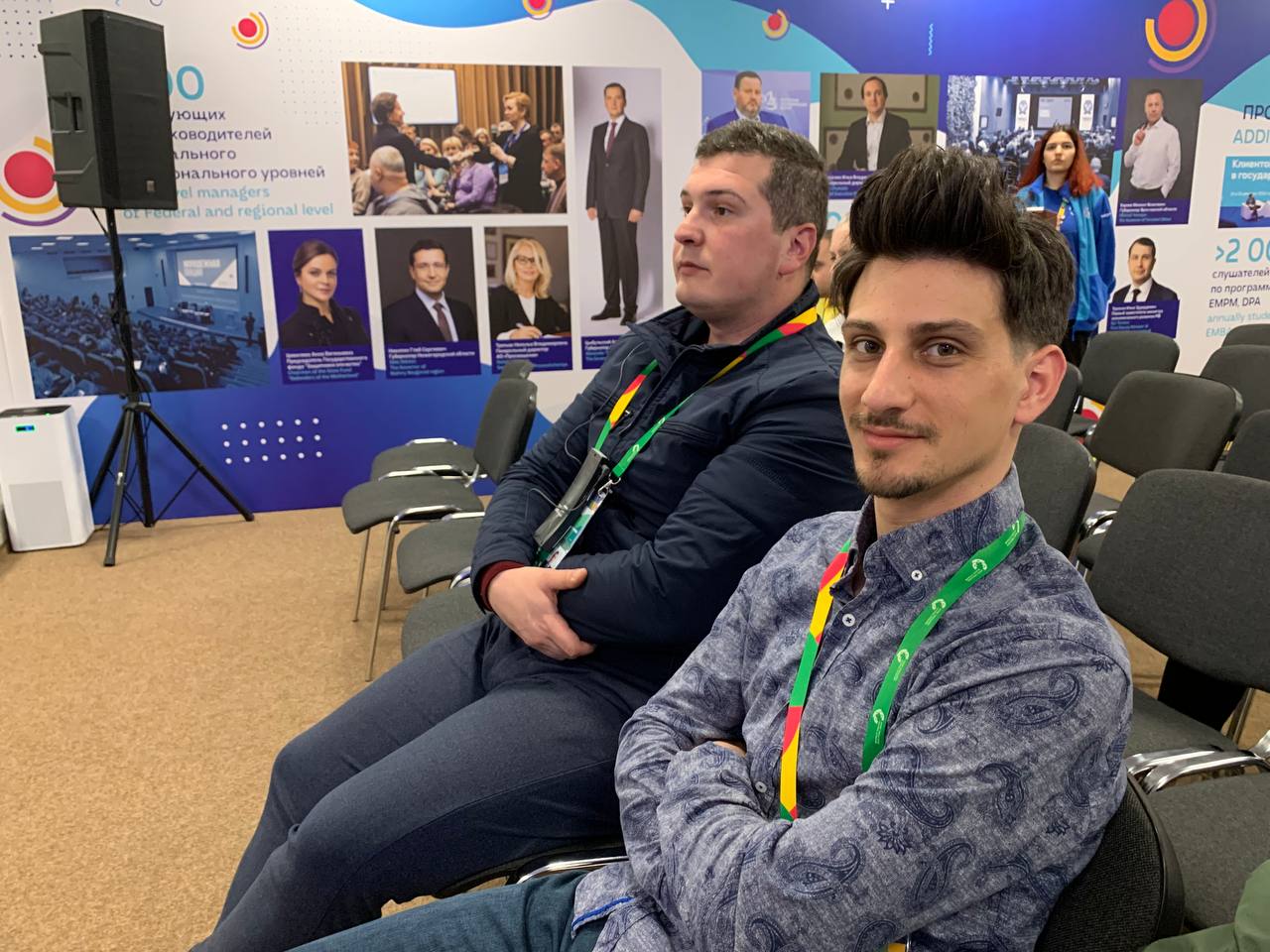
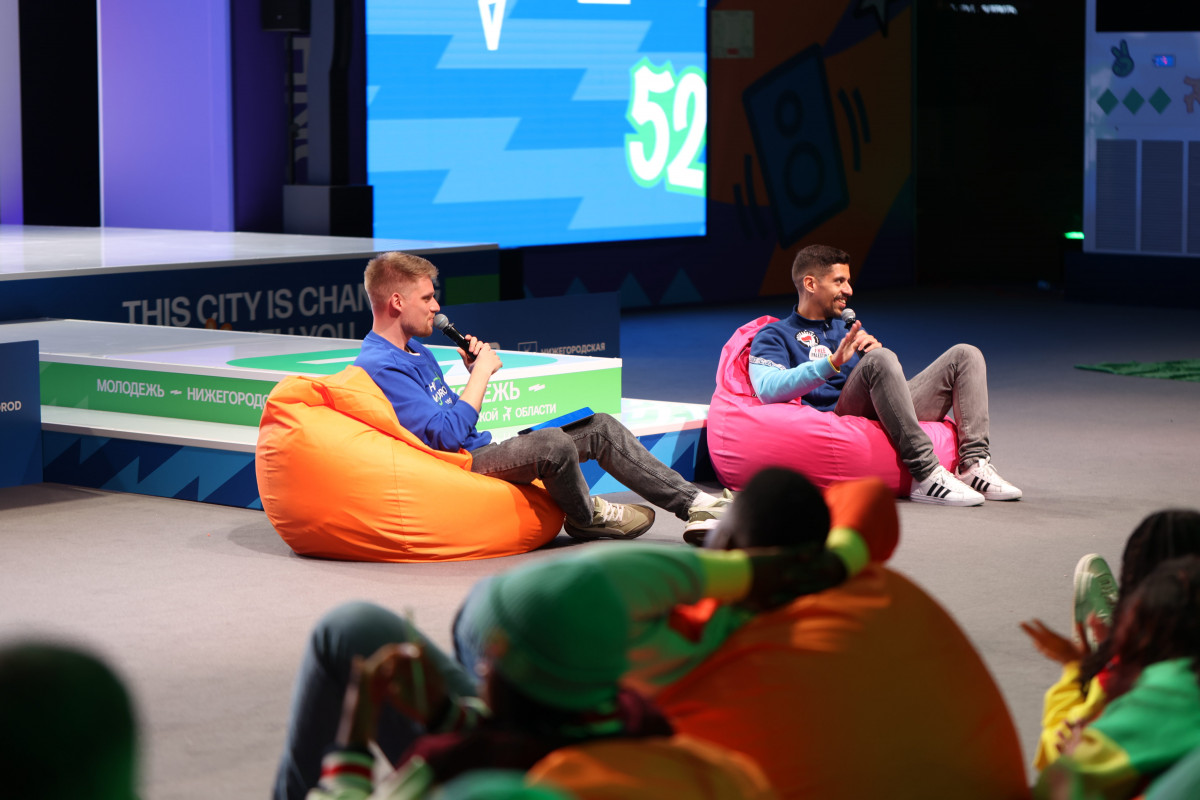
To save the history and keep it undeformed international experts from the Western and Eastern Europe, the Balkans and Russia gathered at the World Youth Festival for the discussion.
The event was also attended by teachers and students of Russian universities, as well as invited representatives from Spain, Serbia, Moldova and Kyrgyzstan, who specialize in the history of the Second World War.
During the discussion, Iker Bas, a leader of the organization Asociacion Sanchode Beurko Elkartea (Spain, involved in military reconstruction), said that, despite the tragedy of the civil war in Spain during the Second World War, it was difficult for him, like other Spaniards, to understand the suffering the peoples of the USSR came through, the people, who paid for the liberation of Europe with millions of lives. This feat of self-sacrifice of the Russian people must not be forgotten. Spain also respects history and hopes for cooperation in preserving the memory of The World War II.
According to Aleksa Gajic, the coordinator of the “Immortal Regiment” action in Belgrade, the Serbs remember and appreciate the fact that it was the Red Army that made a key contribution to the defeat of Nazi Germany and its allies in the European theater of operations. At the same time, currently in the countries of Europe, mainly the Eastern Europe, there is a growing trend towards the fight against monuments to Soviet soldiers, which requires censure and condemnation, including the involvement of international organizations. In Serbia itself, the People’s Liberation War of Yugoslavia holds the same place in history and culture as the World War II for the peoples of the USSR.
Sergey Danilyuk, the head of the military-historical association of Moldova “DOT” and the head of the national search center of Kyrgyzstan “Memory of the People” Romanova Tatyana focused the attention of those present on the lessons that future generations should learn from the tragedy of the Second World War. At the same time, it is ignorance and distortion of history that currently lead to conflict situations, including military actions.
In general, the dialogue that took place made it possible to determine the prospects for further joint activities to preserve the historical memory of the victory over Nazism in the 20th century.
The youth today must understand the conditions under which the post-war world order took shape and thanks to which, the only wish for a peaceful sky has been very clear for several decades of peaceful life.
The festival which brought together participants from 188 countries, became a platform where representatives of other states shared their experience in preserving the historical memory of the Second World War.
The path to a multipolar world, self-realization of youth for the sake of the future and Russia’s openness to a dialogue with all countries are the main agenda highlights of the educational marathon Knowledge.First, which was held from March 2 to 6 on the sidelines of the World Youth Festival in Sochi. Over five days, 137 lecturers shared their knowledge with young leaders from 188 countries, of which 20 were representatives of Austria, Afghanistan, Brazil, Germany, India, Italy, Serbia, Turkey, and Thailand. With their speeches, discussions, and master classes, the lecturers inspired over 5,000 young participants who gathered at the venue of the Festival.
As the members from the foreign delegations noted, the marathon Knowledge.First has shown that Russia is open to cooperation, that it is truly a country of opportunity. Speeches by outstanding experts helped young people learn about trends, promising areas, and important projects in which they can take part and contribute to their development. Russians learned more about international initiatives and had the opportunity to meet their favorite idols.
“The marathon has become one of the main events of the World Youth Festival, a place for dialogue between young leaders and mentors from around the world. During their presentations, the lecturers talked about the key values of our country, unity, and the importance of intercultural and interethnic dialogue. What is especially important is that the marathon participants received honest, sincere answers to their questions… I am sure that from the World Youth Festival has brought knowledge that in the future will help young participants make a contribution to building a fair, safe multipolar world,” noted Maxim Dreval, summing up the results of the Knowledge.First marathon.
The growing number of BRICS members and the powerful potential of their educational systems open up ample opportunities for the exchange of experience, both between the teaching staff of educational institutions and between students.
An important aspect for expanding such interaction is supporting the development of camps for children and youth as a unique format of out-of-school education and socialization. Fahrettin Gozet, President of the International Camping Fellowship, Turkey, elaborated on this.
“Russia is a country that ranks first in the number of children’s camps. Among them are “Artek”, “Orlyonok”, “Smena”, “Ocean”. When I came to Sochi after the Olympic Games, I was very inspired by the idea of the Sirius camp, by the fact that all these talented and hardworking youth received a platform to gather together. And all over the world in different countries I talked about this camp, because it is a wonderful project, said Fahrettin Gozet.
The Knowledge.First marathon program was supplemented by the VK Day lecture hall, where stand-up comedians, athletes, and musicians popular among young people talked about humor, the development of social networks, shared the secrets of creating interesting content, and told how to make your dream come true and achieve popularity.
All six sites of the Marathon were filled with young people, the guys actively communicated in different languages, took pictures with speakers, shared impressions with journalists from major media outlets, discussed the speeches they heard. The marathon tracks were in tune with the meanings of the Festival: “Responsibility for the fate of the world”, “Multinational unity”, “A world of opportunities for everyone”, “Let’s save the family in the name of children and peace” and “We are together with Russia”.
Along with the educational marathon Knowledge.First, within the framework of the educational program of the World Youth Festival, the Knowledge Society organized the intellectual tournament Knowledge.Game with the participation of scholars from different countries, screenings of performances together with the Tavrida Art Cluster, a film lecture Znanie.Kino, where spectators from all over the world got acquainted with legendary Russian films and discussed them with famous actors and directors.
Also, a multimedia exhibition of the National Photo Competition Knowledge.Russia was organized for Festival participants, giving the opportunity to see the main achievements of modern Russia and immerse themselves in their atmosphere using augmented reality technology.
Now, on March 10, the regional program of the Russian Society “Knowledge” starts as part of the World Youth Festival, which will be held until March 17 in all eight federal districts of the Russian Federation. The children will enjoy more than 200 educational events, including speeches, discussions, and master classes by authoritative lecturers from various fields. The program will unite Russians from regions of the country and foreign participants of the World Youth Festival, who will travel across Russia as part of several teams. Guests from different countries will have the opportunity to get acquainted with their Russian peers, the culture of our country and the achievements of the regions.
Foreign delegations from all over the world are arriving at the World Youth Festival in Sochi. On March 1, excursion programs for journalists start on the federal territory of Sirius and the first press conferences with experts will begin.
The first week of the festival will be devoted to discussions, meetings, cultural and sports programs. It will take place in the City of World Evolution. Then the participants get acquainted with the country, its cultural situation, historical heritage, national diversity of people and their traditions, unique nature and economic potential.
Meanwhile, the Western mainstream media have started spreading information discrediting the Forum organizers. For example, it says selection of volunteers was made unfairly, and many “outstanding” young people were refused.
But it is worth highlighting that the Festival is the event of an international scale, comparable to the Expo held in Dubai in 2021. No doubts. that events of this level involve serious selection and require qualifications and motivation from volunteers. To become a volunteer, it is also required to go through the appropriate procedures and pass tests. So far, the organizers attracted both Russian and foreign citizens aged 18 to 35 years, as well as very young volunteers from 14 to 17 years old to work at certain sites. In total, 5 thousand volunteers work at the Forum.
Selection also takes place among foreign delegations. Delegations from 180 countries have already arrived at the Forum, the most representative of them being from India, registering 360 people.
Meanwhile, the head of Rosmolodezh reported that some delegations and volunteers were not released from the airports of their countries when they talked about the purpose of their visit to Russia.
“We have a huge number of young people all over the world… Many of them faced some kind of pressure from their countries, not always a friendly attitude, but this did not stop the guys at all, everyone arrived, everyone is here, everyone is open and ready for friendship, communication,” Razuvaeva told reporters.
The reaction of Western media and officials is quite predictable. Failing attempts to isolate Russia with sanctions restrictions and exclude it from all leading international associations are driving European and American leaders into agony.
Moreover, the West is gradually realizing that the vector of the International Community is shifting. A recent article published in the Financial Times that Davos is no longer in the economic center of the world has caused heated discussion in the Western society. Today, Dubai, Shanghai, Moscow are becoming new world’s centers..
Meanwhile, Russia remains open to international cooperation and accepts thousands of proposals from foreign delegations at the Forum is one more prove of this.
Over the recent years, Russian and international media have been actively writing about various contracts of Uzbekistan for the purchase of Russian military equipment, some of them are the most modern, and the other part are a legacy of the USSR. The numerous deals indicate Tashkent’s determination to take arms sales talks with Moscow to a higher level. In 2017, Uzbekistan committed to modernizing its armed forces as part of a five-year development strategy. Another factor that may have spurred Uzbekistan’s Defense Ministry recently was the intra-Afghan conference in Qatar, which resulted in the adoption of a nascent peace resolution. Tashkent has a lot at stake in this process, since any withdrawal of Western (particularly American) troops as a result of the resolution will have direct security consequences. Thus, Uzbekistan will take sole responsibility for protecting its border with Afghanistan.
In addition, in 2019, Uzbekistan purchased 12 Mi-35M military helicopters. These transport helicopters, which can also be used to attack ground targets, have been in production since the 2000s. Besides, Uzbekistan has ordered an unspecified number of BTR-82A armored personnel carriers (APCs), capable of carrying three crew members and seven soldiers. Previously, Tashkent also purchased “several dozen” special-purpose armored vehicles VPK-233136 “Tiger”, capable of transporting up to seven military personnel (according to TASS).
In addition to modernizing equipment for its ground forces, Uzbekistan plans to enter into contracts for the Air Force and order new fighter jets and a radar system. In particular, Tashkent is negotiating the purchase of Su-30SM multirole fighters, which Russia has deployed in Syria. Uzbekistan has also expressed interest in acquiring Sopka-2 radar systems, which monitor airspace, as well as upgrading the country’s existing military radars to Sopka-2 levels.
Closer-than-usual military cooperation between Russia and Uzbekistan began with President Shavkat Mirziyoyev’s first trip to Moscow in April 2017 and President Vladimir Putin’s return visit to Tashkent in October 2018. During these meetings, the parties discussed issues of military cooperation and modernization of Uzbekistan’s military equipment using Russian assets; the real details of these conversations are only surfacing now. And, no doubts, Uzbekistan’s recent purchases of Russian weapons, along with ongoing negotiations between the two sides, are directly related to these aforementioned summits.
A number of factors indicate that Uzbekistan’s efforts to update its military arsenal are related to the dynamically developing situation in Afghanistan. Earlier this year, the Chief of Staff of the Armed Forces of Uzbekistan, Major General Pavel Ergashev, spoke about the movement of “centres of instability” in northern Afghanistan (i.e. areas close to or bordering Uzbekistan), which, in his opinion, threatens stability in Central Asia. The fact that these purchases came after intense peace negotiations in Afghanistan, which were supported by Uzbekistan, is not a mere coincidence. Assuming a subsequent withdrawal of US troops from the theater of operations in the short to medium term, the burden of defending the Afghan-Uzbek border will now fall solely on Tashkent.
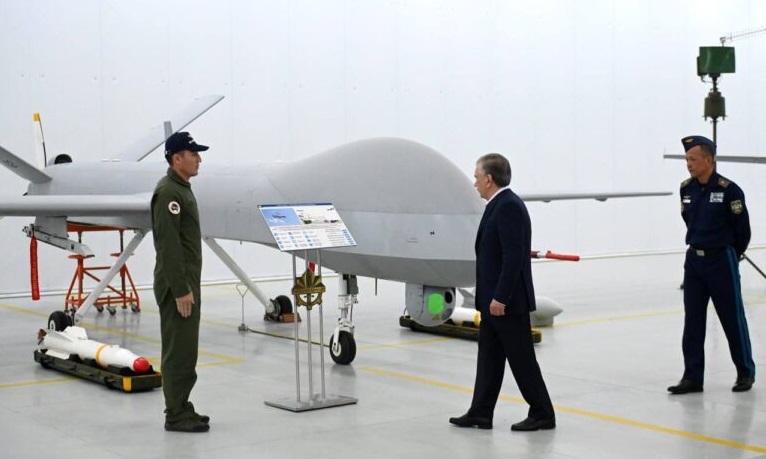
Despite the fact the Turkish drones such as the Bayraktar TB2 have become extremely popular due to their successful deployment in multiple conflicts around the globe and have also popped up in Central Asia, Uzbekistan seems to rely more on the Russian drone system. In August 2021, Uzbek armed forces performed a readiness drill with Russian-made drones in an area near the country’s southern border. The Yug-2021 exercise was held jointly with the Russian army against the backdrop of worsening stability in neighboring Afghanistan.
Uzbekistan has tried to develop domestic defense capabilities elsewhere too. In October 2021, the State Defense Industry Committee announced it had developed its own remote-controlled heavy machine gun. A month later, the same body said it had begun production of a domestically designed light-armored vehicle called Qalqon (Shield).
It is much more profitable for Uzbekistan to purchase military equipment from Moscow rather than from NATO for a number of reasons. Firstly, in the current conditions of logistical difficulties, the delivery of military equipment from Russia is much safer and cheaper than from NATO countries. Secondly, given Uzbekistan’s Soviet past, many standards and the language of instructions for Russian equipment are clearer than Western ones. Thirdly, the United States is gradually curtailing its geographic scope of military operations, since it cannot support them financially, and accordingly, supplies of depleted equipment to Uzbekistan will cost more, and their effectiveness is quite low. Finally, Uzbekistan is also aware of the strategic risks of purchasing military equipment from NATO – ultimately this will lead to the deployment of NATO military bases on the country’s territory under the pretext of “maintaining and monitoring” equipment in proper condition, joint exercises, etc.
Thus, these factors and global changes are motivating Uzbekistan to quickly acquire military equipment from the country where most of its obsolete military equipment originally came from.