Kımız (Mare’s Milk): A drink of fermented mare’s milk, kımız has a very ancient history among the Turks of Central Asia. Islam was probably responsible for its decline, since horsemeat and mare’s milk were, while not actually forbidden, regarded as undesirable by the Arabs. It survived, however, among the non-Ottoman T…urkish peoples of Central Asia. The drink remains important to the people of the Central Asian steppes, including the Turks, Bashkirs, Kazakhs, Kyrgyz, Mongols, Yakuts and Uzbeks. It was also consumed by Hungarian tribes.
Year: 2010
-
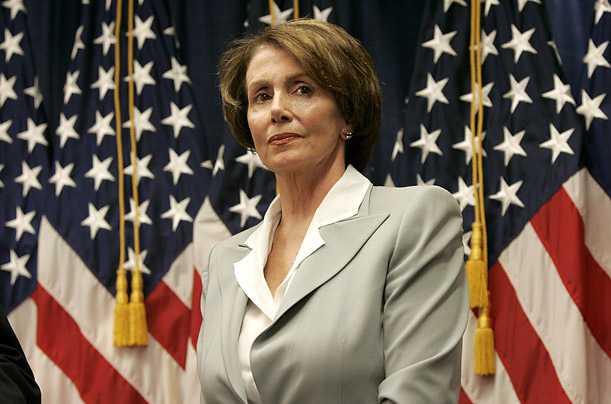
Pelosi Fails to Schedule Vote on Armenian Genocide Resolution
House Democratic Leadership Blocks Bipartisan Majority from Voting on Genocide-Prevention Measure
WASHINGTON – The U.S. House Democratic Leadership failed today to schedule a vote on the Armenian Genocide Resolution, H,Res.252, despite support for this human rights measure from a broad bipartisan majority, killing the prospects for the passage of this legislation during this session of Congress, reported the Armenian National Committee of America (ANCA).
ANCA Chairman Ken Hachikian issued the following statement in response to U.S. House Democratic Leadership’s decision:
“Armenian Americans are angered and disappointed by the failure of Speaker Pelosi and the House Democratic leadership to honor their commitment to allow a bipartisan majority to vote for passage of the Armenian Genocide Resolution.”
“Speaker Pelosi clearly had the majority, the authority, and the opportunity to pass the Armenian Genocide Resolution, yet refused to allow a vote on this human rights measure.”
“The Speaker chose not to move forward, in the face of broad bipartisan backing for this human rights measure, including from the current House leadership and the incoming Majority Leader and Majority Whip, and despite both the relatively muted opposition from the White House, and the fact that Turkey’s effectiveness in opposing its adoption was seriously undermined by controversial policies on the part of Ankara toward Iran, Israel, and Sudan that have angered lawmakers.”
“Her decision to not move this legislation forward during her four years as Speaker represents a failure of Congressional leadership on human rights and, sadly, a setback to America’s standing in the struggle to end the cycle of genocide.”
“Coming in the wake of President Obama’s string of broken promises to recognize the Armenian Genocide, Speaker Pelosi’s refusal to schedule a vote on the Armenian Genocide Resolution represents a major breach of trust with Armenian American voters.”
“Although sharply disappointed by the Speaker’s unwillingness to schedule a vote on the Armenian Genocide Resolution, we were, throughout this session of Congress, tremendously encouraged by the scope and depth of support for the Armenian Genocide Resolution, not only from a bipartisan majority of Congress but also from a growing cross-section of American civil society. We look forward to building on our progress and to continuing the work of the Armenian American community for a strong U.S. moral stand on the Armenian Genocide, an end to Turkey’s campaign of denial, and a truthful and just resolution of this still unpunished crime against the Armenian nation.”
The ANCA also urged Armenian-Americans to send ANCA WbMail to Speaker Pelosi, telling her wheat they think about her decision to block a bipartisan majority from voting to pass the Armenian Genocide Resolution. Send a Free ANCA WebMail by clicking here
-
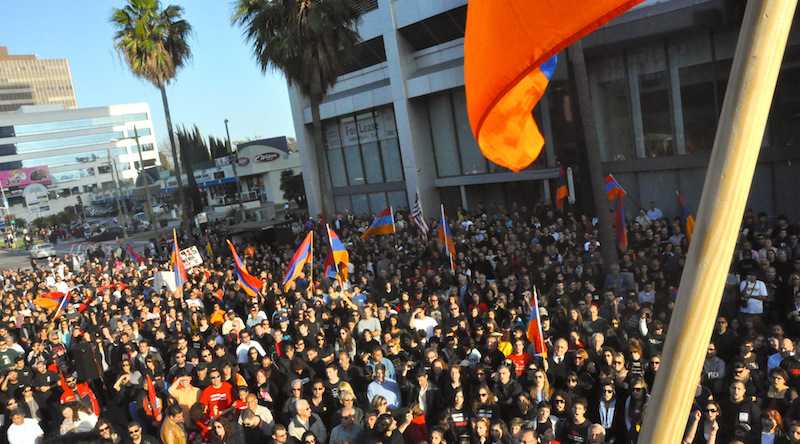
Screams From TASNAKS(ARF): Pelosi’s Refusal Will Have Dire Consequences
–Tasnak (ARF) yayin organlari Pelosi’ye ve AAA ‘ya ates puskuruyor
BY ARA KHACHATOURIANOutgoing Speaker of the House Nancy Pelosi showed her true colors on Wednesday by refusing to schedule a vote on the Armenian Genocide Resolution. For four years, as Speaker, she patronized the Armenian-American community and failed to honor her promise and articulated pledge to recognize the Genocide, becoming a pawn of the Turkish denialist movement.
By blocking the bill from a vote, the Democratic leadership of the House also demonstrated its inability to lead and take action on an issue, which is not merely a campaign pledge, but a matter of justice and human rights.
Effectively, they have become accomplices in the ongoing Turkish campaign of lies and historical revisionism.
The patience of the Armenian-American community has run out. Wednesday’s events will have dire consequences, the ramifications of which will be seen at local district offices of members of Congress and eventually at the polling booth.
By placating the Armenian community, these so-called leaders have garnered votes and enjoyed a long tenure as legislators. They have amassed power in a veiled attempt to act as true representatives of the people and their constituents. And, time and again, the community has applauded and thanked their efforts to advocate on behalf of our community.
That is why, their actions on Wednesday amount to a belligerent betrayal of their constituents for which they will have to answer.
Perhaps praise is due to those individuals who marshaled this effort to ensure that the 111th Congress will go down in history as the one that set the record straight on the Armenian Genocide.
This recent attempt at advancing the resolution mobilized an entire community to stand up and demand justice. One thing is certain: the community will remain standing and raise its voice louder and will send a clear message to those who underestimated the power of the community.
The vast majority of the Armenian-American community—led by the Armenian National Committee of America—was engaged in articulating its aspirations to Congressional members and leaders. Their unwavering commitment and will to advance the Armenian Cause must be recognized, praised and applauded.
The entity that does not deserve applause or praise is—once again—the Armenian Assembly of America, whose leaders were quoted in an RFE/RL news report Wednesday as opposing the Genocide Resolution.
Their cowardice was framed as such: “nobody wants to take a loss in a floor vote in these circumstances. The genocide denial industry would like nothing better than defeating the resolution, even in an unfair vote.” Furthermore, when Pelosi refused to schedule a vote, the Assembly responded by saying: “we also particularly commend the steadfast leadership of Speaker Nancy Pelosi…who… provided guidance and invaluable assistance throughout this process.”
As always, the Assembly spent the majority of the last two years kowtowing to the State Department and its interests and, in the last minute, is jockeying to become the representative of the Armenian community. It is time for the community to see the Assembly for the duplicitous organization that it is and call them out on their hypocrisy.
No one needs a reminder of the Assembly’s stance last year on the ill-fated protocols, which endangered the very security of the Armenian nation.
The grassroots effort that gathered momentum in the last few weeks in favor of an Armenian Genocide Resolution must shift its focus toward clearly articulating to law makers the community’s utter disappointment in their inability to deliver on their promises and their blatant refusal to advance justice.
The Genocide recognition campaign has now entered a new phase. We must ask ourselves whether there are other ways to leverage the US Congress to advance the just demands of the Armenian people for recognition, reparations and retribution from the Turkish government.
For now, however, the Armenian-American community can proudly declare that it fought the good fight as Pelosi and the rest of the Democratic leadership return to their districts in shame to face the music.
-
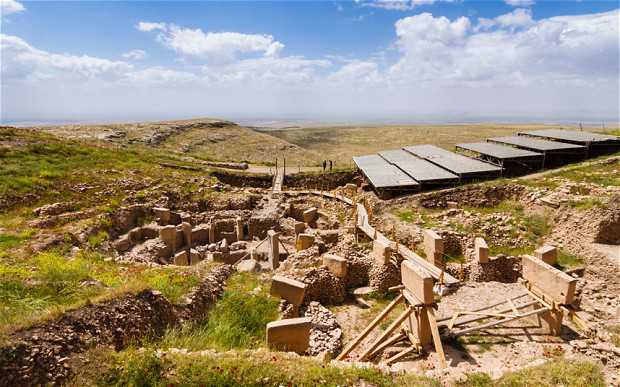
Special report: Why Egypt’s power has dimmed
Alistair Lyon, Special Correspondent, Reuters December 21, 2010, 1:05 am
CAIRO (Reuters) – At Bayoumy’s, a dingy, smoke-filled tea shop in downtown Cairo, Egyptian football fans groaned at the “biased” referee as they watched their national team lose 2-1 to the Gulf state of Qatar in a friendly last week. Once the television commentary had died away and people turned back to their backgammon games, some pondered an awkward question for Egypt, which prides itself on being the pre-eminent regional power. Why is it that gas-rich Qatar, a football minnow ranked 113 in the world, will host the 2022 World Cup — the first in the Middle East — while Egypt did not win a single vote when it bid for the Cup six years ago?
“Qatar does not have the history that Egypt has, but it has vision, money and the goal to be a leader among nations in the region,” sighed the tea-shop proprietor Mr Bayoumy, reflecting on the past under former president Gamal Abdel Nasser. “Egypt had vision and resolve in Abdel Nasser’s time and was even more independent than Qatar now, which has the largest U.S. military base in the Middle East. But this country has no vision any more, only officials who look after themselves.”
Sipping his tea, Haj Masoud, 67, also lamented Egypt’s lack of vitality. “Qatar is new at everything: diplomacy, history, wealth,” he said. “Egypt has a long history in all of these areas but its people are too busy making ends meet.”
Egypt may still be a football powerhouse — it captured the Cup of African Nations for the seventh time this year to bring its FIFA world ranking to 10 — but it can no longer claim automatic primacy as the foremost political, economic and cultural country in the Middle East. Non-Arab Turkey, Iran and Israel all arguably pack a bigger punch than Egypt these days, while oil giants Saudi Arabia and the United Arab Emirates outmuscle it financially. Even an agile lightweight like Qatar can dodge into a diplomatic — and sporting — ring that Cairo once dominated.
“Egypt has virtually no influence as far as I can tell,” says Beirut-based commentator Rami Khouri, who dates the decline in Cairo’s clout to then-leader Anwar Sadat’s 1977 peace-making trip to Jerusalem, when the Arab world pointedly declined to follow his lead. “Egypt used to be a creative, dynamic place, culturally and politically. Now it’s very static and others have become more dynamic — the Syrians, Hezbollah, the Iranians, the Qataris. None of them has become the dominant actor, but they all play a role that used to be more monopolized by Egypt.”
FADING INFLUENCE
Egypt used to be the undisputed Arab power. In the 1950s and 60s, Nasser electrified Arabs with his defiance of colonial powers, enmity for Israel and heady brand of Arab nationalism and socialism. Western powers loathed him, just as today they revile Iranian leader Mahmoud Ahmadinejad and his “resistance” rhetoric.
Nasser projected Egyptian influence far and wide, even if he met ultimate disaster with defeat in the 1967 Arab-Israeli war. His successor, Sadat, offered a bold alternative when he made Egypt the first Arab country to sign a peace treaty with Israel. Initially, the peace deal consolidated Egypt’s role as the Middle East’s most important interlocutor.
In the 21st century, though, Egypt’s voice has faded. Today it is Iran, Saudi Arabia, and Syria which consult on how to keep Lebanon from slipping back into chaos. Iran is the outsider that carries most weight in Iraq’s political struggles. Turkey has hosted indirect peace talks between Israel and Syria, linked up with Brazil to tackle Iran’s nuclear row with the West and tried to reconcile rival Palestinian factions.
Even Qatar, home of al-Jazeera, the satellite television news station which helped destroy the grip of state media around the Arab world, has sought to mediate in conflicts in Yemen, Lebanon and Sudan’s Darfur region — Egypt’s own backyard.
Then there’s the appeal of militant movements such as Lebanon’s Hezbollah and the Palestinian Islamist Hamas, which can often resonate more than the policies of Egyptian and other Arab leaders who shelter under an unpopular U.S. military umbrella.
President Hosni Mubarak, 82, who has ruled Egypt for almost 30 years and may well stand for a sixth term next year, has preserved the peace treaty with Israel and stuck solidly in the U.S. camp. What he lacks, says Amr Hamzawy, an analyst at the Carnegie Endowment’s Middle East Center, is “the vision component. Mubarak is not a visionary leader and is too old to become one.”
TURKEY’S RISING STAR
To get an idea of how far Egypt has slipped, it’s instructive to look at Turkey, which in the past decade has transformed itself from a financial basket-case sitting on the periphery of Europe into a star emerging market and a rising regional power.
The International Monetary Fund expects Turkey’s economy, buoyed by political stability and market-friendly reforms, to grow 7.8 percent in 2010, making it one of the world’s best performers. That outshines Egypt, which is expected to grow by a still-sprightly 6 percent this fiscal year, after 5.1 percent last.
And it’s not just the economy. A Brookings Institution poll this year found that Arabs admired Turkish Prime Minister Tayyip Erdogan more than any other world leader. Under Erdogan’s Islamist-rooted AK Party, in power since 2002, Turkey has fostered stronger trade and business links with Muslim countries. Its political and cultural profile has also risen in the Arab world, which it ruled for centuries as part of the Ottoman empire, sharing social and religious affinities.
In the past, Turkey — NATO’s only Muslim member — avoided getting embroiled in the Middle Eastern quagmire. But in recent years it has used its growing influence and prestige to mediate in difficult conflicts. In a nod to growing Turkish clout, Barack Obama chose Turkey as the first Muslim country he visited as U.S. president — a trip seen as a diplomatic coup in Ankara, even though he later reached out to the Islamic world in a speech from Cairo.
Erdogan’s condemnation of Israel after a deadly Israeli raid on a Turkish-led aid convoy bound for the Gaza Strip last May turned him into a hero in the Arab street — people in the Cairo slum of Manshiet Nasr hung Turkish flags from their windows.
Arab interest in Turkish culture — from TV soap operas, pop music and food to Turkey’s rehabilitation of its Ottoman history — has also surged, fuelling an influx of Arab tourists. Istanbul, the old imperial capital, has become a popular wedding destination for Arabs.
“There are a number of areas in which you can say that Turkey has overtaken Egypt’s place as a regional power,” says Hugh Pope, an author of books on Turkey and a senior analyst at the International Crisis Group, a Brussels-based conflict resolution group. “In the 1950s and 1960s, Egypt was the voice that moved the Arab masses. Now the voice of Erdogan is the voice that moves the masses despite Turkey not being an Arab country.”
Pope points out that Turkey has used its access to EU and U.S. markets and investments to liberalize and modernize, while many Arab economies, such as Egypt’s, still wrestle with the legacy of state control.
“Turkey has a democratically elected government that is liberal, open-minded and Western-oriented, so its rise has not been threatening to the West … It’s a model of benign Islam,” says Hilal Khashan, a political science professor at the American University of Beirut. “The decline of Egypt’s role is largely self-inflicted, as Mubarak’s authority is not democratic.”
OIL-POWERED VISION
But democracy is not the only way to gain power. Qatar and the United Arab Emirates, sleepy desert backwaters in the 1960s, have built shiny city-states in the Gulf, spending oil and gas revenue freely on infrastructure installed almost from scratch.
“The success of the UAE is less a success due to oil than a success of vision,” said Jean-Francois Seznec, a Georgetown University professor. “Much of the credit … is down to two very dynamic ruling sheikhs, Zayed in Abu Dhabi and Rashid in Dubai. Under these rulers, the UAE roared into the modern world. They dragged their backward populations along for the ride.”
With only six million people, most of them foreign workers, the UAE can react rapidly to changes and opportunities, he said. To achieve explosive economic growth, its leaders flattened bureaucracy, “did not impose taxes and in general provided an atmosphere of free trade”.
Seznec said Gulf Arabs seem to pity Egypt. “Certainly its political influence has waned completely in any of the issues around, in favor of Saudi Arabia. From an economic standpoint, Egypt has even less influence.”
Egyptians may have a solid national identity, compared to the Gulf statelets, but can only gasp at their spending power. Two-fifths of Egypt’s people live in poverty, 30 percent are illiterate and food price inflation is 22 percent. “Qatar has money and knows how to spend it well, while our country also has money, but does not spend it right,” said Farouk Magdy, a student at Cairo’s Future University, paying rueful tribute to the “amazing” World Cup stadiums the Qataris are planning. “We could never have competed against their stuff.”
THE U.S. CONNECTION
It hasn’t helped that Egypt has bet everything on U.S.-led Middle East peace efforts, whose protracted failure may have proved a liability.
“Sadat, Mubarak and others promised that peace will not be a separate peace with Israel, but an Arab-Israeli peace, and also that peace will bring prosperity,” says Gamal Soltan, of Cairo’s Al-Ahram Center for Political and Strategic Studies. Many Arabs now “perceive Egypt as a country just allying with the U.S. to protect the regime or implement U.S. policies or plots in the region.”
Egypt receives about $1.3 billion a year in U.S. military aid, hosts one of the world’s biggest American embassies and, along with Saudi Arabia, is Washington’s most important Arab ally. In the Mubarak era, Cairo’s main diplomatic role has been to facilitate Israeli-Palestinian peace talks and, in recent years, to try to reconcile feuding Palestinian groups Fatah and Hamas. Neither effort has borne fruit so far.
And while Washington and its Western allies appreciate Egypt’s mediation efforts, some Arab leaders are privately scathing. Qatari Prime Minister Hamad bin Jassim Al Thani, quoted in a leaked U.S. cable made public by WikiLeaks, said Egypt had “no end-game”, only a vested interest in dragging out Palestinian reconciliation talks as long as possible. “Serving as broker of the talks is Egypt’s only business interest with the U.S.,” the Qatari leader said.
SMOTHERING OPPOSITION
Egypt’s weaker role abroad may also be a result of its obsession with problems at home. Eliminating political challenges sucks up much energy, while corruption and an inert bureaucracy have hollowed out institutions and undercut economic reform efforts.
Mubarak, a former airforce commander, took over after Islamist militants assassinated Sadat in 1981 and has kept Egypt under emergency law ever since, stifling political freedom behind a facade of elections and multi-party democracy. On his watch, Egypt rebuilt ties with the Arab world in the 1980s, crushed an Islamist insurgency at home in the 1990s and accelerated liberal economic reforms from 2004, fuelling three years of 7 percent growth until a surge in global food prices and then a world economic slump braked the momentum.
Yet Egypt is burdened by the explosive expansion of its 79 million-strong population — set to double by 2043 if today’s 2 percent annual growth rate persists. That population boom means that on a per-capita basis, Egypt’s economy has also lagged behind peers such as Brazil and South Africa.
Ugly bouts of sectarian friction between majority Muslims and the Coptic Orthodox Christians who form at least a tenth of the population have eroded a long tradition of coexistence.
A more vibrant media scene now enlivens debate, but no major rival to Mubarak’s National Democratic Party (NDP) has emerged, and the democratic deficit in a security-obsessed state risks tipping into bankruptcy.
The November 28 election produced a lopsided parliament almost devoid of opposition. Mubarak endorsed the vote, but even the United States said it was “dismayed” by reports of election-day interference and intimidation by security forces. Egypt’s Muslim Brotherhood, a pan-Islamic movement and the main opposition group, has scant appetite for organizing protests likely to invite a strong government crackdown, knowing it cannot count on support from Western countries wary of political Islam, according to Shahid Hamid, an analyst at the Brookings Doha Center. “It is interested above all in survival and has little interest in provoking an all-out confrontation with the regime. They believe history is on their side and are willing to wait.”
Most Egyptians did not bother to vote in last month’s poll and many greeted the results with apathy and ingrained cynicism, not street protests. Stop people in the streets of Alexandria, Egypt’s second city, and they readily share their frustrations.
“Elections mean nothing in Alexandria or in Egypt,” complained Mohamed Abdel Fattah, a 68-year-old carpenter. “People are sick of politics. Each candidate is dirtier than the last, they buy votes with money — it’s one big mafia.”
Zinhar Rushdi, 52, an insurance employee in a suit, said MPs routinely ignore their constituents once they have secured the “personal gains and perks” that accrue from an assembly seat. “It’s a patronage system,” he explained, his soft voice almost drowned by the din of traffic. “Businessmen get immunity so they have cover to pursue everything they want.”
CRISIS OF LEGITIMACY
Is there any hope of change? Mubarak’s plans are uncertain. He has had health scares and is the second-oldest Arab leader after Saudi Arabia’s ailing King Abdullah. If he runs in next year’s presidential election, he will win. If he steps aside or fails to last his term, no one can be sure who will take over.
Despite official denials, many Egyptians believe Mubarak has groomed his businessman-politician son Gamal for the job, but few relish the notion of a dynastic handover in a republic.
“Mubarak’s ideal of a strong but fair leader would seem to discount Gamal Mubarak to some degree, given Gamal’s lack of military experience, and may explain Mubarak’s hands-off approach to the succession question,” mused U.S. ambassador Margaret Scobey in another leaked diplomatic cable. “Indeed, he seems to be trusting to God and the ubiquitous military and civilian security services to ensure an orderly transition,” she wrote.
UNEVEN DIVIDENDS
Lobna Mahmoud’s grey Mercedes purrs past a security gate into the sudden calm of Palm Hills, where gardeners tend grassy terraces, sprinklers hiss over flower beds and birds sing. The villa she bought five years ago — prices have tripled since — is nearly complete, with its marble floors and pitched tile roof. It looks over a sprawling club with floodlit football pitch, tennis courts, Olympic-sized pool, cafes and restaurants.
“When I saw this place, it was like a dream,” says Mahmoud, 45, a businesswoman who imports chemicals for paint factories. It may be only 30 km (19 miles) from downtown Cairo, but Palm Hills and many similar projects now ringing the city are a world away from the capital’s relentless smog, grime and noise.
For most Egyptians, they might as well be on another planet.
In the gritty railway town of Dalgamoun, in the Nile Delta north of Cairo, black motor rickshaws jostle past plodding buffaloes in the mostly unpaved streets — a place where small factories and workshops coexist with slower rural rhythms. “Prices are rising like fire and I can’t keep up, with the money I make and the big family I have,” says 67-year-old Ali Abu Issa, serving tea in a truck-stop cafe on the outskirts of town. A grizzled ex-soldier who fought in Yemen and in the 1967 and 1973 wars against Israel, he has eight children.
“I call out to Mubarak to help us,” he says, asserting that the president has a self-interested entourage which keeps him in the dark about the plight of the people. “Officials are corrupt and greedy. They take everything and leave us only scraps.”
Rich-poor contrasts in Egypt seem starker than ever, but the government denies that only a privileged few have benefited from economic reform. Wealth is trickling down, insists Finance Minister Youssef Boutros-Ghali. “The quality of life of the average Egyptian has improved significantly, despite what you hear in the street.”
Egypt could have done even better, he told Reuters, if reforms were not obstructed by bureaucracy and “people who don’t believe foreigners should invest or buy land here — as if they were going to put it on their backs and walk off with it”.
Magdy Rady, the cabinet spokesman, acknowledged that Egypt has lagged Turkey in attracting foreign direct investment in the past six years. Government figures show Egypt lured a total of $45 billion against Turkey’s $81 billion in that period.
“The best we achieved was $13 billion,” Rady says, adding that Turkey, which hit a high of $22 billion in 2007, had been spurred on by its ambitions to join the European Union.
Egypt can hardly aspire to EU membership, but, with no transition to more dynamic leadership in sight, hosting the Arab world’s first World Cup might have been just the kind of project to galvanize the nation. With Qatar having grabbed those bragging rights, the football-crazy customers in Mr Bayoumy’s tea-shop have a despondent analysis.
“Egypt’s role is retreating in the region,” said Magdy Saroh, a 43-year-old engineer, “because Egypt has stood still for 30 years while younger, energetic countries like Qatar that were not on the map have sprung up and are speeding ahead.” (Additional reporting by Marwa Awad, Edmund Blair, Yasmine Saleh, Patrick Werr and Dina Zayed in Cairo, Ibon Villelabeitia in Ankara and Martina Fuchs in Dubai; Editing by Simon Robinson and Sara Ledwith)
-

Tunisia-Turkey pen co-operation agreement in agricultural research
TUNISIAONLINENEWS -Tunisian and Turkish higher-education institutions, signed on Wednesday in Tunis, a co -operation agreement on joint research projects in this sector.
The agreement was signed at the end of the Tunisian- Turkish Joint Agriculture Committee’s meeting, held on December 21 and 22, whose minutes were signed by Secretary of State in charge of Water Resources and Fisheries, Mr. Abdelaziz Mougou and Turkish Secretary of State in charge of Agriculture and Rural Affairs, Mr. Vedat Mirnahnutogullan.
Chairing the signing ceremony, Mr. Abdessalem Mansour, Agriculture, Water Resources and Fisheries Minister, stressed the important and promising prospects of Tunisian-Turkish co- operation, particularly in sectors of water resources, agriculture research and production activities in general.
For his part, the Turkish official underscored the importance of the signed agreement and its role in bolstering bilateral co-operation, so that it would reach the hoped-for level.
Works of the technical committee focused on ways boosting co-operation in sectors of agriculture research, breeding, and water resources.
via Tunisia-Turkey pen co-operation agreement in agricultural research.
-
US pushed pope to welcome Islam
Madrid – The United States initially saw Pope Benedict XVI as a “eurocentric” pontiff who was “unlikely to cut a prominent figure on the world stage”, according to WikiLeaks documents published on Thursday.
The confidential US diplomatic cables obtained by the whistleblower website were quoted by the Spanish daily El Pais.
German-born Benedict XVI would face a “steep learning curve” on international issues, US diplomats wrote after the then cardinal Joseph Ratzinger was elected pope in 2005.
Some of the cables focus on a 2006 academic lecture given by the pope, who quoted a 14th century Byzantine emperor saying that the Muslim prophet Mohammed had brought “only evil and inhuman things”. The quote sparked furious criticism in the Muslim world.
“It taxes the imagination” to suppose that such a reference by the pope “would pass unnoticed”, a US diplomat wrote.
Didn’t foresee consequences of statement
According to his assessment, the pope made the reference on purpose, but without foreseeing the consequences, which were followed by apologies by the Vatican.
The pope’s “approach toward Islam and toward inter-religious dialogue is cooler than that of his predecessor” John Paul II, the diplomat observed.
The controversy was followed by the pope’s trip to Turkey, during which he toned down the uneasiness he had expressed about Turkey’s eventual European Union membership while he was still a cardinal.
The Vatican’s official stance now is that it is not opposed to the membership as long as Turkey meets EU conditions including religious freedom for its Christians.
The Vatican agreed with Washington that the possibility of Turkey – a US ally – joining the EU had the potential to promote greater rights for religious minorities in the country, US diplomats wrote.
Unofficially, however, top Vatican officials told diplomats they were sceptical about Turkey’s commitment to religious freedom.
“The Holy See does not believe theological agreements with Islam are possible, but is convinced that better mutual knowledge will allay suspicions and facilitate peaceful co-existence,” US diplomats wrote in 2009.
– SAPA
via US pushed pope to welcome Islam: News24: World: News.