Year: 2010

  • Travelogue: A diverse culture

    Travelogue: A diverse culture

    Kemal Ataturk, the founder of modern-day Turkey, said: “Culture is the foundation of the Turkish Republic.” Turkey has stayed true to its founder’s saying by preserving and making accessible the rich history of its land which spans over 5000 years. The remnants of these past civilisations are visited each year by thousands of tourists in Istanbul, Ephesus, Troy and many other locations

    Turkey is a land of paradoxes. Its modern, vibrant population lives in the midst of rich Islamic heritage and the opulence of bygone kingdoms. Although 99 per cent of the population is Muslim, the larger cities of Istanbul, Izmir and Ankara have the vibe of a secular European country. .

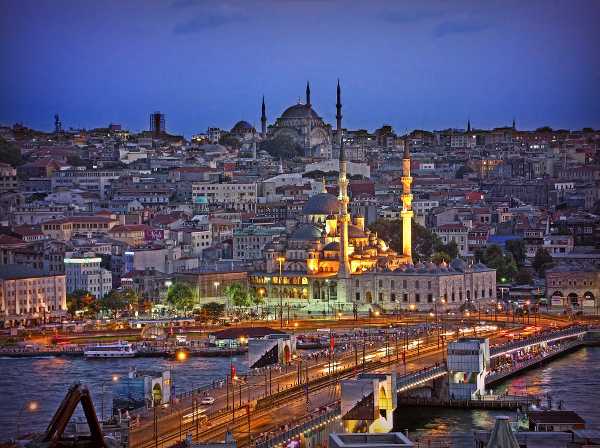
    Istanbul is a must-see for all travelers visiting to Turkey. It is the only city that lies on two continents and is a buzzing metropolitan and a busy sea-port. The city is dotted by rows upon rows of apartment blocks while houses are hard to spot. It gives the impression that most Turks have migrated to Istanbul and now live packed next to each other.

    The cultural heart of Istanbul lies in its old city, called the Sultanahmet. As you travel towards the Old City you pass the giant Walls of Constantinople which are remnants of the Roman Empire. The district of Sultantahmet is a walking area and you can easily walk around and have a look at the main attractions within a few hours. Of course, most people spend up to three days exploring the district, mesmerised by its attractions, learning about its magnificent history.

    The Topkapi palace is the one stop in Sultanahmet which can keep visitors engrossed for an entire day. It was made to house the Ottoman rulers and their families during their subsequent reigns. It has been the residence of eccentric individuals such as Ibrahim I who had 280 of his concubines drowned in the Bosphorus on suspicion of being unfaithful! The palace now houses exhibitions of these rulers’ possessions and the gifts they had received. The most stunning collection is found in the Chamber of the Holy Relics where articles from Prophets, companions and caliphs are kept. These items were shifted to Istanbul when the Caliphate transferred here. Many items were moved to Istanbul for protection from Wahhabi assaults on holy places in Medina. The holy mantle of the Prophet (PBUH), hair from the Prophet’s (PBUH) beard and a tooth broken in the battle of Uhud are kept in the chamber. Possessions of other prophets and companions such as the staff of Musa(as), the tray of Abraham(as) and the prayer rug of Fatima(rz) are also seen here among the many other holy items.

    When the Ottoman Empire defeated the Romans and took over Constantinople (modern-day Istanbul), they converted their churches into mosques. The most well-known example of this is the Hagia Sophia, the largest cathedral in the world at its time. It was converted into a mosque in 1453, more than a thousand years after it was built as a church. It now serves as a museum after the country was secularied by Ataturk. Beautiful mosaics adorn the walls and domes of the Hagia Sophia which is currently undergoing a restoration process to uncover the mosaics covered over by plaster when the church was converted into a mosque.

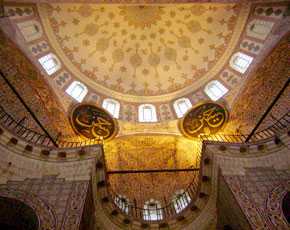
    The Blue Mosque of Istanbul holds striking similarity to the Hagia Sophia in its architecture, a design mimicked by other mosques in the city. Beautiful calligraphy is found in all these mosques which attract hundreds of worshippers and visitors every day. Vendors of scarves line the streets outside these mosques, making good profit from visitors who do not know of the policy of covering your head in order to go inside.

    The largest marketplace in the world is also in Istanbul – the Grand Bazaar has over 3,000 shops. It is a well-preserved remnant of the Ottoman Empire; it was used as a trading place in Byzantine times and became the main market place under the Ottomans. It still maintains its high ceilings and painted domes despite befalling various natural disasters.

    Amid the history, art and architecture of Istanbul you will also come across the feline inhabitants of this city. Turks love cats and this is obvious in the well-cared for appearance of stray. You might see locals feeding them, helping them down trees and even talking to them in public! Stray dogs also look much better than they would in other countries; all of them are tagged to show they have been neutered and are more or less tolerated by the people.

    From the whirling dervishes and historic architecture to bustling market places and serene beaches, Turkey has much to offer.

    Mahvish Zehra is a writer based in the US.

    via The Dawn Blog » Blog Archive » Travelogue: A diverse culture.
  • Istanbul City Hall Restores Famous Bulgarian Iron Church: Istanbul City Hall Restores Famous Bulgarian Iron Church

    Istanbul City Hall Restores Famous Bulgarian Iron Church: Istanbul City Hall Restores Famous Bulgarian Iron Church

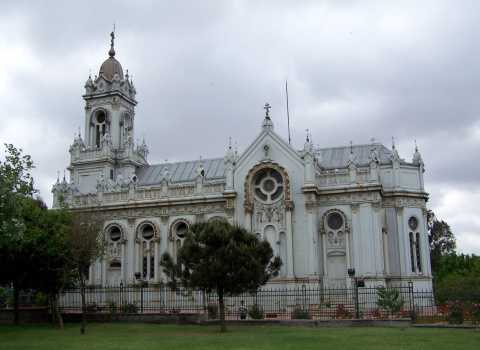
    The Bulgarian "Saint Stephen" Church, also known as the Bulgarian Iron Church, is a Bulgarian Orthodox church in Istanbul, Turkey, famous for being made of cast iron. Photo by wikipedia
    The Bulgarian "Saint Stephen" Church, also known as the Bulgarian Iron Church, is a Bulgarian Orthodox church in Istanbul, Turkey, famous for being made of cast iron. Photo by wikipedia

    The Istanbul City Hall is to restore the Bulgarian “St. Stefan” church, the Bulgarian news agency BTA reports Friday, citing Turkish media.

    The works are to being as soon as possible while 60% of the funds will come from Turkey’s Regions Directorate and the rest will be financed by the City Hall.

    The Bulgarian “Saint Stephen” Church, also known as the Bulgarian Iron Church, is a Bulgarian Orthodox church in Istanbul, Turkey, famous for being made of cast iron. The parts were manufactured in Vienna and then transported via the Danube River to Bulgaria and through the Black Sea to Istanbul. The Church was inaugurated in 1898 by Exarch Joseph and marks the beginning of the Bulgarian exarchate.

    According to a legend, Sultan Abdul Azis, was not inclined to let Bulgarians have their own church, but yielded to the pressure under one condition – for the church to be built only in a month. Bulgarians found the solution by making the church from cast iron.

    In the last few years, the Bulgarian State and the Istanbul City Hall have made significant efforts to raise funds for the church’s renovation and maintenance, but those funds are still insufficient. The 110th anniversary of the iron church was celebrated at the end of 2008.

    via Istanbul City Hall Restores Famous Bulgarian Iron Church: Istanbul City Hall Restores Famous Bulgarian Iron Church – Novinite.com – Sofia News Agency.

  • ‘Classical Ottoman Music and Armenians’ book published in Istanbul

    ‘Classical Ottoman Music and Armenians’ book published in Istanbul

    PanARMENIAN.Net – Titled ‘Classical Ottoman Music and Armenians’, Aram Kerovpyan’s book encourages the youth to learn about the beauty of the past.

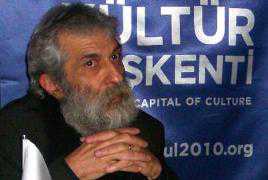
    “All these figures show the richness of our land,” said Yasar Kurt, secretary-general of the Istanbul 2010 European Capital of Culture Agency, which supported the publishing of the book. “This is an important resource book going back 200 years ago and showing us who carried Turkish classical music to the present,” he said.

    Kerovpyan, who was born in Istanbul but has lived in Paris for 33 years, said that not only Armenian but also Greek and Jewish composers, made great contribution to Turkish classical music, Hurriyet Daily News reported.

    via ‘Classical Ottoman Music and Armenians’ book published in Istanbul – PanARMENIAN.Net.

  • For Some Iraqi Christians – Shelter in Istanbul

    For Some Iraqi Christians – Shelter in Istanbul

    ISTANBUL – A small community of Iraqi Christians is spending this Christmas Eve in a small basement chapel at a community center in Istanbul, straining its 150-person capacity.

    As many as half the estimated 1 million members of the Baghdad-based Chaldean Assyrian Church, facing threats and discrimination at home, have fled Iraq since the overthrow of Saddam Hussein, seeking refuge in neighboring Jordan, Syria, Turkey and beyond. Around 3,000 have settled in Istanbul and its environs.

    Native speakers of Aramaic, members of the church have lived in the Middle East for centuries, with population spread among Iraq, Turkey, Syria, Lebanon and Iran, but they did not really belong to any country.

    “We are a national church without a nation,” said, Idris Gabriel Emlek, one of the Fathers of the Chaldean Assyrian Church.

    Their community headquarters in Turkey, at which Father Emlek presides, was founded in 1958 in the historical Beyoglu district and expanded in 1980 with a basement Chapel that hosts Sunday services and upper floors offering temporary accommodation for visiting fellows.

    Spurred by an attack in October in which their main church in Baghdad was besieged by gunmen and more than 50 members were killed, this Christmas season has seen a new exodus into the neighboring countries.

    “I’ve never seen as many people coming here as I have in the last few weeks,” Father Emlek said in an interview early this month, sitting under a portrait of Pope Benedict XVI.

    While Turkey does not allow refugees to resettle permanently, it does function as a stopping point for applicants seeking permanent resettlement in other countries and according to the office of the United Nations refugee agency UNHCR, the number of Iraqi Christians claiming religious persecution in Iraq quadrupled in the last four months of 2010.

    “They also go to Lebanon, Jordan and Syria but it seems that Turkey is the most popular despite the fact that they do not speak the language,” he said.

    While the Ottoman Empire was home to hundreds of thousands of Christians, there are barely any left in modern Turkey, and despite tensions between their governments, Iraqi Chaldeans feel safe here and feel that they are treated with respect and sensitivity.

    “There is a lot of goodwill towards Turkey in Iraq,” Father Emlek said, “This is an ideal spot for many refugees awaiting their final destination. Turkey receives refugees very well.”

    The life of a refugee, though, no matter how well the country receives them, is no bowl of cherries.

    The Immigration Police dictate the locality in which refugee applicants must live, without offering any guidance for work or providing any kind of allowance. Medical expenses are another challenge with doctor visits often unaffordable for large Iraqi families which average up to 10 people each.

    “People come here with severe psychological problems but do not have the means to see a doctor.” Father Emlek said.

    Sitting in one of the ornate chairs neatly placed against the walls of their meeting room, he sounded hopeful for more international help, and increased acceptance of refugees, to come after the media coverage of the recent attack in Baghdad.

    “I hear European Union nations trying to reach out, which is very good,” Father Emlek said. “Unfortunately, only after the wave of violence, have Chaldean Christians been more properly received.”

    This year, however, they are simply thankful to have their modest chapel in which to celebrate Christmas.

    via For Some Iraqi Christians – Shelter in Istanbul – NYTimes.com.

  • Bloody Christmas remembered

    Bloody Christmas remembered

    133 victims of Bloody Christmas remembered, Greek Cypriot authorities told to recognise and apologise for the attacks

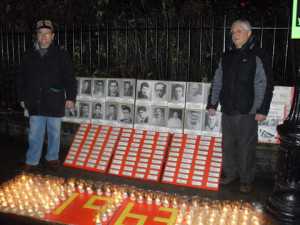
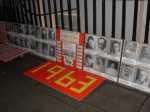
    British Turkish Cypriots, Lord Maginnis of Drumglass, representatives from the Turkish embassy and many others tonight braved the severe winter weather to hold a vigil outside the Greek Cypriot embassy in central London. The action, organised by human rights group Embargoed!, recalled the start of the Cyprus Conflict 47 years ago when Turkish Cypriots were murdered and thousands were forced from their homes by Government forces. A candle was lit for each of the victims, while activists demanded the Greek Cypriot authorities ‘tell the truth’ about the attacks. The vigil concluded soon after 9pm following a two minute silence.

    The small but poignant vigil, attended by nearly 40 people, marked the brutal assault against Turkish Cypriots between 21 and 31 December 1963, a period dubbed as “Bloody Christmas” by the international media. Embargoed! displayed photos and details of each of the 133 civilians killed or abducted at this time, with a candle dedicated to each victim. The striking display attracted the interest and sympathy of passers-by, while leaflets distributed included details about these attacks including how a further 20,000 people fled for their lives, forced to take refuge in make-shift camps.

    Timed to coincide with the Republic of Cyprus’ fiftieth anniversary of independence, the action forms part of Embargoed!’s year-long campaign called 50 Dark Years – Tell the Truth!. The group are demanding the Greek Cypriot authorities ‘come clean’ about the suffering they have inflicted on Turkish Cypriots. Tonight’s vigil is also intended to remind media and political commentators that the Cyprus Conflict started in 1963 and not, as is often stated, in 1974.

    Lord Maginnis praised Embargoed! and other British Turkish Cypriots for their dedicated efforts to highlight the past and present injustices in Cyprus, “I have huge sympathy for the Turkish Cypriot people. Their long years of suffering, persecuted by the Makarios regime and living under embargoes since 1964 simply because they refuse to give up their fundamental rights, is totally unacceptable.”

    Embargoed! spokesperson Ismail Veli said, “This small and dignified vigil remembered the 133 civilians brutally murdered simply for being Turkish Cypriot. Victims such as 10 year old Ayse and her grandmother Ayse Hasan Buba, who were buried alive in Ayvasil. All we want is for the Greek Cypriots to acknowledge the terrible wrongs they have committed against Turkish Cypriots.” He added, “A few months ago we launched the campaign with just a handful of people. Tonight we are back with far more – our campaign will only get bigger if they (Greek Cyprus) fail to do the decent thing and apologise.”


    North Cyprus Free Press

  • ‘Turkey Probes US Nukes At Airbase’

    ‘Turkey Probes US Nukes At Airbase’

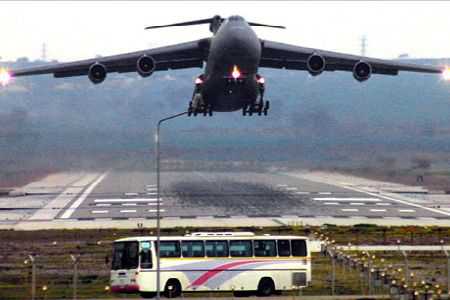
    Turkish parliamentarians are discussing a report revealing that the United States has deployed 90 nuclear bombs at Turkey’s Incirlik Air Force base, a report says.

    The report, called the “US nuclear weapons in Europe,” indicates that Washington currently has 90 nuclear bombs of the “B 61” variety in Turkey, all on the Incirlik Air Force base, Turkey’s Hurriyet newspaper reported on its website on Friday.

    The account has been prepared by the US National Resources Defense Council and is based on figures provided last February by the US Air Force.

    It says 50 of the B-61 bombs are ready to be loaded onto American bomber planes while the remaining 40 will be loaded onto Turkish planes.

    According to the daily, Turkish MP Shukru Elekdag has questioned reasons behind keeping the bombs on Turkish soil even decades after the end of the Cold War.

    Elekdag has also noted that Turkey’s consent to the deployment of the US nuclear bombs at Incirlik is an act which ‘could not be easily explained to its Muslim and Arab neighbors.’

    Press reports have established that US currently has more than 100 nuclear bombs positioned in bases in Belgium, Germany, Italy, and the Netherlands.

    PressTV.Ir