This is the fourth time Turkish Prime Minister Recep Tayyip Erdogan has savored victory in a national ballot. Twice he won general elections, twice in referenda. He is a perennial ‘winner,’ even if we in Israel are largely united in our distaste for him.
By Alon Liel
This is the fourth time Turkish Prime Minister Recep Tayyip Erdogan has savored victory in a national ballot. Twice he won general elections, twice in referenda. He is a perennial “winner,” even if we in Israel are largely united in our distaste for him.
Yesterday, voters overwhelmingly approved the referendum initiated by Erdogan’s Islamic-oriented Justice and Development Party. The constitutional measures passed give the government wide-ranging power to exert control over the military and judiciary, both traditional bulwarks of the country’s secularism.
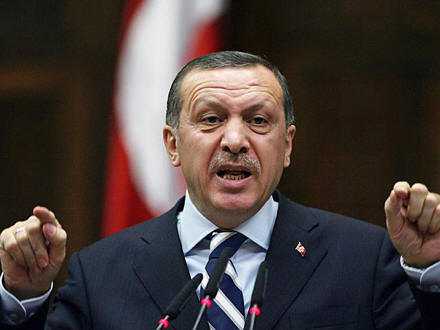
Turkey’s Prime Minister Recep Tayyip Erdogan speaks during a press conference at the international airport in Santiago, Monday May 31, 2010.
Photo by: AP
The referendum result is a triumph for Erdogan’s ideology. It’s hard to imagine the heads of Turkey’s army plotting another coup, given that the reforms now allow them to be tried in civilian court, or the country’s high court banning certain political parties as it has in the past.
Erdogan can now look both forward and back with satisfaction. He has made his country richer, more stable and stronger in the international community, while simultaneously making it both more democratic and more devout.
Should Erdogan prevail in the July 2011 election – a legitimate prospect after yesterday’s victory – he will become the longest-serving, and most influential, Turkish leader since Kemal Ataturk.
The reforms passed yesterday overturn eight decades of government-touted secular ideology, instilling instead a new political creed that could rightfully be termed Erdoganism. And a leader doesn’t have an “ism” attached to his name simply by toeing his predecessors’ line.
Many in Turkey and abroad view Turkey’s transformation – more religious, more eastward-looking – as cause for concern. But to the majority of Turks, the reforms have made the republic more democratic, more humane.
Erdogan will remain hated by the Turkish secular elite, which is concentrated in the army, universities and business community. But he is beloved by Turkey’s poorer, devout periphery. The prime minister has straightened the backbone of the marginalized, and in return has received their undying loyalty.
Fears that Erdogan will turn the country into an Iranian-style Islamic republic are unfounded. Support for the prime minister rests not only on ideology but also on modernization and the prosperity he has helped bring.
We in Israel know Erdogan primarily for his hard-line Mideast policy, less so for his economic platform. But the prime minister’s every step is taken with fiscal growth in mind. Erdogan will abandon neither modernization nor democracy, the system allowing his government to stay in power.
The prime minister must now meet one major objective to justify the “ism” that has been appended to his name: Create a Kurdish state, or at least recognize Turkey’s Kurds as a national minority.
Erdogan is ripe for it, but his country is not. He needs one more term to complete his Kurdish mission. Should he win next July, that may be a real possibility.
Former New York City Mayor Rudy Giuliani slammed the imam behind the so-called “ground zero mosque” Sunday for saying that Islam would be viewed as being under attack in America if the planned Islamic center two blocks from the site of the World Trade Center attacks is not built.
Appearing on NBC’s “Meet the Press,” Giuliani said he would have told anybody three years ago that the families of 9/11 victims would be hurt and angered at the idea of erecting a huge Islamic near the site of the terror attacks by Islamic fundamentalists.
Referring to the recent threats of a radical minister in Florida to burn copies of the Koran, Giuliani said, “The imam has a right to put the mosque there. Freedom of religion gives him that right. The minister has the right to burn the Koran. The same amendment to the Constitution gives him that right, the First Amendment. In either case, common sense and a real dedication to healing that these men of God would theoretically have would tell you not to do it because you’re hurting too many people.”
Then host David Gregory asked him about comments the imam, Faisal Abdul Rauf, made last week on CNN’s Larry King show.
MR. GREGORY: You mention Imam Faisal Abdul Rauf, who is imam who wants to build a community center in lower Manhattan. He appeared on CNN this week and, and issued a warning of sorts about this debate moving forward and its impact. Let me play a portion of that.
MR. GIULIANI: Yeah.
(Videotape, Wednesday) Imam FEISAL ABDUL RAUF: If we move from that location, the story will be that the radicals have taken over the discourse. The headlines in the Muslim world will be that Islam is under attack. And I’m less concerned by the radicals in America than I’m concerned about the radicals in the Muslim word.
(End videotape)
MR. GREGORY: Are you concerned about that warning?
MR. GIULIANI: I’m concerned about the imam doing that. I think that tactic is not the kind of tactic I would have expected from an imam who’s featured as a man of conciliation. You know, I analyzed this imam’s history pretty carefully, and I hate to imply it, but it’s the only way to do it. There’s the good imam and the bad imam. The good imam is about reconciliation. He’s about being open and transparent about what he’s doing and how he’s doing it. Then there’s the bad imam who said America is an accessory to September 11. America has more Muslim blood on its hands than vice versa. He can’t condemn Hamas as a terrorist group. And he will not be transparent about where he’s getting the money, how he’s getting the money, and has virtually not been open at all about this. And now we have the imam who tells us if doesn’t get his way there could be significant and very dangerous violence. Look, those are very, very strong words, and to enter a sort of a suggestion of a threat into this, I worry about this as the kind of tactics he, he pursues.
MR. GREGORY: You, you talked in rather stark terms, however, about moving forward with this community center and mosque, saying that if you are in fact committed to being a healer, you don’t go forward with the project, but if you were a warrior you do. Are you actually suggesting that he’s a warrior…
MR. GIULIANI: No. I’m…
MR. GREGORY: …because of his interest in building this?
MR. GIULIANI: I’m suggesting he’s — seems to be — he seems, by his actions to be more interested in confrontation than in healing. Actually, if you go on with the rest of the that quote, I was talking about the pope and the issue that he faced several years ago with a convent outside of Auschwitz. There was a convent there, perfect right to have it. Many people in the Jewish people felt it was insensitive. The pope and the nuns could have said, “We’re going to stay there. We have a right to do it. Let’s have that confrontation. Bring it on.” The pope, being a man of healing, wanting not to make things more painful for people that have already had way too much pain, said, “Let’s withdraw. Let’s pull it back.” I say he has the same kind of choice.
The people he’s hurting here most are the families of, of — the families that have lost loved ones down there. And they don’t all feel that way, but 80 or 90 percent feel extremely hurt by this. It’s making them relive the pain. They should be the ones to get the most consideration, not the imam, not me, not the president, not the mayor. They’re the ones that are the most affected by this.
WASHINGTON – Former Mayor Rudy Giuliani on Sunday bluntly accused the cleric behind the lower Manhattan mosque of talking out of both sides of his holy mouth.
“There’s the good imam and the bad imam,” Giuliani charged on NBC‘s “Meet the Press,” referring to Imam Feisal Abdul Rauf.
“The good imam is about reconciliation. He’s about being open and transparent about what he’s doing and how he’s doing it,” said Giuliani, who opposes building the mosque near Ground Zero.
“Then there’s the bad imam who said America is an accessory to Sept. 11. America has more Muslim blood on its hands than vice versa. He can’t condemn Hamas as a terrorist group.
“And he will not be transparent about where he’s getting the money, how he’s getting the money. …And now we have the imam who tells us if [he] doesn’t get his way there could be significant and very dangerous violence.”
Giuliani implied such language carries “a suggestion of a threat.”
Meanwhile, Rauf told Christiane Amanpour on ABC‘s “This Week” he would never have gone forward if he had had any notion the mosque would trigger such a firestorm.
“I would never have done it,” Rauf said. “I’m a man of peace. I mean, the whole objective of peace work is not to do something that would provoke controversy. Unfortunately, the discourse hasbeen, to a certain extent, hijacked by the radicals … on both sides.”
Rauf said injecting politics into the mosque debate by “disingenuous” critics like former GOP vice presidential nominee Sarah Palin fuels “growing Islamophobia in this country that denigrates Muslim-Americans.
“We are doctors, we are investment bankers, we are taxi drivers, we are storekeepers, we are lawyers. We are part of the fabric of America. And the way that America today treats its Muslims is being watched by over a billion Muslims worldwide.”
A day after raucous clashes between pro- and anti-mosque demonstrators on the ninth anniversary of 9/11, an estimated 1,000 marchers took to rain-soaked downtown streets yesterday for a peaceful rally in support of religious freedom.
The block where the proposed Park51 mosque and community center would be located remained closed to vehicle and pedestrian traffic – to the chagrin of local shop owners.
Just before kickoff of the Giants-Panthers football game, workers from the nearby Dakota Roadhouse bar taped signs near the two closed intersections: “Dakota Roadhouse Is Open! Just ask a cop to cross the barricade.”
ANKARA — Turkey has launched a project to produce an advanced naval submarine.
Turkey’s Defense Ministry and Navy have been working with Germany in the coproduction of four electric-diesel submarines. The coproduction effort has taken place with Germany’s ThyssenKrupp for the Type 214 submarine.
“This is a huge project that will make Turkey into a submarine manufacturer,” an official said.
The submarine project was expected to cost about $2.5 billion. Officials said the first platform could be delivered to the Navy in 2015.
The Navy has been building three of the submarines in Turkey. Officials said Turkey would also help design electronic subsystems for the underwater platforms.
Turkey has been engaged in several major naval projects. One called for the assembly of up to 11 small frigates in a project estimated at $2 billion.
http://www.worldtribune.com/worldtribune/WTARC/2010/me_turkey0873_09_08.asp. September 8, 2010
Arnold Reisman is an engineer and a retired professor of operations research at Case Western Reserve University. Born in Lodz in 1934, he came to the United States after World War II and is the author of numerous books about Holocaust refugees in Turkey, including Turkey’s Modernization: Refugees from Nazism and Ataturk’s Vision (New Academia, 2006).
In a recent article I asked the real historians in our midst what Turkey’s role was in saving Jews during the Holocaust. I followed by talking about the role of Turkish diplomats in saving close to 3,000 Jews living in France who were able to claim some Turkish connection.
No survey of the profession was needed. An exhaustive bibliographic search gave the answer, loud and clear. Historians know very little about the first question and nothing about the second.
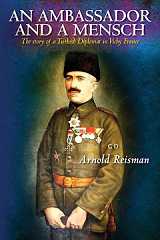
So I, a non-historian, published a book, An Ambassador and a Mensch: The Story of a Turkish Diplomat in Vichy France.
An Ambassador and a Mensch: The Story of a Turkish Diplomat in Vichy France
The book has two unabashed goals. One is to educate those who should know so that they can be better informed in teaching others. The second is to convince Yad Vashem, Israel’s official Holocaust remembrance agency, to alter its ways of bestowing the title of “Righteous among the Nations” and to honor the members of the Turkish legation in occupied and Vichy France for saving a large group of Jews.
The book reveals the little known role played by a Turkish diplomat, Behiç Erkin, Ambassador to France, who, along with his staff, saved Turkish Jews living in France from certain death during World War II. Since Stanford Shaw (1) first chronicled this episode in 1993, it has been uniformly assumed that the Turkish government in Ankara was solidly behind Erkin’s actions. The recent findings of contemporary documents from various U.S. government archives, however, confirms that the intervention on behalf of French Jews with Turkish origins was not official Turkish policy at all but the determined undertaking of members of the Turkish diplomatic corps in France. They acted independently against the extant policy of Ankara, risking the wrath and ire of their own government as well as those of Germany and Vichy France. Their careers—and often their lives—were at risk and their diplomatic peers from Western countries offered no support. Comparatively few of France’s Turkish Jewish community were deported and died in Eastern Europe’s concentration camps and crematoria, 8.2% versus 25% for all French Jewry. The likelihood of these differences having happened by chance is one in over a trillion. These findings make it obvious that there must have been agents of change on the ground.
The approach used in this book incorporates hard historical facts, officially accepted population data, statistical analysis, archival documents from the FDR Presidential Library, Yad Vashem, Turkish, German, and French official government archives, as well as oral histories taken from those directly involved. This latter evidence comes primarily, although not exclusively, from the testimonies now available through the USC Shoah Foundation Institute’s survivor testimonies project. Cold, hard facts become personalized when names and faces of real people are attributed to them. By reproducing a multitude of archival documents and testimonies, most of which have been unexamined by historians, I have shed light on an overlooked part of history that will help shift the paradigm (2) which has prevailed for over half a century in the relevant literature.
Ambassador Behiç Erkin and the other courageous Turkish diplomats in France were instrumental in saving Jews from the Holocaust. Yet too few have heard of their noble and often harrowing efforts during one of humanity’s darkest years.
For their acts the Turkish diplomats deserve to be recognized as Righteous among the Nations, even if it means that Yad Vashem will have to change its rules of how the selections are made. The law of large numbers (a French Jew without Turkish roots had a 3.7 greater chance of having perished in Hitler’s ovens than did his French cohort having some Turkish connection) and a preponderance of anecdotal and archival information should be substituted for the three survivor testimonies that Yad Vashem still requires.
NOTES
(1) Shaw, S.J. Turkey and the Holocaust, (London: Macmillan Press, 1993).
(2) According to Thomas Kuhn (1922-1996), one of the most influential philosophers of science in the twentieth century, “it takes a revolution to change established paradigms” in the academic world. See: T. Kuhn, The Structure of Scientific Revolutions, or T. Kuhn “What are Scientific Revolutions?” in The Probabilistic Revolution edited by L. Krüger, L. Daston, and M. Heidelberger, 7-22.
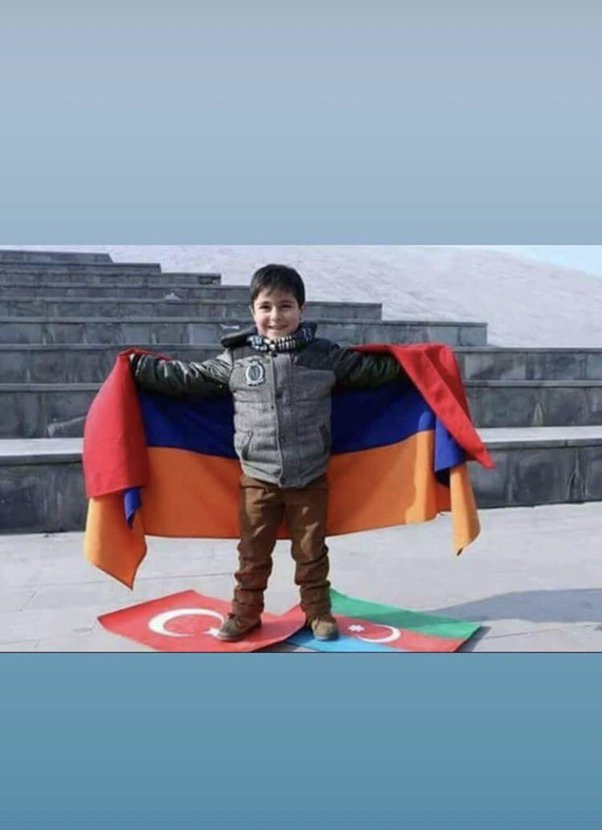
Turkish Hurriyet newspaper wrote that Armenian diaspora has launched a campaign of attack for recognition of so called Armenian genocide.
Armenian diaspora in Boston has laid the foundations of ‘Armenian Heritage Park’ yesterday. The park will include a monument for so called Armenian genocide. Armenian diaspora representatives had previously asked for permission to the state officials and the request of Armenians was accepted despite the reaction of Turkish-American community.
In France Armenian descent Deputy Mayor of Marseilles, Didier Parakyan initiated a petition for recognition of a resolution that proposes penalization of the denial of Armenian allegations regarding 1915 incidents.
Hurriyet also wrote that if left wing politic party wins the elections that will be held in the weekend, “genocide monuments” will probably be evoked in Sweden.
By Hj Pravitz, Nya Dagligt Allehanda, 23 April, 1917
Hj Pravitz takes a deeper look at the statements that had previously been made by Mrs. Marika Stjernstedt, in Nya Dagligt Allehanda, a Swedish Newspaper published in the period 1859-1944.
By Hj Pravitz, Nya Dagligt Allehanda, 23 April, 1917
Hj Pravitz takes a deeper look at the statements that had previously been made by Mrs. Marika Stjernstedt, in Nya Dagligt Allehanda, a Swedish Newspaper published in the period 1859-1944.
*******************
“Recently returned home from abroad I have right now – i.e. somewhat late – had the opportunity to look at two Swedish booklets on the Armenian issue. “Sven Hedin – adelsman” [Sven Hedin a nobility], by Ossiannilsson and “Armeniernas fruktansvärda läge” [the terrible situation of the Armenians], by Marika Stjernstedt. The former book went immediately in the waste basket. In all its poorly hidden appreciation of the title character, it annoyed me more than a main article in Dagens Nyheter. The latter, which seemed spirited by the compassion for the suffering Armenians, I have read repeatedly, and it is really this and its inaccuracies that my article is about.
I dare to claim, that hardly any other Swede has had the opportunity like me, to thoroughly and closely study the misery among the Armenians, since I now for about a month have traveled right among all the emigrating poor people. And this, during the right time, fall 1915, during which the alleged brutalities, according to both writers, were particularly bad.
I want to hope, that what I am describing below, which are my own experiences, will have the purpose to remove the impression of inhumanity and barbarity from the Turkish and German side, which is easily induced by the reading of the two booklets mentioned above.
If I understand the contents of the books correctly, both writers want to burden the Turks as well as the Germans with deliberate assaults or even cruelties.
My position as an imbedded eyewitness gives me the right and duty to protest against such claims, and the following, based on my experiences, will support and strengthen this protest.
Despite the fact that I was and am such a pronounced friend of Germany and its allies, which is consistent with the position of a servant of a neutral country, I started my journey from Konstantinopel (Istanbul) through the Asian Turkey, with a certain prejudiced point of view, partly received from American travelers, about the persecution of the Armenians by their Turkish masters. My Lord, which misery I would see, and to which cruelties I would be a witness! And although my long service in the Orient has not convinced me that the Armenians, despite their Christianity, are any of God’s best children, I decided to keep my eyes open to see for myself to which extent the rumors about Turkish assaults are true and the nameless victims were telling the truth.
I sure got to view misery, but planned cruelties? Absolutely nothing.
This is precisely why it has appeared to me to be necessary to speak up.
To start with, it is unavoidable to state, that a transfer of the unreliable Armenian elements from the northern parts of the Ottoman Empire to the south was done by the Turkish government due to compulsory reasons.
It should have been particularly important to remove, from the Erzeroum district, all these settlers, who only waited for a Russian invasion to join the invading army against the hated local legal authority. When Erzeroum fell in February 1916, an Armenian, with whom I just shared Russian imprisonment, uttered something I interpreted as ‘It would have fallen way earlier if we had been allowed to stay.’ That a country like Turkey, threatened and attacked by powerful external enemies, is trying to secure itself against cunning internal enemies, no one should be able to blame her.
I think it points to a misconception when one claims that the Armenians are living under the uninterrupted distress of some sort of Turkish slavery. There are peoples that have it worse. Or what about Indian Kulis and Bengalis under British rule, and the Persian nationalists in Azerbaijan under the Russians’ – “penetration pacificue”, and the Negroes in Belgian Congo, and the Indians in the Kautschuk district in French Guyana. All these, not to mention many others, seem to me, are victimized to a higher degree and more permanently than the Armenians. I guess technically, one can say that a longer lasting but milder persecution is less bearable to endure than a bloody but quick act of despotism, as in (Ottoman) assaults of the kind that from time to time put Europe’s attention on the Armenian issue. Apart from these periodical so-called massacres, the reason of which could to a large degree be ascribed to the Armenians themselves, I do think that the (Armenians) are treated reasonably well.
The (Armenians) have their own religion, their own language, both in speaking and writing, their own schools etc.
As far as the much discussed major Armenian migration is concerned, I am the first to agree that the attempts of the Turkish side to reduce the difficulties of the refugees left a lot to be desired. But I emphasize again, in the name of fairness, that considering the difficult situation in which Turkey, as the target of attack from three powerful enemies, was in and it was, in my opinion, almost impossible for the Turks, under these circumstances, to have been able to keep up an orderly assistance activity.
I have seen these poor refugees, or “emigrants”, to use Tanin’s words, seen them closely. I have seen them in the trains in Anatolia, in oxen wagons in Konia and elsewhere, by foot in uncountable numbers up in the Taurus mountains, in camps in Tarsus and Adana, in Aleppo, in Deir-el-Zor and Ana.
I have seen dying and dead along the roads – but among hundreds of thousands there must, of course, occur casualties. I have seen childrens’ corpses, shredded to pieces by jackals, and pitiful individuals stretch their bony arms with piercing screams of “ekmek” (bread).
But I have never seen direct Turkish assaults against the ones hit by destiny. A single time I saw a Turkish gendarme in passing hit a couple of slow moving people with his whip; but similar things have happened to me in Russia, without me complaining, not then, nor later.
In Konia, there lived a French woman, Madame Soulie, with family and an Italian maid. They lived there, despite the war, and the Turks did them no harm. And as far as the Germans stationed in the town are concerned, she called them ‘our angels.’ ‘They give all they have to the Armenians!.’ Such evidence of German readiness to sacrifice I established everywhere the Germans were.
In Aleppo, I lived by the Armenian Baron, the owner of a large hotel. He did not tell me about any Turkish cruelties, although we talked a lot about the situation of his fellow citizens. We also talked about Djemal Pasha, who would come the day after and with whom I would meet. Baron expressed himself very positively about this man, who by the way, least of all seemed like an executioner.
In Aleppo, I hired an Armenian servant, who then during a couple of months was my daily company. Not a word has he told me about Turkish cruelties, neither in Aleppo nor in his home town of Marash or elsewhere. I must unconditionally believe in exaggerations from Mrs. Stjernstedt’s side and I do not put one bit of confidence in the Armenian authorities she claims to refer to.
On page 44, Mrs. Stjernstedt writes about (the town of) Meskene and an Armenian doctor Turoyan. I was in Meskene right when he was supposed to have been there. I looked carefully around everywhere for historical landmarks, since Alexander the great crossed the Euphrates (river) here, and the old testament also talks about this place. There was not a sign of Armenian graves and not of any Armenians either, except for my just mentioned servant. I consider Mr. Turayan’s evidence very questionable, and I even dare to doubt that this man, if he exists, was ever there during the mentioned time. If the conditions in Meskene really were as he claims, will anyone then believe that the suspicious Turks would have sent an Armenian up there with a “mission from the government”?
For fourteen days, I followed the Euphrates; it is completely out of the question that I during this time would not have seen at least some of the Armenian corpses that, according to Mrs. Stjernstedt’s statements, should have drifted along the river en masse at that time. A travel companion of mine, Dr. Schacht, was also travelling along the river. He also had nothing to tell when we later met in Baghdad.
In summary, I think that Mrs. Stjernstedt, somewhat uncritically, has accepted the hair-raising stories from more or less biased sources, which formed the basis for her lecture.
By this, I do not want to deny the bad situation for the Armenians, which probably can motivate the collection initialized by Mrs. Stjernstedt.
But I do want to, as far as it can be considered to be within the powers of an eyewitness, deny that the regular Turkish gendarme forces, who supervised the transports, are guilty of any cruelties.
Later on, in a different format, I want to impartially and neutrally like now treat the Armenian issue, but at the moment, may the adduced be enough.