Month: May 2010

  • TURKISH PRESIDENT OF EUROPEAN COUNCIL SHOULD BE BARRED FROM ARMENIA

    TURKISH PRESIDENT OF EUROPEAN COUNCIL SHOULD BE BARRED FROM ARMENIA

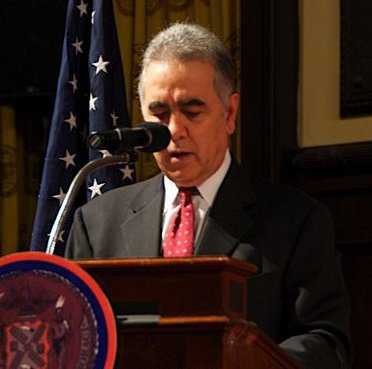
    Mevlut Cavusoglu, the Turkish President of PACE (Parliamentary Assembly of the Council of Europe), offended his hosts by refusing to lay a wreath at the Armenian Genocide Monument during his visit to Yerevan last week.

    When the Armenian media questioned him about his refusal, Cavusoglu lied by saying that his predecessors had not done so either. Armenian journalists corrected him by pointing out that his predecessors had in fact visited the Genocide Monument. After getting caught, he changed his tune and confessed that it was his personal decision not to visit the Monument and asked that Armenians respect his wishes.

    Why should Armenians respect a genocide denier and a liar? Although a founder of the ruling Justice and Development Party and member of the Turkish Parliament, Cavusoglu was not visiting Armenia as a Turkish official, but as President of PACE. It is regrettable that earlier this year Armenia’s delegates to PACE were not successful in blocking his election to the Presidency of this influential European institution.

    The real issue is not Cavusoglu’s ethnic background. No one should be disqualified from any post due to his or her ethnicity. The objections are based on his long-standing opposition to Armenian issues, including denials of the Armenian Genocide and support for Azerbaijan in the Artsakh conflict.

    Upon learning that Cavusoglu would not visit the Genocide Memorial — a standard protocol for all high-ranking dignitaries visiting Yerevan — the Armenian government decided to downgrade the status of his visit from “official” to that of a “working” one. Needless to say, this was just a slap on the wrist, given the gravity of his offense. Regrettably, Armenian officials did not issue a single word of criticism or condemnation. They should have taken a harsher measure against Cavusoglu and cancelled his trip to Yerevan. By not enforcing the country’s long established protocol, Armenian officials are simply encouraging future visiting dignitaries not to respect the memory of Armenian Genocide victims.

    A bad precedent was already set in September 2008, when Pres. Gul was invited to Yerevan. I wrote a column then urging Armenian authorities to ask the Turkish President to lay a wreath at the Genocide Monument. Unfortunately, no such request was made of Pres. Gul, and he was more than happy to sidestep the issue!

    I must commend the Armenian Revolutionary Federation for refusing to meet with Cavusoglu during his Yerevan visit, because of his disrespect for Armenian Genocide victims. His visit was also condemned by the local Student Union of the Hnchag Party.

    Unfortunately, officials of an opposition party met Cavusoglu in Yerevan to pursue their own agenda, asking him — a Turk — to condemn the Armenian government’s human rights record. Meanwhile, pro-government parties met Cavusoglu to familiarize him with Armenia’s position on major regional issues, as if he would be willing to change his views on the Armenian Genocide, Artsakh and Armenian-Turkish relations.

    Regardless of his own and his government’s denialist position on the Armenian Genocide, Cavusoglu should not be excused for not having visited the Genocide Monument. Even Ambassadors of countries that do not formally acknowledge the Armenian Genocide take part in the solemn procession on April 24 and lay a wreath at the Genocide Monument.

    By refusing to follow protocol, Cavusoglu not only insulted the Armenian nation, but also violated the long-standing recognition of the Armenian Genocide by the European Parliament.

    In the end, by his words and deeds, the Turkish diplomat managed to embarrass himself and undermine his own credibility as a political figure unworthy of representing a prominent European institution and its values.

    To avoid similar scandals in the future, Armenian officials must contact foreign dignitaries in advance of their planned visits and impress upon them the importance of respecting Armenia’s established protocol on laying a wreath at the Genocide Monument. Should they refuse, their visit should be promptly canceled. Can anyone imagine a foreign dignitary visiting Jerusalem and refusing to lay a wreath at the Yad Vashem memorial for Holocaust victims? He or she would not be allowed to set foot in Israel again. The Armenian government should take a similar stand vis-à-vis the Armenian Genocide Memorial!

    At the end of his first visit to Armenia, Cavusoglu announced that he would be back in Yerevan in October. I hope Armenian officials do not let him into the country, unless he is prepared to respect Armenia’s established protocols for all foreign dignitaries.

    If Armenian officials do not insist on applying their own rules and regulations, foreign dignitaries would have no reason to comply!

  • plans for Turkish Cultural Centre

    plans for Turkish Cultural Centre

    Turkish NGO’s joined to discuss plans for Turkish Cultural Centre

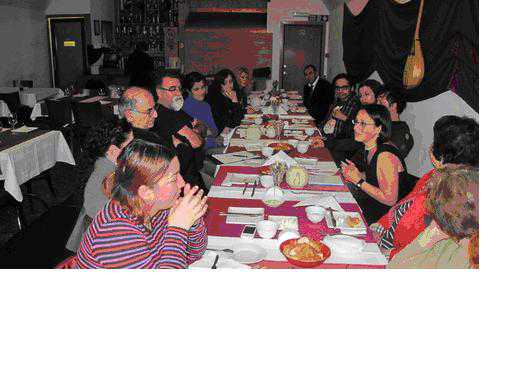
    Turkish NGO’s attended a meeting which was held in London’s Pasha Hotel on Sunday 9th May 2010 to discuss the plans for Turkish Cultural Centre. Many Turkish NGO’ s attended the meeting which was organised by Filiz Kirim to brainstorm a plan for Turkish Cultural Centre where Turkish arts, music and culture can be performed and promoted.

    The organiser of the meeting Filiz Kirim, highlighted that their intentions are non political and solely to unite Turkish NGO’s to conceptualize a plan for pulchritudinous Turkish Centre that is located centrally in London which Turkey really deserves.

    The meeting developed into general discussion points on the mission and the structure of The Turkish Cultural Centre. The Representatives of the Turkish NGO’s highlighted that they have organised a Turkish Day which many British people attended to discover Turkish Culture. The Turkish NGO’s declared that they will do all they can, including sharing their past experiences so that past failures do not occur in the future.

    At the meeting it was unanimously agreed that the proposed Turkish Cultural Centre should be named Turkish World Arts and Cultural Centre so that this could enable artists from all around the Turkish world can participate, perform and promote their art, pictures, music, cinema, and theatre. It was also agreed that the organisation should be a Non-Profit organisation. At the meeting it was all agreed by participants that Yunus Emre Charity and Goethe Institute organisations examples should be looked into detail and use as an example case for the proposal.

  • Turkey’s Next Transformation

    Turkey’s Next Transformation

    By Ilan Berman
    Forbes.com
    May 18, 2010

    What a difference a few years can make. A little more than a decade ago, regional rivals Turkey and Syria nearly went to war over the latter’s sponsorship of the radical Kurdish Workers Party in its struggle against the Turkish state. Today, however, cooperation rather than competition is the order of the day, as highlighted by recent news that the two have kicked off joint military drills for the second time in less than a year.

    The thaw in Turkish-Syrian ties is a microcosm of the changes that have taken place in Ankara over the past decade. Since November of 2002, when the Islamist-oriented Justice and Development Party, or AKP, swept Bulent Ecevit’s troubled secular nationalist coalition from power, Turkey has undergone a major political and ideological metamorphosis. Under the direction of its charismatic leader, Prime Minister Recep Tayyip Erdogan, the AKP has redirected the Turkish ship of state, increasingly abandoning Mustafa Kemal Ataturk’s ideas of a secular republic in favor of a more religious and ideologically driven polity.

    Part and parcel of this transformation has been a monumental reorientation of foreign policy. The only Middle Eastern member of North Atlantic Treaty Organization, Turkey has long served as a stalwart of the West, and a critical force multiplier for European and American interests in Eurasia. Increasingly, however, Ankara no longer seems comfortable playing that role.

    Relations with the United States soured way back in 2003, when Turkey’s opposition to war with Saddam Hussein’s Iraq led it to deny overflight and basing permissions to the U.S.-led coalition, thwarting plans for a “northern front” against Baghdad. Since then, diplomats in both countries have made a public show of mending fences, but deep distrust still lingers. In 2007 Turkish approval of the U.S. hit an all-time low of just 9%, according to the Pew Global Attitudes Project, eclipsing such bastions of anti-Americanism as Pakistan (then logged at 15%) and the Palestinian Authority (13%). Since then, matters have improved slightly. But today, at just 14% favorable, Turkish attitudes toward the U.S. can hardly be called pro-American — or a sound basis for ongoing partnership.

    Turkish attitudes toward Europe have cooled considerably as well. Membership in the “Eurozone” has been a central objective of Turkish foreign policy since the late 1980s. But since formal E.U. accession talks began in 2005, anger over Europe’s obvious reluctance to accept the country’s 77 million Muslims into its fold has gradually soured most Turks on the idea of European membership, and the cause of integration has plummeted in popularity. When tallied by Pew in 2007, only 27% of Turks viewed the E.U. favorably — less than half the number that did just three years earlier.

    Predictably, Turkey’s ties with the country that used to rank as its most reliable regional partner, Israel, have also deteriorated. Back in the late 1990s, Ankara and Jerusalem cobbled together a formidable strategic partnership on military and defense issues, animated by what Mideast scholar Daniel Pipes then described as their “common sense of otherness” in an inhospitable Middle East. Today, however, that convergence is just a distant memory. Over the past two years, a series of very public political spats has roiled diplomatic ties between Ankara and Jerusalem, and military and defense cooperation has virtually ground to a halt. The late-April announcement from Israel that it was temporarily freezing all arms sales to Turkey in protest over public criticism from Erdogan was just the latest sign that all is not well in the Turkish-Israeli entente.

    But Turkey has to belong somewhere. Which is why, in place of these traditional alliances, Ankara has increasingly drifted into alignment with countries it once considered mortal enemies. Ties with Syria, historically deeply troubled, are now anything but, with the two countries boasting multiple new agreements on economic, political and military cooperation over the past year. Turkey has likewise mended fences with Iran; a ballooning bilateral trade and growing diplomatic warmth between the two countries has made clear that — unlike its predecessors — the current government in Ankara views the Islamic Republic more as a partner than a regional competitor or security threat.

    Still, for those concerned about this drift away from the West, there are tantalizing signs that Turkey could soon change course once again.

    The first is political. For years, disarray within Turkey’s notoriously fractious secular opposition prevented the emergence of a serious competitor to the AKP. Now, however, a dynamic new political challenger has arisen. Since it appeared on the scene less than a year ago, the Turkish Movement for Change (TDH), with its agenda of economic renewal and neo-Kemalist foreign policy, has captured the imagination of many Turks tired of the AKP-dominated status quo.

    It’s not by accident that the movement’s message, and its rhetoric, is so reminiscent of President Barack Obama’s successful 2008 presidential campaign. The TDH sees itself as a sort of midcourse correction that would re-center Turkish politics after years of drift. “Turkey is becoming an increasingly polarized society,” Zeynep Dereli, one of the movement’s founders, explains in the latest issue of Turkish Policy Quarterly. “To bring true democracy to Turkey, we must focus on four pillars of prosperity: a free market economy, universal social services, participatory democracy and respect for human rights and freedoms.” And that, Dereli makes clear, involves bringing Turkey back into alignment with the West on a range of foreign policy issues.

    The second development is religious. Over the past couple of years, the Turkish government’s influential Department of Religious Affairs has quietly launched an effort to modernize a key element of Islamic law. According to the BBC, this little-known effort entails the creation by theologians at Ankara University of a document revising the Hadith, the compilation of the spoken word of the Prophet Muhammad that serves as Islam’s second most sacred text.

    If it is successful, the overhaul — still in progress — will be the closest thing the Muslim world has yet had to a religious “reformation” of the sort that brought Christianity into the modern age. It could also become a powerful counterterrorism tool, redefining and demystifying parts of the Islamic tradition that until now have been exploited by radicals to justify overriding hostility to the West.

    Both trends, of course, are still nascent. The TDH’s priorities have put it on a collision course with the AKP, and coming months will determine whether it can in fact serve as a durable political alternative, as its proponents contend. Even if Turkey doesn’t experience a secular “reset,” though, it may well spark a religious one, provided the Turkish government’s plans for an Islamic “reformation” materialize and gain currency in the wider Muslim world.

    Either way, it seems, Ankara’s political evolution is far from over.

    Ilan Berman is vice president of the American Foreign Policy Council in Washington, D.C.

  • Crimean Tatars Mark Deportation Anniversary

    Crimean Tatars Mark Deportation Anniversary

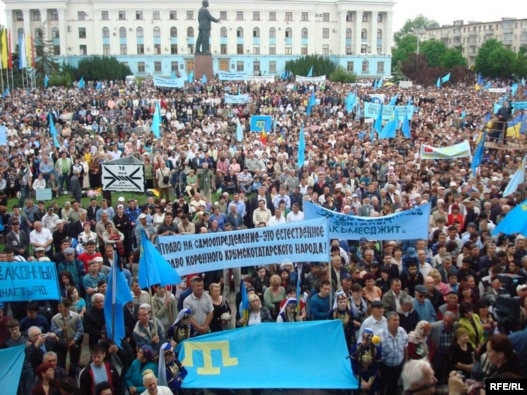
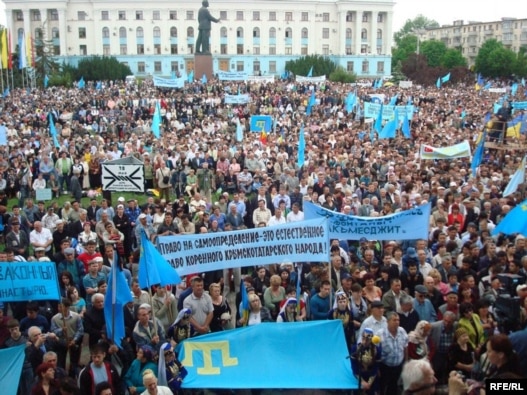
    Crimea’s Tatars mark Deportation Day in Simferapol.
    May 18, 2010
    SIMFEROPOL, Ukraine — Ukraine’s Crimean Tatar minority has marked the 66th anniversary of their deportation, RFE/RL’s Ukrainian and Tatar-Bashkir services report.

    On May 18, 1944, Soviet Army and Interior Ministry troops deported the entire Tatar population of Crimea — some 180,000 people — to Siberia and Central Asia on the orders of Soviet leader Josef Stalin.

    Thousands of people died along the journey.

    In 1991, the Crimean Tatars received official permission to return to Crimea. They currently make up more than 12 percent of the Crimean Peninsula’s population of some 2.1 million.

    Ukrainian President Viktor Yanukovych issued a decree last week calling on the authorities “to provide all necessary conditions for marking the 66th anniversary of the deportation at the appropriate level.”

    Crimean Tatar leaders and activists have been holding commemorative gatherings and mourning ceremonies in Crimea since May 16.

    Mustafa Dzhemilev, the leader of the Crimean Tatar parliament, or Mejlis, said on May 17 that the gatherings are not protest actions but acts of mourning.

    The Day to Commemorate the Victims of the Deportation has been marked every year in Crimea since 1993.

    https://www.rferl.org/a/Crimean_Tatars_Mark_Deportation_Anniversary/2046088.html

  • Pakistan bans Facebook website

    Pakistan bans Facebook website

    A court in Pakistan has ordered the authorities temporarily to block the Facebook social networking site.


    The order came when a petition was filed following reports that the site was holding a competition featuring caricatures of the Prophet Muhammad.

    The petition, filed by a lawyers’ group called the Islamic Lawyers’ Movement, said the contest was “blasphemous”.

    Internet is free in Pakistan but the government monitors content by routing all traffic through a central exchange.

    Justice Ejaz Ahmed Chaudhry of the Lahore High Court ordered the department of communications to block the website until 31 May, and to submit a written reply to the petition by that date.

    An official told the court that parts of the website that were holding the competition had been blocked, reports the BBC Urdu service’s Abdul Haq in Lahore.

    But the petitioner said a partial blockade of a website was not possible and that the entire link had to be blocked.

    The lawyers’ group says Pakistan is an Islamic country and its laws do not allow activities that are “un-Islamic” or “blasphemous”.

    The judge also directed Pakistan’s foreign ministry to raise the issue at international level.

    In the past, Pakistan has often blocked access to pornographic sites and sites with anti-Islamic content.

    It has deemed such material as offensive to the political and security establishment of the country, says the BBC’s M Ilyas Khan in Islamabad.

    In 2007, the government banned the YouTube site, allegedly to block material offensive to the government of Pervez Musharraf.

    The action led to widespread disruption of access to the site for several hours. The ban was later lifted.

    BBC

  • British Holiday Mother “kills 2 children”

    British Holiday Mother “kills 2 children”

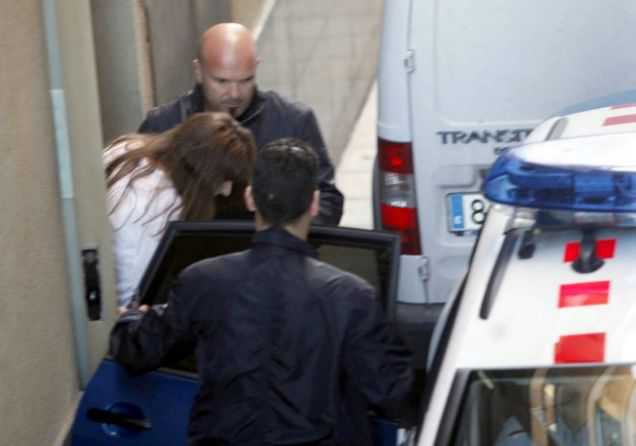
    A British mother has been arrested on suspicion of murdering her two young children who were found dead in a Spanish hotel.

    The woman has confessed to killing her one-year-old son and daughter aged five at the four-star Hotel Miramar in the Costa Brava resort of Lloret de Mar, police sources said.

    Her children may have been suffocated, investigators believe. Emergency services were called but paramedics could do nothing to save the lives of the children who reportedly showed no outward signs of injury.

    The woman, who is in her 30s, was said to have driven to the resort – about 72km (45 miles) north-east of Barcelona – with her children on Monday evening for a few days’ holiday.

    Shortly before 2pm yesterday, she called police herself to the modern, beachfront hotel, where officers found the dead youngsters.

    Police said the cause of death was not known and postmortem examinations are due to be carried out tomorrow.

    The mother reconstructed the tragic events in front of a judge and officers in the room before being taken to a police station this evening.

    The Metro