Month: May 2010

  • UN envoy De Soto urges EU to end KKTC’s isolation

    UN envoy De Soto urges EU to end KKTC’s isolation

    Former UN envoy De Soto urges EU to end KKTC’s isolation;

    Alvaro de Soto, the UN secretary-general’s former special adviser on Cyprus, has said the European Union should, as promised, end the isolation of Turkish Cypriots to help find a lasting solution to the problems on the long-divided island.
    Mr de Soto stated that it would only be fair for the EU live up to its promises to the Turkish inhabitants of northern Cyprus. Noting that he believes that the EU should comply with its commitments to the Turkish Cypriots, he said this would drive Turkey to open its ports to traffic from Greek Cyprus. Turkey refuses to do so as long as theTurkish Cypriots continue to be subjected to isolation, which the EU had promised to end following the Greek Cypriot rejection of the Annan plan in 2004 while the Turkish side overwhelmingly approved it.
    The former UN envoy argued that one reason that prompted the Greek Cypriots to reject the Annan plan aimed at reunifying the island six years ago could be that they felt they were in an advantageous position because they were going to join the EU. He added that another reason was that the Greek Cypriots did not study the plan as carefully as the Turkish Cypriots and were therefore not completely aware of what it would have meant for them.
    De Soto also assessed the prospects of resolving the issue through the bilateral talks initiated by Greek Cypriot leader Dimitris Christofias and former Turkish Republic of Northern Cyprus (KKTC) President Mehmet Ali Talat on Sept. 3, 2008. Talat was unseated by Dervis Eroglu at the presidential elections held a month ago.
    He said both sides have agreed to a bi-communal, bi-zonal federal state solution as a compromise, though it was not either side’s preference. Stating that the parties have agreed to terms of reference for the talks, he said:“There is a new basis. I see that even Mr. Eroglu has agreed to continue on the same basis. They are pursuing a bi-zonal, bi-communal federal solution, the results of which would have to be a state of single international legal personality and sovereignty, and that is in conformity with the Annan plan as far as I can tell.” He added that it is a “good thing” to see Eroglu pledge to continue the talks from where they left off. Christofias and Eroglu are scheduled to hold the 72nd meeting of the reunification talks on May 26.
    De Soto lastly discussed the reason for his resignation from his last post at the UN in 2007 as the special coordinator for the Middle East peace process. He said he resigned because the UN refused to talk with Hamas.“In the Quartet, the UN decided not to deal with Hamas even though Hamas had been democratically elected in an election that has been praised by the observers, including the EU observers. Even though this was the case, the UN stopped dealing with the government of the Palestinian authority, and that was a mistake. I tried to get things changed, and when I was not successful, I left the UN,” he said.
    17 May 2010, Monday

    Topix

  • The Gülen movement plays big in Washington

    The Gülen movement plays big in Washington

    .The Assembly of Turkish-American Associations, or ATAA’s, president, Günay Evinç, was pretty upset. Evinç, who has had good relationships with the Gülen Movement’s organizations so far, did not seem as thrilled with the idea of this alternative Turkish assembly   of Gulen <……………………………..

    Gülen appears to be hitting the organizations closer to Turkish Government in power and thus closer to him. ATAA is one example next lucky organization Might Be the FTAA.  We are not sure about TCA  (Turkish Coalition of America ..  Since about 2 years old TCA consists of only 3 paid people and lots of green dollars from Turkish Deep State which happens to choose not to actively engage Fetullah Gülen.. but to follow or copy his teachings and his way of operation  .. If we look at broader picture Both Gulen and Turkish deep state get their direction from the same corner of OBAMA which we call it CIA they are the 2 friendly actors of the same game .. and “THE GAME CONTINUES” ….  TURKISH FORUM


    Friday, May 14, 2010

    İLHAN TANIR

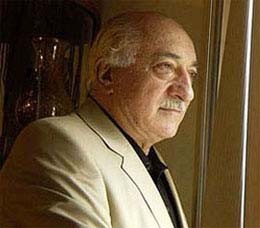
    It was one of the lavish lounges of the Willard Hotel in Washington where hundreds of Turkic people from all across America with plain name tags gathered to mark the creation of a new umbrella Turkic Assembly last Wednesday. Six Turkish-American federations, which have close proximity to Mr. Fethullah Gülen, a Turkish cleric and the exiled leader of the Turkey-based religious Gülen Movement joined to form the Assembly of Turkic American Federations, or ATAF, a non-profit organization.

    Half a dozen U.S. Senators and a few dozens of U.S. Representatives made a strong showing at the reception and the Gülen Movement hinted that its new assembly has some muscles to flex in Washington already.

    One would think bringing that many U.S. Senators and Representatives should require loads of money for campaign donations. “No,” said, Mahmut Yeter, president of one of the six federations that formed the ATAF, “this strong turnout owes its success to their members who worked voluntarily, often visited these lawmakers in their local offices and finally convinced them with their persistence that they have to be at the reception.”

    I had a chance to talk with some of the congressmen and senators who participated at the reception. I asked Ms. Gabrielle Giffords, representative from Arizona’s 8th. District, why she chose to come to a Turkic community gathering, considering that there is a very tiny Turkic community in her district. Gifford turned and pointed out a young Turkish man who was standing next to her. According to the congresswoman, that young Turkish man had visited Gifford’s district office several times recently and finally persuaded her to show up for the reception “even though I do not like to go such events,” Gifford said, before responding my question and telling me that she never heard of Fethullah Gülen.

    The Gülen Movement accelerated its activities in U.S., especially since the leader of the Movement, Fethullah Gülen settled in Pennsylvania about a decade ago. During the mid ’90s, after almost three decades in the making, it was still operating very much under the radar in Turkey.

    The unexpected and sudden decision to combine all of their 180 organizations under one umbrella assembly was a surprising move, at any rate, for those who follow the Gülen movement closely and are aware about its cautious strategies and steps.

    Mr. Gülen first decided to go public with a wide ranging interview in early 1995, and in the following years the movement attracted ever-increasing attention. The postmodern-military coup of Feb. 28, 1997 pushed Gülen out of Turkey to find refuge in the U.S. Only more than a decade later, the Gülen Movement gathered enough manpower, recognition and credit to bring dozens of members of Congress to its half-official Washington debut night. The Turkish ambassador to the U.S., Mr. Namık Tan, came to the reception and stayed there almost the entire night, having conversations with the members of the U.S. Congress – alhough not everyone was as joyful about the new kid in town. The Assembly of Turkish-American Associations, or ATAA’s, president, Günay Evinç, was pretty upset about the name of this new assembly because of its similar word selection with their own assembly. Evinç argued that this name similarity has created a big administrative disaster for their organization to explain the difference.

    Evinç, who has had good relationships with the Gülen Movement’s organizations so far, did not seem as thrilled with the idea of this alternative Turkish assembly. “ATAA,” Evinç said while describing the difference, “promotes an inter-Turks dialogue, not interfaith.” Evinç pleaded that he wanted “a dialogue and to stay on good terms with everyone, including this new organization.” However, this name confusion is such a huge issue, he said, adding that they would even consider finishing “the whole partnerships and dialogue with them.”

    Another Gülen Movement member in Washington said when told about this complaint, “for 30 years, ATAA has been the leading voice to represent Turkish people in the U.S. Now rapidly increasing numbers of Gülen-tied assemblies are taking the market, and ATAA’s and others’ maneuvering room is shrinking.”

    Decision from Gülen

    This decision of “combining all Gülen-related Turkic or Turkish associations and federations under one assembly,” was decided by Fethullah Gülen, another active member of the movement who came to the reception from a long distance said. “This decision was too big to let other leading members of the Gülen Movement to take on. Gülen took the initiative,” said the well-connected member while listening to speakers at the reception.

    It is the “Turkic American Federations,” not Turkish, because this umbrella organization represents not only those Turks who are from Turkey, but those “citizens from Central Asia, Anatolia and the Balkans… as part of [America’s] cultural mosaic” the website of the ATAF notes.

    The Gülen Movement also sent an important signal to the political leadership in Ankara by fetching this many U.S. Congress members. The movement made a psychological statement in Washington that they should be also taken into consideration in terms of multi-leveled relations between Turkey and America by demonstrating that they have a few strings to play in Washington.

    Mr. Gülen motivates his followers in the U.S. to contribute and visit their local representatives. Gülen, according to another active member of the movement at the reception, asks those who want to visit his compound in Pennsylvania “to donate to their local representatives first,” before they show up at his door.

    “This is just a beginning,” another participant told me during the night, while pointing out a group of senators and representatives along with the Turkish ambassador having a conversation.

    The Gülen Movement last week made it official that its members are here in America to stay and expand at an even faster pace in coming years.

    This looming scenario would have two possible upshots for Turkish-American relationships. One is: increasing the presence of the movement in Washington will help Turkey during some of the threatening developments for its interests, such as the Armenian genocide resolution discussions. The Gülen Movement proved with this year’s “genocide” fights in Washington and other states that the movement will be another influential venue to advance Turkey’s interests in Washington on many matters.

    The second upshot is the strong possibility for the Gülen Movement to become a leading voice among the Turkish groups in Washington to reach the U.S. Congress and other Washington decision makers to narrate the contemporary domestic issues of Turkey and relate them to U.S. politicians. In that sense, members of the U.S. Congress, most of whom do not have much international affairs on their resume, might be just happy while swallowing concentrated education pills on Turkey through Gülen Movement recipe.

    The Gülenists deserved a big round of applause with being able to pull off such an impressive gathering at the heart of Washington this week at the end of the day.

    The Gülen Movement members are disciplined, loyal and they complete their assignments as they are told. The movement is able to mobilize its members to fulfill its leader’s vision even in America.

    It is a tough competitor for any other movement.

    That is why we hear more often greetings to Pennsylvania these days from unexpected places.

    List of Websites About Fethullah Gulen

    Fethullah Gülen was listed among the top hundred public intellectuals by Foreign Policy magazine .

    Fethullah Gulen’s website: www.fgulen.com, www.fethullahgulen.org

    Gulen Institute’s Website: www.guleninstitute.org

    Gulen Library’s website: www.gulenlibrary.org

    Fethullah Gulen Forum: www.fethullahgulenforum.org

    Gulen Conferences’ Websites:

    www.fethullahgulenconference.org, www.gulenconference.net , www.gulenconference.us , www.gulenconference.org.uk , www.gulenconference.nl

    Other Links:

    http://gulenmovementforabetterworld.blogspot.com/

    READER COMMENTS

    Guest – Frustrated “Eniste”

    2010-05-15 23:00:06

    Having lived in the US with my Turkish wife, during the time of ASALA; I find myself very confused by your report. In those days, my friends the Turks were totally patriotic to their homeland, at the risk of their lives. They were mostly well educated, financially secure people; which probably differentiated them from the obvious, Tarikat type Gulen disciples you describe. I find it a sign of the total govt. disaster of AKP, that “our” Ambassador pays lip service to the prosperity of a fugitive, who desires the total destruction of the republic’s democracy! I think the comment by the Rep. from Arizona, that she didn’t even know who Imam Gulen was, shows the pathological lies, which underpin the movement! I also pity my countrymen for their stupidity; and condemn them for interference in the affairs, of another nation. Turkey is more subtle; but little better than Iran and Chile!!

  • The UK-US Alliance Under the Microscope

    The UK-US Alliance Under the Microscope

    [from the Royal United Services Institute]

    Nick Clegg’s statement that it is time to ‘turn the page on the default Atlanticism’ of successive British governments highlights a growing unease over the UK’s most important alliance. However, the true debate is not about the merits of the alliance but Britain’s position in the world.

    By John Hemmings for RUSI.org
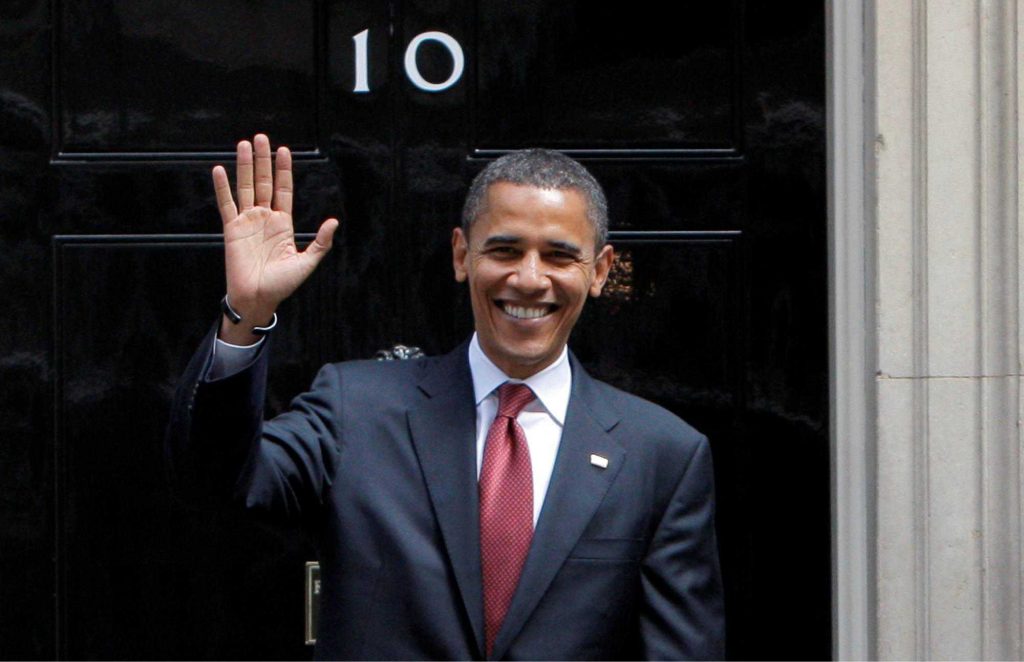
    The UK-US alliance is a deeply-entrenched one, vital to Britain’s security interests and central to the nation’s position in the world. But is it under threat? Is the ‘special relationship’ no longer as special as it once was or is this merely a narrative driven by an over-anxious media? Certainly, reporting on the subject this side of the Atlantic would seem to suggest that there are serious problems, structural as well as cosmetic. On the cosmetic side, the lack of warmth between Gordon Brown and Barack Obama has been seized upon as evidence of a failing relationship. In addition, the last two years have seen a number of complications – insignificant on their own – but in combination add to this sense of crisis. These have included the release of Al Megrahi, the man convicted of the Lockerbie bombing; the extradition to the US of Gary McKinnon, the British hacker diagnosed with autism; and remarks made by Hillary Clinton implying that the US supported Argentinean attempts to reopen negotiations over the Falkland Islands.

    The structural architecture of the relationship

    The ‘special relationship’ should not and cannot be understood as merely the relationship between a given president and prime minister. This part of the alliance is simply too cyclical, based as it is on the continual shift of democratic elections. Far more significant is the structural side of the ‘special relationship’. Birthed during war and shaped by the UK-USA Security Agreement, the military and security side of the alliance is arguably the ‘bread and butter’ of this bond and perhaps the real reason the relationship is described as special.[1] Since 1943, the US and UK have developed a complex network of close links between their defence and intelligence communities. These communities regularly grant privileged access to intelligence, planning and defence development that would be unthinkable between most other states. Personnel develop strong working relationship and contacts due to the high number of secondments within each others’ organisations. While relationships between Foreign Ministers and Heads of State wax and wane, the real partnerships take place in Whitehall and Foggy Bottom, in Langley and Vauxhall Cross, and in the combined command structures in Kabul.

    There are some disturbing signs that this structural side of the special relationship is now being reconsidered due to changes in the strategic environment: the removal of the Soviet Union as a strategic competitor, the rise of Islamic fundamentalism and the growing variance in approach. The rise of China, distant from British shores, has revealed a gap in security priorities between the two. While China’s growing military assertiveness is a cause for consternation for American and Japanese policy-makers, Britons and their EU counterparts continue to view the relationship with China as an economic one. Furthermore, not all recent UK-US cooperation has been fruitful: the perception – real or supposed – of an inferior capability of British forces in Basra and Helmand seems to undermine the benefits of being seen as a faithful ally. Are British contributions being taken seriously, or even worse, do they truly deserve to be?

    The British role in the world

    Within the defence community in the UK, some of these questions are causing a rethink of the relationship: a recent RUSI survey of defence specialists found that nearly one-third of respondents disagreed with the proposition that a relationship with the United States, maintained above all others, best served British interests. While a finding of this kind taken from a sample of the British public might not be surprising following the deeply unpopular Iraq War, it is disturbing to find it so prevalent in the defence community, given the fact that the two sides are active partners engaged in an ongoing conflict. One cannot imagine drawing such results during the heady days of the Second World War. However one wonders if the ‘greatest generation’ would have taken such a poll in the first place. The predicted cuts to British defence spending and the potential, though unlikely, unilateral withdrawal of its independent nuclear deterrent – a point of debate in the 2010 election – mean that the UK’s future capability to partner with the US is now a concern on both sides of the Atlantic. A recent paper by Professor Malcolm Chalmers indicates that this scale-down could seriously impact the British ability to ‘punch above our weight’ in global politics.

    Has Britain effectively managed to answer Dean Acheson’s slightly belittling question: ‘What is Britain’s role in the dusk of Empire?’ American thinker Walter Russell Mead points to the historical British role in shaping the modern world and says that this explains Britain’s post-war alignment with US policy-makers.[2] Following the Imperial drawdown, it was not that Britain chose to subvert itself to US policy-makers, but rather that Britain chose to partner with the US because of the similarities in long-term political and economic objectives.

    To some extent, the Cold War revealed a major alignment of US and UK political assumptions about free market economics, the desirability of liberal democracy, and support for international organisations as a preventative of major-state conflict. While thinkers on both sides of the Atlantic debated the details, the commonality of these assumptions set the two states apart from even their closest allies. The question that is now being asked on both sides of the Atlantic is a good one: do these assumptions still hold, and do they play a major role in deciding the security priorities of both states? Despite the election of a US President who seems to share many British and European positions on nuclear weapons, multilateralism, and a preference for diplomatic over military solutions, the Tea Party syndrome and popularity of right-wing figures like Vice Presidential candidate Sarah Palin indicate a growing chasm between the US and the UK political culture. Furthermore, the financial scandal has raised the spectre of US protectionism of its home market, though this has yet to turn into a reality.

    A true partner

    Expectations must not be allowed to build beyond what is possible between the two states. Britain is in the strange position of having been surpassed by its own construct, but can and should still continue to contribute to a political discussion that it initiated. The deficit between the two has not been merely in hard power or trade but also in self-confidence. Arguably, the current malaise is not at all about the relationship, but about Britain losing sight of its vital role in building and maintaining the free market principles, the international institutions, and the political values that underpin the global order. With the rise of superpower economies – Brazil, Russia, India, and China – the United States does not need a subordinate, neither does it want a go-it-alone Britain, it needs a true intellectual partner. In defence terms, the UK will have to make difficult choices, but these need not be permanent. It must refrain from underselling its defence and intelligence contribution to the partnership: Britain’s part has been praised by senior US political and military leaders, as well as the many troops on the ground. There may be major disagreements on the details of process or planning but that is a consequence of working so closely together on complex issues, rather than a systematic failure and should be treated as such. The main problem arises when political leaders on either side of the Atlantic, use these differences for domestic reasons. The reality of the relationship is quite promising: away from the anxious eyes of the press, away from the political heads, the relationship is extremely functional, and under the twin pressures of Islamic fundamentalism and insurgency, interoperability within the defence and intelligence communities has never been better.

    It is easy to view the relationship in terms of its failings, but the simple fact is that the ‘special relationship’ is the envy of most other US partners, and has a unique place in history. The US cannot decide Britain’s role for it, but whatever the UK decides, the US needs a strong and faithful ally.

    The views expressed above are the author’s own, and do not necessarily reflect those of RUSI.

    NOTES

    1. This sharing includes New Zealand, Canada, and Australia, so technically they are part of the ‘special relationship’.

    2. Walter Russell Meade, God and Gold: Britain, America and the Making of the Modern World’ (2009)
  • EVENTS FOR THE GREEK – PONTIC GENOCIDE IN NEW YORK AND IN CANADA.

    EVENTS FOR THE GREEK – PONTIC GENOCIDE IN NEW YORK AND IN CANADA.

    19  MAYISDA PONTUSLULARIN NEWYORKDA BAYRAK TORENI VAR  – ERTESI HAFTA TURK DERNEKLERI ISE AYNI DIREGE TURK BAYRAGI CEKME MUSADESI ALMISLAR  – EMPERYALIST GUCLERIN HALA TURKIYENIN KARADENIZ SAHILLERINDE GOZLERI VAR (GENISLETILMIS BUYUK OPRTADOGU PROJESININ BIR PARCASI) (BOLUNECEK TURKIYEDEN KOPACAK OLAN PONTUS FEDERASYONU) TURKISH FORUM
    —————————

    Apostolos Papapostolou

    May 10 2010

    The international remembrance day of the Greek-Pontic genocide will be
    honored in New York with public events and the hoisting of the Greek
    Pontic flag and the Greek flag at the Bowling Green Park in Manhattan
    (on the corner of State Street and Broadway).

    The remembrance social event is being organized by the American – Canadian all-Pontic
    Federation and by the Federation of Hellenic Societies of Greater
    New York

    During the event Greek and Greek – American officials and leaders will
    deliver speeches. Also speaking will be American officials, authors,
    intellectuals, activists against genocides and representatives of
    the American Armenian and Assyrian communities.

    This year, during the remembrance of the Greek Pontic Genocide social
    event the Swedish Ambassador will also be honored for the recent
    acknowledgement of the Armenian, the Assyrian and the Greek Pontic
    genocide by the Swedish Parliament.

    Ms Fanoula Argirou, a Greek-Cyprian researcher, journalist and author
    who will be arriving from London, will also give a speech on Wednesday,
    May the 19th, at 7.30 at the Stathakion Centre 22-51 Street, Astoria,
    NY 11105.

    The title of the speech is “From the Greek Pontic genocide to the
    Turkish invasion in Cyprus.”

    In Canada the American and Canadian all-Pontic Federation is staging
    a series of events in collaboration with organizations during the
    month of May.

    Greek Reporter

  • Fear stalks the markets as euro crisis worsens

    Fear stalks the markets as euro crisis worsens

    By James Moore, Deputy Business Editor

    Saturday, 15 May 2010


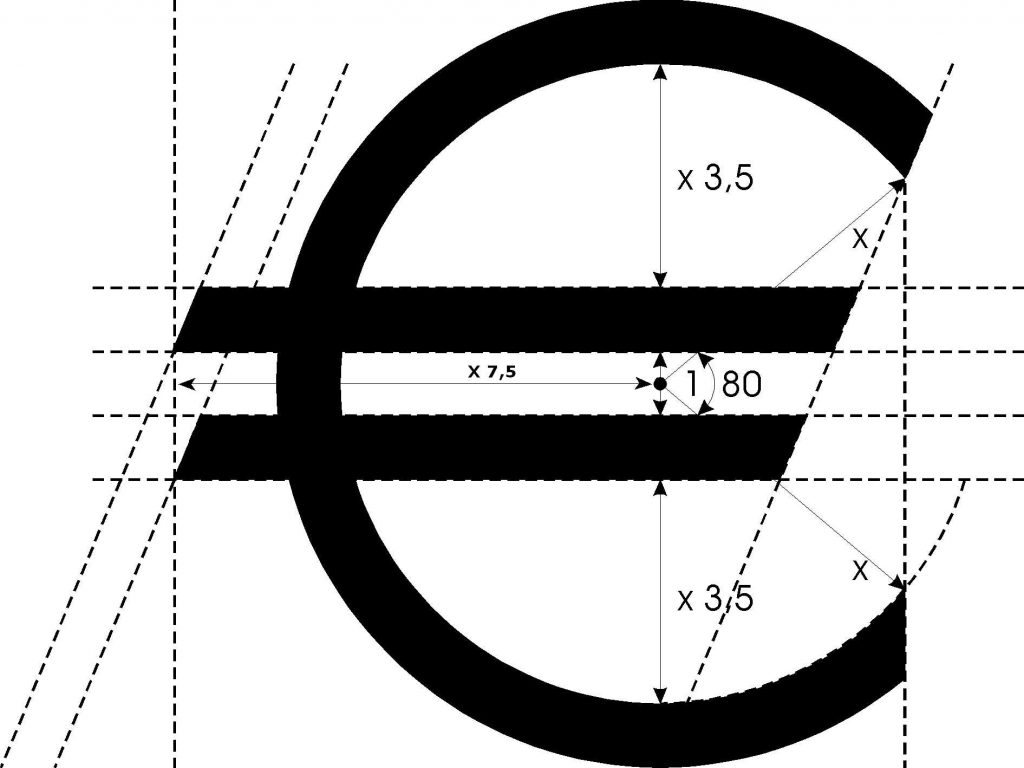
    Markets suffered another day of wild swings yesterday amid continued concerns over the Greek debt crisis and its effect on the euro.

    The latest round of selling was sparked by reports that the French President, Nicholas Sarkozy, had threatened to pull France out of the euro if Germany failed to get onside with a bailout of the heavily indebted Greek economy. The uncertainty was exacerbated when Josef Ackermann, the chief executive of Deutsche Bank, suggested in an interview that Greece might not ever pay back its debts.

    The turmoil saw the FTSE 100 ending down 170.8 points at 5262. Across the Atlantic the Dow opened sharply down, while other major European markets finished deeply in the red.

    The euro also fell steeply on global currency markets. Against the dollar it dropped under $1.24, to its lowest level since October 2008. The weakness in the euro also meant that the pound gained ground against the single currency, rising nearly 1 per cent, or just over a cent. Since the beginning of 2010, as the debt crisis has worsened, the euro has lost about 13.5 per cent against the dollar.

    Yesterday G7 finance ministers held a conference call to discuss the global economic situation and the ongoing crisis. George Osborne, the Chancellor, is understood to have told his counterparts that the Government’s priority is an accelerated outline reduction of Britain’s fiscal deficit. Mr Osborne has promised an emergency budget within 50 days of the new Government taking office.

    It came amid speculation that the UK could be the next country to face a speculative attack if the eurozone does stabilise as a result of the Greek bailout. Some commentators have even suggested that France might not be immune from the contagion.

    George Buckley, economist at Deutsche Bank, said: “There is still a lot of uncertainty out there and you can’t solve everything with a single package. The coalition looks stable at the moment but there will be disagreements and that has even been recognised by both parties.” He said there was a wider concern throughout Europe: that governments might not act to cut deficits soon enough. “And if they don’t, where do we go next?”

    Philip Shaw, economist at Investec, said: “Markets are still concerned that Europe is stalling, and that’s an issue for them, because they are always unsure until some time after governments actually take action to introduce austerity measures and that there is evidence that the measures are actually working.”

    Mr Shaw added: “As far as Greece is concerned it is far from clear that it is actually out of the woods. The package covers its financing needs until 2011 but if it fails to implement the [austerity] measures or its economy takes a sharper downturn than was expected, then by next year the country may find it difficult to borrow money at an interest rate that it is prepared to pay.”

    Economists say Britain does have several advantages over Greece and other eurozone countries with debt problems such as Spain, Portugal and even Italy, which collectively with Ireland have been given the unflattering acronym of Piigs by economists.

    The UK has a floating exchange rate and its debt is much longer-term than Greece. It also has a flexible economy and a stable tax base, which is collected. However, David Buik, partner at BGC Partners, said: “I doubt there is a single person on the planet who can seriously put his hand on his heart and say that he is certain that Greece at the bottom and even the UK can service or repay its debt over the timetables that have been set out. Politicians have simply not been willing to talk about the pain that doing this will inflict.”

    The Independent

  • Russian plant for Turkey’s Akkuyu

    Russian plant for Turkey’s Akkuyu

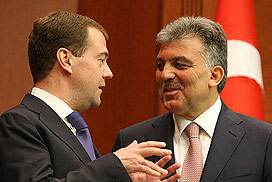
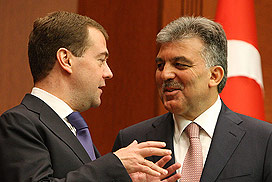
    Turkey’s first nuclear power plant will be built, owned and operated by Russia after the two countries signed an agreement during a visit by Russian president Dmitry Medvedev to Ankara.

    Medvedev and Gul (Image: Presidential Press and Information Office)The deal, signed in front of Medvedev and Turkish prime minister Recep Erdogan, covers the construction of four 1200 MWe VVER units at the Akkuyu site on Turkey’s Mediterranean coast. Unlike Russia’s previous overseas reactor construction projects, however, the plant will be built, operated and middlefinanced through a Russian project company. Russian state nuclear company Rosatom has been given until mid-August to create the subsidiary, which will initially be 100% Russian-owned. In the longer term, Russia may sell up to 49% of the company to other investors from Turkey and elsewhere, but will retain the 51% controlling stake. Turkish firm Park Teknik and state generation company Elektrik Uretim AS (EUAS) have been tipped as likely candidates eventually to take up significant shares in the $20 billion project.

    Rosatom head Sergei Kiriyenko described the establishment of a Russian-owned reactor overseas as a long-sought after development, saying it was “much more interesting” to be a co-investor rather than simply the constructor of such projects.

    The site for the reactors will be provided by EUAS. The Turkish Electricity Trade and Contract Corporation (TETAS) has guaranteed to purchase a fixed amount of the plant’s output (70% of the electricity generated by the first two units and 30% of that from the third and fourth reactors) over the first 15 years of commercial operation at a reported price of 12.35 US cents per kWh, with the rest of the electricity to be sold on the open market by the project company. The reactors are expected to enter service in the period 2016-2019, with the first one due to start up within seven years of receipt of a construction licence and the others following at yearly intervals.

    The agreement also provides for Russia and Turkey to cooperate in other areas of the nuclear fuel cycle including the treatment of used nuclear fuel and radioactive waste, decommissioning and the possible construction of a Turkish nuclear fuel fabrication plant. However, such cooperation would be carried out under separate terms.

    Both the Turkish and Russian parliaments must now ratify the agreement before it can come into force.

    World Nuclear Watch