Month: May 2010

  • Ban Ki-Moon calls on Turkish youth to take role in world politics

    Ban Ki-Moon calls on Turkish youth to take role in world politics

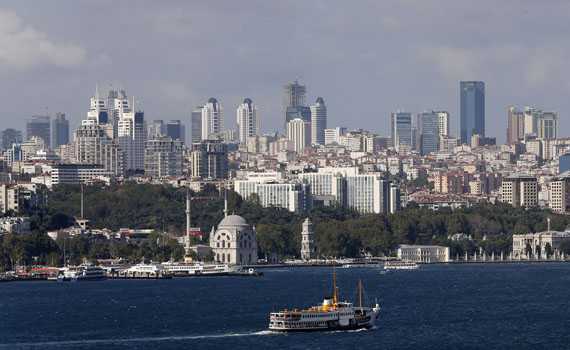
    United Nations Secretary-General Ban Ki-Moon called for young people to take an active role in the world of politics in a remarking speech at Boğaziçi University on Friday.

    “As young people living in Turkey you should aim beyond here for broader security and prosperity in the world,” said Ban.

    Referring to Turkish Prime Minister Recep Tayyip Erdoğan’s visit to Greece last week and Turkey’ efforts to come to an agreement with Iran on the exchange of enriched uranium, Ban said Turkey has a dynamic diplomacy and a solid economy in times of crisis.

    He said Turkey’s credibility is increasing more and added that Turkey has three ways to go further in the international arena. First is by increasing its active contribution to the issues in its region and the world. “Turkey has learned the right to speak up, let your voice be heard and clear on the issues of security and peace. You have to become a force of progress in the region,” said Ban.

    Secondly, Turkey should do more efforts to give power to women. Thirdly, the alliance of civilizations, an initiative supported by Turkey and many other states, should be an ongoing project. “I feel proud to be part of this process and the United States will join as the hundredth member. Turkey has been second to none in supporting this initiative and as students of this university you have the power to contribute,” said Ban.

    As a former diplomat from South Korea, Ban made an emotional speech on Turkey’s deployment of troops to Korea back in the early 1950s. “We are all grateful to your sacrifice; you were one of the first to answer the call from the U.N. back then. Turkish soldiers went to fight for liberty and peace in a place where they didn’t know following their government’s orders. Out of 5,000 Turks who fought, nearly 500 of them died, but in the end they were there celebrating the victory with us,” said Ban, adding that Turks and South Koreans have been friends and brothers since then.

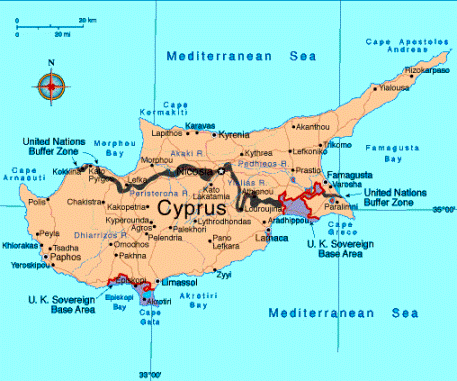
    Meanwhile, Ban said the Cyprus issue would definitely be on his agenda on his meeting with Erdoğan on Saturday.

    Hürriyet Daily News

  • Fears of new ‘Great Depression’

    Fears of new ‘Great Depression’

    Leading City experts have started raising the prospect of “Great Depression II” amid worries that the European economic crisis could trigger a deeper bout of chaos.

    Leading City experts have started raising the prospect of “Great Depression II” amid worries that the European economic crisis could trigger a deeper bout of chaos.

    Markets on both sides of the Atlantic dipped to fresh lows as fears surrounding the fate of the euro project transmuted into worries about the wider global economic system.

    Bill Gross of bond fund Pimco said that hedge funds were starting to liquidate their positions in a bid to preserve their capital a worrying “mini relapse” towards 2008 territory.

    Andrew Roberts, head of European rates strategy at RBS (LSE:RBS.L – news) , said “Great Depression II” could now be approaching, adding: “It now has potential to speed toward its conclusion; a European $1trn package which does little and political panic tells you we are about to reach the end of the road. The world should be discussing deflation, not inflation.”

    The FTSE 100 flirted briefly with the 5,000 point mark, eventually finishing the day down 84.95, or 1.7pc, at 5073.13, while the French CAC 40 index was 2.3pc lower and Germany’s Dax (Xetra: news) dropped 2pc. The S&P 500 and the Dow Jones (news) index both suffered their sharpest one-day falls in more than a year. The S&P fell 3.9pc to 1071.59, while the Dow closed 3.6pc lower at 10,068.01.

    The falls in share prices coincided with increases in the price of government bonds in Germany, the US and much of the developed world as investors sought a safe haven. German 10-year bund yields consequently hit a record low, while in the UK gilt yields dropped to the lowest level since early last December.

    Although the rush to safety stems originally from the euro’s difficulties this week and German efforts to ban short-selling on its banks , fears that the episode may evolve into a deeper economic crisis were bolstered by fresh data. The European Commission produced “flash” data showing consumer confidence falling from a 23-month high of -15 in April to a seven-month low of -17.5 in May. Howard Archer, of INS Global Insight, said: “This is clear evidence that the deepening and spreading eurozone debt crisis… is now weighing down appreciably on consumer confidence. This is a very worrying if hardly surprising development.”

    In the US there was a surprise 25,000 increase in jobless claims to 471,000 in the week ending May 15. The deterioration in the employment picture, coming hard on the heels of Wednesday’s drop in inflation, underlined worries that the US is exposed to a possible global double-dip recession.

    Mr Gross said investors were now being frightened off by worldwide “fiscal tightening momentum”, adding that markets were facing “a mini-relapse of a flight to liquidity as hedge funds and other leveraged positions are liquidated to preserve capital”.

    One worry is that European leaders are not sufficiently behind the $1 trillion bail-out fund they announced, in collaboration with the International Monetary Fund, last week. A second fear is that other indebted countries could soon be exposed.

    One rumour abounding on Thursday was that a major rating agency will soon have to downgrade Japan’s credit score, potentially bringing the world’s second-biggest economy into the spotlight.

    The Telegraph

  • July 7 inquests to probe alleged ‘failings’ of Police and Security Services

    July 7 inquests to probe alleged ‘failings’ of Police and Security Services

    The inquests into the deaths of 52 people in the July 7 bombings will scrutinise alleged failings by police and the security services.

    Coroner Lady Justice Hallett said it is “not too remote” to investigate what was known in the years before the atrocities took place.

    She told the Royal Courts of Justice that inquests into the deaths of the four suicide bombers will be held separately and she will sit without a jury.

    Announcing that she will resume the inquests later this year, Lady Hallett said: “The scope of the inquest into the 52 deaths will include the alleged intelligence failings and the immediate aftermath of the bombings.

    “I am sure however that the survivors, despite not being granted interested persons status, will play an important part in the process. I will do all I can to make sure their interests are properly taken into account.”

    ITN

  • Turf war forces White House intelligence chief Dennis Blair to quit

    Turf war forces White House intelligence chief Dennis Blair to quit

    Resignation comes after infighting with other administration figures and growing doubts about grip on job

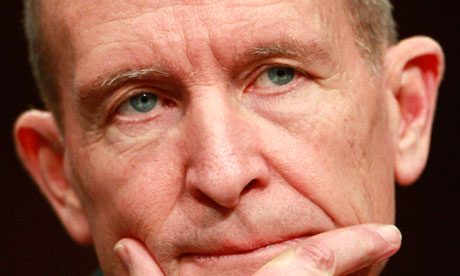
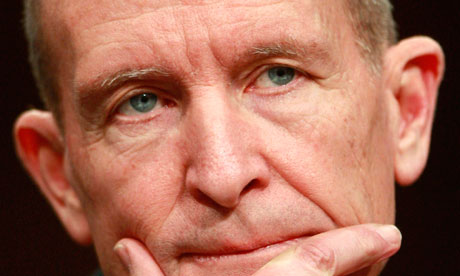
    Dennis Blair

    Dennis Blair, the White House’s chief co-ordinator of intelligence in the fight against terrorism, resigned last night at the end of a difficult 16 months in office marked by infighting with other administration figures and growing doubts about his grip on the job.

    Rumours have swirled for months in Washington that Blair’s tenure as national intelligence director was ending, following a sequence of turf battles with colleagues and criticism over the way he handled the failed Christmas Day bombing attempt on a plane bound for Detroit.

    It is known that Barack Obama interviewed two possible replacements for Blair in advance of last night’s resignation. According to ABC News, Blair offered to resign on Thursday afternoon and Obama accepted. In a statement, Blair said he had offered his resignation “with deep regret”.

    The post of DNI was created in 2004 on the recommendation of the 9/11 commission which argued that the failure of intelligence before the attacks on New York and Washington illustrated the need for a strong co-ordinating role in the White House. The office was invested with the task of bringing together intelligence from 16 different government agencies.

    But from the start it was racked with problems stemming from lack of clarity about the role and territorial squabbling with other departments.

    Under Blair, such infighting had spilled out into the public eye. Last November he was involved in a tussle with Leon Panetta, the politically-adept director of the CIA. Though nominally his boss, Blair lost the battle which was over his desire to chose some of the chief US intelligence officers abroad, a post that has traditionally gone to the CIA station chief.

    That dispute became so heated that even the vice-president, Joe Biden, failed to resolve it and in the end Obama stepped in and sided with Panetta.

    Following the Christmas Day bomb attempt, in which Umar Farouq Abdulmuttalab allegedly managed to board a plane bound for Detroit carrying explosives, Blair made a number of comments that proved awkward. He said that the suspect should not have been interviewed by FBI agents after his arrest, which angered administration officials who had been portraying the attempted bombing as a criminal matter.

    He also referred to a new body, the high-value interrogation group, implying it should have been involved in the questioning even though in fact it was not yet in operation. Terrorism continues to be the most sensitive political issued faced by the president in the wake of 9/11, as any sign of weakness or incompetence is likely to be seized on by the Republicans as evidence that Obama is failing to protect Americans from danger.

    Blair has an impeccable CV. A retired admiral from a six-generation naval family, he was a Rhodes scholar in Oxford with Bill Clinton and served as military liaison to the CIA. But despite his credentials he appeared to lack the political cunning needed to make a success of a fiendishly difficult job.

    The Guardian

  • Press release of the Embassy of Azerbaijan

    Press release of the Embassy of Azerbaijan

    From: [email protected]

    Embassy of the Republic of Azerbaijan

    PRESS-RELEASE

    May 17, 2010                                                                                                                                                                                                               No. 5

    STATEMENT OF THE MINISTRY OF FOREIGN AFFAIRS

    OF THE REPUBLIC OF AZERBAIJAN

    According to the reports circulated by the mass media outlets of the Republic of Armenia so-called “parliament elections” are being arranged to take place in the Nagorno-Karabakh region of the Republic of Azerbaijan on 23 May, 2010.

    The Ministry of Foreign Affairs of the Republic of Azerbaijan reiterates in this regard that the unrecognized separatist regime in the occupied territories of Azerbaijan represents nothing but an illegal structure established by Armenia on the basis of ethnic cleansing of Azerbaijani population. The so-called “elections” are conducted in order to camouflage the annexation policy of Armenia and are aimed at consolidation of the results of the continued occupation of the Azerbaijani territories.

    Conduct of such “elections” gravely violates the relevant provisions of the Constitution of the Republic of Azerbaijan and the norms and principles of international law, since they are held in absence of the original Azerbaijani population of the Nagorno-Karabakh region, and therefore shall have no legal effect whatsoever.

    Any kind of elections in the Nagorno-Karabakh region of the Republic of Azerbaijan may be recognized as fair and free once the expelled Azerbaijani population takes full, direct and equal part in their conduct in lawful and democratic environment equally to the Armenian population of the region. Holding such elections will be possible after the withdrawal of the Armenian occupying forces, normalization of the life in the region, creation of necessary conditions for restoration of the dialogue and cooperation between the Armenian and Azerbaijani communities of Nagorno-Karabakh. These steps will open up possibility for the elaboration of the self-rule status for the Nagorno-Karabakh population within Azerbaijan.

    The Republic of Azerbaijan calls upon the Armenian side to stop its destructive practice of illegal steps, which does not have any prospects, and instead to demonstrate a good will and take a constructive position in the negotiation process, which has dynamically evolved through the last year, in order to find a soonest and durable solution to the conflict on the basis of the norms and principles of international law.

    Baku, May 14, 2010


    275 Slater Street, Suite 904. Ottawa ON K1P 5H9 Canada Tel: (613) 288 0497 Fax: (613) 230 8089

    E-Mail: [email protected]


    MSN Dating: Find someone special. Start now. Start now!

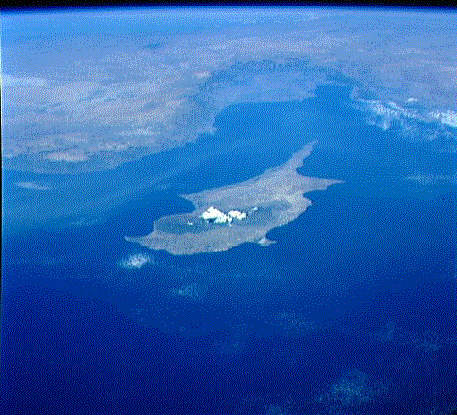
  • Turkey in Europe and beyond: the Cyprus issue

    Turkey in Europe and beyond: the Cyprus issue

    DAVID HANNAY

    1. Pessimists have always outnumbered optimists so far as resolving the Cyprus problem is concerned – and rightly so if you look back over the last 45 years of failed attempts to do just that, a diplomatic battlefield strewn with the withering bones of numerous U.N. secretary generals, U.N. special representatives, mediators and facilitators from the main Security Council operators and of course leaders of the two communities in Cyprus. Many of them walked away, pronouncing the problem insoluble. Despite myself spending seven years breaking my teeth on the basic intractability of the issues and on the challenge of getting the two Cypriot parties and their backers in Greece and Turkey to reach workable compromises on those issues, I am not one of that school of thought. The problem is, I believe, soluble.

    2. First, an existential question – does it matter? Could not the world simply job along with the Cyprus problem unsolved? Living with that status quo which so many Security Council resolutions have futilely denounced, and declared to be unacceptable? Not so long ago a prime minister of Turkey – Bülent Ecevit – used to tell his visitors that he had solved the Cyprus problem in 1974. But, quite apart from the problems on the island itself, which have admittedly somewhat eased in recent years with the lessening of tensions along the cease fire Green Line, with the opening up of more crossing points and with increased contacts between the two communities, the list of reasons why accepting the status quo makes no sort of sense is a long one. Cyprus remains a painful pebble in the shoe of Turkey’s EU accession negotiation without whose removal it is hard to see those negotiations ever being brought to successful conclusion; Cyprus is in addition already complicating negatively Turkey’s existing customs union relationship with the EU as the Ankara Protocol remains unimplemented; it is frustrating attempts to build a better working relationships with all of Turkey’s neighbors, it is the weakest link in that chain – because Cyprus is a neighbor of Turkey, every bit as significant for the success of the new policy as Syria, Iraq or Armenia, and its relationship to Turkey will affect, either positively or negatively, that of another neighbor, Greece. The list is surely long enough to answer the question, even if experience did not tell one, as it does, that Cyprus neglected is all too likely to bite the international community painfully in the ankle at some unexpected moment. So Abdullah Gül was surely right when he first coined the phrase in 2002: “No solution in Cyprus is no solution.”

    3. So what needs to be done if the Cyprus problem is to be solved and not neglected? The first essential requirement is to keep the present U.N.-sponsored negotiating process going and to continue to give it the Security Council’s and Greece and Turkey’s full support. It needs to be sustained through whatever vicissitudes electoral shifts on either side in Cyprus may throw at it. Progress may have been painfully slow since the process resumed two years ago, but progress there has been particularly on issues of the governance of a newly re-united Cyprus. The other big issues, of property, territory and security now need to be addressed with equal determination. Why persevere with a framework and a format which has so far yielded so few results? Because there are no obviously viable, or even remotely viable, alternatives. The framework of a bi-communal, bi-zonal federation was set by agreement from the two sides as long ago as 1977. Since then there have been sporadic attempts to break away from that framework, for example Rauf Denktash’s ideas for a confederation. Such ideas have not evoked a scintilla of support and are no more likely to do so in the future than in the past. The same is true of attempts to break away from the format of negotiations between the leaders of the two communities under the aegis of the U.N. Again, suggestions have been made of an EU-led process or of the involvement of the two parts of Cyprus and of Greece and Turkey. But these are displacement activities fated to get nowhere.

    4. I will spare you a long meander through the details of the main component parts of the Cyprus problem – governance, property, security and territory. Suffice it to point out that in the period from 2002 to 2004, for the first time, all the elements needed for a comprehensive settlement of all these matters were put on the negotiating table. Of course those elements, in the form they were then presented, led to the split outcomes of the two referendums in the spring of 2004. So changes there will have to be if a deal is to be struck. If only one could get away from the zero-sum calculations to which Cypriots on both sides of the divide are so devoted and could recognize that changes to deal with sensitive points for one of the parties do not necessarily and involve precisely equivalent damage to, or concessions by the other, then the prospects for progress would greatly improve. One reason for avoiding making detailed suggestions, as to what needs to be changed, is that such changes must emerge from a process of give and take between the two Cypriot parties and not seem to be being imposed from the outside. In 2004, it was just too easy for opponents of the Annan Plan to say that it was simply a great power diktat. On this occasion, if an agreement is to emerge, it must involve the firm commitment of the leaders of both communities and a willingness to back the outcome in the referendums, which will have to follow.

    5. You may or you may not find this analysis reasonably convincing. But you will surely ask why should such an approach work this time when it has failed to work so often in the past? And you would be right to pose that question, to which there is currently no fully satisfactory answer. Because there is a crucial piece missing from the equation, namely the fate of Turkey’s bid to join the EU. For 15 years or so now, and for the foreseeable future, the chances of a settlement of Cyprus problem have revolved around and been inseparably linked to the progress being made in the bids of Cyprus and of Turkey to join the EU. What started during the ‘60s, ‘70s and ‘80s of the last century as an international dispute with heavy Cold War overtones has now metamorphosed into a European conundrum. In the first phase, after the end of the Cold War, the key question was whether the EU would make it an absolute condition for Cyprus joining the EU that there should be a prior settlement of the Cyprus problem. In the next phase the key question was whether the negotiations to settle the Cyprus problem could be brought to a head and insight of a successful conclusion while Cyprus’ accession to negotiations were still under way and all parties, the Greek Cypriots most notably, could have been pressed by the EU to seal a deal. That question too was answered in the negative when Cyprus’ EU accession treaty was signed in 2003; and when a divided Cyprus was admitted the following year. Now we are in a third phase when the key factor is Turkey’s own accession bid which could be at stake, but when, so far at least, the divisions within the EU over Turkey’s eventual accession have prevented that factor from coming fully into play as the driver of a Cyprus solution.

    6. None so far emerges from this sequence with very much credit. The EU cut the ground from under the U.N. when they removed the need for a Cyprus solution as a condition for EU membership. Rauf Denktash ensured by his negative attitude that the long period of Cyprus’ accession negotiations could not be used in any effective way to bring about a solution. And Tassos Papadopoulos drove a stake through the heart of the Anna Plan. And now those within the EU who most vociferously oppose Turkish accession and work to slow down the negotiations are most surely undermining the rationale of the Cyprus negotiations. The fact that that group includes not only France, Germany and Austria but Cyprus too is indeed a bitter irony since it is Cyprus that stands to gain most both politically and economically from Turkey’s accession, assuming that one discounts, as I do, any chance of Turkey joining the EU while the status quo in Cyprus continues; and it is Cyprus that stands to lose the most if Turkey’s accession bid flounders, because in those circumstances I would predict with considerable confidence that there will not be a Cyprus solution.

    7. Does that mean one should lose hope over Cyprus? I do not think so. So long as there is life in Turkey’s accession negotiations, and that means for as long as Turkey, in Harold Wilson’s phrase when confronted with General de Gaulle’s second veto of Britain’s accession, refused to take “no” for an answer, then there will be real hope for a Cyprus settlement. That argues against trying to get artificial deadlines in the Cyprus negotiation; that has never worked in the past and seems no more likely to work now. It has arguments against using too much of that stock in trade of the frustrated international negotiator’s talk of last chances. But it does argue powerfully in favor of the EU making a renewed effort to negotiate Turkey’s accession in good faith and with the will to get to the end of the road. Of course that will not happen for Cyprus reasons alone; but Cyprus is one among other very good reasons why it ought to happen.

    *Lord David Hannay was the British special representative for Cyprus. This piece was abridged from a speech he made at a conference held by Salzburg Global Seminar on May 11.

    , 19 May 2010