Month: May 2010

  • Russia says plans full visa-free travel with Turkey in long-term

    Russia says plans full visa-free travel with Turkey in long-term

    Medvedev said that they targeted to apply a whole visa-free regulation with Turkey in long-term.

    Russian President Dmitry Medvedev said on Wednesday that they targeted to apply a whole visa-free regulation with Turkey in long-term.

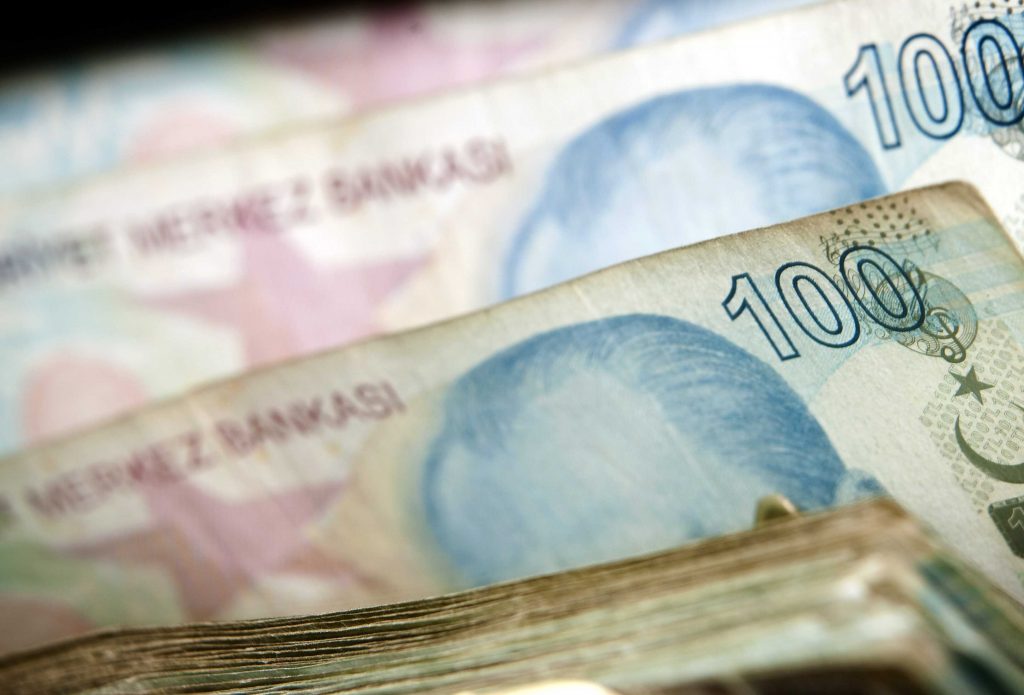
    Earlier in the day, Turkish and Russian officials signed an agreement putting an end to visa procedures between the two countries. The agreement was signed between Turkish and Russian governments in capital Ankara, removing visa requirements for Turkish and Russian citizens to travel to each other’s countries.

    Speaking at Turkey-Russia Business Forum in Ankara, Medvedev said that there was a high-level economic cooperation between Turkey and Russia.

    Medvedev said that Turkey and Russia signed many agreements today, and the amount of investments was expected to exceed 25 million USD thanks to these agreements.

    We can reach the figures of pre-economic crisis period, he added.

    We target to reach 100 billion USD of trade volume between Turkey and Russia within the next few years, said Medvedev.

    He noted that it was important to make investments in textile, food industries, chemical industry and agriculture too.

    Medvedev said that visa requirement for tourists and businessmen was ended between Turkey and Russia today, adding that this was just a beginning. Medvedev said that they targeted to apply a whole visa-free regulation in long-term.

    Noting that construction sector was on very good level in Russia, Medvedev said that many Turkish companies were operating in Russia in this sector. He added that the business volume of Turkish construction companies in Russia was nearly 30 billion USD.

    Medvedev said that the investments were mutual, adding that the amount of Russian businessmen’s investments in Turkey reached billions of USD, and they were on technology and metal industry areas.

    AA

  • Russia, Turkey call for Hamas inclusion

    Russia, Turkey call for Hamas inclusion

    Russia and Turkey have called for the inclusion of the democratically elected Palestinian government of Hamas in Middle East peace talks.

    “Unfortunately Palestinians have been split into two… In order to reunite them, you have to speak to both sides. Hamas won elections in Gaza and cannot be ignored,” Turkish President Abdullah Gul said during a joint press conference with his Russian counterpart Dmitry Medvedev in Ankara on Wednesday.

    “Undoubtedly, all parties to this problem should be included more actively (in the process) in order to reach a solution. The process should not exclude anyone,” he added.

    Medvedev agreed with the idea that no group should be excluded from the peace process.

    The Russian president urged the United States to work actively with other nations in the efforts to establish peace in the Middle East.

    He also stated that a divided Palestinian administration could not help resolve the conflict.

    Medvedev said the division “causes the Palestinians to regress.” He also warned that Gaza was “facing a human tragedy.”

    Earlier on Tuesday, Medvedev was in Syria, where he met with Hamas leader Khaled Meshaal and Syrian President Bashar al-Assad.

    Medvedev’s meeting with Meshaal and his later comments in Turkey received an angry response from the Israeli foreign ministry.

    “The foreign ministry vehemently rejects the call from the presidents of Russia and Turkey to include Hamas in the peace process and expresses deep disappointment over the meeting between the president of Russia and Khaled Meshaal in Damascus,” it said in a statement issued on Wednesday.

    However, that was not the only thing about Medvedev’s visits that upset Tel Aviv. In a phone conversation before Medvedev left for Syria, Israeli President Shimon Peres had asked him to convey a message to Assad.

    But according to Russian Foreign Minister Sergei Lavrov, Medvedev did not agree because it contradicted Moscow’s stance.

    “We did not have a special need to implement this message because this is our position — to live in peace and solve issues on the basis of the international legal framework adopted by everyone and which should now be implemented by everyone,” Lavrov told AFP.

    Press TV

  • HYDROGENASE, ALGAE FARM TO RECYCLE CO2 FOR BIO-HYDROGEN AIRSHIP

    HYDROGENASE, ALGAE FARM TO RECYCLE CO2 FOR BIO-HYDROGEN AIRSHIP

    Between engineering and biology, Hydrogenase is one of the first projects of bio-mimicry which draws its inspiration from the beauty and the shapes of the nature, but also and especially from the qualities of its materials and its self-manufacturing processes. The new green revolution is really in progress and enables us to design the air mobility of the foil after shock, 100% self-sufficient in energy and zero carbon emission! This inhabitated vertical aircraft inaugures a clean and ethic mobility to meet the needs of the population en distress touched by the natural and sanitary catastrophes, and all that without any runway! Its architecture is subversive and fundamentally critic towards the ways of living of our contemporary society that we have to reinvent totally! Let’s take off thanks to biofuels and let’s propel to the eco-responsible transport of the future!

    2015: Biofuels of the 3rd generation, the challenge of a sustainable mobility ! :

    The price of the fuel has just reached a new historical record by passing 75 dollars the barrel in 2010. Within 10 years, we could reach the famous “Hubbert Peak”, the precise moment from which the worldwide fuel production will begin to decrease because of shortages. In such a context, the massive resort to renewable energies and nanotechnologies, that do not emit gaswith greenhouse effect, is becoming an absolute economical, technological and political priority! From Queensland’s university to the Karlsruhe’s one, going through Berkeley in California, the « third generation » biofuels are in gestation and will revolutionize our future sustainable land or air mobility. Their main strengths: they do not compete either with the food cultures nor with the forest spaces and can be developed naturally everywhere in the world even in arid territories, the whole tending to a targeted bio-remediation of the industrial CO2 !

    According to biologists, the output obtained by a farm with micro-seaweeds would be superior to those made currently with farming means to produce biodiesel or bioethanol. This could be estimated at 1000 litres of hydrogen for 330 grams of chlorophyll per day whereas for example colza produces roughly only 1000 litres of oil per hectare. According to industrials a hectare of seaweeds could thus produce organically 120 times more biofuels than a hectare of colza, soya or sunflower.

    Moreover, a farm with seaweeds is a true miniature biochemical power station able to absorb CO2 as main nutrient by photosynthesis accelerated by producing hydrogen in vitro or in bioreactors. This natural process, nourishing itself with our waste enables thus to recycle under the effect of the sun, in seaweeds or sea water baths, up to 80% of carbonic gas and NOx (nitrogen oxides also very impacting on the greenhouse effect). The global organic cycle enables therefore to revaluate our carboned rejections such as for example those are coming from filters with particles of our cars, reactors of our airplanes or also our rockets coming from thermal power stations with coal or gas.

    2020: Towards an aerial revolution and agree generation of airships ? :

    The builders of airplanes get involved at maxima until 2020 according to an international agreement to be less polluting (reduction by 80% of their rejection in nitrogen oxides), to be thriftier in fuel (reduction of 20% of the fuel quantity by carried passenger) and finally to be more silent (reduction of 10 decibels, i.e. twice less noise). But what will happen when there will be no more fuel? The end of air freight in 2030 ? According to forecasts, every year from 2010, 200 billion of Chinese people will fly to spend holidays abroad. After the last born A380 of Airbus and the 777-200LR of Boeing, the airplanes of the future will not have such as their previous energy-consumers to be designed without taking into account the notions of sustainable development and the respect of the environment. A theme totally ignored fifteen years ago in this sector! This transport must be eco-designed from renewable energies and present a statement of carbon emission equal to zero!

    No airplane, no helicopter, no aircraft, the project « Hydrogenase » marks a new generation of state-of-the-art hybrid airships. It is dedicated to humanitarian missions, rescue operations, installation of platforms for scientific studies, and of course to air freight. Then, complementary activities could be entertainment, eco-tourism, hotel, human transports, air media coverage and territorial waters surveillance.

    This mode of transport is certainly less interesting than the piggyback or sea freight and slower than airplane; however it needs less infrastructure and multimodal platforms (runway, freeways, ship/truck alternation…). It consumes thus less territory and will progressively enable to heal our landscapes slashed by the transport network leading to a massive deforestation. Therefore, it costs 10 times less for the carriage of heavy loads as well as traveller transport, and everything without damaging the planet! For the specialists of logistical transport facing the long lasting absence of appropriated road or airport infrastructures in many parts of the world (desert and oceans), this new generation is also very expected to link production sites and using sites. Moreover, flying free health care centres or even country hospitals could also interfere during natural catastrophes, where lives could be in danger. It could also explore and help underprivileged territories of the third world by carrying the raw materials of our globalised alimentation to those who are hungry in remote places!

    This mode of transport is certainly less interesting than the piggyback or sea freight and slower than airplane; however it needs less infrastructure and multimodal platforms (runway, freeways, ship/truck alternation…). It consumes thus less territory and will progressively enable to heal our landscapes slashed by the transport network leading to a massive deforestation. Therefore, it costs 10 times less for the carriage of heavy loads as well as traveller transport, and everything without damaging the planet! For the specialists of logistical transport facing the long lasting absence of appropriated road or airport infrastructures in many parts of the world (desert and oceans), this new generation is also very expected to link production sites and using sites. Moreover, flying free health care centres or even country hospitals could also interfere during natural catastrophes, where lives could be in danger. It could also explore and help underprivileged territories of the third world by carrying the raw materials of our globalised alimentation to those who are hungry in remote places!

    2030: Hydrogenase, the 100% self-sufficient organic airship of the future

    The project Hydrogenase brings to question the « always faster » of our frenetic society and thinks differently to the mobility and services. With bionic look, this inhabited vertical airship sets in the heart of a floating farm of seaweeds that reload it directly with bio-hydrogen. These two interdependent entities are both nomad and organic, the first one flies in the sky and the second one on the seas and oceans.

    The proactive ship flourishing in the air :

    The semi-rigid not pressurised airship stretches vertically around an arborescent spine that air-dynamically twists on more than 400 meters high and 180 meters of diameter. Forming a big flower ready to open, the spaces divide in cross under the shape of petals that welcome respectively the main sectors of activities: housing, offices, scientific laboratories and entertainment. The stem around the one these functional petals structure themselves, welcome the vertical circulations, the technical premises and the goods warehouses for the freight.

    These 4 inhabited spaces are included between 4 great bubbles inflated with bio-hydrogen, a renewable energy. These bubbles are made with a rigid hull in light alloy shaped with twisted longitudinal beams linked together by wide sinusoidal rings. Every end is finished by a cone, and the one at the bottom, the most sharpened one carries the stabilizers and the rudders of deepness and of direction. This framework is covered by a double layer of waterproof, fireproof, glazed canvas to reduce the resistance to advancement. The in-between is divided into slices in which there are small balloons full of helium. The helium mattress in periphery enables to protect the balloons of bio-hydrogen and helium, the remaining 30% are provided by the aerodynamic of the airship twisted fuselage with the speed, as for an airplane.

    This type of airship is of course heavier than a flexible aerostat of same cubing because of the weight of the structure, but it can reach higher speeds, thanks to the solidity of its hull in titan, and carry more tons thanks to the ability to build always bigger layers (10000 m3 in 1900, 70 000 m3 in 1924 and 200 000m3 in 1938, 250 000 m3 in 2010). What distinguishes also such a machine from classical aircrafts from the past is that this one is heavier than the air and flies thanks to the Archimedes’ thrust (that does every balloon or aircraft), to helixes or at its subtle twisted aerodynamic that enables to reduce the oscillations of the limited layer. The fact that it is heavier than the air enables actually descents faster without having especially to eject gas. Moreover, the sustentation is based on the compression and the decompression of the biogas. Hydrogenase can thus be lighter or heavier according to the wished needs and the height.

    In order to build a proactive airship with positive energy, we also have integrated all the renewable energies. Actually, whereas the inflatable bubbles are glue-backed with flexible photovoltaic cells the four wings of the vessel are each of them inlayed with turbo-propellers with recuperation of energy. These 20 wind propellers are articulated around orbital rings which enable them to go from the horizontal position at the take-off to the vertical position assuring the vessel a navigation speed of 175km/h. The inhabited spaces integrate by steps vegetable gardens photopurifyng the used waters, the biomasses damaging the organic waters and loaded fuel cells. Nothing is lost, everything is recycled and transformed !

    On top of absorbing the solar energy, this flying castle draws its inspiration from the biomimicry technologies and is built in lighter and more resistant composite materials (fibreglass and carbon fibre) in order to reduce the weight of its structure at the maximum. The fitting is thus self cleaning, in nanostructured glass inspired from the lotus leave that does not get wet. The vessel is thus made of « intelligent layers » avoiding for example the accumulation of ice or snow and « self-separable ceramics » offering a bigger resistance to the split and that fill the cracks. This bionic coating draws also its inspiration from shark skin that enables without being toxic to avoid the adhesion of bacteria whereas the four wings present irregularities of surface, as the finely beaded whale fins do, in order to reduce the turbulences. The green industry meets thus through this bionic prototype the expectations of the consumption, the always more demanding antipollution regulation and the rarefaction of resources.

    The floating organic farm on seas and oceans :

    The floating farm is a true organic purifying station composed of 4 carbon wells in which the green seaweeds recycle our carbonated waste brought by ships. This is directly dedicated to feed organically in biohydrogen the proactive airship. It replaces thus the petrol station as the runway for traditional airplanes and looks like a weaving of fine amphibian laces!

    Actually, it sets up as much underneath as on top of the sea surface and respects the quadripartite sharing out in petals of the whole Hydrogenase project. Continuing the 4 wings of the pneumatic tower, 4 great arches structure this circular platform and distribute vertically all the levels of the central ring inhabited by the scientists. At the surface, these arches are covered by thermal and photovoltaic solar shields whereas under the water they are set with 32 hydro-turbines transforming the tidal energy of the sea streams into electricity.

    Energically self-sufficient, this farm organises on a radiant plan, the seaweed bioreactors exposed to the zenith sun under the lenticular accelerators for a better photochemical output. The whole set forms four gardens dedicated to the accelerated photosynthesis where we access through marinas setting the exchanges between this true new floating city and the surrounding coasts. On top of producing clean energy, this floating purifying station is also an incredible observatory of the sea fauna and flora that fight for the protection of ecosystems and for the revitalization of the beds of corals and of endangered species. It is a true cleaner of seas and oceans by skimming and damaging as main nutrient the floating waste banks of our energy-consuming civilisation.

    Hydrogenase is thus a project of environmental resiliency that will enable to invent a clean mobility according to a « cradle to cradle » cycle respecting our planet by assuring also the technological evolution of the human adventure ! As biotechnological prototype, it aims at being the symbiosis of men actions and their positive impacts on the nature. By imitating the processes of natural ecosystems, it deals with reinventing the industrial, town-planning and architectural processes to produce clean solutions and create an industry where everything is reused, either back to the ground under the shape of not toxic « organic nutrients », or back to the industry under the shape of “technical nutrients” able to be indefinitely recycled.

    Vincent Callebaut Architectures
  • New Geopolitics of the South Caucasus

    New Geopolitics of the South Caucasus


    Caucasian Review of International Affairs

    From Vol. 4 (2) – Spring 2010

    pp. 184-186

    Abstract

    The article examines new trends and development in the South Caucasus. The author identifies five factors which affect the foreign policy of regional countries as well as regional powers. These factors are the Georgian-Russian war of 2008, the US-Russian “reset”, the global financial crisis, the political transformation in the countries which have undergone “color revolutions”, and the Armenian-Turkish rapprochement. The author believes that the change in the geopolitical layout of the region will turn the countries of the South Caucasus further from the West. At the same time, they are not going to be fully embraced by Russia. A balancing act between the US, EU and Russia will be most likely their policy choice.

    Keywords: South Caucasus, geopolitics, US, Russia, Azerbaijan, Georgia, Ukraine

    Introduction

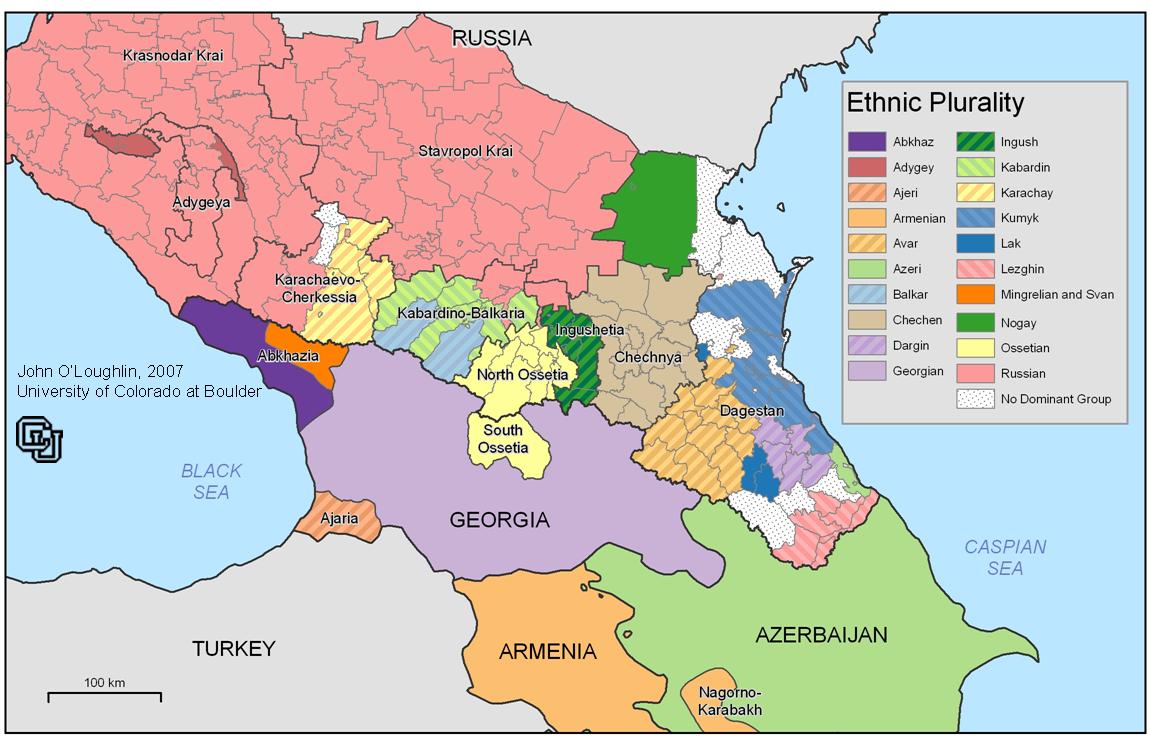
    After the collapse of the Soviet Union, the South Caucasus region was opened up for the global market as well as competition among global powers. The dominance of Russia which had lasted for 200 years was questioned by new actors, primarily the United States, Turkey and Iran. The South Caucasus, with its vital links to the Black Sea, Central Asia and Middle East, and its rich natural resources (primarily oil and gas in the Caspian Sea) became a complex battleground aggravated by internal problems such as the war between Armenia and Azerbaijan due to territorial claims of the former with regard to the latter’s Nagorno-Karabakh region.

    While the geopolitical conditions of the 1990s were defined internally by ethnic conflicts, the creation of statehood, and the transition from communism to a market economy, external factors were connected with the arrival of the new powers – the US, EU, Turkey, Iran on one side, and efforts by Russia to maintain control on the other. A wave of “colour revolutions” in 2003-2005 further changed the political landscape of the regional states and increased the possibility of ending Russian influence in post-Soviet space. However, despite losing its influence in the 1990s, Russia, due largely to enormous profits from oil, gained the momentum to strengthen its position by 2008.

    New Geopolitical Factors

    The last three years have brought forth a new set of conditions which is likely to affect the states of the region and their foreign policy agenda. Domestically the states of the region continued to suffer from ethnic conflicts, but they managed to build viable statehood, and make progress on market reforms with

    Azerbaijan as the leading economic power. However, internationally, five major developments have been reshaping the region:

    • Georgian-Russian War, 2008
    • US-Russian Reset, 2009
    • Global Financial Crisis, 2009
    • Decolourization of Colour Revolutions, 2010
    • Armenian-Turkish Rapprochement and its impact on Azerbaijan-Turkey and Azerbaijan-US relations, 2009-2010

    The Georgian-Russian War had adverse effects on the image of the West in the region. The verbal support from the US, EU and NATO was not enough to counter the Russian offensive. Russia showed assertively that it would resort to force rather than yield its influence in the South Caucasus. Accordingly, attempting to secure NATO membership by regional countries has posed a direct threat to their sovereignty and territorial integrity. Post-Soviet countries realized that Russia is still a mighty power, and the West is not willing to confront her for the sake of small post-Soviet states.

    Further, the US-Russian “reset” declared by the Obama administration sent a clear message that relations with Russia are much more significant for the American administration and its Western allies than relations with other former communist states. However, many experts might not agree with that conclusion as they point out that the West continues to boost its relations with post-Soviet countries through the EU’s new Eastern Partnership initiative, NATO’s Partnership for Peace program and other political and economic channels, the treatment of US allies like Azerbaijan and Georgia in regards to the April 2010 Washington Nuclear Security Summit speaks for itself.

    On the other side, Russia’s bold foreign policy in its so-called “near abroad”, in various political and economic manifestations, was seriously damaged by the global financial crisis. The Russian economy endured great losses which affected its ability to sponsor its allies or show its influence as an economic power. Thus, the former Soviet countries appreciated the importance of economic relations with the West and the need for reform of their economies. Exclusive reliance on Moscow proved to be shaky. Even the new president of Ukraine Viktor Yanukovich, a staunch Russian ally, paid his first foreign visit to Brussels, exhibiting the desire of the new Ukrainian leadership to move closer to the West in terms of its economic preferences.

    The victory of Yanukovich in the latest elections in Ukraine changed the colour of the 2004 “Orange Revolution” which brought his predecessor, Viktor Yushchenko, to power. A similar development took place in Kyrgyzstan, which has recently seen the overthrow of the victor of the “Tulip Revolution”, Kurmanbek_Bakiyev. Though it would be an overstatement to assert the failure of the “colour revolutions” – since the elections in Ukraine manifested the democratic changes in the country – nevertheless, we can speak about, at least, the decolourization or change of colour of past revolutions. The latest trend shows that post-Soviet countries cannot be reformed quickly, and a change is not simply about the removal of one leader for the sake of another. The process of democracy requires a profound transformation of all layers of society, the gradual modification of political and social institutions, and comes with generational shifts.

    Last, but not least, the South Caucasus is knotted in a web of territorial, ethnic and identity conflicts, which have to be dealt in a complex manner. These problems have a new buzz word – protocols. The desire of the Obama administration to disconnect the Turkish-Armenian rapprochement from the Armenian-Azerbaijani conflict has already damaged the relations between Azerbaijan and the US and affected Azerbaijani-Turkish relations, and might have an effect on energy projects between Azerbaijan and the West. The disappointment in Azerbaijan regarding the US policy on the Turkish-Armenian protocol is not only about the prospect of the resolution of the conflict with Armenia – it is also about disillusionment with Western democracy where powerful lobbies like the Armenian Diaspora seriously affect the countries’ decision making.

    Moreover, it is about a widening gap between Christians and Muslims, as almost every Western news agency in its description of the Armenian-Azerbaijani-Turkish conflicts emphasizes the religious affiliation of the relevant ethnic groups. However, these conflicts have no religious connotations.

    For two decades Azerbaijan has been conducting a pro-Western foreign policy both politically and economically. Though subjected to criticism on human rights, the country’s leadership declares that it envisions a better future but through gradual reformation and improving economic well being, rejecting foreign recipes and revolutions.

    Over the last decade the country has manifested more balancing acts by promoting better relations with its immediate neighbours, first of all, with Russia and Iran. Azerbaijan has concluded important security and energy agreements with these countries. However, both countries – Russia and Iran – have close links with Armenia which outweigh their relations with Azerbaijan. It is no accident that during a trip to the occupied Azerbaijani territories in April 2010, the new Russian mediator for the Armenia-Azerbaijan conflict Igor Popov discussed with Armenian separatists the possibility of constructing of a new airport in Nagorno-Karabakh. The historical Russian-Armenian alliance will not be affected by Russia’s renewed interest in Azerbaijan.

    Conclusion

    A number of the above-mentioned factors and developments make a balanced foreign policy a viable choice for regional states. The experience of post-Soviet countries proved that blatant pro-Western or anti-Russian stances or vice versa (as the Serbian experience taught us) does not produce positive results. This is a new reality of the geopolitics of the South Caucasus.

    Fareed Shafee holds master’s degrees from the School of History, and the School of Law of Baku State University, Azerbaijan, and Kennedy School of Government of the Harvard University, USA. His research interests include conflict resolution and ethnic studies.

    URL:

  • Turkish and Turkish Cypriot NGOs to unite and form stronger lobby task force

    Turkish and Turkish Cypriot NGOs to unite and form stronger lobby task force
    Turkish and Turkish Cypriot NGOs to unite and form stronger lobby task force

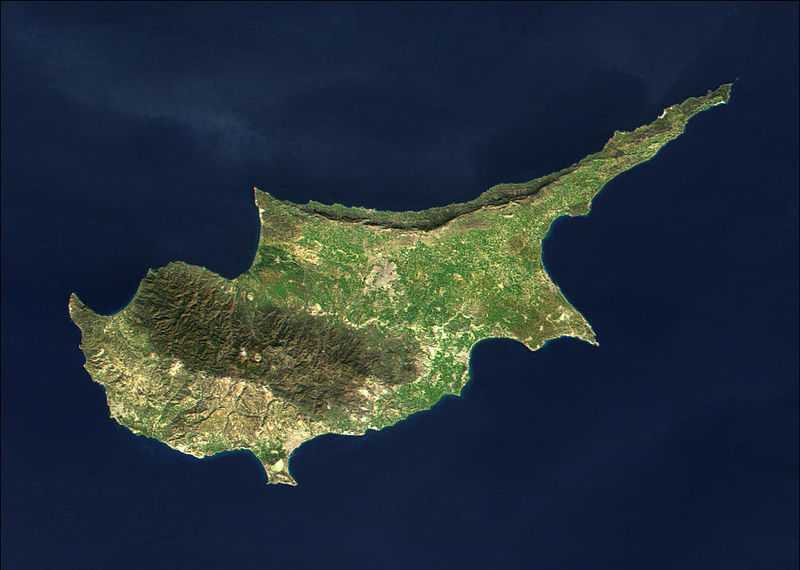
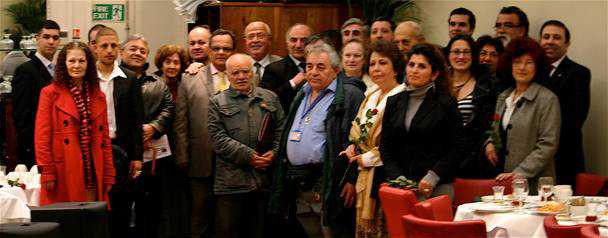
    A breakfast meeting was held in London’s Sofra Restaurant on Sunday 9th May 2010 to discuss the subject of the Cyprus Problem. It was organised and hosted jointly by the Association of Turkish Cypriots Abroad, Turkish Forum WTA, Cyprus Turkish Association and the UK Konsey.

    The guest and keynote speaker was world renowned historian and author Professor Dr. Sonyel. He highlighted that historically the Turkish Cypriots have been unjustly treated and continue to remain isolated in the World. He concluded by saying that the Greek Cypriot strategy has always been to eradicate the Turkish Cypriots from the island of Cyprus. It is highly unlikely that they will accept any agreement based on equality of power and sovereignty.

    The meeting developed into general discussion points on how to be more effective and unitary principally against the Greek, Greek Cypriot and Armenian propaganda.

    It was unanimously agreed by all the NGOs present that all groups should put aside their past differences and unite as a stronger and effective lobby force. It was generally agreed that they should use the relevant umbrella organisations such as the UK Turkish Cypriot Konsey and the Turkish Federation. Turkish Forum, World Turkish Alliance which serves Turkish communities worldwide will help co-ordinate efforts with its mass distribution lists, grassroots teams and distinguished advisors in five continents.

    Türk ve Kıbrıs Türk Sivil Toplum Örgütleri daha güçlü bir lobi kuvveti oluşturmak için toplandı

    Kıbrıs Sorunu’nu tartışmak amacı ile 9  Mayıs 2010 Pazar günü Londra’da Sofra Restorant’ta toplantı yapıldı.Toplantı aynı zamanda daveti veren ATCA (Association of Turkish Cypriots Abroad), Turkish Forum Dünya Türkleri Birliği (Turkısh Forum World Turkish Alliance) ve UK (Birleşik Krallık) Konsey’i tarafından organize edildi.

    Toplantıya ana konusmacı olarak misafir olan dünyaca ünlü tarihçi ve yazar Profesör  Doktor Selahi Sonyel katıldı. Prof. Dr. Selahi Sonyel konuşmasında geçmişte Kıbrıs Türklerine karşı adil olmayan tavırların sürdüğünü ve Kıbrıs Türklerinin izolasyona uğradığını irdeledi. Sonuç olarak ta Kıbrıslı Rumların Kıbrıslı Türklere uyguladıkları stratejinin her zaman Kıbrıs Türklerini adadan def etmek olduğunu belirtti. Kıbrıslı Rumların, eşit olan iki halk olarak adada hakimiyet paylaşımını kabul ederek antlaşmaya varmalarının çok düşük bir ihtimal olduğunu ifade etti.

    Toplantının ana konusu, Yunanlılar, Kıbrıs Rumları ve Ermeni propagandasına karşı çoğunluk olarak nasıl daha etkili birlik oluştururuz şeklinde gelişti.

    Toplantıda bulunan tüm sivil toplum örgütleri, geçmişte olan aralarındaki tüm farklılıkları bir kenara bırakmaya, daha güçlü ve etkili bir lobi kuvveti oluşturmaya oy birliği ile karar verdi. Ana hatlarıyla İngiltere Kıbrıs Türk Konseyi (UK Turkish Cypriot Konsey) Türk federasyonu (Turkish Federation) şemsiye organizasyonunun koordinasyonuna karar verildi. Türk toplumuna dünya çapında hizmet eden, Turkish Forum Dünya Türkleri Birliği, kitle dağıtım listeleriyle, halktan oluşan takımlarıyla ve seçkin danışmanlarıyla bu gayretleri beş kıtada koordine edecek.

    Cetin Ramadan, ATCA – UK Representative

    &

    Haluk Demirbag, Turkish Forum WTA

  • David Cameron is UKs new prime minister

    David Cameron is UKs new prime minister

    Conservative leader David Cameron is the new UK prime minister after the resignation of Gordon Brown.

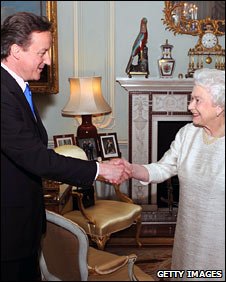
    David Cameron and the Queen

    Mr Cameron, 43, is in Downing Street after travelling to Buckingham Palace to formally accept the Queen’s request to form the next government.

    He said he aimed to form a ‘proper and full coalition’ with the Lib Dems to provide ‘strong, stable government’.

    His party won the most seats in the UK general election last week, but not an overall majority.

    In a speech at Downing Street, Mr Cameron said he and Lib Dem leader Nick Clegg would “put aside party differences and work hard for the common good and the national interest”.

    He paid tribute to outgoing PM Gordon Brown for his long years of public service and said he would tackle Britain’s “pressing problems” – the deficit, social problems and reforming the political system.

    Mr Cameron stressed there would be “difficult decisions” but said he wanted to take people through them to reach “better times ahead”.

    The Conservatives have been in days of negotiations with the Lib Dems – who were also negotiating with Labour – after the UK election resulted in a hung parliament.

    But the Lib Dems said talks with Labour failed because “the Labour Party never took seriously the prospects of forming a progressive, reforming government”.

    Formal agreement

    A spokesman said key members of the Labour team “gave every impression of wanting the process to fail” and the party had made “no attempt at all” to agree a common approach on issues like schools funding and tax reform.

    “Certain key Labour cabinet ministers were determined to undermine any agreement by holding out on policy issues and suggesting that Labour would not deliver on proportional representation and might not marshal the votes to secure even the most modest form of electoral reform,” he said.

    However Labour’s Lord Mandelson told the BBC they had been “up for” a deal with the Lib Dems, but they had “created so many barriers and obstacles that perhaps they thought their interests lay on the Tory side, on the Conservative side, rather than the progressive side”.

    After it became clear the talks had failed, Mr Brown tendered his resignation and said he wished the next prime minister well.

    In an emotional resignation statement outside Number Ten, Mr Brown thanked his staff, his wife Sarah and their children, who joined the couple as they left for Buckingham Palace.

    Mr Brown said it had been “a privilege to serve” adding: “I loved the job not for its prestige, its titles and its ceremony – which I do not love at all. No, I loved the job for its potential to make this country I love fairer, more tolerant, more green, more democratic, more prosperous and more just – truly a greater Britain.”

    ‘My fault’

    He also paid tribute to the courage of the armed forces, adding: “I will never forget all those who have died in honour and whose families today live in grief.”

    Later he thanked Labour activists and MPs for all their efforts and told them Labour’s general election performance was “my fault, and my fault alone”.

    The Lib Dem and Conservative teams met for hours of negotiations at the Cabinet Office on Tuesday – four days after the UK general election resulted in a hung parliament.

    The talks resumed after Lib Dem negotiators met a Labour team, which followed Mr Brown’s announcement on Monday that he would step down as Labour leader by September.

    But there were signs throughout the afternoon that the two parties – who together would still not command an overall majority in the House of Commons – would not reach a deal.

    Several senior Labour figures, including John Reid and David Blunkett, warned against a coalition with the Lib Dems, particularly if the price involved offering them a referendum on changing the voting system to proportional representation.

    After Mr Brown announced he would be stepping down and would see if Labour could do a deal with the Liberal Democrats, the Conservatives upped their offer to a promise of a referendum on changing the voting system from existing first past the post system to AV.

    BBC