Month: May 2010

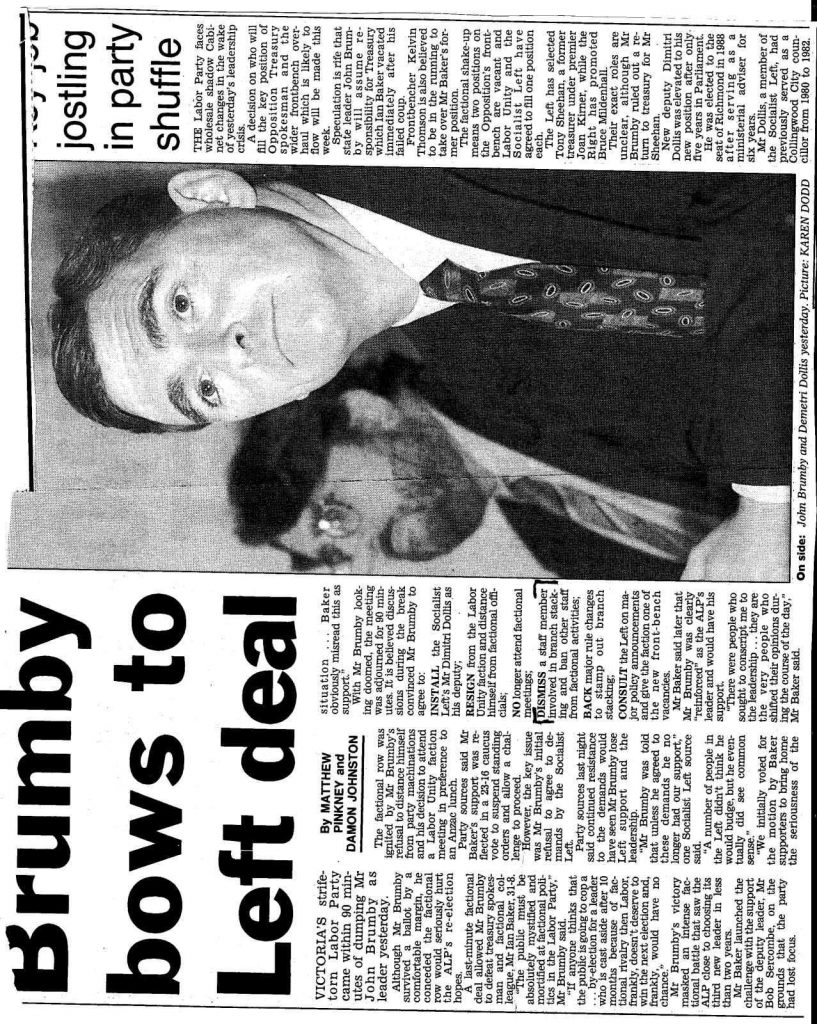
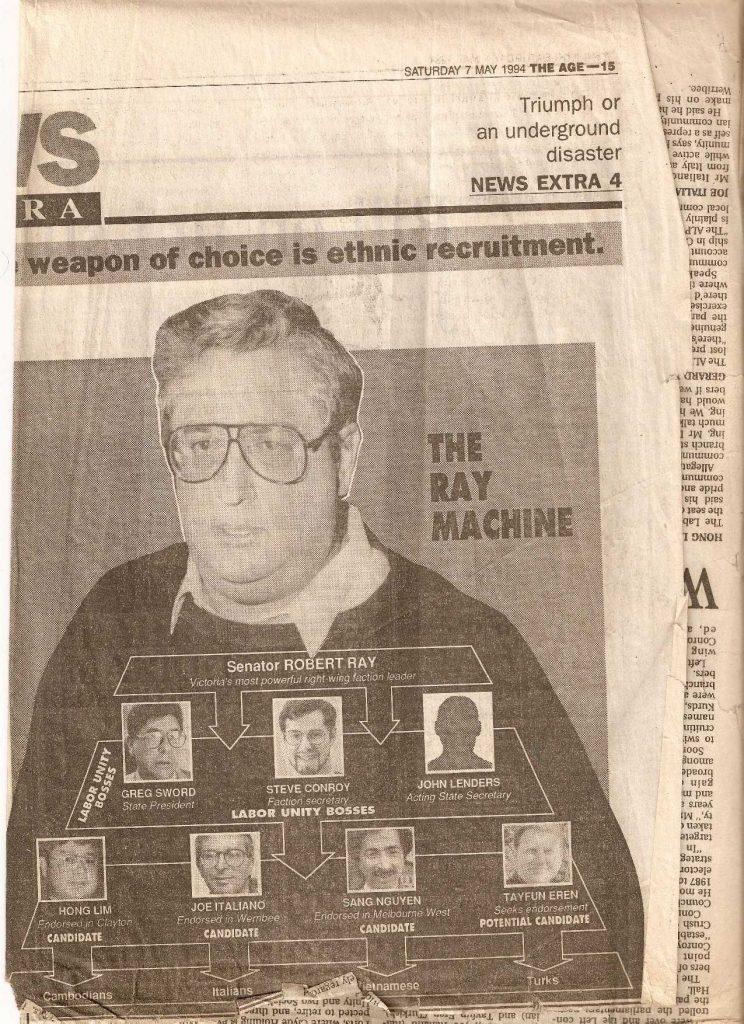
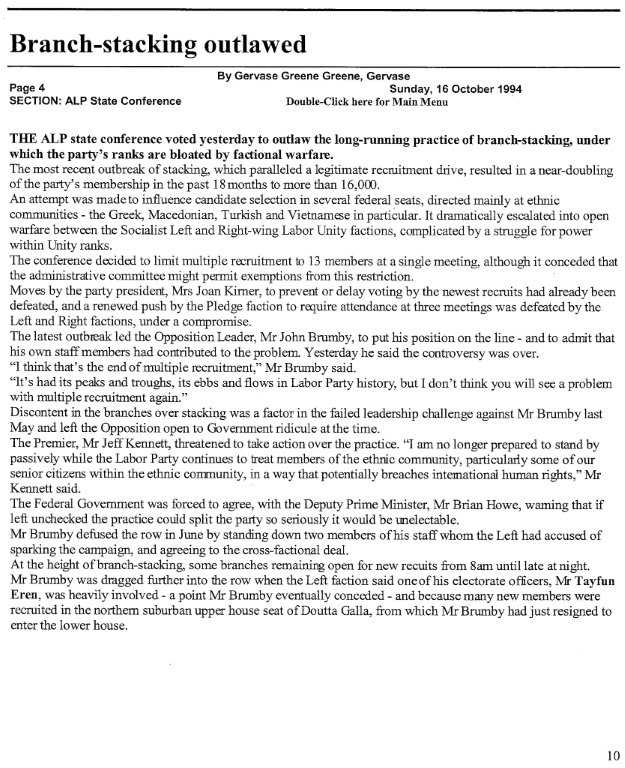
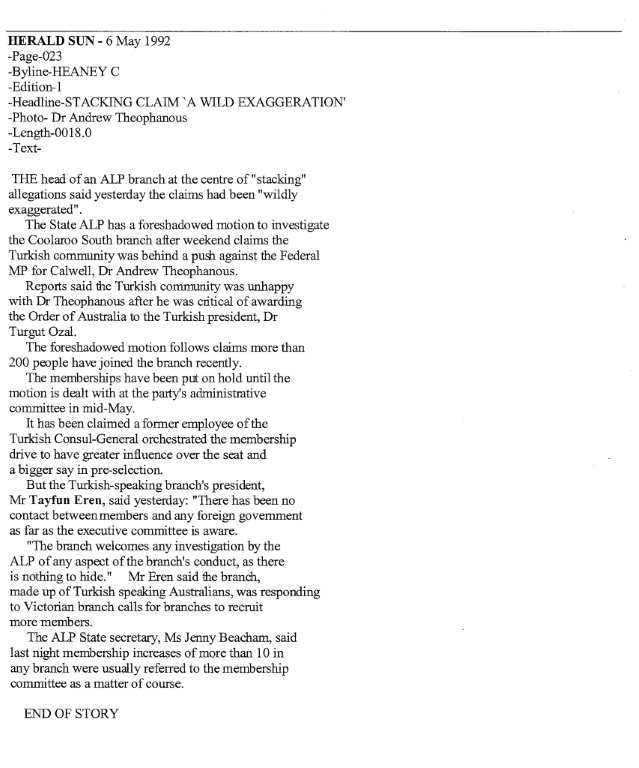
  • Tayfun Eren vs. Dimitris Dollis (Papandreou’s senior adviser)

    Tayfun Eren vs. Dimitris Dollis (Papandreou’s senior adviser)

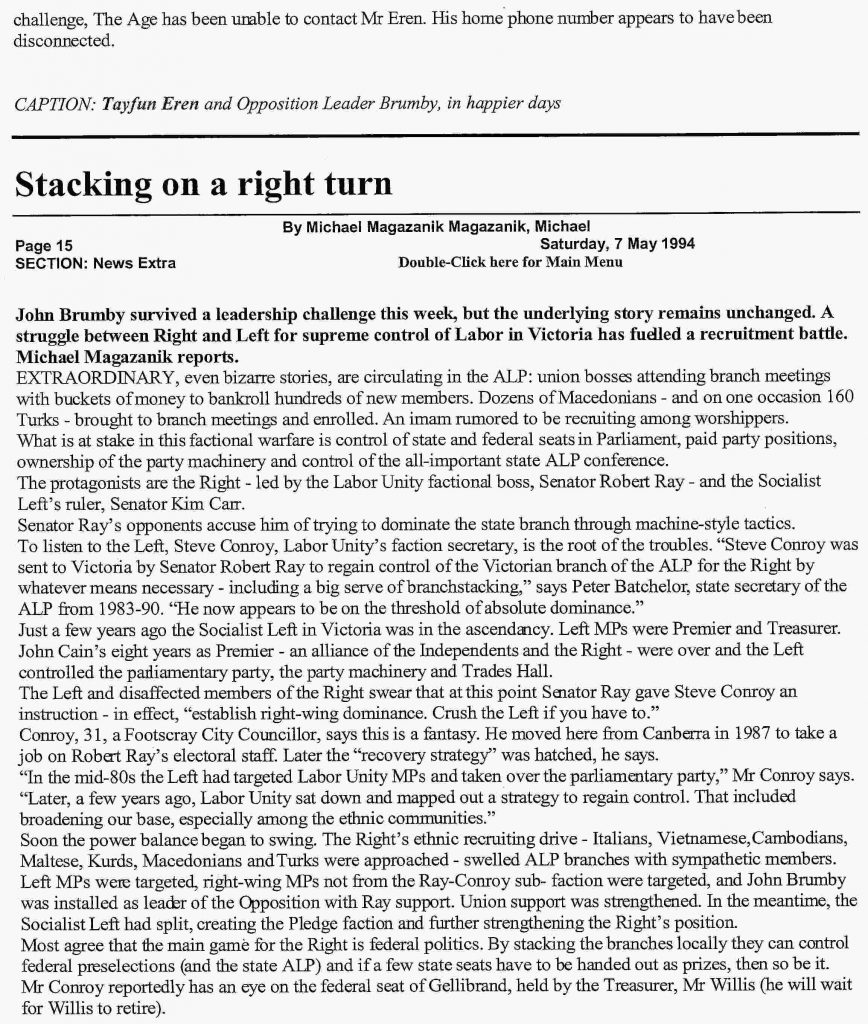
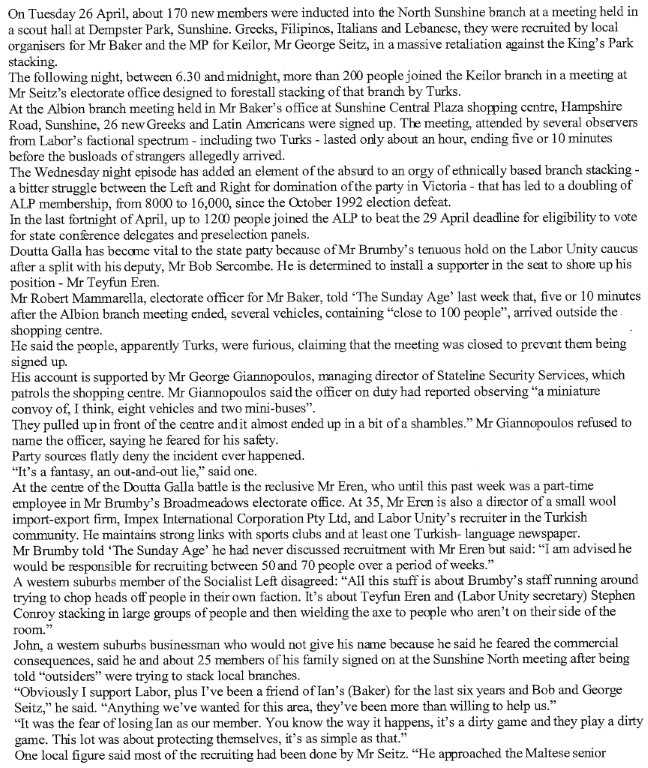
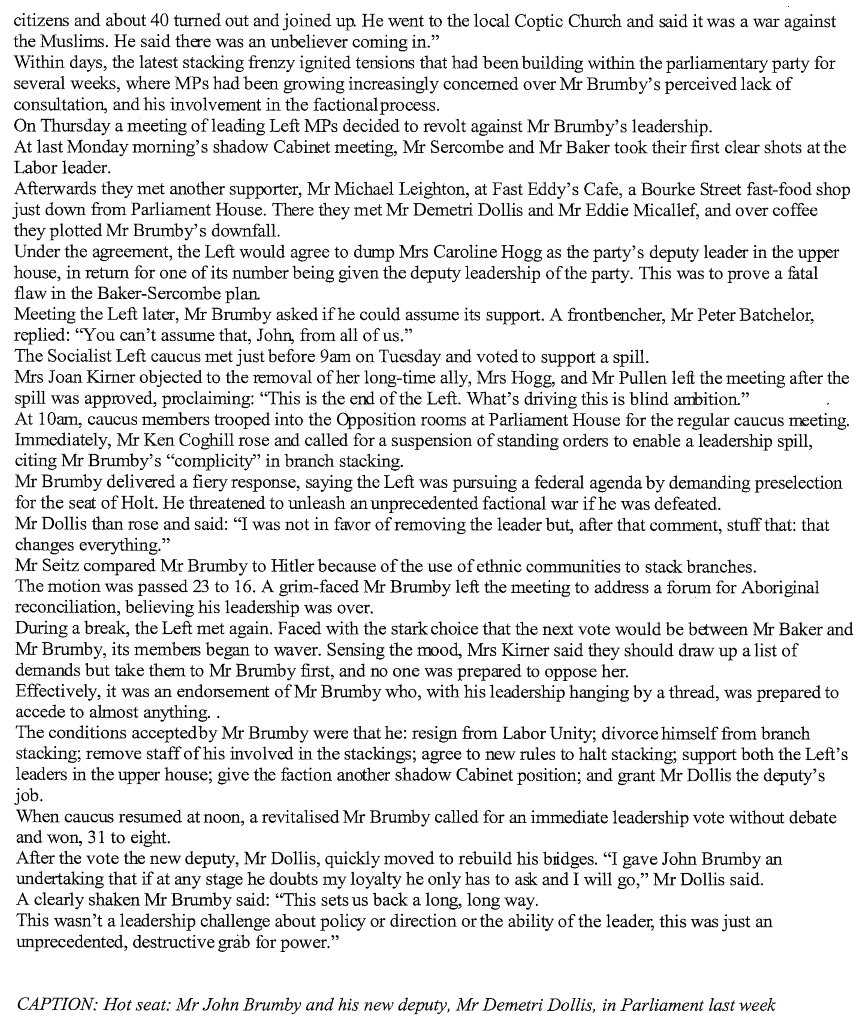
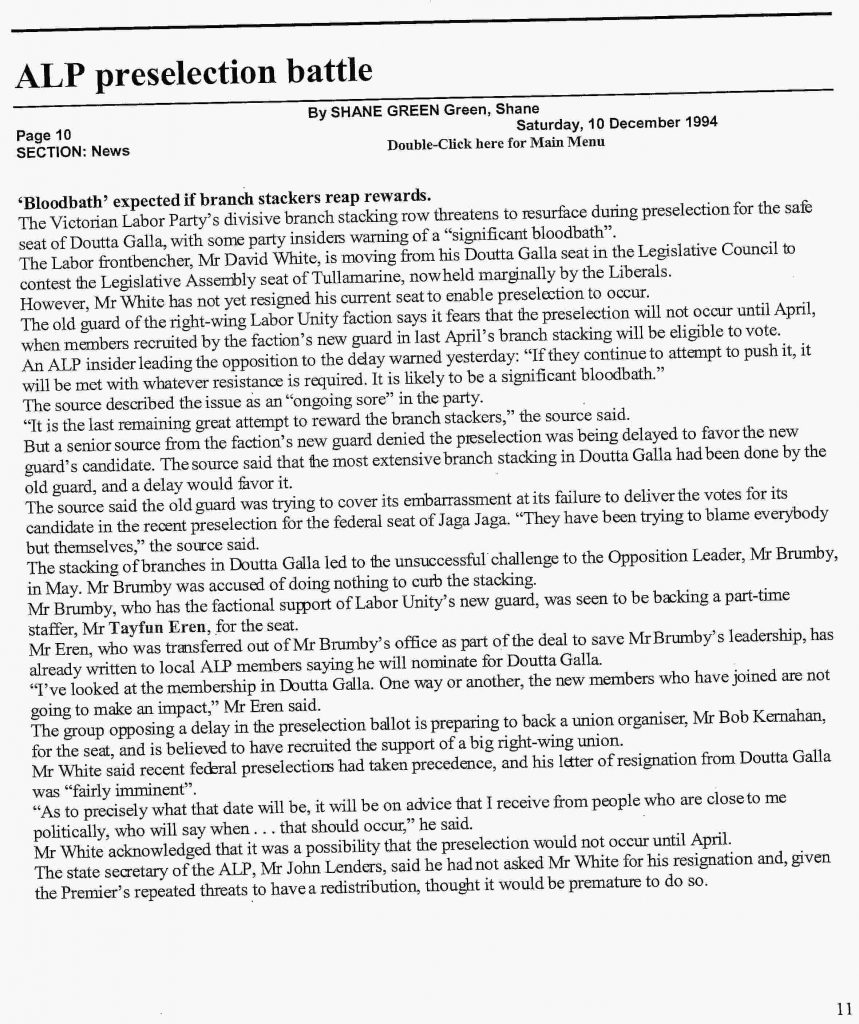
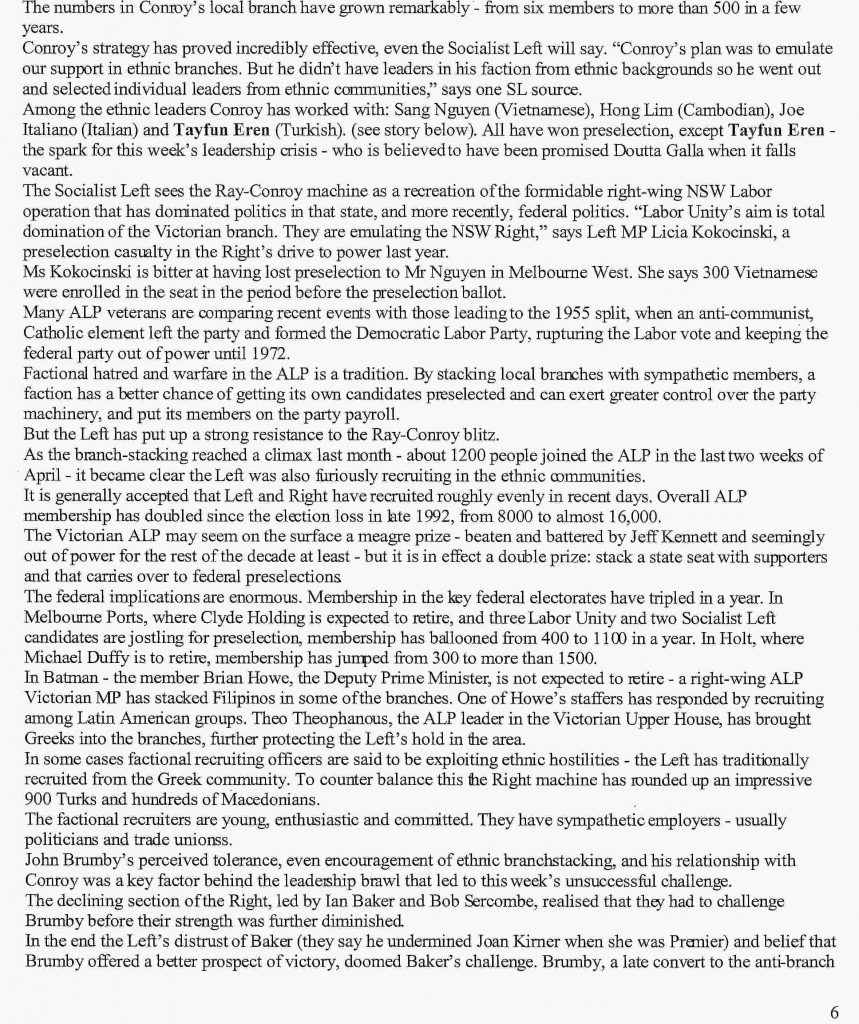
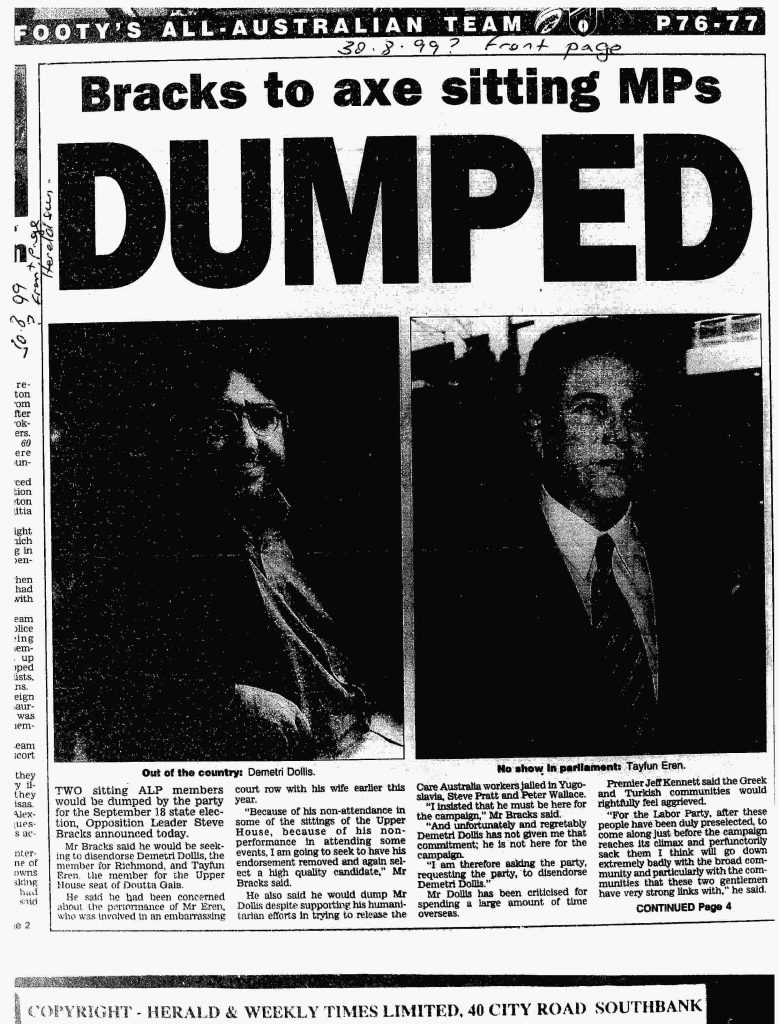
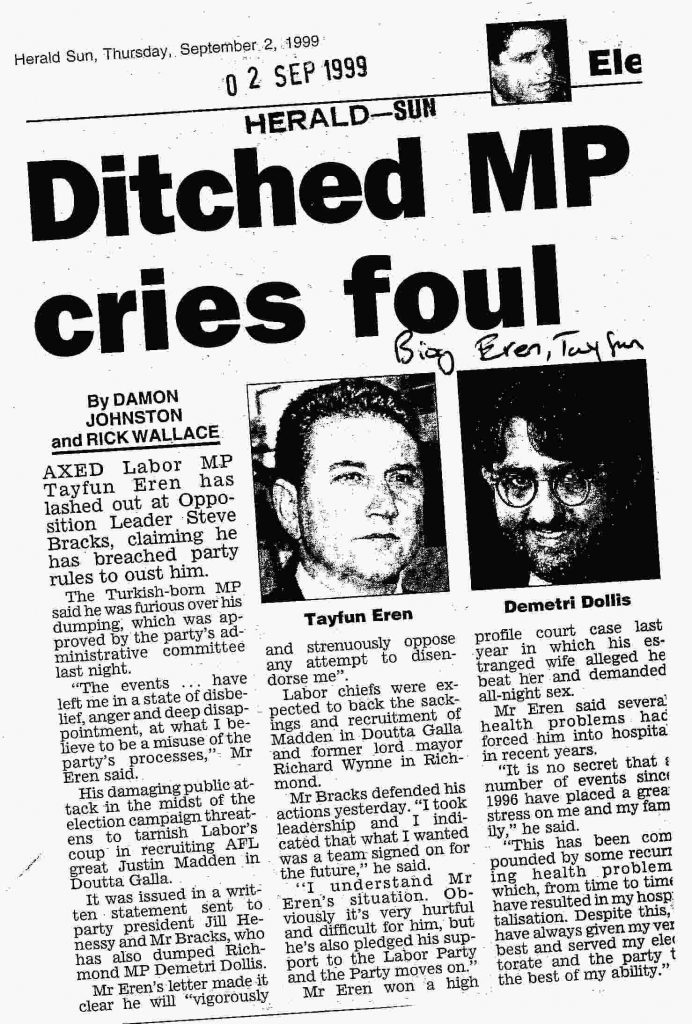
    Avustralya’da eski Labor milletvekilerinden Tayfun E. Eren dostumuzun hasmı ve Türk davasına 1999’dan beri aktif bir şekilde sürekli köstek olan Dollis ile ilgili arkaplan aşağıda…  En son Assyrian “Genocide” ve Pontus konusunu planlayan ve yürürlüğe sokan kişi bu Dollis… 1999 dan evvel de Avusturalya meclisinde Yunanistan’ın ‘köstebek’ görevini yapıyordu. Şu anda Papandreou’nun danışmanlarından oluyor kendileri…  Ve 1999’dan beri de Yunanistan’ın Dışişlerinde çalışıyor… İlgililerin dikkatine sunulur… Detaylı bilgi isteyenler Turkish Forum’a başvurabilirler…

    Saygılar,

    Tayfun E. Eren

    Haluk Demirbag

    George Papandreou faces early test after winning Greek elections

  • Peter Wilson, Europe correspondents
  • From:The Australian
  • October 05, 2009 1:57PM
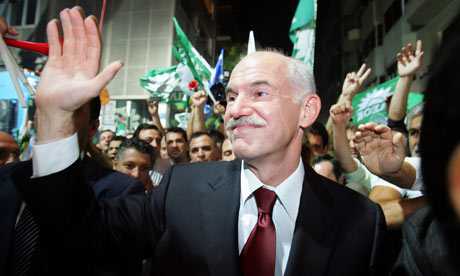
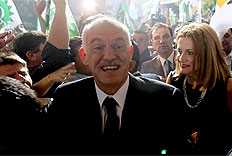
  • Greek socialist party leader George Papandreou after being elected prime minister of Greece. Picture: Getty Images Source: The Australian

    GREEK voters have thrown out their five-year-old conservative government and made centre-left leader George Papandreou prime minister, a post previously held by both his father and grandfather.

    Mr Papandreou, a US-born former foreign minister, will follow his father Andreas and grandfather George in heading Greece’s government but he faces urgent economic challenges and a major battle to curb corruption.

    AUDIO: Peter Wilson talks to George Papandreou

    The PASOK socialist party that his father founded in 1974 is expected to win about 160 seats in the 300-seat parliament, reassuring markets by securing a stable majority at a time when urgent government reforms are needed.

    Mr Papandreou pledged to “turn a page” on scandals and economic malaise associated with the outgoing conservative government.

    “We stand here united before the great responsibility which we undertake,” Mr Papandreou told cheering supporters in central Athens when the result became clear.

    “We have a mandate to turn a new page,” Mr Papandreou said as supporters of his Pasok party celebrated the socialists’ return to power after more than five years in opposition.

    “Today we start together the great national effort of placing the country back on a course of revival, development and creation. We don’t have a day to waste.”

    He said PASOK had waged “a good fight to bring back hope and smiles on Greeks’ faces … to change the country’s course into one of law, justice, solidarity, green development and progress”.

    PASOK won by a larger than expected margin of 44per cent to 34per cent over the conservative New Democracy party.

    Mr Papandreou, 57, told The Australian last week that if elected he would make several reforms to help members of the Greek diaspora in Australia and elsewhere, making it easier for them to work in Greece and to vote in Greek elections.

    He said he would change Greece’s tough education rules so as to recognise three-year bachelor degrees issued by Australian universities as the equivalent of four-year Greek degrees, removing a hurdle that has long frustrated Australians wanting to work in Greece.

    He also vowed to allow the one million-plus registered Greek voters who live overseas to vote by mail or at local consulates instead of the current system which requires them to travel to Greece to cast a ballot.

    Often criticised in Greece for speaking English more fluently than Greek, Mr Papandreou has fought PASOK’s old-style party chieftains in a bid to modernise the party, dropping from its candidate list several factional heavies including the former prime minister Costas Simitis.

    The defeated prime minister, Costas Karamanlis beat Mr Papandreou in elections in 2004 and 2007 but yesterday resigned the leadership of New Democracy to accept responsibility for his failed gamble of calling a snap election just half way into a four-year term of parliament.

    Dora Bakoyannis, the 55-year-old foreign minister who served as mayor of Athens during the 2004 Olympic Games, is the frontrunner to replace him as leader of the conservative party, a post once held by her father Constantine Mitsotakis.

    Mr Karamanlis had called for an austere series of government cuts to rein in the deficit and national debt but he was hampered by the fact that he had made little progress in the previous five years on his vows to fight corruption and reform an outdated government bureaucracy.

    Mr Papandreou campaigned on a promise of a 3 billion Euro ($5b) stimulus package but faces immediate talks with Euro zone officials concerned that Greece’s budget deficit is already twice the 3 per cent of GDP allowed under the rules of the common currency.

    The socialist leader has vowed to increase wages and pensions and fund the extra spending by increasing taxes on the rich and cracking down on tax evasion.

    Raised in Sweden and the US when his father was in political exile, Mr Papandreou promised to appoint an advisory panel of foreign economic experts and tackle Greece’s high levels of corruption and its tradition of new governments handing out state jobs and contracts to their own cronies.

    A senior job in the new administration is certain to go to close Papandreou advisor Demetri Dollis, a former Victorian Labor MP who served as deputy leader of the state opposition before being stripped of his ALP preselection by then leader Steve Bracks in 1999 for spending too much time overseas.

    Mr Dollis held a high-level job in the foreign ministry when Mr Papandreou was foreign minister and has worked in Mr Papandreou’s personal office over the past five years.

    , October 05, 2009

    [2]

    Papandreou looks to Greek diaspora as he forms new cabinet

    George Papandreou is expected to tap international talent for his government to help tackle Greece’s multiple crises

    • Helena Smith in Athens
    • guardian.co.uk, Tuesday 6 October 2009 10.50 BST
    George Papandreou is expected to announce his cabinet later today. Photograph: Simela Pantzartzi/EPA

    Greece‘s socialist leader George Papandreou was sworn in as prime minister this morning amid clear indications that the new government he will lead will seek to tap talent in the diaspora to address the multiple crises facing the country.

    The English-speaking prime minister, propelled into office following an overwhelming victory in Sunday’s elections, is expected to announce a cabinet this afternoon to take on Greece’s financial and economic crisis and social malaise.

    US-born Papandreou was educated in Sweden, England and Canada and is a Harvard University fellow. His closest aides include English-speaking Greeks born and brought up in Africa, America and Australia. The 57-year-old politician is himself more comfortable speaking English than Greek.

    “Part of my identity is being a Greek of Greece and a Greek of the diaspora,” Papandreou told the Guardian. “I think in many ways being Greek is being ecumenical, open to the world. We are a country that has always been open with ideas and contact with the rest of the world as a shipping nation and tourist destination.”

    Through his network of connections as head of Socialist International, the global grouping of leftwing parties, Papandreou has already embarked on talks with renowned experts in the fields of economy and public health. The Nobel economics laureate Joe Stiglitz is in touch with him “on a daily basis”, offering advice on how to rescue Greece’s debt-ridden economy from the brink of bankruptcy.

    Also a Harvard professor and international health expert now sits in the Greek parliament following his appointment as a non-elected MP with Papandreou’s Pasok party.

    “George has always said there is an untapped world and that is the other Greece in the diaspora that he is going to work with, talk to and take advice from to help us get the country out of this situation,” said Dimitris Dollis, a Greek Australian who is among Papandreou’s senior advisers. “Ties with the diaspora are going to be much stronger.”

    Among candidates for prominent cabinet roles are George Papaconstantinou, a graduate of New York University and the London School of Economics who worked at the OECD in Paris, and Louka Katseli, a former economics professor at Yale.

    After years of introspection under the outgoing centre-right government, Greece is also expected to become far more “open and outward looking” in its foreign policy under Papandreou, who won international plaudits back in the 90s when he almost single-handedly improved relations with Turkey by daring to pursue reconciliation.

    “Being parochial is a state of mind and we want to get out of it,” said a source close to Papandreou who will be one of his senior foreign affairs advisers. “The [outgoing] conservatives chose to tread water in a turbulent sea, no initiatives were taken and relations with out neighbours gradually stalled. Our approach is going to be a lot more cosmopolitan, open and creative which is George’s natural inclination.”

    The change in style has been welcomed by western diplomats startled by the rise of nationalism and xenophobia in Greece in recent years.

    And amid speculation that Papandreou will assume responsibility for foreign affairs – at least initially – many are hopeful that relations with neighbouring Turkey, Macedonia and the rest of Europe will improve. In Istanbul and Ankara there were scenes of jubilation with some Turks cracking open bottles of champagne when news of Pasok’s victory came through. In recent months ties with Turkey have worsened with tensions in the Aegean rising noticeably.

    https://www.theguardian.com/world/2009/oct/06/george-papandreou-sworn-greek-pm, 6 October 2009

    [3]

    Greek NGO teacher Lerounis returns to Greece after release by Afghan Taliban militants

    Greek teacher and NGO worker Athanassios Lerounis arrived in Athens on Saturday following his release earlier in the week by Afghan Taliban militants seven months after they kidnapped him in the Chitral region in northern Pakistan.

    Lerounis, chairman of the non-governmental organisation Greek Volunteers, was kidnapped outside his museum in the remote Kalash valley last September, while his guard was fatally shot. He had been working on a cultural project in the area since 2001.

    Professor Lerounis, a Greek teacher and social worker, was kidnapped on September 8, 2009 following an attack on the Kalash village of Brun, in Pakistan, where he lived. He was abducted outside the ethnological museum Kalash-Dur he had created himself in Pakistan to preserve and showcase the culture of the Kalash people. Lerounis has also founded two primary schools, three motherhood centers and the Kalash Cultural Center in Bumburate Valley.

    Lerounis was released in Nooristan province in Afghanistan on Wednesday, and Pakistani officials took him to Chitral later that night. He was taken to the Greek embassy in Islamabad on Friday morning to await transportation back to Greece arranged by the Greek government.

    A visibly moved and relieved Lerounis arrived Saturday at Athens’ ‘Eleftherios Venizelos’ International Airport, where he thanked everyone who had helped in securing his release.

    “I am very happy to be standing on Greek ground after so many months. A big thank you to the people in Pakistan, the Greek government and the personal interest of the prime minister, who acted as a human being and not a politician,” Lerounis told waiting reporters.

    Lerounis also thanked prime minister George Papandreou’s personal envoy to Islamabad, ambassador-at-large Dimitris Dollis, and the Greek ambassador in Islamabad Petros Mavroidis, who accompanied the NGO volunteer on his flight to Greece, as well as all people who were supportive throughout his ordeal.

    Dollis confirmed a statement by Wazir on Thursday that no ransom was paid, adding that Lerounis’ release was a big success of the Greek government, Greek diplomacy and the country, and called Lerounis “an example of perseverance”.

    Asked if he would return to the Kalash tribe, Lerounis said that “with the support of the Greek and Pakistani government, I would like to return there some day and continue my work”.

    http://www.hri.org/news/greek/ana/2010/10-04-12.ana.html#10, 12 April 2010

    [4]

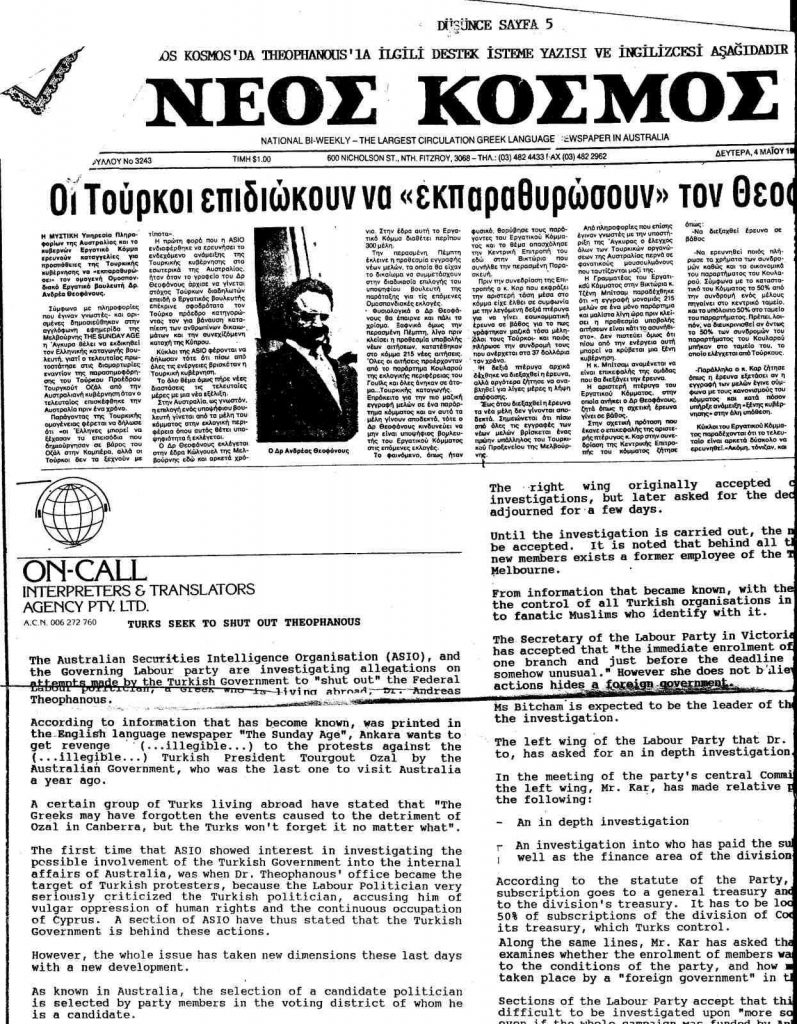
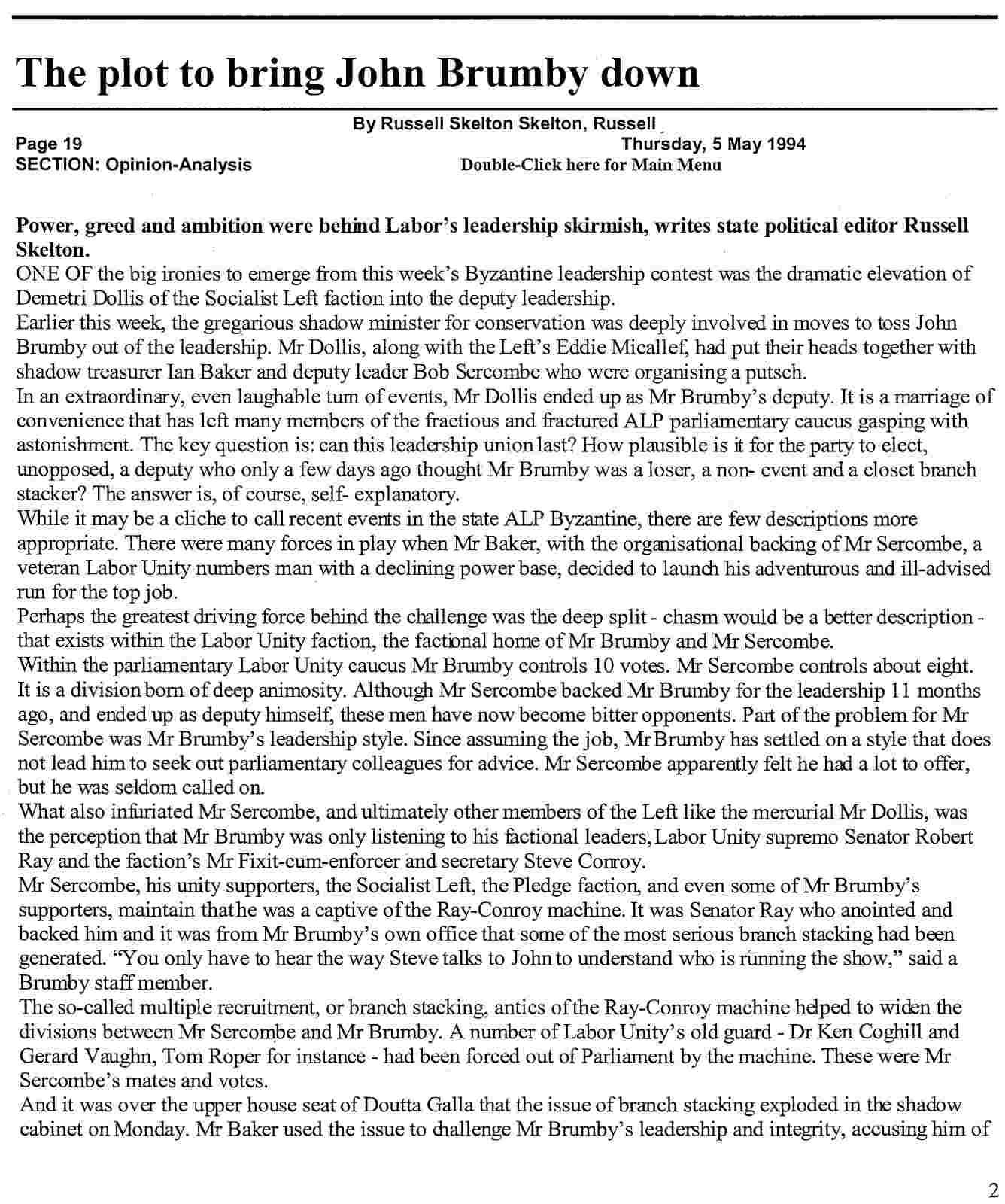
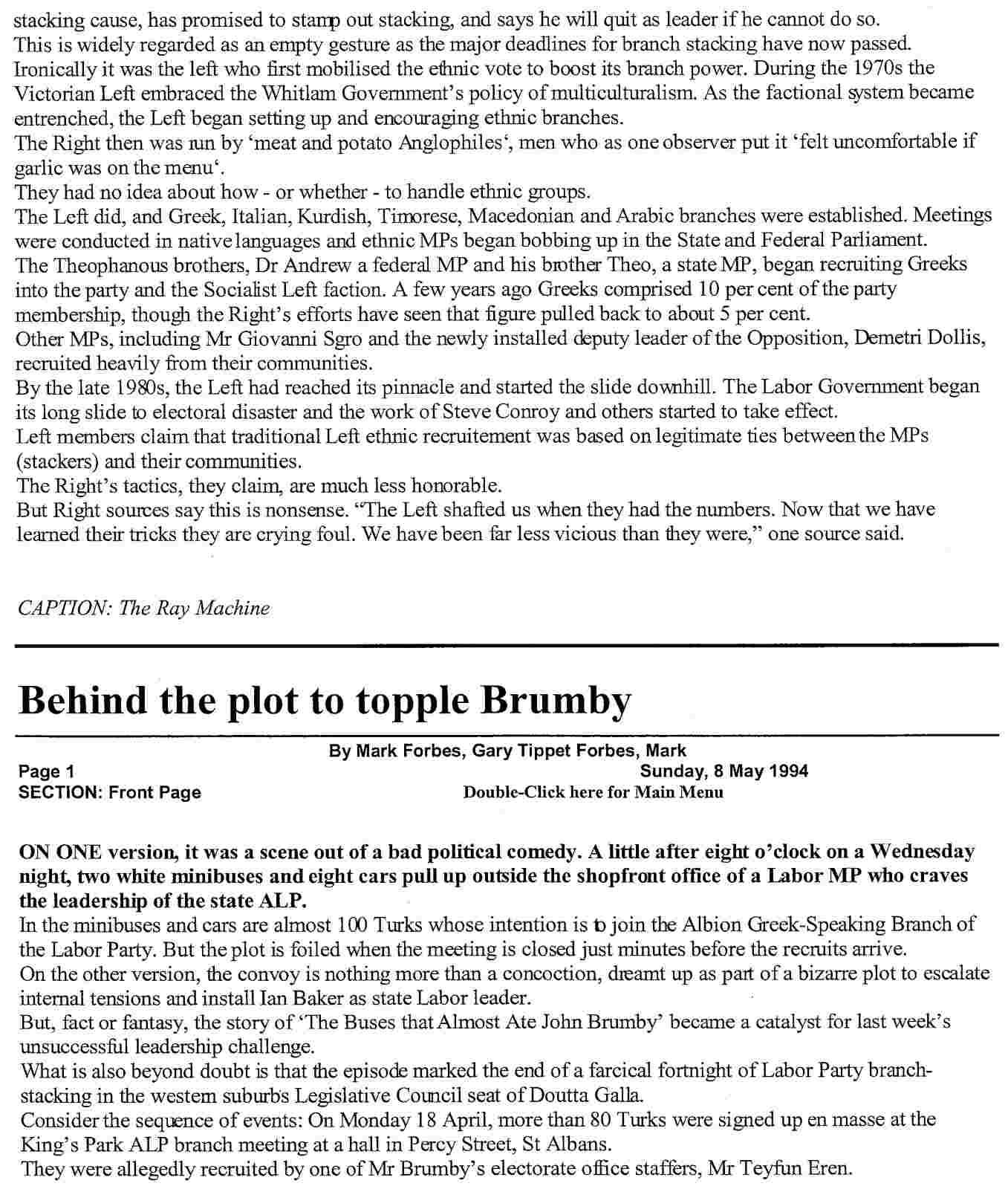
    Yunan Avusturalyan gazetelerinde Avustralya Turkleri ile ilgili yazilar

    [5]

    [6]

    [7]

    Bearded Dollis

    [8]

    [9]

    [10]

    [11]

    [12]

    [13]

    [14]

    [15]

    [16]

    [17]

  • How A Court Case Was Won In France Against A Dashnak

    How A Court Case Was Won In France Against A Dashnak

    Maxime Gauin
    Paris, May 2, 2010

    © This content Mirrored From  http://armenians-1915.blogspot.com © This content Mirrored From  http://armenians-1915.blogspot.com
    © This content Mirrored From  http://armenians-1915.blogspot.com © This content Mirrored From  http://armenians-1915.blogspot.com © This content Mirrored From  http://armenians-1915.blogspot.com

    “We live in fact for some moments, intense and special; the rest of the time, we wait these moments.”

    Edgar Faure (1908-1988), French lawyer and statesman.

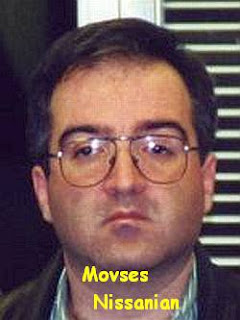
    On April 27, the Lyon’s tribunal declared Movsès Nissanian, municipal counselor of Villeurbanne (biggest city of Lyon’s suburb) member of Armenian Revolutionary Federation (ARF-Dashnak), guilty of “public insult against an individual” (me) and sentenced him. As a preliminary information, I have to say the following:

    — Lyon is comparable to Boston in USA for the influence of Armenian nationalism, and the ambiance in Villeurbanne could be compared, by some aspects, with New Jersey’s ambiance. The mayor and former MP, Jean-Paul Bret, has some common points with US Senator Robert J. Menendez.

    — I received no support from Lyon’s Turkish associations for the costs, or any other aspects, of my court case.

    — As a MA student in history, I sued Mr. Nissanian to defend my dignity and the freedom of speech, against the political misuse of history.

    I) Background: the facts, the procedure, the collateral incidents

    .

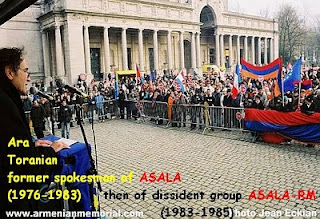
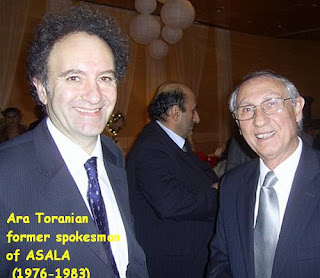
    February 15, 2008. During a meeting about the Sirma Oran affair, Movsès Nissanian says that I am exactly like “those who sent Jews to Auschwitz” during the WWII. He says that because I wrote an article, published on the Web, criticizing the mayor of Villeurbanne (who harassed Sirma Oran by his questions about the so-called “genocide”) and the ARF (for his crimes of the past, including terrorism and massacres of Muslims and Jews). I signed the article by initials only, to remain quiet, but my name was revealed on the free-access forum of armenews.com, first French-Armenian Web site. His editor-in-chief is Ara Toranian, former spokesman of ASALA (1976-1983) then of dissident group ASALA-RM (1983-1985).

    May 15, 2008. I file a complaint in Lyon’s tribunal.

    June 2008. The Lyon’s prosecutor opens a criminal investigation.

    October 21, 2008. I file a complaint in the police station of my Parisian district, against vitriolic messages who insult and defame me, on the forum of armenews.com. I sent before several e-mails to Mr. Toranian, but he did not respond, so I take my promise to complaint. Less than seven hours after that, Mr. Toranian destroys for ever his dear free-access forum. Even some of his friends asked to him, before my complaint, to close this forum, because it was full of racist, anti-Semitic and anti-homosexual messages, several with direct incitation to physical violence, including murder.

    December 2008 (I do not remember the precise date). I give to the chief of Lyon’s investigative magistrates, in charge of my complaint, the record of Mr. Nissanian’s statements during the meeting of February (Jean-Patrick Martz, husband of Sirma Oran, was in the room and recorded the speeches). The record is later authenticated by an expert, because a demand of Mr. Nissanian.

    July 31, 2009. The procedure is completely finished. Both the chief of investigative magistrates and the deputy prosecutor ask that Mr. Nissanian be sent in front of Lyon’s tribunal for “public insult against an individual”.

    September 9, 2009. The trial is fixed to November 3.

    End of October 2009. Mr. Nissanian’s lawyer, Xavier Vahramian, files his written conclusions: 18 pages, plus 33 pieces, mostly about the so-called “genocide”; Mr. Nissanian lawyer argues that since I “denied the genocide”, I am guilty of “provocation”, as defined by law, and that, as a result, Mr. Nissanian must be not sentenced. He adds that “ARF did never use terrorism” and even that “ARF has always condemned terrorism”. The defense lawyer filed nothing during more than one year of investigation. It is now too late to make an appropriate response. Me and my lawyer ask that the trial be postponed; the tribunal accepts and fixes the date to January 5.

    One can notice that the accusations of war crimes against Muslim and Jewish civilians, perpetrated by ARF members from 1914 to 1922, were never challenged, or even mentioned, by Mr. Nissanian or his lawyer, during the whole procedure.

    November 3, 2009. Oran vs. Bret trial. The ambiance is terrible. I am scolded upset when I am leaving the tribunal’s room, by fanatic young Dashnaks (it is fair to add that few others young Dashnaks were unaggressive and expressed their disapprobation to such an aggressive attitude). I prevent insult and assault only in asking: “Do you want take the place of Mr. Nissanian?” I file a “main courante” (complaint without legal consequence) in the police station of my Parisian district, in coming back to my home.

    November-December 2009. In French National Library, I search extensively in the archives of Haïastan, official newspaper of young Dashnaks and France-Arménie, monthly edited by Dashnaks of Lyon; I photocopy many articles supporting stridently terrorism. During the same time, I write a draft of response, about Dashnak crimes (terrorism of 1890’s and 1900’s years; terrorism of interwar period; collaboration with Nazism; terrorism of 1970’s and 1980’s; celebration of terrorism until today) and about the allegations of “genocide”, using writings of Feridun Ata, Donald Bloxham, Gwynne Dyer, Edward J. Erickson, Yusuf Halaçog(lu, Hilmar Kaiser, Guenter Lewy, S,inasi Orel and Sürreya Yuca, Stanford J. Shaw, Philip H. Stoddard, Malcom E. Yapp and others. My lawyer makes with this draft two appendixes for the revised version of his written conclusions (the first was established in October 2009). Written statements of Türkkaya Ataöv, Mumtaz Soysal and Norman Stone are also filed. I would like express my thanks to these professors.

    January 4, 2010. Ara Toranian publishes on his site armenews.com a defamatory article against me, saying that Movsès Nissanian was right in saying that I have the same mentality of those who sent Jews to Auschwitz. Immediately, I sent an e-mail to him, threatening to make a new court case. Less than one half-hour, he answers that to prevent any misunderstanding about his intentions, he is deleting the article (and keeps his promise).

    II) The trial of January 5, 2010, and its consequences

    The trial happens in front of the same tribunal than for Oran vs. Bret case. However, the ambiance is much more quiet for this trial that on November 3. Not a single young Dashnak, and less activists in general. All are calm — excepted one, expelled by the president in the beginning of my statement. I speak about terrorism: nobody screams. I say that Mr. Toranian was president of the “National Armenian Movement for ASALA” (I say that because Mr. Nissanian used one of his articles for his defense); Mr. Toranian is three or four meters behind me; he says absolutely nothing. The president asked to everybody to be short, so I say almost nothing about “genocide” claims, just quoting Hilmar Kaiser’s praising of Yusuf Halaçog(lu.

    Movsès Nissanian’s lawyer asks few question to me, but no one about history. My lawyer asks to his colleague of defense: “You asserted in your written conclusions that ‘ARF has always condemned terrorism’; did you file a single piece proving that?” No reply. My lawyers asks then to Mr. Nissanian if he regrets to have used such words against me. The defendant answers that yes.

    Later during the trial, the president says: “the tribunal has not to decide between historical thesis”.

    As usual in French procedure, the last word is for the defendant. In his short final declaration, Mr. Nissanian says: “I reprove these acts of terrorism” used by ARF and ASALA.

    Mid-January 2010. Clash in the staff of France-Arménie, which published my account of trial on its Web site. Readers are chocked by what Mr. Nissanian said about terrorism, and call him a “coward”, a “shame” for ARF. Both my account and the comments are finally deleted, and the editor-in-chief, the passionately anti-Turkish racist Laurent Leylekian is furious because this incident.

    III) The judgment: some commentaries

    It is pronounced on April 27. The full text is available here:

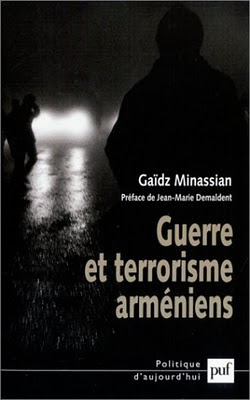
    Even more quiet ambiance than on January 5. No one Armenian media announced the date of the judgment. The tribunal rejects the excuse of provocation, arguing that such an excuse needs to be a direct and personal attack against the person who insult, and must be made few time before that the insult happens. No allusion to “genocide” claims in the discussion of the excuse of provocation. Mr. Nissanian is declared guilty of insult against an individual and sentenced. The president found a judgment of the Cour de cassation (French Supreme court) of April 1908 (!), saying that there is a difference between a “fault” of victim (excessive imprudence in the expression), which decreases the sentence, and the excuse of provocation, which prevents a sentence. In this case, the tribunal argues that it is an unneeded strident formulation to quote Gaïdz Minassian’s critical analysis about Dashnak terrorism (ARF “elevated terrorism until a saint method”, he writes in his book “Guerre et terrorisme arméniens”) in a context which concerns not ARF, but its Villeurbanne’s chapter, not involved in terrorism or in glorification of terrorism. I wanted not to libel this section, but to show the contrast between the repeated ask to Sirma Oran about “genocide” recognition (asks made by the Villeurbanne’s mayor) and the complete absence of ask of “recognition” about crimes perpetrated by ARF; but I did not insist of this point, before and during the tribunal, because I did not know the decision of 1908, and because my lawyer did not think to it.

    So, Mr. Nissanian is sentenced, but to slight punishment: 300 € of suspended fine; 90 € as costs of judgment’s registration; 500 € for me. The president says that “it is a warning” to him.

    Despite the slightness of the sentence, this judgment is terrible for ARF. The “genocide” claims are not accepted, not even discussed; the tribunal confirms by this way that he does not want “decide between historical thesis”.

    The basic accusation of terrorism against ARF is validated; the judgment says that I mentioned “the acts attributable to ARF”, referring, among others, to terrorism. Even the use of jurisprudential notion of “fault” is terrible for ARF: the fundamental contradiction between the Dashnak terrorism on one side, the Dashnak desire of respectability, not the say the Dashnak arrogance in pretending to say what is good, on the other side. Mr. Nissanian escaped to a severe sentence only in substantiating his claims to be not favorable to terrorism, i.e. in saying “I reprove these acts of terrorism”; so, he broken ties with a considerable part of Dashnak activists. But the worst is perhaps that this defeat happened in front of the same tribunal than Mr. Bret’s success against S?rma Oran.

    When I am writing this text, not a single Armenian Web site or forum has been mentioned the judgment; so, even is the sentence is slight, it seems sufficient for a strong symbolic effect.

    As a result of two years of I renounce to nothing and regret nothing; I express my thanks to the thirty persons who I did not know before the judgment, and who sent to me their congratulations for the success in front of Lyon’s tribunal.

    Many other people could make a successful court case, in France as well as in other countries of Western Europe, against Armenian nationalists who use insult or defamation as a political instrument — frequently with more viciousness and perseverance than Mr. Nissanian; one can hope, at least, that I will not remain alone to do that for a long time.

    Maxime Gauin
    Paris, May 2, 2010


    Google Translation Of Maxime gauin’s Article in

    The Theodor Mommsen Villeurbanne
    A misunderstood genius: Jean-Paul Bret
    By Mr. G, lundi11 February 2008

    “Hypocrisy is a tribute that vice pays to virtue. “

    Francois de La Rochefoucauld, Maxims.

    The mayor of Villeurbanne, Mr. Bret is an extraordinary perspicacity. He decided to joint list with the Greens. He asked one of the candidates nominated by the party to “recognize the genocide of Armenia. This person has a Turkish name, she would have called Jeannine Smith, the same question he asked was, no doubt. This person runs. It is not enough for Mr. Bret: he asks her to repeat the “Armenian community” of Villeurbanne. She runs again. It is still not enough for Mr. Bret, which then requires a “recognition” writing.

    Hunting “revisionist”

    For Mr. Bret, anyone denying that the plight of Armenians in 1915-1916 could be a genocide, he said, “Holocaust denier” – even if this dispute does not affect the individual suffering and the magnitude of various crimes. The slightest suspicion that subject can cause the most severe sanctions, the most exemplary. Mr. Guenter Lewy, professor emeritus of political science at the University of Massachusetts, who fled Nazi Germany as a teenager with his family in 1939, is “revisionist”.

    “The three pillars of the Armenian claims, to classify the losses suffered during the First World War as genocide fail to substantiate the charge that the Young Turk regime organized the massacres. Other alleged evidence of a plan of annihilation are no better.

    Apply or not the term genocide to events which occurred here nearly a century may seem unimportant to many historians, but this application – or not – keeps a great political importance. The Armenians and their supporters, such as Turkish nationalists have made claims and defended their cause at the cost of simplification of historical reality, complex, and by ignoring crucial evidence that would lead to a more nuanced view of the past. Scholars have based their professional position on previous work, often ignoring dishonest interpretations of primary sources as they behaved. Against the backdrop of major policy issues, both sides have sought to silence opponents of their views, and to prevent a confrontation of all arguments in this case [1]. “

    Historians specializing in Ottoman history, and whose fame is international, so all are “deniers”, including MM. Bernard Lewis (Jewish), Stanford Jay Shaw (of the Jewish faith), and Gilles Veinstein (born in 1945 in Paris, in a Jewish family).

    “During the rest of the [First World War], much of the Armenian population was killed or fled. […] The Armenians say that these deaths are the result of a policy of genocide implemented by the Ottoman government. […] The minutes of the council of ministers did not confirm this, rather they show great willingness to investigate and improve a situation where six million people (Turks, Greeks, Arabs, Armenians, Jews and others) were killed by a combination of rebellions, attacks by bandits, killings and massacres-cons, famine and diseases, compounded by sudden foreign invasions, in which all peoples of the empire, Muslim and non-Muslims, have counted the victims and criminals. […] After the Revolution [Russian], a truce was signed between the Republic and the Ottoman Empire, but the Armenian units then began a massacre of Turkish peasants generalized still resident in the South Caucasus and eastern Anatolia, where were more than 600,000 refugees, in addition to 2,295,705 Turks living in the provinces of Erzurum, Erzincan, Trabzon, Van and Bitlis after the war [2]. “

    “1) There was no hate campaign aimed directly at the Armenians, no demonizing comparable to European anti-Semitism.

    2) The deportation of the Armenians, although widespread, was not total, and in particular it did not apply to the two main cities of Istanbul and Izmir.

    3) The Turkish actions against Armenians, although disproportionate, were not born from nothing. The fear of a Russian advance into the eastern Ottoman provinces, knowing that many Armenians viewed the Russians as liberators against the Turkish regime and awareness of Armenian revolutionary activities against the Ottoman State, all contributed to create an atmosphere of anxiety and suspicion, aggravated by the situation becoming more desperate by the Empire and the neuroses – oh – usual time of war. In 1914, the Russians formed four large Armenian volunteer units and three others in 1915. These units accounted for many Ottoman Armenians, including some well-known public figures.

    4) The deportation for criminal reasons, strategic or otherwise, had been practiced for centuries in the Ottoman Empire [3]. “

    “Second point: there were also many casualties among Muslims throughout the war, the fighting but also by actions against them by Armenians, in a context of ethnic and national rivalry. If there are victims forgotten, are those, and the Turks of today are right to denounce the bias of Western opinion in this regard. Is it because there were only Muslims that are neglected, or because they implicitly consider that the ultimate success of their peers deprives them of the status of martyrs? What view would carry us so on the same facts, if things had turned out differently, if the Armenians were eventually based on the rubble Ottoman state in Anatolia sustainable?

    But the last point is crucial, debate, its legal and political implications, is whether the massacres perpetrated against the Armenians were the order of the Young Turk government, if the transfers have been a lure for systematic extermination company, implemented in different ways, but decided, planned, RC governmental level, or if the Young Turks were only guilty of recklessly triggered movements which ended in bloodshed. Merely asking the question may seem absurd and outrageous. It is true that state involvement is a prerequisite for the complete application to the Armenian tragedy of the term genocide, as it was coined in 1944 and defined by the Nuremberg Trials and the United Nations Convention of 1948.

    It must however admit that one has so far no evidence that government involvement [4]. “

    Similarly, are counted among the “deniers”, Professor Eberhard Jäckel, one of the leading names of Nazi [5], the UK government [6], the German government [7], the Spanish government, Israeli Parliament [8], the Bulgarian Parliament [9] and the Nobel Peace Shimon Peres. [10]

    Some disgruntled say that Mr. Bret has led a miserable political operation, whose methods disturbingly reminiscent of inquisitorial trials: the repentant heretic in public, and is excluded from the community if it persists in the heresy. Daring to proclaim the truth loud and clear: Mr. Bret is a genius – a misunderstood genius. Although he never made a study of history (like many other “specialists” self-appointed Ottoman history, such as Yves Ternon surgeon), he managed to unmask the “denial,” where is: in scientific research, recognized as such, and the governments of key allies of France. This genius can not be praised enough.

    Dear friends of Mr Bret
    Think! He is already struggling Turkish hydra, but it must also be wary of his friends. Mr. Bret indeed maintains the best relations with the local Armenian Revolutionary Federation (USA-Dashnaktsutiun). For, as amazing as it sounds, this foreign party (or to be absolutely correct its youth branch) has a section villeurbannaise, and also a section of Paris, Lyon, Marseille, Nice, and another in Décines, situated, as Villeurbanne, a suburb of Lyon. If a reader knows a European Turkey section of the PS in the suburbs of Munich, Milan, and Edinburgh, he would write to the association, which will transmit.

    The heroic and visionary Mr. Bret managed a tour de force: to remain an impeccable democrat, while the friend of the local members of the FRA. Indeed, the FRA has “elevated to the rank of terrorism sacrosanct practice [11]. The list of major terrorist acts in the ARF include:

    the first hostage of the contemporary era, which took place at the Ottoman Bank (Istanbul), August 26, 1896, the stated purpose (and succeeded, unfortunately, beyond all hope) promote violence antiarméniennes, a pretext for intervention further increased the great powers in the Ottoman Empire [12];

    the failed assassination attempt against Sultan Abdul Hamid II in 1905, which killed the founder of the Dashnaktsutyun, Christapor Mikaelian, who died while handling a bomb he was preparing [13];

    the assassination of Bedros Kapamaciyan Mayor Armenian Van, 10 December 1912 [14];

    the massacre of many Muslim civilians between 1914 and 1922 [15];

    the assassination of Archbishop Leon Tourian, head of the Armenian Church in the Americas, New York, December 24, 1933 [16];

    a series of attacks between 1973 and 1985, including the suicide bombing of Lisbon, July 27, 1983, commemorated each year by the FRA [17];

    the twin bombings of August 1, 1993, against Viktor Polianitchko (Russian officer) and General Ossetian Safonov [18] who won, the FRA to be prohibited in Armenia until the election of Mr. Kocharian, a of his friends, as President of the Republic [19].

    The long record of party Dashnak not limited to these terrorist activities, it also includes the pro-Nazi activism of some of its most prominent members, never disavowed activism, but rather glorified, until today, by the direction of FRA. Hairenik, party organ Dashnak United States, has shown its unwavering support and full support to Nazi ideology. The edition of September 17, 1936 states as follows:

    “Then came Adolf Hitler, after fighting worthy of Hercules. He spoke of race in the pulsing heart of the Germans, making the fountain spring of the national genius. “

    A month earlier, on August 19 exactly Hairenik not hesitate to write:

    “It is sometimes difficult to eradicate these harmful [Jews], when they have contaminated up to the root like a chronic illness, and when it becomes necessary for one people [in this case the Germans, or rather Nazis] to eliminate an uncommon method these attempts are regarded as revolutionary. During such surgery, it is natural that the blood flows. Under such conditions, a dictator emerges as a savior. “

    Other members of the FRA are not content to support the Third Reich by words: they gave him the gift of their person. Thus General Ganayan (or Kanayan, according to a transcript of the Armenian alphabet in Latin script), better known by his nickname, Dro, he formed and led the 812th battalion of the Armenian Wehrmacht, the main fact of weapon was the roundup of Jews in occupied Soviet Union [20]. Dro is in the mausoleum since 2000, inaugurated by President Kocharian [21]. In an editorial in April 2001, General Dro Hairenik ranks among the “heroes” of the Armenian people [22], thereby demonstrating his perfect continuity with the line of the 1930 pro-Nazi. Mr. Vahan Hovhannesian, candidate of the ARF in the presidential elections in Armenia, also believes Dro as a “hero” [23].

    It goes without saying that Mr. Bret has asked all his friends from the USA to recognize and condemn, orally then in writing, all of his crimes. It goes without saying that Mr. Bret is necessarily also “committed” to the “recognition” of the “Armenian genocide” as “recognition” of numerous crimes of the FRA, the 1890s to today.

    How? You have not read, heard or seen it in the media, but then not at all? This may be an omission on their part. Just think, a genius like Mr. Bret can not ignore such acts.

    [1] Guenter Lewy, “Revisiting the Armenian Genocide,” Middle East Quarterly, Winter 2005.

    [2] Stanford and Ezel Kural Shaw Jay Shaw, History of the Ottoman Empire and Modern Turkey, New York / London, Cambridge University Press, Volume II, revised edition, 1978, pp. 315-325 (according to Ottoman documents).

    [3] “The explanation of Bernard Lewis,” The World, 1 January 1994.

    [4] Gilles Veinstein, “Three questions about a massacre,” The History, April 1995.

    [5] “But if we take into account the fact that Turks and Kurds have also deplored the heavy loss, and certainly more than combat due to illness, approximately one third of British soldiers Indians and taken prisoner by the Turks in 1916 have died, all this strongly suggests that no genocidal intent existed. “Eberhard Jäckel,” Genozid oder nicht? “Frankfurter Allgemeine Zeitung, March 22, 2006.

    [6] “The evidence is insufficient evidence to convince us that the events should be classified as genocide under the terms of the UN Convention on Genocide of 1948 which, anyway, is not to retroactive application. The interpretation of events in Eastern Anatolia in 1915-1916 is still the subject of genuine debate among historians. “Lady Scott (Foreign Office), statement on behalf of the British Government in the House of Lords, 2001.

    [7] “The federal government believes that consideration of massacres in 1915-1916 can not be by definition a matter of history and that it therefore applies only to historical research and both countries are interested in ascertaining the Turkey and Armenia. Response from the German Minister of Foreign Affairs to a parliamentary question in March 2001.

    [8] “Israeli Parliament Rejects Alleged Genocide Bill”, Turkish Daily News, March 16, 2007.

    [9] “Bulgarian Lawmakers reject Armenian” genocide “claims”, Turkish Daily News, January 18, 2008.

    [10] “We reject attempts to create a similarity between the Jewish Holocaust and the Armenian allegations. Nothing comparable to the Holocaust has taken place. What the Armenians suffered a tragedy but not a genocide. Shimon Peres interview with the Turkish Daily News, April 10, 2001.

    [Eleven] Gaïdz Minassian, Armenian War and Terrorism, Paris, Presses Universitaires de France, 2002, p. 262.

    [12] Francis Georgeon, Abdulhamid II, Sultan Caliph, Paris, Fayard, 2003, pp. 299-300, Stanford and Ezel Kural Shaw Jay Shaw, History of the Ottoman Empire and Modern Turkey, op. cit., pp. 203-205.

    [13] Gaïdz Minassian, Armenian War and Terrorism, op. cit., p. 2.

    [14] Justin McCarthy, Esat Arslan, Ömer Cemalettin TASKIRAN and Turan, The Armenian Rebellion at Van, Salt Lake City, Utah University Press, 2006, pp. 164-165.

    [15] Justin McCarthy et al, The Armenian Rebellion at Van, op. cit., pp. 233-251.

    [16] Michael M. Gunter, “Pursuing the Just Cause of Their People. A Study of Contemporary Armenian Terrorism, Connecticut, Greenwood Press, 1986, p. 55.

    [17] Gaïdz Minassian, Armenian War and Terrorism, op. cit., pp. 21-114, especially pp. 88-93 on the attack in Lisbon.

    [18] “A representative of Boris Yeltsin killed in the North Caucasus”, Le Monde, August 3, 1993; Gaïdz Minassian, Armenian War and Terrorism, op. cit., p. 262. It is true that the two victims have not breached the global humanism, is the least we can write, but they deserved a trial, not an ambush.

    [19] The ban was also motivated by the relations between the USA and part of the Russian extreme right, one led by Mr. Zhirinovsky: Gaïdz Minassian, Armenian War and Terrorism, op. cit., p. 241.

    [20] Sedat Laçiner, “The Second World War: Armenian-Nazi Collaboration? “The Journal of Turkish Weekly, May 21, 2005. id = 1133

    [21] “Dro, became pro-Nazi hero,” L’Humanite, 19 April 1999. See also the official website of the FRA:

    [22]

    [23]
    URL for this article: http://www.turquieeuropeenne.org/article2455.html

    © 2004 European Turkey. All rights reserved
  • Police Find Car Bomb in Times Square

    Police Find Car Bomb in Times Square

    May 1, 2010

    By AL BAKER and WILLIAM K. RASHBAUM

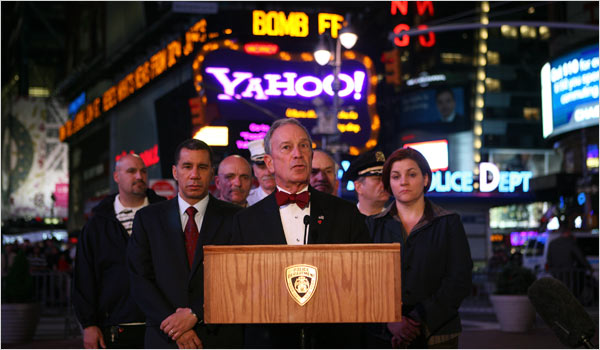
    A crude car bomb of propane, gasoline and fireworks was discovered in a smoking Nissan Pathfinder in the heart of Times Square on Saturday evening, prompting the evacuation of thousands of tourists and theatergoers on a warm and busy night. Although the device had apparently started to detonate, there was no explosion, and early on Sunday the authorities were still seeking a suspect and motive.

    “We are very lucky,” Mayor Michael R. Bloomberg said at a 2:15 a.m. press conference. “We avoided what could have been a very deadly event.”

    A large swath of Midtown — from 43rd Street to 48th Street, and from Sixth to Eighth Avenues — was closed for much of the evening after the Pathfinder was discovered just off Broadway on 45th Street. Several theaters and stores, as well as the South Tower of the New York Marriott Marquis Hotel, were evacuated.

    Mr. Bloomberg was joined by Gov. David A. Paterson, Police Commissioner Raymond W. Kelly and other officials at the early morning press conference to give a chronology of the vehicle’s discovery, its disarming, and the investigation that has been launched. The mayor and police commissioner had returned early from the annual White House correspondents’ dinner in Washington.

    At 6:28 p.m., Mr. Kelly said, a video surveillance camera recorded what was believed to be the dark green Nissan S.U.V. driving west on 45th Street.

    Moments later, a T-shirt vendor on the sidewalk saw smoke coming out of vents near the back seat of the S.U.V., which was now parked awkwardly at the curb with its engine running and its hazard lights on. The vendor called to a mounted police officer, the mayor said, who smelled gunpowder when he approached the S.U.V. and called for assistance. The police began evacuating Times Square, starting with businesses along Seventh Avenue, including a Foot Locker store and a McDonald’s.

    Police officers from the emergency service unit and firefighters flooded the area and were troubled by the hazard lights and running engine, and by the fact that the S.U.V. was oddly angled in the street. At this point, a firefighter from Ladder 4 reported hearing several “pops” from within the vehicle. The police also learned that the Pathfinder had the wrong license plates on it.

    Members of the Police Department’s bomb squad donned protective gear, broke the Pathfinder’s back windows and sent in a “robotic device” to “observe” it, said Deputy Commissioner Paul J. Browne, the police department’s chief spokesman.

    Inside, they discovered three canisters of propane like those used for barbecue grills, two five-gallon cans of gasoline, consumer-grade fireworks — the apparent source of the “pops” — and two clocks with batteries, the mayor said. He said the device “looked amateurish.”

    Mr. Browne said: “It appeared it was in the process of detonating, but it malfunctioned.”

    Bomb squad officers also discovered a two-by-two-by-four-foot metal box — described as a “gun locker” — in the S.U.V. that was taken to the Police Department’s firing range at Rodman’s Neck in the Bronx to be destroyed, Mr. Kelly said. It was not immediately known what, if anything, was inside it.

    Officials said they had no reports of anyone seen running from the vehicle. Mr. Kelly said police were scouring the area for any additional videotapes but noted that the S.U.V.’s windows were tinted, which could further hamper any efforts to identify those inside. Some of the surveillance cameras nearby were located in closed businesses, and the mayor made clear it would take time to review all available tapes.

    “We have no idea who did this or why,” Mr. Bloomberg said.

    Kevin B. Barry, a former supervisor in the New York Police Department bomb squad, said that if the device had functioned, “it would be more of an incendiary event” than an explosion.

    The license plates on the Nissan were registered to another vehicle — a Ford pickup truck that was taken to a junkyard near Bridgeport, Conn., within the last two weeks, according to a law enforcement official. The previous owner of the Ford was interviewed Saturday night by the F.B.I., but it did not appear he was regarded as a suspect. Still, the junkyard was considered a primary target of the initial investigation.

    The S.U.V.’s standard vehicle identification number had been removed, Mr. Bloomberg said, and investigators were scouring it to see if the number appeared elsewhere.

    The White House said President Obama had been briefed on the episode and had pledged federal assistance in the investigation.

    Times Square on a Saturday night is one of the busiest and most populated locations in the city, and has long been seen as a likely target for some kind of attack.

    A maze of metal barricades kept pedestrians south of 43rd Street. In the center of Times Square, dozens of police and fire vehicles were parked on Broadway and Seventh Avenue, but in Times Square between 42nd and 43rd Streets, tourists milled or sat at tables, much as they do on any other Saturday night. On Eighth Avenue at around 11:30 p.m., people carrying theater playbills were directed west on 44th Street out to Eighth Avenue.

    On Eighth Avenue police officers used large pieces of orange netting to corral pedestrians and separate them from traffic.

    Many people stayed to watch after being shut out of Broadway shows or prevented from getting back to their hotels, trading rumors about what was happening. Many guests at the New York Marriott Marquis hotel at 1535 Broadway were being kept in an auditorium at the hotel, Mr. Kelly said.

    Some theaters were evacuated, but many were not, according to a spokeswoman for the Broadway League, the trade group of theater owners and producers. The spokeswoman, Elisa Shevitz, said she would not have all the details about how many theaters were affected until Sunday.

    For some Broadway shows the curtains went up 15 to 30 minutes late. Shows that started late included “Red” and “God of Carnage” — which are both playing at houses on the block of 45th Street where the bomb was found — and “In the Heights.”

    Onlookers crowded against the barricades, taking pictures with cellphones, although only a swarm of fire trucks and police cars was visible.

    Pota Manolakos, an accountant from Montreal, was not able to return to her room at the Edison Hotel with her husband and 6-year-old son for several hours.

    She said she asked a police officer what was going on, and the officer told her: “Lady, take your kid and get out of here. There’s a threat, take your kid and get out of here.”

    “We have nothing with us except for what we have on,” Ms. Manolakos said.

    Gabrielle Zecha and Taj Heniser, visiting from Seattle, had tickets to see “Next to Normal” at the Booth Theater on 45th Street but could not get into the 8 p.m. show because the area was blocked off. But they made the best of the spectacle. “It’s a whole different kind of show,” Ms. Heniser said, adding, “It’s almost the equivalent of a $150 show.”

    A group of people on a high school senior trip from Jacksonville, Fla., said they were stuck for about an hour and a half in the Bubba Gump restaurant at 44th Street and Seventh Avenue.

    “A lot of people were getting tense who were there longer than we were,” said Billy Wilkerson, 39, a police sergeant in Jacksonville and a chaperone for the trip. “It’s so good to get out, but it was exhilarating.”

    He said he was impressed by his New York counterparts. “I just sat back and learned a lot,” he said.

    Fabyane Pereira, 35, a tourist from Brazil, said the episode would not deter her from another visit. “I feel sorry for America,” she said. “I’m at your guys’ side.”

    In December, the police closed Times Square for nearly two hours as they investigated a suspiciously parked van, delaying the rehearsal of the New Year’s ball drop. However, the van turned out to contain nothing but clothing.

    Reporting was contributed by Micah Cohen, Patrick Healy, Karin Henry, Steve Kenny and Ray Rivera in New York and Eric Lipton in Washington.

  • Historian wins court case against ‘Armenian genocide’

    Historian wins court case against ‘Armenian genocide’

    29Apr10

    ‘French Researcher Maxime Gauin’s letter as a response to the Washington Post article by Prof. Henry Barkey; ‘The Armenian genocide resolution is a farce all around’.

    Fransa’da önemli bir hukuk savaşı kazanıldı.

    28 Nisan 2010 Çarşamba

    Ermeni tezleri çizgisi dışında 1915 olayları hakkında değişik düşüncelerin konuşulmasına ve tartışılmasına “gizli 301” ile pek müsaade etmeyen Fransa’da önemli bir hukuk savaşı kazanıldı.

    Türk kelimesine bile tahammül edemeyen ve 30 seneyi aşkın süredir istediğini söyleyen, 1915 olaylarını 2. dünya savaşında Yahudilerin yaşadıkları soykırım ile karşılaştırabilen Ermeni diasporası bu sefer sert kayaya çarptı.

    23 yaşındaki Fransız genç tarihçi Maxime Gauin’a bir internet sitesinde 1915 olaylarında gerçekleri anlatmak için yazdığı yazı yüzünden “nazi”, “Yahudileri ölüm kamplarına göndermek için toplayan Fransız milisi” ve gene sadece Yahudi soykırımı için kullanılabilen ve Fransız hukukuna göre suç sayılan “inkarcı” benzetmesini yapan Fransa’nın Lyon şehri Villeurbanne banliyösü belediye meclis üyesi ve Villeurbanne Daşnaksutyun ile Federation revolutionnaire Arménienne (Ermeni devrimci federasyonu) bölge yöneticisi Movses Nişanyan, yaptığı benzetme ve hakaretler yüzünden Lyon mahkemesi tarafından 500 euro para cezasına çarptırıldı.

    Genç tarihçi Maxime Gauin, Movses Nişanyan’a Lyon ceza mahkemesi nezninde hakaret davası açmıştı. Ancak ilk duruşma kararı verilirken teknik bir hatayı gerekçe olarak kullanarak Movses Nişanyan’a bir ceza vermek istemeyen mahkeme heyeti, buna benzer bir konuda daha önce mahkemeler tarafından karar verildiği yolunda yapılan ikazlar sonucu karar aşamasını bugüne bırakmıştı.

    Fransa’da geçerli olan kanunlar ışığında, Lyon ceza mahkemesi Movses Nişanyan’ı Maxime Gauin’a 500 euro tazminat vermeye mahkum etti.

    Verilen bu tarihi karar Fransa’da bir “ilk” oluşturuyor, çok kolay bir şekilde Türklere nazi benzetmesi yapan Ermeni diasporası ilk defa bu benzetmeleri yüzünden mahkum edildi, bu sayede Fransa’da bulunan Türk derneklerine de, “inkarcı”, “nazi” gibi hakarete uğramaları durumunda mahkemede dava etme yolu açılmış oldu.

    Engin Akgürbüz/ LYON, (DHA)

    =======================================================================

    ‘French Researcher Maxime Gauin’s letter as a response to the Washington Post article by Prof. Henry Barkey; ‘The Armenian genocide resolution is a farce all around’.

    “Mister Barkey,

    Your article “The Armenian Genocide Resolution is a Farce all Around” (https://www.washingtonpost.com/wp-dyn/content/article/2010/03/02/AR2010030202375.html?waporef=obinsite) is an interesting and iconoclast analysis; unfortunately, among the pertinent remarks, there is this big error:

    “To be clear, the overwhelming historical evidence demonstrates that what took place in 1915 was genocide.”

    1. Many respectable historians criticize the “genocide” label, including Roderic H. Davison, Gwynne Dyer, Edward J. Erickson, Michael M. Gunter, Paul B. Henze, J. C. Hurewitz, Yitzchak Kerem, Bernard Lewis, Guenter Lewy, Heath Lowry, Justin McCarthy, Andrew Mango, Robert Mantran, Jeremy Salt, Stanford J. Shaw, Norman Stone, Gilles Veinstein and Robert F. Zeidner.

    2. There is simply no evidence of a genocide intent.

    — Gwynne Dyer demonstrated as early as 1973 that Mevlanzade Rifat’s book is a crude falsification, and even Yves Ternon, strongly favorable to Armenian nationalists, considers this work as more than dubtious.

    — The “Andonian documents” were proved to be forgeries, more than twenty-five years ago: Christopher Walker, who believed in 1980 to the authenticity of “Andonian documents” suppressed almost all references to this material in the second edition of his book (Armenia. The Survival of a Nation, London, Routledge, 1990), then wrote in an article that “doubt must remain until and unless the documents or similar ones themselves resurface and are published in a critical edition” (“World War I and the Armenian Genocide”, in Richard G. Hovannisian, [ed.], The Armenian People from Ancient to Modern Time, New York, St Martin’s Press, 1997, p. 247). Absolutely no effort in this sense was made since 1997: it is perhaps the best evidence that Andonian material is nothing but a forgery.

    — The “Ten Commandments” are a another forgery. As early as 1973 Gwynne Dyer demonstrated that the authenticity is highly questionable. More recently, even the strongly pro-Armenian historian Donald Bloxham noticed (“Donald Bloxham replies”, History Today, July 2005, Vol. 55, Issue 7) :  “Most serious historians accept that this document is dubious at best, and probably a fake. It was the subject of controversy some twenty years before Dadrian rediscovered it for publication in 1993. The document’s donor originally offered it for sale to the British authorities in February 1919, a time when numerous fraudulent documents were in circulation.”

    The late Stanford J. Shaw, former professor of Turkish history at Harvard, University of California-Los Angeles and Bilkent noticed: “The British and French authorities to who they had been handed pointed out that they were at complete variance with Ottoman style and vocabulary and were obvious forgeries, as a result never using them in courts of law” (From Empire to Republic. The Turkish War of National Liberation. 1918-1923, Ankara, 2000, tome I, p. 316). Similarly, British historian Jeremy Salt, considers that the text is “certainly a fake” ().

    Ambassador Morgenthau’s story, which was not considered as a reliable source by actual American specialists like George Abel Schreiner and Horace C. Peterson, is refuted even by the personal archives of Morgenthau himself. See Ralph Elliot Cook, The United States and the Armenian Question, 1894-1924, Ph.D. dissertation, Flertcher School of Law and Diplomacy, 1957, p. 129; Heath Lowry, The Story Behind “Ambassador Morgenthau’s Story”, Istanbul, The Isis Press, 1990 (available online: http://www.eraren.org/index.php?Lisan=en&Page=YayinIcerik&SayiNo=19) and Guenter Lewy, The Armenian Massacres in Ottoman Turkey, Salt Lake City, University of Utah Press, 2005, pp. 140-142.

    — The Special Organization was accused by Arthur Beylerian, V. Dadrian and Taner Akçam to be a key of “racial extermination”, but only in using falsified quotations and in neglecting the archival material of this organization, as demonstrated by Guenter Lewy and Edward J. Erickson: https://www.meforum.org/748/revisiting-the-armenian-genocide https://www.meforum.org/991/armenian-massacres-new-records-undercut-old-blame

    — The Turkish martial-courts of 1919-1920 violated all the basic rights of defense, and all their original material is lost, as explained by Guenter Lewy in his article and his mentioned before. See also Ferudun Ata, İşgal İstanbul’unda Tehcir Yargılamaları (“The Istanbul Trials of Relocation”), Ankara, TTK, 2005.

    3. It is not true that Western sources support mostly the “genocide” allegations.

    US journalist George Abel Schreiner, who traveled extensively in Anatolia, wrote that “Turkish ineptness, more than intentional brutality, was responsible for the hardships the Armenian subjected to” (The Craft Sinister: A Diplomatic History of the Great War and Its Causes, New York, G. Albert, 1920, pp. 124-125).

    Swedish journalist G. H. Pravitz published an account of his trip in Eastern Anatolia then in Arab provinces, in his newspaper Nya Dagligt Allehanda, April 23, 1917. He concluded that there was no campaign of extermination and that all the allegations of massacres which he checked were false (http://www.tallarmeniantale.com/swedish-eyewitness.htm).

    Heinrich Bergfeld, German consul in Trebizond, who served eight years in Turkey and spoke Turkish, checked rumors of “massacre” in his region, together with the US consul Oscar Heizer, on July 17, 1915: they concluded that the rumors were baseless; in other occasions, Bergfeld denounced crimes against other convoys of displaced Armenian, who indeed occurred this time (Guenter Lewy, op. cit., pp. 145-146).

    William Peet, the American head of international Armenian relief effort in Istanbul, recalled that Talat Pasha “gave prompt attention to my requests, frequently greeting me as I called upon him in his office with the introductory remark: ‘We are partners, what can I do for you today?’” (Louise Jenison Peet, No Less Honor: The Biography of William Wheelock Peet, Chattanooga, E. A. Andrews, 1939, p. 170).

    H. Philips, diplomat serving in US embassy of Istanbul, sent on September 1st, 1916, a report concluding that atrocities were committed by local officials, without orders from central government (Guenter Lewy, op. cit., p. 231).

    Otto Liman von Sanders, chief of German military mission in Ottoman Empire, and not exactly a Turkophile, explained that “In the execution of expulsions many of the terrible and damnable cases of ruthlessness may unquestionably be ascribed to the minor official whose personal hatred and rapacity gave the measures ordered from above enhancement of harshness that was not intended [by Ottoman government]” (Five Years in Turkey, Annapolis, U.S. Naval Institute, 1927, p. 157; translated from German by Carl Reichmann).

    The report of General Harbord, approved by US Senate in 1920, does not mention any “extermination campaign” but war crimes from both sides (see the full text online: https://armenians-1915.blogspot.com/2009/04/2813-conditions-in-near-east-report-of.html). The report of Emory Niles and Arthur Sutherland supports the same conclusion, with more details ().

    Moreover, the compilation of German documents published by Johannes Lepsius in 1919 was proved to be not only selective, but also full of dishonest ellipses and even containing pure and simple manipulations of texts, as a systematic comparison between the originals of German archives and the published version demonstrates (Cem Özgönül, Der Mythos Eines Völkermordes, Cologne, Önel Verlag, 2005).

    4. The “genocide recognitions” forget the crimes committed by Armenian nationalists.

    The crimes committed against the Armenian population herself.

    Armenian Revolutionary Federation and Hunchakian Party killed many decent Armenians, who were loyal to Ottoman Empire, or at least, denounced the methods of gangsters used by revolutionary committees, including the Armenian chief of Ottoman police in Bitlis, assassinated in 1898, and the mayor of Van Bedros Kapamajian, assassinated in 1912 (see, among others: Kapriel S. Papazian, Patriotism Perverted, Boston, Baikar Press, 1934, pp. 13-18 and pp. 68-73; Justin McCarthy, “The Armenian Uprising and the Ottomans”, Review of Armenian Studies, 7-8, 2005).

    The Armenian revolutionary committees claimed their responsibility in the massacres of Armenians of WWI, explaining that they organized insurrections and recruitment of volunteers for Russian an French army in guessing perfectly the tragic consequence (Gareguine Pasdermadjian, Why Armenia Should Be Free, Boston, Hairenik Press, 1918, p. 43; Aram Turabian, Les Volontaires arméniens sous les drapeaux français, Marseille, Imprimerie nouvelle, 1917, pp. 41-42).

    Then, the great massacres of Muslim and Jewish civilians.

    Haig Shiroyan, an Ottoman Armenian who became an US citizens, wrote in his Memories: “The Russian victorious armies, reinforced by Armenian volunteers, had slaughtered every Turk they could find, destroyed every house they penetrated” (Smiling Through the Tears, New York, 1954, p. 186). Niles and Sutherland, in their report mentioned before, noticed: “Armenians massacred Musulmans on a large scale with many refinements of cruelties” and that “Armenians are responsible for most of the destruction done to towns and villages”.

    Ottoman archives are full of first-hand accounts about atrocities committed by Armenian volunteers, including burning of babies, cutting of women’s breast, etc.; many documents were translated into Western languages: https://louisville.edu/a-s/history/turks/Documents2.pdf https://louisville.edu/a-s/history/turks/turcs_et_armeniens.pdf Archeological excavations, carried out in Eastern Anatolia thanks to documents and very old survivors, discovered several thousands of skeletons, from 1986 to 2003, identified thanks to specific clothes, small Korans, bullets, and, for the last mass graves, thanks to DNA tests.

    Finally, the Armenian terrorism which supported the “recognition movement” — and was supported by ARF, Hunchak and some personalities of Ramkavar/AGBU. Armenian terrorists killed at least 70 persons, wounded more than 500, and perpetrating 160 attacks by explosives.

    One of the Armenian terrorist groups was simply a branch of ARF (Francis P. Hyland, Armenian Terrorism: the Past, the Present, the Prospects, Boulder-San Francisco-Oxford, Westview Press, 1991, pp. 61-62; Gaïdz Minassian, Guerre et terrorisme arméniens, Paris, Presses universitaires de France, 2002, pp. 28-37 and 106-109; Yves Ternon, La Cause arménienne, Paris, Le Seuil, 1983, pp. 218-224). ARF of Californian and elsewhere celebrates the racist murderer Hampig Sassounian, sentenced to life by Californian justice, currently in a Californian jail (among many other examples: www.asbarez.com/45716/sassounian-thanks-community-for-continued-support/ www.asbarez.com/46446/more-than-70-000-raised-for-hampig-sassounian-defense-effort/ www.fra-france.com/print_article.php?id=56).

    Mourad Topalian, one of the most active Armenian American lobbyists, former president of Armenian National Committee of America, was sentenced in 2001 to 37 months of jail for illegal storing of war weapons and explosives, linked to a terrorist organization. Vicken Hovsepian, principal leader of ARF in USA, was sentenced in 1984 to six years of jail for participation to an attempt of bombing.

    Who recalled the terrorist past activities of these peoples during the debate about “genocide” resolution?

    In hoping to read more balanced accounts of WWI and Armenian terrorism in your articles,

    Regards,

    Maxime Gauin,

    Paris”

    _______________________________________________________

    WASHINGTON POST

    The Armenian genocide resolution is a farce all around

    (https://www.washingtonpost.com/wp-dyn/content/article/2010/03/02/AR2010030202375.html?waporef=obinsite

    _______________________________________