Month: April 2010

  • So called Armenian genocide documentary to strain Turkish-German Relations

    So called Armenian genocide documentary to strain Turkish-German Relations

    Saturday, 10 April 2010 10:18

    A 90-minute documentary on Armenian genocide allegations seems to strain Turkish-German relations.

    After German Chancellor Angela Merkel’s official visit proclaimed World of the development in Turkish-German ties, a documentary about so called Armenian genocide prepared by German production directors caused the reaction of Turkish people.
    The premiere of the documentary “Aghet-Ein Volkermord” is held in Babylon Cinema in Berlin on April 7. The 90-minute documentary is prepared by German directors in 2009 and 2010. German politicians, diplomats and Armenian community representatives in Germany were present during the premiere of the documentary. Armenia’s ambassador to Germany Armen Martirosyan and director of the movie Erik Fridler made speeches following the premiere. Attendance of German politicians to the event caused the reaction of Turkish people.

    The documentary is expected to be shown other European countries besides German

  • President of Poland Killed in Plane Crash in Russia

    President of Poland Killed in Plane Crash in Russia

    Russia.
    • Video: Polish President Killed in Plane Crash
    By ELLEN BARRY, MICHAL PIOTROWSKI and NICHOLAS KULISH 10:38 AM ET
    A plane carrying the Polish president, Lech Kaczynski, and many of the country’s leaders crashed as it landed in a heavy fog.
    • Times Topics: Poland
    • comment iconPost a Comment | Read (91)
    • Kaczynski Often a Source of Tension Within E.U. 51 minutes ago
    • World Leaders, Especially Merkel, Express Sadness 20 minutes ago
    NEXT
    PREV
    Czarek Sokolowski/Associated Press
    A plane carrying the Polish president, Lech Kaczynski, crashed in a heavy fog in western Russia.
    • Video: Polish President Killed in Plane Crash

  • Archaeology in Conflict

    Archaeology in Conflict

    WAC + ANCBS

    Vienna 2010

    15. Illicit Trade in Cultural Property and Internet Sales

    Sam Hardy, University of Sussex, UK

    Cypriot antiquities rescue from the Turkish Deep State:

    The rescue of forgeries, and the death of Stephanos Stephanou

    In comparison to 7 other international speakers from different countries and Universities,

    Mr. Hardy’s lecture turned out to be anything but academic and a veiled attack on the

    TMT and Turkish Cypriot State which was equated to some mythical and indefinable

    entity called “The Turkish Deep State”, which was made responsible for all ills on Cyprus.

    According to Mr. Hardy, until 1955 and under British colonial rule, everything was under control and that Cypriot Archaeological property was safe. Mr. Hardy then went on to say that with the Greek nationalist ENOSIS movement, there came about the TMT which was described as an extension of the Turkish Deep State. He went on to say that following the

    communal strife, the Turkish Cypriots had to live in Enclaves out of which with the help

    of the TMT within the enclaves and the help of the Greek Cypriots outside the enclaves,

    looted the archaeological riches of Cyprus were looted. He tried to excuse the poor Turkish Cypriots and the TMT who apparently did it for economic reasons and for financing their armed struggle against the Greeks.

    Mr. Hardy, then went on to create a mythical Greek hero called Stephanos Stephanou,

    who was presented as an under-cover, Greek Cypriot police officer who clandestinely entered the North of Cyprus in order to rescue Cypriot cultural property (specifically?

    a very old and valuable Bible). According to Mr. Hardy, Stephanou had Turkish Cypriot

    accomplices who were also arrested and later released by Turkish Cypriot Police.

    According to Mr. Hardy, Strephanou was deprived of his human rights and was tortured to death by Turkish Cypriot Police (= Turkish Deep State). He went on to make a preposterous

    claim that Kutlu Adali was also killed by the Turkish Deep State and for the same reason,

    i.e. for reporting thefts of Cypriot cultural property.

    This lecture, while attempting to cover the attack on the TRNC, and trying to appear as

    if putting blame equally on both the Greek and Turkish Cypriot sides, it was a masterpiece in

    political propaganda using an international scientific forum to present the TRNC as an illegal and criminal entity.

    Discussions, Comments & Questions

    At the end of the 15. Lecture- series, Küfi Seydali (Turkish Cypriot) was allowed to

    critically comment on the lecture delivered by Sam Hardy of Sussex University.

    Mr. Seydali introduced himself as a Turkish Cypriot who has been living in Austria for decades. Seydali thanked the other speakers for their highly academic and balanced lectures on the subject of illicit trade (via internet) in cultural property.

    However, Seydali begged for their understanding that he could not feel the same about Mr.

    Hardy’s lecture which he described as a “political thriller”. Seydali went on to explain his utter shock and disappointment in the face of such an attack on the Turkish Cypriots and

    their state.

    Seydali started to question Hardy’s initial statement about the British Colonial record, and asking  the question, where did all the antiquities in the British Museum of Central London came from? Egypt, India, Cyprus and other ex-colonies, perhaps? Seydali said, don’t take my word, go and see for yourselves as Archaeologists.

    Seydali then went on to explain the sufferings of the Turkish Cypriots who were, for 11 years (1963 – 1974), pushed into enclaves making a proud 3% of Cyprus’ total territory. How is it

    possible, he asked, that a small community imprisoned into 3% of Cyprus and beleaguered by

    the Greek army and Greek Cypriot armed elements, and under UN observation, could do

    such damage to the cultural heritage of Cyprus? Is it possible, he asked?

    Seydali went on to explain further how unjustified and untrue Hardy’s claims were. Seydali asked, how is it possible that in all big Turkish Cypriot townships there exist Archaeological Museums under the control of a Ministry in charge for culture? He went on to tell the audience that the Greek Cypriot Archbishop Hrisostomos had visited the  Archaeological and Icon Museum in Güzelyurt, North Cyprus (Omorfo) in 2008, during which he could not hide his surprise and amazement at the work well done by Turkish Cypriot Archeologists and

    State. Seydali also added that the Eastern Mediterranian University (EMU) cooperated within the framework of relevant UNESCO conventions and many European experts such as Prof. Zeischka,  Dr. Bartelheim, and Prof. Pernicka, in order to protect archelogical sites and Fundus. Seydali asked the Archeologists present to visit Northern Cyprus and see for themselves or at least get in touch and talk to the Turkish Cypriots about the difficult task they are faced with in protecting their cltural and archeological heritage.

    Finally, Seydali explained how painful and unjust he found the attacks by Mr. Hardy on

    the Turkish Cypriot Resistance Movement (TMT) whose sole function was to defend

    the Turkish Cypriot community against Greek-Greek Cypriot attacks. He concluded by saying that after the creation of the TRNC, TMT ceased to exist and has nothing to do with the

    so-called “Turkish Deep State”, a relatively new, medial expression used within Turkey.

    Furthermore, he added that Stephanou was visited by UN officers and Doctors, and that he had been tortured is just not true, and that the death of Mr. Kutlu Adali had nothing to do

    with Mr. Staphanou or archaeology, and the subject of this conference.

    He thanked the organisers for allowing him to comment, and thanked the Scientists for

    listening to his comments.

    Vienna, 09.04.2010
  • Queen offers sympathy to Poland after president’s death

    Queen offers sympathy to Poland after president’s death

    The Queen has expressed her “deepest sympathy” to the Polish government and people after the death of President Lech Kaczynski in a plane crash.


    Gordon Brown said the whole world would be “saddened” and Tory leader David Cameron called it a “black day”.

    Rev Canon Bronislaw Gostomski, a priest at a Polish church in West London, was among those who died in the crash.

    Members of the community in London are gathering at a Polish cultural centre in Hammersmith to lay flowers.

    The president’s wife, Poland’s army chief, central bank governor, MPs and leading historians were among more than 80 passengers on board the flight.

    Officials say his aircraft came down as it tried to land in thick fog at Smolensk airport, western Russia.

    ‘Just speechless’

    Among the dead was the Rev Gostomski, the Polish president’s personal chaplain and the parish priest at St Andrew Bobola Polish Church in Shepherd’s Bush, west London.

    A colleague, Father Marek Reczek, told the BBC Rev Gostomski was a popular figure who had been in office for eight years.

    “It is a very difficult time for our parishioners. Many of them have been coming into the church to pray,” he said. “They have been crying.”

    He said a special mass to honour the memory of Rev Gostomski will be held next Tuesday at the church, starting at 1900.

    At the Polish Information Centre in Hammersmith, Szymon Nadolski said it did not matter if people supported the president.

    “They are still our president and intellectuals,” said the 30-year-old. “I think everybody will be united regardless of who they support.”

    Monika Skowronska, vice chairman of the Polish Social and Cultural Association, said she knew one of the passengers – Ryszard Kaczorowski, the last President of the Polish Government-in-Exile.

    “I’m in complete and utter shock. I am trying hard not to cry. People are just speechless,” she said.

    ‘Biggest tragedy’

    Members of the Polish community in the UK have been e-mailing the BBC since the news broke.

    Marcin, from London, said: “I was shocked when I discovered what happened in Smolensk this morning.

    “It is the biggest tragedy in the history of Poland, because so many very important people have died at the same time.”

    Many of the messages make reference to the purpose of the president’s visit to Russia.

    Maciej, also from London, said: “What makes this news more sad is that they were flying to mark the 70th anniversary of the Katyn massacre, which was such a blow to our nation.”

    The Katyn forest massacre was the mass murder of thousands of Polish officers and intellectuals, carried out by Soviet forces in 1940.

    Sabina Kubica, originally from Krakow but now living in Edinburgh, wrote: “I’m absolutely shocked and deeply sad. This might be one of the darkest days.”

    Mr Brown broke off from campaigning in Scotland to pay tribute to the Polish president.

    “I think the whole world will be saddened and in sorrow as a result of the tragic death in a plane crash of President Kaczynski and his wife Maria and the party that were with them,” he said.

    “We know the difficulties that Poland has gone through, the sacrifices that he himself made as part of the Solidarity movement.

    Mr Cameron said he was a “very brave Polish patriot who stood up for freedom”.

    “He suffered hugely under communism and always stood up for his beliefs, and for his great faith in his country,” he added.

    BBC

  • Polish President Lech Kaczynski ‘in plane crash’

    Polish President Lech Kaczynski ‘in plane crash’

    Polish President Lech Kaczynski and scores of others are believed to have been killed in a plane crash in Russia.

    Lech Kaczynski, file image

    Officials in the Smolensk region said no-one had survived after the plane apparently hit trees as it came in for landing in thick fog.

    Several other government figures, including the army chief of staff, were also thought to have been on board.

    They were in Russia to mark the 70th anniversary of the Katyn massacre, when the Soviets killed thousands of Poles.

    The BBC’s Adam Easton in Warsaw says the crash is a catastrophe for the Polish people.

    He says Prime Minister Donald Tusk was reportedly in tears when he was told.

    Plane ‘hit trees’

    The Russian emergencies ministry told Itar-Tass news agency the plane crashed at 1056 Moscow time (0656 GMT).

    Ministry spokeswoman Irina Andrianova said it had been flying from Moscow to Smolensk, but had no details on the identities of those killed.

    Smolensk regional governor Sergei Antufiev told Russian TV that no-one had survived.

    “As it was preparing for landing, the Polish president’s aircraft did not make it to the landing strip,” he said.

    “According to preliminary reports, it got caught up in the tops of trees, fell to the ground and broke up into pieces. There are no survivors in that crash.

    “We are clarifying how many people there were in the [Polish] delegation. According to preliminary reports, 85 members of the delegation and the crew.”

    Russian investigators said there were a total of 132 people on the plane.

    Smolensk map

    Controversial figure

    The president was flying in a Tupolev 154, a plane that was designed in the 1960s and capable of carrying more than 100 passengers.

    Our correspondent says there had been calls for Polish leaders to upgrade their planes.

    As well as the president and his wife, Maria, a number of senior officials were also said to be on the passenger list.

    They included the army chief of staff Gen Franciszek Gagor, central bank governor Slawomir Skrzypek and deputy Foreign Minister Andrzej Kremer.

    Mr Kaczynski has been a controversial figure in Polish politics, advocating a right-wing Catholic agenda.

    He has opposed rapid free-market reforms and favoured retaining social welfare programmes.

    BBC

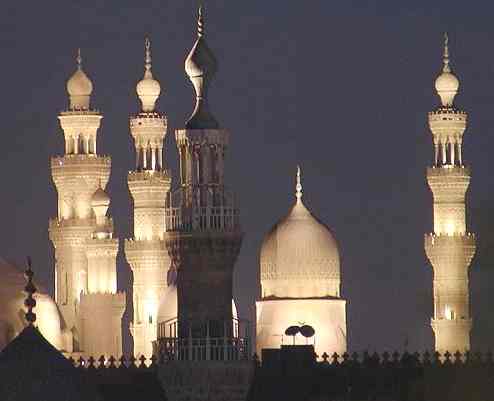
  • ENGLAND: Replica Mosques being used as Army firing targets

    ENGLAND: Replica Mosques being used as Army firing targets

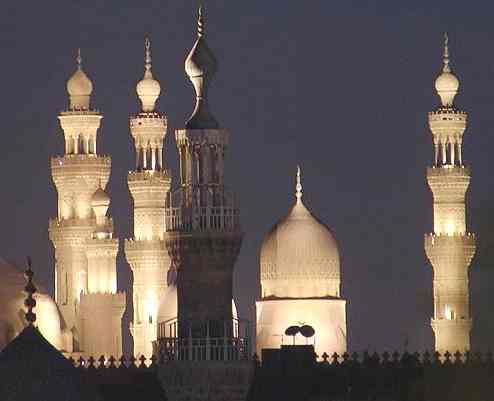
    http://www.solarnavigator.net/geography/geography_images/Egypt_Cairo_mosques.jpg

    8 April 2010   The Muslim Council of Britain was shocked and saddened to learn of replica mosques being used as Army firing targets in Catterick.

    Allowing the places of worship to be used in this manner sends out all the wrong signals on so many levels. The MCB raised the issue with the Ministry of Defence in the past and is now raising once again to seek clarification.

    Dr Muhammad Abdul Bari, Secretary General of the Muslim Council of Britain said “Over many months mosques in this country have been at the forefront of anti-Muslim hate campaigns, vandalism and even arson attacks.

    This totally unacceptable and worrying practice of using replica mosques as firing targets plays into the very hands of those on the far-right who take aim at mosques.

    The Army must go beyond simply apologising and acknowledging that this insensitive practice must now stop.

    They have worked hard to highlight the contribution of Muslims in our armed forces. We hope swift action is taken to safeguard this good work and ensure cohesion”.

    Turkish Forum  uk