Month: April 2010

  • Gazprom-SOCAR gas deal: Should Azerbaijan commit to a long-term contract?

    Gazprom-SOCAR gas deal: Should Azerbaijan commit to a long-term contract?


    By Efgan Niftiyev
    Today’s Zaman

    WASHINGTON — In the last quarter of 2009, State Oil Company of Azerbaijan Republic (SOCAR) and Russian gas giant Gazprom signed a medium-term deal — in the presence of both Azerbaijani President İlham Aliyev and Russian President Dimitry Medvedev — to supply Azerbaijani gas to Russia.

    The contract initially envisioned export of about 500 million cubic meters of gas per year.
    Gazprom’s Web site said the two companies would conduct joint technical inspections of the 200-kilometer Baku-Novo Filya pipeline, which runs along Azerbaijan’s Caspian coast to the Russian border, and ultimately modernize the pipeline. “Azerbaijani gas will be supplied to Russia along this route,” the company’s Web site reported.

    A few months later, Gazprom CEO Alexei Miller announced that his company is willing to buy as much Azerbaijani gas as possible. He also mentioned that Gazprom — the world’s biggest natural gas producer — will be paying market prices for Azerbaijani gas. SOCAR’s chief, Rovnag Abdullayev, also expressed his company’s interest in increasing the amount of natural gas sold to the Russian side. Since then, Gazprom has tried to push SOCAR for a long-term gas deal.

    At first it seems like a pretty good deal for Azerbaijan since Azerbaijan lacks a direct gas link to Europe and has been unable to agree with Turkey on terms for the transit of larger planned volumes. A SOCAR-Gazprom deal would be an excellent opportunity for Azerbaijanis to sell their gas at market prices right at the “door” without hassling with transit countries such as Turkey and Georgia or waiting for the implementation of the Nabucco pipeline. Thus, Gazprom’s network is the “optimal” route for gas from Azerbaijan to reach Europe.

    For diversification of export routes and for certain geopolitical and commercial reasons, Gazprom’s offer requires careful examination and analysis by the Azerbaijani side. As of now, Azerbaijan is capable of carrying out its commitments toward exporting approximately 1 billion cubic meters (bcm) to Russia (the Dagestan region) annually. The second phase of Shah Deniz gas production is expected to add 12 billion to 14 billion cubic meters of annual gas output in three to five years once a market is found and transit for the fuel ensured. Committing all possible gas supply to Gazprom beforehand cannot be viewed as a viable option for Azerbaijan.

    Azerbaijan may

    lose its bargaining power

    Early commitments to Gazprom will decrease Azerbaijan’s bargaining power in terms of pricing. Central Asian gas producers Kazakhstan and Turkmenistan had to sell their natural gas for significantly lower prices compared to world market prices because Gazprom was the only buyer. It was only when China became another possible buyer for Central Asian gas that the Russian company offered fairly good prices to Turkmenistan and Kazakhstan.

    Along with commercial concerns, geopolitical ramifications of a possible long-term commitment to Gazprom cannot be disregarded. Russia is widely known to use its economic advantage as political leverage in dealing with its neighbors and other countries. In the cold winter of 2009, Russia did not hesitate to cut the gas supply to its consumers in order to push its political agenda forward. Since then, European countries have started looking for alternative natural gas supply routes. Russia’s intransigency forced them to think about their energy security and be cautious in their future dealings with Russia.

    In line with this new approach, the Nabucco pipeline has been proposed to create another supply route that is projected to bring about 31 bcm of natural gas to Europe. Gazprom applies different pricing approaches to different countries. The price that is given to Armenia — its closest ally in post-Soviet hinterland — is much lower than the prices given to Ukraine or Georgia, the latter started to import natural gas from Azerbaijan instead. Thus, it is not that hard to see political motivation in Gazprom’s business.

    Azerbaijani gas is one of the possible — maybe the most viable — sources to fill the Nabucco pipeline, and it is in Azerbaijan’s utmost interest to diversify its natural gas exporting options. Being a major supplier of the Nabucco pipeline would serve Azerbaijan’s interests, and Azerbaijan can play an important role in European energy security. Currently Azerbaijan’s Shah Deniz is the only deposit mature enough to be considered a base for forming contracts for the Nabucco project.

    Russia with the hand of Gazprom is doing its best to cut the possible supply for Nabucco. It takes all re-export expenses and pledges to pay market prices for all future possible Azerbaijani exportable gas, meaning that to re-export Azerbaijani volumes, Gazprom would need to cut production and exports of Russian gas, its main source of profit. This makes Gazprom’s offer a politically motivated rather than commercially viable deal. If Azerbaijan happens to commit all its future exportable gas to the Russian company, the Nabucco project will receive a fatal blow, and Azerbaijan will become highly dependent on Russia to export its natural gas. This will ultimately enable Russia to gain more leverage in its relations with Azerbaijan, and Russia will hardly hesitate to use this leverage in dictating its political ambitions.

    ‘Absurd scenarios’

    Some argue that Azerbaijan may “bribe” Russia to make her apply pressure on Armenia so that Russia forces the latter to take a more constructive position in peace talks over the Nagorno-Karabakh conflict. This scenario is totally absurd. Although Russia has a great deal of political and economic influence on Armenia, this scenario is unlikely to happen because Russia is not interested in resolving the frozen Nagorno-Karabakh conflict, contrary to official Russian statements and its role as a mediator. Instead she has always used separatist conflicts to overpower post-Soviet countries. On the other hand, Azerbaijan, under the leadership of father Aliyev, pursued a similar purpose while making oil contracts with Western companies. Along with commercial gains, Azerbaijan expected to strengthen its bargaining position against Armenia while trying to become an important partner of the West. The commercial side of the story has played out quite well, and Azerbaijan also bolstered its independence and sovereignty. However, this policy did not produce desired outcomes for Azerbaijan in terms of making Western countries exert more pressure on Armenia. For all these reasons, it would not be wise for Azerbaijan to pursue the same tactic in its dealings with Russia.

    Azerbaijan has to consider all possible ramifications of signing long-term deals with Gazprom and granting all its possible exportable gas to the Russian company. Azerbaijan should never be willing to experience what Turkmenistan experienced in its dealings with Gazprom. Gazprom’s unilateral reduction — at short notice — of the gas that it takes from Turkmenistan showed that Gazprom is far from being reliable and has the potential to carry out irresponsible actions. Along with Gazprom’s credibility, commercial viability and geopolitical implications of the agreement should be carefully analyzed given Gazprom’s stature as a reliable and a credible gas buyer. Having vast natural sources is not enough. The wise management of those sources is much more important.
  • The peoples of both Ireland and Turkey suffered from Winston Churchill

    The peoples of both Ireland and Turkey suffered from Winston Churchill

    I should remind you here that ‘our gallant ally’ , U.K. , had conquered and subdued Namibia and Tanganyika by methods even more barbarous than those of the British in taking their own African empire. These were foolish times of course, and only an idiot today would look back to the bloodshed of these years with pride.

    I am happy to say that in Ireland, we have put the 1916 Rising well behind us, and we refer to it merely as an example of the sorry lunacy that can seize the souls of otherwise good men, when madness becomes fashionable. So, at least some of the seeds of the 1916 Rising were sown in the Dardanelles. It was a cruel paradox that the first regiment to arrive from Britain to put down the Rising were the Sherwood Foresters — who, if you remember, had been used to ‘secure’ the Turkish battleships, the seizure of which had helped propel the Ottomans to war in the first place.

    Yes, in the loathsome figure of Winston Churchill — an imperialistic war-monger and egotistical bully — the Turkish and Irish peoples are united by a common and imperishable loathing.’

    Now, through some inexplicable oversight, the Department of Foreign Affairs did not give this speech of mine for the President to make at Gallipoli. Why not? The British tabloid headlines the next day would have been the purest joy to read.

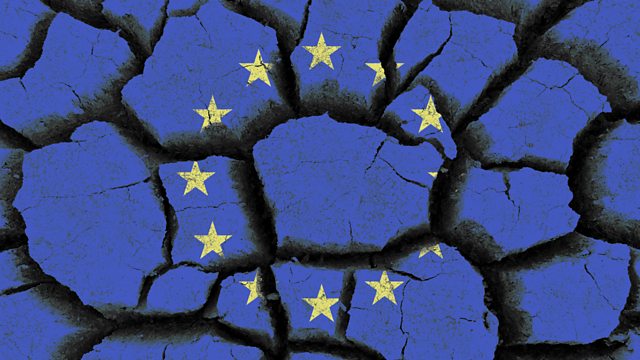
    And as for the President’s comments about Turkey’s proposed membership of the EU, which have clearly vexed many of you, more  at

    kmyers@independent.ie

    – Kevin Myers

    Irish Independent

  • Turkey’s presence in EU as an armed invader in Christian lands

    Turkey’s presence in EU as an armed invader in Christian lands

    Unless we admit Turkey, says Mr Erdogan, the EU will “end up a Christian club”. Well, is that so very bad? Didn’t Christians invent just about everything for the last 400 years? And how would Europe remain recognisably European (or even Christian) after a mass-movement of Anatolian Muslims into our cities?

    For one thing that Ryanair has taught us is the overnight mobility of populations. And Turkish immigration will probably not consist of cosmopolitan elites but of peasants and their imams from Anatolia, accompanied by their burkas, naquibs and madrasas.

    And if you wonder about the outcome, wonder no more: simply go to Bradford and Blackburn and ask them about the boundless delights of mass-Islamic immigration. Go on. Ask them.

    kmyers@independent.ie

    myers hakkinda bilgi
    https://en.wikipedia.org/wiki/Kevin_Myers
     

  • BOOK: The Gulen Movement by Muhammed Cetin

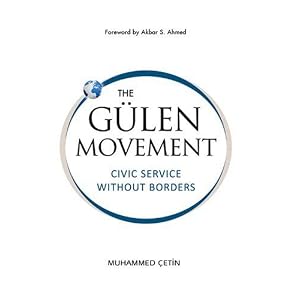
    BOOK: The Gulen Movement by Muhammed Cetin

    The Gulen Movement: Civic Service without Borders
    See larger image
    Publisher: learn how customers can search inside this book.

    The Gulen Movement: Civic Service without Borders (Hardcover)

    ~ Muhammed Cetin (Author)


    List Price: $18.95
    Price: $12.78 & eligible for FREE Super Saver Shipping on orders over $25. Details
    You Save: $6.17 (33%)
    Pre-order Price Guarantee. Learn more.
    This title has not yet been released.
    You may pre-order it now and we will deliver it to you when it arrives.
    Ships from and sold by Amazon.com. Gift-wrap available.


    Special Offers and Product Promotions

    • Pre-order Price Guarantee! Order now and if the Amazon.com price decreases between your order time and the end of the day of the release date, you'll receive the lowest price. Here's how (restrictions apply)

    Frequently Bought Togethe

    + +
    Total List Price: $63.85 Price For All Three: $49.90 Some of these items ship sooner than the others. Show details
    • This item: The Gulen Movement: Civic Service without Borders by Muhammed Cetin This title has not yet been released. You may pre-order it now and we will deliver it to you when it arrives. Ships from and sold by Amazon.com. Eligible for FREE Super Saver Shipping on orders over $25. Details
    • The Gülen Movement: A Sociological Analysis of a Civic Movement Rooted in Moderate Islam by Helen Rose Ebaugh In Stock. Ships from and sold by Amazon.com. This item ships for FREE with Super Saver Shipping. Details
    • New Turkish Republic: Turkey As a Pivotal State in the Muslim World (Pivotal State Series) by Graham Fuller In Stock. Ships from and sold by Amazon.com. Eligible for FREE Super Saver Shipping on orders over $25. Details

    Customers Who Bought This Item Also Bought

    Page 1 of 1 (Start over) Back
    • The Gülen Movement: A Sociological Analysis... by Helen Rose Ebaugh 4.6 out of 5 stars (10) $26.95
    • New Turkish Republic: Turkey As a Pivotal State... by Graham Fuller 5.0 out of 5 stars (4) $10.17
    • Crescent and Star: Turkey Between Two Worlds by Stephen Kinzer 4.0 out of 5 stars (92) $10.88
    • Who Speaks For Islam?: What a Billion Muslims... by John L. Esposito 3.8 out of 5 stars (29) $15.61
    • Contemporary Islamic Conversations: M. Fethulla... by Nevval Sevindi 5.0 out of 5 stars (1) $44.50
    Next

    Editorial Reviews

    Product Description

    This book seeks to develop an appropriate discourse for studying the Gulen Movement and phenomena like it. The established discourse concerns itself with social movements as protest, as challenge to the System, as contentious actors looking to alter or even overturn existing structures and/or policies in some field, usually political or economic. Approaching the matter from social movement theory and taking an insider's perspective, the author argues that the Gulen Movement is, as it has always been, non-contentious' it is not a marginalized actor working on the System from the outside. On the contrary, it has always worked within the System - within the boundaries of the laws and public norms that obtain in the different local and national settings where it has set up institutions.

    Product Details

    • Hardcover: 344 pages
    • Publisher: Blue Dome Press (May 16, 2010)
    • Language: English
    • ISBN-10: 1935295012
    • ISBN-13: 978-1935295013
    • Shipping Information: View shipping rates and policies
    • Amazon.com Sales Rank: #602,122 in Books (See Bestsellers in Books)
    • Would you like to update product info or give feedback on images?

    Customers Viewing This Page May Be Interested in These Sponsored Links

    (What's this?)    Inspired by F. Gulen opens new browser window www.idcnj.org -   Interfaith Dialog Center organizes diverse interfaith activities Advertise on Amazon See a problem with these advertisements? Let us know
    What problem did you find?(close)
    With which advertisement did you find a problem?
    Comments
    If you need help or have a question, please contact Customer Service.

    What Do Customers Ultimately Buy After Viewing This Item?

    69% buy The Gülen Movement: A Sociological Analysis of a Civic Movement Rooted in Moderate Islam 4.6 out of 5 stars (10) $26.95
    31% buy the item featured on this page: The Gulen Movement: Civic Service without Borders $12.78
    Explore similar items

    Suggested Tags from Similar Products

    (What's this?) Be the first one to add a relevant tag (keyword that's strongly related to this product). Check a corresponding box or enter your own tags in the field below.
    islam(16) dialogue(11) gulen movement(7) clash of civilizations(9) turkey(9) fethullah gülen(11) hip hop(6) humanism(8) amazing new read(3) midd

  • ARMENIAN REVOLT : VIDEO

    ARMENIAN REVOLT : VIDEO

    A balanced view of the struggle between the Ottoman Empire and the Armenians in the Eastern Anatolia during the late 19th century what is considered by some today, a genocide. This in-depth documentary is based on two years of research in the United States, Russia, Germany, Romania, England, and Bulgaria with historical footage and images from the national archives of the United States, Romania, Bulgaria, Russia and Germany with participation of an international team of experts
    Director:
    Marty Callaghan
    Contact:
    View company contact information for Armenian Revolt on IMDbPro.
    Home

    Armenian Revolt Documentary

    By Jonathan Wilson Sun, 05/04/2008 – 11:26

    Armenian Revolt

    The following is an analysis of excerpts and video scenes from the critically acclaimed Armenian Revolt Documentary, we highly recommend that you buy the DVD yourself and examine the arguments and discussions conducted in them to make up your own mind.

    The Armenian Revolt DVD can be purchased for approximately $10.99 from the American Turkish Association of Houston! You may also view most of the documentary in low quality on YouTube at the bottom of this article.

    In this part of the documentary of the Armenian Revolt, the background information of the Ottomans were discussed along with how Armenian society grew in the Ottoman Empire; this was an important introduction to put the Ottoman history into it’s proper context.

    Contextual Background and Environment of the Ottoman Empire

    Dr. Norman Stone a world renowned Ottoman historian on World War I, talked about what kind of a minority the Armenians were in the Ottoman Empire. Dr. Stone talked about the Armenians having ambassadors and even foreign ministers and other high ranking government officials in the Ottoman Empire. He also mentioned that the Armenians were known as the most loyal of Ottoman Christians, which made the Greek Christians envious of their loyalty and millet ranking

    Dr. William Ochsenwald of Virginia Tech and author of “The Middle East: A History”, talked about how the religious freedoms and civil liberties granted by the Ottomans for centuries started to work against the Ottomans. The allowance of thousands of Christian missionaries to start schools, churches, and hospitals were dividing the people of the Ottoman Empire from each other. The side effect of this was the Armenian Nationalist Movement and the spread of an ideology for Armenians to rule their own nation, a Christian nation.

    The documentary then introduces the Hunchaks (Hunchak Socialist Party) established in 1887 and the Dashnaks or Tashnaks (Armenian Revolutionary Federation) established in 1890, and how they were both created with an ideology to rebel against the Ottoman Empire.

    Dr. Yusuf Halacoglu, president of the Turkish Historical Society, talks about how the ARF and Hunchaks were exactly like the terrorists of today, and he compares them to Al Qaeda since they both killed civilians and caused terror in the Middle East for political means.

    The documentary then mentions British Ambassador Phillip Curry reported from Istanbul that the “aim of the Armenian revolutionaries is to stir disturbances, to get the Ottomans to react to violence, and thus get the foreign powers to intervene.”

    Dr. Justin McCarthy of the University of Louisville, also talks about how the conflict became so intense that both sides forced all the neutral parties to pick a side, and thus the conflict became inevitable.

    Dr. Sina Aksin of Ankara University, talks about the viscous cycle of revenge and violence that occurred as a result of Armenian revolts, which provoked local Muslims to seek revenge against the Armenians, not distinguishing between who is a rebel and who is an innocent Armenian. Thus more people had to choose sides and many innocent people died on both sides. Dr. Aksin tells us that for the Europeans however, the importance was the massacres of the Armenians, and the massacres of Muslims were ignored.

    Dr. Mehmet Saray of Istanbul University, talks about how the local Muslims in the region felt betrayed by the Armenian revolutionist activities even though they had lived together for centuries in peace.

    Russian Diplomat General Mayefski wrote:

    the unarmed Armenian villagers were forced to help the rebels at the cost of their blood.

    The documentary then talks about how the Armenians were left with no choice, since the Armenian revolutionaries killed Armenians who would not help the Revolutionary cause as well.

    The idea is, if a stranger attacks you and steals your money, you would be very angry, but imagine if that stranger was once your best friend? The pain is doubled, and this is what the locals felt when the Armenians they were treating equally began to attack their neighboring villages and fellow Ottoman citizens.

    The Provocation Ideology of the Revolutionaries

    This part of the Documentary talks about how the ARF and Hunchaks planned to provoke violence by attacking Kurdish villages and other Muslim inhabitants, who were armed and when they found their fellow tribesmen and villagers killed, they were more than prepared to strike back viciously.

    The Hunchaks and ARF leaders of whom many lived in Europe, immediately received the reports which were then delivered to European diplomats, consuls, and newspapers and other publications to promote anti-Turkism and the hope that these acts of violence would compel the Europeans to defeat the Ottomans.

    They conducted this method of provocation because the rebels knew that the Armenian revolutionaries themselves cannot easily overthrow the Ottomans, even though they tried several times to assassinate government leaders and governors including Sultan Abdul Hamid II.

    Cast

    (Credited cast)

    Professor Secil Karal Akgun Herself
    Aram Arkun Himself
    David Fromkin Himself
    Professor Justin McCarthy Himself
    Professor William Ochsenwald Himself
    Stanford Sahw Himself
    Norman Stone Himself (as Professor Norman Stone)
  • NASA Made a Small Personal Aircraft With Electric Engine

    NASA Made a Small Personal Aircraft With Electric Engine

    Thursday, April 8, 2010


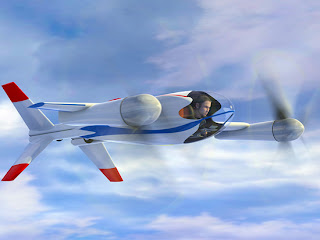
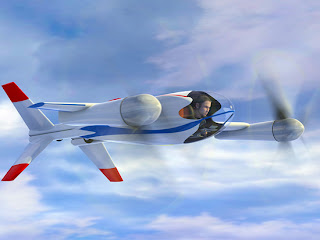
    A small electric aircraft concept named “Puffin” has been created by an engineer from NASA. The aircraft also has the ability to take off and land from a vertical position. The small aircraft that can only be loaded by one person might soon occupy your garage.

    The zero emission aircraft designed for personal flights will be able to fly with maximum speed up to 241 kph. The Puffin designer, Mark Moore, claims that the aircraft battery will be able to bring the aircraft up to 80 km distance. This small aircraft only has 136 kg weight and 45 kg of battery weight.The length of the aircraft is 3.7m and the wingspan width is 4.4m.

    The unique one of the plane is that the passenger position is standing parallel to the plane’s position when going off. The plane will take off straight up, then as the straight forward position, the position of the passenger is prone position facing the front glass.

    The four legs of aircraft tails support the aircraft’s position to be able to stand when willing to take off or landing and it will closes during flight. The aircraft planned to launched in the next few decades.

    Posted by mr.ido at 5:23 AM