Month: April 2010

  • Armenia’s Stand: Justice At Home, Justice Abroad

    Armenia’s Stand: Justice At Home, Justice Abroad

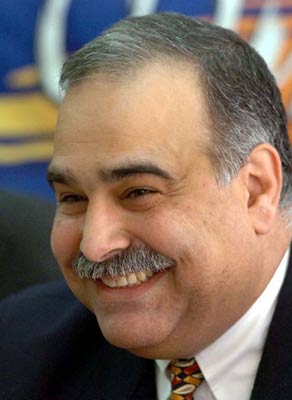
    By Raffi K. Hovannisian

    Yerevan—We are at the brink of a pair of wars, civil and regional, and it is better to speak now.
    Armenia, that ancient civilization deprived by the tragedies of yore of its capacity for contemporary statecraft, needs immediately to put its house in democratic order. Finally responsible for its own record, it also has legitimate expectations of the international partnership.

    In this global and so contracted century of ours, where resources and rights often compete for precedence, domestic demeanor and foreign affairs form part of one and the same policy agenda. Nuclear or not, all pieces count.

    Armenia has finally to empower its citizenry, ensure due process and accountable government, and hold true elections. The corruption of state and its ill-disguised feudalesque vertical of post-Soviet power must give way to basic liberties and equal opportunities for all. Political prisoners should be released forthwith and those responsible for the deaths of ten citizens on March 1, 2008 brought to account. Justice must begin from within, or else civil strife is sure to ensue.

    Modern independent statehood is an immeasurable gift that must not be squandered or ceded to anybody, friend or foe. Armenia’s security and armed forces are functions of its sovereignty, and no one, neither the Collective Security Treaty Organization nor NATO, should be called upon to guard its borders and its interests. Sound mutual relations with Russia, the United States, Europe and China are pivotally important, but Armenia must from now on be in sovereign command of its own frontiers and strategic assets. This choice should be universally respected.

    The resetting of regional imperatives requires correlation with Armenia’s vital concerns.

    Armenia and its people the world over shall never forget the great Genocide and the dispossession of their homeland. They cannot be expected, through protocols or other avenues of persuasion, to ratify their loss or to legitimize the fruits of genocide. These include an illegal de facto boundary negotiated by the Bolsheviks and Turkish Nationalists, the destruction of a thousand years worth of cultural heritage and architectural treasures, the mass expropriation of homes, schools, academies and other properties, and an abiding official escape from responsibility into the annals of schizophrenic denialism.

    There is a growing current in Turkish society which seeks to look their history in the eye and thus to recast the exclusivist foundations of their state. They should be embraced and supported in their long-overdue self-discovery, just as the Turkish family who in 1915 saved my grandmother’s life by risking their own should find their due in the textbooks of tomorrow.

    As with the Holocaust and the liberating leadership of postwar Germany, acknowledgment must beget atonement which, if anchored in truth, will lead to redemption, restitution, a right of return to a national home, and ultimate reconciliation between the Armenian and Turkish nations.

    Armenia expects the world community to uphold and attach the rule of law, both internally and internationally, without seeking refuge in intellectually and legally false distinctions such as sui generis. Mountainous Karabagh’s case for post-Stalinist decolonization and independence is juridically at least as strong as, if not more than, Kosovo’s, Abkhazia’s, Eritrea’s or East Timor’s. It must formally be recognized—and within its existing constitutional borders—by Armenia and the very same countries that have extended recognition to the aforementioned.

    Supported by Turkey, Azerbaijan today is trying to breathe bellicose fire into its failed war of aggression, 1988-1994, against Mountainous Karabagh by which it lost any claim it rhetorically might ever have had.
    Contrary to Baku’s familiar projection of blame upon others, it alone holds in occupation the ancestral Armenian heartlands of Gardmank, Shahumian, Getashen, Artsvashen, and Nakhichevan. Let the refugees of all nationalities, including the local Azeris and the nearly one million Armenians displaced from these territories as well as from Azerbaijan proper, return to their places of origin. That is comme il faut, but there can be no further territorial adjustment without resolving the occupation above.

    Georgia would do itself and its firm future relationship with Armenia a favor by defending in full the linguistic, cultural, civil, political and religious rights of its large Armenian community. The historically Armenian region of Javakhk must be given special consideration in terms of its identity, representative self-government, and connection with the Armenian republic. This is fundamental to both Armenia’s and Georgia’s national security, as is the requirement to release all ethnic Armenian prisoners from the injustice of their politically-driven incarceration.

    Iran, too, shall change—at its pace and in its way. A long-standing bilateral rapport with Armenia as its basis, the Islamic Republic ought to work to improve its domestic performance and, among other things, to recognize the Holocaust. So too should Israel, as bearer of the Shoah, no longer rest complicit in the denial of the Armenian Genocide. Washington, Moscow and the capitals of Europe have a lot of critical rethinking to do in this connection.

    The time, perhaps, has come for all past paradigms to shift their script. Whether classically geopolitical or energy-sourced, the curtain must soon fall on the east-west and north-south axes of yesterday’s cliché.

    For the sake of little old Armenia and the grand New World.

    Raffi Hovannisian, the Republic’s first foreign minister, is founding director of the Armenian Center for National and International Studies
  • Racism in Germany

    Racism in Germany

    I am not racist, but very frequently you hear these words in Germany, and they are often used before a tirade against foreigners. Of course, racism is a worldwide phenomenon, but it is a fact that Germans have a reputation for being an extremely racist people. Many Germans are very offended by this and claim that it is not true. Haven’t we taken in more refugees than all other European Union member states together? Don’t they owe their lives to us? Don’t we give them homes? What is racist about that? These are tirades that they argue vehemently. However, if you look at the matter more closely, you will see that those arguments are neither sufficient nor convincing.

    If you look at the way refugees are treated instead at how many there are living here, you will not exactly find proof for Germany’s anti-racism. Some refugee camps are so run-down and filthy that even animals would be extremely unhappy there. Some refugees live in rooms without windows, and if they earn money, they even have to pay for such a place to live.

    Moreover, even decent refugee camps are always very dangerous places, because they are popular targets for crazy neonazis who might throw bombs at them. This has happened far too often already. There is a huge amount of hatred behind all that. What is worst, and what scares me very much, is that nothing is really being done about neonazis. Even their political party called NPD (Germany’s nationalistic party, or Nationalsozialistische Partei Deutschlands) still exists, which I find unbelievable, especially considering Germanys history. To me, even the resemblance of that party’s name to Hitler’s NSDAP (Germany’s Nationalist workers party, or Nationalsozialistische Deutsche Arbeiterpartei), which existed during the Third Reich, is very offensive. However, it is not only neonazis that foster so much hate against foreigners. Near my home town, for example, an African was killed by policemen some years ago.

    Germans always claim to be tolerant and open-minded towards other cultures. This might be true for certain cultures, namely those similar to our own, like people from Europe, North America or Australia. However, the picture is totally different with foreigners from more exotic places, especially for those with a dark skin. Among those, refugees are certainly the least popular inhabitants of Germany, but they are by no means the only kind of foreigners being ostracized. I have nothing against them, but they should keep to themselves, and so should we, many Germans argue, completely unaware of the contradiction within this statement. For reasons probably not even clear to them, many people think that spending time with blacks will ruin someone’sreputation.

    Any person who believes that the German society is not racist should look at the way many parents react when their daughter or son has a black partner. Some will even refuse to regard their child as a member of their family any longer. Moreover, Germans with black partners walking along the street will merely be stared at if they are lucky, or if not, they will be called abusive names. Watching such scenarios will surely make anyone at least doubt the fact that Germans are friendly towards foreigners.

    As usual in such matters, one should be careful not to generalise. There are German people who are extremely open-minded. An old lady once invited me and an African friend to sit with her in the tram and spoke to us in a very friendly way throughout our journey. However, I have found such people and situations to be the exception. Certainly there is some degree of racism in any country, but I still have to say that Germany gives a particularly bad picture, especially compared to other European countries. During my holidays in Sweden, Ireland or England I have walked along the street with African, Japanese and Indian people, and I have never been stared at as I have in Germany.

    To me, it is apparent that there is far too much racism in my country and that it must be fought with much more determination than politicians are showing at this stage.

    The Cheers

    A comment from a reader

    Andreas Muller says on 2010-02-18 22:07:24 about Racism in Germany

    Of course we are racist as German and we are very proud on that. But there are many racists in USA too. Racism in USA is other matter. Now the topic is about this fact, that Germans are centre of extreme racism and it’s true. Our racism is hidden and modernized into sadistically making pain to foreigners. We ruin the life of foreigners and we conspire against them. For us the foreigners are like home animal or prisoners. We as Germans want to make a new spread fascism around the world by our lobbies in other countries.

  • Spy movie tussle with Israeli security services by journalist in shoot to kill inquiry

    Spy movie tussle with Israeli security services by journalist in shoot to kill inquiry

    by Mark Weiss in Jerusalem

    The Israeli journalist forced into exile in London after the military launched an investigation into leaked documents has said his life now resembles a “spy movie.”

    Uri Blau, who acquired 2,000 military documents, including 700 classified as ‘top secret’, claimed in an article for the Haaretz newspaper that he was scared to leave Britain to return home where he faces the threat of arrest.

    A Tel Aviv court lifted a gag order on Tuesday over a case against Anat Kam, a 23-year old female soldier who has been charged with national security offences for passing the documents revealing the military targetted assasination policy to Mr Blau.

    Mr Blau claimed he was being targeted by the Israeli authorities for doing his job as an investigative journalist.

    “When I left Israel I had no reason to believe our planned trip would suddenly turn into a spy movie whose end is not clear,” he wrote. “I certainly didn’t think I’d have to stay in London and wouldn’t be able to return to Tel Aviv as a journalist and a free man, only because I published reports that were inconvenient to the establishment.”

    Mr Blau said he decided to stay abroad after hearing that his Tel Aviv apartment had been broken into, and being informed that his telephone and e mails were being monitored. “Experiences I had read about in suspense novels have become my reality in recent months,” he said. “When you’re warned “they know much more than you think,” and are told that your telephone line, e-mail and computer have been monitored for a long time and still are, then someone up there doesn’t really understand what democracy is all about, and the importance of freedom of the press in preserving it.”

    The reporter received the classified documents from Anat Kam, who served at the army’s Central Command headquarters, and who has been under house arrest since December.

    Talks between Mr Blau and Israeli intelligence, whereby he would hand over all the documents in his procession, broke down last week. Each side has accused the other of reneging on the terms of the agreement.

    Mr Blau is now wanted for questioning by both the Israeli police and the security services.

    Yuval Diskin , head of the Shin Bet security agency , warned that “the kid gloves will now be taken off” as the intelligence community steps up its efforts to retrieve the sensitive information.

    The stolen documents include details of Israeli troop deployments and contingency plans for emergencies. Israeli media reported that the operational plans for Israel’s invasion of Gaza last winter were altered because the original blueprint was amongst the top secret information transferred to Blau.

    Miss Kam, who goes on trial next week ,will be charged with espionage, an offense which carries a maximum life sentence. Nuclear whistleblower Mordechai Vanunu , who was tried on similar charges , served 18 years in prison.

    The Telegraph

  • Woman sells home to pay for cancer drug denied by NHS

    Woman sells home to pay for cancer drug denied by NHS

    A cancer sufferer has been forced to sell her home to pay for a potentially life-prolonging drug after being turned down for treatment on the NHS.

    Nikki Phelps, 37, suffers from a rare form of cancer, and believes the medication Sunitinib, also known as Sutent, could help.

    It is available through the NHS and costs £36,000 a year. Although effective at slowing down the growth of tumours Sutent has not been approved to treat multiple endocrine neoplasis (MEN1), which Mrs Phelps suffers from and which has caused aggressive tumours to form in her endocrine system.

    Mrs Phelps, a former primary school teacher, who was first diagnosed with cancer ten years ago, has criticised the NHS for failing to offer her the drug.

    Last week David Cameron told his Witney consituents that £200 million from his planned efficiencies savings would be put into a Cancer Drugs Fund for sufferers refused access to treatments by NICE.

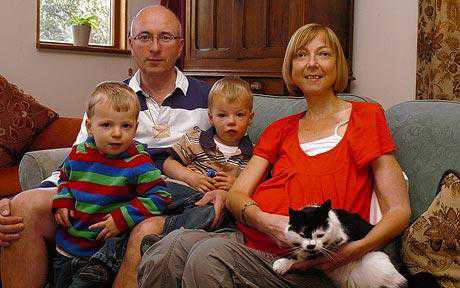
    Mrs Phelps and her husband Bill, who have two-year-old twins, Jack and Harry, have already spent their £6,000 savings on a two-month supply of Sutent and are now selling their £200,000 family home in Luddesdown, near Gravesend, Kent, to pay for the tablets which cost £100 per day.

    Mr Phelps, 45, said he is also prepared to sell his business, The Cat’s Pyjamas cattery, if the money for treatment runs out.

    He said: “Her life is now between the bedroom, the bathroom and the sofa.

    “Emotionally she’s very strong. She has to be. There are two little boys who can’t have their mum sobbing around them.”

    Mrs Phelps was diagnosed in 2000. Her father died from the disease the following year.

    She had surgery in 2002 and was given the all clear shortly afterwards. She then gave birth in November 2007 through IVF treatment.

    The following year she was re-diagnosed with the disease and in January of last year underwent surgery to remove a tumour weighing 11lbs.

    Mrs Phelps says that doctors believe that cancers previously kept at bay by successive courses of chemotherapy ‘ran riot’ during her pregnancy.

    She says doctors have also warned her that there is a 50 per cent chance one of her sons could contract the condition in later life.

    Meanwhile, the family are receiving donations from friends at the mother-and-baby group which she attended who have set up an online fundraising page.

    Mr Phelps added: “It’s a strange situation where you realise that just when you were starting to lose faith in everything, people rally round to help like this.”

    NHS West Kent said Sutent is only for licensed for treatment of a form of kidney cancer called renal cell carcinoma and gastro-intestinal stromal tumours.

    Dr James Thallon, Medical Director for NHS West Kent said: “NHS West Kent routinely funds Sunitinib for conditions approved by NICE (the National Institute for Clinical Excellence) .

    “However, for certain types of tumour the drug is not licensed, or approved by NICE, and it is vitally important that we consider all the clinical evidence in deciding to fund a drug in these circumstances.

    “We have to prioritise treatments that we have clear evidence will work over those where we can?t be certain, to get the best from our limited resources and to not endanger patients with unproven treatments.”

    The Telegraph

  • Muslim outrage as Army uses ‘mosques’ on firing range

    Muslim outrage as Army uses ‘mosques’ on firing range

    The Ministry of Defence apologised yesterday after a Muslim group complained that structures used on an Army firing range resembled mosques.

    Bradford Council for Mosques said the structures at Bellerby firing range at Catterick Garrison in North Yorkshire should be taken down immediately.

    The Army said it was vital soldiers trained in an environment which replicated where they were deployed.

    A spokesman for the Ministry of Defence said the structures were ”generic Eastern buildings” and were not used as target practice.

    The spokesman added: ”We apologise for any offence that we may have caused. It was never our intention for these generic structures to look like or replicate mosques, only to provide a setting similar to operational environments in which our personnel could train.

    ”We are seeking a meeting with representatives from the Muslim community to hear their concerns in order to discuss the way forward.”

    Mohammed Saleem Khan, chief executive of the Bradford Council for Mosques, said the shape and colour of the structures – a green dome – symbolised an Islamic place of worship.

    ”It is so obvious. Even a non-Muslim recognised the significance. The first person who raised the issue with us was a non-Muslim,” he said.

    ”We are trying to achieve unity and cohesion and encourage British Muslims to participate in the Army and we accommodate visits from the Army.

    ”It is clearly very offensive. We feel there should be an apology and they should be removed straight away. If it was a mistake it should be removed straight away.”

    The Telegraph

  • Turkey and Greece hope better ties lower defense costs

    Turkey and Greece hope better ties lower defense costs

    By SELCAN HACAOGLU

    ANKARA, Turkey

    Turkey and Greece on Thursday announced a series of measures to build confidence between the rival neighbors, including joint military training designed in part to ease years of tension over airspace and sea boundaries and a local arms race.

    Turkey’s Foreign minister Ahmet Davutoglu said the new moves ultimately could help limit arms spending.

    As well, 10 key ministers, including those in charge of foreign and European Union affairs as well as energy and economy would meet at least twice a year, Davutoglu and Greece’s Deputy Foreign Minister Dimitris Droutsas announced.

    The ministers said their armies would increase cooperation through joint training and conferences. The move is designed to encourage Turkish and Greek officers, who have for decades regarded each other as potential enemies, to work with each other.

    The countries have been at odds for years over flight procedures over the Aegean Sea border. For decades, their warplanes have often engaged in mock dogfights.

    “The measures will boost confidence between the two peoples and armies,” Droutsas told a joint news conference with Davutoglu.

    Greece is suffering from a severe economic crisis and plans to cut defense spending in 2011 and 2012. Responding to a question over whether Turkey would follow Greece’s lead, Davutoglu said that there would be no need for arms spending if the neighbors could build a “common future.”

    “We have a vision and it is not based on mutual threat but on mutual interests,” Davutoglu said. “If we manage to build a common future, there will be no need for defense spending.”

    Davutoglu pointed out that his government has already reduced military spending, saying the government has spent more on education than arms in recent years.

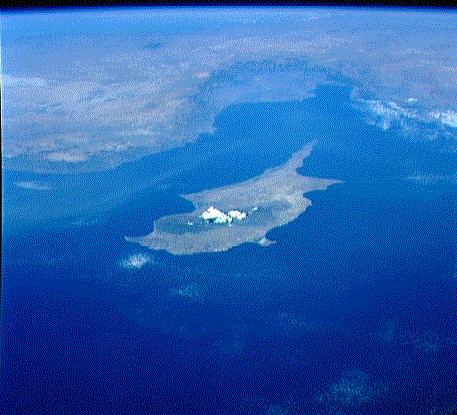
    EU-member Greece supports Turkey’s membership bid in the European Union, hoping that it will help solve territorial issues. The largest snag is the divided island of Cyprus where Turkey keeps about 40,000 troops.

    Turkey began EU membership talks in 2005, but negotiations on some policy have been frozen over Turkey’s refusal to allow ships and planes from Cyprus to enter its ports and airspace, and the EU says Ankara must open its airspace to the EU member if it wants to get closer to membership itself.

    In return, Turkey insists on the lifting of what it says is the unofficial trade embargo on the breakaway Turkish Cypriot state in the north of the island, which was divided into a Greek Cypriot south and a Turkish Cypriot north following Turkey’s 1974 invasion.

    Businessweek