Month: April 2010

  • Turkish EU Minister on the Armenian Genocide Controversy

    Turkish EU Minister on the Armenian Genocide Controversy

    ‘We Are Very Sensitive About This Issue’

    Photo Gallery: 3 Photos
    DPA

    In a SPIEGEL interview, Ankara’s Minister for European Affairs Egemen Bagis discusses Turkey’s journey to the West and his country’s dispute with the United States over a resolution on the genocide of the Armenians recently passed by Congress.

    SPIEGEL: Mr. Bagis, why does Turkey still need a minister for European Union affairs? Isn’t Europe a dead issue in your country?

    Bagis: Absolutely not. My government is investing more energy in the reform process than any other government. In 2013 we will be ready for accession.SPIEGEL: But do Turks share your enthusiam? Three out of four Turks believe that the EU wants to divide your country and spread Christianity.

    Bagis: I have other figures: If Turkey held a referendum today on accession, 60 percent would vote for it. On the other hand, only 40 percent of Turks believe that accession will definitely take place. In Europe it is the other way round: Forty percent want to take Turkey in, but 60 percent believe the country will join the EU one day.

    SPIEGEL: In other words: There is skepticism on both sides.

    Bagis: Let’s put it this way: Some countries like Malta apply for membership and are in the next day. Others need a little more time. I have no problem with the fact that some Europeans say they want negotiations with an open-ended outcome. Today everything has an open-ended outcome, even Catholic marriages.

    SPIEGEL: Turkey has been seeking EU membership since 1959. Is it not humiliating to be held at bay for so long?

    Bagis: No, because we also made mistakes. There have been three military coups since 1959, and many Turkish government’s didn’t have a clear vision or idea of Europe. It was the Justice and Development Party (AKP) government of Prime Minister Recep Tayyip Erdogan that first made the necessary constitutional amendments between 2002 and 2004 so that we could finally start accession negotiations.

    SPIEGEL: Only 17 percent of Germans support Turkish membership in the EU.

    Bagis: Believe me, one day Europeans will have to appeal to the Turkish public to support EU membership. Europe has many problems. Tell me, for example, how the EU plans to solve its energy crisis without Turkish help? A large part of the future energy resources Europe needs will flow through Turkey. And tell me how you are going to solve your economic and demographic problems? The average age in Europe is 40, while in Turkey it is 28. Where are you going to get your work force from? Who is supposed to pay your pensions?

    SPIEGEL: As long as declared opponents of Turkish accession like German Chancellor Angela Merkel and France President Nicolas Sarkozy are in office, you won’t get very far with such arguments.

    Bagis: I am very thankful that German Foreign Minister Guido Westerwelle has publicly stated that he wants accession talks to continue. With regards to President Sarkozy: He used this horrible, insulting phrase, “privileged partnership” …

    SPIEGEL: … a term that was actually coined by Germany’s conservative Christian Democratic Union party.

    Bagis: But Sarkozy repeated it often enough. My government has only one answer: We will only accept full membership — nothing more, nothing less. We want the same chances as every candidate country.

    SPIEGEL: Atatürk, the founder of modern Turkey, said: “The Turks have only ever gone in one direction — towards the West.”

    Bagis: And that is still true. But at the same time, we are also a bridge and have four strong pillars, one in each direction …

    SPIEGEL: … of which you recently pulled out two by recalling your ambassadors to the United States and Sweden. The move was triggered by the decision of a Congressional committee to pass a resolution recognizing the death of more than a million Armenians in 1915-16 as genocide. A similar resolution was passed by Sweden’s parliament.

    Bagis: With this decision, Sweden has become slave to a thesis that, unfortunately, is based on falsehoods. The voting in the US on the so-called genocide was a success for Turkey. The Congressman from California, who got support from the Armenian lobby, made a fool out of himself. He tried to scratch the back of every Representative in the corridors of Congress in order to get their vote. But then he only won by a single vote.

    SPIEGEL: Still, a Congressional committee approved the resolution.

    Bagis: Secretary of State Hillary Clinton later declared that the resolution will not be passed by the entire House of Representatives. As you know, the French parliament passed a similar law on the so-called Armenian genocide in 2006. Afterwards there was a ban on French airforce flights over Turkey. We are very sensitive about this issue.

    SPIEGEL: What options do you have if the Americans do, in the end, recognize the genocide officially? Would you want to close the Incirlik airbase? Leave NATO?

    Bagis: I will leave that up to your readers’ imagination. But allow me to remind you of one thing: Seventy percent of the logistical support for the Iraq deployment comes through Incirlik.

    SPIEGEL: Why is it so difficult for Turkey to recognize the genocide of the Armenians?

    Bagis: It is up to the historians, not politicians, to judge what happened in the past. Politicians look into the future. We have offered to create a joint commission of historians together with the Republic of Armenia — so far without success. Besides, you should know that the Ottoman Empire was an ally of the German Reich. Nothing that happened back then happened without consultations with the Germans.

    SPIEGEL: If you dont accept the word “genocide,” then how can you have a “Genocide Museum” in the city of Igdir in eastern Turkey, dedicated to the Turks who died in 1915?

    Bagis: That’s very easy: Every action leads to a reaction. But I don’t want to rule out the possibility that, someday, this museum could be transformed into a “Museum of Coexistance” or a “Museum of Mutual Pain.” I do not want to deny that the Armenians went through very difficult times …

    SPIEGEL: You call it “difficult times”? We are taking about 1.5 million Armenians who perished between 1915 and 1917.

    Bagis: According to American historian Justin McCarthy, 600,000 Armenians died at the time — and at the same time, 2 million Kurds and Turks. There was a civil war in Turkey, right in the middle of World War I.

    SPIEGEL: The interior minister at that time, Talat Pascha, told the then US ambassador, Henry Morgenthau, that the “physical extermination” of the Amernians was a necessary goal of the war.

    Bagis: According to McCarthy, this quote isn’t entirely accurate. But I am not a historian. I wasn’t there, you weren’t there. Why don’t we leave this question to a mutual commission of historians comprised of Armenians and Turks?

    SPIEGEL: There was a time when Turkey seemed further along the road toward confronting its past. In 1919, the three men mainly responsible for the Armenian genocide — Talat Pasha, Enver Pasha and Cemal Pasha — were all sentenced to death in absentia. Atatürk wanted nothing to do with them. Nevertheless, there are still three large, magnificent tombstones for these men in Istanbul.

    Bagis: It is traditional in our culture to commemorate the dead. Like all of us, these men surely did some good and some bad things in their lives and for their country.

    SPIEGEL: Is Turkey worried the Armenians will demand reparations?

    Bagis: You know, there are an estimated 100,000 illegal Armenian immigrants in our country, who work here providing care for the elderly and children. For me, this shows that there is no hate between our people. On the contrary: We are attempting to achieve rapprochement, there is a peace process between our countries …

    SPIEGEL: … which is stagnating at the moment.

    Bagis: That is not our fault. We have attempted to bridge our differences; we want to open all archives. But when you see that the other side is blocking all your attempts, it makes you skeptical.

    SPIEGEL: This issue represents one of the few on which the AKP government, the military and the secular elite are all on the same page. Doesn’t that bother you?

    Bagis: No. My government focuses on solving problems. We want good neighborly relations, also with Armenia.

    SPIEGEL: Turkey’s new foreign policy earned considerable praise, but the country’s domestic policies have been enigmatic for some people in the West. Isn’t your government overplaying its hand in its power struggle with the army? You are no longer arresting only potential putschists, but also critics of the government.

    Bagis: The investigations in the so-called Ergenekon case, where men are suspected of having planned a putsch against the government, are an issue for the judiciary. In the latest progress report, the European Union assesses the investigation as an opportunity for Turkey to further democratize itself.SPIEGEL: Others see signs of continuing Islamization. Restaurants are losing their alcohol licenses, young people are being harassed for holding hands in public and Family Minister Aliye Kavaf has described homosexuality as a “disease.”

    Bagis: I do not agree with her, I do not consider homosexuality to be a disease. But I am neither a historian nor a doctor. Besides, I really don’t think that Turkey has become more conservative. It just so happens that the conservatives are a lot more visible today than they were previously.

    Interview conducted by Bernhard Zand and Daniel Steinvorth
    https://www.spiegel.de/international/world/turkish-eu-minister-on-the-armenian-genocide-controversy-we-are-very-sensitive-about-this-issue-a-683701.html
    __._,_.___
  • Fighting talk from Brown as he rallies the party faithful in Hendon

    Fighting talk from Brown as he rallies the party faithful in Hendon

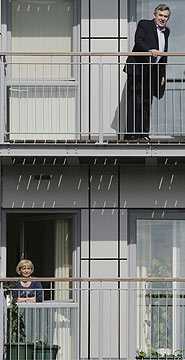
    Gordon Brown campaigning in north London yesterday

    Fighting talk from Brown as he rallies the party faithful in Kirkcaldy and Hendon

    Martin Fletcher

    The words were almost Churchillian. “We will fight for every vote in every seat every hour between now and the close of polls,” Gordon Brown promised the party faithful in his Kirkcaldy & Cowdenbeath constituency on Friday.

    “We fight with strength in our soul and confidence in our cause because we are the people’s party — not simply a party in Britain but the party of Britain.

    It gave the impression that the Prime Minister would be barnstorming around the country. Aides reinforced that idea: “We are going to win this campaign people to people, door to door, street to street,” said one. The reality is more prosaic. Mr Brown may be the underdog, but his campaign to date has been distinctly low key. He does not have a campaign bus. He has yet to address a meeting open to the general public.

    On Saturday he made several appearances, but all except one were in his own constituency, where he has a rock-solid 18,216 majority and is sure of a warm reception.

    His campaign event yesterday was in Hendon, northwest London, where he met precisely six voters, at least three of whom were Labour supporters. Mr Brown arrived just before 3pm, his Jaguar coming face to face with an unsuspecting learner driver as it entered Fortune Avenue.

    He joined a young couple named Richard Belle and Cheryl Revill — both Labour supporters — in their flat on the fourth floor of a new block. The four other guests included Ms Revill’s father, a Labour Party member, and were chosen with the help of Andrew Dismore, the local Labour MP. The group of three men and three women included three from ethnic minorities — a model of political correctness.

    Mr Brown chatted for 20 minutes about how Labour’s affordable housing policies had helped Mr Belle and Ms Revill to buy their first home. He spoke about schooling, Bollywood and citizenship. He cracked jokes, mentioned his children and poked fun at his inability to use a mouse.

    Then he returned to Downing Street to work on today’s manifesto speech and, doubtless, catch up on the fortunes of his beloved Raith Rovers in the Scottish Cup semi-final.

    Aides say that these intimate meetings help him to highlight specific Labour policies and “create a buzz” in marginal constituencies.

    The big prize, however, is the television news clip of a Prime Minister not known for his common touch, listening to “ordinary people” in their homes. And as long as the audience is sympathetic, Mr Brown is very good at it.

    He is not alone in resorting to tightly controlled events. All the party leaders do it. Today’s elections are won on television, the internet and Twitter.

    Not all of Fortune Avenue was won over yesterday. Darshna Yagnik, 38, a university lecturer, said: “It’s all to make himself look like a people’s person but he’s not.”

    , April 12, 2010

  • Muslims vow to unseat Zionists – HENDON

    Muslims vow to unseat Zionists – HENDON

    By Martin Bright

    he Muslim organisation that claimed responsibility for unseating “pro-war, pro-Israel” Labour MP Lorna Fitzsimons from her Rochdale constituency at the last election has launched its campaign for the 2010 election.

    The Muslim Public Affairs Committee, which has an openly anti-Zionist agenda, has said it will target MPs and candidates known to support Israel and those they have identified as “Islamophobic”. It claims that 82 constituencies now have a Muslim population larger than the incumbent’s majority.

    MPAC will concentrate its resources on the Oldham seat of Immigration Minister Phil Woolas, who recently raised concerns about the prevalence of marriage between cousins in the Muslim community.

    “Muslim voters can no longer be taken for granted by Labour, as a new politicised generation are becoming swing voters who demand action, on issues from Palestine to anti-terror laws,” said Rukiya Dadhiwala, MPAC’s campaign co-ordinator.

    The organisation has also warned Muslim voters in Hendon to vote for anyone but sitting Labour MP Andrew Dismore, who is considered an arch-Zionist.

    It claims 2,000 leaflets attacking the Labour candidate were distributed outside Hendon mosque at Friday prayers.

    However, his opponents, Conservative Matthew Offord and Lib Dem Matthew Harris are also both strong supporters of Israel. “They may be Zionists, but they are not as bad as he is,” said spokesman Tahir Shah.

    . April 8, 2010

  • Big guns set their sights on Hendon

    Big guns set their sights on Hendon

    Few MPs have worked as tirelessly on Israel causes as Andrew Dismore

    By Marcus Dysch

    In recent weeks voters in Hendon have been preoccupied more with matzah prices than turnout forecasts and swing percentages.

    But they are now likely to find themselves at the forefront of fevered election activity.

    Labour’s Andrew Dismore, who has held the seat since 1997, faces a critical challenge from Tory Matthew Offord and the Liberal Democrats’ Matthew Harris, who is Jewish.

    Although the constituency is ranked 73rd on the Tories’ list of targets, analysts put it in the top four of the essential 80 seats the party must win to topple Gordon Brown.

    David Cameron’s troops must gain 116 seats for an overall Commons majority. Hendon, requiring just a four per cent swing away from Labour, is very much up for grabs.

    Senior politicians have already visited; Foreign Secretary David Miliband popped in to a school last month, days after former Tory leader William Hague spoke to local members of Conservative Friends of Israel.

    While Hendon voters are concerned over local matters such as hospitals and transport, candidates are likely to face tougher questioning on Jewish doorsteps over their handling of wider issues concerning Israel.

    Few MPs have worked as tirelessly on these causes as Mr Dismore. He has frequently urged Parliament to take action on looted art restitution, led calls for a national Holocaust Memorial Day and regularly defended Israel.

    He may just escape the potential fall-out from Labour’s handling of the universal jurisdiction fiasco thanks to his (unsuccessful) Private Member’s Bill.

    Mr Offord, former deputy leader of Barnet Council, is also a long-standing friend of Israel.

    In recent weeks I have spotted him regularly pounding the streets, chatting to residents. Five years ago, he was the Tories’ election agent in Hendon, overseeing Mr Dismore’s majority being slashed by 5,000. That work could now prove crucial in aiding his own attempt to secure a seat. Mr Harris, vice-chairman of Lib Dem Friends of Israel, faces an uphill struggle. Despite his history as a dedicated local campaigner, he will suffer as a result of the party’s recent catastrophic track record on Israel.

    He has valiantly attempted to defend his party, despite Baroness Tonge’s outbursts, calls to suspend arms sales to Israel, and the leadership of Nick Clegg, a man who failed to realise that Israel is a Jewish state.

    For the next month, political eyes will be firmly fixed on this distinctly Jewish corner of north-west London. If Mr Offord is successful, Mr Cameron is likely to find himself at Number 10.

    , April 8, 2010

  • Nazi Archive Made Public

    Nazi Archive Made Public

    Documents of Nazi atrocities during the Holocaust were kept locked for decades. Now that the archive is being made public, Scott Pelley brought three Holocaust survivors to examine their records.


    Watch CBS News Videos Online

  • The United Ireland Party officially supports Turkish membership of the EU

    The United Ireland Party officially supports Turkish membership of the EU

    The United Ireland Party, FINE GAEL, has said it officially supports Turkish membership of the European Union notwithstanding opposition to the move expressed by one of its TDs this week.

    The party’s spokesman on foreign affairs, Billy Timmins, yesterday said that views expressed by Lucinda Creighton rejecting Turkish accession to the union did not reflect party policy.

    However, Ms Creighton said last night it was time to review party policy.

    “Fine Gael policy is that we are in favour of Turkish accession as long as it meets certain requirements,” said Mr Timmins.

    “A number are set out in the Ankara Protocol, including the use of ports in Cyprus. It has fulfilled some of them,” he said.

    Mr Timmins pointed out that a motion supporting Turkish membership of the EU was approved by the Fine Gael ardfheis in 2004.

    In a speech to a party meeting in her Dublin South East constituency earlier this week, Ms Creighton criticised comments by President Mary McAleese during her official visit to Turkey supporting its application for EU membership.

    Ms Creighton described the argument for Turkish membership as “fundamentally flawed” and contended that Turkey was not wealthy enough to join the EU.

    The union would have difficulty absorbing a country with a population of 72 million, she said, warning of a new wave of immigration to Ireland that would follow its accession.

    Ms Creighton also asserted that, geographically, Turkey could not be considered part of Europe.

    “By allowing Turkey accede to the European Union, the floodgates would be opened up to countries such as Morocco, who have as legitimate and credible a claim to EU membership as Turkey,” she said.

    Fianna Fáil TD Michael Mulcahy also criticised Ms Creighton’s dismissal of Turkish aspiration to EU membership as “scaremongering”. He said Turkey had formalised commercial ties with the European Union.

    “Deputy Creighton should remember that it has been long-standing Irish Government policy to support Turkish membership of the European Union, and her attempts to derail this worthwhile inclusion of Turkey by scaremongering on the issue of unemployment, is not appropriate.”

    “Of course, there is a disparity in wealth between the European average and Turkey, but the Turkish economy is a very dynamic economy, set to grow by 10 per cent next year, and it is a sheer fallacy to believe that millions of Turkish people would descend on Ireland if Turkey was granted full membership of the European Union.

    “There has not been a massive migration of workers from Bulgaria or Romania, both of whom have a much lower GDP per head than Ireland,” he said.

    He also called on Fine Gael leader Enda Kenny to clarify if Ms Creighton’s views now represented the party’s official policy on the matter.

    Contribution by Mr. Nizam Bulut