Month: November 2009

  • Rapprochement between Ankara, Teheran worries Brussels

    Rapprochement between Ankara, Teheran worries Brussels

    Published: Tuesday 17 November 2009   

    Policymakers and influential media warned that Turkey’s developing ties with Iran could be counterproductive to the EU’s efforts to convince Teheran that it should abandon its nuclear weapons programme.

    “Policymakers in the West are getting worried that Turkey’s growing ties with Iran – by lessening that country’s sense of isolation – may frustrate diplomatic efforts to prevent Tehran from building a nuclear bomb,” writes Katinka Barysch of the Centre of European Reform (CER) in a paper published on 4 November.

    Relationships between Turkey and Iran are on the upturn. On 27-28 October, Turkish Prime Minister Recep Tayyip Erdogan embarked on a two-day visit to Iran. There he met President Mahmoud Ahmadinejad and Supreme Leader Ayatollah Ali Khamenei. The visit was also an occasion to discuss gas transit, trade and energy agreements.

    “The Erdogan government values its relationship with Iran as part of its ‘zero problem’ neighbourhood policy. Having been more or less isolated in the region only 20 years ago, Turkey now has flourishing political and trade links with most of its immediate neighbours,” Barysch writes.

    This trip was anticipated in an interview with the Guardian newspaper, which saw the Turkish prime minister state that Iran was Turkey’s friend. “As a friend so far we have had very good relations and have no difficulty at all.” During his stay, Erdogan also stressed that the Iranian nuclear project is “an energy project that is peaceful and humanitarian”. This assertion contradicts the Commission’s 2009 progress report, which states that “Turkey supports the EU position on Iran’s nuclear programme”.

    The Iran-Turkey relationship is also motivated by economic interests. “Trade between Turkey and Iran has been growing fast in recent years, to reach an estimated $6 billion in 2008. Politicians from both sides say they want to see that figure double or even triple over the next 5-10 years,” Barysch notes.

    European opinion is divided. “Some European countries say Turkey’s improved ties with Iran could help EU policy in the Middle East and boost world powers’ efforts to stop Iran developing a nuclear bomb. Others fear Ankara could be turning its back on Europe and its policy could hinder talks on Iran’s nuclear enrichment programme by reducing Tehran’s isolation,” writes Timothy Heritage of Reuters.

    Stronger scepticism towards Ankara’s position can be found in Germany, where German Chancellor Angela Merkel is said to have raised concerns about the rapprochement between Turkey and Iran. Officials have also pointed to the increasing difficulties emerging within NATO over friction between Turkey and Israel.

    Turkey’s foreign policy ambitions are facing a dilemma. “As a long-standing NATO member and a country negotiating for EU membership, Turkey is expected to align itself with the US and Europe. As a regional power, Turkey will want to act independently and avoid antagonising its neighbours. It is not clear how long Ankara will be able to avoid tough choices,” Barysch concludes.

    Recently, Turkish Foreign Minister Ahmet Davutoglu told journalists in Brussels that his country was in fact helping the West during ongoing tensions over Iran’s nuclear programme. He said his country was pursuing a policy of “zero problems” with its neighbours, with all of which he said relations were “very good” (EurActiv 05/10/09). 

  • More U.S. job hunters look for work in other countries

    More U.S. job hunters look for work in other countries

    By Paul Davidson, USA TODAY

    Here’s one way to deal with the brutal U.S. job market: Leave the country.

    With the nation’s unemployment rate at a 26-year-high of 10.2%, more Americans are hunting for, and landing, work overseas, according to staffing companies and executive search firms.

    Jeff Joerres, CEO of Manpower, the No. 1 U.S. staffing company, says about 500 clients are seeking jobs abroad, up from a few dozen six months ago.

    “It suddenly looks like there may be better opportunities outside the U.S.,” Joerres says. “It is a phenomenon we haven’t had before.”

    While the number of globe-trotting job candidates is still relatively small, the trend reverses a longtime pattern of far more foreign workers seeking jobs in the U.S., Joerres says.

    Fifty-four percent of executives said they’d be likely or highly likely to accept a foreign post, according to a survey of 114 executives Friday by talent management company Korn/Ferry. Just 37% of those surveyed in 2005 said they’d go abroad.

    The hottest international job markets include India, China, Brazil, Dubai and Singapore, recruiters say. International companies are largely seeking candidates in engineering, computer technology, manufacturing, investment banking and consulting.

    Although the global recession hit Asian economies, they did not suffer as deeply as the U.S. and are rebounding faster, says economist Nariman Behravesh of IHS Global Insight. Contact Singapore, which recruits executives in that country, says it’s seeking “global talent to help foster innovation” for fields such as digital games.

    Steve Watson, chairman of executive search firm Stanton Chase International, says he recently sought a CEO for a Dubai manufacturer, and “three or four people quickly raised their hands. I do not think we would have had that two years ago.”

    After completing his junior year at Georgia Institute of Technology, Charles Wang, an industrial engineering major, worked as a project manager for United Parcel Service in Dubai from July 2008 until last May. His task: develop a delivery system for the Arab state’s first-ever network of streets and addresses. After graduating next month, he plans to return to Dubai for a permanent job.

    USA TODAY

  • Iran drops Russia for Turkey

    Iran drops Russia for Turkey

    Tuesday, 17 November 2009

    Meir Javedanfar: As Ayatollah Khamenei sidles up to Recep Tayyip Erdogan, he could learn from Turkey’s leader about balancing his alliances

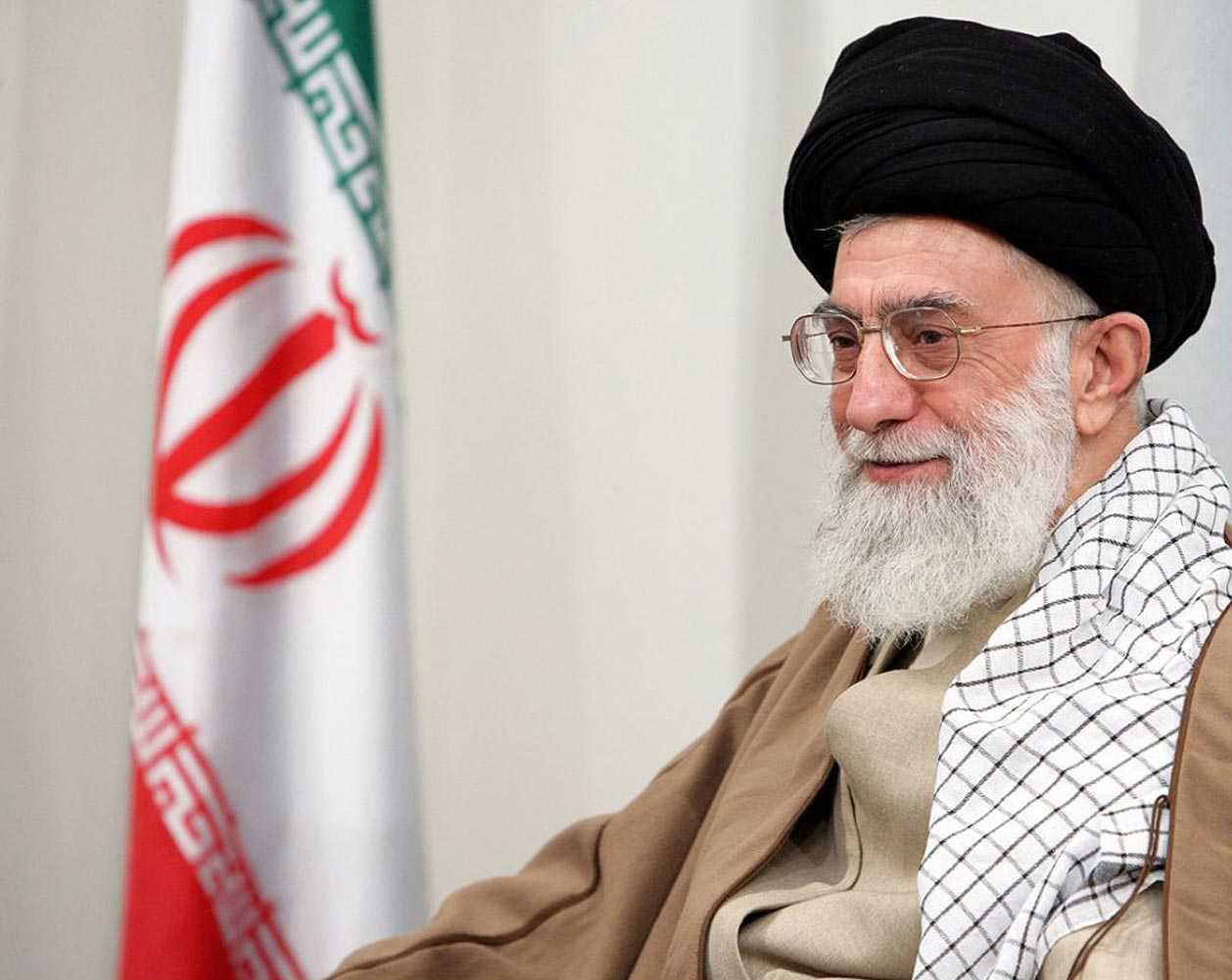
    Ayatollah Khamenei

    The famous Chinese strategist, Sun Tzu, wrote in his book, The Art of War: “If an enemy has alliances, the problem is grave and the enemy’s position strong; if he has no alliances, the problem is minor and the enemy’s position weak.”

    Iran’s supreme leader, Ayatollah Ali Khamenei, is currently witnessing how the US, which he sees as the enemy for his nuclear ambitions, is working hard on building alliances, including with Russia. Khamenei is not happy.

    So much so that Iran recently cancelled a deal with Russia to launch its communication satellite, and turned to Italy instead. This is in addition to recent complaints from Tehran regarding delays from Russia in the delivery of the S-300 anti-aircraft system. Until recently, Tehran kept its complaints away from the cameras and behind closed doors. But now that Khamenei sees the Russians as disloyal, his regime is not shy about airing its criticism publicly.

    The Iranian government has decided to take the initiative and to look for a new partner to replace the Russians. Judging by the recent flurry of visits between Tehran and Ankara, it seems that Khamenei has found a willing partner in Turkey.

    Unlike Russia, Turkey does not have a veto in the UN security council. However, its stock in the Middle East and the Islamic world is certainly rising. Its prime minister, Recep Tayyip Erdogan, is being seen more and more as a credible defender of Islamic and Arab issues. Many people on the Arab street respect his leadership, as he was elected in a genuinely democratic elections. The same can not be said about Egypt’s president, Hosni Mubarak, or King Abdullah of Saudi Arabia, who received their posts undemocratically.

    Erdogan’s relations with the US and the EU also count in his favour. Although he has recently been getting closer to his Muslim and Arab regional neighbours, he has not severed his ties with the west, but is masterfully playing both sides. His relations with the US are also not based on Turkey’s weaknesses. On one occasion, he resisted US pressure and even walked away from a promise of $6bn in grants and $20bn loan guarantees, because he did not find the agreement suitable. And his verbal attacks on Israel after the recent Gaza war have certainly helped his image in the region.

    Now that Khamenei has turned down Barack Obama’s nuclear offer, he feels that the prospect of sanctions is greater. Therefore, he needs a change of strategy to deal with the expected difficult time ahead. One strategy is to turn his struggle against Obama into a new west v Islam confrontation. Judging by the recent international TV debate in Qatar, where Iran’s nuclear programme was discussed in front of a select audience from the Middle East, there certainly is sympathy for his position. As far as many people in the region are concerned, Iran’s nuclear programme is the only way to counter Israel’s superior balance of power. Therefore this is a viable strategy. And Erdogan’s rising popularity in the region, and Tehran’s improving relations with his administration, will be a feasible way for Khamenei to improve his own position during the difficult times ahead. The absence of progress in the Israeli-Palestinian peace track will also help him.

    However, the Iranian supreme leader should be careful about how he approaches his relations with Turkey and the price he is willing to pay for it, both at home and abroad. According to the Iranian news website Khabar online, the Ahmadinejad government concluded a secret gas agreement with Turkey in late October, without informing parliament. After the news was recently leaked to the press, parliament launched a full investigation. There are now discussions about cancelling the whole deal if, as the members of parliament say, it is found to be against the country’s interests. Many people suspect that Khamenei offered the deal in unfavourably good conditions to Ankara, as a means of buying its loyalty. Judging by its results it seems to have worked. However, the domestic backlash could damage the legitimacy of his regime even further.

    There is also the issue of the Bushehr nuclear power plant. Turkey can not complete it. Only Russia can. Khamenei turning his back on Moscow could be even more detrimental to this important and expensive project. Perhaps Khamenei could learn from the Turks, and instead of constantly changing one ally for another learn to balance his alliances.

    UTV

  • Turkish is more spoken than English in Europa

    Turkish is more spoken than English in Europa

    World map that shows some of the many languages of the world, where they are spoken and how many people speak them. This language map means you can now see the most spoken language on each continent!

  • Adana Massacres Focus of Istanbul Workshop

    Adana Massacres Focus of Istanbul Workshop

    This is happening in Istanbul, not Armenia.  Yuksel Oktay, Sukru Server Aya, Ergun Kirlikovali, Javid Huseynov or many other contra-genocide view holders are not invited, not welcome, and need not apply…. Peace-loving-dove approaches are easy and they bring in peace of mind to individuals promoting them but they may be naive, selfish, even cruel considering current realities…  What follows below is hard, cold reality.  We have too few people who figght back against nonstop defamation of all things Turkish and even that group is far from being organzied, focused, or even appreciative of the realities…  As if Turks are the ones who occupy Karabagh or have driven a million Azeris into exile…  Reality check please…

    ERGUN KIRLIKOVALI ,

    Turkish Forum Advisory Board Member & ATAA president Elect

    November 13, 2009

    By Roland Mnatsakanyan

    From Nov. 6-7, Sabanci University (Istanbul) just hosted an international workshop entitled “Adana: 1909: History, Memory, and Identity from a Hundred Year Perspective.” The workshop included scholars from the United States, Canada, United Kingdom, France, Italy, and Turkey. The event was sponsored by Gomidas Institute (London), Sabanci University, Istanbul Bilgi University History Department, the International Hrant Dink Foundation, and Bogazici University History Department. A capacity audience filled the lecture theatre and included professors, students, journalists, and members of the public. There was simultaneous translation between English and Turkish.  The papers that were presented will be published in English and Turkish editions.

    In their opening remarks, Cengiz Aktar and Ara Sarafian welcomed the participants and pointed to new opportunities for holding such meetings in Turkey today. They explained that the Adana 1909 workshop was organized to mark the centennial of the Adana massacres. It began with a call for papers in Turkish, Armenian, and English, and the presentations at the workshop reflected the different interests of the participants.

    The first paper was an unusual one, as it was a discussion of Turks who saved Armenians in 1909. The fact that Armenians were massacred was a given, and the speaker presented a sensitive examination of righteous Turkish officials who saved potential victims. The speaker used Ottoman records to show how Ottoman Armenians petitioned the state to recognize one such Turkish official for his role in saving an entire community. This first paper took some of the sting out of the workshop, where the audience could sympathize with the Armenian victims of 1909 without vilifying “Muslims” or “Turks” as single categories. Subsequent papers followed with the same sensitivity.

    Each session was chaired by a senior scholar and was followed by a discussion. The workshop thus benefited from the presence of additional senior scholars, such as Selim Deringil, Caglar Keyder, Mete Tucay, and Hulya Adak.

    The organizers considered the workshop a success.

    The papers that were presented could be summarized as follows (not in the order of presentation at the workshop).

    Some new perspectives

    Abdulhamit Kirmizi gave a well-nuanced paper discussing the fact that some Muslims saved Armenians during the 1909 massacres. The role played by such Muslims was actually acknowledged by Ottoman Armenians after 1909. The speaker’s focus was Major Hadji Mehmet Effendi and his men who defended Sis, the seat of the Armenian Catholicosate of Cilicia, from attacks by neighboring tribes and villages. Kirmizi used Ottoman documentation to discuss such Muslims, many of whom were decorated by the Ottoman government. The actions of these officials were the opposite of other officials who encouraged the massacres. Another well-nuanced and probing paper concerned a complex range of different factors related to the Adana massacres. It was stressed that some of these factors could only be probed in a speculative but informed manner at this stage of debates. One such factor was identified as the presence of tens of thousands of impoverished migrant workers who could not find work in Adana in April 1909. Sinan Dincer ( Ruhr University, Bochum ) discussed such migrant workers in Adana province that season, and suggested that they could have been drawn into the fighting for no other reason than to loot and steal Armenian property. The speaker stated that he was not arguing that this was a major factor explaining the massacres, but it might have been a significant contributing factor.

    Views from Europe

    Two presentations discussed French and German records related to the Adana massacres. Vincent Duclert (EHESS) contrasted the position of the French government following the Hamidian massacres, the Adana massacres, and the Armenian Genocide. He noted that the French government was reluctant to press the Ottoman authorities after the Adana massacres because many French officials supported the Young Turk government. Instead, French authorities played down the issue in France. Dilek Guven (Sabanci University) discussed German consular records, as well as the records of the Baghdad Railway company. These records attested to the terrible suffering of the Armenians in 1909. She noted that German policy towards Ottoman Turkey was uncertain at that time, especially as the 1909 massacres were reportedly carried out by supporters of Abdul Hamid II, whom the Germans had backed until the 1908 revolution. Benedetta Guerzoni (independent scholar) discussed how imagery of the Adana massacres was constructed in western newspapers, with particular reference to Italy and France.

    Some Armenian sources

    Ara Sarafian (Gomidas Institute) and Zakarya Mildanoglu (independent researcher) discussed Armenian records related to the events of 1909. Sarafian introduced Hagop Terzian, who published a powerful report in 1912, on the 1909 events. Terzian included his own testimony in Adana city, as well as the testimonies of others in smaller communities. Sarafian argued that Terzian’s text had a certain popular force-of-argument that challenged official accounts that tried to play down the incidents. Sarafian quoted Terzian to stress the devastating role of the newspaper “Itidal” in agitating and fermenting violence against Armenians. Zakarya Mildanoglu presented the Adana massacres through the Armenian periodical press with many illustrations from different journals. His accounts included satire as a powerful tool to convey what had happened to Armenians. (Mildanoglu was also responsible for a separate exhibition of photographs depicting the Adana massacres. These images and texts were displayed at the workshop.)

    American witnesses

    The role of American missionaries as witnesses was discussed by Lou Ann Matossian  (Cafesjian Family Foundation) and Barbara Merguerian (Armenian International Women’s Association), with powerful papers related to events in the cities of Adana and Tarsus. Tarsus was also the focus of Oral Calislar, a well-known Turkish journalist who presented the testimony of Helen Davenport Gibbons in her book Red Rugs of Tarsus. Calislar, who has published the Turkish translation of this work, gave a personal reflection regarding his native Tarsus. (The Gomidas Institute has just published a critical English edition of the Red Rugs of Tarsus.)

    Human and material losses

    The reality of Armenian losses was stressed by Osman Koker, who gave a fascinating paper on Armenian communities in Adana province, illustrated by photographs and postcards. He included images from Antioch, Alexandretta, Marash, Beylan, Sis, Adana, Tarsus, and Koz Olouk.

    Sait Cetinoglu (Belge Uluslararasi Yayincilik) gave a forceful presentation on the organization and plunder of Armenian properties in 1909, while Asli Comu (Cambridge University) gave a solid paper based on land records from the Adana region in the 1920’s. These records gave new insights into how Armenian properties were broken up and par celled out to Muslim refugees. The actual number of Armenian casualties during the massacres was discussed by Fuat Dundar, who raised some questions about the demographics of the Adana massacres based on his work on the massacres of Abdul Hamid II and the Armenian Genocide. The fate of Armenian orphans following the Adana massacres became a major concern for Armenian community leaders. Nazan Maksudyan gave a moving paper on the fate of such orphans, especially in “foreign” orphanages. One key concern was assimilation in government-run orphanages where the language of instruction was Turkish and not Armenian.

    Literary responses to the massacres

    The legacy of the 1909 massacres could not be explained by simple numbers for casualties or lost properties. Literature was a powerful way to convey a sense of violence, loss, and trauma that accompanied events and lingered on in the lives of survivors. Marc Nichanian (Sabanci University) and Rita Soulahian (McGill Univeristy) discussed the literary response to the Adana massacres, with particular reference to Arshagouhi Teotig, Taniel Varoujan, and Zabel Yessayan. (Unfortunately Nichanian could not be at the workshop and his paper was beautifully presented by Hulya Adak (Sabanci University)).

    Ottoman Parliament

    Anastasia Iliena Moroni (EHESS & Panteion University, Athens ) discussed how the Adana massacres were presented in the Ottoman Parliament.

    Adana Massacres Focus of Istanbul Workshop
  • Call for Turkish-Armenian peace from theater stage

    Call for Turkish-Armenian peace from theater stage


    VERCİHAN ZİFLİOĞLU
    ISTANBUL – Hürriyet Daily News
    Monday, November 16, 2009

    The Gülbenkyan Foundation, an Armenian organization in Lisbon, has given full support to the play ‘Armenian Concert or Turkish Proverb’ to be staged in Turkey. ‘We cannot live by getting stuck in tragedy,’ says the writer and composer of the play, Gerard Torikian. Also, director Serge Avedkiyan, who adapted the play to the stage, talks about the new initiative among the diaspora

    The reconciliation process between Turkish and Armenian people has received support from the Armenian diaspora.
    The Gülbenkyan Foundation, an Armenian organization in Lisbon, has provided financial support for “Le Concert Armenian ou le Proverbe Turc” (Armenian Concert or Turkish Proverb) to be staged in Turkey. The play is the work of world-renowned Armenian composer and France-based actor Gerard Torikian, who wrote it in collaboration with French playwright Isabelle Guidard. It received full support not only from the Gülbenkyan Foundation but also from Turkey and France.
    Anadolu Kültür (Anatolian Culture), which is a civil society organization run by Osman Kavala that supports the Turkish-Armenian reconciliation process by organizing cultural and artistic events, played a leading role in bringing Torikian’s play to Turkey.
    In his play Torikian questions historical events and reveals the struggles in his inner world. Directed by France-based Serge Avedikyan, “Armenian Concert” was first performed in 2006 in France and has been performed throughout the world since. Its Turkish première, meanwhile, was Thursday in the southeastern city of Diyarbakır. It will be performed Tuesday at Garajistanbul in Istanbul’s Galatasaray neighborhood at 9 p.m. Though the original language of the 1.5-hour play is French, there will be Turkish and English subtitles.

    Facing the past

    Torikian and Avedikyan, who came to Istanbul right after the Diyarbakır performance, spoke to the Hürriyet Daily News & Economic Review. Although Torikian came to Turkey for the first time last year, his roots are in Anatolia. His father’s family is from the northwestern city of Bursa while his mother’s family comes from the Black Sea region. The artist grew up hearing about the painful events of 1915.
    Torikian said he had prejudices until he came to Turkey. “I felt myself a part of this land as soon as I came to Turkey because my grandfather and grandmother are part of this land.”
    He said he was warmly welcomed during his visit last year. “I returned to France with very nice memories. As a result of this nice experience, I decided to stage the play here.” Torikian defined the painful events in 1915 as “a big tragedy.”
    “There was a big tragedy like genocide but it makes no sense to get stuck in the tragedy. The best way to get rid of the pain is to be able to see it from a distance,” he said.

    ‘We can’t define our identity through genocide’

    Even though Torikian and Avedikyan are Armenian, they grew up in different cultures. Avedikyan lived in Armenia until he was 15 while Torikian lived his entire life in France. Discussing the concept of “belonging,” Avedikyan said, “When I am alone, I question where I belong: To France, where I live, or to Armenia, or to Anatolia?”
    He said similar questions appeared in his inner world from time to time. “I saw that one cannot survive by getting stuck in the past. As Armenians, if we continue to define our identity through genocide, we won’t be able to proceed. We are Armenian, but we remember that we are human first.”

    New trend in diaspora

    There are more than 1 million Armenians spread around the world from Anatolia. “The diaspora is finally changing,” said Avedikyan. “Thoughtful artists from the diaspora reject politics and pressure. They stay away from excessive nationalist statements and viewpoints. They never deny the genocide but are more positive about the future.”
    As for the reconciliation protocol that was signed between the two countries recently, Avedikyan said, “I prefer the sound echoed in the conscience of people rather than the signatures of politicians. Let’s support the reconciliation of Turkish and Armenian people, let peace be our goal.”

    About ‘Armenian Concert’

    In the play an Armenian composer is preparing for an Odyssey Suite recital, but inspiration for the suite, the Homer Saga, never sets him free. The past is determined to capture the composer with thousands of ghosts. He is surrounded by these ghosts from the past. The composer fights against the past and the ghosts with all his might. The power of music helps the composer and he succeeds in being freed from the past. As soon as he is free, he looks at the face of the past and realizes the best way to vanquish the past is to make peace with it.