Month: November 2009

  • Brzezinski Says Ignore US Public on Afghanistan

    Brzezinski Says Ignore US Public on Afghanistan

    Political Views
    By MWC News

    By David Swanson

    BrzezinskiZbigniew Brzezinski spoke at a RAND Corporation forum on Afghanistan in a Senate caucus room on Thursday.  His first statement was that “Withdrawal from Afghanistan in the near future is a No-No.” He offered no reasons why and suggested that his other statements would be more controversial.

    During a subsequent question-and-answer period, I asked Brzezinski, former National Security Advisor to President Jimmy Carter, why he had provided no rationale for his first rule. I asked him why such a rule should be considered uncontroversial when approximately half of Americans oppose the occupation of Afghanistan.  I asked how he would respond to the arguments of a US diplomat who just resigned in protest.

    Brzezinski’s response would make Dick “So?” Cheney proud.  He responded that it was understandable but that a lot of people are weak and don’t know any better, and they should be ignored. But, he urged that those supporters of war who would criticize the president if he pulled out should be feared and followed.

    These are paraphrases.  For exact wording get the video.  Here are my notes on Brzezinski’s remarks:

    1. “Withdrawal from Afghanistan in the near future is a No-No.”  He gives no reason, just takes it for granted everyone agrees.  Says #2 will be more controversial.
    2. Don’t repeat what Soviet Union did.  Don’t Americanize the American occupation of Afghanistan.
    3. Make sure NATO and anybody else willing is there with the Americans, esply Islamic troops.
      The Three Fundamental Noes.

    To Do:

    1. Deny safe haven to al Qaeda.  That is THE objective.  Don’t build a nation.
    2. Be sensitive to ethnic diversity while we’re building a nation.
    3. Do what USSR did in crushing democratic movements in places like Poland.  Hire natives to fight.
    4. We may have to put in more troops.  Control cities and roads.  Undertake counterinsurgency.
    5. Pursue accomodations with Taleban and Talebanlike formations.
    6. Keep economic assistance flowing rather than abandoning Afghanistan as we did after the counterinsurgency against the USSR.  Seduce the population.
    7. Involve the Europeans in funding elimination of narcotic crops.
    8. Be more respectful of Pakistani strategic interests in Afghanistan.
    9. Engage China and Iran with their interests in Afghanistan.
    10. Build a North-South pipeline to the Indian Ocean.
    11. Rename it The Vietghanipipelinistan Quagmire of Freedom.
      OK I made up #11.

    Source:

  • Jewish organization in US states impossibility of worsening relations with Turkey

    Jewish organization in US states impossibility of worsening relations with Turkey

    Tensions in the Turkey- Israel relations will not affect the deep Jewish-Turkish friendship, National Director of the giant U.S. organization AntiDefamation League, Abraham Foxman said, CNN Turk reported.

    “This is an old and strong friendship and therefore new problems [between Turkey and Israel] cannot affect it,” Foxman said at the meeting on the relations of the Turkish and Jewish communities.

    Tensions between the two strategic partners arose after Ankara’s refusal to participate in joint military trainings with Israel on the backdrop of Turkey’s rapprochement with Syria and Iran.

    “If Turkey wants to be close to the Arab and Middle Eastern countries – there is no problem. But why should it be to the prejudice of the Turkish-Jewish friendship,” Foxman said. “I hope these tensions will be temporary in nature.”

    Regarding the 1915 “Armenian genocide”, Foxman said the Anti-Defamation League’s position on this issue remains unchanged.

    According to Foxman, the problem of the “Armenian genocide” should be solved between Turkey and Armenia, but not in the U.S. Congress or in the French Parliament.

    The draft resolution urging the Obama administration to recognize the so-called 1915 “Armenian genocide” at the Ottoman Empire was submitted to the Senate of the U.S. Congress on Oct.28. Senators Robert Menendez (Democrat from New Jersey) and John Ensign (Republican, Nevada) are the authors of the resolution, ITAR-TASS said.

    Source:  en.trend.az, 31.10.2009

  • Azerbaijani laser specialist arrested in Iran accused in espionage

    Azerbaijani laser specialist arrested in Iran accused in espionage

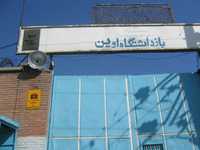
    EvinPrisonAzerbaijan, Baku, October 31 / Trend News T. Jafarov /

    Azerbaijani laser specialist arrested in Iran is accused of espionage, head of Iranian firm Sazan Elektronics Industry, Abbas Eftekhari, told Trend News over phone on October 31.

    “Arrest of Rashid Aliyev has no relation to the contract signed between our firm and Baku State University. He was arrested due to national security. He was arrested for espionage,” Eftekhari said.

    Leading engineer-physicist of the biological laboratory of the institute for physical problems of the Baku State University Rashid Aliyev worked in this company in 2006-2008 at the invitation of Iranian company Sazan Elektronics Industry.

    Head of the company has repeatedly suggested the scientist to move to Iran for permanent living. But Aliyev did not accept this proposal, and returned to his homeland soon, the Committee for the Protection of Aliyev’s Rights said.

    Mammadov said that the corresponding organizations in Iran got letters with a request to investigate the reasons of the scholar’s arrest and release. The Iranian Embassy in Azerbaijan was also informed. However, Aliyev’s family has not got any official information on the reasons for the scholar’s arrest.

    The committee and the scholar’s family call on the appropriate organizations to assist in Aliyev’s release and return to his homeland.

    After persistent requests of the director Abbas Eftekhari, Aliyev returned to Iran for a short perod on October 5. On October 6 he was arrested under the pretext of problems with visa.

    Eftekhari said that he does not know for whom Aliyev dealt with espionage and a core of the problem.

    “I was told that this person was accused of espionage. They did not say for which country he worked,” Eftekhari said.

    Eftekhari said that Aliyev worked over a joint project in the company. He was arrested by employees of the Interior Ministry and the Ministry of National Security of Iran.

    Eftekhari also said about objections during the arrest. “But it is impossible to object to employees of the Interior Ministry and the Ministry of National Security of Iran,” director of the company said.

    The permission to meet with Aliyev was not given. But conditions for telephone conversation were created two days ago, Eftekhari said.

    Eftekhari stressed that the company hired a lawyer to protect rights of Azerbaijani scholar. But the police do not allow him to work.

    “Arrested person does not have rights to hire a lawyer and deal with protection till the case is submitted to the court upon the Iranian laws. We have hired a lawyer for Aliyev but the police said that he does not need a lawyer’s services till the trial is conducted. After the case is submitted to the court, we will hire a lawyer and protect Aliyev’s rights,” head of the company said.

    He said that Aliyev is in the fifth corpus of Evin jail.

    Aliyev has suspended his scientific activity. He voluntarily went to serve in the army when he was 38.

    He installed communication systems in N unit of the special purpose till 1999. He participated in organizing and conducting tests in military units of laser technology for special purposes.

    He was also involved in overhaul of some vessels of Border Troops, the Ministry of Environment and Natural Resources.

    Do you have any feedback? Contact our journalist at [email protected]

    Source:  en.trend.az. 31.10.2009

  • J Street comes alive on Washington, DC map

    J Street comes alive on Washington, DC map


    Friday, October 30, 2009

    İLHAN TANIR

    The Israel-Palestine peace process – a top foreign-policy objective of the Obama administration – faces continued challenges after months of intense diplomatic talks engineered by George Mitchell, the U.S. envoy for the Middle East. These negotiations have produced a mere handshake between U.S. President Barack Obama, Israeli Prime Minister Benjamin Netanyahu and Palestinian Authority President Mahmoud Abbas, without being able to produce any framework for an ongoing peace process.

    Obama’s tough rhetoric against Netanyahu backfired, said Ami Ayalon, the former head of the Shin Bet, Israel’s secret service, and former commander in chief of the navy after a panel discussion at the J Street conference in Washington, D.C. The initial stalemate was presented by Netanyahu as a victory, which was in reality a mere defense of the status quo, he added. Ayalon also stated that after this first round of diplomacy, Obama started to be viewed as a collaborator with the current Israeli administration, which created some questions in the Arab world regarding the degree to which he can uphold his strong stance against Israeli demands.

    Under these circumstances, I asked Jeremy Ben-Ami, the executive director of the J Street movement, to describe his organization to me. “[J Street] is the political voice of American Jews and other Americans who believe that it is in our best interests and as well as that of Israel to end the conflict with the Palestinians and to have a two-state solution and a comprehensive peace process in the Middle East.”

    J Street, with a history a mere 18 months in the making, attracted thousands of supporters, the support of hundreds of the members of Congress, high-profile attendees and the Obama administration’s unequivocal backing last week. The Obama administration has shown its support by sending the National Security Adviser, Ret. General James L. Jones, to represent the President and to speak at the conference. Gen. Jones concluded that “this U.S. administration will participate in J Street’s other activities in the future.” On the other hand, while J Street hosted many members of Congress, Republicans and Democrats alike, the one person who shied away from the conference was Israel’s ambassador to Washington, D.C., Michael Oren. According to the statement that was released by the Israeli embassy, there were “concerns over certain policies of the organization that may impair the interests of Israel.”

    One would rightly ask why is it that this new movement attracted so much attention and sparked a range of discussion in America and across the globe, while Israel already has a mighty lobby, centered around the American Israel Public Affairs Committee, or AIPAC, in Washington, D.C., an organization that has been staunchly and unequivocally defending Israel’s policies? What is it that makes J Street so unique to draw thousands of participants, many of whom come from the other states and places as far away as Jerusalem?

    I attended most meetings of the conference for two-and-a-half days to receive answers to these questions. I met many ordinary participants as well as religious leaders, rabbis and humanitarian workers from Jerusalem. I met a couple of the participants during the “Jewish Community Town Hall” meeting, after speeches by Rabbi Eric Yoffie, the president of the Union for Reform Judaism and Jeremy Ben-Ami. After these speeches, the crowd discussed some of the questions of the ongoing conflict in Gaza and the Israeli-Arab peace process in general. Two participants were from Oxfam International, a confederation of 14 organizations working in more than 70 countries to find permanent solutions to poverty and injustice. One of these participants was John Prideaux-Brune, Oxfam’s country director, who has been living in Jerusalem and Gaza for about five years.

    John said that Israel still occupies Gaza from the sea, land and air, even if it claims officially it does no longer do so. According to the Geneva Conventions, Israel has to allow humanitarian help to enter Gaza. However, John argues, what is allowed to go into Gaza is incredibly limited. For example, macaroni cannot get in because it is considered a luxury food item. Israel only allows about 100 trucks of food to go in to Gaza a day, as opposed to 600-700 trucks before the Gaza conflict. Cement or any other construction materials are not allowed by the border officials as they could be used to make tunnels. His frustration goes further by talking about the terrible circumstances the Gazans live under; ordinary Jewish-American people also sitting at our table are equally angry and add their own criticisms to his frustrations. Another Jewish-American participant who is equally frustrated by the Israeli government’s harsh treatment of the Gazan people was Naftali Kaminski, a doctor, who joined the conference from Pittsburgh.

    Therefore, the first reason for J Street’s success and wide popularity undoubtedly comes from the grassroots support of ordinary American Jews who are tired of Israel’s grinding policies in Gaza and stubborn settlement practices. The grassroots support is, I believe, the most important element for any organization to be effective and apparently J Street has it all. There is another very important reason for J Street’s immediate success, which is that it coincided perfectly with a new U.S. administration coming into office. J Street’s close relationship with and support of the Obama administration was seen very clearly during the conference and this special relation apparently makes the organization’s mission to fill a gap in American politics even stronger. J Street defends many parallel policies that fit well with the Obama administration’s plans, such as the two-state solution and a complete freeze of the settlements. It was also interesting to see that whenever a panelist talked about a two-state solution, criticized Israel for what it did during the last Gaza war or called for ending the occupation, the J Street crowd roared and applauded excitedly.

    Even though J Street received heavy flak from AIPAC and other hard-line right-wing Israeli factions in respect to their criticism of Israel’s policies, the open-minded discussions and honest debates on the panels were exhilarating and personally lifted my hopes for the peace process. To see a crowd in an inaugural conference describe themselves ‘pro-Israel,’ but stand up against the country’s many wrong-headed policies gained my deep respect.

    PS. Washington, D.C. marks its streets with letters, and J is missing from the actual map.

    __._,_.___