Month: November 2009
-

DAVUTOGLU: Risky Diplomacy
By Owen Matthews, Yenal Belgici, and Semin Gumusel | Newsweek Web ExclusiveNov 28, 2009
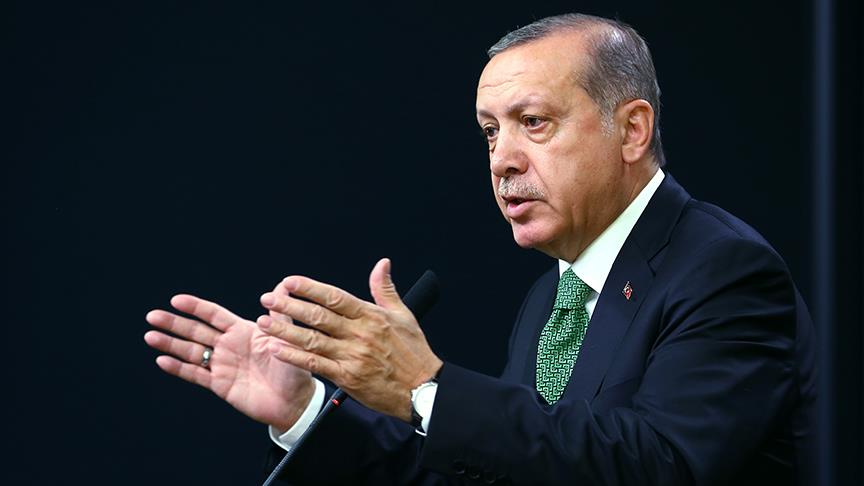
SPONSORED BY:Elvis Barukcic / AFP-Getty ImagesOn the Road: Davutoglu in Bosnia on Oct. 16, 2009Has the West really "lost" Turkey? With Ankara showing a new cordiality to countries like Syria and Iran, foreign-policy analysts are scrambling to assess whether Turkey has shrugged off Europe and the United States in favor of its Muslim neighbors. Turkish Foreign Minister Ahmet Davutoglu sat down with NEWSWEEK's Owen Matthews, Yenal Belgici, and Semin Gumusel in Ankara recently to discuss NATO, Iran, Barack Obama, and the thinking behind Turkey's new diplomacy. Excerpts: Matthews: Many of Turkey's allies are wondering, after Prime Minister Recep Tayyip Erdogan's recent visit to Iran, whose side is Turkey on? Davutoglu: In order to answer this question, you have to understand the geography and the history of Turkey. We are a European country and we are an Asian country. We have direct access to the Balkans, the Caucasus, and the Middle East. So Turkish foreign policy has to be multiregional, multidimensional. We are also part of European history. But at the same time, the history of more than 20 [Middle Eastern and Balkan] countries could be written only using Turkish archives. We have more Bosnians in Turkey than in Bosnia itself, more Albanians than in Albania, as well as Kurds and Arabs. Because of these historic connections, all these countries have certain expectations from us.Matthews: Yet during the Cold War you were unequivocally a U.S. ally. The Cold War was a static international environment; you had only two options—either [to be a] member of NATO or a member of the Warsaw Pact. There was no third alternative. After the Cold War, a dynamic situation emerged, and Turkey had to assume a foreign-policy role in all [its neighboring] regions regardless of their ethnic or religious background. But at the same time, Turkey's most institutionalized relationship remains its membership of NATO—this is Turkey's strongest tie. Similarly, the main objective of Turkish foreign policy is integration with Europe. Our history is part of Europe's, our culture is part of Europe's, and our process of modernization is parallel to the developments in Europe. Our membership of NATO and the negotiation process with the EU is the strategic priority of Turkey. But it doesn't mean that because of these strong ties we can ignore the Middle East, we can ignore Asia, Central Asia, North Africa, or Africa.Owen Matthews and Christopher DickeyTurkey is the surprising beneficiary of our misadventures in the Middle East.Matthews: Isn't friendship with Iran mutually exclusive with membership in NATO? Our relations with Iran are not something new. The Turkish-Iranian border has been stable for 370 years. We have been implementing a policy of "zero problems with our neighbors," not just with Iran, but also Iraq and Syria and also with non-Muslim countries such as Georgia, Bulgaria, Greece, Russia, Romania, and with all of our other neighbors. All our [regional] relations improved. Today Russia is our biggest trade partner; our relationship with Greece and Georgia are excellent. So it's a consistent policy across the board. You can't say that Turkey is giving special priority to Iran. The question should be: is having zero problems with our neighbors compatible with being a candidate for the EU and a member of NATO? From our perspective, yes, they are compatible. This is the whole philosophy of the EU itself, which emerged through minimizing political problems with its neighbors. Similarly, we want to have a zone of security and stability around us. And this is exactly the European approach, based on European philosophy and European values. If you study Germany's Ostpolitik [of détente with the Soviet bloc] in the 1960s, you can understand Turkey's Eastern politics in 2009.Matthews: Turkey is now in a position of influence that it hasn't had in long time. Does that not mean that Turkey has emerged as one of the winners of the Iraq War? We would have the same foreign policy toward the Middle East even if there had been no war in Iraq. Our foreign policy toward the Middle East, the Caucasus, and the Balkans is not opportunistic but based on firm principles. In order to have a new prosperous, stable, secure Middle East, we have been implementing a proactive peace diplomacy. That's why we initiated direct Syrian-Israeli talks; that's how we were able to unite Sunni groups [in Iraq] and convince them to participate in politics in 2005. We have been very active in Lebanese politics to resolve disputes between Sunnis and Shias, and active in Gaza trying to achieve a ceasefire. We have also been trying to resolve issues regarding the Iranian nuclear program and signed agreements with Armenia and moved forward in resolving the Armenian-Azerbaijan dispute. During the Georgian crisis we initiated the Caucasus Stability and Cooperation Platform, and we have mediated in Bosnia-Herzegovina and Serbia. Matthews: But the Iraq War created a power vacuum that you are now filling. The same war in Iraq also created big risks for Turkey. This type of international issue creates risks and advantages at the same time. How this new context will be interpreted and be responded to depends on the political will of a country. Turkey implemented a consistent foreign policy; therefore, now we have excellent relations in the region. But it is because of our foreign policy, not because of the war in Iraq. We have been sincere, we have been active, and we did not change our policy because of some very conjectural short-term interests. Gumusel: Is Turkey's success at regional problem-solving inspired by Europe? Europe is a beautiful example to follow—I mean, the generation that fought [World War II] and caused millions of deaths in Europe was the same generation that established the European Union. We want to be a part of this beautiful example and to reflect this experience onto other regions. Matthews: Are relations between Turkey and the U.S. better than during the Bush administration? Much better. Obama's style is to encourage more multilateralism, more consultation, more interaction with allies, instead of preparing policy and implementing it before consulting with other allies. Matthews: What does the U.S. want from Turkey? If you permit me, that question is typical Cold War logic. It assumes that there is one power, the United States, who always wants something from us. But being an ally means sharing, being inclusive. If you ask Secretary [Hillary] Clinton what are the 10 most important issues facing American foreign policy today, and ask me the same question [about Turkey], we will come up with the same list. Iraq, Afghanistan, Palestine, energy security, the Caucasus, the Balkans. We share the problems, and we are therefore trying to solve these problems together.Gumusel: Where do you see yourself and Turkey in 10 years? I see a country that has managed to start economic integration and has solid relations with all its neighbors. Also, a country that has become a member of the EU. I see a Turkey which keeps an effective role within NATO and which is also a key player not only in security-related fields but also in economic organizations such as G20. I do not think these objectives are unreachable by the year 2023, the 100th anniversary of the Turkish Republic, 14 years from now. Bilgici: You emphasize that you criticize Israel on a moral basis. Doesn't it damage Turkish foreign policy not to criticize Sudan for what has happened in Darfur? We have been working on to provide a better dialogue between the parties in Darfur and the Sudanese government. When President [Omar] al-Bashir came to Turkey, our president criticized him in a most sincere and open way. We think that we have managed to develop a morally responsible relationship with Sudan. © 2009 -
The Top 10 cities to visit in 2010
Guidebook publisher Dorling Kindersley reveals the hip, hot and happening city breaks for the coming year

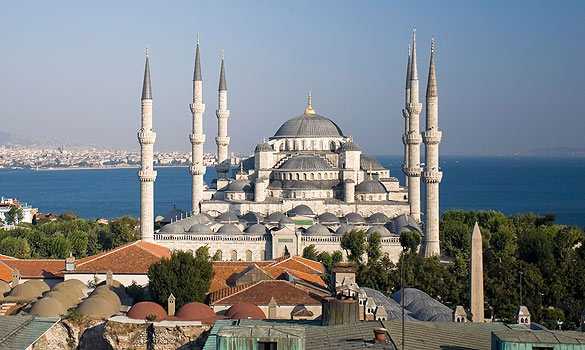
Visit the Blue Mosque in Istanbul, one of 2010's must-see cities (Jon Arnold Images Ltd/Alamy) DK Eyewitness Travel team
Istanbul
One of the greatest cities the world has ever known, nowhere does the cliché of East meets West, old meets new, apply more aptly.
The last few years have seen Istanbul thrive with boutique hotels, uber-trendy bars and gourmet restaurants adding to its already intoxicating mix of historic and cultural sites. Watch it ramp up another notch as the city becomes a European Capital of Culture in 2010.
Vancouver
Feted as the world’s most livable city, this West Coast gem has a lively cultural scene with superb restaurants and hotels. A beautiful city where glass towers and skyscrapers are set against a backdrop of coastal mountains, in 2010 it will host the Winter Olympics.
With a strong focus on sustainability, the legacy of the Games for Vancouver will see improved public transport, striking ‘green’ buildings and a huge arts and culture programme.
Delhi
Rejuvenated and refreshed, Delhi is sprucing up to host the 2010 Commonwealth Games. The colonial city centre and Delhi’s main shopping area, Connaught Place, has been given a new façade, while the city’s monuments are being cleaned and revitalised and improved transport links are opening up the city. Don’t be surprised to find bullock carts still plodding placidly alongside the latest luxury car though – Delhi is a city where contrasts sit happily.
Nottingham
In May 2010 Hollywood’s eyes will focus on this humble corner of the East Midlands, as Ridley Scott’s new Robin Hood film is released to the world. Meanwhile old meets new at Nottingham Contemporary, a new building designed by award-winning architects Caruso St John, with a series of exhibitions and art projects running across four galleries. Add to this Nottingham’s designer shopping credentials and you have plenty of reasons to visit the city.
Nara
Japan’s ancient capital Nara celebrates its 1300th anniversary in 2010 with special displays of hidden national treasures and rarely-seen Buddhist statues, as well as a host of other cultural events including an International Film Festival.
With its wooded hills, temple, parks and some of the world’s oldest wooden buildings this ancient city remains a symbol of tranquility in a country where teenagers experiment with the gadgets of the future.
Boston
New England’s largest city exists to be explored. From spring 2010, intrepid visitors will benefit from the biggest bike share scheme to launch in the US to date, with two and a half thousand bikes available to hire at the swipe of a credit card from special stands across the city.
Film lovers might choose to seek out locations used in a slew of filmed-in-Boston movies due to hit screens in 2010, including Ben Affleck’s The Town and Mel Gibson’s Edge of Darkness.
Oslo
There aren’t many capital cities where you can swim in summer and ski in winter, all within the city’s boundaries. Oslo is charmingly Scandinavian but with the kind of outdoor ‘chilling’ culture more usually associated with Southern Europe.
With new flights from Ryanair and costs that now compare favourably with many Euro-zone destinations, Oslo is more affordable than ever. And in 2010 it plays host to the Eurovision Song Contest.
Tel Aviv
Touted as the New York of the East, Tel Aviv looks set to really attract attention in 2010 as news spreads about the city’s party credentials. New Easyjet flights from Stansted, starting in late 2009, are bound to encourage the crowds. The heat generated by the city’s nightlife is matched only by the temperatures on its glorious sweep of city beach.
Valparaiso
A charming town, where Chilean socialist Pablo Neruda hid in the late 1940s when Communism was outlawed. 2010 will mark the 40th anniversary of Chile’s first democratically-elected socialist head of state, Salvador Allende.
Valparaiso offers a fairly unique South American experience, with painted houses sitting on hills leading down to a huge bay, with old elevators taking you up and down the city’s steep slopes.
Reykjavik
Financially speaking it’s a relatively good time to visit. Getting there might be easier too, with Iceland Express flying to New York four times a week from June 2010, and Icelandair increasing its services from Glasgow and Manchester, and connections to North America.
Logistics aside, Reykjavik offers a fine visit, from hedonistic revelry to the calming charm of a city that offers glaciers in its sea views, a mountainous backdrop and geothermal lagoons.
Compiled by the DK Eyewitness Travel team. Traveldk.com
Source: www.timesonline.co.uk/, 25 November 2009
-

2015 – Year for commemoration of common tragedy: Turkish party leader
Why wait until 2015? Why not now? But first, all those western countries and Russia who created the “Eastern Question and the Armenian Issue” should admit their roles in the common tragedy and tell the world that they will not continue with their never ending goals in putting road blocks for the development of Turkey and the re-establisment of friendship between the Armenians and the Turks everywhere. Everyone should heed the words of Mustafa Kemal Pasa who made the following statement on 7 March, 1920:
“Civilisation and the humanity should once more enlightened regarding the alleged Armenian massacres and the purpose of the propaganda created to mislead the world. These are the results of resentment and anger from detestable and vicious accusations.”
Yuksel Oktay
28 November 2009
From: CEM TOKER <[email protected]>http://news. am/en/news/ 9524.html www.ldp.org. tr
12:53 / 11/27/2009
Cem Toker, Liberal Democrat Party (LDP) leader who recently visited Armenia “asked for the recognition of 2015 as a year for the commemoration of the common tragedy of 1915,” Turkish Sunday’s Zaman writes.
The source quotes Toker as saying: “Both sides suffered from great pain a century ago. We can initiate such a process to share our common and mutual anguish without blaming each other and referencing the notion of Genocide. I hope that the 2015 Year for the Commemoration of our Common Tragedy will make a contribution to the peace process at a time when protocols have been signed for the normalization of diplomatic relations and the opening of border gates. People’s stories of family tragedies are often followed by remarks of gratitude; they say, for instance: ‘Our Turkish neighbors gave us food; they protected us. They saved our lives; they told us they could look after our babies for us, implying that we would come back anyway.’ These stories point to the humane part of the whole story. This is a great potential to look forward.”
According to Toker, Turkey is the key topic of daily discussions in Armenia, “If you want to survive politically there, you have to be against Turkey; this is the dominant belief in the country. Turkey is the only issue that people talk about when they get together. It does not matter whether they hold positive views or not on Turkey. Turkish people’s reaction to the Dink murder shocked the Armenian people. Eager to prevent the emergence of positive feelings on Turkey, nationalists strove to present this as an organization of the state; however, this propaganda was not very influential. People have changed their views on Turkey because of the slogans chanted at the funeral ‘We all are Hrant; we all are Armenians’,” Toker says, adding that Armenian people were surprised when hearing there are 50,000 Armenians in Istanbul working without feeling that they live in a hostile country.
Asked about the reactions he got in Armenia, LDP leader replied: “Ordinary people also started changing their views on the Diaspora. They now criticize Diaspora actors, noting that it is easy to make recommendations from remote parts of the world. There are two kinds of people: The moderates say, “Well, I am ready to erase the map in my mind; but it will stay alive in my heart.” The same also applies to 1915. They say, “I will take the Genocide out of my brain; but I will keep the anguish alive in my heart.” The others, however, say: “I will never forget this map; it will always remain alive in my brain and heart. I will never erase the Genocide and the Armenian cities. These are what make me an Armenian.”
Touching upon Azeris’ reaction on the Armenia-Turkey reconciliation, Toker told Zaman: “I have difficulty understanding why the Azeri people show such an excessive reaction to the normalization of Turkish-Armenian relations. It is really interesting to observe that they are so critical of the moves Turkey has taken to address thorny issues including Nagorno-Karabakh, the recognition of borders and the Genocide allegations while remaining silent towards Iran’s eagerness to keep its borders with Armenia open. I do not say Iran should close its gates; quite the contrary, why did we close while Iran did not? They do not object to Iran, but they criticize Turkey because we seek a resolution. This is not acceptable.”
News from Armenia – NEWS.am
-

“ARMENIA GETS PREPARED TO USE 1909 ADANA INCIDENTS AGAINST TURKEY”
26 November 2009
Historian Cezmi Yurtsever claimed that Turkish government’s ’Armenia opening’ initiative will be undermined by ’Adana incidents’ file.
Historian Cezmi Yurtsever claimed that Armenians are getting prepared to use ’Adana incidents’ as a political card against Turkish government as a reply to Turkish governments calls for Armenia to return to occupied lands to Azerbaijan.
Yurtsever said, “Armenians initiated preparations in 2009. They held panels and conferences titled „What happened in Adana in 1909“ about the civil war in Adana in 1909. This issue was brought to the agenda in Yerevan, Beirut Cilicia Church and Istanbul Sabanci University by the support of Armenian diaspora. In case Turkey brings the demand of withdrawal of Armenian forces from the occupied lands of Azerbaijan on the agenda of the negotiations towards normalization of relations, Armenia and Armenian diaspora will bring the issue of Adana incidents on the agenda and they will demand for compensation for the real estates of Armenian people that changed hand during the civil war in Adana in 1909.”
Reminding that Armenian archpriest of Cilicia Church in Beirut, Aram Sarksyan brought this issue on the agenda, Yurtsever said, “Armenian President Serzh Sarksyan, U. S. Ambassador to Beirut, and leading Christian religious leaders voiced these claims of compensation. But Aram Sarksyan claimed that Turkey should pay compensations for the real estates of 30 thousand Armenians that perished during Adana incidents. On the other hand, Ottoman archives show that the Armenian population in the province was about 18 thousand. This proves that statementsof Armenian religious leader were nothing other than speculation.”
TURKISH HISTORIAN EXHIBITS DOCUMENTS ON ADANA INCIDENTS
Historian Cezmi Yurtsever exhibits historical document that he collected from Ottoman archives and from the archives of other countries about 1909 Adana incidents. Yurtsever said, “I am aiming to bring the attention of Turkish officials to theintention of Armenian officials to demand for compensation on Adana incidents. Exhibitation will be open between November 24 to 28 in front of Adana Metropolitan Municipality Abidin Dino Park.”
-

WHO IS AN ARMENIAN?
Tamar Kevonian,
Asbarez.com – 20/11/2009 –
“What if an Armenian was Muslim or Bahai, or Hindu?” the question is asked one day during a conversation about ethnic identity and why it was tied into religious identity.
There are those, mostly scholars in Armenia, who vehemently deny the Armenian ethnic identity to anyone who is not of the Christian faith, particularly of the Orthodox persuasion. They claim that being Armenian automatically assumes and implies Christianity.
This logic would be acceptable except for the fact that Armenians, as an ethnic group, existed long before Christianity or their conversion to it in a bloody and violent manner. The switch to the religion that now identifies us was not a peaceful one and St. Gregory the Illuminator himself waged the war.
Armenia, two millennia ago, had a varied population. Strategically located at the crossroads of the region, many cultures passed through the area while some chose to make it their permanent home. As a result, the Armenia of that day was culturally diverse, religiously tolerant and very cosmopolitan.
Legend has it that upon King Drtad’s miraculous cure at the hands of St. Gregory the Illuminator, he immediately converted to the magical new religion and proclaimed Armenia to now be a Christian state. Everyone was to set aside their previous religious beliefs which they’d held for hundreds of years in favour of a new one and live happily ever after in the afterglow of their new found religion. But the story doesn’t end there. Or even begin there.
King Drtad was the infant son of Khosrov II when he was assassinated by Anak, an Armenian operating as an agent for the Persian Empire. St. Gregory was the son of Anak who, as an adult, returned to Armenia and worked for King Drtad without informing him of his true identity.
The legend taught to Armenian children today does not include this fact. Completely ignoring it, it skips directly to St. Gregory’s time spent in the dungeon for being a Christian. In reality, his incarceration came about because of the king’s discovery of the assistant’s true heritage. Which king wouldn’t imprison the son of his father’s assassin?
The story goes on to say that after Drtad is cured of his illness at the hands of Gregory, he becomes a believer of Christianity. As a young king, Drtad fought hard to liberate Armenia and create a quasi independent state. His country’s conversion to the upstart religion was the final break from his Roman and Persian neighbours at a time when religion affiliation was a key tool that set a nation apart.
The process of becoming peace-loving Christians was anything but peaceful or loving. The legend of Drtad omits the key part of the story by ignoring the ‘how’ of the conversion. Although begun peacefully, it soon turned violent when nobles, priests and their followers of the prevailing faiths resisted the efforts of the state. The forced conversion of hundreds of thousands of people had other purposes besides spreading the word of God. Under the guise of religion, Kind Drtad was able to purge his land of political opposition and enemy agents and confiscate the wealth of the existing temples. Everyone was either forced to convert or lose their heads. His right-hand man in this war was none other than St. Gregory, the founder of the Armenian Orthodox Church. His greatest supporter and passionate advocate of the effort was Ashkhen, Drtad’s wife who was not Armenian.
In one brief decade, Armenia went from a culturally diverse nation without an official national language to one that espoused uniformity and conformity where the use of Armenian became a requirement and strictly enforced. Survival is a basic human instinct and many did convert rather than lose their heads. Some of the descendants of those who chose to convert almost two millennia ago were, in the early part of the 20th century, forced to make yet another difficult choice: convert or die, but this time to Islam.
Why is identity tied to faith? What about Armenians that are Orthodox but don’t speak a word of the language or know any of the history? What of the Armenian of mixed heritage with the overwhelming love and enthusiasm for the Armenian culture who practices another religion? Do they qualify?
At a recent photo exhibit, Harry, a well known photographer, gave a contextual explanation of one of his photos that looked like nothing more than Muslim village women escaping a flood while holding their children to their breast. The real story is that they were Kurdish women, who after the death of their children and the hardships they endured, were allowed by Turkey to emigrate to Germany. “But the best part,” said Harry, “is that when going through customs and registering their names in their new home country, each one of them gave an Armenian name.” They reclaimed their original identity. “Now, they even have a nice little community with a church.”
Today, in the remote corners of what was once a part of greater Armenia and is now Turkey, there exists a substantial group of Armenians who have almost all converted to Islam. Although they maintain their Armenian identity and their distinctive Armenian dialect, they do not practice the espoused religion of Christianity. Do we consider them to be Armenian?
It is estimated that there are several million “hidden” Armenians in Turkey and the surrounding areas. A little-thought of side effect of the Armenian-Turkish protocols and the resulting improved relations between the two countries may be just the encouragement and motivation these Armenians need to stand up and reclaim their roots and fortify our numbers. Can we deny them their Armenian identity? Can we afford not to?============================
30 Responses for “Who is an Armenian?”
-
daron says:
November 21, 2009 at 12:36 amWell writen Tamar.
-
Armen says:
November 21, 2009 at 12:38 amIt should be stressed that Armenians are NOT part of the Orthodox denomination. Those are the Greeks, Georgians, Russians, Serbs and other peoples in the Balkans. The overwhelming number of Armenians are part of the Apostolic denomination.
-
Aya says:
November 21, 2009 at 12:46 amArmenian is an Armenian, thats the most important thing. Muslim or Christian, we are brothers and sisters.
-
Guest says:November 21, 2009 at 4:03 am
#1. You are describing ancient Armenia with modern ideas of religious tolerance, ethnicity, etc. in ways that were most likely not really applicable to ancient peoples.
#2. I went to an Armenian school and I can most definitely tell you the part about Gregory being the son of an assassin is taught. The part about the forcible conversion is also taught, and even how Etchmiadzin happens to be built upon one of the most important pagan shrines in Armenia.#3. I do not purposefully mean to be rude, but for someone making such big statements about Armenian history, you should know that Gregory was not the founder of our church. There is a reason why it is called the Armenian Apostolic Church and not the Armenian Illuminated Church.
#4. Identity is tied to faith because faith forms such a big part of identity. This is especially true for Armenians. I’m sure you know the relevant history/mythology.
#5. You don’t have to Armenian Orthodox to be Armenian, but if you are not you have to sort of make up for it by emphasizing some other aspect of Armenianness because like I said, the Armenian Orthodox Church has been so essential to Armenian identity in the past 1700 years that by turning away from it, you necessarily are cutting yourself off from a huge aspect of our identity. This isn’t a particularly big gap if you are Catholic Armenian Rite or Armenian Evangelical, but if you are Muslim it is. However, I would say changing your name and the name of everyone in your village most definitely qualifies.
-
papken hartunian says:
November 21, 2009 at 10:18 amIn my opinion, there are three classes of Armenians. First class is, I call them, Armenians Armenians who are born as Armenians and lived as Armenians and served for Armenia and Armenians during their lives.
Second class, I call them born again Armenians, are Armenians who are born as Armenians, however they are grown up as none Armenians. Some of these Armenians later on chose to be identified as Armenians and continue serve Armenia and other Armenians during rest of their lives.
Finally, there are people who have nothing to do with being an Armenian at all. However, these people love Armenia and serve Armenians. I call them “new Armenians.”
In short, all people are born by default, they do not have anything to do with the place of their birth and have nothing to do in selection of their parents. Therefore, the question “Where are you from? has only one meaningful answer- I am from my mother. What matters is that to whom we have pledged our allegiance.
Suppose, US and Armenia are in the state of war against each other. And you claim that you are an Armenian and you are citizen of United States or any other state for that matter. Suppose further that, you must joint the conflict and you have given a choice to fight against either side. Which side you are going to fight? The answer to this question is the same answer of the question “Who is an Armenian?”
-
AM says:
November 21, 2009 at 9:10 pm“It is estimated that there are several million “hidden” Armenians in Turkey and the surrounding areas.”
Estimated by who, how, where? Before this statement is answered, that sentence shouldn’t have been published. It is wishful thinking. -
Narine says:
November 22, 2009 at 4:01 amHave you ever think of the risk that can come from the “hidden” Armenians you mentioned?
Ayd hayere arden vaxuc hay chen garox ellal ete nkatenq, vor kan AZG -i bnoroshichner: lezu, mshakuyt` kron…(nshvacnere amenaglxavornern en) I dep, mi morceq vor darerov petakanutyun chunecac azgin hamaxbel yev glxavorel e henc krone` Hayoc Araqelakan ekexecin. Isk mahmedakanutyune da miayn kron che` ayl apreladzev, manavand Turkiayum, vortex bolore hamarvum en TURK…
Myus harcin andradardzov asem, vor turkere ogtvelov mahmedakan hayer erevuytic, shat arag Hayastan klcnen hazaravor iskakan turqeri` verjnakan npatakin` hayeri verjnakan vochnchacume irakanacnelu hamar.
I think we all need to be very careful regarding this issue…
Think twice… -
Haroutune Keoroghlanyan says:November 23, 2009 at 4:11 am
A hard question to ponder… the long and short of it is that our so called ten million figure would have to be multiplied at least four, maybe five times…Christianity has proved to be a terribly expensive indulgence for us. I wander how seriously Armenia would be treated with a population of FIFTY MILLION and working ports on the Black sea, the Mediterranean and the Caspian… at the turn of the last century Baku was an Armenian-owned city … is it possible that Azerbaijan would today be a pan-Turkist dream?
Seriously though, who in his right mind would dare stop more than 200,000 Hamshenis from joining the fold… the only conclusion that makes sense is to embrace everybody who claims to be Armenian, Armenian. -
Patricia Constantinian says:
November 23, 2009 at 5:51 amAnd what of Armenians who choose to practice no religion; those who, for whatever reason, find themselves unable to accept myths of virgin births, miracles, heaven and hell, Armenians who aren’t threatened by the idea that the Christianization of Armenia had strong political and strategic motivations? It’s not so much that Armenians who do not participate in Orthodox Christianity do not qualify for Armenian identity. It’s more likely that they cannot find a place in Armenian community life and still be open about their divergent faith or non-belief. The fact that an Armenian identity is defined in such narrow, exclusionary terms will, in my opinion, ultimately bring about the dissolution, dilution, and demise of our ethnic and cultural identity. It might just be that worked in the 4th and 5th Centuries has exhausted its purpose over the course of 1600 years or so.
-
Babken DerGrigorian says:November 23, 2009 at 11:10 am
wow.. what a great piece. thanks Tamar!
-
Roger says:
November 23, 2009 at 11:38 amGreat, thought-provoking article about how History, ignored, may repeat itself. Kevonian points out a cycle that is tied in to the peculiar nature of Armenia’s religion and how it is tied in to nationality.
-
Jirair says:
November 23, 2009 at 12:28 pmDrtad’s conversion to Christianity was purely a political act. Perhaps it is important to live in France (as I am) and observe the French concern of the spread of English language as a universal language to understand the motivation of Drtad. Tamar Kevonian’s article does not give enough weight to the fact that the introduction of Christianity was the means to distinguish the Armenian nation from that of the Persians. A hundred years later the invention of the Armenian alphabet was also a political act. This time, the objective was to distinguish the Armenian nation from the Greeks and the Romans, who by then had converted to Christianity and their influence was a danger to the Armenian national identity. Even though I agree with Kevonian’s point that today, being christian and speaking Armenian is not a prerequisite for being Armenian, but I do not agree with her argumentation to demonstrate her point. In fact any individual who feels Armenian is Armenians. The saying goes: You are what you feel you are.
In the 4th and 5th century, the Armenian leaders were pursuing a “nation building” strategy which was appropriate at that time. Today the strategy is not only “building” but also “uniting the nation with all its components” since the context different. Hence my agreement with the article.
But worth noting here an other point. For centuries, Armenians have pursued an “isolationist” strategy and build barriers. Otherwise how can we explain, for example … “why didn’t the Armenians try to convert the Persians to Christianity, when they had over 400 years before the arrival of the Arabs who converted the Persians to Islam?”. (Those who had the opportunity to study the history of the spread of Islam, know that the Arabs, in the 7th century did not attempt to convert Jews nor Christians to Islam. The only condition for those, was to pay their taxes. While pagans, i.e. Persians had no choice: convert to Islam or loose your head). To my knowledge there is no trace in our history where we have used “missionaries” or any other means to convert the Persians to Christianity, while the spread of Christianity was based on missionary activities. Why didn’t we ? The military and economic power of Persia cannot explain our lack of interest to convert them to Christianity. We just did not want to. We kept to our “isolationist” strategy.
One must also agree, that the “isolationist” strategy worked well and kept our nation, although small, but going and helped it survive. -
Haro says:
November 23, 2009 at 2:04 pmPlease Tamar, before writing such articles do some research (no offense by my argument, please take my criticism very objectively). And by research, I mean some recently discovered Armenian historians and archeological research. This is a very provoking subject and should not be addressed so hastily, especially when you have related it to the Khaytarag Protocols.
“Who is Armenian” subject surfaced just recently, approximately 5 years ago, when Turkey announced that they have a sizable population of Hamshenies. And then this issue exploded as Muslin Armenians that still live in Turkey. Everyone by now knows that this is yet another propaganda method to confuse the Armenians all over the world (that are still Armenians) by destroying the only root that may have remained in them, namely the Armenian Identity. It is ironic, that you have fallen into this trap and have written such article precisely like a Turkish revisionist historian.
First of all, Armenian does not equate to “religion”. By “religion”, you should not assume anything concrete. Because, this term means a million things and is interpreted in a million ways. It’s the same thing as trying to define the word “God”. There are more than 3 billion inhabitants on this planet, and I assure you that the word “God” has more than 3 billion interpretation. Therefore, to put Armenian Identity (a term that has a concrete meaning) question at the level of the term “Religion” is the mother of all propagandas. And Turks know how to create such things.
Therefore, instead of associating the Armenian Identity with the term “religion”, we should associate with written and developed doctrines. Such as Orthodoxy, Armenian Apostolic Orthodoxy, Catholicism, Islam or more accurately the Ottoman Islamism. You see, even Islamism cannot be discussed without referencing the nationalism of the Muslim. Yes, there is a difference between Arab Islam, Persian Islam or Turkish Islam (besides their shiite or suni sects).
When you outline these background information, it becomes very clear that in the region of Greater Armenia land, the only Islam that existed until today is the Turkish Islam. And therefore there are no such fallacies as Muslin Armenians. Because, if there were, then 80 percent of the current Turkish population would automatically become Armenians. This of course is the whole point of the Turkish government’s destructive diplomacy (i.e. confuse the Armenian Identity to confuse the Armenians by making them fight each other on a stupid question of Armenian Identity).
The question of Armenian Identity is very clear and there are very nicely written books about it (e.g. Armen Ayvasyan, Shiraz, Charenz, Tekeyan and many other Armenian writers, both inside and outside the current Armenia). It is ironic that all of these Armenian writers will never use the term “Muslin Armenians”, because there is a historically well understood term for such, and it is called “Dajgazanel”, “Turkaszvel”, “Turkanal” and ‘Ouranal”. When an Armenian was converted to Islam, she/he was converted into Turkishness before becoming Islam.
Having said these, let me do some correction in the Christian history that Tamar has stumbled into. First of all, Gregory was not that much Christian (meaning Jesus follower). He and Drtad had no option but to accept Christianity, because almost all nobleman and a sizable of Vagharshabat and Araratian population were already Christians. They realized that by making Christianity state doctrine they will unify Armenia against future Persian doctrines. Secondly, there is a difference between Christianity and the doctrine of followers of Jesus. The term Kristos was only introduced much later during Mesrop Mashtoz, and is the name of the Grecko-Roman general Khristo who fought and won a war against the other legion of Rome (and in the name of Jesus and the Cross).
Recent archeological discoveries are pointing to the case that Christianity (as doctrine) started originally from Armenia long before it was introduced in Middle East (namely the Mihr version of the belief). Moreover, Jesus was one of the followers of this doctrine. So the only thing that was revolutionized in Armenia was that indeed Jesus was the Son of the God that was depicted by this old Armenian Pagan belief to return to Earth (verification of this info needs a book to be outlined).
Have anyone really asked why the Armenians were the first nation to Christianize. Well, because their old Pagan belief was the origin of the Christianity. As for the destruction of temples and inner civil uprising between Grigoris and pagans in Armenia. We have some information from Agatangeghos, and let us not ignore it. There is a mention of a high priest called Artzan who in our recent interpretation would be the true native Armenian or the follower of the Old “Christian” doctrine. Both, king Drtad (who was raised and educated in Rome) and Grigoris were more or less foreigners, while Artzan was a native Armenian, raised in Armenia. Drtad and Grigoris hated the Armenian old ways and culture, because they had either Roman or Assyrian background. Therefore the destruction of temples had nothing to do with the name of Jesus, and in fact absolutely contradictory to old Armenian “Christian” doctrine. They were destroyed because both Drtad and Grigoris hated them (because they also had personal grudge and hated the competing other authority, namely, Artzan the high priest).
Having said all these, I give the reader the judgement of what Armenian Identity is if it is not in fact very much related to the old Armenian “Christian” doctrine, which is not very much different from today’s Apostolic doctrine of today (i.e. Armenian = Christian(the First Christian doctrine which includes everything about Armenianness). And please, no more such absurd calls of “Oh, then you are denying the right of some poor Pilipino Muslin Armenian to be Armenian”. Oh, please… I am not denying anything, they have the very freedom of converting back to Armenian Apostolic Church, and the very freedom of learning Armenian language and standing by the side of a united Armenia. In fact, anyone can become Armenian if they want to (even your pet dog for that matter, btw. my dog understands Armenian very well, is she Armenian? I don’t know let see… she woreships me, I am Armenian, yea OK she is Armenian, why not?). But they have to become Armenian by deeds and not just by absurd names. -
Sako says:
November 23, 2009 at 3:44 pmTamar, in Montreal, I went to Sourp Hagop. we learned that St Gregory was the son of King Drtad’s assassin. Alot of people know what u wrote. It’s well written and I enjoyed it but u make it seem like its top secret information.
-
Vahe says:
November 23, 2009 at 4:42 pmMy parents are Christian and I am not. If someone tries to tell me that I am not Armenian or in any way lesser one because of me not being religious – they are out of their minds. You can’t take away my or any other person’s nationality or bestow it on someone not born Armenian by grading some personal characteristics. I don’t think that there are good or bad Armenians, just like there are no good or bad French or Chinese. There are good or bad people, depending on where you live and whose scales are you using.
-
Armen says:November 23, 2009 at 4:50 pm
Let’s all go to Garni and worship Aramazd like they used to! I wonder if there are any Pagan Armenians left…?
-
Haro says:
November 23, 2009 at 5:43 pmOK, good example from Vahe’s comment. Vahe’s parents are Christians, but he thinks he is not. But his parents are Armenians and he thinks he is too. Vahe, are you Muslim? God forbit he is not. So how do you know that you are not Christian. He says, he is not religious. You see, what Tamar has started, an endless energy exhaustion system to confuse all Armenians that still believe very firmly that they are true Armenians. Vahe, I know what you are feeling, I for one being a scientist am not a religious person too. But who said that Armenian Christianity (not any other) is a religion. It becomes a religion, when you take whatever Mashtoz did out and away from the doctrine (e.g. write the bible in Turkish in Roman characters, and leave no Armenian trace in it, then destroy all historic document pertaining to Armenianness).
Only then Armenian Christianity becomes a “religion”.
Vahe has also pointed out yet another foregone confusion that arises from this Turkish propaganda machine. Namely, being a good or bad Armenian. See, this is what the enemy wants to put us into. Degrade our Armenian Identity by questioning it with some absurd terms, such as “Muslim Armenian” terminology.
Vahe, you are 100% right. -
daron says:
November 23, 2009 at 7:13 pmTo Armen,
No brother, no more Pagan Armenians left, thanks to Krikor Lousavorich and Haro… By the way Haro, were Jesus and Noah Armenian too, I’m just wondering. -
Dino Ajemian says:
November 23, 2009 at 7:45 pmTo Narine:
Don’t worry. The barbarians already know exactly where every crypto Armenian, Armenian, Alevi Zaza and every other non sunni and non turk is, what they do and where they go, in turkey and in the diaspora. In fact they know what prominent Armenians in the diaspora had for lunch and whether or not they are cheating on their wifes or husbands. They read our emails and know our internet surfing habits. They know what every Armenian organization is planning. There is nothing the turkish intelligence services dont know.On a happier note, I am an Armenian pagan believer but have respect and love for the Jew called Jesus. He is my favorite Jew. 30% of Armenia is pagan. I pray to Vahakn for Armenian victories and a cool breeze on a hot summer day and I thank Goddess Anahit whenever I am in an Armenian womans embrace. There are Armenians who give information to the barbarians on a day to day basis and there are odars who speak Armenian, are members of and worship at Armenian Apostalic churches and have fought in Artsakh. Which one is Armenian?
-
papken hartunian says:
November 23, 2009 at 7:51 pmThere are Pagans living in Armenia. Tthey go in Garni and celebrate their own holidays. Are these Pagans Armenians? Depends!
-
Onnig Z says:November 23, 2009 at 8:42 pm
How about Armenians of the Jewish faith?
Why were they not included in your research? -
armenian says:November 24, 2009 at 1:21 am
very informative, i was surprised that asparez would publish such a daring article, it is almost the end of 2009, in this age of abundant scientific discoveries, how much longer before people wake up from their religious hypnosis, my fellow armenians, if u want to worship something, that is your right, but by all means do not define my ancestry based on a religious affiliation, while i am grateful for the (orthodox, excuse me “apostolic” church not to offend religious guardians) for preserving the Armenian culture, it also subsequently alienated those who did not believe in christianity and therefore severed their tie with armenianness…lost treasure for border-less armenia, and much gain for the the other nations which absorbed our pride and joy, it is my dream that all the daughters and sons of hayk and armenak, whether they are aware of their identity or not, atheist, or religious will experience a fervent ethnic renaissance and shift their focus on the motherland ARME’NIA,
after all when the dust settles, and the he said she said subsides, all that matters is the strength of our nation, when bickering amongst yourself remember always, that a family cannot stay together and continue to coexist, unless they live in a safe house built on strong foundations, and all of us should never forget that, outside armenia whatever its boundary de jure might be, we armenians are nothing but a temporary guest, and if you don’t believe me all you have to do is revisit history, and you will see, that after 600 years of fairly good and prosperous life under the turks we were subjected to a campaign of extermination…and please don’t rush to incite religious animosity, based on reliable historical accounts, christians have not faired much different toward other fellow christians that were subjugated,
i dream of a modern armenia, far ahead of its time, the new world center of creativity, the birth place of the true human rights, unlike the pseudo propagandist versions that drowned the western societies, i dream of an armenia where every citizen is treated fairly and equally before the law regardless of their background and preferences, a model country, a golden society inspiring the rest of the world -
Garo says:
November 24, 2009 at 7:05 amTamar- great article. The topic of “Muslim” Armenians is becoming only more relevant as the Republic of Turkey continues to democratize.
Haro- How narrow of a definition should we make “Armenianess”? For example, Saint Movses Khorenatsi was a Chalcedonian Christian. In your opinion, should the Armenian Apostolic Church (non-Chalcedonian) remove his sainthood? For those who are staunch Christian nationalists, your Orthodoxy must surely compel you to “love thy neighbor” regardless of their religious or atheist beliefs?
And to those whose paranoia has got the better of them, Turkification and Islamification are, in fact, two completely separate processes. Let us not forget that a large number of truly God-fearing Muslims risked their lives and provided us shelter and safe passage without forced assimilation during the Genocide in modern day Turkey, Syria, Iran, and Lebanon.
Tamar and Patricia are absolutely correct. The world has become a completely different place within the last one hundred years and we must expand on the notion of what is to be Armenian. I wholeheartedly believe this as a member of the Armenian Apostolic Church.
Pluralism and tolerance is essential for both the Republic and the Diaspora. Armenia’s faltering democracy is in dangerously short supply of them both. The Diaspora’s sometimes myopic view of each other creates unnecessary prejudice which ultimately undermines our universal goal- preservation of the homeland. With the aforementioned tenets, we can grow in number and organization, two essential factors in expanding geopolitical influence within Asia Minor, Anatolia, and the Caucasus. A paradigm of neo-Armenianism throughout the entire historic homeland must be adopted irrespective of one’s religious, political, or dialectic differences.
Let us celebrate our ancient and common heritage rather than estrange those groups categorically victimized by oppression. -
christian manougian says:
November 24, 2009 at 8:36 amWHAT I THINK:WHO EVER WORKS FOR STREGTHENING AND POWERING A NAME CALLED ARMENIA IS AN ARMENIAN AND WORKS FOR AN AGENT CALLED ARMENIA ,EVERYONE OF US WORKS HARD TO KEEP HIS HOUSE CLEAN IN ALL MEANS AND TO LET ARMENIA GROW ,HE IS AN ARMENIAN .
WHO EXCEPTS CHRISTIANITY IS COMPLEATING HIS ARMENIAN IDENTITY ,WITHOUT RELIGION OF CHRISTIANITY YOU CANT BE FOCUSING AT ARMENIA ,CAUSE YOU WILL FOLLOW THE OTHERS U BELONG TO AND U STREGTHEN THEM .
ARMENIA IS A CHRISTIAN COUNTRY ,BUT IT DOSNT MEAN TO IGNOR ITS MINORITIES AND NON CHRISTIANS .
TODAY IS NOT THE PAST IT STARTED WITH KING DERTAT AND WILL CONTINUE .
LIKE A MOTHER GIVING HER CHILD A NAME AND A RELIGION AND U WILL BE THANKFULL TO HER IS LIKE ARMENIA GIVING U A NAME AND A RELGION THAT WE HAVE TO BE THANKFULL.SO BE PROUD. -
Mikael says:
November 24, 2009 at 9:14 amI was also taught that Gregory was the son of Anak who killed Drtad’s father. That isn’t some secret hidden away. It was part of the normal curriculum at school and in Church. Armenian Identity does not equal Christianity. I agree with Haro on every point. I should also mention there is a sizable Jewish community in Armenia as well. They were born in Armenia, speak Armenian and practice the culture. The only difference is that they happen to not be Christian. Are they not Armenian as well? No offense, but my thoughts of this article are that some hasty generalizations were made according to poor research.
-
Haro says:
November 24, 2009 at 1:58 pmMy sisters and brothers, all of us that have commented here know what Armenian Identity is. We don’t need a debate by some writer to tell us what Armenian is. My point in these commentary was to point that the term “Muslim Armenian” was invented by the Turkish revisionist historians, and is a provocative propaganda machinery. There are no such Armenians. Of course, there are Armenians that converted to Islam either by force in order to save their lives. But we Armenians do not call them “Muslin Armenian”s. We have a traditional term for it depending on how they converted into Islam. If they converted to Islam by their own will, then they Turkified if they lived in current day Turkey. If they converted to Islam because they were kidnapped by a Kurd or Arab, then they are called “Dajkgazouaz”s. Then there are some Armenian children that were bought or saved during the Genocide by benevolent Arabs and Kurds, those Armenians kept their faith and remained “Armenian Christian”. My grandfather was a survivor of this third kind. He was raised among Kurds, and he remained Armenian and Christian (I mean “Armenian Christian”).
Finally, as a scientist, I may be identified as an atheist. But I have no conflict with “Armenian Christianity”, because I have studied all the details of the Armenian old manuscripts and found that “Armenian Christianity” is beyond the term “religion”. It’s the same thing as talking about the background music of a movie and the whole movie along with the music. Armenian Christianity is not just religion. It has more than 3500 years of roots in Armenian Highland. For example, you cannot take “Avarayr” battle out of the Armenian Christianity and expect to have the same effect. Again, please note that I am equating Armenian with “Armenian Christianity” and not just any other Christianity. Armenian Christianity has its root in the pagan Mihr (as in Poker Mher, or Mheri Door) believes, and even to this day, there are symbolic references to Mihr in the old manuscripts. Under every old church in Armenia, there is a pagan foundation. Moreover, the Khoran, Khoung, Muron, Zes, almost everything that does not refer to Jesus is entirely pagan. In short, the whole foundation is pagan. There are many references of Mihr in the Grecko-Roman Christianity as well, for example the symbol of triumph over the bull (Spanish Toro), the Holy Trinity, etc.
One of the commenters was asking whether Jesus was Armenian. No, he was not, but he was a follower of Mihr believe, which originated from Armenia. The Mihr believe was introduced to Egypt mostly during the Tigran the Great’s time. As for Noah, this part of the mythology is not very clear, but, why the Bible has references to Ararat? Some historians believe that this story may have passed to the Jews via the Armenians, again during the time of Tigran the Great.Finally, Armenian Identity should imply all these, not just whether the person believes in an abstract and unseen Allah or God (who was more or less created by “human”s).
Also, the “Muslim Armenian” term does not bring much honor to those 1.5 million Armenians victims of the Genocide, who remained Armenian Christian and were massacred by the Turks. So please, don’t talk to me about religious tolerance BS.Tamar jan, please don’t raise your children as “Muslim Armenian”. You can raise them as atheist, if you really hate the Armenian Christianity, or Saint Mesrob and Vartan, so much.
-
Haro says:
November 24, 2009 at 7:11 pmOne final note from me, watch this YouTube clip and think about what “Muslim Armenian” propaganda terminology is going to lead us into:
Thanks all, I am out of this article debate. The rest of my efforts will be included in my next documentary movie “Ագռաւի Դուրը” (Agravi Doore, in English ”The Craw’s Entrance”).
-
most pessimist optimist says:November 24, 2009 at 9:58 pm
KEEP YOUR RELIGIOUS BELIEFS TO YOURSELVES IN YOUR OWN HOMES, FOR IT IS A PRIVATE MATTER AND HAS NO PLACE IN CIVIC ARENAS…
GET WITH IT, IT’S THE 21ST CENTURY
ALL THOSE SCREAMING IN THE NAME OF CHRISTIANITY, DO YOU NOT REALIZE THAT BOTH CHRISTIANITY AND ISLAM ARE A DISGUISED AND MANIPULATED VERSIONS OF THE SAME RELIGION…JUDEISM????????
EITHER WAY GOOD FOR NOTHING BUT DIVISIONS AND WEAKNESSESvery informative, i was surprised that asparez would publish such a daring article, it is almost the end of 2009, in this age of abundant scientific discoveries, how much longer before people wake up from their religious hypnosis, my fellow armenians, if you want to worship something, that is your right, but by all means do not define my ancestry based on a religious affiliation, while i am grateful for the (orthodox, excuse me “apostolic” church not to offend religious guardians) for preserving the Armenian culture, it also subsequently alienated those who did not believe in christianity who either willingly or forcefully severed their tie with armenianness…lost treasure for border-less armenia, and much gain for the the other nations which absorbed our pride and joy, it is my dream that all the daughters and sons of hayk, armenak, through blood line or foreign marriages, whether they are aware of their identity or not, agnostic, atheist, or religious will experience a fervent ethnic renaissance and shift their focus on the motherland… ARME’NIA,
after all, when the dust settles, and the he said she said subsides, all that matters is the strength of our nation, when bickering amongst yourself remember always, that a family cannot stay together and continue to coexist, unless they live in a safe house built on strong foundations, whatever its boundary de jure might be, and all of us should never forget that, outside armenias protective wings, we armenians are nothing but temporary guests, and if you don’t believe me all you have to do is revisit history, and you will see, that after 600 years of fairly good and prosperous life under the turks we were subjected to a campaign of extermination…and please don’t rush to incite religious animosity, based on reliable historical accounts, christians have not faired much better toward other fellow christians they subjugated, who can forget the endless barrage of religious persecutions endured under the byzantine roman christian rule, or better yet, how our compatriots are being treated in christian georgia at the present day???
I dream of a new armenia, like a phoenix rising from the ashes, far ahead of its time, the new world center of creativity, the birth place of true human rights, social, economic and personal freedoms, unlike the pseudo propagandist versions that drowned the western societies with illusions, i dream of an armenia where corruption is reviled, justice is blind, and poverty is extinct, a model country, a golden society inspiring the rest of the world. -
Baron’s Life says:
November 25, 2009 at 8:40 amGreat article Tamar and also great responses….who’s Armenian?
I , hereby, declare THE WHOLE WORLD is ARMENIAN…
They just don’t know it yet….!
-
daron says:
November 25, 2009 at 2:31 pmHaro,
Again thanks for the information that you posted, although I disagree with it. To start with, Mihr that you are referring to is an old Persian religion “Mithraism” that was adopted later by Roman military class and by Armenian Royal Class. King Dertad was initiated into Mithraism but nowhere in my research I found indications that claim Mithraism as Armenian religion. A good reference for Mithraic rites and mysteries is “The Origins of the Mithraic Mysteries” by David Ulansey, you can also refer to books written by Joseph Campbell. Regarding to the atrocities that were committed by the Apostolic Armenian Church towards fellow Armenians you can refer to ” The Tondrakian Movement ” by Vrej Nersessian.
On the other hand, branding Armenians that do not practice Christianity as non Armenians is a fallacy. I have met Buddhist, Hindu and Islam Armenians who feel strongly towards their national identity, and I’m sure by not regarding them as Armenians will be an insult to their Armenian pride.
Nevertheless, I respect your perspectives and wish you good luck on your future work.
-
-

Ottoman Empire and Germany (1871-1908)
Military-economic relationship
Trade Activities of German Armaments Industry
In the Ottoman MarketBy Naci Yorulmaz
Free University, BerlinGermanyAbstract
At the beginning of the 19th century Ottoman Empire was “self-sufficient in its armaments production” but afterwards by the middle years of the nineteenth century the empire could not escape the consequences of the technological change in the defense industry and had become completely dependent on foreign arms suppliers. Because of dependency of the Ottomans on imports increased the financial burden, and opened another door to “economic penetration” by the European Powers.
In the eve of the World War I the Ottoman favored the Germans for the army orders. The reasons for this preference were, as indicated in many other researches as well, not due to the higher quality or lower price of their products compared to the other companies. Instead, the political relationships between the two Empires, along with some forms of private acquaintances, were decisive in the relative inclination towards German companies.
The expansion of German military influence in Turkey went hand in hand with commercial influence. At this point it is briefly worth examining the claim that the trade related military technological associations on the eve of the First World War triggered in a closer economic and political relationship between two countries after the war until today.
Read more…