Month: September 2009

  • Who is Infiltrating the U.S Through Our Charter Schools?

    Who is Infiltrating the U.S Through Our Charter Schools?

    fetullahgulentakkeli

    An ACT! for America Exclusive

    by Guy Rodgers

    www.actforamerica.org

    For some time we have been researching a Turkish-based Islamist movement that has a significant network here in the United States. Given Turkey’s history of secular, democratic government, and some of the remarks made by President Obama in his recent speech there, many of our members and other readers will likely be surprised by what we have found.

    I suspect that even many who are well-read on the issue of Islamism are unfamiliar with the Fethullah Gulen Community (FGC), a movement a February 2009 article in the respected Jane’s Islamic Affairs Analyst labeled “Turkey’s third power.” Indeed, the article noted in its Key Points: “Turkey’s Islamist Gulen movement, while a powerful political force, is largely an unfamiliar entity to the West.”

    The FGC is named after Fethullah Gulen, a Turkish imam who now lives in the United States. He fled Turkey in 1998 to avoid prosecution on charges that he was attempting to undermine Turkey’s secular government with the objective of establish an Islamic government. Since Gulen’s arrival here the Department of Homeland Security tried to deport him, but he successfully fought the effort in federal court because it was ruled he was an individual with “extraordinary ability in the field of education” – although he has no formal education training.

    The FGC emerged in Turkey in the 1970’s. According to the Jane’s Islamic Affairs Analyst piece, Gulen stated that “in order to reach the ideal Muslim society ‘every method and path is acceptable, [including] lying to people.’” This public acknowledgement of taqiyya (employing deception to advance Islam) is highly pertinent to Gulen’s activities here in the United States.

A recent article in the Middle East Quarterly by Rachel Sharon-Kreskin titled “Fethullah Gulen’s Grand Ambition” sheds light on Gulen’s background:

    Gülen was a student and follower of Sheikh Sa’id-i Kurdi (1878-1960), also known as Sa’id-i Nursi, the founder of the Islamist Nur (light) movement. After Turkey’s war of independence, Kurdi demanded, in an address to the new parliament, that the new republic be based on Islamic principles. He turned against Atatürk and his reforms and against the new modern, secular, Western republic.

    Sharon-Kreskin documents how the FGC, in league with Turkey’s ruling party, Adalet ve Kalkinma Partisi (AKP), has been successful in gradually moving Turkey away from its secular democratic governance, towards an Islamist state governed by Shariah law, and reorienting itself toward Iran. What’s more, other evidence suggests that Gulen’s ultimate goal may well be the resurrection of the Ottoman Empire so as to reinstate the Islamic Caliph. Clearly this has immensely serious ramifications for geo-political affairs in the Middle East as well as for the continued rise of radical Islam throughout the world.

    What makes Gulen particularly dangerous is his strategic and tactical means to achieving this goal. He oversees a worldwide network of businesses, schools, foundations and media outlets, with an estimated budget of 25 billion dollars. Here’s what Gulen had to say in a sermon in 1999 aired on Turkish television:

    You must move in the arteries of the system without anyone noticing your existence until you reach all the power centers … until the conditions are ripe, they [the followers] must continue like this. If they do something prematurely, the world will crush our heads, and Muslims will suffer everywhere, like in the tragedies in Algeria, like in 1982 [in] Syria … like in the yearly disasters and tragedies in Egypt. The time is not yet right. You must wait for the time when you are complete and conditions are ripe, until we can shoulder the entire world and carry it … You must wait until such time as you have gotten all the state power, until you have brought to your side all the power of the constitutional institutions in Turkey … Until that time, any step taken would be too early-like breaking an egg without waiting the full forty days for it to hatch. It would be like killing the chick inside. The work to be done is [in] confronting the world. Now, I have expressed my feelings and thoughts to you all-in confidence … trusting your loyalty and secrecy. I know that when you leave here-[just] as you discard your empty juice boxes, you must discard the thoughts and the feelings that I expressed here.

    Simply put, he is brilliantly and patiently employing taqiyya on a global scale, because this strategic approach is not confined to Turkey.

    Here in the U.S. the FGC runs over 90 charter public schools in at least 20 states. This was brought to our attention by ACT! for America members who actually have relatives who teach in one of these schools, an illustration of the growing reach of ACT! for America’s “eyes and ears” across our country. For obvious reasons we cannot reveal the identity of our sources.

    Our readers may be familiar with the numerous emails we have released regarding the operation of the Tarek ibn Zayed Academy (TiZA), a publicly funded charter school in Minnesota that is so blatantly Islamic in nature that the Minnesota Department of Education issued two citations against it and the ACLU is suing it. FGC schools appear to be very different, and reflect the Gulen’s exhortation to “move in the arteries of the system without anyone noticing your existence until you reach all the power centers…”

    Indeed, the fact that so little has been written about the FGC schools here in the U.S., as well as the accolades that have been accorded the FGC as a model of “moderation” by some in our government, would appear to confirm that the FGC and its schools are doing an excellent job of heeding Gulen’s exhortation and masking their true intent.

    During several discussions and emails with our sources inside FGC schools, I asked specifically if the schools promote Islam in the way that the TiZA school in Minnesota does. I was told that this was not the case in the schools these sources were familiar with. However, one particular school (and likely numerous others) appears to be in violation of state law because the school’s affidavit for its charter does not acknowledge that it is connected with a religious institution or group. In other words, those who chartered this school practiced taqiyya by hiding this fact. (Enterprising readers may want to research this with respect to FGC schools around the country. For a list of the FGC network in America and its schools, click here).

    What’s more, the schools appear to be a source of recruitment for outside school activities sponsored by the FGC, such as summer camps, which would be in keeping with the pattern of recruitment of members and followers that FGC employs worldwide, according to both the Jane’s and Middle East Quarterly articles.

    As a further example of the use of taqiyya, the Jane’s article gives examples of how FGC’s Turkish language media outlet Zaman runs stories with information and headlines that are missing from the English language media outlet Today’s Zaman. This practice of two different messages, one to the indigenous Islamic population and one to the West, is common in the Islamic world, and has led many in the West, including political leaders and academics, to be misled as to the true intentions of Islamists.

In building a sophisticated and well-funded worldwide network, including a substantial presence here in the U.S., Fethullah Gulen is following in the footsteps and exhortations of Mohammed, who counseled patience and deception as a means of overcoming the infidel when the power of the infidel was greater than the power of the umma, the Muslim community. In a very real sense this is as or more sinister than the frontal assault strategy of Islamist organizations such as al Qaeda and Hamas, because, like the proverbial “frog in the kettle,” we are incrementally “boiled alive” without realizing it.

    For years American Congress for Truth, and now its “sister” organization ACT! for America, have been ringing the alarm bells about what is variously known as “cultural jihad,” “creeping jihad,” “stealth jihad,” and “creeping shariah.” Much of Europe and Great Britain has been Islamized through this process, a process that invariably does not lead to peaceful coexistence between Muslims and non-Muslims, but leads to Islamic self-segregation, increased Islamist militancy and aggression, and the eventual forced imposition of Islamic shariah law within the society.

    The FGC charter schools in America may outwardly appear innocuous, but they are serving a greater and long-range objective of Fethullah Gulen. We in the West need to be less gullible and more discerning when it comes to the elements of “stealth jihad” within our midst.

    Guy Rodgers is Executive Director of ACT! for America.

  • The Fener Greek Patriarchate Universal or National?

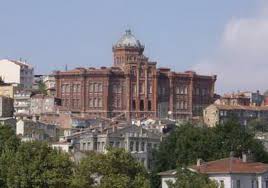
    The Fener Greek Patriarchate Universal or National?

    http://www.bolcasohbet.net/fener-rum-patrikhanesi/http://www.yenidenergenekon.com/248-fener-rum-patrikhanesi-ve-ekumeniklik-meselesi/http://www.timeturk.com/news_detail.php?id=16769http://gundemonline.wordpress.com/category/fener-rum-patrikhanesi/

    The basic mistake made when there is an unsolved problem or when a problem is left hanging, is going around the problem itself without trying to go down its essence and thus to the real answers. To put in other words the basic mistake is the inability to focus on the efforts to find the “right answers” to the “right questions”.

    One can find the traces of such mistakes during the process of finding a solution to the problems arising from The Fener Greek Patriarchate.

    These problems primarily arise from ecumenical claims and the demand that Turkey should recognize this claim.

    In the text of the Lausanne Treaty, which is regarded as the fundamental treaty of the Turkish Republic, there is no mention of the Patriarchate. In Lausanne, political and administrative privileges given to the Patriarchate during the Ottoman period were lifted and it was agreed that it only had spiritual authority. Other than that it is not stated in the text whether it has any authority outside the Turkish borders or any ecumenic title..

    Ecumenism is a problem which essentially concerns “church laws and tradition”. Therefore it is out of the question that the Turkish Republic accepts the ecumenism of the Fener Greek Patriarchate.

    What is more is that the claims of ecumenism “theologically” have a grave moral flaw:

    “Vatican, 1600 years later, had abandoned its principles of faith regarding that the churches except those in Rome, Antakya and Alexandria, which are defined in the Iznik Clerical Council in 325, could not be regarded as ecumenic.

    Thus, the claim that the Church in Istanbul was founded by St. Andrew, the first apostle of Jesus Christ, was accepted behind the scenes by Vatican, yet under the guarantee of “the infallibility of the Pope”.

    However, until November 30th 2008 it was claimed that the Fener Greek Patriarchate was promoted to a patriarchate from episcopacy due to the “a unified church a unified state” motto of the Eastern Roman Empire and for political reasons and that the St. Andrew myth was made up to justify this on religious grounds. However it was a widely known fact that there is no document indicating that St. Andrew had come to the city of Istanbul, since the city was not even founded in year 30.”[1]

    Moreover it a weird contradiction that the Fener Greek Patriarchate is defined and asserted as ecumenic only by those involved in power struggle in the region and not by Orthodox countries and communities. Barthelomeos is consistently defined as the leader of 300 million Orthodox. However it is quite interesting that those who grant him the title “Ecumenic” are not Orthodox themselves.”[2]

    Apart from the theological discussions, issues related to the contemporary practices and demands of the Patriarchate also need to be unraveled:

    Is the Fener Greek Patriarchate a national church or is it universal (ecumenic[3])?

    If it is so, than why are the main churches subordinate to the Patriarchate are led only by those of Greek origin? Why is the Fener Greek Patriarch, Jerusalem Patriarch, French Metropolitan Bishop etc. are only chosen from among those of Greek origin?

    What’s more; “Why is the Fener Greek Patriarch is regarded as a national church even above the church in Greece?”

    Why do some Greek Metropolitan Bishops force into the churches of those from different nationalities (eg. Bulgarian Church) and hold a sermon in Greek language?

    And other questions follow:

    Will only those of Greek origin benefit from the Heybeliada Clergy School, great efforts of which were shown in the establishment and which has become a source of political pressure on Turkey? Will the Fener Greek Patriarchate, which has authority over only 300 thousand people among 300 million Orthodox congregation, consider the Orthodox congregation, which is dispersed to a vast area and which is out of its control, as non-existent at the expense of creating duality in the Orthodox world?

    It does not seem possible for the Fener Greek Patriarchate – with its single-sided demands and fait accompli – to reach a common solution neither with the Orthodox world nor with Turkey unless reliable and logical answers are found to these questions.

    Sibel Keskin

    [email protected]


    [1] Gozde Kilic Yasin, Global Religious Struggle, Cumhuriyet, July 14th, 2008.

    [2] Above-mentioned article.

    [3] The term ecumenic derives from the Greek word “oikoumeni“, which means universe, cosmos and world.

  • U.S. & Kurdish Occupation in Kerkuk City

    U.S. & Kurdish Occupation in Kerkuk City

    Iraqi Turkmen Human
    Rights Research Foundation

    The most difficult time for the non-Kurdish components in the north of Iraq: Is it the disputed areas or seized areas?

    Date: 25 August, 2009

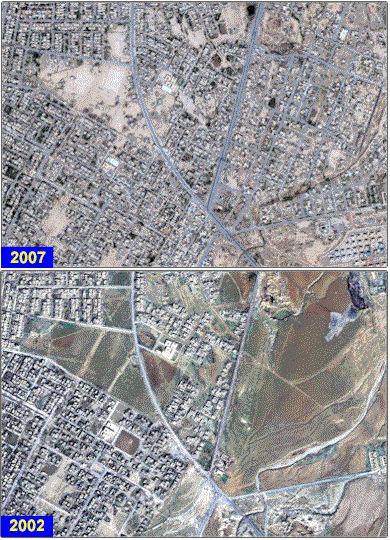
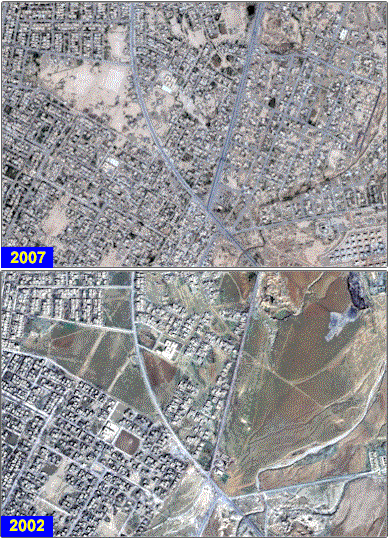
    The extent of demographical change in Kerkuk province:
    A region in Kerkuk city: map of 2002 compared with map of 2007

    No: Rep.22-H2509

    Unfortunately, Iraqis have lived for years with the suffering of decades of dictatorship, war, economic embargo, and most recently the U.S. occupation. This long period has psychologically and physically exhausted Iraqi people from all its communities.

    Despite all these disasters that befell Iraq, Iraqis continue to rebuild their country and sympathizers among the global and regional powers have been involved in helping Iraq with moral and material aid to build the bases of the new Iraqi state. The Iraqis are determined to build a democratic Iraq and a culture of human rights. With the support and concern of the world, particularly that of the West, hoped that they have the same goals and targets, they will establish the cornerstones of democracy in the Middle East.

    But the problems faced by Iraqis after the occupation are numerous. The sectarian religious and ethnic racism are of the most important of these problems. It was the cause of imbalance, political instability and insecurity, and had an effective role in economic instability, which negatively impacted all areas of daily life.

    The religious sectarianism and tendency for reprisals are considered the basic causes of the killing of dozens, or even hundreds, of Iraqis every day for years during and after the U.S. occupation. At a time when national and international efforts are concentrated on stopping the bloodshed in central Iraq, there continue to be systematic violations of human rights in those areas of northern Iraq under the control of the Kurdish parties, backed by the Peshmerga militia and security units.

    In northern Iraq live the majority of country’s diverse ethnic and religious communities: Shabaks, Yazidis, Chaldo-Assyrians, Turkmen, Kurds and Arabs. Regardless of their respective sizes, the standard of living of everyone was approximately equal and all suffered the harshness of the former political system. But after 1991, and particularly after the U.S. occupation in 2003, the balance between these components was disturbed.

    When the Safe Haven for the Kurds was set up, it gave rise to a large gap in the economical, political and even cultural potentials between the Kurdish citizen on one hand and members of other Iraqi communities on the other hand.  The result led to the hegemony of the Kurdish racist political parties in northern Iraq.

    The most important factors that led to the imbalance between the components in northern Iraq after 1991 are:

    Ö         While non-Kurdish communities were subjected to decades of suppression, and were unable to directly challenge the Ba’athist Government, the Kurdish community obtained material and moral support from regional and western powers, facilitating their domination of the reins of power in the northern region.

    Ö         Establishment of the Kurdish Safe Haven excluded other Iraqi components whilst handing its administration to the Kurdish tribal and militia-backed political parties which politicized the security services and led to the marginalization of the non-Kurdish communities.

    Ö         Independent access by the Kurdish nationalist parties to a large proportion of Iraq’s national income and their control of revenue from the northern border gate provided the Kurdish authorities with additional sources of finance and strength.

    The policy of the Kurdish parties to glorify Kurdish race has led to the preparation of curricula based on incorrect historical and geographical information that encourages the development of a fanatic generation of Kurds ready to quarrel against any people they feel to be threatening their ethnic goals. In these circumstances, Kurdish militias (Peshmerga), Security Services (Asayish) and intelligence agencies (Parastin) were built with the same concepts.

    By the time of the 2003 occupation, the Kurdish people had already gained a sense of injustice that their fatherland has been occupied by others and the Kurdish parties and people were convinced of the Kurdish nature of northern Iraq, and in particular the city of Kerkuk. Despite historical and academic sources offering a different opinion, they believe they have the historical right to build their country on vast Iraqi lands. (See references below)

    Kurdish man had developed an overwhelming desire to establish a Kurdish state at any cost. The absolute support of the occupation forces to the Kurdish parties and the absence of any authority or rule of law due to demolition of the Iraqi state became as a catalyst for the implementation of these base-less aspirations by the Kurdish authorities. The material and moral support of the West, resulting from sympathy to the Kurdish case after the latter were targeted for their fighting against Saddam Hussein, played a great role in strengthening this rush.

    Up to this stage the Kurdish parties and their cadres lacked experience and were characterized by toughness, tribalism, intolerance and inefficiency after having been fighting the Iraqi state amid the rugged mountains for decades. These parties have withdrawn all of these specifications with them into the period of Safe Haven in early nineties and into the after occupation period.

    Thus began the most difficult time for the millions of Iraqi non-Kurds who form the majority in northern Iraq. The Kurdish political parties, militias and security services took control of most of the state’s civil administration, security, and military departments. Under the supervision of the occupation forces, their control was extended to include more than 75% of the province of Mosul (± 3 million inhabitants), 20% of the province of Salah al-Din (± 1 million inhabitants) and 90% of the province of Kerkuk (al-Tamim) (830,000 inhabitants) and about 50% of the Diyala province (1.37 million inhabitants), whilst several millions of Arabs, Turkmen, Yazidis and Shabaks are living in these areas. The estimated size of the Kurds in this vast area is thought not to exceed one million inhabitants.

    Kurdish control also overwhelmingly dominated those lands outside the Kurdish region that are at the root of plans to annex them to the Kurdish administration.  There is pressure on millions of non-Kurdish Iraqis to change their nationality with the aim of changing the demography of the region – aided by the resettlement of Kurdish families and ethnic cleansing.

    The first days of occupation

    In the absence of state institutions, the looting and burning of government departments began and spread to banks, universities, municipalities and community radio, television and even hospitals.  Peshmerga militias seized the wheels of government, of the Ba’ath party and in many cases of non-Kurdish inhabitants. Arabs were forced to leave their villages and had their property appropriated. Large numbers of machines, vehicles and government documents were transferred to Sulaymaniya, Duhok and Erbil.

    The Kurdish militia, supported by political parties, also started seizing government buildings in these vast lands, and especially in Kerkuk, sharing these properties among themselves.  Many of these buildings were turned into offices or housing for the Kurdish families brought to the region as part of the Kurdification process.

    Demographic change

    State institutions

    Almost all of the Iraqi state institutions have been dismembered and the Iraqi citizens have been psychologically and economically exhausted, making it easier for the Kurdish parties and militias, which were well-armed and organized to enter and extend control over these areas in the four provinces and all of its governmental institutions, under the supervision of the occupying forces. The partisans and members of Kurdish Peshmerga, who did not have the minimum degrees of education, received the top posts in the cities, districts and sub-districts. Consequently, they have been appointed as district and sub-district managers and mayors. Thus, most managers of the state offices come from the ethnic Kurds and they took control of the city councils. Tens of thousands of Kurds had been appointed in the government offices in these vast areas of northern Iraq, where the number of state employees has increased twofold in some regions.

    Kurdish nationalism and party affiliation has been adopted the basis for appointments.  By these means many non-Kurdish inhabitants were forced to work for the agendas of Kurdish parties away from their parties. Additionally, Kurdish parties seized large numbers of jobs in the Iraqi state, which are disproportional with their size. From the total of 165 senior posts in the Iraqi State, the Kurds hold 65 posts.

    Kurdish parties with militias has ruled the northern regions of Iraq in the full absence of state institutions while the concern of the international community and Government of Iraq remained with the fighting and bleeding in the center of the country. In the midst of these circumstances, the rebuilding of all the institutions of the state including the military, security and police systems, was carried out with the intention of ‘Kurdifying’ the institutions. The staff of the civil service was in many accusations doubled and in addition to the large numbers of Kurdish Peshmerga militias, distributed throughout the governorates, the overwhelming majority of the two Iraqi military brigades stationed in Mosul were Kurdish.

    In Kerkuk, the security system has been replaced by hundreds of Kurds, brought from Sulaymaniya, Erbil and Duhok.  The majority of officers and members of the police came from the Kurdish parties in Kerkuk province and they control of these devices in most of other regions. The Kurdish parties seized all weapons of the dissolved Iraqi army in the northern regions, which were about more than a quarter of the strength of the total weapon of Iraq – amounting to hundreds of thousands of light and heavy weapons, including tanks and many types of anti-aircraft missiles and mortars, all of which were transferred to the Kurdish provinces.

    Two important factors led to replacement of large numbers of qualified personnel in these vast areas by non-qualified Kurds:

    Ö         The adoption by Kurdish political parties of a concerted Kurdification policy.

    Ö         The fleeing of large numbers of staff who previously held key positions in government offices .

    There was therefore a great need to find qualified replacement personnel but the failure of the Kurdish administration to find such personnel has led to the majority of appointments being made to non-qualified Kurdish staff, who in many cases has not studied in either primary or secondary school. Taxi drivers consequently became police chiefs, while graduates of the Institute of Agriculture became directors in unrelated government offices. Peshmerga militants who have not received any formal training or education held the posts of manager in government offices and the graduates of a primary school became officers in the army, police or security forces.

    Hundreds of Kurdish party headquarters backed by militias and security forces have been spread throughout the cities, districts and sub-districts. Kurdish parties spent large sums to recruit a large number of collaborators from other nationalities.

    Iraqi elections were held in these vast areas under the control of the Kurdish parties and their militias all of whom do not hide their insistence on the Kurdishness of these areas and of the need to seize it by force if necessary. The population number of Kerkuk province at the day of occupation was 870,000 people. The number of voters in this province became 800,000 in the elections of December 2005.

    During the elections, the poverty of non-Kurdish citizens was exploited to obtain their votes after paying symbolic sums to them. Furthermore, large sums have also been paid to many of those who hold important posts for their support for the Kurdish party’s agendas. After using all kinds of manipulations and election frauds, the Kurdish parties won in most areas, which increased their control on all key positions in administration and decision-making mechanism in these areas. For example:

    Ö         The number of Kurds in Nineveh province council was 31 out of 41 members. This was partially due to the Sunni boycott.

    Ö         In Kerkuk province council, the number of Kurds is 24 out of 41 members.

    Ö         In Erbil, the sets of provincial council were divided equally between the two Kurdish parties

    Ö         All members of the City Council of Kifri are of Kurdish ethnicity

    Ö         In Khanaqin after intimidation and temptation, the representatives of other nationalities in the city council joined to the Kurdish parties.

    Kurdish migration

    Kurdish parties started with the beginning of the occupation to encourage hundreds of thousands of Kurdish citizens to migrate to new areas that the Peshmerga had entered after the occupation, frequently paying a sum or/and salaries to them. Those who held high positions in the political parties or in Peshmerga militias, acquired finances for the construction of their homes, which are built on the lands of the municipalities, government or non-Kurdish peoples. Hundreds of family members joined those who received new posts and dozens of new neighborhoods have arisen in the cities of these vast areas. The number of Kurds and Turkmen who were removed from Kerkuk by the Baath regime was estimated to 120,000 Kurds but the bulk of those deported from Kerkuk were born in Sulaymaniya or Erbil.

    The Kurdified administration forged ration cards and transferred population registration records of the Kurdish people coming to the new areas, in particular that of Kerkuk province. The newcomers were provided with the identity cards and passports but attempts of the Kurdish parties to transfer the population registration records of Shaykhan district to Kurdish Duhok province failed. Thousands of staff and teachers from the province of Sulaimaniya, Erbil and Dohuk have been appointed to teach the Kurdish language instead of Arabic. Elements of the Peshmerga militias have been fixed in the many checkpoints that have been developed on public roads between many cities like Erbil, Bartalah, Shaykhan and Dohuk.

    Thousands of Arab families left these vast areas after the initial entry of Peshmerga militias, while other Arabs left the region after animosity and hostility grew at the same time as the Kurdish militia consolidated their control of the region. In Kerkuk province alone about 25 villages were evacuated of which many had existed before the Ba’ath regime.

    Appropriation of lands particularly that of government and inhabitants lands is considered a major characteristic of the period after the creation of the Kurdish Safe Haven in these regions, particularly after occupation. The Kurdish parties, which held for the first time the administration of governmental offices in 1991, have lacked the understanding of concept of a state and the management of its institutions. Consequently, the newcomers from the mountainous regions supported by Kurdified administration have captured vast lands belonging to municipalities, government and inhabitants.  The share of these lands going to party members and militias was also enormous, for example, the Barzani family seized on the territory of the entire Salah al-Din district. Meanwhile, in Kerkuk province, the Kurdish families have seized on all types of lands and large numbers of buildings. This resulted in the number of lawsuit presented to the Property Claims Commission in Kerkuk province reaching over 40,000 individual cases, most of which related to Turkmen.

    Other human rights situations

    After occupation, the general situation in northern Iraq was characterized by:

    1. Absence of the rule of law and the forces which preserve it
    2. Absolute control of the Kurdish parties and militias, which are characterized by:

    a.       Non-democratic tribal mentality

    b.       Lack of professionalism resulting from a lack of education and vocational training

    c.       Tough aggressive nature because of living in the harsh mountainous areas in a state of a war, which lasted for decades

    1. The Iraqi State and the international community were engaged to address the disaster caused by the fighting in central Iraq
    2. Iraq’s other ethnic groups in the region were exhausted as a result of the assimilation policies of former dictatorship.
    3. The absence of international human rights organizations and even the United Nations and the lack of monitoring or follow-up has led to lack of registration and documentation of large numbers of violations of human rights for a period of years.

    Under these circumstances, although the region did not face a conflict between Sunnis and Shiites, there have been thousands of cases of intimidation, arrests, detention, torture in prisons, kidnapping, assassinations, killings and loss of persons from non-Kurdish ethnic groups and many others who oppose the policies of Kurdification. With the lack of security, thousands of Yezidi, Shabak, Chaldeo-Assyrians, Turkmen and Arab families migrated from the regions where Kurdish Peshmerga militias were in charge of security. Today, it is estimated that 238 people were kidnapped in Kerkuk and there are a lot of abductees who have not been counted.

    In these vast regions, the Kurdish security forces (Asayish) have converted the buildings of Ba’ath party into the headquarters for Kurdish militias, where the oppositions were detained. Hundreds of these offices are today scattered east of Mosul city and in the plain of Nineveh, working to suppress the non-Kurdish population by all types of intimidations. In coordination with the headquarters of the Kurdish parties, the security agents collect information on citizens and prevent the Shabaks and Chaldeo-Assyrians from entering the city of Duhok and other regions and target the Yazidis who reject the dominance of the Kurdish parties.

    During the attempts of Kurdish militias to control the district of Tal Afar, which was put in the map of so-called Kurdistan, the region was subjected to two destructive attacks using all types of heavy weapons including tanks and helicopters.  As a result, thousands of occupation troops and Kurdish militias swamped the city causing 100,000 inhabitants to leave Telafer. The minor attacks, arrests, assassinations, kidnappings continued for three years. Large numbers of populations are still considered internally displaced.

    In 2005, Kurdish militias broke into Turkmen political party buildings and institutions, confiscating twenty-four buildings including, fifteen schools, newspaper, print houses, local radio and television stations and the headquarters of political parties. Turkmen living in Erbil who were not loyal to the Kurdish parties were denied work in government offices. The non-Kurdish inhabitants of all the regions were forced to study Kurdish in schools.

    Many Chaldea-Assyrian villages were evacuated, tens of Yazidi politicians were arrested, Shabak activists were assassinated, hundreds of leading Baathists were killed and Turkmen lands were confiscated.

    The Kurdish authorities recruited large numbers of collaborators from other communities and used them to establish parties and civil society organizations against their own national parties. These collaborators were used in political companies. Many spied for Kurdish parties. The votes of other communities were bought in the elections.

    Names of the cities, streets and buildings were changed from Turkmen or Arabic to Kurdish. The signboards in the governmental offices were written in Kurdish, the non-Kurdish inhabitants greatly suffered particularly in the hospitals.

    Domination of the Kurdish parties on the administration in these vast regions led to the revival of the Kurdish neighborhoods and cities and retardation of the development in non-Kurdish regions.

    One of the most dangerous phenomena that have begun to emerge in northern Iraq is the large differences in standard of living and economic power between the Kurdish people on one hand and the non-Kurdish people on the other hand. This phenomenon is attributed to the following factors, which should be generalized to the vast regions which the Kurdish militias controlled after occupation:

    1.       The appointment of hundreds of thousands of Kurds in areas occupied by the Kurdish parties, after the occupation:

    a.       In government offices, for example,

    a.       The appointment of more than ten thousand staff in Kerkuk province, 90% of whom are of Kurdish ethnicity.

    b.       About two thousand Kurds were appointed in Kara Tepe sub-district.

    c.       Thousands of Kurdish teachers from Duhok were appointed in Mosul region.

    b.       In the Iraqi army, for example, more than 80% of the two Iraqi army divisions in Mosul are of Kurdish ethnicity.

    c.       In security service and police, for example, almost all the security system in Kerkuk province were replaced by Kurds in Kerkuk province

    d.       Increase in the number of Peshmerga militias, for example, the recruitment of tens of thousands of Peshmerga militants in 2004 – 2005

    e.       Appointments in Kurdish regions, for example, being it is based on the party affiliation; there are about million staffs in Kurdish regions who are also members of Kurdish parties. In contrary, the number of non-Kurdish appointments is severely restricted.

    2.       Kurdish authorities:

    a.       Receive 13% of Iraq’s income since mid 1990s, while the other communities receive no share. Despite the important decline in the number of Kurds in the three Kurdish provinces after occupation, the Kurdish share increased to 17% of the total Iraqi budget and other Iraqi communities have remained deprived of any share.

    b.       Collect massive sum from Khabour border crossing since 1991, where almost all the Iraqi imports were entering.

    3.        Kurdish domination on the governmental offices in the north of Iraq has brought another economic benefit to the Kurdish people. Since occupation and in these vast regions, the Kurdified administrations gave thousands projects to the Kurdish contractors who use the Kurdish officials and Kurdish workers.

    These are the developments in the north of Iraq since the occupation and for a period of six years, where the Kurds dominate economy, civil, military, security administrations working to subdue the non-Kurdish communities to contain their lands and to annex it to the Kurdish region.

    ___________________________
    References:

    1.        Phebe Marr, “The Modern History of Iraq”, P. 9

    “In recent history, Kurds have been migrating from the mountains into foothills and plains, many settling in and around Mosul in the north and in the cities and towns along the Diyalah River in the south, but most Kurds still live along the lower mountain slopes where they practice agriculture and raise livestock”

    2.        Edger O’balance, “The Kurdish Revolt”, P. 33

    “Right up until the end of the 19th century the sight of a large tribal federation, with all its livestock, moving across the mountains and plains of the northern parts of the Middle East in search of fresh grazing, was both splendid and ominous – as nomadic Kurds moved like a plague of locusts, feeding and feuding”.

    3.        David McDowall, “A Modern History of the Kurds”, I.B.Tauris & Co Ltd Publishers 1996, London & New York, P. 144.

    “The towns and villages along the high road running from Mosul to Baghdad were mainly Turkish speaking, being Turkmen”,

    “But, as the commission noted, the Kurd ‘is taking possession of the arable and in “Kurdizing” certain towns’ specially the Turkmen’s ones of the high road”

    4.        William R. Hay, “Two Years in Kurdistan 1918 – 1920”, (William Clowes and Sons, Limited, London and Beccles 1921), P. 81 – 83

    “Dizai tribe descended from the hills about 3 centuries ago, and occupied a few villages round Qush Tappah. In the middle half of the 19th century they started to expand, and rapidly covered the whole country up to Tigris. In the late 1920s, they constitute one third of the Erbil district population.” “It is reported that less than a century ago trees and shrubs were plentiful on the slopes of Qara Choq Dagh; when the Kurds came, however, they were quickly taken for fire woods and no trace of them now remains”

    5.        Ibid, P. 10

    “Mandali in fact was an ideal training ground. Four languages were current in the district, and most of the townsmen could speak all four. As children they learnt their mother tongue, Turkish, from their parents, and the local Kurdo-Lurish dialect from their nurses and the people of the hills, whither they were sent for the hot weather. Subsequently they acquired Arabic from the men who tended their date-gardens, and Persian from the merchants who visited their town and became guests in their houses”.

    6.        George Keppel, “Personal Narrative of Travels in Babylonia, Assyria, Media, and Scythia”, H. Colburn 1827, Vol. I, P. 30

    “Not many weeks before we saw this Moolah, he was one of the principal persons of Mendali, a Turkish town near the frontier. In those days he was the bosom friend of Davoud Pasha, “his best of cut-throats” and most willing instrument of assassination”

    7.        Ibid. P. 267

    “From the ferry we rode about 2 miles along the banks of the river, arrived at Bacoubah, our second day’s march. This appears to have been a very considerable place, but has been laid almost entirely in ruins by the army of Coords, under the command of Mohammad Ali Meerze”.

    8.        Ibid., P. 276 – 281

    “We reached Shahraban at eleven o’clock P.M., and found it almost entirely deserted. —. We wondered through the desolate street, some time without finding any house with inhabitants, till we came to a caravanserai, where we met a man who told us that all the inhabitants had left the place, which had been sacked and ruined by the Coords.” “This town was, not many months back, one of the most populous and thriving in the pashalick of Baghdad, now the whole population consisted of about 3 families”

    9.        Ibid., P. 290 – 291

    “Our tents were pitched to the north of the town. Kizil Rubaut, in common with its neighbors from the vindictive spirits of its Coordish enemies”

    10.     Ibid., P. 293

    “In an hour and a half we found ourselves at Baradan, which, in common with other villages, has suffered from the inroads of the Coordish army”

    11.     Ibid., P. 297

    “Khanaki, which is of reputed antiquity, defines the frontier of the Pashalick of Bagdad, and has met with a fate natural to its unfortunate position between two rival powers. About two years ago, it was taken by Mohummud “Ali Meerza, and must at that time have had its share of the calamities of war”

  • Turkey seeks shield amid missile-defense negotiations

    Turkey seeks shield amid missile-defense negotiations

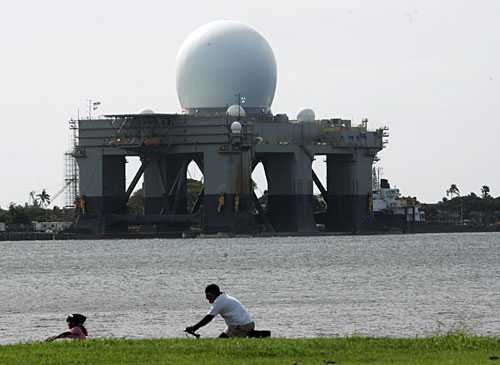
    Turkish Foreign Minister Ahmet Davutoğlu says it’s not so and American officials are mum, but according to a top defense lobbyist, “negotiations are ongoing” over U.S. plans to deploy a missile-defense shield in Turkey, a possibility floated last week by a Polish newspaper.

    Riki Ellison, chairman of the U.S.-based Missle Defense Advocacy Alliance, or MDAA, insisted to the Hürriyet Daily News & Economic Review that claims by the Polish newspaper are valid.

    The stir began last week when the Warsaw-based daily Gazeta Wyborcza reported that U.S. President Barack Obama has “all but abandoned” plans to locate parts of a controversial U.S. missile shield in Poland and the Czech Republic. The newspaper said the Pentagon has been asked to explore switching planned interceptor-rocket launch sites from the two Central European states to Israel, Turkey or the Balkans.

    U.S. plans to deploy a missile-defense system in Poland and the Czech Republic have created serious tension between Russia and the United States in the past. Russia has repeatedly responded to U.S. missile-defense plans with countermeasures.

    It is no secret that the Obama administration’s promise to “reset” relations with Russia prompted Obama to launch a strategic review of the defense shield.

    Amid the Pentagon’s search for a new strategy, last week’s reports turned heads toward Turkey. Foreign Minister Davutoğlu immediately responded to the claims, saying that the government has not received any request from the United States or NATO regarding the missile-defense project.

    Ellison said he hopes to see a working missile-defense shield in operation by 2013. Ellison’s MDAA is a nonprofit organization launched in 2002 to advocate deployment of an anti-missile program.

    Ellison said he believes there will be a concerted effort from the United States to work with the Turkish government to install missile shields at four bases in Turkey. “Negotiations are happening already and they will continue to go forward,” he said.

    Ellison is evidently well informed on the strategy. However, Turkey’s acceptance of the missile-defense plan may not be realistic, given the risk to its relations with Russia, already frayed by other tensions. Turkey may be a U.S. ally, but Russia supplies the majority of its energy and has a hand in Turkey’s future in the Caucasus.

    Russian Prime Minister Vladimir Putin’s Aug. 6 visit to Ankara for talks with his Turkish counterpart Recep Tayyip Erdoğan secured some 20 agreements covering energy, trade and other areas, including nuclear cooperation. Russian authorities have also agreed to scrap regulations requiring the full inspection of Turkish goods at customs.

    Turkey has been playing a very careful game for some time when it comes to its relations with Russia. Ankara does not want to make an enemy out of Moscow.

    Accepting the deployment of U.S. defense shields in Turkey would be a major step toward a whole new round of tense Turkish-Russian relations at a critical and vulnerable time. Russia would probably play its energy card against Turkey and could even annul this year’s previous agreements.

    The deployment could also have a negative impact on Turkey’s relations with its neighboring countries in the Middle East. Starting with the Turkish Parliament’s March 2003 decision to prevent the United States from invading Iraq through Turkish territory, Turkey has been trying to follow a relatively independent line in its foreign policy. Acceptance of the missile shield would destroy most of Turkey’s diplomatic capital among Middle Eastern countries, which perceived Turkey as making its own decisions after the 2003 bill.

    There is another scenario that sounds more realistic: Turkey currently has no defense against ballistic missiles. According to past news reports, Turkey has been planning to purchase a missile-defense system for some time. Turkey has begun “preliminary talks with the United States, Russia, Israel and China with regard to its plans to buy its first missile defense system, worth more than $1 billion,” wrote the Daily News last year.

    This invites the question: Is missile defense a matter of packaging? Might Turkey avoid allowing the United States to install a missile-defense system on her soil? Rather, might the rumors circulating stem from a bid by Turkey to buy a missile-defense system for herself?

    It is hard to imagine the difference would calm Russia. It is known that Russia is firmly against any U.S. missile shields in Turkey, just as it is against the installations in Central Europe. And despite its determination to expand its military capabilities, Turkey would probably like to stay out of the struggle between Washington and Moscow.

    Hurriyetdailynews
  • Is Paul Wolfowitz for Real?

    Is Paul Wolfowitz for Real?

    Four writers — Stephen M. Walt, David J. Rothkopf, Daniel W. Drezner, and Steve Clemons — weigh in on Paul Wolfowitz’s critique of realism and U.S. President Barack Obama.

    wolfowitz

    Just Because He Walks Like a Realist…

    By Stephen M. Walt

    It is easy to understand why Paul Wolfowitz dislikes “realism.” On the most significant foreign-policy decision since the end of the Cold War — the ill-fated invasion of Iraq in 2003 — the realists who opposed it were right and Wolfowitz and the other architects of the war were dead wrong. No wonder he begins his article by saying that this “is not the place to reargue the Iraq War.” I’d try to exclude Iraq from discussion if I were him too, because that tragedy demonstrates the virtues of realism and the follies of Wolfowitz’s own worldview.

    On the whole, Wolfowitz’s discussion of “realism” in the Sept./Oct. issue of FP is about as accurate as his 2002 estimates about the troop levels needed to occupy Iraq and the overall costs of the war. He implies that realists are uninterested in moral issues and claims “there is a serious debate” between realists and their critics regarding the peaceful promotion of political change. But this is a caricature of realist thinking and a nonexistent debate, and it is telling that he never offers any evidence to support his description. The only “realists” he bothers to mention are Brent Scowcroft and Zbigniew Brzezinski, and he never quotes or cites other prominent realist scholars or policymakers. Having decided to expose realism’s alleged limitations, in short, apparently he couldn’t be bothered to do some research and read what they had to say.

    What do realists believe? Realists see international politics as an inherently competitive realm where states compete for advantage and where security is sometimes precarious. So, realists emphasize that states should keep a keen eye on the balance of power, which makes them wary of squandering blood or treasure on needless military buildups, ideological crusades, or foolish foreign wars. Realists cherish America’s commitment to democracy and individual liberty, but they know that ideals alone are no basis for conducting foreign policy. They also understand that endless overseas adventures will inevitably provoke a hostile backlash abroad and force us to compromise freedoms at home.

    Realism also emphasizes that other states will defend their interests vigorously, that successful diplomacy requires give-and-take, and that advancing U.S. interests sometimes requires us to do business with regimes whose values we find objectionable.  In recent years, realists have also reminded their fellow citizens that nationalism is a powerful force and that most societies bristle, and ultimately rebel, when outsiders try to tell them how to run their own affairs. Realists also understand that no system of government is perfect, and that even well-intentioned democracies sometimes do foolish and cruel things. Most important of all, realists understand that military force is a blunt and costly instrument whose ultimate effects are difficult to foresee, and that states should go to war only when vital interests are at stake.

    Contrary to Wolfowitz’s claims, realists are not indifferent to moral concerns, including the virtues of democratic government and the value of basic human rights. There is no “debate” between realists and idealists over the desirability of these things in the abstract, and little or no disagreement about whether the United States should encourage such changes peacefully. I know of no realists who oppose the peaceful encouragement of core U.S. values, and Wolfowitz offers no examples of any. As the debate over the Iraq War revealed, the real issue is whether the United States and its democratic allies should be trying to spread these ideals at the point of a gun, or sacrificing other important interests in order to advance them.

    Realists oppose such efforts for at least four reasons. First, promoting regime change via military force costs lots of lives, money and prestige. Wolfowitz’s war in Iraq led to the deaths of more than 4,300 Americans (plus more than 30,000 wounded), as well as at least 100,000-plus Iraqis (and maybe far more). It also cost the U.S. taxpayer over $1 trillion (and counting). It is frankly hard to see the moral virtue in that “achievement.” The present Iraqi government may be an improvement on Saddam Hussein’s regime, but it is hardly a model of representative democracy, its long-term fate is uncertain, and the costs of imposing it have been enormous.

    Second, realists are wary of idealistic wars of choice because they invariably force policymakers to engage in threat-inflation and deception in order to stampede the public into supporting actions that they would otherwise oppose. Wolfowitz was an able practitioner of this art while in office, but realists know that such behavior inevitably erodes the integrity of public institutions, the overall quality of governmental decision-making, and ultimately, public trust. When policymakers can only get things done by deceiving their fellow citizens, how can democratic institutions continue to function effectively?

    Third, as Wolfowitz acknowledges, even the peaceful promotion of democracy sometimes confronts genuine tradeoffs. We might like to see a vibrant multi-party democracy in Egypt, China, or Saudi Arabia, for example, but pressing that objective too vigorously would threaten other legitimate foreign-policy objectives. In the competitive world of international politics, even a country as powerful as the United States often has to temper its idealistic impulses against important strategic interests.

    A good case in point is Libya’s decision to abandon its WMD programs. Wolfowitz believes we succeeded with Libya because we didn’t “soft-pedal our differences” with Moammar El-Qaddafi’s authoritarian regime, but the real lesson of this case is directly at odds with the point he is trying to make. A key ingredient in Qaddafi’s decision to give up his WMD programs was the Bush administration’s assurances that he could remain in power and that the U.S. would not try to overthrow him, even though they were well aware that he runs a dictatorship and has no plans to change it. Neoconservatives like John Bolton opposed that compromise, but President Bush went ahead and did the deal. That was an act of realism, and I assume even Wolfowitz would agree that the world is better off as a result.

    Fourth, realists are skeptical about the ability of even well-intentioned outsiders to conduct large-scale social engineering in societies they don’t understand, because our track record here is abysmal. We intervened in Somalia in the early 1990s for essentially altruistic reasons, but our repeated intrusions have made the situation there steadily worse.  And Somalia is hardly an exception: A recent Brookings study found that U.S. military intervention lowered the prospects for democracy by about 33 percent. (For other scholarly commentaries reaching similar conclusions, see here and here.) Realists understand what both neoconservatives and liberal internationalists tend to forget: Other societies are complicated systems and outside interference usually generates lots of unintended consequences. And because the places where we intervene tend to be troubled societies where the prospects for democracy are already low — think Iraq, Somalia, Haiti, or Afghanistan — the realists’ skepticism is, well … realistic.

    The lesson is that we should usually allow foreign countries to proceed toward more tolerant forms of government at their own pace.  And the more we proclaim the need to export our values elsewhere, the more likely we are to find ourselves meddling where we do not belong and doing more harm than good.

    Finally, realists are wary of costly moral campaigns because they might eventually undermine America’s current position of primacy.  If I were a Chinese leader, for example, I would be delighted by the policies that the United States has pursued in the Middle East and Central Asia in recent years.  Since 2001, the United States has gotten itself bogged down in two losing wars, wars at least partly justified by a desire to “spread democracy.”  And while the United States has been distracted by these problems, China’s “peaceful rise” has continued and it has been quietly forging deeper ties in Asia, Africa, the Middle East, and even Latin America.

    Wolfowitz may be correct about one thing: Barack Obama is probably not a “realist.”  The president is essentially a pragmatist, and his foreign policy does not seem to flow from any particular ideological vision.  But with the possible exception of Secretary of Defense Robert Gates, his administration is chock full of traditional liberal internationalists, many of whom backed the Iraq war in 2003 and who still believe that it is America’s mission to go out and right wrongs wherever they may arise.  That’s why we are plunging deeper into Afghanistan, why Hillary Clinton spent a couple of weeks telling Africans how to run their countries, and why the foreign-policy establishment continues to think we are making progress every time Washington has to assume responsibility for fixing some foreign problem.

    Unfortunately, Obama inherited a terrible legacy from the Bush administration, due in good part to policies that Wolfowitz championed.  Whatever his own inclinations may be, Obama will have to be ruthlessly realistic in order to deal with these difficult challenges.  The bottom line is that it really doesn’t matter if Obama is a “realist” or not.  But the sooner he starts to act like one, the better off the United States will be.

    A Neocon in Realist’s Clothing

    By David J. Rothkopf

    I think Paul Wolfowitz performs a useful service by thoughtfully and systematically examining the underlying flaws in the current conception of “realism” — the hype surrounding it and the “policies” associated with it. If only someone had more effectively done the same with neoconservatism — which, of course, was neither new nor, as it was practiced by the Bush administration, remotely conservative. (How could anything so politically and militarily risky, fiscally wasteful, and seemingly allergic to any principle, be called “conservative”?)

    Reading Wolfowitz’s piece, I kept thanking Providence for giving me a concentration in English in college rather than say, political science. I actually was taught what words mean. (In fact, being an English major taught me that “political science” may be the humdinger of all oxymorons … even if calling “realists” realists and “neoconservatives” neoconservatives comes pretty darn close.) Economists have their “lies, damned lies, and statistics” and clearly, political scientists have their “lies, damned lies, and labels.”

    It’s not just “neocons” and “realists” of course who are mislabeled or falsely advertising themselves. There is nothing “conservative” about the reckless fiscal policies of “conservative” champions like Reagan or Bush, nothing “progressive” about the New Deal nostalgia of many on the left, nothing “pro-life” about abortion opponents who also use a misreading of the Second Amendment to allow them stock up on assault weapons, nothing “liberal” about folks who think the answer to everything is greater government control of people’s lives. Say what you may about the underlying beliefs, the labels are meaningless.

    That said, if we can stipulate the labels are primarily forms of branding and positioning that are as related to the underlying realities as Madison Avenue claims of the health-benefits of smoking in the middle of the last century, then we can move on to the more relevant policy questions raised by Wolfowitz. These turn not on whether “realists” are more realistic than other policymakers but rather on whether the “realism” peddled to the public actually holds water as an approach.

    Here I think Wolfowitz is at his most compelling. He frames the issue — and some “realists” will no doubt dispute his approach but I think the issue he raises is worth discussing — by observing that: “In the words of one leading realist, the principal purpose of U.S. foreign policy should be ‘to manage relations between states’ rather than ‘alter the nature of states.’” He then goes on to point out that if your goal is to advance the U.S. national interest and to “manage relations between states,” then you really need to consider from time to time altering the nature of states. Hard to argue with that, in my book.

    If the objective is to advance the national interest and influence states and our ability to do so is limited and different from circumstance to circumstance, shouldn’t we use every tool at our disposal to do so (assuming the use of the tool provides a net gain toward achieving our goals)? If so, influencing the nature of states or the internal workings of states is not off bounds for realism — it is the beginning of realism — it is the place where the effort to influence states begins.

    But I would go further. I think this type of “realism” is founded on a false assumption and a fiction. The false assumption is that the central work involved in advancing the national interest involves relations between states. This ignores the fact that states are only one among the many types of actors in the world who can impact our national interests.  The related fiction is that borders constitute a kind of sovereign bubble and that within that bubble there is a kind of magical unity. Or at least that within that bubble all disagreement is trumped by the sovereign power of the state. That is, of course, patent nonsense in a world in which non-state actors from giant corporations to terrorist groups act in their narrow self-interests and in ways that are often at odds with the policy of the states in which they are domiciled. In fact, I would argue that the vast majority of states are now so weak that they are much less influential than say the world’s largest corporations on economic issues, the world’s largest NGOs on key humanitarian issues, or the world’s most notorious terror or criminal groups on security issues.

    Based on this view, “managing relations between states” cannot be the only objective of foreign policy. (To have another view would be incredibly unrealistic.) Additionally, based on my view, taking advantage of the fact that states are collections of diverse actors teeming with opposing views and divergent interests offers the single best way of “managing relations between states.”

    Does this mean I am advocating invading everyone and trying to make them into mini-Americas? Of course not. It means that if, as everyone asserts, foreign policy is about advancing the national interest then realism dictates we use all legal means at our disposal to do so. This “realism” is founded on a Westphalian view of states as the smallest divisible units of legitimate global authority that is dangerously out of date. And when realism is based on an outdated fiction, that’s probably too weak a foundation even when big name academics are out shilling for the idea.

    Further, of course, the notion that it’s uniquely “neocon” to promote democracy is just silly. Look no further than the recent elections in Afghanistan for an example of “realists” doing likewise … or to Iran or Honduras for examples of why the U.S. policy ought to be encouraging democracy by whatever legal means might work. The question genuine realists ask is: What’s going to work?

    It’s also revealing that, although some realists promote the idea of a less meddlesome United States, when pushed they simply reveal that they mean we should only meddle where they think it is wise. (Pressure on Palestine bad, pressure on Israel good.) This gets to another problem I have with both “realism” and another product promoted heavily by that idea factory up there on the Charles: “smart power.” They are so self-serving. If I am a realist, what does that make you? If I practice “smart” power, your alternative is necessarily dumb.

    Henry Kissinger, father of modern American smart power, once said — on another subject — that academic infighting is so fierce because the stakes are so low. Here the name calling about the names they call themselves is so fierce because the differences are so minimal. Mainstream academic foreign-policy cliques in the United States essentially believe very similar things and thus are defined by their minimal differences, and ultimately by what they do in practice, which is often as not driven more by the arithmetic of momentary politics and possibilities than the calculus of policy. The best illustration is the difference between the Bush and Obama administrations. Many of the words are the same but how they interpret, prioritize, and act may be quite different based on a host of important factors that have precious little to do with defined schools of thought.

    Capitalization Matters

    By Daniel W. Drezner

    As I was reading Paul Wolfowitz’s essay on Obama and realism, I kept thinking, “there’s realism and then there’s Realism.”

    Small “r” realism consists of a recognition that there are some unpleasant truths in world politics that must be acknowledged if one is going to pursue a prudent foreign policy.  If a government amasses significant capabilities or acts aggressively, it will tend to trigger balancing coalitions.  International institutions are often feckless and hypocritical.  Forcible regime change is really, really hard.  Implacable hostility to powerful actors with different ideologies won’t work terribly well.  Power is a relative measure and a resource that should be husbanded for important matters of state.  You get the idea.

    Big “R” Realism is a theoretical paradigm that makes certain assumptions about what drives powerful actors in world politics, and derives interesting predictions (and occasional prescriptions) from those assumptions. Many of these predictions match up with small “r” realism (balancing behavior, useless international institutions, etc.).  Many go beyond them, however. According to Realism, regime type is unimportant in explaining world politics.  The democratic peace is a mirage.  Strong states are better at foreign policy.  Not all Realists agree on everything, but they agree on some big and not obvious things, and they all seem to publish in International Security an awful lot (don’t aske me to parse out the difference between defensive realists, neoclassical realists, structural realists, and offensive realists; if you do, well, I’m going to have this kind of reaction).

    The difference between the two “realisms” is one of purpose. Small “r” realism is a set of guidelines for real, live policymakers, and is intended to foster prudence.  Big “R” Realism is intended to be more provocative to the point of caricature — i.e., to the point where Realists might have little difficulty incorporating zombies into their paradigm. It is certainly possible to be both. Behind closed doors, I have heard big “R” Realists proffer small “r” realist prescriptions that might contradict the academic paradigm. In public, it’s funny how Realists who believe that anarchy and the distribution of power are the only things that matter nevertheless rail against the pernicious influence of ethnic lobbies.

    Stephen Walt is a Realist with a capital “R”, so I expect him to provide a vigorous response to Wolfowitz.  I found the latter’s essay to be occasionally insightful, occasionally hostage to the exact same paradigmatic blinders of Realism, and occasionally blurry about the distinction between realism and Realism.

    Wolfowitz tries to get at this distinction in these paragraphs:

    Of course foreign policy should be grounded in reality. Americans agree that foreign-policy goals should be achievable — that the United States should match its ends with its means. What sensible person could argue with that? That is simply pragmatism. But “realism” as a doctrine (I’ll spare you the quote marks henceforth) goes much further: In the words of one leading realist, the principal purpose of U.S. foreign policy should be “to manage relations between states” rather than “alter the nature of states.”

    …. let’s stipulate that the issue here is not whether to use military force to promote changes in the nature of states; it’s about whether — and how — to promote such changes peacefully. On that issue there is a genuine debate between realists and their critics. And a desire for pragmatism should not be confused with a specific foreign-policy doctrine that minimizes the importance of change within states.

    On these points, Wolfowitz is mostly right and very wrong on one important issue.  He’s right to say that Obama might be a realist (pragmatist) but he’s not a Realist.  I also think he’s right to say that regime type matters.

    So he’s right, but he’s also banal in his rightness. No president will ever be a Realist. Few foreign policy leaders are so wedded to a theoretical doctrine that they don’t think regime type matters at all. Henry Kissinger might have been a Realist in the academy, but in power he was a realist.  Wolfowitz takes great pains to point out that George H.W. Bush didn’t always act like a Realist — but it’s also true that George W. Bush stopped acting like a Neoconservative around 2004.

    Presidents are politicians, and they’ll discard ideas that don’t work.  And no promulgator of ideas in international relations should be brassy enough to think that their doctrine is always right.

    What’s missing from Wolfowitz’s essay is any genuine assessment of the costs and benefits of the different policies available to the United States when dealing with, say, the likes of China, Saudi Arabia, Iran, or North Korea.  Wolfowitz seems to think that more aggressive steps should be taken to foment internal regime change in these countries.  In doing so, he cleverly contrasts it with the counterfactual of “doing nothing.”  But, as previously noted, the Obama administration has been ratcheting up containment policies against adversaries like Iran and North Korea.  There’s a lot of virtue in using containment to deal with these regimes — and in the case of Pyongyang, the policy might be bearing fruit.  The word “containment” never appears in Wolfowitz’s essay, however.  This suggests a kind of all-or-nothing logic to Wolfowitz’s thinking that might explain certain policy blunders committed in the past decade.

    One final note of warning. Wolfowitz’s essay posits a debate between Realism and Neoconservatism as the faultline in U.S. foreign policy. While I’m certainly aware of this split, it’s not the only one, or even the most important one, in the foreign-policy community. As much as Realists and Neocons enjoy sniping at each other now, this elides periods during which they were on the same side in the policy world. It also elides current issues on which they still agree:  not relying on international institutions, confronting China, etc. Liberal institutionalism is hardly flaw-free — but it is an equally viable perspective that needs to be considered when debating the future of American foreign policy.

    Failing to Note the Difference When the U.S. Power Tank Is Full or Near Empty

    By Steve Clemons

    Paul Wolfowitz’s provocative critique of foreign policy realism has several key flaws. Most importantly, he sets up an artificial and contrived version of realist thought and fails to engage the problem of positive and negative variations in America’s stock of power.

    In his essay, Wolfowitz acknowledges the classic distinctions between realism and neoconservatism — that realism prescribes dealing with states as they are in an anarchic international system while neoconservatives and their left-leaning, fellow-traveling liberal interventionists want to change the internal character of states as a primary goal of American national security policy.

    Given President Obama’s shift in a semi-realist direction at the beginning of this term, FP asked Wolfowitz to respond to the assertion that “we are all realists now.” Appropriately, the architect of George W. Bush’s Iraq War responds “No.” Of course, we aren’t — but we are not all values militants either.

    Wolfowitz makes a case against a gold standard version of .999 “pure realism” that simply doesn’t exist anywhere in the world except perhaps in University of Chicago lectures inspired by Hans Morgenthau and carried on by disciple John Mearsheimer and his followers. Wolfowitz sets up his debate with academic realists — not policy realists who have significantly evolved in practice and perspective since the days of Kissingerian-style realism.

    Brent Scowcroft and Zbigniew Brzezinski — both identified as realists in the Wolfowitz critique — differ on many micro-policy issues, as Wolfowitz points out. In fact, Wolfowitz acknowledges that he supported Scowcroft’s position on the Gulf War and Brzezinski’s view that NATO should be expanded. He facetiously asks if that makes him a realist or renders them ideologues.

    Scowcroft and Brzezinski — as they noted in their recent joint book America and the World: Conversations on the Future of U.S. Foreign Policy, a set of edited discussions with David Ignatius — are not in complete sync when it comes to certain national security priorities and do not frame challenges identically. And they are not the kind of realists to whom Wolfowitz seeks to compare himself.  Both former national security advisors are “hybrid realists” who believe that American power is constrained today and diminishing in part because of a set of very misinformed, strategic mistakes made by the George W. Bush administration, mistakes that compounded the failure of Bush’s father and Bill Clinton to reorganize the terms and realities of America’s global social contract after the fall of the Soviet Union.

    By the end of his essay, Wolfowitz identifies himself as a hybrid realist as well — choosing the term “democratic realist.” I’d call Scowcroft and Brzezinski adherents of newly emerging hybrid schools of “ethical realism” and/or “progressive realism” in which they worry first about the overall ability of America to achieve its global objectives vis-à-vis other states, but with a sensitivity to and concern for both the internal realities of other countries and the increasingly disconcerting transnational challenges that are facing the international system as a whole.

    In other words, these hybrid realists of the Scowcroft/Brzezinski sort do believe in states as the primary actors of the international system, but they see tremendous value in institutions like the United Nations and the Bretton Woods institutions, in negotiating international deals on many issues, including arms, nuclear weapons, and climate change. Brent Scowcroft even sits on the board of one of Al Gore’s major climate-action groups. These hybrid realists are sensitive to the role that global public opinion — inside countries — about the United States and its policies plays internationally.  These are not characteristics of the type of classic realists that Paul Wolfowitz contrasts himself with in his essay.

    Progressive realism attempts to maintain a logic of costs and benefits of American action in the international system.  As Henry Kissinger and Richard Nixon frequently pointed out in their written treatments of U.S. foreign policy, the traditions of both pragmatic, interest-driven realism and idealism are deeply embedded in the core structures of the country.

    To some degree, the Nixon era was a highpoint for foreign-policy realism, with strong echoes during the George H. W. Bush administration, while values militancy and democratic idealism swelled during the Carter, Reagan, Clinton, and George W. Bush terms.  But even under these ideal-driven presidents, a commitment to reorder the internal guts of other countries coexisted and wrestled with a constant counterargument of realist scenarios and arguments.

    Ronald Reagan was a values crusader against global Soviet interests in his first term and then pivoted towards a realist-informed engagement with Gorbachev in his second.  George W. Bush’s Iraq invasion had many contrived rationales far beyond those offered in the Wolfowitz essay but nonetheless was part of a values crusade in the region that differed greatly in character and objective from any other contemporary American military effort since Vietnam. But whereas Reagan was able to turn his rhetorical messianism into engagement with the Soviets, George W. Bush turned his military provocation into swagger and conceit during his first term — failing to use the edge he had built to forge a new relationship with Iran which, intimidated by the quick military U.S. success in Iraq, had privately reached out to the Bush White House. Bush’s realist shift came during his second term, frustrating his hawkish, torture-endorsing, Dark Side-hugging vice president, but too late to reverse any of the key disasters hatched during the first term.

    The “hybrid realism” to which most policy practitioners subscribe entails using American power in ways that increase and enhance America’s power position. It means shaping the international order in ways conducive to American interests but also promulgating American values, civil institutions, and our democratic example in ways that don’t undermine core interests or American power.

    Paul Wolfowitz punts on the Iraq War — not wanting to debate it in this essay. But by dropping the subject, he misses a fundamental reality for any presidency — the power a president inherits when he or she gets the keys to the White House is not the same from president to president.

    Barack Obama, in his early foreign-policy moves, has found his “inner Nixon” and made a number of key realist-like gestures not because Nixonianism was lurking just under the skin of his campaign for the White House all along — but because he had to. John McCain also would have been compelled to find his “inner Nixon” and to push back the Max Boots and William Kristols and John Boltons who want to hatch yet more wars amid those now underway. McCain also would have found his way to a hybrid realism not unlike what we are seeing Obama deploy — because America is so substantially constrained today and doubted by much of the world as a superpower in decline that has not exhibited of late an ability to achieve the objectives it sets out for itself.

    The Iraq war punctured the mystique of America’s superpower status and exposed military limits, followed later by economic limits that have undermined the confidence of key allies in American power and dependability. These weaknesses have also animated the pretensions of foes, problem states, and transnationally organized enemies.

    Thus, George W. Bush’s “stock of power” was far greater at the beginning of his presidency than was Barack Obama’s.

    To not recognize that the Iraq war — no matter how legitimate and necessary Wolfowitz feels that war was — deflated American power is a significant gap in his analysis. Had the Iraq invasion not occurred, had the Bush team dealt a crushing blow to Osama bin Laden and al Qaeda and come home, the world and America would be in a different place.  In those circumstances if Barack Obama were still residing today in the White House, he might be less interested in the combined work and writing of Brent Scowcroft, Zbigniew Brzezinski, and Richard Nixon. He might have been the type of values crusader that George Bush got to be — at least for a short while.

    Wolfowitz carefully avoids any mention of the words “regime change,” but he fails to note that many of his close intellectual and political allies are obsessed with regime change against some of the more problematic nations in the world today.  They use “democracy promotion” interchangeably with “regime change” — whereas Wolfowitz more cautiously calls not for revolutions but incremental evolutions.  I’m in agreement with Wolfowitz that incremental change that is encouraged is far better than political change driven by force.  Wolfowitz supports the human rights work of the State Department and endorses the use of the presidential bully pulpit to express support for those working and fighting for democracy in nations run by authoritarians and despots.  I think most hybrid realists also understand the importance of the global human rights agenda — but believe that agenda must be comingled and copresent with the other facets of the respective relationship.

    One of the issues I wish Wolfowitz had raised but regrettably neglected is the importance of America demonstrating by example the kind of democracy we hope others aspire to.  His American Enterprise Institute colleague and former vice president of the United States, Richard Cheney, applauds CIA officers who choked prisoners, faked executions before detainees, and threatened to kill children as strategies of coercion. We saw the reactions to 9/11 and the buildup to the Iraq war lead to a national-security pathology in the United States in which core democratic values were undermined. We held not just prisoners in Guantanamo but thousands of others in Abu Ghraib, Bagram, and other facilities in a manner completely at odds with our beliefs about universal human rights.  We tortured — and our government spied on a massive scale on American citizens.

    This kind of example is something that authoritarian governments salivate at — and true democrats abroad revile.

    Wolfowitz writes:

    When all opposition is suppressed, the forces of change go underground and that is where radicalism thrives. Jailing a democratic reformer like Ayman Noor in Egypt is not a way to fight extremism.

    He is absolutely right — but this same maxim holds for America’s hand in perpetuating other grievances and also checking the forces of reform — particularly in the Israel/Palestine conflict, which Wolfowitz acknowledges may actually be the greatest driver of anti-Americanism today in the Middle East.

    Wolfowitz sounds as if he might be ready to find some common ground with the community of hybrid realists that, like him, want to see the world move toward a community of nations that act responsibly on the international stage and that move toward political templates that allow the growth of healthy civil institutions and promote self-determination and even democracy abroad.  His statement about Israel and its messy, unresolved state of affairs with the Arab world is not consistent with the Bill Kristol-led neoconservative position — and this is heartening.

    But for Wolfowitz’s new school of “democratic realism” to attract followers, he should come to terms with and understand the perspectives of the real realists in Washington policy circles today that differ significantly from the textbook classic realists he used as a foil.  There will be differences still between these clusters of varying realist hybrids — but Wolfowitz needs to understand that the fundamental critique that folks like me make about the values militants and idealists is that they fail to think about the consequences of actions in sustaining national power.

    Many foreign-policy idealists are driven by emotion and sentiment first — and rationality and calculated priority-setting last.

    And in my view, while I know that Wolfowitz is one of the few in the George W. Bush administration that did have a coherent, internally logical strategy that he felt would work in knocking out Saddam Hussein, his colleagues allowed raw emotion, reaction, and swagger to cloud their judgments in a matter of war and peace. Wolfowitz himself miscalculated about the aftermath of the war and the occupation — and set into motion a set of events that haven’t strengthened America’s hand but rather awakened and animated Iran’s pretensions as a great regional power, sparking paranoia and concern among Sunni Arab states and Israel — at a point when U.S. power is, because of Iraq and Afghanistan, in question.

    Wolfowitz’s essay is sensibly drafted and intelligent. There is significant insight in the piece — but not enough introspection.  Wolfowitz’s brand of foreign policy may work better in certain times — at times of a state’s overwhelming hegemonic dominance in world affairs — but may be quite inappropriate and ineffective when that same state’s power has sagged and is limping, needing reinvention and clear accomplishment.

    Today is the time of realists of a variety of sorts — mostly because of the realities that  Wolfowitz and his Bush administration colleagues unleashed in the world.

    Stephen M. Walt, a Foreign Policy blogger, is the Robert and Renée Belfer Professor of International Affairs at Harvard University’s Kennedy School of Government and coauthor with J.J. Mearsheimer of The Israel Lobby.

    David J. Rothkopf, a Foreign Policy blogger, is president and chief executive of Garten Rothkopf, a Washington-based advisory firm specializing in energy, climate, and global risk-related issues. He is a visiting scholar at the Carnegie Endowment for International Peace and author most recently of Superclass: The Global Elite and the World They Are Making.

    Daniel W. Drezner, a Foreign Policy blogger, is professor of international politics at the Fletcher School of Law and Diplomacy at Tufts University, a senior editor at The National Interest.

    Steve Clemons is director of the American Strategy Program at the New America Foundation and publishes the popular political blog, The Washington Note.

    Source: www.foreignpolicy.com, August 27, 2009
  • NATO Chief Says He’d Consider Brzezinski Plea for Russia Accord

    NATO Chief Says He’d Consider Brzezinski Plea for Russia Accord

    By James G. Neuger

    rasmussenSept. 1 (Bloomberg) — NATO said it would consider a proposal by former U.S. National Security Adviser Zbigniew Brzezinski to tighten security arrangements with a Russian-led defense alliance to ease East-West tensions.

    NATO Secretary General Anders Fogh Rasmussen said he has an “open mind” toward ideas to soothe the strains between the former Cold War adversaries that peaked with Russia’s 2008 invasion of Georgia, a would-be NATO member.

    “We have to look closer into the possibilities of improving confidence between Russia and NATO,” Rasmussen said in an interview at North Atlantic Treaty Organization headquarters in Brussels yesterday. “I am prepared to look upon all ideas that serve confidence-building with an open mind.”

    Western governments are courting Russian help in securing supply lines for the 100,000 allied troops in Afghanistan, stemming the spread of nuclear weapons and in combating piracy off the coast of Somalia.

    Writing in the current issue of Foreign Affairs magazine, Brzezinski called for a pact with the Russian-led Collective Security Treaty Organization, a seven-nation group cobbled together out of the remnants of the Soviet Union.

    Such an agreement would go beyond the periodic high-level NATO-Russia meetings that resumed in June after the 28-nation western alliance ended a diplomatic boycott to protest the Georgia invasion.

    Brzezinski, who served under President Jimmy Carter from 1977 to 1981, wrote of a need “to consolidate security in Europe by drawing Russia into a closer political and military association with the Euro-Atlantic community and to engage Russia in a wider web of global security that indirectly facilitates the fading of Russia’s lingering imperial ambitions.”

    ‘Strategic Partnership’

    Rasmussen urged a “strategic partnership” with Russia to ward off common threats such as terrorism.

    NATO-Russia ties were strained by Bush administration plans for a missile-defense system in eastern Europe and efforts to offer alliance membership to Ukraine and Georgia, two former Soviet republics.

    Relations broke down completely when Russia rolled over Georgia’s army in a five-day war to reestablish its sphere of influence. Russia later granted diplomatic recognition to two territories, South Ossetia and Abkhazia, which declared independence and established military outposts in them.

    President Barack Obama set out to “reset” relations with the Kremlin, heralding an East-West thaw.

    Russian and NATO foreign ministers held their first post- Georgia-war meeting in Greece in June, agreeing to resume military-to-military cooperation.

    Rasmussen, 56, a former Danish prime minister who became alliance chief Aug. 1, said he had not yet read Brzezinski’s proposals and stressed that any outreach to Russia would not undermine NATO’s role as the bedrock of trans-Atlantic security.

    “The cornerstone of Euro-Atlantic security will still be NATO,” Rasmussen said.

    To contact the reporter on this story: James G. Neuger in Brussels [email protected]

    Source:  www.bloomberg.com,  August 31, 2009