Month: September 2009

  • “PM Erdogan should keep the words he said in Azerbaijan”

    “PM Erdogan should keep the words he said in Azerbaijan”


    [ 01 Sep 2009 16:36 ]
    Ankara. Mayis Alizadeh – APA. Deputy Chairman of Turkey’s leading opposition party – Republic People’s Party, former officer of Turkish Foreign Ministry, former ambassador of Turkey to Germany, Denmark and NATO, MP Onur Oymen interviewed by APA’s Turkey bureau

    -Some days ago you said there will be improvements in Turkey-Armenia relations. You were right. How do you assess the recent situation?

    -We were confused, because Prime Minister Erdogan promised in May in Azerbaijani parliament that Turkey-Armenia relations will not be normalized unless the occupation by Armenia ends. There is no information that Armenia will end the occupation – they do not step back. How will the relations be normalized under these circumstances? We can not approve it. We must think about Turkey-Azerbaijan relations. Azerbaijan is our brother. The problems worrying Azerbaijan will worry us, too. That’s why, we consider that Turkey should not normalize the relations with Armenia, unless Armenia releases Azerbaijani territories and one million Azerbaijanis return home.

    -Head of Turkish Foreign Ministry’s office and his assistant visited Azerbaijan last week. As far as we know Turkish diplomats assured Baku that Azerbaijan’s interests will not be damaged.

    -They had said it earlier and noted that they informed Ilham Aliyev about the negotiations held in Switzerland. Later, serious protests came from Azerbaijan. Does it damage Azerbaijan, if relations are established before Armenians release Azerbaijani territories?

    -It seems that these steps are taken to pave the way for Serzh Sargsyan’s arrival in Turkey. Doesn’t this atmosphere show this?

    -Sargsyan may come to Turkey by plane. Abdullah Gul also left for Yerevan by plane. They exert pressure on Turkey under the pretext of the match. “I will not come, if do not reopen the borders.” No one will mourn in Turkey, if Sargsyan does not come to watch the match. We can not change our targets and policy only because he will come to watch the match. Turkey should demonstrate a decisive position.

    The Prime Minister promised during his visit to Azerbaijan that the borders will not be opened until the solution to Nagorno Karabakh conflict.

    – Sargsyan is one of the separatists who occupied Nagorno Karabakh. Sargsyan shows Karabakh Armenians as soon as Turkey and Azerbaijan pressure upon Armenia.

    – We understand these games very well. Is there any sign of Armenia’s willingness to withdraw from Karabakh lands?

    – No.

    – Why we have to step back? Why we closed the borders? We closed borders because Armenia occupied 20 percent of Azerbaijani lands. Why we have to re-open the borders while the lands were not liberated so far?

    – As a veteran diplomat and politician, you know the Russian influence on Armenia. What do you think, can the West to win Armenia making these steps over Turkey?

    – Russia has own interests and goals as every country has. We want normal relations with Russia, but the countries have to be able to protect their interests and targets. Otherwise they can’t win anyone’s trust. If the Prime Minister promised something on behalf of his country, he must not leave it later. I am concerning about our Azerbaijani brothers. The re-opening of the borders will hurt them. We didn’t hear Azerbaijan’s reaction yet. It will be better to know thoughts of Azerbaijani president about the last developments. In our opinion, Turkey must not step back in its policy.

    – Probably you will express your opinion during the discussion on the protocols agreed between the governments of Turkey and Armenia at the Turkish parliament.

    – Of course. But the ruling party has a majority in the parliament and it has a power to pass any law there. Unfortunately we have no enough power to prevent it. But the Turkish people will show necessary reaction. The government should report to the people about its actions.

  • “Turkish-Armenian agreements do not include any condition about Nagorno Karabakh”

    “Turkish-Armenian agreements do not include any condition about Nagorno Karabakh”


    [ 01 Sep 2009 17:07 ]
    Baku – APA. “Armenia moves closer to the opportunity for solution of problems with Turkey”, said Armenian president Serzh Sargsyan in an annual meeting with the staff members of the Ministry of Foreign Affairs and ambassadors, APA reports quoting News Armenia.

    He said the international community had more information and more obligations on this issue. “We worked hard to normalize our relations with the neighboring country. I consider that the coherent protocols enable us to do that”.

    Sargsyan said the Turkish-Armenian agreements did not include any condition about Nagorno Karabakh and related issues. “The history of Armenia-Turkey relations should be discussed not by the historians, but by the subcommittees of the intergovernmental commission”.

    Sargsyan said for the first time in the history of Armenia the signing of important international document would be accompanied by the public debates. “I prefer nationwide activity in this issue. You have to play active role in the public debates in Armenia and Diaspora and to make clear all positive and problematic components of the protocols”.

  • West Hails Turkish-Armenian Statement

    West Hails Turkish-Armenian Statement

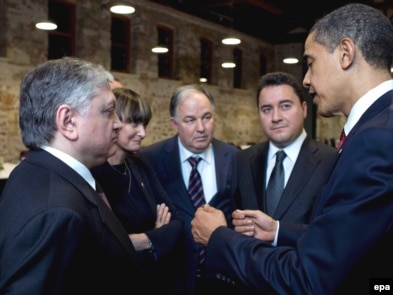
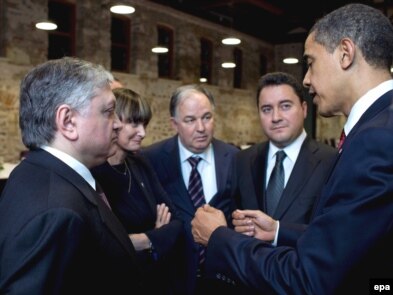
    Turkey – US President Barack Obama (R) meets with the foreign ministers of Armenia, Turkey and Switzerland in Istanbul, 06Apr2009

    01.09.2009

    The United States and the European Union have welcomed the latest agreement announced by Armenia and Turkey and urged the two estranged neighbors to promptly complete the normalization of their relations.

    “The United States warmly welcomes the joint statement made today by Turkey and Armenia, with Swiss participation, outlining further steps in the normalization of their bilateral relations,” U.S. State Department spokesman Ian Kelly said late Monday.


    “It has long been and remains the position of the United States that normalization should take place without preconditions and within a reasonable timeframe,” he said. “We urge Armenia and Turkey to proceed expeditiously, according to the agreed framework as described in today’s statement.”


    The Turkish-Armenian statement, which set concrete time frames for the establishment of diplomatic relations between the two states and reopening of their border, also drew strong praise from the EU on Tuesday. Javier Solana, the bloc’s foreign and security policy chief, called it a “crucial step towards normalization of bilateral relations.”


    “I commend the  courage and vision of both sides to move forward with this historic process,” Solana said in a statement. “I hope the two protocols can be signed, ratified, and implemented in the near term.”


    The European Commission attaches high importance to a rapid and steady implementation of the protocols on the establishment of diplomatic relations and on the development of bilateral relations,” read a separate statement by Benita Ferrero-Waldner and Olli Rehn, the EU commissioners for external relations and enlargement respectively. “This agreement should contribute to peace and stability in the South Caucasus.”


    Both the EU and the U.S. have been highly supportive of the unprecedented Turkish-Armenian rapprochement that gained momentum with Turkish President Abdullah Gul’s historic September 2008 visit to Yerevan. Washington is understood to have also been involved in fence-mending negotiations held by Turkish and Armenian diplomats over the past year. U.S. President Barack Obama personally encouraged Ankara and Yerevan to bring the process to a successful conclusion when he visited Turkey in April.


    https://www.azatutyun.am/a/1812260.html

  • Who Will Blink First…

    Who Will Blink First…

    Armenia or Turkey?

    Publisher, The California Courier

    After months of rampant rumors and news leaks, the Foreign Ministries of Armenia and Turkey, with Switzerland as mediator, issued a joint statement on August 31, making public the text of two protocols intended to regulate their problematic relationship.

    In a previous joint statement released on April 22, Armenian and Turkish officials stated that they had agreed to a “roadmap” which was to normalize their relations “within a reasonable timeframe.” At the time, the two sides had indicated their agreement in principle by “initialing” the two protocols, the text of which was not published until August 31. This lengthy delay was due to Turkey backing down from the “roadmap” under pressure from Azerbaijan. Pres. Aliyev had insisted that Turkey keep its border with Armenia closed until the Karabagh (Artsakh) conflict is resolved.

    During the ensuing months, in the absence of any progress in Armenian-Turkish relations, there was widespread speculation on whether Pres. Serzh Sargsyan would agree to travel to Turkey on October 14, to attend the World Cup qualifying soccer match between the national teams of the two countries. The Armenian President attempted to pressure Turkey to keep its end of the bargain in the declared “roadmap,” by announcing that he would go to Turkey only if the border were open, or on the threshold of being opened.

    The American government was also pressuring Turkey to move forward with the envisaged agreement with Armenia. In recent days, Secretary of State Hillary Clinton telephoned both Pres. Sargsyan and Turkish Foreign Minister Ahmet Davutoglu, to help overcome any remaining stumbling blocks. Since Pres. Obama had broken his campaign promise by not using the term “Armenian Genocide” in his April 24 statement, under the pretext that doing so would undermine the on-going “delicate” negotiations between Armenia and Turkey, the United States sought some progress in these two countries’ relations, as a face saving measure for the American President.

    As a result, Armenia and Turkey disclosed for the first time on August 31 the actual text of the two protocols and announced that they “have agreed to start their internal political consultations” on the “Protocol on the establishment of diplomatic relations” and the “Protocol on the development of relations.” These consultations are to be completed within six weeks, after which the two states will sign and submit these Protocols to their respective Parliaments for ratification.

    The first Protocol commits the two sides to open their common border and to establish diplomatic relations. It also requires Armenia and Turkey to recognize “the existing border between the two countries as defined by the relevant treaties of international law.” This is an important requirement for Ankara as it seeks to put an end to Armenian claims to “historic Armenian lands,” now part of the territory of the Republic of Turkey. On the other hand, many Armenians would reject this provision, as they want to leave the door open for future claims on the usurped territories, including Mount Ararat.

    The second Protocol contains the most controversial element of both documents. It states that Armenia and Turkey “agree to implement a dialogue on the historical dimension with the aim to restore mutual confidence between the two nations, including an impartial scientific examination of the historical records and archives to define existing problems and formulate recommendations.” An “intergovernmental bilateral commission” would first be established, comprised of several sub-commissions, one of which would deal with “historical” issues. A “Timetable” attached to the second Protocol further specifies that Armenian, Turkish as well as Swiss and other international experts shall take part” in the deliberations of “the sub-commission on the historical dimension.”

    These two Protocols are bound to raise serious concerns and could cause major political turmoil within Azerbaijan, Turkey, and Armenia.

    Pres. Aliyev would most probably once again go on a rampage against Turkey, as he did during the announcement of the first “roadmap” on April 22. Given Azerbaijan’s valuable energy resources and their transit through Turkey, Ankara’s leaders can ill-afford to ignore Aliyev’s temper tantrums!

    There could also be turmoil within Turkey as both the political opposition and elements of the “deep state” may organize massive demonstrations and denounce Pres. Gul and Prime Minister Erdogan for being unpatriotic and favoring relations with Armenia over “brotherly” Azerbaijan. Such accusations could chip away just enough votes from the ruling majority in the Turkish Parliament to reject the ratification of the Protocols.

    Ratification is also not a foregone conclusion in Armenia. For more than a year, many Armenians both in Armenia and the Diaspora have vigorously complained to the government about the wisdom of negotiating such an agreement. They objected to the plan to establish a sub-commission on “historical” issues, which by its very nature would cast doubt on the veracity of the Armenian Genocide. In addition, many Armenians do not accept “the existing border” with Turkey, in order not to preclude future Armenian territorial claims. The apprehension created by this document could lead to large demonstrations both inside and outside of Armenia and cause serious political dissension, jeopardizing Armenia’s stability and security.

    Given the pressure brought to bear on the Armenian government by Russia, the United States, and Europe, it will not be easy for Yerevan to back down from going forward with this agreement. Nevertheless, all is not lost. It is wholly possible that as a result of a sharp confrontation between Azerbaijan and Turkey on this issue, compounded by domestic opposition to the Gul/Erdogan regime, the Turkish government may quietly urge its parliamentary majority not to ratify these Protocols. To maintain the heat on Turkey and force it to blink first, Armenia should not sign any agreement with Azerbaijan over Artsakh for the time being. It is also possible that the outcry by Armenians worldwide against these Protocols would convince the Armenian government not to go through with this agreement and urge its majority in Parliament to vote against it.

    Unfortunately, the repeated warnings to the Armenian authorities by this writer and others at the start of these negotiations went unheeded. It would have been much easier back then to make appropriate policy adjustments and take corrective measures. Should Armenia back down from this agreement first, it may bring upon itself the wrath of the major powers. Nevertheless, at this critical juncture, the Armenian government’s preeminent concern should be safeguarding the country’s national interest rather than earning brownie points from foreign powers!

  • Karabakh Peace Process Must Be Fully Inclusive

    Karabakh Peace Process Must Be Fully Inclusive

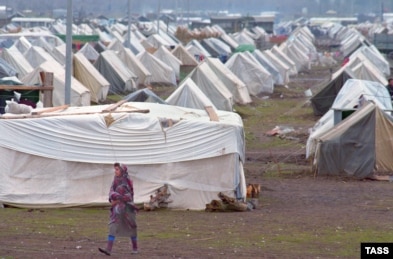
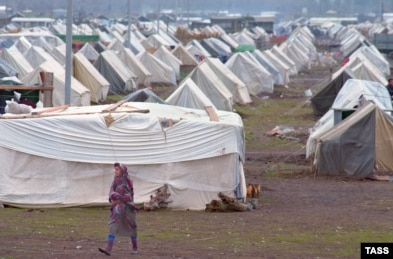
    Many of the hundreds of thousands of Azeris displaced from Nagorno-Karabakh and the surrounding territories occupied by ethnic Armenian troops continue to live in camps in Azerbaijan.

    September 01, 2009 by Javid Huseynov

    The dispute over the Azerbaijani region of Nagorno-Karabakh has festered for more than two decades. One of the keys to finding a peaceful resolution of the conflict is achieving the normalization of relations between the region’s ethnic Armenian and Azeri communities.

    In 1992, a mission of the Conference on Security and Cooperation in Europe (CSCE, precursor to the OSCE) headed by then-U.S. Secretary of State James Baker worked out the so-called Baker Rules, which were agreed to by all sides in the conflict. Those rules recognized the two communities of Nagorno-Karabakh as “interested parties,” and Armenia and Azerbaijan as “principal parties.”

    In this context, one could only welcome the headline of an RFE/RL commentary by Robert Avetsiyan, a representative of Nagorno-Karabakh’s ethnic Armenian community, entitled “Nagorno-Karabakh Must No Longer Be Barred From The Negotiating Table.” Unfortunately, the author stopped short of mentioning the ethnic Azeri community that, prior to the 1988 conflict, comprised one-third of Nagorno-Karabakh’s population and 99 percent of the population of seven other adjacent districts of Azerbaijan currently occupied by Armenian forces.

    Falling into the general pattern of Armenian-Azerbaijani disagreements, Avetsiyan’s piece quickly shifted from discussing the legal and political aspects of conflict resolution to counterproductive historical allegations attempting to deny the Azeri identity. Unfortunately, some of these assertions need to be addressed.

    First Christians In The Caucasus

    The modern Christian heritage of Nagorno-Karabakh has its roots in the ancient kingdom of Caucasian Albania, called Aghvank in Armenian. While the Armenian language belongs to the Indo-European family of languages, Caucasian Albanians — the pre-Islamic ancestors of modern Azerbaijanis — spoke an indigenous Caucasian language. Both Caucasian Albania and Armenia were converted to Christianity in the fourth century.

    The religion was first brought to Armenia by an ethnic Parthian noble, St. Gregory the Illuminator, but the first Christian church in the Caucasus was built in Albania. The church of Kish was established in the present-day Sheki region of Azerbaijan by St. Eliseus, a disciple of St. Thaddeus, who in 201 A.D. converted King Abgar IX of Edessa, making Osroene the first Christian state.

    The territory of present-day Nagorno-Karabakh (Artsakh) belonged to Caucasian Albania in the first century A.D. (“Great Soviet Encyclopedia,” 1973). Upon the Islamic conquest of the Caucasus in the ninth century, Artsakh was ruled by the Albanian princes (C. J. F. Dowsett, “A Neglected Passage In The ‘History Of The Caucasian Albanians’”, BSOAS, 19(3), 1957), while the Albanians in the eastern plain of Karabakh mixed with the Turkic population and became Muslims (R.G. Suny, “Looking Towards Ararat: Armenia In Modern History,” 1993). Thus the “Canons Of Aghvan,” composed in the fifth century, were a part of the Caucasian Albanian historical heritage shared by present-day Azerbaijanis.
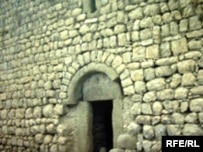
    Ancient Albanian Church, Qapaqtepe, Azerbaijan’s Dashkasan districtThe monasteries of Amaras and Gandzasar remained the citadels of an autochthonous Albanian Apostolic Church up until 1836, when the Russian authorities incorporated it into the Armenian Apostolic Church. At the time, Gandzasar was the see of the Catholicate of Caucasian Albania, while the Amaras monastery was first claimed by the Armenian Church only in 1848.

    Territory Of Karabakh

    The first independent state in Nagorno-Karabakh was the 18th-century Karabakh khanate, established with a capital in present-day Shusha circa 1751 and ruled by an Azeri khan (R. Hewsen, “Journal Of The Society For Armenian Studies,” Vol. 6, 1995, p. 270). Throughout the 19th century, Armenians remained a minority on the territories of Karabakh and present-day Armenia despite their major resettlement from Ottoman and Persian domains after the Russian conquest.

    Upon the fall of the Russian Empire, in 1918-20, the territory of Nagorno-Karabakh was under the control of the Azerbaijan Democratic Republic, whose authority over Karabakh was officially recognized by the Allied powers. After the establishment of the Azerbaijan SSR in 1921, the Bolshevik Kavburo voted to not to incorporate but to retain Nagorno-Karabakh in Azerbaijan.

    While the nationality of “Azerbaijani” was first indicated in the 1939 Soviet census, the millions of Azeris did not appear out of nowhere. The formulation of a uniform Azerbaijani identity started in pre-Christian Caucasian Albania and Atropatene, incorporating Islamic and Turkic elements in medieval times, to become the first secular, democratic Muslim nation in 1918.

    Prior to 1939, Azerbaijanis were called Turks, until Stalin decided to disassociate the Turkic people of the Caucasus and Central Asia from Turkey. In a similar move in the 1920s, Soviet authorities granted the Zangezur region to Armenia, separating Azerbaijan into two disjoined parts, and got rid of the Turkestan toponym in Central Asia.

    Violence Erupts

    The Armenian side often claims that the Sumgait events of February 27, 1988, were a precursor to the violence in Nagorno-Karabakh. But the first acts of violence took place in the Gugark region of Armenia in the fall of 1987. Subsequently, thousands of Azerbaijani refugees were forced to flee Armenia and were settled in Sumgait by the Soviet authorities.

    These events were followed by clashes in the Askeran region of Nagorno-Karabakh on February 22, 1988, when two ethnic Azeris were killed by an ethnic Armenian mob. Among the convicted perpetrators of the Sumgait events were also three ethnic Armenians who killed a quarter of the 26 ethnic Armenians who died in the violence, according to the deputy prosecutor-general of the USSR at the time.

    While Sumgait is often highlighted in the context of Nagorno-Karabakh conflict, less attention is paid to the 1992 Khojaly massacre of ethnic Azeris by Armenian forces. Named the “largest massacre” of the conflict by Human Rights Watch, Khojaly’s civilian death toll was some 20 times that of Sumgait.
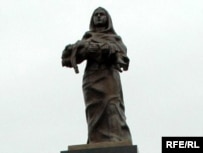
    A monument to the victims of the Khojaly Massacre in BakuWhile both Azerbaijani and Armenian perpetrators in Sumgait were tried and sentenced by the court of law, those responsible for Khojaly were never brought to justice, despite the fact that the then-military commander in Nagorno-Karabakh (and now the president of Armenia), Serzh Sarkisian, has admitted Armenian responsibility for this atrocity (Thomas De Waal, “Black Garden: Armenia And Azerbaijan Through Peace And War,” NYU Press, 2004).

    In its efforts to settle historical differences with Turkey, the Armenian side often appeals to the notion of justice. Yet the so-called Nagorno-Karabakh Republic (NKR) is an unjustly established monoethnic Armenian entity in the Caucasus. It is not independent, because it cannot sustain itself without the existence of its sponsor, Armenia.

    But most importantly, it was established after the exodus of one ethnic group forced by another. The self-proclaimed “NKR officials” cannot speak on behalf of the people of Nagorno-Karabakh, because one-third of them were stripped of the right to choose their leaders due to their ethnicity. Therefore, Azerbaijan — along with all reputable organizations including the United Nations, the Council of Europe, and the OSCE — consider the “NKR elections” and “NKR officials” illegitimate. Moreover, in the words of then-U.S. Assistant Secretary of State Elizabeth Jones, these “NKR officials” constitute “criminal secessionists.”

    Contrary to the Armenian allegations that Azerbaijan intended to cleanse Nagorno-Karabakh’s ethnic Armenian population, in a letter addressed to the UN Security Council on November 9, 1993, the chairman-in-office of the CSCE Minsk Conference on Nagorno-Karabakh detailed the territories occupied by Armenian forces and outlined the required timetable for their withdrawal. Additionally, all four of the 1993 UN Security Council resolutions on Nagorno-Karabakh call for the immediate withdrawal of Armenian forces from the occupied territories of Azerbaijan. It has been 16 years since the “NKR officials” and their protectors in Yerevan refused to fulfill these international demands.

    At present, Armenia’s military occupation of the region precludes the much-desired participation of Nagorno-Karabakh’s ethnic Armenian community in the peace process, because the region’s ethnic Azeris were stripped of this right. Lasting peace in Nagorno-Karabakh cannot be achieved without a return of the region’s ethnic Azeri population and their harmonious coexistence with the ethnic Armenian community. Furthermore, to reestablish the much-needed trust between the two nations, it is important for both Armenians and Azerbaijanis to refrain from any hostile, derogatory, or inflammatory rhetoric.

    Dr. Javid Huseynov is general director of the Azerbaijani-American Council. He was assisted in the preparation of this article by U.S. Azeris Network Managing Director Dr. Adil Baguirov, Azerbaijani National Cultural Association (Hungary) founder Dr. Vugar Seidov, and Azerbaijan Society of America President Tomris Azeri. All four are originally from the once Azeri-populated regions currently under Armenian military occupation. The views expressed in this commentary are the author’s own and do not necessarily reflect those of RFE/RL

    https://www.rferl.org/a/Karabakh_Peace_Process_Must_Be_Fully_Inclusive_/1812056.html
  • Bernard Lewis Speaking on Armenian Allegations

    Bernard Lewis Speaking on Armenian Allegations

    3 YOU TUBE VIDEOS YOU MUST SEE .. TURKISHFORUM

    Bernard Lewis Speaking on Armenian Allegations

    03:29 – 1 year ago youtube.com

    *:IE-SearchBox&oe=UTF-8&sourceid=ie7&rlz=1I7GGLL_en&q=bernar+lewis+and+armenian&um=1&ie=UTF-8&ei=dW-cSvu2LoiwsgPG5OCUDg&sa=X&oi=video_result_group&ct=title&resnum=4#

    —————————————

    Armenian Genocide Lies- CNN- Turks victims too

    00:20 1 year ago youtube.com
    Armenian Genocide lies. Blitzer comments on the one-sided Armenian hate lobby’s push to promote one view while opposing the Turkish view armenian genocide lies turkish cnn
    youtube.com
    —————————————-
    Mel Glibson’s LESSON on Armenian Atrocities
    05:16 – 1 year ago youtube.com
    to a Lethal Weapon in its own right. politics mel gibson genocide Christian forgery werfel eu armenian turkish ottoman danny glover braveheart lethal weapon signs the patriot
    youtube.com
    ———————————————