Month: September 2009

  • Welcome to Chile

    Welcome to Chile

    WELCOME TO CHILE

    by Cem Ryan

    Welcome to Chile, my fellow ovine Türks.

    Leftist roundups, newspaper purges, cleansing of university faculties, destruction of culture, destroying the cultural habit and constitutional right of street demonstrations… Pinochet called it “cleaning the streets of human garbage.” Here, his bully-boy buddies call it “ Turkey cleaning its intestines.”

    The “disappearances” of the Chilean nightmare are mirrored here by illegal leftist jailings under absurd scams like Ergenekon and the beheading of women via head-squeezing, brain-squeezing political head scarves. And we Türks stand by, patiently observing. Afterall, we say, that’s Turkey. Well Kurban Bayram, the ever popular animal sacrifice day, is coming. So let us just line up behind the genuine sheep, meekly bow our craven heads, and capitulate completely, proclaiming, That’s Turkey. It would be a far, far better thing to do than continue this silent vigil over the nation’s demise.

    Decades of human suffering and social outrage have been encapsulated by the work of political hoodlums, all aided and abetted by the hypocritical, excremental policies of the United States of America. For example, consider Iran, Iraq, Guatamala, Chile, Brazil, Bolivia, and, of course, Turkey… all beset, from without and within, by the political and economic mafia of America, all corrupted. So let our final words be, That’s America.

    Whatever the choice for our last words, first consider these of Brutus via Shakespeare. One can appropriately substitute the words “Turks” and “Atatürk” if one dares.

    Stoop, Romans, stoop,

    And let us bathe our hands in Caesar’s blood

    Up to the elbows, and besmear our swords;

    Then walk we forth, even to the market-place,

    And waving our red weapons o’er our heads,

    Let’s all cry, “Peace, freedom, and liberty!”

    And be of brave heart, the hoodlums will understand none of it.

  • U.S. Expects Quick Results From Turkish-Armenian Talks

    U.S. Expects Quick Results From Turkish-Armenian Talks

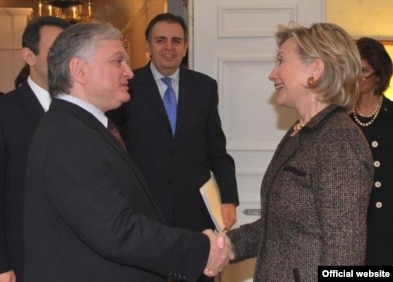
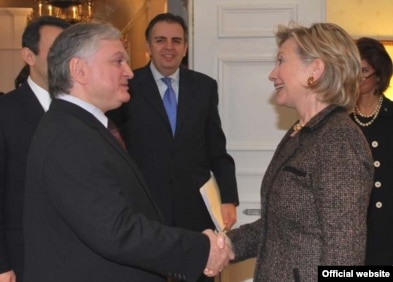
    Armenia — Foreign Minister Eduard Nalbandian meets U.S. Secretary of State Hillary Clinton in New York.
    29.09.2009
    Emil Danielyan

    U.S. Secretary of State Hillary Clinton pressed Armenia and Turkey to complete the normalization of bilateral relations within a “reasonable” period of time as she met with the two countries’ foreign ministers late on Monday.

    The Turkish-Armenian dialogue was a key focus of her separate talks with Turkish Foreign Minister Ahmet Davutoglu and Armenia’s Eduard Nalbandian held on the sidelines of the UN General Assembly in New York.

    Clinton praised both governments for their “strong commitment” to pushing forward the process hailed by the international community and United States in particular. “I want to reiterate our very strong support for the normalization process that is going on between Armenia and Turkey, which we have long said should take place without preconditions and within a reasonable timeframe,” she said after meeting Nalbandian.

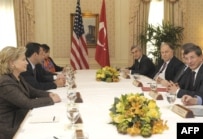
    U.S. — Secretary of State Hillary Clinton (L) meets with Turkish Foreign Minister Ahmet Davutoglu (R) during a bilateral meeting in New York, 28Sep2009

    Clinton later delivered a similar message to Davutoglu, according to U.S. officials cited by Western news agencies. “When we say reasonable ‘time frame,’ we mean just that, that  it’s not just the process that we want to see,” U.S. Assistant Secretary of State Philip Gordon was reported to tell journalists. “We welcome the process, but we also want to see a conclusion to the process and that’s what we’re underscoring when we say that.”

    The U.S. officials’ message should have been heartening for official Yerevan which has long complained about Turkish linkage between the normalization of Turkish-Armenian ties and a resolution of the Nagorno-Karabakh conflict acceptable to Azerbaijan. Armenian leaders fear that Ankara could still avoid implementing two fence-mending agreements with Yerevan if international efforts to settle the dispute yield no breakthrough in the coming months.

    The agreements, which envisage the establishment of diplomatic relations and the reopening of the Turkish-Armenian border, are due to be signed by October 14. The documents need to be ratified by the parliaments of both countries before they can take effect.

    According to the Armenian Foreign Ministry, Nalbandian thanked Clinton for Washington’s strong support for the ongoing Turkish-Armenian rapprochement that began shortly after President Serzh Sarkisian took office in April 2008. Clinton underscored that support when she telephoned Sarkisian to discuss the process on September 19. It was their second phone conversation in a month.

    In Gordon’s words, Washington hopes that Sarkisian will accept Turkish President Abdullah Gul’s invitation to watch with him the return match of the two countries’ national football teams that will be played in the Turkish city of Bursa on October 14. “We think it would be a good thing if he attended it, reciprocating the attendance of the Turkish president of the match when it was in Armenia,” the diplomat said.

    “This is a difficult process that faces some political opposition in both places and it’s hard for both governments,” added Gordon. “It shouldn’t wait for other things to get done, or be linked to other things. It should go ahead.”

    Nalbandian sounded cautiously optimistic on that score in his speech at the General Assembly earlier on Friday. “The process of the normalization of the Armenian-Turkish relations … promises to bear fruit despite all difficulties,” he said.

    https://www.azatutyun.am/a/1839147.html
  • Opening of Turkish-Armenian borders now contradicts Azerbaijan’s national interests: FM

    Opening of Turkish-Armenian borders now contradicts Azerbaijan’s national interests: FM

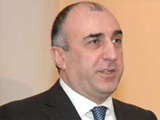
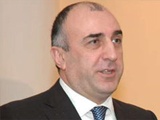
    Azerbaijani Foreign Minister Elmar Mammadyarov spoke with Trend News in an exclusive interview.
    Trend News: How do you assess your visit to the U.S.? With whom were the meetings held, and what the main issues were discussed?

    Elmar Mammadyarov: The UN General Assembly, which is in the focus of the world community and international organizations, provides good opportunities for the various meetings and discussions of bilateral relations. As part of my current visit to New York, besides the events as part of the UN General Assembly, I met with representatives of the United States, Austria, Israel, Lebanon, Turkey, Portugal, Estonia, Kazakhstan, Slovenia, Cuba, Switzerland, the European Commission, Organization of Islamic Conference (OIC), and also took part in events by several organizations such as GUAM, BSEC and the OIC. At the meetings, I discussed the current bilateral relations with these countries, as well as prospects of cooperation.

    During the visit, I had an opportunity to meet with Turkish Prime Minister Recep Tayyip Erdogan, and twice with Foreign Minister of this country Ahmet Davutoglu. The meetings focused on the bilateral relations between the two countries in all fields, including the resolution of the Nagorno-Karabakh conflict.

    Q: You were scheduled to meet with representatives of the OSCE Minsk Group so that to organize a meeting between the presidents of Azerbaijan and Armenia in Chisinau. How do you assess this meeting?

    A: Right, I met with the representatives of the OSCE Minsk Group to discuss the current state of  the Armenian-Azerbaijani Nagorno-Karabakh conflict, as well as to prepare the forthcoming meeting between the Presidents of Azerbaijan and Armenia.

    Q: In an interview with Vesti TV channel, Armenian President Serzh Sargsyan said that the refugees from Nagorno-Karabakh have a  full legal right to return to their homes, but only after determining the status of Nagorno-Karabakh. Azerbaijan takes the opposite position – definition of the status of Nagorno-Karabakh is possible only after the repatriation of the refugees and internally displaced persons.

    A: We have repeatedly expressed our stance on the Nagorno-Karabakh conflict. Armenian troops must withdraw from the occupied lands of Azerbaijan. It is necessary to create favorable conditions for repatriation of internally displaced persons to the lands liberated from the occupation, including to Nagorno-Karabakh, as well as to restore communications. Only after this, the issue of status can be considered.

    Q: The new U.S.  administration has made some changes to regional policy in the South Caucasus and the Middle East. In which manner could it impact strategic relations between Azerbaijan and the United States, as well as the resolution of the Nagorno-Karabakh conflict?

    A: As part of my visit to New York, I met with U.S. Secretary of State. This was the second meeting with Hillary Clinton this year. Friendly and constructive talks focused on the Azerbaijan-U.S. relations in all directions, and the strategic partnership between the two countries was welcomed.

    The resolution of the Armenian-Azerbaijani Nagorno-Karabakh conflict has become one of key issues of the discussions. Mrs. Clinton re-emphasized the inadmissibility of preserving the status quo in the Nagorno-Karabakh conflict, noting the importance of resolving this conflict to ensure peace and security throughout the region and reaffirmed the U.S. commitment to the speedy settlement of the Nagorno-Karabakh conflict.

    Q: The world’s leading countries, especially the OSCE Minsk Group co-chairing countries, are showing great interest in the reopening of the Armenian-Turkish border. What do you think, how can opening of the border impact resolution of the Nagorno-Karabakh conflict?

    A: We have an unambiguous attitude on this issue. Turkey closed its border with Armenia in 1993 after the occupation of Kalbajar by Armenian troops. The Azerbaijani lands have not been liberated so far. Opening of the border under such circumstances is contrary to the national interests of Azerbaijan. The senior Turkish officials have repeatedly made clear that these two issues are inter-related and the border with Armenia will not open until the liberation of the occupied territories of Azerbaijan.

    Q: The U.S. co-chair of the OSCE Minsk Group has been replaced. Can one expect any new initiatives by Robert Bradtke?

    A: As I have already noted, in New York I met with the OSCE Minsk Group co-chairs. At this meeting, I met with the American Co-Chair, Robert Bradtke. He also took part in my meeting with U.S. Secretary of State, Hillary Clinton.

    As I said, at the meeting, the Secretary of State reaffirmed the U.S. commitment to the speedy resolution of the Nagorno-Karabakh conflict, and noted the inadmissibility of preserving the status quo and the importance of the conflict resolution for peace and stability throughout the region. I believe that Bradtke’s diplomatic experience will contribute to the resolution of the conflict.

    Q: During your speech at Columbia University, you spoke about the significance and an important role that Azerbaijan has in the region, as well as the U.S.-Azerbaijan strategic relations. How do you assess the current state of relations between the two countries?

    A: There is a strategic partnership between Azerbaijan and the U.S. The U.S.-Azerbaijan cooperation, covering many fields, successfully developed both bilaterally and multilaterally.
    Q: Does Azerbaijan have a target to join NATO? If not, why is the defense system being created in accordance with the standards of the alliance?

    As the country which shares the European and Euro-Atlantic values, Azerbaijan has become one of the first states joining the NATO Partnership for Peace Program. Currently, we are developing cooperation with NATO through the Euro-Atlantic Partnership Council.

    Cooperation with this organization is also continuing under the Individual Partnership Action Plan. This cooperation has contributed greatly to raising the level of training of the Azerbaijani Armed Forces, law enforcement, border guards, the agencies, involved in preventing and eliminating consequences of emergency situations.

    http://www.today.az/news/politics/56003.html
  • Tatar Congress Vows To Hold Own Global Census

    Tatar Congress Vows To Hold Own Global Census

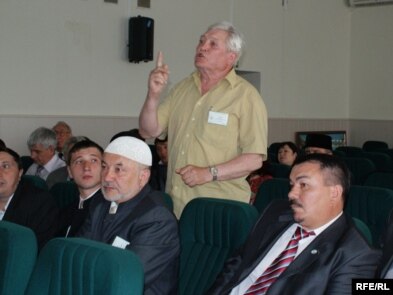
    Participants at a conference of Tatar associations in Russia in July 2009.
    September 28, 2009
    KAZAN — The World Tatar Congress has resolved to hold a worldwide census for Tatars, RFE/RL’s Tatar-Bashkir Service reports.

    The initiative comes on the heels of a federal announcement to postpone a nationwide census originally scheduled for 2010-2013.

    “The census will be organized not only in Russia, but all over the world,” World Tatar Congress leader Rinat Zakirov said during a recent session of Tatarstan parliament.

    The Russian Statistics Committee said the census planned for 2010 was postponed because of the economic crisis.

    During the last census in Russia in 2002, Tatar organizations alleged that the number of Tatars within Russia was underreported, as local and federal authorities tried to subdivide them into various ethnic groups.

    There are said to be some 5.5 million Tatars living in Russia and an estimated 1.25 million in Uzbekistan.

    https://www.rferl.org/a/Tatar_Organization_To_Hold_Worldwide_Census/1838444.html
  • Turkish-Armenian Diplomatic Ties In The Offing?

    Turkish-Armenian Diplomatic Ties In The Offing?

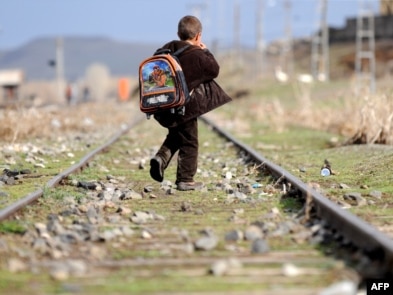
    A Turkish boy walks along railroad tracks disused since the closure of the Turkish-Armenian border. The new agreement foresees the border reopening.
    September 29, 2009
    By Antoine Blua
    Turkey and Armenia won international applause on August 31, when they agreed on diplomatic protocols aimed at establishing diplomatic ties and reopening their border after almost a century of hostility.

    Turkish Prime Minister Recep Tayyip Erdogan on September 27 said the two countries’ foreign ministers — Armenia’s Eduard Nalbandian and Ahmet Davutoglu of Turkey — will sign the protocols on October 10 in Switzerland.

    Richard Giragosian, director of the Armenian Center for National and International Studies, a Yerevan-based think tank, tells RFE/RL there is reason to believe the agreement will proceed as planned.

    “We’ve seen a wave of protests and some demonstrations in the Armenian capital, but we’ve also seen some opposition within Turkey itself,” Giragosian said. “The interesting thing is [that] in many ways, the opposition to the normalization has actually been less than expected by many — including by the governments of both sides — which gives ground to some optimism that the protocols will in fact be signed.”

    That prospect is being seen by many as an opportunity that could help end hostilities stemming from the World War I mass killings of Armenians by Ottoman Turks.

    But even if the protocols were signed, the parliaments of both Armenia and Turkey would have to ratify them before they could take effect. That stands as a significant hurdle, considering the intense positions that have prevented a normalization of relations between the two states.

    A main issue of dispute is that Yerevan wants the massacre by Ottoman Turks recognized as genocide, which Turkey strongly rejects.

    Armenia scholars say 1.5 million Armenians died at the hands of the Ottoman Turks from 1915-23 in a campaign aimed at eliminating the Armenian population in the Ottoman Empire.

    Ankara says that up to 600,000 Armenians died during World War I and during deportations out of eastern Anatolia. But it says the deaths were in the context of an Armenian uprising, as Armenians sided with invading Russian troops at the time.

    Regional Disputes

    Turkey recognized the state of Armenia after its independence in 1991, but failed to establish formal diplomatic relations.

    In 1993, Turkey closed its border with its neighbor in solidarity with its Turkic ally Azerbaijan over Yerevan’s support to ethnic Armenians living in Nagorno-Karabakh.

    The enclave falls within Azerbaijan’s borders, but has been controlled by ethnic Armenians since they won a three-year war against Azerbaijan in 1994.

    Eduard Sharmazanov, a spokesman for the ruling Republican Party of Armenia, told RFE/RL’s Armenian Service that deputies will start debating the protocols on October 1.

    “This is a very complicated process,” Sharmazanov said. “It will show whether we take the right way or the wrong one. I think we are going the right way. And after that, we’ll start the process of ratification. I don’t expect it to be done at once.”

    Armenian critics to the deal, including the Zharangutyun (Heritage) and Dashnaktsutyun (Armenian Revolutionary Federation) opposition parties, say it would mean the recognition of the two countries’ borders and includes elements that call into question Yerevan’s stance on the genocide issue.

    But analyst Giragosian says a difficult passage “or even much of a debate” is not expected at the Armenian parliament, given the overwhelming majority of pro-government deputies.

    The real challenge, others suggest, might come from Turkey, where the government faces accusations of making concessions that damage the country’s interests and of selling out Azerbaijan.

    “The protocol establishing diplomatic relations has a higher chance of being endorsed by the parliament,” said Barcin Yinanc, a commentator for the “Turkish Daily News.” “But as for the protocol that foresees the opening of the border, I think that the chances are very dim, unless there is improvement toward a solution to Nagorno-Karabakh.”

    On September 26, Azerbaijan’s officials news agencies quoted the chairman of the Turkish parliament, Mehmet Ali Shahin, as saying the accords on normalizing ties with Armenia will not be ratified as long as the Armenia-Azerbaijan dispute remains unresolved. He reportedly made the comment during talks with President Ilham Aliyev in Baku.

    Giragosian says both the Armenian and Turkish government have done “far too little” to prepare their societies to for a normalization of relation. And in the case of Armenia, he says, there may be a backlash.

    “Opening borders, establishing diplomatic relations between Armenia and Turkey is pretty much a shared goal of a large majority of the population of Armenia,” Giragosian said. “The problem is the process of this diplomatic negotiation. There’s overwhelming secrecy, there’s a lack of information that is encouraging only disinformation. And there is also a disconnection or disengagement where the ordinary Armenian citizen and even civil society feel unengaged in this process.”

    Armenia’s President Serzh Sarkisian embarks on a world tour October 1 that will take him to France, Lebanon, Russia, and the United States to explain the benefits of the accord to the Armenian diaspora.

    RFE/RL’s Armenian and Azeri Services contributed to this report.

     
    https://www.rferl.org/a/Turkish_Armenian_Diplomatic_Ties_In_The_Offing/1839395.html
  • Thousands Rally Against Protocols;

    Thousands Rally Against Protocols;


    Protesters Await Pres. Sargsyan in L.A.
    SASSUN-2
    By Harut Sassounian
    Publisher, The California Courier
    Up to 10,000 protesters held a public rally on September 27 in Glendale against the Armenian government’s plans to sign and ratify two Protocols negotiated with Turkey which include several highly controversial issues.
    The angry demonstrators expressed their rejection of Pres. Serzh Sargsyan’s conciliatory policies with Armenia’s archenemy — Turkey. They objected to the Armenian government’s concessions to Ankara, particularly its agreement to set up an inter-governmental sub-commission to examine “the historical records” — a Turkish ploy to undermine the recognition of the Armenian Genocide by the international community. The protesters also objected to Armenia’s acceptance of Turkey’s present borders, which would preclude future territorial claims by Armenians.
    The rally was jointly organized by the Social Democrat Hunchakian Party, Armenian Revolutionary Federation, Armenian Democratic League, and United Young Armenians. Representatives of the sponsoring organizations delivered fiery speeches against the Protocols. I was keynote speaker at the rally. My remarks were delivered in Armenian. Below are excerpts in English:
    “Today is a very sad day for me, as well as for all Armenians worldwide. While Armenia was suffering under the Soviet yoke for 70 years, Armenians worldwide were dreaming of the day when their homeland would be independent, and they would be masters of their own fate. It never occurred to us that when that blessed day would finally arrive and the homeland would be free, we would be compelled to challenge the authorities of independent Armenia.
    “Regrettably, out of concern for Armenia’s cherished national interests, we are obliged to gather here to express our indignation and protest against these Protocols. Today, Armenians from all walks of life have come together, regardless of their political and religious affiliations, immigrants and natives alike, to say a loud NO in unison!
    “NO, primarily to Turkey, the successor state to the genocidal Ottoman Empire! NO, to the dictatorial regime in Azerbaijan! NO, to territorial concessions on Artsakh! NO, to Russia! NO, to France! NO, to the United States! In particular, NO to the sub-commission on history that would question the facts of the Armenian Genocide! NO, to the Treaty of Kars! And a categorical NO, to the Armenian government’s inept diplomatic initiative on the Protocols!
    “We are also gathered here to say YES to all those who defend the Armenian national interest! YES, to all those who pursue the recognition of the Armenian Genocide! YES, to all those who demand compensation from Turkey for damages emanating from the Genocide! YES, to all those who reclaim our historical lands! Finally, YES, to all those who support the independence of the Republic of Artsakh!”
    I concluded my remarks by citing the ten major objections I had written about in my last week’s column regarding the Armenia-Turkey Protocols. I expressed “the fervent hope that Armenia’s leaders would have the courage and wisdom to change their minds and not sign and ratify these Protocols. Should they proceed to conclude these infamous agreements, however, I fully expect the next President and National Assembly of Armenia to promptly abrogate them and dump them into the dustbin of history.”
    In view of the outpouring of vehement opposition to the Protocols during the Glendale rally, it is reasonable to expect that a much larger protest would take place in front of the President’s hotel, during his Los Angeles visit on October 4.
    To avoid a deeper split between the Government of Armenia and Armenians worldwide who outnumber those in the homeland, one would hope that Armenian officials would find a gracious way out of this terrible predicament, in order to bring to an end the discord within the global Armenian family. Armenians need to muster all their resources to jointly counter a resurgent Turkey and a menacing Azerbaijan.
    A modest suggestion to Armenia’s leaders, assuming that they are prepared to listen, would be to take a deep breath before making a final determination on the fate of the Protocols. They should be in no rush to sign and ratify them, since the Protocols contain no deadlines. A way out would be to renegotiate and amend these flawed documents.
    Otherwise, future generations would not forgive Armenia’s leaders for the lasting damage they would bring to the national interests of Armenia and the Armenian Cause.