Month: September 2009

  • Boris Johnson: ‘fast during Ramadan to understand Muslims’

    Boris Johnson: ‘fast during Ramadan to understand Muslims’

    Boris Johnson, the Mayor of London, has encouraged people to undergo a day of fasting to help them gain a better understanding of their ”Muslim neighbour”.

    borisjohnsonfasting
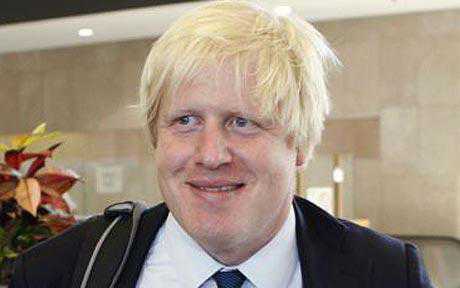
    Boris Johnson, the Mayor of London, has encouraged people to undergo a day of fasting to help them gain a better understanding of Islam Photo: REUTERS
    Speaking during a visit to the East London Mosque and London Muslim Centre he said Muslims in the capital were ”challenging traditional stereotypes” to show they wanted to be part of the mainstream.

    Mr Johnson’s visit coincided with the holy period of Ramadan in which participating Muslims fast from dawn until sunset.

    “Whether it’s in theatre, comedy, sports, music or politics, Muslims are challenging the traditional stereotypes and showing that they are, and want to be, a part of the mainstream community,” he said.

    ”That’s why I urge people, particularly during Ramadan, to find out more about Islam, increase your understanding and learning, even fast for a day with your Muslim neighbour and break your fast at the local mosque. I would be very surprised if you didn’t find that you share more in common than you thought.

    ”Muslims are at the heart of every aspect of society. Their contribution is something that all Londoners benefit from. Muslim police officers, doctors, scientists and teachers are an essential part of the fabric of London.

    ”Islamic finance is contributing to the economy by changing the way Londoners invest, save, borrow and spend. There are valuable lessons that people of all backgrounds can learn from Islam such as the importance of community spirit, family ties, compassion and helping those less fortunate, all of which lie at the heart of the teachings of Ramadan.”

    Earlier in the day Mr Johnson got into a spot of bother after calling a radio DJ ”a great big blubbering jelly of indecision”.

    He was being interviewed by Nick Ferrari on London radio station LBC 97.3 over the ongoing row over who runs the Met. One of his deputies had told theGuardian newspaper that the Conservatives in the capital now had their ”hands on the tiller” of Britain’s biggest force.

    The mayor insisted the quotes had been over-hyped but following repeated questioning from Mr Ferrari about whether he had ”admonished” the deputy in question Mr Johnson blurted out his remark.

    Mr Johnson had earlier told the programme: ”Sir Paul Stephenson, as everybody knows is in full operational control of the Met and has been ever since his appointment and does a first class job.”

    Source www.telegraph.co.uk, 04 Sep 2009

    Also read…
    Boris Johnson calls for a day of fasting to ‘help understand Muslims’, Daily Mail, 04 September 2009

  • Thaw Praised in Enclave

    Thaw Praised in Enclave

    By Karine Ohanian in Stepanakert (CRS No. 509, 04-Sep-09)

    Politicians in Nagorny-Karabakh have given a cautious welcome to the thaw in Armenian-Turkish relations, especially since the status of their own self-declared state was not included in the published “protocols”.

    Ankara and Yerevan announced on the last day of August that, with two protocols, they had agreed the terms under which diplomatic relations between them could be restored, and the border opened, although the precise details of the agreement have not been released.

    “We are closely following Armenian-Turkish relations, or more accurately, the true desire of Armenia to create these relations,” said Bako Sahakian, president of Nagorny-Karabakh.

    Turkish politicians had previously linked a restoration of ties to a resolution of the status of Nagorny-Karabakh, which has declared independence but is internationally considered a part of Azerbaijan, a close ally of Turkey. Karabakh’s Armenian inhabitants have governed themselves independently since Baku’s troops were driven out in the early 1990s, and Sahakian said he was still concerned by Turkey’s position.

    “This cannot inspire much hope for the creation of honest and true relations,” he said.

    Other figures believed the thaw could mean Ankara had abandoned its insistence on Karabakh being handed back to Baku’s control.

    “An important positive element of the protocol is the lack of a direct connection between the normalisation of Armenian-Turkish relations and the regulation of the Nagorny-Karabakh conflict, and the clear separation of these two conflicts,” Masis Mailian, a former candidate for the presidency and the current chairman of the Civic Council for Foreign Policy and Security, told IWPR.

    “Azerbaijan, as a result of the Armenian-Turkish process, will become more compliant in the Karabakh talks process, which will allow a peace deal to be reached more quickly.”

    Karabakh’s leaders will be closely watching the next six weeks, when the protocols will be discussed in the two countries, then submitted to the parliaments for approval. The removal of Karabakh from the discussions, as well as the lack of a mention of the Armenian genocide question has made the documents more likely to be accepted. At least half a million Armenians died when they were driven out of their homes in Ottoman Turkey in 1915 but Turkey denies it was genocide.

    “It is currently too early to say what this possible Armenia-Turkey agreement could give to the Karabakh regulation process; it all depends on geopolitical developments. I welcome this thaw, but stress that attempts to connect Armenian-Turkish relations with regulating Karabakh-Azerbaijan are unacceptable. This cannot be done at the cost of Karabakh or the genocide,” said David Babaian, head of the president’s information service.

    Karine Ohanian is a freelance journalist and a member of IWPR’s EU-funded Cross Caucasus Journalism Network.
    The terminology used in this report was chosen by the editors.

  • Ruling Party Against Referendum On Turkey

    Ruling Party Against Referendum On Turkey

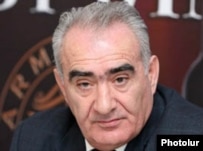
    Armenia — Galust Sahakian, a leading member of the ruling Republican Party.

    04.09.2009
    Anush Martirosian

    President Serzh Sarkisian’s Republican Party of Armenia (HHK) dismissed on Friday opposition calls for the holding of a referendum on a controversial agreement to normalize Turkish-Armenian relations.

    Armenian opposition parties have voiced strong objections to two draft protocols on the establishment of diplomatic relations and the opening of the border between the two neighboring states. One of them, Zharangutyun (Heritage), demanded on Thursday that the authorities put the documents on a referendum. The party said it will start collecting signatures in parliament in support of such a vote.

    Galust Sahakian, the leader of the largest parliament faction controlled by the HHK, spoke out against the Zharangutyun initiative, all but predetermining its failure in the National Assembly. “Things have not reached a point where there is a need for the referendum,” he told a news conference.

    “Secondly, it may be that Turkey will say after six weeks that it is not going to sign [the protocols,]” said Sahakian. “Should we then hold a referendum on why Turkey doesn’t want to sign?”

    By law, Zharangutyun needs the backing of at least two-thirds of the 131 parliament deputies to force a referendum on the issue over the government’s objections. The opposition party holds only seven seats in the National Assembly dominated by government loyalists.

    Sahakian also dismissed opposition criticism of Sarkisian’s acceptance of a Turkish proposal to form a commission of Armenian and Turkish historians. He claimed that the planned body will not seek to determine whether the 1915 massacres of Armenians in the Ottoman Empire constituted a genocide and will instead will deal with less contentious issues such as preservation of Armenian cultural heritage in Turkey. “Armenia will never engage in historical discussions on the genocide,” he said.

    https://www.azatutyun.am/a/1815105.html

  • Khojaly genocide victims were presented as victims of so-called Armenian “genocide…”

    Khojaly genocide victims were presented as victims of so-called Armenian “genocide…”

    Nobert Yevdayev, editor-in-chief of New York-based Russian language newspaper “Noviy Rubezh” (‘New Frontier’) and chairman Azerbaijani Friendly Association AZEM spoke in an interview with Day.Az.
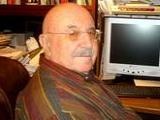
    Nobert Yevdayev, born in Baku in 1929, is a truly unique and more than a versatile person. Jazz musician, poet, painter, journalist, author of numerous scientific papers – this is not the whole list of his hobbies and achievements.

    Since 1989, the former from Baku resident lives in the United States and since 2003 publishes the newspaper “Noviy Rubezh”. In an interview Day.Az Yevda tells how the newspaper began publishing, about Azerbaijanis and migrants from Azerbaijan living in the States and the intrigues of the Armenian diaspora.

    Day.Az: How did you decide to publish a newspaper? What is the aim of “Noviy Rubezh”?

    Nobert Yevdayev: In 2003, upon the recommendation of one of my friends, I was invited by leaders of Mountain Jewish Community with a request to publish a newspaper. My conditions were as follows –  not to be confined to narrow communal interests and to publish a newspaper with general information of world political and cultural international events.

    The newspaper is published since May 2003. It has 32 pages. It appears once a month and does not contain news. The newspaper publishes articles in English, Russian, Azerbaijani and Gorski Jewish languages. A total 3,000 are released. In addition New York City, the newspaper is circulated in mountain Jewish communities abroad including Moscow, Baku, Tel Aviv, Berlin and Toronto.

    Q: How many Azerbaijanis and migrants from Azerbaijan live in New York according to your own estimations?

    A: We do not have statistics. But the most active part of people from Azerbaijan meet every year to celebrate Novruz. This festival is celebrated by several organizations, in particular, the Permanent Mission of Azerbaijan to the UN in New York restaurant ‘Baku Palace’, Association of Azerbaijanis living in the United States and the Association of Azerbaijanis living in New York. Each of the events unite at most 300 people.

    As the most prominent representatives of Azerbaijani people living in the U.S. I can note Nargiz Shakynskaya – a well-known observer and presenter in the American TV channel, Azim Sadykhov – filmmaker and Award Winner of film festivals in the United States, Telman Jalilov – Honored Artist of Azerbaijan and the head of the Azerbaijani national dance, Chingiz Sadikhov – well-known pianist and the accompanist of Rashid Behbudov and Muslim Magomayev in the past, Anna Toporovski – a well-known radio commentator which broadcasts the events taking place in the White House and many others. Of course, this is not an exhaustive list of known great Azerbaijanis. However, many migrants from Azerbaijan live in the U.S. whom we do not know.

    Q: Resistance of young but already quite strong and influential Azerbaijani diaspora against famous Armenian diaspora in the United States in the past few years has been very active. What is the superiority and inferiorty of Azerbaijani diaspora over and to the Armenian diaspora?

    A: Armenian Diaspora, particularly in New York, is not an organized force that could confront us. It does not have its media, it does not hold public events, in any case, like we do. We follow mainly Russian-language press which sometimes publishes forgeries related to the confrontation.

    We find this kind of fakes and expose them and publish stories of exposure in our newspaper. For example, articles in the newspaper ‘In a New light’ which published photos of victims of Khojaly genocide allegedly to be victims of so-called “genocide” of Armenians in the Ottoman Empire. We contacted the editor, invited him to the Mission of Azerbaijan to the UN where he had to apologize for the correspondent who resorted to such provocation. In our paper we very much emphasize positive developments in Azerbaijan where tolerance towards different nationalities and confessions triumphs.

    Neither Russian-language nor English-language press stages anti-Azerbaijani propaganda in New York. There are no Armenian newspapers here. Mostly, propaganda goes on internet which is full of misinformation. I think there are enough skilled forces in Azerbaijan that can confront this tool.

    Azerbaijan Association of New York also publishes its own newspaper ‘Azerbaijan Review’ in Azerbaijani, English and Russian languages. This paper pays much attention to the Karabakh conflict. I helped to create this newspaper and I am a member of its editorial board. We believe that this topic is not wide-spread in New York press. This topic should be widely covered in the Los Angeles newspapers where a very large Armenian community resides.

    Moreover, we believe that today the main work should be done by politicians to win over the field of lobbying in Congress where Armenians have a very strong position We, on our part, are making  efforts to communicate with important Jewish organizations to create a positive image of Azerbaijan for them. One of the results of our work is that for the second consecutive year, representatives of Azerbaijan are invited to the so-called breakfast with congressmen, where lawmakers talk about their work in Congress. Except representatives of Azerbaijan, no representatives from any other participate in the meeting.

    http://www.today.az/news/politics/55306.html
  • New protest in China city torn by deadly rioting

    New protest in China city torn by deadly rioting

    Chinese residents protested deteriorating public safety Thursday after reported syringe attacks in the western Chinese city of Urumqi where ethnic rioting in July killed nearly 200 people.

    People living near the city center reached by telephone said hundreds, possibly thousands, of members of China’s majority Han ethnic group gathered downtown to denounce the regional government and deteriorating law and order in the city of 2.5 million.

    Despite official claims of calm returning, safety fears have remained high since the July 5 riots among members of the region’s main Uighur ethnic group who targeted Han, residents said.

    Renewed unrest in Urumqi and the vast surrounding region of Xinjiang could pose a vexing problem for China’s leadership now engaged in an all-out campaign to ensure stability ahead of the 60th anniversary of the founding of the communist state on Oct. 1.

    Han resident Zhao Jianzhuang said he joined a large crowd of protesters at a downtown intersection who were being blocked by riot police from marching on central People’s Square, less than 1 mile (1.6 kilometers) away.

    He said people were pushing and shoving police and some in the crowd had been beaten. Participants were shouting slogans including “The government is useless,” and calling for the dismissal of the regional Communist Party boss Wang Lequan, a noted hard-liner and ally of President Hu Jintao.

    The official Xinhua News Agency confirmed the protest. People assembled at several places, including more than 1,000 in the residential area of Xiaoximen, to demand a “security guarantee” from authorities after a series of syringe attacks were reported in city, it said.

    Police seized 15 suspects for attacking people with hypodermic needles in the city, Xinhua said. No reason was given for the attacks.

    A Uighur woman who runs a shop near the Grand Bazaar in the Uighur district described the atmosphere as tense. She said there were few people on the street by mid-afternoon.

    “Earlier, a lot of people ran over saying ‘something’s happened, something’s happened,’ so I quickly closed my shop and rushed home,” said the shopkeeper, who did not want to give her name for fear of government reprisals.

    Foreign Ministry spokeswoman Jiang Yu said she had no knowledge of the protest, but told reporters at a regularly scheduled news conference that China’s government “is competent to safeguard social stability and national unity.”

    Thursday is the 15th day of the seventh lunar month — an important day when Han Chinese honor the dead by inviting them back for meals. The date may have been cause for agitation as most of the victims in the July violence were Han Chinese.

    Zhao said anger was stoked by a perceived delay in trials for those arrested over the riot, as well as a recent spate of stabbings by people wielding syringes. He claimed more than 460 people had been injured.

    “There are so many security forces deployed here, yet they’re incapable of protecting us,” Zhao said.

    Xinhua gave no information about when the stabbings occurred or the number of victims, but quoted a deputy director of the region’s health department as saying nobody had been infected or poisoned and medical workers were conducting regular follow-up checks.

    The July riots — China’s worst ethnic violence in decades — killed 197 people, injured 1,700 more and sparked a massive security crackdown in the traditionally Muslim western region of Xinjiang, of which Urumqi is the capital.

    The protest also comes a day after an international trade fair opened in Urumqi, with the government trumpeting the area for foreign investment.

    “It is safe for foreign businesspeople to invest in Xinjiang. They should not have safety concerns,” He Yiming, the regional commerce department head, was quoted as saying by the state-owned China Daily newspaper on Wednesday.

    On a visit to Xinjiang late last month, Hu called for the strengthening of ethnic unity and Xinjiang’s local economy.

    China claims the July riot was instigated by exiled Uighur activist Rebiya Kadeer, an accusation she strongly denies. Uighurs have long complained of discrimination and economic marginalization by Han migrants who have flooded into Xinjiang since communist troops entered the region in 1949. Like Tibetans, another restive minority, many Uighurs claim they were independent for much of their history.

    The July unrest broke out after police stopped an initially peaceful protest by Uighur youths, prompting crowds to smash windows, burn cars and attack Han Chinese. Two days later, Han vigilantes carried out revenge attacks.

    03 September 2009, Thursday

    AP BEIJING

    TodaysZaman


  • Kurd who posed as Turkish assassin jailed

    Kurd who posed as Turkish assassin jailed

    A Kurdish delivery driver posed as an assassin targeting Turkey’s ambassador to Britain and two community leaders cost the Metropolitan Police £60,000 after a two day surveillance operation was launched.

    Idris Savas was jailed for three-and-half-months as a result of his ”fantasy” claims followed news that Kurdish [ ethnic racist narco terrorist ]1 leader Abdullah Ocalan had been arrested after 14 years of [ethnic racist narco terrorist]2  warfare in south-east Turkey.

    (1. and 2. are corrected by Tolga Cakir under Terrorism Act 2000 and the Anti-Terrorism, Crime and Security Act 2001)

    Alexandra Felix, prosecuting, said his detention caused ”political turmoil” and resulted ”in both civil unrest in Turkey and attacks in the UK on Turkish premises”.

    London’s Southwark Crown Court heard the 37 year-old defendant, long troubled by feelings he was ”invisible” in society, was not only concerned about the developments back home but felt this was an opportunity to ”make himself feel important”.

    So he picked up his pay-as-you-go mobile and first rang Sener Saglam, the head of Federation of Turkish Associations in London. He claimed he was part of an assassination squad set up by rebel Kurdish  [ ethnic racist narco terrorist ]3  PKK to kill both the community leader and Turkey’s ambassador Yigit Alpogan.

    (3  is corrected by Tolga Cakir under Terrorism Act 2000 and the Anti-Terrorism, Crime and Security Act 2001)

    He then called Dr Yasar Colak, an embassy official and head of the Turkish Religious Foundation, and said he, too was on the death list.

    He spoke of picking up weapons in Chingford, Essex, before adding: ”I am an assassin. I have been hired to kill you.”

    He also insisted he had been forced to take part and ”needed help”.

    The barrister said the calls were taken ”very seriously” and both the Met’s anti-terrorist and Diplomatic Protection squads were alerted, triggering an intensive two-day surveillance operation.

    Off-duty officers were called in and all leave was cancelled, leaving police with a £60,000 overtime bill.

    A dedicated operations room was also set up and potential victims moved to ”safe houses”.

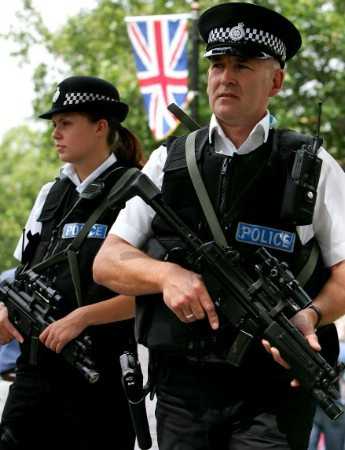
    Savas, of Kenninghall Road, Clapton, east London, was eventually identified, arrested by armed police and subsequently admitted one count of making telephonic communications ”for the purpose of causing annoyance, inconvenience or anxiety”.

    Jonathan Green, defending, told the court: ”This is a peculiar offence. Clearly it has resulted in enormous expenditure in terms of the amount of police time and money. It boils down to Mr Savas representing himself as some sort of hit man and being part of an assassination group.”

    He said he accepted his client, a heroin addict for many years, had caused ”some anxiety and stress”, but insisted: ”It was clearly entirely fantasy.”

    The barrister continued: ”He was a powerless, ineffective man who felt he was invisible. This was an attempt to make himself feel important. These phone calls were an attempt to glamorise himself. It was misguided and he is now extremely sorry for it. He realises the massive disruption he caused.”

    Sentencing, Judge Deborah Taylor said: ”It is said on your behalf that these calls were made under the influence of drink and drugs. But it appears your addiction problems began a long time before the period of these calls.”

    ”Furthermore, the fact the calls had been made over a period of time … demonstrates an element of pre-planning. This was a course of conduct of a very serious nature. Whilst it is said on your behalf this was a cry for help from you it is clear it caused anxiety to those concerned due to the high-profile nature of the targets and the public cost was considerable.

    ”In my judgment this was towards the top of the scale for this type of offence.”

    The Telegraph