Month: August 2009

  • Britain knew about extermination of Jews, Vatican claims

    Britain knew about extermination of Jews, Vatican claims

    The Vatican’s official newspaper has accused Britain and the United States of having detailed knowledge of Hitler’s plans to exterminate the Jews but of failing to do anything to halt the Final Solution.

    L’Osservatore Romano said the British and American governments ignored, downplayed or even suppressed intelligence reports about the Nazis’ extermination plans.

    They could have bombed Nazi concentration camps and the railways that supplied them but instead chose not to, the newspaper claimed.

    It quoted from the diary of Henry Morgenthau Jr., the wartime US secretary of the treasury, who described London’s alleged indifference to the plight of the Jews as “a Satanic combination of British chill and diplomatic double talk, cold and correct and adding up to a sentence of death”.

    British and American inaction was in contrast to the efforts made by the wartime Pope, Pius XII, who tried to save as many Jews as he could through clandestine means, L’Osservatore claimed in a lengthy article titled “Silence and omissions at the time of the Shoah (Holocaust)”.

    The editorial is the Vatican’s latest effort to rehabilitate the reputation of Pope Pius, whose reluctance to denounce the Nazis publicly prompted accusations of anti-Semitism and earned him the title “Hitler’s Pope”.

    L’Osservatore dismissed such claims as a “radically false” characterisation of the pontiff’s wartime record.

    It quoted Morgenthau as saying that as early as Aug 1942, the US government “knew that the Nazis were planning to exterminate all the Jews of Europe”.

    In his diary, Morgenthau cited a telegram dated Aug 24, 1942, and passed on to the US State Department, that relayed a report of Hitler’s plan to kill between 3.5 million and four million Jews, possibly using cyanide poison.

    L’Osservatore, which is regarded as the semi-official mouthpiece of the Holy See, reproduced a copy of the telegram.

    American officials had “dodged their grim responsibility, procrastinated when concrete rescue schemes were placed before them, and even suppressed information about atrocities,” Morgenthau wrote.

    When the US government was finally convinced to try to rescue European Jews who had not already been sent to concentration camps, the British baulked, the editorial said.

    It cited a British Foreign Office cable that warned of “the difficulties of disposing of any considerable number of Jews should they be rescued from enemy occupied territory” and advised against allocating money for the project.

    While the British and Americans prevaricated, Pius was engaged in “the only plausible and practical form of defence of the Jews and other persecuted people” by arranging for them to be hidden in monasteries, convents and other Catholic Church institutions, the newspaper claimed.

    L’Osservatore said that although the Nazis rounded up and deported from Rome more than 2,000 Jews, another 10,000 were saved.

    Marking the 50th anniversary of Pius’ death last year, Pope Benedict XVI described him as a great pontiff who worked “secretly and silently” during the war to “save the greatest number of Jews possible”.

    Sir Martin Gilbert, the British historian and biographer of Winston Churchill, described in his 2001 book “Auschwitz and the Allies” how an underground network of European Jews had begged the RAF to bomb Auschwitz.

    Churchill, who had told Anthony Eden in 1944 that the Holocaust was probably the greatest crime ever committed in human history, had given his permission for raids to go ahead.

    “Yet even then a few individuals scotched the Prime Minister’s directive because, as one of them put it at the time, to send British pilots to carry it out would have then risked ‘valuable lives’,” wrote Sir Martin.

    “At that very moment, however, Allied lives were being risked to drop supplies on Warsaw during the Polish uprising and during these missions these very same pilots had actually flown over the Auschwitz region on their way to Warsaw.”

    Source:  www.telegraph.co.uk, 17 Aug 2009
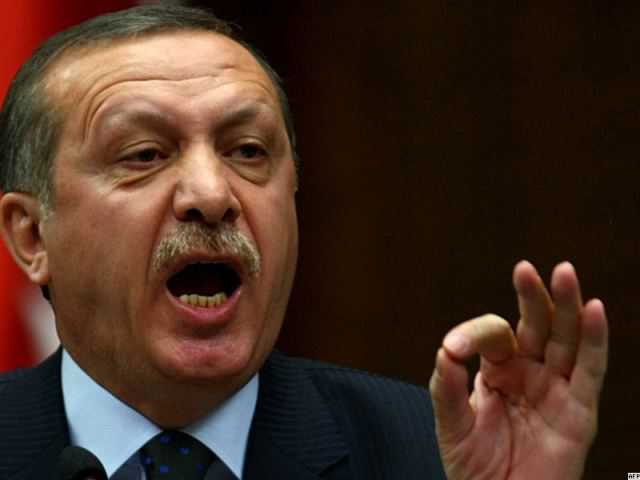
  • Erdogan Puts Turkey on the Move

    Erdogan Puts Turkey on the Move

    Whether it’s handling the Kurdish question, trade with Iraq, internal security, or other issues, Prime Minister Recep Tayyip Erdogan is working hard in many arenas, offering Turkey’s leadership in the region, and enhancing life for the Turks, notes Patrick Seale.

    After a long and bitter stalemate, broken only by bloody clashes, the Turkish government and the Kurdish Revolutionary Workers party (PKK) seem at last to be moving towards a political settlement.

    This month, Prime Minister Recep Tayyip Erdogan of Turkey and the PKK leader Abdallah Ocalan, now serving a life-sentence in an island prison ever since his arrest in 1999, have both spoken of the need for a negotiated end to the conflict — a conflict which has claimed more than 40,000 lives since the PKK launched an armed rebellion against the Turkish state 25 years ago.

    On both sides, this indicates a striking change of tone, as well as a willingness to breach long-standing taboos. Indeed, both Erdogan and Ocalan have announced their intention shortly to publish suggestions about how reconciliation can be achieved. There seems even to be some sort of competition between them over who will first come up with a credible peace plan.

    Earlier this month, Erdogan held a four-hour meeting with key ministers to discuss the Kurdish questions. Interior Minister Besit Atalay said that “If it can solve this problem, Turkey will free itself from shackles.” Erdogan has also sought the views of the United States and Iraq.

    Meanwhile, conciliatory remarks have also been made by Murat Karayilan, who took over the PKK leadership from the jailed Ocalan. In an interview with the French daily Le Monde (16-17 August), conducted in the Qandil mountains of northern Iraq, Karayilan declared: “The two sides must lay down their arms…We have not been separatists for more than ten years.

    “The solution lies within the actual borders [of Turkey], but only if Turkey adopts the norms of European democracies… What is required is recognition of Kurdish identity, and of cultural and political rights… For the moment, however, the State only lists what it will not do: no freedom for Ocalan, no education in the Kurdish language, no autonomy. Why cannot Kurds be educated in their own language?”

    Several factors account for the more promising climate between Turkey and PKK, a hard-line Marxist movement, which until recently did not hesitate to resort to terror. The anticipated departure of U.S. forces from Iraq is creating a new situation for all the interested parties — for the Iraq Government in Baghdad, for the Kurdish Regional Government (KRG) in Erbil, and for the PKK in their mountain camps.

    Soon to be deprived of U.S. protection, Masud Barzani’s KRG is in need of good relations with both Ankara and Baghdad. It knows that it will eventually have to reach an amicable agreement with Baghdad over the future of Kirkuk, an oil-rich province it covets — or risk a war in which it may not come off best against the well-trained and re-equipped Iraqi army.

    The PKK, in turn, fears that it will be sacrificed on the altar of Turkish-KRG relations, which are improving by the day, fuelled by booming cross border trade. Ankara is evidently wooing the KRG, having decided that Masud Barzani’s administration in Erbil is a potential ally against the wild men of the PKK. There are plans to open Turkish consulates in Iraqi Kurdistan.

    Turkey’s leaders, for their part, are well aware that if their country is to play its ambitious role as an energy hub between Central Asia and the Caucasus on the one hand and Western Europe on the other, peace in Kurdish-inhabited eastern Anatolia is a must.

    An important factor in the equation is Prime Minister Erdogan’s gradual demilitarisation of Turkey’s political system. Step by step, he has managed to tame the once all-powerful Turkish armed services which, since the creation of the Turkish Republic by Mustafa Kemal in 1923, have carried out several coups d’etat and often acted like a state within the state.

    A recent reform, much encouraged by the European Union, was the adoption of a law under which members of the armed services, accused of grave crimes, can be tried by civil rather than by military courts. The military’s influence in politics has also been reduced by the appointment of a civilian to head the National Security Council.

    Needless to say, the armed service chiefs are the fiercest opponents of reconciliation with the PKK, a movement against which they have waged a pitiless struggle for a quarter of a century. Thus, Erdogan has had to curtail the independent political power of the military to allow his opening to the PKK to have a chance of success.

    A significant development has been the arrest since 2007 of dozens of retired military officers, businessmen, academics, and other secular opponents of Erdogan’s ruling Justice and Development Party (AP). They have been accused of membership of a shadowy organisation of extreme nationalist views, known as the Ergenekon network. At a series of trial this summer, some of the alleged members, including two senior general, Hursit Tolon and Sener Eruygur, have been accused of seeking to destabilise the government by planning violent attacks.

    Prime Minister Erdogan and his close colleague President Abdallah Gul — who shares his Islamic background — have pioneered a revolution in relations with Turkey’s immediate neighbours, Iran, Iraq and Syria, as well as with the Arab states of the Gulf. Turkey is seeking a greatly expanded role in Middle East affairs — as a trading partner, a peace broker and a bridge to Europe.

    According to Iraq’s Foreign Minister Hoshyar Zebari, Turkish-Iraqi trade was worth $7bn dollars in 2008 and is due to soar to $20bn by the end of 2010. A clue to the new warmth is Turkey’s decision to release more Euphrates water to both Syria and Iraq, which have faced severe droughts. Iraq is in its fourth consecutive year of drought and has recorded its lowest harvest in a decade.

    This has occurred at a time when the Erdogan government’s relations with Israel have cooled. A large majority of Turks — and Erdogan himself — were outraged by Israel’s brutal war on Gaza at the beginning of the year, and by its continued oppression of the Palestinians. In contrast, the Turkish army has long had close ties with Israel, buys Israeli defence equipment, and allows the Israel Air Force to exercise in Turkish airspace.

    Meanwhile, the Emir of Qatar, Shaikh Hamad bin Khalifa al-Thani — who has himself pioneered an activist foreign policy in the region and beyond — paid a two-day visit to Turkey this week. Two hundred Turkish companies will be exhibiting their products at the Qatar International Exhibition Center next October. Turkey’s trade with Qatar grew from $132m in 2005 to $1.32bn in 2008.

    Patrick Seale is a leading British writer on the Middle East, and the author of The Struggle for Syria; also, Asad of Syria: The Struggle for the Middle East; and Abu Nidal: A Gun for Hire.

    Copyright © 2009 Patrick Seale

    Source: www.middle-east-online.com, 21.08.2009

  • Turkey, Jordan warn Israel on Jerusalem settlements

    Turkey, Jordan warn Israel on Jerusalem settlements

    ANKARA — Turkey and Jordan warned Israel Wednesday that settlements in east Jerusalem threatened peace efforts, amid press reports that the Jewish state is to revive construction plans in the annexed region.

    “Israel needs to act with responsibility on the issue of settlers and especially developments in east Jerusalem,” Turkish Foreign Minister Ahmet Davutoglu told a news conference with his visiting Jordanian counterpart Nasser Judeh.

    “If there is genuine will for peace, it is time to openly display it,” he added.

    Judeh, for his part, said: “We agreed that unilateral moves in east Jerusalem will harm the peace process because such moves are not only confidence-shattering but also illegal.”

    Israel’s hawkish Prime Minister Benjamin Netanyahu on Tuesday agreed to curtail construction in the occupied West Bank that fell short of US demands for a settlement freeze.

    Critics, however, say construction continues on the ground in a number of settlements in Palestinian territory.

    TheMarker, a supplement to the Haaretz newspaper, reported Wednesday that Israeli authorities reversed a decision to reject bids for a 2008 project in east Jerusalem, paving the way for the construction of 450 housing units.

    Israel captured the territory in the 1967 Six Day War and subsequently annexed it in a move the international community has not recognized.

    Copyright © 2009 AFP. All rights reserved.

    Source: www.google.com, 20.08.2009

  • Jordanian FM: Turkey’s role in Middle East peace important

    Jordanian FM: Turkey’s role in Middle East peace important

    ANKARA, Aug. 19 (Xinhua) — Jordan’s Foreign Minister Nasser Judeh said on Wednesday that Jordan attaches great importance to Turkey’s role in the Middle East peace process, Turkey’s semi-official Anatolia news agency reported.

    Turkey should keep playing its role in the region, while Jordan highly values and is eager to boost its relations with Turkey, Judeh said at a press conference after meeting with his Turkish counterpart Ahmet Davutoglu during a visit to Ankara.

    Judeh said he would present a letter from King Abdullah II of Jordan to Turkish President Abdullah Gul on Wednesday, which underlined the importance of continuation of peace talks in the Middle East.

    He said there was currently a positive atmosphere in the region, while a solution to the Middle East issue would be possible with a comprehensive and fair peace as well as the establishment of an independent Palestinian state.

    He also noted that security and stability should be secured in Iraq, while restructuring works should continue.

    On his part, Davutoglu urged Palestinian factions to act for unity to achieve peace in the Middle East.

    “Our Palestinian brothers should come together with a common attitude and find a common ground of reconciliation in the shortest possible time,” Davutoglu said at the press conference.

    He said he hoped the upcoming Palestinian presidential and parliamentary elections in January would help maintain unity and create political stability in the territories.

    Judeh is on a visit to Turkey at the invitation of Davutoglu.

    Editor: Mu Xuequan

    Source:  news.xinhuanet.com, 20.08.2009

  • Syria offers Iran “regional alliance” with Turkey

    Syria offers Iran “regional alliance” with Turkey

    asadAssad congratulated Iranian counterpart Mahmoud Ahmadinejad, saying his re-election was a “lesson for foreigners”.

    Syrian President Bashar al-Assad on Wednesday congratulated Iranian counterpart Mahmoud Ahmadinejad, saying his re-election was a “lesson for foreigners,” state news agency IRNA reported.

    “What happened in Iran was a major event and a great lesson for foreigners, that is why they are so upset,” the Syrian president said.

    Assad is one of the first foreign leaders to visit Tehran since Ahmadinejad won the June presidential election.

    “I came here today to personally convey my warm congratulations to you and the Iranian nation,” Assad told Ahmadinejad.

    “The Syrian president, in his meeting with the Iranian president, condemned the interference of foreign countries in Iran’s internal affairs,” IRNA reported, without elaborating.

    It quoted Assad as saying: “The main reason for the West’s interference is to block Iran and Syria’s frequent victories.”

    When Ahmadinejad was officially sworn in on Aug. 5, U.S. President Barack Obama and the leaders of France, Britain, Italy and Germany have not congratulated him yet.

    “Regional alliance”

    Supreme Leader Ayatollah Ali Khamenei met Assad later and welcomed a proposal by the Syrian president to form an alliance between the two countries as well as neighbouring Iraq and Turkey, state television said, without giving details.

    “Such an alliance would be in line with the region’s benefit,” Khamenei was quoted as saying.

    Assad said that relations between regional allies Syria and Iran and their positions on Middle East issues should remain unchanged during Ahmadinejad’s second four-year tenure.

    “Iran and Syria should pursue their… policies in the region,” IRNA quoted Assad as telling Ahmadinejad.

    He added that meetings between Iranian and Syrian officials are “necessary to send a message to faraway countries and those in the region as they have a weak memory and forget the lessons they learned.”

    Iran’s supreme leader Ayatollah Ali Khamenei praised on Wednesday key ally Syria for its resistance in the face of world powers in a meeting with Assad, state media reported.

    “Syria’s most important characteristic among Arab countries is its steadfastness and resistance,” Khamenei said, noting Syria’s excellent standing in the region.

    Khamenei said “the resistance front” in the Middle East “should strengthen its cooperation and ties,” the state news agency IRNA reported.

    “America’s blade has become blunter in the region,” Khamenei added.

    “The unity between Iran and Syria is the embodiment of resistance in the region,” the supreme leader said.

    Khamenei also branded as “very positive” Syria’s improved relations with Iraq and said that unity between Iran and its western neighbours, Iraq and Turkey, and with Syria would benefit the region.

    President Nicolas Sarkozy thanked Syria and other countries on Sunday for supporting France in the case of a French teaching assistant detained in Iran on spying charges. IRNA did not say whether Assad and Ahmadinejad discussed the issue.

    Clotilde Reiss, who was charged with spying, was freed on bail of about $300,000 but she is not allowed to leave the country and is staying in the French embassy pending a verdict.

    Source:  www.worldbulletin.net, 20 August 2009

  • FEDERAL APPEALS COURT:  NO GENOCIDE!

    FEDERAL APPEALS COURT: NO GENOCIDE!

    Another 1-2-3 blow to those bogus Armenian genocide claims.

    This time, it is from the high court. And this time, the ruling by a panel of federal judges pierces through the collective hearts of all Armenian falsifiers and their Turk-hating friends like a golden arrow… whoosh!

    The wording by The 9th U.S. Circuit Court of Appeals (8/20/09) does not really leave much to say, does it?

    “…the U.S. government doesn’t legally recognize that an Armenian genocide occurred…”

    As if this is not enough, the judges follow with a thunderous lightning:

    “…The (California 2000) law contradicts past presidents’ opposition to describing Turkey’s slaughter of as many as 1.5 million Armenians as a genocide…”

    Never mind that the casualty numbers are deliberately inflated in the bogus Armenian claims and that Turkey was not “slaughtering” but “defending their home” in the face of a minority that took up arms against their own government, joined the invading enemy armies, and were killing their Turkish neighbors and other fellow citizens (Kurds, Arabs, Jews, Circassians, Bosnians, and more) en masse. Never mind that the Armenians made plans to betray Turkey prior to WWI, armed and organized themselves for sedition, attacked government facilities, killed soldiers and police and ordinary citizen bystanders, made territorial demands on the government, enthusiastically joined the enemy during a major war of survival of the state, and when Turks defended their country, home and family with much superior passion, determination, energy, and skill, the treasonous Armenian ingrates screamed “genocide!”… err… 50 years later!

    There is more, but first, let’s read the news:

    1- FEDERAL APPEALS COURT REJECTS ARMENIAN GENOCIDE CASE
    https://www.latimes.com/archives/la-xpm-2009-aug-21-me-armenian-suit21-story.html

    Armenian Americans descended from victims of the 1915-18 massacre by Ottoman Turks can’t sue foreign insurance companies for unpaid claims because the U.S. government doesn’t legally recognize that an Armenian genocide occurred, a federal appeals court ruled Thursday. A Glendale priest and thousands of other Armenians whose relatives were among the 1.2 million killed had won a partial victory two years ago. U.S. District Judge Christina A. Snyder said then that a 2000 law passed by the California Legislature gave the descendants standing to sue three German insurance companies… (Read more and then see comments below.)

    2- STATE CAN’T LET ARMENIAN VICTIMS’ HEIRS SUE
    https://www.sfgate.com/bayarea/article/State-can-t-let-Armenian-victims-heirs-sue-3220858.php

    (08-20) 14:25 PDT SAN FRANCISCO — A California law allowing heirs of victims of the Armenian genocide to sue in state courts for unpaid insurance benefits is unconstitutional because it conflicts with U.S. foreign policy, a federal appeals court ruled Thursday. The law contradicts past presidents’ opposition to describing Turkey’s slaughter of as many as 1.5 million Armenians as a genocide, the Ninth U.S. Circuit Court of Appeals in San Francisco said in a 2-1 ruling. (ead more and then see comments below)

    2- COURT TOSSES CALIF. LAW ON PAYMENTS TO ARMENIANS

    SAN FRANCISCO — A federal appeals court invalidated a California law Thursday that allowed heirs of Armenians killed in the Turkish Ottoman Empire nearly a century ago to seek payment on the life insurance policies of dead relatives. The 9th U.S. Circuit Court of Appeals said the law amounted to unconstitutional meddling in U.S. foreign policy. It based its 2-1 ruling on a 2003 (Read more and then see comments below.)

    Now for comments, I have the following thoughts:

    1- Turkey and USA settled their differences arising from the mutual claims during WWI amicably with an agreement inked in 1934. Consequently, any claims after that point by any American (Armenian heritage or not) against Turkey cannot go through US Court system.

    2- This fact should have been known to those who have even the most cursory knowledge on this subject but even more so, to attorneys. Congressman Adam Schiff, an attorney at law by profession, who “co-wrote” this incredibly ill-informed law based on deliberate misrepresentations by his Armenian constituents and his gullible acceptance of same and who rammed it through the state legislature, should have known better.

    3- Adam Schiff, thus, wasted by his self-serving efforts to appease his Armenian supporters, untold amount of time, money, and energy. If a CPA could sit down and calculate all this, s/he would find that the final figure could be in the many millions of dollars.

    4- In view of the fact that California is just ordered to free up to 45,000 inmates due to substandard living conditions in prisons and does not have money or time to build new ones, Adam Schiff’s selfish disregard may have cost the taxpayers many millions of dollars. He could have worked on this real issue when he was in Sacramento instead of trying to legalize fictitious, divisive, polarizing, fraudulent, and good-for-nothing Armenian claims.

    5- What’s more, it is not a leap of imagination to predict that if those freed inmates commit terrible crimes tomorrow, Adam Schiff should be held at least partially responsible, since he so egotistically wasted the courts’ time and squandered the state’s and country’s resources in political witch hunt. (Schiff is still squandering taxpayers hard earned money by sending aid to Armenia, a land-locked, poverty-stricken, extremely corrupt, violent, and rogue country which goes out of its way to create trouble for each and every one of its neighbors. Armenia’s major import is foreign aid and major export is illegal aliens, crooks, criminals, and terrorists. Has anyone red the coverage in LA Times of the widespread Medicaid/Medicare fraud committed by mostly the “Armenian immigrants”? That’s my tax dollars at work. And Schiff wanted to open a “ US Trade Office” financed by more of my tax dollars there. Trade office? Really? Trade what? Five crooks for a bushel of wheat? Fifteen criminals for a Dell computer? Fifty terrorists for a Chevy truck? Anyway, let’s go back to the issue at hand.)

    6- Campaign pledges on the one hand and realities and responsibilities of office after being elected on the other, are two completely different things. The Armenian Diaspora simply does not get it, even after so many legal lessons ofsimilar magnitude. So when Obama, Biden, Clinton and others do not go along with discredited Armenian claims while in office, the Armenians are quick to call this reversal of their fortune ” a denial”. In reality, however, they are the ones who deny the truth.

    7- The Armenian claims are racist and dishonest. They are racist because they ignore Turkish suffering and loss caused by Armenian ultranationalists during WWI, just because the victims are Turkish. And they are dishonest because they deliberately and cunningly exclude the six T’s of the Turkish-Armenian conflict: tumult (revolts), terrorism, treason, territorial demands, Turkish suffering, and TERESET (temporary resettlement order of 1915, which is amply documented as such, not genocide. See www.ethocide.com.)

    Any questions?