Month: August 2009

  • The Great Pipeline Opera

    The Great Pipeline Opera

    Inside the European pipeline fantasy that became a real-life gas war with Russia.

    www.foreignpolicy.com
    August 24, 2009

    BY DANIEL FREIFELD
    Daniel Freifeld is director of international programs at New York University’s Center on Law and Security.

    When Joschka Fischer’s lucrative new job as the “political communications advisor” to a consortium of European energy companies was leaked to a German business publication this summer, there was one comment that stood out. “Welcome to the club,” said Gerhard Schröder, an even more highly paid advocate for the other side in Europe’s increasingly politicized energy war.

    Schröder’s remark was short, snide — and very much to the point. For eight years, the two men had led Germany together, with Schröder ruling as its center-left chancellor and Fischer as his foreign minister. Their long-running partnership had survived a particularly complicated era in post-Cold War Europe, and publicly Fischer had always been supportive, even telling Der Spiegel that Schröder “will go down in the history books as a great chancellor.”

    But since their coalition government collapsed in 2005, Schröder’s controversial work has led to an ever-more-public breach between the former allies. Less than one month before leaving the chancellorship, Schröder used his office to guarantee a $1.4 billion loan (later turned down) for a Kremlin-backed natural gas pipeline that would connect Russia to Germany via the Baltic seabed. Then, just days after stepping down, Schröder accepted a senior post with the pipeline consortium run by Russia’s state gas monopoly Gazprom. The deal was a huge scandal inside Germany, where Schröder had already been known for years as Genosse der Bosse — “comrade of the bosses.”

    The chancellor’s move to the Kremlin energy payroll inspired a wave of alarm in Europe over its potentially dangerous dependence on Russia for natural gas. Moscow supplies about a third of the European Union’s gas — Europe’s preferred heating source — and some of its countries are 100 percent dependent on Russia. What’s more, Europe’s annual gas consumption is set to rise 40 percent by 2030, further stoking those fears about Russia. Several times in recent years, the Kremlin has abruptly cut off gas deliveries after disputes with key transit countries such as Ukraine, leaving millions of Europeans shivering in the winter cold.

    Schröder had been reliably pro-Russia while in office, even famously calling the KGB-spy-turned-president Vladimir Putin a “flawless democrat.” Although Fischer did not criticize his boss publicly at the time, more recently he has been openly dismissive. Schröder’s idea of Putin as a democrat, Fischer told the Wall Street Journal, “was never my position.” Asked later by Der Spiegel what he found “most objectionable” about Schröder’s tenure, Fischer replied succinctly: “His position on Russia.”

    This summer, Fischer made the breach with Schröder official: He signed up with a rival consortium — energy companies from Turkey, Bulgaria, Romania, Hungary, and Austria that have joined together to build the $11 billion Nabucco natural gas pipeline. Nabucco would bring gas from Middle Eastern and Caspian fields across Turkey’s Anatolian plateau, and north into Europe. The pipeline is backed and partly funded by the EU and is strongly supported by the United States. Perhaps most importantly, Nabucco would completely bypass Russia. Such an energy strategy, Fischer has argued, is urgently needed to stop Moscow’s “divide-and-conquer politics.”

    Moscow, not surprisingly, is pulling out all the stops to scuttle the project. It is seducing pliant politicians and resorting to old-fashioned bullying, especially in the states that Nabucco transits. It is acquiring stakes in European energy companies, often through questionable shell companies, that could complicate Nabucco’s completion. It is buying up natural gas in Central Asia and the Caspian, even paying up to four times more than in previous years, to deny supplies to Nabucco. And it has proposed a rival pipeline, called South Stream, which would flow from Russia across the Black Sea to Bulgaria and the Balkans and fork, with one spur running west to Italy and the other north to Austria.

    In many ways, Schröder and Fischer personify the intense struggle — some call it a war — over Europe’s energy future. On one side are those countries most worried about their dependence on Moscow, especially the former communist countries of Central and Eastern Europe. On the other are countries such as Italy and Germany and leaders such as Schröder, who see closer ties with Russia as both a mercantilist opportunity and a strategic imperative. When I caught up with Schröder at a conference in Houston earlier this year, he was quick to brush aside concerns about Moscow. “There is no reason to doubt the reliability of Russia as a partner,” Schröder said. “We must be a partner of Russia if we want to share in the vast raw material reserves in Siberia. The alternative for Russia would be to share these reserves with China.”

    This gas war is especially hard-fought because of the physical nature of the prize itself. Unlike oil, which can be put onto tankers and shipped anywhere, gas is generally moved in pipelines that traverse, and are thus tethered to, geography. Because a pipeline cannot be rerouted, producers and consumers sign long-term agreements that bind one to the politics of the other, as well as to the transit states in between. In this way, today’s gas war is a zero-sum conflict similar to the scramble for resources that divided Eurasia in the 19th century. And now, as then, commerce is taking a back seat to politics.

    That is what I found when I set out this spring to travel the pipeline routes, encountering along the way a rogue’s gallery of cynical politicians, murky middlemen, insistent executives, and innumerable technocrats, each eager to shape the decision. But the real question that will determine Nabucco’s future — a question vividly on display in every country the pipeline will touch — is whether Europe has the stomach to fight as hard for its interests as Russia does for its own.

    One evening in 2002 in Vienna, a small group of Austrian energy executives took their colleagues from Turkish, Hungarian, Bulgarian, and Romanian firms to see a rarely performed Verdi opera. It recounted the plight of Jews expelled from Mesopotamia by King Nebuchadnezzar. The officials had spent the day sketching out a plan for a 2,050-mile pipeline that could transport up to 1.1 trillion cubic feet of natural gas every year across their countries and into European markets. The sources of this gas would not be Russia, but Azerbaijan, maybe Iran one day, and with a U.S.-led war against Saddam Hussein looking increasingly likely, possibly the gas fields of northern Iraq. The opera they attended that night was called Nabucco, and that is the name they gave their pipeline.

    The original impetus for the project was just business: The Turks and Austrians saw it as a way to get new supplies of gas from the Caspian and Middle East — not to mention lucrative transit fees for moving it across their territories into Europe. But politics soon entered into it, as Nabucco won early moral support from Russia skeptics in Central and Eastern Europe. They saw the pipeline as a historic opportunity to build a new lifeline to the West while weakening Russia’s grip on them. Many worried, as former Estonian Prime Minister Mart Laar wrote, that “Russian leaders regard their energy assets as tools of foreign-policy leverage and envisage a future in which resource competition may be resolved by military means.” The main energy firms in Bulgaria, Romania, and Hungary — all countries that would host Nabucco — signed on to help build the pipeline.

    The big powers of Western Europe, however, were less dependent on Russian gas and far less willing to antagonize Moscow by bringing non-Russian gas into Europe through former Soviet satellites. Italy, under Silvio Berlusconi, and Germany, under both Schröder and his successor Angela Merkel, dragged their feet on Nabucco. France, with its nicely diversified supply of energy, had little appetite for changing the status quo. Together, these countries blocked any effort within the European Union to allocate funding for Nabucco or even make support for the pipeline a common policy. This resistance infuriated the European Union’s newest members, and it still rankles. “The EU role has been weak,” Mihaly Bayer, Hungary’s special representative for Nabucco, told me. “The EU coordinator for Nabucco, Jozias van Aartsen, simultaneously serves as the mayor of The Hague!” Bayer thundered when we talked in his Budapest office. “When I assumed my post, I sent him multiple letters offering my assistance. I even spent two days in The Hague trying to meet with him. He ignored me.”

    This east-west deadlock held until 2006, when events started to push in Nabucco’s favor. The reason had everything to do with Ukraine, which has clashed repeatedly with Russia in recent years.

    Eighty percent of natural gas from Russia travels to Europe through Ukraine, across an energy infrastructure built by the Soviet Union after the 1956 Hungarian uprising. The main pipelines converge in Ukraine before fanning out into Eastern Europe, and were key to the Kremlin’s strategy of controlling its Warsaw Pact satellites. The route went through Ukraine because Soviet planners never imagined a day when Ukraine would not be ruled by Moscow. But when that day did arrive, on Aug. 24, 1991, Russia’s hold on Ukraine did not end. It just grew more complex, and gas remained a central means of control.

    How this unfolded was explained to me in Kiev by Bohden Sokolovsky, an energy advisor to Ukrainian President Viktor Yushchenko, over a breakfast of vodka, blintzes, and cigarettes. It all came down to two things, Sokolovsky said, “Otkat and deriban” — roughly translated, kickbacks and theft. As Soviet assets and state-run energy companies were privatized in Ukraine in the 1990s, apparatchiks and businessmen on both sides of the border concocted elaborate schemes to get in on the action. They manipulated prices and parceled out kickbacks. The deals were “obviously corrupt,” recalled a senior advisor to former Ukrainian President Leonid Kuchma. “But it was a great deal for Ukraine.”

    Many Europeans disliked their dependence on Ukraine. “The very basis of the gas business in Ukraine is graft,” Vaclav Bartuska, the Czech Republic’s ambassador at large for energy security, told me. But the desire to do something about it only really materialized with the gas disputes that broke out between Ukraine and Russia after the 2004 Orange Revolution. Ukrainian protesters had just successfully contested an election marred by fraud and voter intimidation, ultimately preventing the Kremlin-favored candidate from taking power. Soon after, the new president, Yushchenko, sought to steer Ukraine into a Euro-Atlantic orbit. This was a direct threat to Russia’s influence over its main point of entry into European gas markets. So Putin countered that if Ukraine wanted to be a Western country, it would have to pay the far higher Western price for gas. When Kiev refused to pay those higher prices in the winter of 2006, Moscow shut off gas shipments to its neighbor for four days, denying fuel to millions of other Europeans as well.

    “It wasn’t until the 2006 gas crisis that the rest of Europe actually started to care about what was going on in Ukraine,” recalled Bartuska, who mediated yet another dispute between Russia and Ukraine this January. Many more Europeans began to view Russia not as a reliable supplier of gas but as an aggressive petrostate that privileged its political organizations over its commercial obligations.

    Almost overnight, support for Nabucco grew dramatically throughout Europe. But the gas shut-offs also added new impetus to Nabucco’s Russian-backed rival, South Stream. Whereas Nabucco’s supporters saw warning signs in Ukraine about Russian aggression, others saw a corrupt, untrustworthy transit state disrupting Russia’s reliable supply of gas. As Dmitry Rogozin, Russia’s ambassador to NATO, put it: “It’s clear that if Europe wants to have guaranteed natural gas supplies, as well as oil in its pipelines, then it cannot fully rely on its wonderful ally, Mr. Yushchenko.” The Italian energy company Eni led the way, signing on to South Stream in 2007.

    And then, of course, there is Germany, where Gerhard Schröder is hardly Russia’s only friend. At the same Houston conference where I saw Schröder, I attended a small breakfast for energy company officials and experts. At the first mention of transit security, Reinier Zwitserloot, a spry German of about 60, shot up and shouted, “The most reliable transit state is the Baltic!” He went on: “As far as I am concerned, Nabucco is nothing but an opera!” I later learned that Zwitserloot had recently been awarded the Order of Friendship of the Russian Federation, Moscow’s highest honor for non-Russian citizens.

    In this opera, Turkey has been cast in one of the leading roles. With its indispensable geographic position between the oil and gas reserves of Iraq, Iran, and the Caspian, it is an absolute certainty that Turkey will host major pipelines sooner or later. If Nabucco succeeds, Turkey could be the biggest winner, both economically and geopolitically — a fact not lost on Russia or Europe. Or Turkey.

    Until the gas wars began, Turkey had a weak hand: It had been rebuffed for EU membership and depended on Russia for a majority of its natural gas. But now, with the country’s gas demand skyrocketing and Turkish supply contracts with Russia set to expire, Turkey has not been shy in reminding Europe that it has options. “What is important is to gain natural gas,” said Taner Yildiz, Turkey’s minister of energy. But doing it through Nabucco, he added, “is not obligatory.” Turkey’s ambassador to the United States has pointedly called the EU “the biggest impediment to progress on Nabucco’s development.”

    When I sat down in late April with Cuneyd Zapsu, a founding member of Turkey’s ruling Justice and Development Party and a longtime counselor to Prime Minister Recep Tayyip Erdogan, he was openly frustrated with Europe’s wavering about the pipeline. “Turkey has been ready to sign the deal,” he told me. “But every time the consortium agrees, [our Nabucco partners] throw a new term in.”

    Zapsu understands Turkey’s delicate but fortuitous position. “Everyone is trying to make Turkey the enemy,” he said. But shifting his gaze out the window and down onto the Bosporus where Europe and Asia meet, Zapsu just smiled. “Everyone loves us.”

    The mood is less one of love than of fear in several other countries where Nabucco would run, as Russia has aggressively stepped up its efforts to block the pipeline. Next door to Turkey in Bulgaria — the poorest member of the EU and a transit state for both the Nabucco and South Stream pipelines — Ognyan Minchev, head of the Institute for Regional and International Studies, told me how Moscow threatened the Bulgarians in 2006. Scrap an agreement with Gazprom and sign a new contract with higher prices for Russia and lower transit fees for Bulgaria, they were told, or else the gas would be cut off. “The Bulgarian government is obedient to Russia,” Minchev said. “Bulgaria has put the entire energy system in Russian hands.”

    Further along the Nabucco route, in Hungary, Laszlo Varro has similar fears. At dawn one day in April, the tall Hungarian led his small dog around a hilltop park overlooking Budapest, recounting how the Russian energy giant Surgutneftegaz had recently acquired a decisive stake in the Hungarian energy firm MOL, where Varro is head of strategy. “It is one of the least transparent energy companies — in Russia,” he said. Varro’s concern, he explained, is that no one really knows who is behind Surgutneftegaz — or rather, he quickly added, that “everyone knows who is behind the company since no one knows.” Others in Hungary suspect the same, and one major newspaper spelled it out in a recent headline: “Mr. Putin, Declare Yourself.”

    Surgutneftegaz is run by Vladimir Bogdanov, an oligarch who managed Putin’s 2000 presidential campaign in western Siberia. The secretive Surgutneftegaz has offered almost twice the market value for its shares in MOL. Varro and others see a sinister reason for this seemingly illogical behavior: MOL is a Nabucco consortium member, and by buying this stake, Surgutneftegaz can cut off funding for the pipeline and cripple it in Hungary.

    Russian firms are making similar acquisitions in Austria, which is the proposed end of the road for both Nabucco and South Stream. Centrex Europe Energy & Gas, an opaque gas trading firm with ties to Gazprom, makes its money buying cheap gas from Russia and reselling it for profit in Austria. The German magazine Stern recently traced Centrex’s profits back to a company registered to a phony address at a drab Soviet-style housing block in Russia. And yet, Centrex recently entered into a partnership with Gazprom Germania to take a 20 percent stake in Austria’s Baumgarten trading platform and storage facilities, where the two rival pipelines will literally terminate. Considering that Gazprom already holds a 30 percent share in Baumgarten, this means that Russia’s state-run energy company now controls half of the most important gas storage and distribution system in central Europe — and the future terminus of Eurasia’s competing southern pipelines.

    Not every country in Europe is so concerned about Russia, however. In Serbia, I was installed at the far end of a conference table opposite Mrakic Dusan, the state secretary for energy and mines. After an initial back and forth, Dusan interrupted me. “Where are the hard questions?” he demanded. So I asked him if Serbia is inviting unacceptable risks by signing a partnership with Gazprom. “We have a great contract with Russia,” Dusan insisted. I asked him if he worries that Gazprom has an unsound financial and strategic position. “After 2030, only Russia, Qatar, Iran, and Turkmenistan will still have gas. With Russia in control, this ‘gas-OPEC’ will control world supplies.” Dusan rubbed his chin as he spoke, revealing a large fancy watch. I asked where he got it. Smirking, he responded before the translator could finish.

    “Putin.”

    For the last few years, veteran U.S. diplomat Steven Mann, the State Department’s coordinator for Eurasian energy diplomacy, watched as Americans and Europeans struggled to turn Nabucco from grandiose idea to gas-delivering reality. But when he finally left the job earlier this year, he told author Steve LeVine to beware “Nabucco hucksterism” — a condition he defined as occurring when political enthusiasm for an energy deal gets out too far ahead of its commerical viability. “There have been quite a number of officials who know very little about energy who have been charging into the pipeline debate,” Mann told LeVine. “Nabucco is a highly desirable project, don’t get me wrong. But there are other highly desirable projects besides Nabucco,” he added. “And the overriding question for all these projects is, Where’s the gas?”

    For Nabucco to be initially viable, most energy experts agree, the gas will need to come from the former Soviet state of Azerbaijan — 283 billion cubic feet of gas per year, to be precise, roughly 25 percent of the pipeline’s capacity. Indeed, without Azerbaijan and its major natural gas supplies, Nabucco is a non-starter.

    Russia knows this too, so it has been doing everything in its power to deny Nabucco gas from Azerbaijan, buying it to replenish Russia’s declining production. In April, Russian President Dmitry Medvedev hosted Azeri President Ilham Aliyev in Moscow to discuss Russian purchases of Azerbaijan’s gas. And then in June, they inked an agreement in which Azerbaijan promised to sell Russia up to 500 million cubic feet of gas — at well over market rate — from its offshore gas field, Shah Deniz.

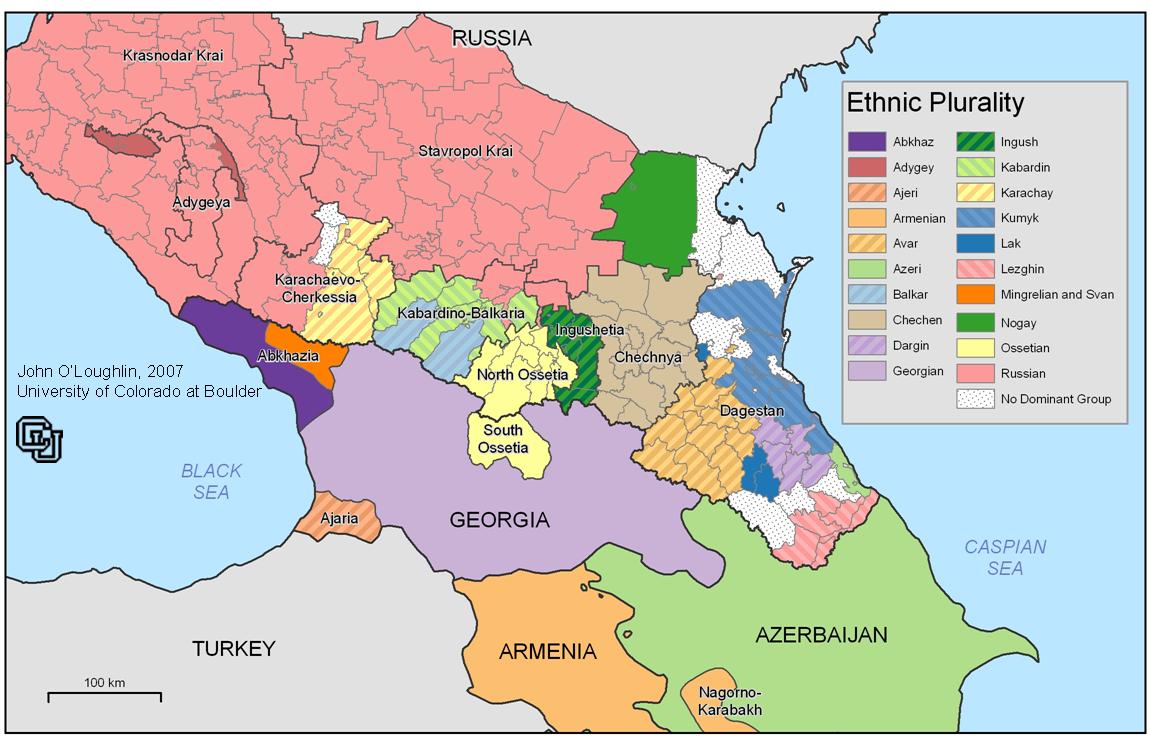
    If there were still any doubt about how far Russia would go to fight for its interests in the Caucasus, Azerbaijan need only look at Georgia, which is still reeling from Russia’s invasion last summer. It is the key transit state between Azerbaijan and Turkey, hosting two pipelines that bring oil and gas from the Caspian to Turkey. By attacking its small neighbor, Russia effectively warned not only Georgia but the whole neighborhood.

    But in recent months, Nabucco’s European supporters have started to get their acts together, and Azerbaijan has begun to take notice of that, too. In May, the EU signed a deal of its own with Azerbaijan, which committed to building energy and trade links directly with Europe. This was arguably a more valuable agreement than the one Azerbaijan later signed with Gazprom, which offered not money but only vague pledges that may or may not be met.

    Then, on July 13, beneath the crystal chandeliers of an Ankara hotel ballroom, the prime ministers of Turkey, Bulgaria, Romania, Hungary, and Austria signed a Nabucco treaty describing exactly how the pipeline would operate and how tariffs would be calculated. Several days after the announcement that Nabucco had hired Joschka Fischer, who is beloved by many in Turkey for his passionate support for its EU membership, Turkey had dropped a major demand that it had insisted on for months, and the path to the deal was cleared. This was a major breakthrough, and it led Natig Aliyev, Azerbaijan’s energy minister, to remark: “I am sure that the project will be realized successfully.” When that day comes, Azerbaijan will enjoy both higher prices for its gas and a lifeline to the West.

    Also in attendance in Ankara was Iraqi Prime Minister Nuri al-Maliki, whose country looks increasingly likely to play a large role in supplying Nabucco — possibly larger than that of Azerbaijan. By some estimates, Iraq could provide more than 500 billion cubic feet of natural gas per year by 2014, when Nabucco is expected to be up and running. All of the major players — Arab Iraqis, Kurdish Iraqis, and the Turks next door — want to see Iraqi gas heading north through Turkey and into Europe. Recently, a Hungarian and an Austrian energy firm, both Nabucco consortium members, made deals to take 10 percent apiece in the $8 billion Pearl Petroleum gas project in Iraqi Kurdistan. It now seems distinctly possible that a pipeline named after Nebuchadnezzar, the ancient ruler of Babylon, might ultimately owe its success to Iraq.

    When Gerhard Schröder signed on with Gazprom in 2005, the smart money in the gas war was on Moscow. Now that picture is changing, if slightly. There is a sense that the Kremlin overplayed its hand both in the gas shut-offs to Ukraine and in the Georgia war last summer. Indeed, U.S. Vice President Joe Biden recently echoed this view of Russia’s energy power play. “[Russia’s] actions relative to essentially blackmailing a country and a continent on natural gas, what did it produce?” he pointed out. “You’ve now got an agreement [Nabucco] that no one thought they could have.” At the same time, the global recession has hit Russia particularly hard, and Gazprom’s profits fell 84 percent in the fourth quarter of 2008, making it Russia’s biggest debtor, rather than the world’s biggest company, as it once bragged it would become.

    And Nabucco’s European supporters finally seem to be taking their own side in this fight. They now have a heavyweight rainmaker in Fischer, who is going toe to toe with his old boss Schröder in the struggle for influence in the path of the pipelines. The recent EU agreement with Azerbaijan and the fanfare-laden treaty signing in Turkey are contributing to the sense that Europe is leveling the playing field with Russia. “We have started to confound the skeptics, the unbelievers,” European Commission President José Manuel Barroso said in July. “Now that we have an agreement, I believe that this pipeline is inevitable rather than just probable.”

    And yet, if recent experience teaches anything, it is not to count Russia out, especially when so much is at stake. When I raised this issue with Russian Energy Minster Sergei Shmatko at a meeting in Bulgaria in April, he shot me a threatening glare and cautioned against planning for an energy future without Russia, unless the Europeans were fully prepared to deliver it. “We have an expression in Russia,” Shmatko told me. “Don’t sell the skin off a bear before you kill it.”
  • Turkish Company Says Abkhaz Risks Too High

    Turkish Company Says Abkhaz Risks Too High

    24 August 2009

    Reuters

    ISTANBUL —The Turkish operator of a tanker that was seized by Georgian authorities for delivering fuel to breakaway Abkhazia said Friday that he had given up the idea of sending any further supplies to the Black Sea territory.

    Georgia has passed legislation that forbids commercial traffic heading to Abkhazia in an attempt to isolate the territory, which was recognized by Moscow as independent after a five-day war between Georgia and Russia last August.

    Abkhazia has threatened a “proportionate response” to the Georgian blockade, which it says is aimed at suffocating it. The operator’s statements suggested that Tbilisi’s actions might be working.

    “The risks are too high now. We take cargo from one place to another, legally, and we don’t want to deal with illegal actions such as these,” said Huseyin San, general manager of the tanker operator Densa, whose company had been making regular trips to the Abkhaz port of Sukhumi to deliver fuel.

    Georgia says the tanker was picked up in Georgian territorial waters, but San said Georgia had intercepted it in international waters off Turkey before taking it to the Georgian port of Poti.

    San said the Georgian authorities had made no announcement of their intention before the seizure, which meant that they might have breached the ship’s right to pass freely through international waters.

    Under Georgian law, foreigners risk prosecution if they enter Abkhazia or another breakaway region, South Ossetia, without permission from Tbilisi.

    Some Abkhaz officials say the policy is simply pushing Abkhazia closer to Russia, which already controls Abkhazia’s borders and patrols its coastline.

    Abkhazia’s economy minister, Kristina Ozgan, said Thursday that Abkhazia would import 500 tons of diesel from Russia to compensate for the tanker’s detention.

    Georgia said Friday that the fate of the ship, its cargo and crew were in the hands of the courts. Local media reports have suggested that the cargo could be confiscated and auctioned.

    San says he will open an international court case citing the United Nations Convention on the Law of the Sea if authorities try to unload the ship and sell its $3 million to $4 million worth of gasoline and diesel.

    San, who said he had spoken with the captain, currently being held with a crew of 13 Turks and 4 Azeris in Batumi, said everyone who was on board the ship was well.

    The captain faces up to 24 years in prison if found guilty of smuggling and violating the Georgian ban on unauthorized economic activity.

    On Thursday, the Georgian coast guard said it had detained a vessel carrying scrap metal from Abkhazia. It was operating under a Cambodian flag.

  • FALSIFIERS OF TURKISH-ARMENIAN CONFLICT

    FALSIFIERS OF TURKISH-ARMENIAN CONFLICT

    There is not a day when some Armenian activist somewhere around the country is not deliberately defaming and demonizing Turks, Turkish-Americans, Turkey, and even friends of Turkey. This is done by signs, blogs, letters, talks, films, panels, exhibitions, indoctrination summer camps, and/or a combination of these and other vehicles. Why?

    If the Armenian claims are so truth, so watertight, so slam dunk, why such passionate, radical, sometimes even fanatic behavior, which is known in the past, to have led to Armenian terrorism victimizing ordinary citizens?

    Do you see the Irish going around and bombing British facilities to have the potato famine acknowledged?

    Do you see the Jews going around and bombing German installations to have the Holocaust recognized?

    Do you see Japanese bombing American owned buildings to have the Japanese internment admitted?

    What is wrong with Armenians? Especially those who still revere Armenian terrorists (like the notorious Lisbon Five ?)

    And those who never condemn Armenian terrorism of the past 40+ years victimizing 70+ innocent men, women, and children, mostly of Turkish heritage, but some non-Turkish ones, too?

    ARMENIAN HYPOCRISY IN SUPPORTING TERRORISM

    What can one say in the face of an incredible hypocrisy that while all Armenians mourn the assassination of Hrant Dink in 2007 by a Turkish teenager, no Armenian will remember, much less mourn, the assassination in 1982 of the Turkish consul general, Kemal Arikan, by an Armenian teenager? Both victims were 52 years old, married, had teenage daughters, and killed by a teenager filled with hate by his elders. Why this double standard in the Armenian community? Why would they now acknowledge, much less condemn, more than 2000 acts of terrorism committed by brainwashed and fanatic Armenian youth?

    Armenian love to hate all things Turkish. So much so, that they even falsify the record of one of the most accomplished Turkish historians, Prof. Esat Uras, the founder of Turkish Armenianology. His 1000+ plus book “Armenians in History and The Armenian Question” still shines the brightest light into a dark chapter of history that is the Turkish-Armenian conflict. You know what Armenian propagandists call him? Pan-Turkish ideology and former Turkish secret service agent. Give me a break!

    If it were this simple to defame a man’s personality, character, and lifelong career, then the Armenian lobby would have nothing to do today, as there is not anyone in the contra-genocide camp, yours truly included, that the Armenian did not call Turkish government agent, someone paid by Turkish interests, lobbyist, propagandist, or similar. Such intimidation, harassment, and even veiled threats by Armenians, though, only help create only a bitter smile on our faces and more research, publications, and public education in return.

    Why do Armenian attack the doyen of Turkish historians, Prof. Esat Uras, so viciously? Because of many of his books? Yes. But perhaps more for what he wrote about Armenia and the Armenian identity:

    “Armenia cannot be anything other than simple memory based on geography, a region without political boundaries.”

    IS ARMENIAN HISTORY MOSTLY PROPAGANDA MADE IN GLENDALE ?The

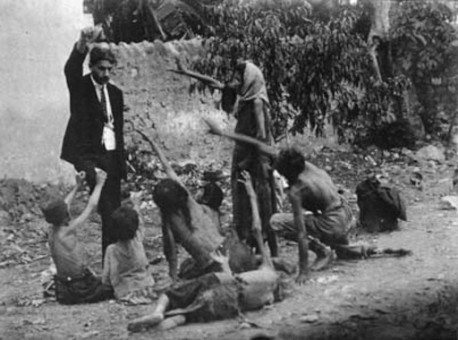
    Armenians prefer to call mountainous eastern Anatolia Armenia but they only lived there, scattered over a very wide territory and were always a small minority in the areas they lived. If communities can claim the right to every place they lived, then there would be thousands of countries as members of the United Nations today. Can Armenians claim California as their own just because they number 20% of Glendale and 10% of Fresno? Or Massachusetts because 5 % of some town there is Armenian?

    Armenians were also furious with what Center for Strategic Research, a think tank in Ankara that is similar to Hudson Institute in Washington DC, wrote in “Armenian Claims & Historical Facts”:

    “It is certain that the Armenians did not originate in Armenia (Eastern Anatolia highlands) not did they live there for three to four thousand years as claimed. They put forward these ideas merely to support their claim that the Turks drove them out of a homeland in which they lived for thousands of years. But these claims cannot stand up the facts.”

    Armenians still think they can humiliate Turks and destroy Turkish history with falsifications, fabrications, and deception. They still think they can implement an apartheid on Turkish soil, where a tiny minority would be allowed (by the powers east and west) to rule over a majority of non-Armenians. They still think they can pressure, harass, and eventually destroy Turkey. Then again, Armenians are not exactly known for their sound thinking. They also think that a tail can wag the dog.

    The most shocking of all is that some American institutions of higher education would allow themselves to become a vehicle used by directly/indirectly-paid-Armenian-agents and/or direct/indirect beneficiaries of the Armenian-financed-genocide-industry (Akcam, Gocek, et.al.) to promote Armenian version of history.

    “…Armenians further claim that they were the people of Urartu which existed in Anatolia starting about 3000 BC. This claim has no basis in fact. No form of the name Armenian was found in any inscription in Anatolia dating from that period, nor was any similarity at all between the Armenian language and that of Urartu, the former being a satem group of Indo-European languages while the latter was similar to Ural-Altaic languages. Nor were there any similarities between their cultures. There is, therefore, absolutely no evidence at all to support the claim that the people of Urartu were Armenian…”

    Source: “Armenian Claims & Historical Facts”, Center for Strategic Research, Ankara (A think-tank like Hudson Institute in Washington DC.)

    ARMENIAN NARRATIVES ARE PARTI PRIS, SELECTIVE, AND UNTRUSTWORTHY

    So, much of poses to be serious writings in academic journals about modern Armenian history, produced by academics like C.J. Walker, well known for his passionate support of the Armenian cause, are parti pris, discriminatory, and unreliable.

    It is the Armenian-financed and/or supported genocide scholars who have an interest in cover up, distortion, secretive reviewing of data, falsification, fabrication, and deception, and who do not seek to discover or explain the situation as it really was.

    The Karabagh territory historically belongs to Azerbaijan. Armenians relocated there by Tsarist Russia in accordance with the long standing Russian policy of substitution of Muslims of Caucasus (by killing or expelling) by reliable elements (Armenians and others.)

    Armenians are newcomers and colonists even in the eastern Anatolian highlands. The ancestors of Armenians arrived there in the 6th century BC and actually destroyed the Urartians. The three so called 5th century historians, Buzand, Khorten, and Yeghiske, are non-existent and the works attributed to them are non-credible para-historic texts.

    Armenian propagandists are busy defaming and demonizing the Turkish identity, promoting the false Armeniological school, which corrupts and distorts Turkish history in accordance with the Armenian designs.

    SEVEN ARMENIAN OR ARMENOPHILE SCHOLARS IN TROUBLE

    Armenians are so intolerant to dissent and responsible opposing views that if you do not tow the official Armenian party line in telling the Armenian history, you will be declared an enemy of the Armenians even if your career is spent in appeasing them. If you don’t believe me, ask these scholars: Nina G. Garsoian, Ronald Grigor Suny, Robert W. Thomson, Richard G. Hovannisian, James R. Russel, Peter S. Cowe, Alina Ayvazian, Simon Payaslian, and others.

    Can you believe the Armenian fanatics? These seven scholars spent a life time trying to appease the Armenian propagandists but just because they question the Armenian identity or homelands, they were “nixed”. If I were any one of these seven scholars, I would definitely avoid Armenian functions in the next… uh… 195 years. Armenian fanatics are in no mood to see any of these seven scholars or the scholars will “get it”. The Armenian hoodlums made derogatory videos about them and posted them in youtube. These seven scholars are “shish kebab” now as far as the Armenian thugs are concerned. You see what I mean?

    Ronald Grigor Suny is the holder of the first Alex Manoogian chair in Modern Armenian History in the Univ. of Michigan. In other words, he is as “partyline” as you can possibly get to the Armenian version of history. In his book “Looking Towards Ararat: Armenians in Modern History” , 1993, page 4-5, he writes this:

    “…The national consciousness of Armenians about their identity is nothing but a collection of beliefs…”

    Now if I say this, Armenians falsifiers and their Turk-hating stooges are quick to label me Turkish-government agent, paid-lobbysist, genocide denier, blah…blah…blah… But look who is saying it?

    Let’s continue with the writings of this Armenian-propagandist-turned-instant-Armenian-enemy:

    “…The present Armenian people are a product of natural intermingling of different ethnic groups…

    The ancestors of Armenians were invaders of Armenian (eastern Anatolian) highlands who have migrated to Armenia in the 6th century BC…”

    Source: Same book, page 7. Wow!

    Again, if I uttered these words, columnists kissing Armenian (you know what) would walk all over each other to call me names. Sorry to disappoint them but one cannot argue with facts, can one?

    Fasten your seatbelts for this one:

    “…The Armenian-Turkish conflict was provoked by the Armenian nationalists in order to overtake Turkish Anatolia and the Turkish side simply reacted…”

    Source: Ronald Grigor Suny, “Nation Making, Nation Breaking: The End of the Ottoman Empire and the Armenian Community”, 1996, page 3.

    Forgive me, your honor, you majesty, your high and mighty genocide scholar of the 17th order, but isn’t that exactly what I have been writing all these years? If what I was subjected to by the Armenian falsifiers and Turk-haters is any indication, then this poor Ronald Grigor Suny is in serious trouble. Who knows, Armenian terrorists might bomb his house, too, just like they did UCLA’s Prof. Stanford Shaw’s house in 1977 for saying the same things. Ah, but in those days, who knows, people like you, Ronald Grigor Suny, ridiculed Prof Stanford Shaw and ignored his freedom of speech, didn’t you?

    Well, what do you know, now you are in the same spot as Prof Stanford Shaw was in 1977! You are not exactly a (so called) genocide denier, but you deny worse: you deny Armenian identity and homeland. (Don’t you love it? Does this thing get any better than this?)

    Finally, there is this:

    “…The Turkic-Azeris are the direct descendants of the Caucasian Albanians and the territory of Karabakh historically belonged to (Azeris)…”

    Source: Ronald Grigor Suny, “Looking Towards Ararat: Armenians in Modern History” , 1993, page 193

    Thank you, Ronald Grigor Suny, the Armenian-propagandist-turned-instant-Armenian-enemy. Who is going to save you from the Armenian Revolutionary federation now?

    Lesson of the day: Truth rules, sooner or later.

  • CIA mock executions alleged in secret report

    CIA mock executions alleged in secret report

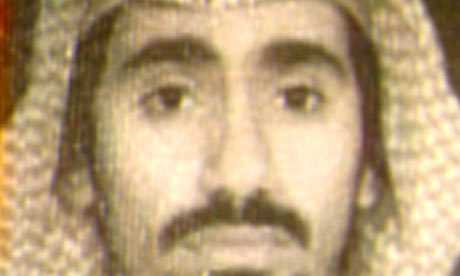
    Julian Borger, diplomatic editorAbd al-Rahim al-Nashiri, al-Qaida's chief of operations for the Persian Gulf and a suspected mastermind of the USS Cole bombing in October 2000, is now in U.S. custody. (AP Photo/ABC World News Tonight, HO).

    Abd al-Rahim al-Nashiri, al-Qaida’s chief of operations for the Persian Gulf and a suspected mastermind of the USS Cole bombing in October 2000, is now in U.S. custody. (AP Photo/ABC World News Tonight, HO).

    The CIA will come under some of its toughest scrutiny for years tomorrow with the publication of a report detailing the agency’s use of mock executions, and the possible appointment of a special prosecutor to investigate its detention policy.

    The alleged abuses all took place under the Bush administration but some intelligence officials are arguing that the pendulum has now swung too far in the other direction, and congressional preoccupation with the CIA’s past misdeeds is hindering its current operations.

    The report was drawn up in 2004 by the CIA inspector general, John Helgerson, and kept secret until now. According to leaks in the US press over the weekend, it will say that CIA interrogators carried out mock executions to terrorise suspected terrorists into giving information.

    In one case, Abd al-Rahim al-Nashiri, suspected of playing a role in the bombing of the USS Cole in 2000, was threatened with a gun and a power drill. In another case, a gun was fired in a room next to a detainee who was being questioned, to convince him a fellow detainee had been killed. Threatening a detainee with summary execution is a violation of US law.

    The reports come weeks after the CIA’s admission that it had considered the use of hit squads to target senior al-Qaida leaders around the world, loosely inspired by the Israeli Mossad assassination teams that tracked down and killed Arabs believed to have been responsible for the murder of Israeli athletes at the 1972 Munich Olympics. It also emerged that private contractors were hired to take part in the CIA programme. Although the programme was cancelled because of legal and logistical misgivings before any assassinations were carried out, the revelations have added to the CIA’s embarrassment.

    Barack Obama’s administration has been reluctant to open an investigation but pressure from Democrats in Congress and human rights groups has been fuelled by the revelations. The attorney general, Eric Holder, is now reported to be contemplating the appointment of a prosecutor to look into the allegations contained in the Helgerson report, as well as detainee deaths in CIA custody.

    The new wave of scrutiny of the intelligence services has been compared to the Senate’s Church committee investigations in the mid-1970’s which uncovered widespread abuses including assassination plots against foreign leaders and espionage against American citizens. The Church committee was credited with cleaning up an agency that had run amok, but after the 9/11 attacks it was retrospectively blamed for over-regulating the CIA, rendering it institutionally cautious and unable to infiltrate hostile countries or terrorist groups.

    The new CIA director, Leon Panetta, who has brought some of his predecessors’ excesses to the attention of Congress, warned this month that the political wrangling over the past could distract the agency from its key task.

    “The CIA no longer operates black sites and no longer employs ‘enhanced’ interrogation techniques,” Panetta wrote in the Washington Post. “Yet my agency continues to pay a price for enduring disputes over policies that no longer exist.”

    Vincent Cannistraro, a former CIA official, said that “the pendulum on intelligence has swung from one side to the other.”

    “The clandestine capability that was arduously built up is already weakened through bureaucratisation, potential congressional hearings and investigations motivated by partisan political concerns,” Cannistraro said.

    Robert Baer, another former CIA officer, disagreed, arguing the need for accountability was paramount.

    “It’s the appearance of illegality that keeps running through this as a watermark,” Baer said. “You can’t just say let’s put this behind us.” “In the meantime clandestine intelligence will be bypassed by military action with all the drawbacks of limited oversight and lack of clandestine refinement.”

    Source:  www.guardian.co.uk, 23 August 2009

  • Turkey’s Energy Politics

    Turkey’s Energy Politics

    The Southeast Europe Project invites you to a

    forum

    Turkey’s Energy Politics:

    Neither East nor West

    with

    Gulnur Aybet, Lecturer in International Relations, University of Kent at Canterbury (UK) and Southeast Europe Policy Scholar

    Tuesday, September 1, 2009

    2:00 – 3:30 p.m.

    5th Floor Conference Room

    RSVP acceptances only [email protected]

    For directions visit www.wilsoncenter.org/directions

    All events, unless otherwise noted, are held at the:

    Woodrow Wilson Center

    1300 Pennsylvania Ave., NW

    Washington, DC 20004

  • Jewish Sanhedrin rabbis unite with Turk on common cause

    Jewish Sanhedrin rabbis unite with Turk on common cause

    WorldNetDaily Exclusive

    TROUBLE IN THE HOLY LAND
    What? Muslim leader wants Temple rebuilt
    Jewish Sanhedrin rabbis unite with Turk on common cause

    Posted: August 05, 2009, © 2009 WorldNetDaily

    With the Middle East still in chaos and rumors of war in the air, the idea of rebuilding the Jerusalem Temple on a foundation occupied and administered by Islamic militants might seem fanciful – even preposterous.

    But the author of a new book, “The Islamic Antichrist: The Shocking Truth About the Real Nature of the Beast,” returned from Turkey recently with news that a prominent Islamic teacher and best-selling author and Jewish Sanhedrin rabbis are hoping to do just that.

    In a column penned in WND today, author Joel Richardson reveals the historically unprecedented development.

    Adnan Oktar, who uses the pen name of Harun Yahya, is a controversial but highly influential Muslim intellectual and author with more than 65 million of his books in circulation worldwide. Oktar recently met with three representatives from the re-established Jewish Sanhedrin, a group of 71 Orthodox rabbis and scholars from Israel, to discuss how religious Muslims, Jews and Christians can work together on the project.

    “The objectives of the alliance include waging a joint intellectual and spiritual battle against the worldwide growing tide of irreligiousness, unbelief and immorality,” explains Richardson, who met in Turkey with Oktar. “But even more unusual is their agreement with regard to the need to rebuild the Jewish Temple, a structure that Mr. Oktar refers to as the ‘Masjid (Mosque)’ or the ‘Palace of Solomon.’”

    An official statement about the meeting has been published on the Sanhedrin’s website. Concluding the statement is the following call:

    “Out of a sense of collective responsibility for world peace and for all humanity we have found it timely to call to the World and exclaim that there is a way out for all peoples. It is etched in a call to all humanity: We are all the sons of one father, the descendants of Adam, and all humanity is but a single family. Peace among Nations will be achieved through building the House of G-d, where all peoples will serve as foreseen by King Solomon in his prayers at the dedication of the First Holy Temple. Come let us love and respect one another, and love and honor and hold our heavenly Father in awe. Let us establish a house of prayer in His name in order to worship and serve Him together, for the sake of His great compassion. He surely does not want the blood of His creations spilled, but prefers love and peace among all mankind. We pray to the Almighty Creator, that you harken to our Call. Together – each according to his or her ability – we shall work towards the building of the House of Prayer for All Nations on the Temple Mount in peace and mutual understanding.”

    Oktar explained his vision for the rebuilding of Solomon’s Temple to Richardson:

    “The Palace of Solomon is a historically important palace and rebuilding it would be a very wonderful thing. It is something that any Jew, a Christian or a Muslim should welcome with enthusiasm. Every Muslim, every believer will want to return to those days, to experience those days again and, albeit partially, to bring the beauty of those days back to life.”

    Joel Richardson and Adnan Oktar meet together in Istanbul July 21, 2009

    Oktar added that the Temple of Solomon “will be rebuilt and all believers will worship there in tranquility.” During his meeting with the Sanhedrin Rabbis, Oktar expressed his belief that the Temple could be rebuilt in one year:

    “It could be done in a year at most. It could be built to the same perfection and beauty. The Torah says it was built in 13 years, if I remember correctly. It could be rebuilt in a year in its perfect form.”

    Richardson later met with Rabbi Abrahamson and Rabbi Hollander, two of the Sanhedrin representatives who conferred with Oktar. Regarding the rebuilding of the Temple, Rabbi Hollander explained, “The building of the Temple is one of the stages in the Messianic process.” But another possibility that has been presented is that the Dome of the Rock that sits so prominently on the Temple Mount be used as “a place prayer for all nations.”

    Do you prefer reading e-books? “The Islamic Antichrist” is also available in electronic form at reduced price through Scribd.

    “This should be fairly simple,” explained Rabbi Hollander. “It is said that the structure of the Dome in Haram E-Sharrif (the Temple Mount) was originally meant by (Caliph) Omar to be a House of Prayer for Jews, and the Al-Aqsa for Muslims.”

    However, he also explained that religious Jews would not be able to enter the Dome of the Rock unless it had first been ritually cleansed according to Jewish halakhic regulations.

    This is not the only similar call to rebuild the Jewish Temple, points out Richardson. Yoav Frankel is an Orthodox Jew who has been deeply involved in interfaith dialogue with Muslims and also envisions a shared Temple Mount. The Interfaith Encounter Association is working on a project called “God’s Holy Mountain.” It sees the day when the rebuilt Jewish Temple will exist side by side with the Dome of the Rock.

    Richardson sees such plans tying in to Barack Obama’s calls for internationalizing the city of Jerusalem.

    A recent poll showed nearly two-thirds of Israelis back the idea of rebuilding the Temple.

    “Meanwhile, the work of the Temple Institute, a group that has openly dedicated itself for years to rebuilding the Jewish Temple goes on,” writes Richardson.

    It has already created many of the most significant priestly utensils and pieces of furniture necessary for the Temple once it is ready.

    “The suggestion of rebuilding the Jewish Temple is deeply significant to Christians, particularly those who are students of Bible prophecy,” explains Richardson. “According to the Bible, an impostor messiah known as the Antichrist will someday invade the land of Israel and ‘set himself up’ in the ‘God’s Temple.’”

    Richardson’s book focuses on the striking parallels between the Bible’s prophecies about the coming messiah and Islam’s traditions regarding the one called “the Mahdi” – Islam’s primary messiah figure, who will one day invade the land of Israel and establish his seat of authority on the Temple Mount.

    Richardson’s book stands in stark contrast to most other popular prophecy books of the last 40 years.

    The student of Islam and the Middle East says that after decades of reading popular prophecy books and even best-selling fiction like the “Left Behind” series, millions of evangelical Christians around the world are expecting the Antichrist to emerge from a revived Roman Empire, which many have assumed is associated with the Roman Catholic Church and the European Union.

    Not so, argues Richardson. His book makes the case that the biblical Antichrist is one and the same as the Quran’s Muslim Mahdi.

    “The Islamic Antichrist” is almost certain to be greeted in the Muslim world with the same enthusiasm as Salman Rushdie’s “The Satanic Verses.” The author, Joel Richardson, is prepared. He has written the book under a pseudonym to protect himself and his family.

    “The Bible abounds with proofs that the Antichrist’s empire will consist only of nations that are, today, Islamic,” says Richardson. “Despite the numerous prevailing arguments for the emergence of a revived European Roman empire as the Antichrist’s power base, the specific nations the Bible identifies as comprising his empire are today all Muslim.”

    Richardson believes the key error of many previous prophecy scholars involves the misinterpretation of a prediction by Daniel to Babylonian King Nebuchadnezzar. Daniel describes the rise and fall of empires of the future, leading to the endtimes. Western Christians have viewed one of those empires as Rome, when, claims Richardson, Rome never actually conquered Babylon and was thus disqualified as a possibility.

    It had to be another empire that rose and fell and rose again that would lead to the rule by this “man of sin,” described in the Bible. That empire, he says, is the Islamic Empire, which did conquer Babylon and, in fact, rules over it even today.

    Many evangelical Christians believe the Bible predicts a charismatic ruler, the Antichrist, will arise in the last days, before the return of Jesus. The Quran also predicts that a man, called the Mahdi, will rise up to lead the nations, pledging to usher in an era of peace. Richardson makes the case these two men are, in fact, one in the same.

    His book was an instant best-seller on the Amazon charts when it debuted Tuesday. It remains No. 1 in two religion categories.

    Source:  www.wnd.com, August 05, 2009