Month: July 2009

  • Neo-Nazi bomb factory man guilty

    Neo-Nazi bomb factory man guilty

    White Supremacist Terrorist Neil Lewington

    A white supremacist has been convicted of terrorism and explosives offences, and faces years behind bars.

    Neil Lewington was arrested by chance on a train on his way to strike his first blow in his racist war against the “non-British”.

    The neo-Nazi, who turned his bedroom into a bomb factory, was also trying to perfect tennis ball bombs which he could throw at the homes of Asians.

    He was found guilty at the Old Bailey of having explosives with intent to endanger life and preparing for acts of terrorism.

    Lewington, 43, an unemployed electrician who lived with his parents in Tilehurst, Reading, Berks, had denied all eight charges brought under the Terrorism Act and explosives laws.

    He was convicted of seven counts.

    Guardian

  • MoD may face hundreds of new torture claims

    MoD may face hundreds of new torture claims

    The inquiry into the death of Baha Mousa while held by the British Army begins tomorrow, with lawyers registering more claims of abuse
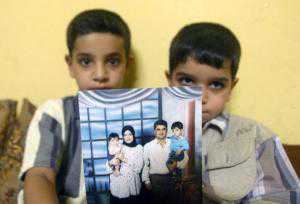
    The Ministry of Defence faces the threat of hundreds of claims for alleged abuse and torture of Iraqi civilians by British soldiers. Lawyers say emerging evidence of abuses, including use of electric shocks, points to a systematic policy of sensory deprivation, sleep deprivation and beatings throughout the occupation of Basra, which must have been authorised by senior officers or politicians and known to hundreds of soldiers. Some 20 Iraqi civilians last week began a fresh round of legal cases claiming human rights abuses against the Ministry of Defence.


    Sir William Gage will tomorrow begin his inquiry into the death of Baha Mousa, a recently widowed 26-year-old hotel worker and father of two small children, who was beaten to death by British soldiers while in custody in Iraq in 2003.

    Mr Mousa’s family, including his father, Dawood Mousa, a former colonel in the Iraqi army, and other civilians who were arrested and beaten at the same time, will travel to London to attend the proceedings in September. Mr Mousa said yesterday: “The questions still remain: Who? And Why? I am eager for this inquiry… we want to know who killed Baha and whether what was going on was part of a wider policy.” He said he hoped “it will not be a whitewash” and that he was “speechless”

    when he was not allowed to take part in a military tribunal.

    The MoD has already paid compensation for the death of Mr Mousa, who had 93 separate injuries on his body, although no soldier has been convicted for the killing. Seven soldiers did face court martial in 2006, but only one was convicted of inhumane treatment and sentenced to a year in prison. Corporal Donald Payne pleaded guilty after appearing in a one-minute video, shown at the court martial, in which internees could be seen forced to hold “stress positions” while wearing hoods.

    Hooding was one of five techniques outlawed by the British government in 1972. The others were stress positions – where suspects are forced to squat in positions that become painful – sleep deprivation, constant noise and refusal of food and water. But it is emerging that the practices continued until last year; it is unclear when the ban was overturned, or by whom.

    The latest cases – some of which are detailed below and which arose during five years of British military operations in Iraq – have similar complaints. They say homes were raided early in the morning by up to 60 British soldiers, men were beaten with rifle butts, plasticuffed and dragged to detention facilities where they were beaten, blindfolded, forced to wear ear muffs, hold stress positions, refused food and drink and not allowed to go to the toilet.

    One man, Ali Nassih Mowannis, 24, claims wires were held to his tongue and feet and electric shocks administered. Another, Adil Abbas Fadhil Mohammad, says he was left hanging by handcuffs from a ceiling for an hour. Others say their wives or sisters were beaten, or they were stripped naked, while photographs were taken of them.

    The MoD was forced last week to concede a further inquiry into allegations that Iraqis were tortured and killed by the British after what become known as the battle of Danny Boy in Maysan Province in May 2004. The MoD had claimed – in a case brought by nine survivors – that they had not complained at the time. But at the High Court last week government lawyers were forced to concede the case following the discovery of an email that the nine had in fact complained to the Red Cross and an investigation had been ordered. A draft letter outlining the complaints had been drawn up to be sent to Tony Blair. It is not clear if the investigation was ever carried out or the letter sent.

    On Friday, Lord Justice Scott Baker condemned the MoD for its secrecy in the case and for making “partly false” statements in an effort to keep interrogation techniques secret under a public-interest immunity [PII] certificate. Until the MoD had demonstrated that “the whole content of such documents was scrupulously accurate” the courts should approach PII certificates from the MoD “with very considerable caution”, he said.

    Yesterday, Phil Shiner of Public Interest Lawyers in Birmingham, which represents many of the Iraqis, including Baha Mousa’s family, as well as the nine Danny Boy claimants in court last week, said: “There are hundreds of cases of Iraqi torture and abuse at British detention facilities… The systemic reasons for this are completely under explored.”

    Mazin Younis, of the London-based Iraqi League, which carries out initial interviews with claimants, said there were at least another 30 or 40 potential claims. If jurisdiction reached beyond British bases, that number would double, he added. “I absolutely believe there have been incidents from 2004 until 2008,” he said. “Thousands of soldiers have either witnessed abuse or co-operated in it. The stories are all very similar. The raid starts at home, they are kicked and beaten and hooded.”

    The MoD, which denies all allegations in relation to Danny Boy, said other cases had yet to be proven. In a statement, the armed forces minister Bill Rammell said: “Over 120,000 British troops have served in Iraq and the vast majority have conducted themselves with the utmost professionalism. All allegations of abuse are investigated… and where proven, those responsible are punished and complainants compensated. Allegations must not be taken as fact, and formal investigations must be allowed to take their course.”

    What the claimants say: ‘We were beaten… blindfolded… threatened with dogs… forced to strip’

    These are the allegations made in statements to British lawyers by some of the Iraqis seeking legal redress from the Ministry of Defence.

    Ali Nassih Mowannis, 24, arrested January 2006

    Ali was arrested with Nassih Mowannis Abdul-Ali, 45, and his teenage brother, Anwar, by 60 or 70 soldiers who raided their home at 2.30am. Nassih’s wife was forced to strip her baby naked. Jewellery and £12,500 was taken and never returned. All were blindfolded and earmuffed and beaten. Ali had electric shocks administered to his tongue and feet.

    Hussain Salman Muharib, 23, arrested April 2004

    Claims he was beaten with rifle butts after going outside in his pyjamas to investigate gunfire. His father was shot in the arm and his brother in the neck. He was dragged back into the house by 30 soldiers who beat his family, including his mother, sister and children. He was taken to a detention centre, beaten for 19 hours, forced to strip and parade in front of six or seven soldiers who photographed him on mobiles. Released without charge after three weeks.

    Mustafa Abdul Amir Haddada, 31, arrested March 2006

    Mustafa was woken by the sound of his door being kicked. As he investigated, it was blown in with explosives. He was injured by shrapnel, including a serious wound to his eye. Soldiers kicked and beat him and his wife. He was handcuffed and blindfolded. He was denied medical care, which led to the loss of his eye. Released without charge after one year and four months.

    Abbas Mowannis Abdul Ali, 34, arrested January 2006

    Abbas was arrested during a night raid on his home. He was hooded in front of his children and pushed down the stairs. In detention he was hooded, earmuffed and beaten. Also claims he was urinated on and at one point shot in the leg at close range with a rubber bullet. Released in September 2007 without charge.

    Badr Salman Muharib, 31, arrested twice, in April 2003 and April 2004

    On both occasions Badr was hooded and beaten. On the first occasion he was released after 19 days with an apology. On the second he was repeatedly dragged across the ground, forced to strip and bend backwards and forwards while soldiers took photographs of him.

    Adil Abbas Fadhil Mohammad, arrested March 2006

    A night guard, Adil was approached by British troops, beaten and arrested while on duty. Repeatedly beaten and threatened with dogs. At one point he was forced to stand on a wobbly table, with cuffs tied to a hook on the ceiling. He could reach the table only on tiptoe. When it fell over he was left hanging from the ceiling for half an hour and beaten. He was later stripped and had his penis pulled. Tricked into believing he had been taken to Guantanamo Bay. Released without charge after 48 hours.

    Tarek Hassan, 22, arrested April 2003

    Detained by British forces during a raid on his family home. The soldiers were looking for Tarek’s brother, Khadim, a high-ranking Ba’ath party official, and said they would hold Tarek until Khadim turned himself in. Four months later Tarek’s body was found in the desert north of Baghdad. He had been shot eight times and his hands were tied with plasticuffs commonly used by British and US soldiers. Khadim is now seeking an inquiry at the European Court.

    Kammash family, arrested April 2007

    The family home was raided, and six men, including 70-year-old Jabbir Kammash, were arrested, hooded and handcuffed and beaten. Jabbir was released after a day with his son, and his other son four days later. The other three were held for several months, deprived of sleep, forced to go without clothes and sexually humiliated.

    Muslim Abbod Mohammed and Najim Abbod Mohammed, arrested August 2006

    The claimants were arrested at 2.30am by 20 soldiers and beaten so severely Najim’s arm was broken. More than once he was dragged by his broken arm. Muslim was forced to stand in the sun for two hours in a stress position and had stones thrown at him. Both were deprived of sleep through banging and by pornographic films played loudly. Both released without charge after almost a year.

    Moayaad Jabbar Ibrahim, Imad Oraibi Abdulla Al-Iqabi, Ali Jabbar Hassan, arrested August 2003

    The three were beaten for 30 minutes in their homes and in front of children so severely one lost consciousness. They say soldiers smelled of alcohol. Released the following day and received a letter of apology.

    Andrew Johnson

    The Independent
  • Israel soldiers speak out on Gaza

    Israel soldiers speak out on Gaza

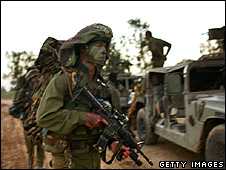
    A group of soldiers who took part in Israel’s assault in Gaza say widespread abuses were committed against civilians under “permissive” rules of engagement.

    The troops said they had been urged to fire on any building or person that seemed suspicious and said civilians were sometimes used as human shields.

    Breaking the Silence, a campaign group made up of Israeli soldiers, gathered anonymous accounts from 26 soldiers.

    Israel denies breaking the laws of war and dismissed the report as hearsay.

    “We were told soldiers were to be secured by fire-power. The soldiers were made to understand that their lives were the most important, and that there was no way our soldiers would get killed for the sake of leaving civilians the benefit of the doubt,” said one soldier in the report.

    “People were not instructed to shoot at everyone they see, but they were told that from a certain distance when they approach a house, no matter who it is – even an old woman – take them down,” said another.

    Many of the testimonies are in line with claims made by human-rights organisations that Israeli military action in Gaza was indiscriminate and disproportionate.

    Amnesty International has accused both Israel and Hamas of committing war crimes during the 22-day conflict.

    Israeli officials insist troops went to great lengths to protect civilians, that Hamas endangered non-combatants by firing from civilian areas and that homes and buildings were destroyed only when there was a specific military need to do so.

    ‘Ill discipline’

    According to testimonies from the 14 conscripts and 12 reserve soldiers:

    • Rules of engagement were either unclear or encouraged soldiers to do their utmost to protect their own lives whether or not Palestinian civilians were harmed.

    • Civilians were used as human shields, entering buildings ahead of soldiers

    • Large swathes of homes and buildings were demolished. Accounts say that this was often done because the houses might be booby-trapped, or cover tunnels. Testimony mentioned a policy referred to as “the day after”, whereby areas near the border were razed to make future military operations easier

    • Some of the troops had a generally aggressive, ill-disciplined attitude

    There was incidents of vandalism of property of Palestinians

    • Soldiers fired at water tanks because they were bored, at a time of severe water shortages for Gazans

    • White phosphorus was used in civilian areas in a way some soldiers saw as gratuitous and reckless

    • Many of the soldiers said there had been very little direct engagement with Palestinian militants

    The report says Israeli troops and the people who justify their actions are “slid[ing] together down the moral slippery slope”.

    “This is an urgent call to Israeli society and its leaders to sober up and investigate a new the results of our actions,” Breaking the Silence says.

    Israel said the purpose of the 22-day operation that ended on 18 January 2009 had been to end rocket fire from Gaza aimed at its southern towns.

    Palestinian rights groups say about 1,400 Palestinians died during the operation. Thirteen Israelis died in the conflict, including 10 soldiers serving in Gaza.

    According to the UN, the campaign damaged or destroyed more than 50,000 homes, 800 industrial properties, 200 schools, 39 mosques and two churches.

    Investigations

    Reacting to the report, Israeli military spokeswoman Lt Col Avital Leibovich said:

    “The IDF [Israel Defence Forces] regrets the fact that another human rights organisation has come out with a report based on anonymous and general testimony – without investigating their credibility.”

    She dismissed the document as “hearsay and word of mouth”.

    “The IDF expects every soldier to turn to the appropriate authorities with any allegation,” Lt Col Leibovich added. “This is even more important where the harm is to non-combatants. The IDF has uncompromising ethical values which continue to guide us in every mission.”

    There have been several investigations into the conduct of Israel’s operation in Gaza, and both Israel and Hamas, the Palestinian militant group that runs the territory, have faced accusations of war crimes.

    An internal investigations by the Israeli military said troops fought lawfully, although errors did take place, such as the deaths of 21 people in a house that had been wrongly targeted.

    UN Secretary General Ban Ki-moon has requested more than $11m (£7m) in compensation from Israel for damage to UN property in Gaza. A limited UN inquiry blamed Israel in six out of nine attacks on UN facilities, resulting in casualties among civilians sheltering there.

    Meanwhile, a fact-finding team commissioned by the Arab League concluded there was enough evidence to prosecute the Israeli military for war crimes and crimes against humanity, and that “the Israeli political leadership was also responsible for such crimes”.

    It also said Palestinian militants were guilty of war crimes in their use of indiscriminate rocket attacks on civilians.

    BBC

  • London protest today/Uighur People of London

    London protest today/Uighur People of London

    LONDON:

    Host:
    Uighur People of London
    Date:
    Wednesday, July 15, 2009
    Time:
    12pm
    Location:
    Chinese Embassy
    Street:
    49-51 Portland Pl, London, W1B 1JL
    Email:
    [email protected]

    Facebook Information: ent.php?eid=127436610785&ref=mf

  • Media ponder ‘energy chess game’

    Media ponder ‘energy chess game’

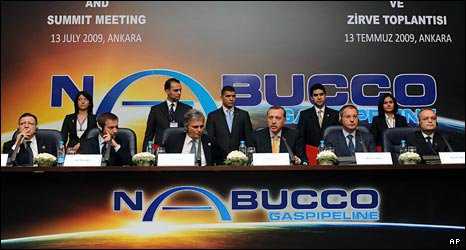
    Turkish writers were pleased about the Nabucco gas pipeline deal signed by Turkey, Austria, Hungary, Bulgaria and Romania on Monday in Ankara. They saw it as placing their country in an excellent position strategically, particularly with regard to Europe.

    But a commentator in one Turkish paper, as well as writers in several Romanian dailies, wanted to know from where the gas for the pipeline would come. This point was also not lost on Iran’s hard-line daily Hezbollah, which believes Europe will have to approach Iran.

    Further east, commentators wondered whether Russia’s rival pipeline project, South Stream, would now be scrapped.


    SAMI KOHEN IN TURKEY’S MILLIYET

    The inter-governmental agreement on Nabucco that was signed in Ankara yesterday deals a new “strategic card” to Turkey… through this project Turkey once again shows that it acts as a bridge between the East and West… This strengthens Turkey’s hand in international relations, particularly regarding Europe.


    ISMAIL KUCUKKAYA IN TURKEY’S AKSAM

    If the Nabucco project is realised and the gas to be carried by this pipeline can be found, our country will further strengthen its “strategic importance” in the eyes of the West. This “new move” by the European Union and US against Russia in the “energy chess game” will bring very important developments politically in terms of the Middle East and Caucasus.


    FATIH ALTAYLI IN TURKEY’S HABERTURK

    A big pipeline is being built in order to reduce Europe’s dependency on Russian gas. But it is not clear who will provide gas for this pipeline. Iran has gas, but the US has prevented Tehran from joining Nabucco. Russia does not permit the countries in its backyard to participate. In the current situation, it seems that only half of the capacity of the pipeline will be used.


    IRAN’S HEZBOLLAH

    Many experts believe that the gas sources of Central Asia, the Caucasus and even Iraq are not enough to fulfil the demands of the European countries and Turkey for a year, and that sooner or later they must use Iran’s gas sources. That’s why the Turkish prime minister emphasised Iran’s presence during the signing ceremony.


    IRAN’S HAMSHAHRI

    Why should the situation be such that the head of a country, which is merely on the gas pipeline route, is at the focal point of the project; managing and hosting the contract and more importantly, feeling sorry for the second largest holder of gas reserves of the world, i.e. Iran and talking about lobbying to include Iran?


    RAZVAN CIUBOTARU IN ROMANIA’S COTIDIANUL

    Politically, the deal is an indisputable success. However, beyond the jubilation of a good start, the Ankara deal is still only just on paper and does not eliminate the competition represented by the rival South Stream plan initiated by Russia.


    ELIZA FRANCU IN ROMANIA’S GANDUL

    Russia controls all the resources in the region – not only its own but also those of its former satellite states. Or, when it does not have this control, it has the money to buy it. By overpaying for Azeri gas, Russia left this project without any supplier.


    FLORENTINA CIOACA IN ROMANIA’S ADEVARUL

    The fact that Nabucco project is a priority for the European Union does not solve the main problem: the lack of gas supply.


    UKRAINE’S GAZETA PO-KIYEVSKI

    It is all too obvious that Europe and Asia want an end to threats with the “gas club”. What can you expect? Moscow should not have displayed it so insistently.


    UKRAINE’S EKONOMICHESKIYE IZVESTIYA

    Observers suggest that Azerbaijan will blackmail Europe with gas sales to Russia, and Russia with co-operation with Europe.


    UKRAINE’S DELO

    There is still a high likelihood that Russia, which is not interested in alternative supplies, will have an influence on Turkmenistan’s decision to co-operate with Nabucco.


    AZERBAIJANI’S ZERKALO

    Moscow’s attempts to hinder the implementation of this project… have failed. Baku expressing its readiness to participate in the Nabucco project, and also Turkmenistan’s statement that it is ready to consider this project as a way to diversify supply routes for its gas, can be viewed as the failure of Moscow’s plans to hinder the construction of this gas pipeline.


    AZERBAIJAN’S YENI MUSAVAT

    The signing ceremony in Ankara can be viewed as the start of a new stage in the years-long geostrategic struggle for Caspian energy.


    COMMENTARY ON BELARUSIAN RADIO

    The latest major foreign policy failure – and the re-orientation of Azerbaijan and Turkmenistan towards Nabucco cannot be described in any other way – is entirely due to the short-sightedness of the Russian gas monopolist, which aims only at making immediate profits.


    RUSSIA’S VEDOMOSTI

    In the game between Nabucco and South Stream, the EU team has gone forward into the next round. The state of play might still change, but Gazprom’s goals seem less realistic than those of the European Union.


    MIKHAIL ZYGAR IN RUSSIA’S KOMMERSANT

    The US and Europe believe that the signing of the agreement will force Russia to give up South Stream… After the agreement was signed, it has become clear that Nabucco is significantly ahead of South Stream, owing to the fact that the project has the consolidated political support of practically the whole of Europe… Gazprom’s brainchild, South Stream, cannot boast such consolidated support.


    MIKHAIL SERGEYEV IN RUSSIA’S NEZAVISIMAYA GAZETA

    Gazprom’s refusal to purchase Turkmen gas in the amount agreed upon last year and the current total suspension of purchasing has forced Ashgabat to look for a substitute for Russia as the major buyer… Analysts say that the Turkmen-Iranian deals are bad news for Gazprom, which is losing its monopolistic position in the transit of gas from Central Asia.


    PAVEL ARABOV IN RUSSIA’S IZVESTIYA

    Nabucco has been officially launched in Ankara. If everything goes as planned, Europe will get a long-awaited gas pipeline bypassing Russia in four years’ time.

  • Anger China or defend Uighurs? Turkey walks fine line.

    Anger China or defend Uighurs? Turkey walks fine line.

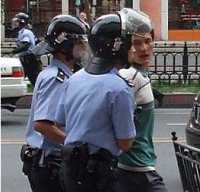
    Beijing urged Turkish Prime Minister Erdogan to retract his statement that China is committing “genocide” against its Muslim minority.

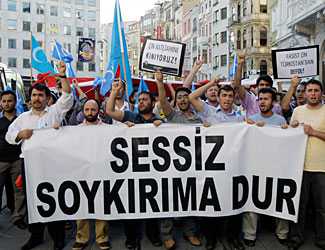
    Developments in China’s restive Xinjiang Province and the attacks against the minority Muslim Uighurs there may not have led to vocal protests in most of the Muslim world. But in Turkey, the events in western China have led to large protests in the streets and strong words from Turkish officials.

    The comment raising the loudest outcry has been Prime Minister Recep Tayyip Erdogan’s accusation last week that China is committing “genocide” against the Uighurs, a statement that Beijing is now pressuring him to retract.

    Experts say that taking its criticism of China too far could backfire on Ankara, which has been working to improve both its diplomatic and trade relations with Beijing.

    An estimated 184 people have died in the recent violent clashes between Uighurs and ethnic Han Chinese in Urumqi, the capital of Xinjiang. Chinese officials have claimed that most of those killed have been Han.

    Turkey’s minister of industry and trade, Nihat Ergun, last week called for a boycott of Chinese goods, while Mr. Erdogan, speaking on television last Friday, said: “The incidents in China are, simply put, tantamount to genocide. There’s no point in interpreting this otherwise.”

    Uighurs as ‘brothers’

    “There is a lot of sensitivity among the Turkish public about the Uighurs. They consider them as real brothers,” says Sami Kohen, a political affairs columnist for Milliyet, a Turkish daily.

    “Turks originally came from that part of Asia to Anatolia, and the language that Uighurs use is much closer to the language that Turkey speaks than others in Central Asia,” he continues.

    The Turkish president’s official flag, for example, has 16 stars on it, representing “Turkish states” established throughout history. One of the stars commemorates the Uighur state that existed around the 8th century.

    Adds Mr. Kohen: “There is quite a large Uighur community in Turkey, and they are quite strong. They have a lobby and they have been quite strong in defending their cause.”

    Turkey raises its global profile

    Turkey has, in recent years, been working to raise its foreign policy profile and establish itself as a regional political and economic power. Turkey’s president, Abdullah Gul, actually visited Urumqi as part of a recent state visit shortly before the violence broke out there. Turkey signed a reported $1.5 billion worth of trade deals during the visit.

    But analysts say Ankara’s criticism could lead to a rupture with Beijing.

    “The Turks really have a tough decision to make, whether they keep this going or back off. This is a major test for Turkey’s new foreign policy,” says Bulent Aliriza, director of the Turkey Project at the Center for Strategic and International Studies in Washington. “This is a serious problem for the Turks from every angle.”

    Ankara now also needs to decide if it will grant a possible request to visit Turkey by Rebiya Kadeer, a Uighur diaspora activist based in the United States whom China has accused of being behind the violence in Xinjiang.

    “All hell is going to break loose if she shows up in Turkey, especially after the comment that Erdogan made,” Mr. Aliriza says.

    Take it back, China says

    The Chinese government now appears to be pushing back against Turkey. A Tuesday editorial in the government-controlled English-language China Daily urged Erdogan to “take back his remarks … which constitute interference in China’s internal affairs.”

    Chinese Foreign Minister Yang Jiechi, in a phone conversation with his Turkish counterpart, blamed the violence in Xinjiang on “three evil forces,” state news agency Xinhua said, referring to “extremism, separatism, and terrorism.”

    For Turkey, which has had its share of domestic violence and terrorism, both from Islamic extremists and Kurdish separatists, these are not meaningless words.

    The Christian Science Monitor