Month: July 2009

  • Up to 169 aboard feared killed in Iran plane crash

    Up to 169 aboard feared killed in Iran plane crash

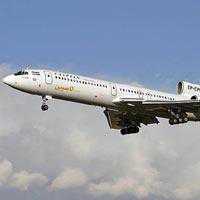
    TEHRAN (Reuters) – A passenger aircraft crashed in northwestern Iran on Wednesday and up to 169 people on board were feared killed, ISNA news agency reported.


    “153 passengers along with 16 crew were on the plane that crashed,” ISNA said, without giving a source.


    Earlier Iranian state television said that all 150 people on board had been killed.

    The Caspian Airlines aircraft was traveling from Tehran to Yerevan in Armenia when it came down at 11:33 a.m. (0703 GMT) near the city of Qazvin, the official IRNA news agency said.


    Iran’s English-language Press TV said in a scrolling news headline, “150 people on board crashed Iran plane believed dead.”


    A fire brigade official earlier told IRNA that everyone on board was killed. IRNA quoted an Iranian aviation spokesman as saying a the plane crashed 16 minutes after take-off from the capital’s Imam Khomeini International airport.


    (Editing by Louise Ireland)

    Reuters

  • Iran executes 13 Sunni Muslim rebels

    Iran executes 13 Sunni Muslim rebels

    Iran executed 13 members of a Sunni Muslim rebel group by hanging on Tuesday morning in a prison in the southeastern city of Zahedan, the country’s state news agency reported.

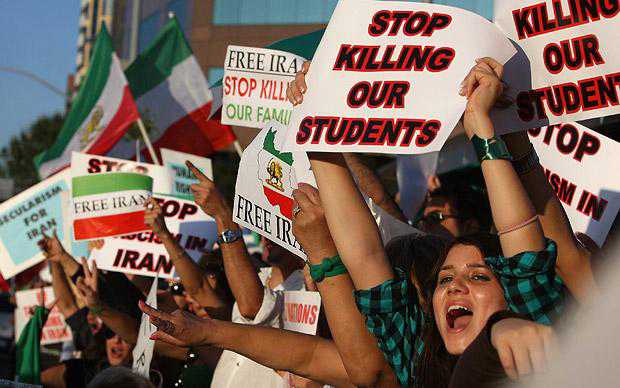
    Also on Tuesday an adviser to Mir Hussein Mousavi, the main challenger to President Mahmoud Ahmadinejad, said the opposition leader would soon form a political front, an umbrella group made up of reform-minded political parties to challenge hard-liners and push for democracy.

    Mr Mousavi will attend Friday prayers this week in his first official public appearance since last month’s disputed presidential vote, according to a newspaper report.

    The Etemad daily said the prayers at Tehran University will be led by Akbar Hashemi Rafsanjani, the former president and a rival of Mr Ahmadinejad and one of the four Friday prayer leaders in Tehran.

    The reformist Mohammad Khatami, another former president and supporter of Mr Mousavi, will also attend, the newspaper said.

    “Mousavi and Khatami will attend the prayers this week led by Rafsanjani. This will be their first public appearance in an official event after the (June 12) election,” said the daily, citing Mr Mousavi’s Facebook page. It also said Mr Mousavi had urged his supporters to attend the sermon.

    The country’s most powerful figure, Supreme Leader Ayatollah Ali Khamenei, upheld Mr Ahmadinejad’s landslide win in his Friday sermon one week after the vote. But Mr Mousavi has denounced the vote as rigged, saying the next government is “illegitimate”.


    14 Jul 2009

    Telegraph

  • CYPRUS- TRNC A VIGIL FOR FREEDOM

    CYPRUS- TRNC A VIGIL FOR FREEDOM

    CALLING ALL TURKS &FRIENDS OF TURKEY
    A VIGIL FOR FREEDOM OF TURKISH CYPRIOTS
    Sunday, July 19, 2009 / 6:00pm to Monday, July 20, 2009 / 12:00pm

    IN FRONT OF THE TURKISH EMBASSY, DC
    2525 Massachusetts Avenue, N.W., Washington, D.C 20008

    Assembly of Turkish American Associations (ATAA) is leading a VIGIL to respond to the extremist Cyprus Action Network of America (CANA). We will always be grateful to the Turkish Armed Forces for the Cyprus Peace Operation of July 20, 1974 which stopped the savage ethnic cleansing of the Turkish Cypriots by Greek Eoka guerrillas.

    Please contact us at 202.483.9090 or 240.888.2860 and let us know you are coming.

    What is happening to our Uygur brothers and sisters to day, has happened for years to Cypriot Turks and still happening.

    A look at the history of Cyprus, shows that it  was never a Greek island.
    1571-1878 Ottomans ruled, Turkish and Greek Cypriots lived in peace.
    1878 Britain took over the provisional administration.
    1914 Britain annexed Cyprus.Terrorist acts by Greeks started

    Statrting 1955,  the Cypriot Turks were subjected to increased repression, cruelties, intimidation by the terrorist organization EOKA. From 1955 to 1958 Turkish Cypriots were driven from the mixed villages, their houses were burnt.
    EOKA’s aim, supported both the extremist Greek Cypriots and Greece was to annihilate the Turkish Cypriots and achieve union (Enosis) with Greece.

    Turkey and the Turkish Cypriots resisted.
    1960 Republic of Cyprus was established based on the equality and partnership of the Turkish  and Greek Cypriots, with Turkey, Greece and Britain as guarantors.
    After 1960, the terrorist acts and ethnic cleansing by the Greek Cypriots, and EOKA continued and became worse.

    Nearly 30,000 Turkish Cypriots were forced from their homes and became refugees in enclaves which corresponded to 3% of the territory of Cyprus, whereas the Turkish Cypriot community previously inhabited on nearly 30% of the island. The refugees lived according to a UN statement in “veritable siege”. All necessities as well as utilities had to be brought in through the Greek Cypriot lines. The Greek Cypriots placed embargoes, control points and other restrictions on the enclaves which largely cut them off from the outside world. The UN moved in to supply a lifeline to the people in the enclaves.
    More than 100 Turkish Cypriot villages were destroyed, hundreds of Cypriot Turks were murdered, wounded, taken hostages. Many went missing.
    Greeks sent secretly 20,000 troops to the island with the aim of eventual take over of the island to realize Enosis, annexation to Greece.
    The world, especially Western Powers looked the other way.

    July 15,1974 there was a coup in Cyprus, a terrorist group took over the island’s government.
    Of the guarantor nations, Greece itself was instigating the coup, Britain refused to get involved.
    July 20, 1974, Turkey had no choice but to intervene militarily and started the Peace Operation in Cyprus.

    Around that time, US Ambassador to Cyprus, Rodger Davies and his aide were assassinated by Greek EOKA terrorists, one of the many  Greek terrorist acts against US and Turkish diplomats over the years.

    Since July 20, 1974 when the Turkish Armed Forces took over the Northern part of Cyprus and brought order to the island, there were no deaths, terrorist acts, coercion or ethnic cleansing in the island.
    Two communities live in peace, each separate with its own independent government and administration.
    In 1983 Turkish Republic of Northern Cyprus (TRNC) was established.
    In 2004 the Turkish Cypriots overwhelmingly voted for the Annan plan (unification of the island) and the Greek Cypriots overwhelmingly rejected it.

    However an unprecedented injustice against the Cypriot Turks continues to this day.
    In 1990 Greek part of Cyprus applied for membership in the European Union(EU). After intense lobbying and extreme propaganda, Greek part of Cyprus was accepted to EU in 1997, an unlawful, illegitimate, and unwise act by the EU making a federal settlement in the island impossible.

    Also since 1974 a most unfair and damaging embargo has been applied to Turkish Cyprus, with the objective to choke the Turkish Cypriots economically.
    To this day the embargo continues with its absurd and cruel rules.

    In 1974 The Washington Post reported that  “the Greek Cypriots wanted to be left alone to kill Turkish Cypriots, and the Turkish Republic put  a stop to that”

    The  Peace Operation led by the Turkish Armed Forces in 1974, is taught throughout American law school human rights classes  as one of few military operations in the world that have resulted in increased human rights and democracy.

    Oya Bain
    [email protected]

    Attachment(s)
    1 of 1 File(s)

    Vigil_TurkishCypriots-II.doc
  • Welsh Shepherd Does More for Armenian Cause than Most Armenians

    Welsh Shepherd Does More for Armenian Cause than Most Armenians

    sassun-2
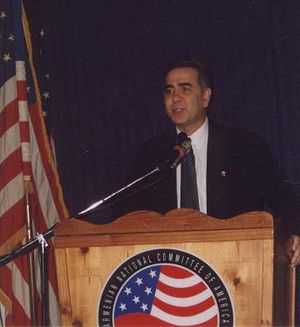
    Publisher, The California Courier
    Incredible, but true! Eilian Williams, a shepherd in Wales, has done more in support of the Armenian Cause than most Armenians, despite the fact that he is not related to Armenians by heritage or marriage. For all his good work, he has received no recognition and no appreciation. Most Armenians, except for a small circle in London, are neither aware of his existence nor his selfless efforts.
    His first involvement with Armenians began in 1998 when an Armenian acquaintance asked him to arrange for the Armenian Church Choir to perform in Eisteddfod, a Welsh Cultural Festival. This prompted him to form the “Wales Armenia Solidarity” group.
    On April 24, 2001, Mr. Williams organized the first Armenian Genocide commemoration in the Temple of Peace, located in Cardiff, Wales. He then succeeded in getting the National Assembly for Wales in October 2002 to officially recognize the Armenian Genocide and organized a special commemorative event in the National Assembly building, which was attended by Armenia’s Ambassador to the United Kingdom.
    Through his persistent efforts, the Gwynedd County Council in March 2004 became the first municipality in the UK to recognize the Armenian Genocide.
    In October 2004, Mr. Williams arranged for the Prime Minister of the Republic of Nagorno Karabagh (Artsakh) to be received by the Presiding Officer (Speaker) of the National Assembly for Wales, thus boosting the legitimacy of Artsakh’s statehood.
    Two years later, Mr. Williams was able to persuade the majority of the members of the National Assembly for Wales to support the Assyrian/Armenian Genocide Early Day Motion (EDM).
    In January 2007, he organized the Hrant Dink Commemoration in the British Parliament. He also lobbied for the Armenian Genocide Motion in the House of Commons which garnered the signatures of 182 Members of Parliament.
    On November 3, 2007, at the inauguration of the Armenian Genocide Monument in Cardiff, which Mr. Williams and John Torosyan helped organize, the Speaker of the National Assembly for Wales made scathing remarks about Turkey. Turkish hooligans tried to disrupt the solemn proceedings; several months later, they desecrated the Genocide Memorial.
    Over the years, I had followed with great admiration the unpublicized activities of this “odar” shepherd of Wales. However, I had no direct contact with him until last month, when I received from him the text of a new Early Day Motion that he had submitted to the British House of Commons. The Motion demands that Turkey return the more than 2,000 Armenian, Assyrian and Syriac churches and religious monuments confiscated by the Turkish government after the 1915 Genocide to the jurisdiction of their respective Patriarchates as “a measure of restitution.”
    The Motion further asks that the British government recognize the fact that these minorities were ethnically cleansed in the years following 1915, as was recently acknowledged by Turkish Prime Minister Rejeb Erdogan. The Motion has so far gained the support of 23 Members of the British Parliament.
    This Motion attracted my attention because in recent months, I have been advocating such an initiative through my columns and lectures. I was pleasantly surprised when the Welsh shepherd sent me an e-mail last month informing that he had decided to take this action after reading my columns and particularly the remarks I had delivered at the House of Commons on May 7.
    Armenian-Americans should follow the good example set by Mr. Williams and submit a similar resolution to the U.S. Congress. It would be practically impossible for any Member of Congress to oppose a motion that calls for the return of Armenian houses of worship to their rightful owner, the Armenian Patriarchate of Istanbul. Such a resolution would go beyond the mere acknowledgment of the Genocide, by seeking to restore some of the massive losses suffered by the Armenians.
    European Armenians should go even further by filing a lawsuit in the European Court of Human Rights, seeking a judgment for the immediate return of the churches and religious monuments to the Armenian Patriarchate. It is unconscionable that these Armenian churches — the ones not yet destroyed — have been converted to mosques, warehouses and living quarters, and no one is contesting this shameful state of affairs! One can imagine the worldwide outcry if today’s German government were still holding on to a single synagogue that was confiscated by the Nazis during the Holocaust!
    My hat off to Eilian Williams! I only wish that Armenians would emulate the righteous activism of this good shepherd whose efforts deserve proper recognition by the Republic of Armenia, the Church, and Armenians worldwide!
  • Ankara Promotes Closer Regional Integration in the Middle East

    Ankara Promotes Closer Regional Integration in the Middle East

    Ankara Promotes Closer Regional Integration in the Middle East

    Publication: Eurasia Daily Monitor Volume: 6 Issue: 133
    July 13, 2009
    By: Saban Kardas
     
    On July 8, Istanbul hosted the first joint ministerial meeting of the Gulf Cooperation Council (GCC)-Turkey strategic dialogue, which served to highlight the growing multi-dimensional ties between the country and the Middle East. Ankara has increased the frequency of bilateral meetings with the regional states, reflecting the intensification of its diplomatic activity in the Middle East, this has also witnessed the use of multilateral forums including the Arab League, GCC and the Organization of the Islamic Countries.

    Several high level meetings between Turkey and the GCC aimed at addressing regional issues or deepening economic cooperation facilitated this dialogue. The first step toward institutionalizing a multi-dimensional approach came in September 2008. After his meeting with the GCC ministers in Jeddah, the then Turkish Foreign Minister Ali Babacan said that both sides signed a memorandum of understanding to institutionalize their relations by launching the strategic dialogue process. “The establishment of the strategic dialogue is the first regular consultation process the GCC holds with third parties… [which will] bolster the deep-rooted friendship and brotherhood ties between us. We plan to advance our cooperation in the fields of politics, economics, defense, security and culture through regular high level consultations,” Babacan said. He justified the deepening Turkish involvement in the Persian Gulf region by stating that “Turkey is one of the first countries to be directly affected if instability erupts in the gulf region” (www.ntvmsnbc.com, September 3, 2008).

    The dialogue continued by holding the GCC-Turkey senior officials’ meeting in Istanbul on February 9-10, which prepared the groundwork for the latest meeting. Turkish Foreign Minister Ahmet Davutoglu co-chaired the meeting with his counterpart from Oman and the current president of the GCC ministerial council Yusuf bin Alawai bin Abdullah. The Secretary-General of the GCC Abdurrahman al Atiyyah as well as the other GCC foreign ministers also attended the forum. The visiting delegation met President Abdullah Gul and Prime Minister Recep Tayyip Erdogan (Anadolu Ajansi, July 8).

    The joint declaration issued after the meeting emphasized the parties’ determination “to anchor cooperation between them on a solid institutional basis,” evaluated the state of mutual cooperation in various areas and outlined future goals (www.mfa.gov.tr, July 8). In the economic sphere, the declaration noted that a framework agreement on cooperation was ratified and they would further explore, “the prospects of cooperation in the field of energy, including oil, gas, renewable energy and mineral resources.”

    The framework agreement was first signed in 2005 by the then foreign minister Gul (www.haber7.com, July 8). During his tenure as prime minister and earlier as foreign minister, Gul used his personal connections in the region skilfully, and played a key role in deepening Turkish cooperation with the region.

    After stressing the progress achieved in the Turkey-GCC free trade area negotiations, the declaration expressed the parties’ willingness to accelerate the process. In security affairs, both sides agreed to maintain dialogue in order to enhance military cooperation in areas of common concern, and emphasized the importance of maintaining their common position against terrorism and combating international piracy.

    A main element in the declaration focused on regional and international issues. Both sides emphasized that “all relations in the region should be based on full respect for the sovereignty, independence and territorial integrity of the countries of the region and the principles of non-interference in internal affairs, and friendly neighborly relations.” They exchanged opinions on regional challenges, including Iraq, the Iranian nuclear issue and Lebanon.

    Other items addressed by the declaration revealed the extent to which both sides are exploiting the platform to garner support to resolve bilateral issues. Ankara accepted the inclusion of the dispute over the three islands between Iran and the UAE. In return, the GCC supported Turkey in its effort to secure E.U. accession, as well as Ankara’s stance over the Cyprus question, the Xinjiang crisis and the Alliance of Civilizations initiative.

    The GCC countries recognize Turkey’s growing leverage in Middle Eastern politics and seek to achieve consensus with Ankara. The GCC members sympathize with Turkey’s policy of charting an independent foreign policy, and maintaining a balanced approach between Western policies in the region and the concerns of local countries on controversial issues. Indeed, Turkey and the GCC member states sought to coordinate their position on the diplomatic standoff over Iran’s nuclear program, developments within Lebanese domestic politics, the future of Iraq in the light of the American withdrawal and Palestine-Israel relations. Ankara values these ties in order to promote diplomatic support from the GCC countries in its bilateral issues and multilateral initiatives. For instance, during Turkey’s drive for U.N. Security Council membership, such connections worked to the country’s advantage.

    For its part, in addition to such shared political and strategic motivations, Turkey’s policies toward the Middle East are driven by substantial economic interests. Turkey wants to attract capital to boost its economic development. Moreover, Ankara has actively promoted forming a free trade area with the GCC, which it hopes will be accelerated through this dialogue.

    Ankara considers these flourishing ties as consistent with its new foreign policy doctrine, which emphasizes avoiding disputes with its neighbors and maintaining balanced relations with all stakeholders through multi-dimensional partnerships. Hence, Ankara wants to maintain dialogue with all the regional actors without antagonizing others. Although some had claimed that both sides might be an attempt to contain Iranian influence, Turkey and the GCC have carefully avoided giving any impression that their strategic dialogue represents an anti-Iranian axis in the region (www.asam.org.tr, September 9, 2008). Addressing this concern, Davutoglu emphasized during his press conference that this initiative was not “a new bloc or counter-bloc in the region. Rather it is a step toward deepening regional integration.” Al Atiyyah agreed saying, “the term ‘strategic’ should not irritate anyone. This strategic dialogue is a peaceful strategy to achieve further development and economic progress” (Star, July 8).
    https://jamestown.org/program/ankara-promotes-closer-regional-integration-in-the-middle-east/

  • Police fear far-right terror attack

    Police fear far-right terror attack

    • Extremists want to stoke race tensions, officer warns
    • Counter-terrorism unit diverting resources to threat
    • No specific intelligence of planned strike, sources say

    Vikram Dodd

    Scotland Yard’s counter-terrorism command fears that right-wing extremists will stage a deadly terrorist attack in Britain to try to stoke racial tensions, the Guardian has learned.

    Senior officers say it will be a “spectacular” that is designed to kill. The counter-terrorism unit has redeployed officers to increase its monitoring of the extreme right’s potential to stage attacks.

    Commander Shaun Sawyer told a meeting of British Muslims concerned about the danger to their communities that police were responding to the growing threat.

    Sawyer said of the far right: “I fear that they will have a spectacular… they will carry out an attack that will lead to a loss of life or injury to a community somewhere. They’re not choosy about which community.”

    He said the aim would be to cause a “breakdown in community cohesion”.

    Sawyer revealed that the Met commissioner, Sir Paul Stephenson, had asked the counter-terrorism command, SO15, to examine what the economic downturn would mean for far-right violence. The assessment concluded that the recession would increase the possibility of it.

    Sawyer told the meeting last Wednesday that more of his officers needed to be deployed to try to thwart neo-Nazi-inspired violence. He said the terrorist threat posed by al-Qaida remained the unit’s priority, but said of its far-right section: “It is a small desk … we need to grow that unit.” Sources have told the Guardian that while they believe the neo-Nazi terrorist threat has grown, they have no specific intelligence of an attack.

    “There is an increased possibility of violence from the far right. There is a trend,” said one senior source, adding that the ideology of the violent right was driven by “people who don’t like immigration, people who don’t like Islam. We’re seeing a resurgence of anti-semitism as well.”

    The meeting at which Sawyer spoke was staged by the Muslim Safety Forum, whose chair, Abdurahman Jafar, said: “Muslims are the first line of victims in the extreme right’s campaign of hate and division and they make no secret about that. Statistics show a strong correlation between the rise of racist and Islamophobic hate crime and the ascendancy of the BNP.”

    It is a decade since an extreme rightwing terrorist has used bombs to claim lives in Britain. In 1999, David Copeland struck three targets in London. His attack on a gay pub in Soho, London, killed three people and left scores injured. It followed attacks against the Muslim community in Brick Lane, east London, and the bombing of a market in Brixton, south London.

    The senior source said: “When Copeland attacked we did not have the religious tensions with the Muslim community. What kind of schism would a Copeland-type event cause now?”

    The far-right threat to Britain’s Jewish communities is monitored by theCommunity Security Trust, which says attempted terrorist violence by neo-Nazis has increased in the past few years. It says nine white men have been “convicted of offences involving explosives, terrorist plots, violent campaigns or threats to carry them out”.

    David Rich, of the CST, said: “There’s no one directing people, it’s a mindset” – a reference to the easy availability of extremist right-wing material and information about making bombs.

    Source: www.guardian.co.uk, 6 July 2009