Month: July 2009

  • Uighur Leader Raises New Accusations

    Uighur Leader Raises New Accusations

    By ANDREW JACOBS and MARTIN FACKLER Published: July 29, 2009

    In the weeks since ethnic bloodletting claimed nearly 200 lives in the northwest Chinese region of Xinjiang, the government has been waging a global propaganda war against Rebiya Kadeer, the exiled Uighur leader it accuses of instigating the violence.

    Yuriko Nakao/Reuters

    The exiled Uighur leader Rebiya Kadeer in Tokyo on Wednesday, where she leveled new accusations at the Chinese government.

    Related

    Times Topics: Rebiya Kadeer | Uighurs

    As a result, Ms. Kadeer, who spent more than four years in a Chinese prison and now lives in the United States, has emerged as the international face of the Uighur cause. On Wednesday, she ratcheted up the war of words during a visit to Japan, where she claimed that “nearly 10,000” Uighurs had disappeared “overnight” in Urumqi, the Xinjiang capital.

    “Where did they go?” she asked during a news conference, according to The Associated Press. “Were they all killed or sent somewhere? The Chinese government should disclose what happened to them.”

    Ms. Kadeer did not provide evidence to back up her assertion, which stands in stark contrast to government figures that place the numbers of those arrested at 1,200.

    But her comments infuriated China, which summoned Japan’s ambassador in Beijing to express “strong dissatisfaction” with the decision to grant her a visa.

    China’s Foreign Ministry demanded that Japan “take effective action to stop her anti-China, splittist activities.” The Japanese government declined to intervene, saying that Ms. Kadeer was visiting as a private citizen.

    The true story of what happened in Urumqi may never be known. But Ms. Kadeer’s and the Chinese government’s dueling, sometimes hyperbolic, accounts have sowed confusion and created an even wider chasm between the government and those pressing for greater Uighur autonomy.

    “This has become an exercise in influence-building and image management,” said Russell Leigh Moses, a Beijing-based analyst of Chinese politics. “As each side scrambles to push their version of events, the chances for dialogue are rapidly receding. Xinjiang could very well reignite, but instead of fire prevention, each party seems bent on trying to prove the other side is the one with the lighter fluid.”

    China has not minced words in its approach to Ms. Kadeer, 62, who heads the World Uighur Congress, which advocates for Uighur self-determination. Editorial writers, government officials and even normally staid diplomats have described her as “a terrorist” and “a criminal” who caused the death of 197 people, most of them Han Chinese. As proof, they cite a phone call she made to her brother in Urumqi shortly before the strife began, warning him to stay off the streets. Ms. Kadeer does not deny making the call but says she was just looking out for his safety.

    On Wednesday, Chinese officials delivered a DVD to the offices of The New York Times in Beijing titled “Xinjiang, Urumqi, July 5 Riots: Truth.” The 20-minute film, with versions in Arabic, Turkish, English and other languages, begins with idyllic scenes of Uighurs and members of other ethnic groups who inhabit the region and goes on to show graphic images of beatings that it says were “incited and controlled” by Ms. Kadeer.

    According to the state-run Xinhua news agency, the July 5 mayhem was orchestrated through text and e-mail messages. Gangs of killers, it said, were sent to 50 locations in Urumqi after protesters gathered at a downtown square to express anger over a brawl at a south China toy factory during which two Uighurs were beaten to death by Han Chinese co-workers.

    In the official accounting of how events unfolded on July 5, security officials described mysterious women in “long Islamic robes” who issued orders to the rioters. One woman, they said, even passed out clubs.

    Such assertions, however, are difficult to verify, and the government has yet to provide proof showing that Ms. Kadeer or her organization had a hand in planning the chaos.

    In recent weeks Ms. Kadeer has given a very different narrative. She says that most of the dead were Uighur, not Han, and that as many as 1,000 people were killed, many of them peaceful demonstrators shot dead by security officials who chased them down dead-end streets and opened fire after turning off street lamps.

    She has not provided evidence to back up such claims, saying to reveal her sources would put them in peril. Interviews with both Han and Uighur residents in Urumqi, however, have not yielded any witnesses who can corroborate such accounts.

    Ms. Kadeer’s next trip, to the Melbourne Film Festival in Australia, is sure to produce a fresh round of invective. A documentary about Ms. Kadeer’s life, which will be shown on Aug. 8, has already prompted three Chinese filmmakers to pull out of the festival. Last weekend, after a Chinese consular official told organizers to drop the film, the festival’s Web site was overrun by hackers, who replaced film schedules with a Chinese flag and slogans denouncing Ms. Kadeer.


  • Is Turkey preparing for peace?

    Is Turkey preparing for peace?

    Simon Tisdall

    Simon Tisdall guardian.co.uk, Tuesday 28 July 2009 16.30 BST

    There is much speculation about the government’s ‘Kurdish initiative’ and if it will be enough to end the long-running conflicT

    Recep Tayyip Erdogan may be about to deliver the biggest blow yet to the fraying ultra-nationalist legacy of Turkey’s founding father and first president, Mustafa Kemal Ataturk. But ironically given recent controversies, the prime minister’s anticipated demarche is not about advancing his supposed Islamist agenda. Instead it concerns the rights of Turkey’s 12 million-strong ethnic Kurd minority, which Ataturk did more than most to suppress.

    Erdogan’s confirmation last week that his government was working on a “Kurdish initiative” to finally resolve a conflict that has claimed 40,000 lives since 1984 has prompted furious speculation about what is in store. It followed similar comments earlier this year by Erdogan’s ally, President Abdullah Gul, who spoke of a “historic opportunity”, and by army chief Ilker Basbug, who characterised the Kurdish problem as a test of Turkey’s modernisation.

    Reports in Hurriyet and other Turkish media suggest the plan could include a general amnesty for Kurdistan Workers’ party (PKK) fighters, enhanced political, economic, language and educational rights, and the reinstatement of banned Kurdish names in south-eastern Anatolian towns. Article 5 of the anti-terror law, which has been used to imprison children for stone-throwing, is also said to be under review.

    Erdogan did not say when he would unveil his new strategy. But it is likely to come before 15 August, the date on which the jailed PKK leader, Abdullah Ocalan, has promised to launch his own “road map” for peace. The PKK has renounced its former aim of of an independent Kurdish state and recently extended a unilateral ceasefire until September. Ocalan, held in solitary confinement for the past 10 years on Imrali island in the sea of Marmara, is expected to offer suggestions on disarmament, political reintegration of PKK members, increased local government autonomy and the creation of a national “dialogue period”.

    Ocalan’s road map would present “a solid solution”, Hasip Kaplan of the Kurdish Democratic Society party (DTP) told Hurriyet. “The dialogue period should be initiated … The DTP is ready to contribute to the resolution of this problem,” he said. For his part, Erdogan has an uneven, stop-start record on the Kurdish issue. Although he appears committed, it remains unclear just how far he is prepared to go.

    Erdogan’s hesitancy is undoubtedly due in part to the fierce resistance emanating from the same conservative, secular opponents, civilian and military, who accuse him and his Islam-based Justice and Development party of secretly pursuing a religious agenda. “The prime minister has become a very serious risk for Turkey … as he prepares to divide Turkey under the guidance of the butcher of Imrali [Ocalan],” said Devlet Bahceli of the far-right Nationalist Movement party. Deniz Baykal of the Republican People’s party said Erdogan was bowing to EU and US pressure arising from human rights concerns and the stability of northern Iraq.

    These persistent internal tensions, illustrated by this month’s trial of two army generals allegedly linked to the “Ergenekon” coup ring and by last year’s uproar over lifting a university headscarf ban, have potential to derail Erdogan’s Kurdish initiative. Equally, if a peace process does take root, it will be seen in some quarters as undermining Ataturk’s ideal of a common people with a common language under a common flag.

    But times are changing and even Turkish statist diehards may have to change, too. As historian Andrew Mango points out in a new book published by Haus Publishing, From the Sultan to Ataturk, Ataturk was an authoritarian radical, wedded to a contemporary concept of the nation state and determined to raise his vision of a modern, secular Turkey from the ruins of the Ottoman empire. “His objective was to fashion a united Turkish nation out of the disparate Muslim groups inhabiting the country … until they joined the mainstream of the one existing human civilisation which happened to have its centre in the west.” Ataturk had no time for religion, Mango said, nor for separatists and minorities in any shape or form. In 1925, a Kurdish rebellion was brutally crushed and Ataturk’s cultural revolution accelerated.

    Eighty-six years after the Treaty of Lausanne, which brought Turkey into being, pressure grows inexorably for a loosening of the Ataturk straitjacket. “There is no doubt that identity policies adopted in the founding period of the Republic of Turkey reflect a notion of modernity that has caused much conflict and suffering and is today entirely out of touch with the spirit of the times,” said Sahin Alpay, writing in Today’s Zaman. “It is high time that Turkey adapt its identity policies to the age of human rights, democracy and respect for diversity.”

  • Spanish Suspected Bomb Kills Two Police Officers in Majorca

    Spanish Suspected Bomb Kills Two Police Officers in Majorca

    By Emma Ross-Thomas

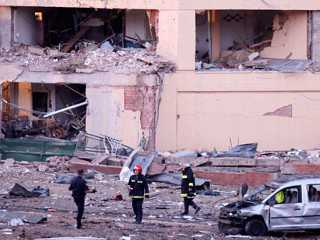
    July 30 (Bloomberg) — A suspected bomb killed two Civil Guards in Majorca, Spain, an official at the police force’s Madrid office said.

    “We don’t know if it was a car bomb or a backpack-bomb,” the official, who declined to be named in line with policy, said today in a phone interview.

    Yesterday, a bomb packed into a van exploded outside the family quarters of a police barracks in the northern Spanish city of Burgos, in an attack that the government blamed on the terrorist group ETA. Majorca is a major tourist destination for European visitors and is also where Spain’s royal family goes on holiday.

    ETA, whose initials in the Basque language stand for Euskadi ta Askatasuna, or Basque Homeland and Freedom, has been blamed for the deaths of more than 800 people in a four-decade campaign for an independent nation spanning the seven Basque- speaking provinces of Spain and southwestern France.

    Bloomberg

  • New Kurdish Leader Asserts Agenda

    New Kurdish Leader Asserts Agenda

    Joseph Sywenkyj for The New York Times
    Last week, a Kurdistan Democratic Party building in Sulaimaniya, Iraq, displayed a poster of Massoud Barzani in his youth, right.

    By SAM DAGHER
    Published: July 28, 2009
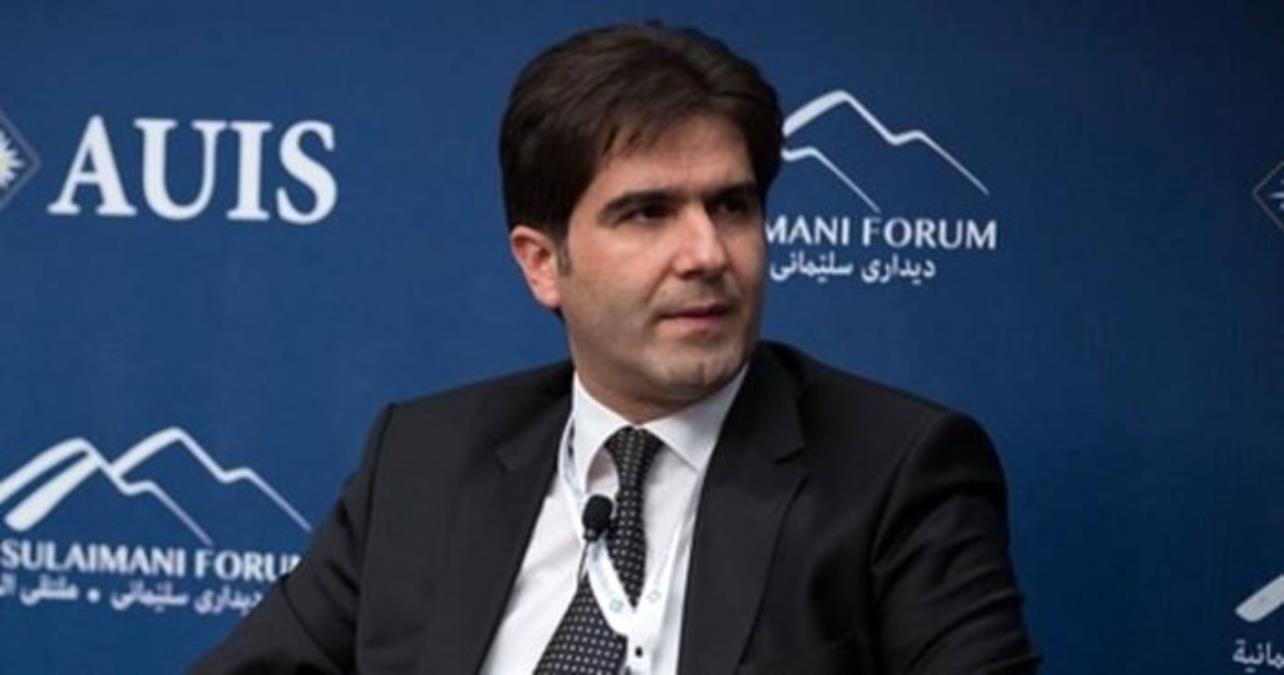
    ERBIL, Iraq – The president of the semiautonomous Kurdistan region, Massoud Barzani, on Tuesday rejected proposals by the United Nations to resolve Iraq’s explosive internal border disputes, and reiterated his determination to proceed with a contentious local constitution.

    Khalid Mohammed/Associated Press
    In Erbil, Iraq, supporters of Massoud Barzani, the Kurdish regional leader, on Sunday celebrated a projected election victory.

    Mr. Barzani, newly empowered after winning an estimated 70 percent of the vote in the region’s presidential and parliamentary elections on Saturday, made the remarks in his first interview with the news media since the vote.

    “Regrettably, the recommendations of the United Nations are unrealistic,” Mr. Barzani said, referring to a report by the United Nations in April outlining options for the settlement of territorial disputes that threaten Iraq’s fragile stability. They included making Kirkuk Province – including the oil-rich city of Kirkuk that is claimed by Kurds, Sunni Arabs and Turkmens – into an autonomous region.

    American officials have repeatedly stated their support for a United Nations-brokered solution.

    “We will not accept that the United Nations or anyone else present us with alternatives to Article 140,” he added, referring to the clause in Iraq’s national Constitution that calls for a census followed by a referendum to settle the fate of areas including Kirkuk.

    Tensions have been aggravated by the presence of Kurdish troops in parts of the contested areas. The situation worsened in June when the region’s Parliament, overwhelmingly controlled by the two governing parties, including Mr. Barzani’s party, the Kurdistan Democratic Party, approved a draft constitution that enshrined Kurdish rights to the disputed territories.

    Although the document states that the final demarcation of the region’s boundaries is subject to Article 140, it is unequivocal in its assertion that the disputed territories are inseparable from the “geographic and historic entity” called Iraq’s Kurdistan region.

    Mr. Barzani said one reason he agreed to put off a referendum on the regional Constitution that was to have been held during Saturday’s elections was a request this month from Vice President Joseph R. Biden Jr. and other American officials.

    “They asked if it was possible to postpone it because the timing was inappropriate,” he said.

    Mr. Barzani said he was determined to put the constitution to a referendum this fall. Such a move would place him on a collision course not only with the central government, which opposes the document in its current form, but also with a new Kurdish political coalition that did surprisingly well on Saturday.

    Shaho Saeed, a top official in the coalition, Gorran, said his movement filed a complaint this month with Iraq’s federal court in Baghdad that questioned the legitimacy of the process that the previous regional Parliament adopted to approve the constitution.

    Mr. Saeed said Gorran opposed the document because it gave powers to Mr. Barzani “that exceed the powers of Parliament and the judiciary.” Gorran wants the proposed constitution redrafted, he said.

    Although the region’s two governing parties, including the Patriotic Union of Kurdistan, retain a comfortable majority to form the next government, Gorran appeared to have clinched at least 25 of the new Parliament’s 111 seats, according to preliminary results.

    With the two parties expected to remain firmly in control of Parliament, Mr. Barzani said that no one has the two-thirds majority needed to redraft the document.

    “The new Parliament has no right to redraft the constitution,” he said. “It is over.”

    Mr. Barzani said he welcomed the emergence of an opposition movement like Gorran, but issued a warning to those who might interpret it as a loosening of the grip of the two parties that control the region’s security forces, economy and patronage network.

    “If any regional country or even Baghdad interferes in an internal matter, or any individual inside the region conspires against the region’s security and well-being,” he said, “actions will be taken in accordance with the law against those who want to undermine the unity of the Kurdish house.”

  • Ex-Armenian consul among five arrested

    Ex-Armenian consul among five arrested

    in alleged deportation-blocking scheme

    Norair Ghalumian and four others are accused of obtaining and selling letters from the consulate that allowed immigrants convicted of murder, robbery and other crimes to avoid deportation. By Anna Gorman and Alexandra Zavis
    July 29, 2009 Five people, including a former Armenian consul, have been arrested in alleged schemes to block the deportation of illegal immigrants convicted of murder and other serious crimes, federal immigration officials announced Tuesday.

    The defendants allegedly obtained letters from the Armenian Consulate in Los Angeles and then sold them — for as much as $35,000 each — to at least two dozen convicted criminals facing deportation, officials said. The letters, which were sent to U.S. Immigration and Customs Enforcement, said the Armenian government could not verify that the immigrants were citizens and therefore could not let them back into the country.

    • Counter-terrorism investigators find alleged identity theft ring

    Unable to deport the immigrants, U.S. officials were forced to release them. By law, the immigration agency cannot keep criminals in detention for more than six months beyond their prison sentences if deportation is unlikely.

    The immigrants who received the “letters of refusal” had been convicted of murder, attempted murder, robbery and other crimes, officials said.

    “It’s a great scheme,” said Jennifer Silliman, deputy special agent in charge of the immigration agency’s Los Angeles office. “You have got these career criminals, many of whom are violent, circumventing the system and essentially buying themselves a place in the United States.”

    Grigor Hovhannissian, Armenia’s consul general in Los Angeles, said he and others within the Armenian government were committed to cooperating with U.S. authorities in the ongoing investigation.

    “It is in our vital interest to sort this out,” he said. “It does tremendous harm to the prestige of our country.”

    Hovhannissian said his predecessor, Norair Ghalumian, had not been part of the government for several years but allegedly was handling consular duties on his own.

    “Outside of his professional duties, he may have been offering services that were totally illegal,” he said.

    Ghalumian, 52, was consul from 1999 to 2003, according to U.S. officials. The other defendants included Hakop Hovanesyan, 54, a former employee of the consulate; Margarita Mkrtchyan, 41, a Beverly Hills attorney; Oganes Nardos, 36, a substance abuse counselor; and Elvis Madatyan, 47, who owns an auto body business and a bakery.

    All five appeared in court Tuesday afternoon to face federal charges of obstructing immigration proceedings. Four were ordered released on bonds ranging from $50,000 to $200,000 and told to return to court Aug. 17 for a preliminary hearing. Nardos’ detention hearing was continued until Aug. 7 because of questions about whether he entered the country fraudulently. If convicted, each could be sentenced to five years in federal prison.

    “These defendants endangered the safety and security of United States residents,” U.S. Atty. Thomas P. O’Brien said in a statement.

    The defendants’ family members, gathered at the courthouse in Los Angeles, expressed disbelief about the charges.

    “I am shocked,” said Ghalumian’s wife, Katarine Simonian. “A lot of people know him as a very honest person.”

    The immigration agency began its investigation about two years ago and used undercover agents to contact the defendants and obtain the illicit letters. All five people were allegedly carrying out the same scheme but were not part of a larger criminal organization, officials said.

    Immigration authorities executed search warrants at various locations, including Mkrtchyan’s Glendale residence, Hovanesyan’s travel agency and Nardos’ residence, and left with refusal letters and official stationery from the consulate. Immigration officials have identified some of those who received the letters and said they could face federal criminal charges.

    Although the letters in this case were allegedly obtained fraudulently, there are thousands of immigrants across the country with legitimate letters of refusal. They have served time for crimes and been ordered deported but are still here because the U.S. cannot get passports or visas for them. Among them are Armenians born in the former Soviet Union, Palestinians born in refugee camps and Africans from countries whose international borders have shifted.

    [email protected]

    [email protected]

  • Moscow Market Crackdown Strains Turkish-Russian Trade Relations

    Moscow Market Crackdown Strains Turkish-Russian Trade Relations

    Moscow Market Crackdown Strains Turkish-Russian Trade Relations

    Publication: Eurasia Daily Monitor Volume: 6 Issue: 144
    July 28, 2009
    By: Saban Kardas
    As Russian Prime Minister Vladimir Putin prepares to visit Turkey in early August, new items are being added to his agenda. In addition to energy projects, bilateral trade issues, caused by recent problems encountered by Turkish exporters, will occupy a large part of his itinerary. The Russian government’s crackdown on the Cherkizovsky market in Moscow in early June added a new dimension to Turkish-Russian trade issues.

    Russian anti-smuggling teams raided the Cherkizovsky market, confiscating thousands of containers for further examination, and shut it down. The charges against the traders included violations of consumer safety and sanitation codes as well as immigration rules. The incident cost countless jobs, many of whom are foreigners including Chinese, Vietnamese and Turkish traders, and created tension between Russia and China where most of the goods originated (www.russiatoday.ru, June 29; Anadolu Ajansi, July 1).

    Why the Russian government decided to close the Cherkizovsky market, after allowing it to flourish for twenty years, remains unclear. Prior to the crackdown on the market, Putin complained about the failure of the anti-smuggling mechanism, and signaled his readiness to strengthen the fight against smuggling (Cihan, June 29).

    The Turkish press speculated that Putin used these allegations as a pretext to punish the owner of the market, the business mogul Telman Ismailov, for his recent investments in Turkey. In May, Ismailov opened a luxurious hotel in the Turkish city of Antalya, a frequent destination for Russian tourists, which is estimated to yield $1.4 billion annually for the local economy. Putin was reportedly angered by the lavish opening party in the context of the global financial crisis. Moreover, the Turkish press suggested that Ismailov’s decision to invest in Antalya was in defiance of Russian authorities’ advice to open the hotel in Sochi, which had further upset Putin (Radikal, June 10; Yeni Safak, July 13).

    In an interview to the Turkish press, Ismailov even expressed his desire to obtain Turkish citizenship (Yeni Safak, May 25), which also negatively affected his reputation in Russia. He did not officially file an application, but changes to the Turkish citizenship code around the same time eased the conditions for citizenship on exceptional grounds, such as for foreigners investing in Turkey (Hurriyet, June 11).

    However, the Turkish press initially preferred to present the market crackdown as a measure against Ismailov, downplaying the broader context of the developments in Russia. Last week, its coverage of the crisis took a new turn. Several reports highlighted the “plight” of Turkish businessmen who were affected in the midst of this crisis caused by Russia’s internal competition. Hundreds of Turkish firms are believed to sell textile, leather and other goods, by registering them and paying the necessary fees at this market first, before they are further distributed within Russia. Turkish businessmen claimed that, due to the ongoing Russian anti-smuggling investigation, they cannot retrieve their goods from storage facilities. Many criticized Russia’s treatment of the Turkish businessmen as unfair, and compared it to the “customs crisis” between Ankara and Moscow, which has continued for more than one year (Cihan, July 25). Some Turkish businessmen, however, support these Russian actions and maintain that this was long overdue. In their view, the smugglers in the market were creating unfair competition for the traders who were operating legally (www.turkrus.com, July 27).

    The growing protests from the Turkish business community exerted pressure on the Turkish government to protest officially to Russia. Turkish Energy Minister Taner Yildiz, who is also the co-chair of the Russian-Turkish joint economic council, described this development as an internal Russian affair, and stressed that this issue was not raised in bilateral contacts with Russia (Cihan, July 27). His Russian counterpart, Igor Sechin visited Turkey last week to hold talks with Yildiz and the Turkish Prime Minister Recep Tayyip Erdogan ahead of Putin’s visit to Turkey in early August.

    Nonetheless, the State Minister responsible for Foreign Trade Zafer Caglayan issued a written statement, which described Russia as a major trading partner and noted that the under-secretariat for foreign trade had formed a commission to investigate the claims of Turkish businessmen and explore new marketplaces in Moscow. Although Caglayan recognized that the decision of the Russian authorities did not directly target Turkey, given the volume of Turkish goods in the market, he stressed that this did indirectly affect the country. However, the figures released by Caglayan contradicted those which appeared in earlier press reports. Whereas the Turkish press maintained that as many as 5,000 businesses were affected by the market crackdown, Caglayan said that only 200 were owned by Turks. Moreover, Caglayan noted that only 10 percent of the total goods sold in the market were of Turkish origin (www.ihlassondakika.com, July 27).

    Caglayan also signaled that he might raise this issue with Russian officials in order to protect the rights of the Turkish businessmen in accordance with the Russian and international rules. Moreover, he added that these problems and the “customs issue” will be on the agenda when Putin visits Turkey next month.

    A highly busy schedule awaits Putin in Turkey, most importantly over future cooperation in energy projects. Despite Ankara’s signing of the Nabucco treaty, Turkey is still pursuing joint investments with Russia in nuclear power, and other gas transportation projects. Turkish exports to Russia were damaged by the new customs regulations imposed by Russia prior to the Georgian war in August 2008. Russia and Turkey reached a deal in September 2008 to simplify customs procedures for Turkish goods, but Ankara claimed that Moscow has not complied with the agreement. The problem was not resolved during President Abdullah Gul’s and Yildiz’s visits to Moscow earlier this year. Although Russia was confirmed as Turkey’s main trading partner, its reluctance to resolve such issues remains a constant source of tension between both countries. More importantly, the timing of those “commercial” crises provides justification over the speculation that Russia is exploiting Turkey’s economic and energy dependence to punish Ankara for its political decisions.

    https://jamestown.org/program/moscow-market-crackdown-strains-turkish-russian-trade-relations/