Month: July 2009

  • ARMENIAN LOBBY TRYING TO STOP TURKISH LOBBY

    ARMENIAN LOBBY TRYING TO STOP TURKISH LOBBY

    From:Center for Armenian Remembrance <[email protected]>

    Petition Against Six Denialist Corporations

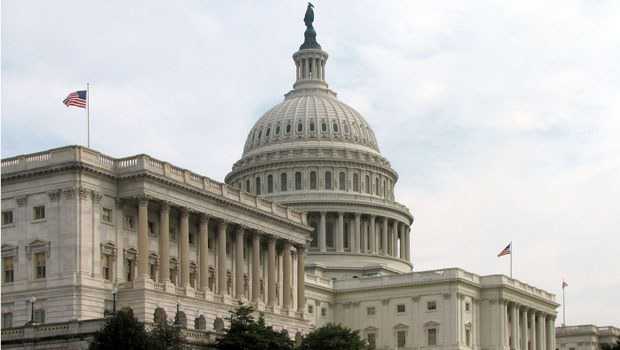
    It has come to light that, contrary to their public statements of being good corporate citizens and champions of human rights, six American and British mega-corporations have been secretly lobbying the United States Congress not to recognize the Armenian Genocide.

    In the American system, it is customary for corporations to lobby Congress only on taxes and trade rules related to their specific businesses. It is however highly unusual and downright shameful for corporations to do the bidding of their foreign clients.

    BAE Systems Inc., Goodrich Corp., Northrop Grumman Corp., Raytheon Co., United Technologies Corp. and energy producer Chevron Corp are spending over a million dollars a week to lobby Congress.

    The world-wide Armenian community cannot match this level of expenditure. We can however raise our righteous voice by signing the petition below. The collected signatures will be hand delivered and emailed to the corporate heads and key stockholders of these companies.

  • Russia Offers Turkey a Role in Nabucco Rival South Stream

    Russia Offers Turkey a Role in Nabucco Rival South Stream

    MOSCOW (Reuters)-Russia has offered Turkey a role in its South Stream gas pipeline to Europe, Russian news agencies reported on Wedneseday, marking another attempt by the Kremlin to undermine the European Union’s rival Nabucco project. Deputy Prime Minister Igor Sechin, Russia’s top energy official, told Turkish Energy Minister Taner Yildiz that Turkey is welcome to participate in the South Stream project, which aims to transport Russian gas under the Black Sea through Eastern Europe to Austria and Italy. “We hope that the Turkish side will look at our offer and that we will cooperate further so that our offer is more attractive and clear to our partners,” S echin told reporters in Moscow after the meeting with Yildiz, the news agencies reported. He did not give details of what specific role Turkey could play in the planned South Stream pipeline, which in its current form does not cross Turkish territory. Yildiz said Turkey would review all the offers on the table, but added that Nabucco and South Stream were not rivals in Turkey’s understanding. “Not one of the projects are being looked at as competitors. Each one has its own course of development,” he said, Interfax reported. Sechin did not mince words, however, about the Russian offer’s goal of damaging Nabucco’s chances of success. Turkey is a crucial partner in the Nabucco project, which Europe is counting on to ease its energy dependence on Russia. Asked about the benefits of Russia’s offer over Nabucco, Sechin said: “The clear economic accounting, the coordination of all the factors, and the efficiency should clearly show which project is the best,” Itar-Tass news agency reported. On Monday, Russia dealt a heavy blow to the Nabucco project by securing supplies of Azeri gas, which has been identified as the main potential source for the EU-backed pipeline.
  • Biden: US Not Stand in Israel’s Way on Iran

    Biden: US Not Stand in Israel’s Way on Iran

    Published: July 5, 2009

    WASHINGTON (AP) — Vice President Joe Biden seemed to give Israel a green light for military action to eliminate Iran’s nuclear threat, saying the U.S. ”cannot dictate to another sovereign nation what they can and cannot do.”

    Israel considers Iran its most dangerous adversary and is wary of hard-line Iranian President Mahmoud Ahmadinejad, who just won a disputed re-election. He repeatedly has called for Israel to be wiped off the map and contends the Holocaust is a ”myth.”

    Israel and the U.S. accuse Iran of seeking to develop weapons under the cover of a nuclear power program. Iran denies that.

    ”Israel can determine for itself — it’s a sovereign nation — what’s in their interest and what they decide to do relative to Iran and anyone else,” Biden told ABC’s ”This Week” in an interview broadcast Sunday.

    ”Whether we agree or not. They’re entitled to do that. Any sovereign nation is entitled to do that. But there is no pressure from any nation that’s going to alter our behavior as to how to proceed,” Biden said.

    The government of Prime Minister Benjamin Netanyahu says it prefers to see Iran’s nuclear program stopped through diplomacy but has not ruled out a military strike.

    ”If the Netanyahu government decides to take a course of action different than the one being pursued now, that is their sovereign right to do that. That is not our choice,” Biden said.

    Asked about Biden’s comments, Adm. Mike Mullen, the chairman of the Joint Chiefs of Staff, said Sunday that the U.S. position on Iran and a military strike involves a ”political decision.”

    ”I have been, for some time, concerned about any strike on Iran. I worry about it being very destabilizing, not just in and of itself but unintended consequences of a strike like that,” Mullen said on CBS’ ”Face the Nation.”

    ”At the same time, I’m one that thinks Iran should not have nuclear weapons. I think that is very destabilizing,” he said.

    While most experts are in agreement that there’s a good chance Iran could have a usable nuclear bomb sometime during his presidency, President Barack Obama told The Associated Press in an interview Thursday, ”I’m not reconciled with that.”

    A nuclear-armed Iran, Obama said, probably would lead to an arms race in the volatile Mideast and that would be ”a recipe for potential disaster.” He said opposing a nuclear weapons capacity for Iran was more than just ”a U.S. position” and that ”the biggest concern is not simply that Iran can threaten us or our allies, like Israel or its neighbors.”

    Israel is also concerned about Iran’s close support for two of its most committed enemies, Hezbollah guerrillas in Lebanon and Hamas militants in the Gaza Strip.

    Obama said in May, after his first meeting with Netanyahu at the White House, that the Iranians had until year’s end to get serious about international talks on curbing their nuclear ambitions. ”We’re not going to have talks forever,” he said.

    But Obama sees movement on Israeli-Palestinian peace as key to building a moderate Arab coalition against Iran, while Netanyahu says dealing with the Iranian threat must take precedence over peacemaking with the Palestinians.

    Most experts believe that wiping out the Iranian nuclear program is beyond the ability of Israel’s military. In 1982 the Israeli air force destroyed Iraq’s nuclear reactor in a lightning strike. But Iran’s facilities are scattered around the country, some of them underground.

    Biden was asked in the interview that if the Israelis decide they need to try to take out Iran’s nuclear program, would the U.S. stand in the way militarily?

    ”We cannot dictate to another sovereign nation what they can and cannot do,” the vice president replied. ”Israel has a right to determine what’s in its interests, and we have a right and we will determine what’s in our interests.”

  • Inquiry into MI6 chief on Facebook

    Inquiry into MI6 chief on Facebook

    The Liberal Democrats are calling for an inquiry into whether the new head of MI6, Sir John Sawers, should be allowed to take up his post after his wife apparently published personal details and photographs on the Facebook website.

    Lady Shelley Sawers disclosed potentially compromising information, including the location of the London flat used by the couple and the whereabouts of their three children and of Sir John’s parents on the social networking site, The Mail on Sunday has reported.

    The details, which were removed after the newspaper contacted the Foreign Office, also revealed the couple’s friendships with actors Moir Leslie and Alister Cameron.

    Lady Sawers’ half-brother, Hugo Haig-Thomas, a former diplomat, was said to be among those featured in family photographs on Facebook.

    Mr Haig-Thomas was an associate and researcher for controversial historian David Irving, who was jailed for three years in Austria in 2006 after pleading guilty to Holocaust denial, the paper reported.

    Lady Sawers put no privacy protection on her account, allowing any of Facebook’s 200 million users in the open-access “London” network to see the entries, the paper said.

    Senior politicians said the security lapse raised concerns about Sir John’s ability to take up his post as chief of the Secret Intelligence Service in November, giving him responsibility for Britain’s overseas spying operations.

    Edward Davy, the Liberal Democrat foreign affairs spokesman, called on Gordon Brown to launch an inquiry into the matter.

    ITN

  • Azerbaijanis visiting Nagorno Karabakh

    Azerbaijanis visiting Nagorno Karabakh

    Baku. Elbrus Seyfullayev – APA. “I saw Shusha as a town without development. I saw there about ten families. There might be at least 1000-1500 people in Shusha.

    We visited Shusha mosque and Cidir Duzu, the plain of Horse Race. Then we visited the house of Polad Bulbuloglu’s father and took pictures there. I believe I will return to Shusha and t live there”, said MP Rovshan Rzayev after visiting Nagorno Karabakh. The parliamentarian highly appreciated the visit and said it took place as a result of President Ilham Aliyev’s policy. “We were instructed before the visit. All events scheduled in the visit program took place. The talks were normal and it was a step toward our returning to Karabakh in future”.

    Rzayev said it seems Armenians are ready to step back because they understand that prolongation of the Karabakh problem is against their interests. They saw big difference between Baku and Yerevan and they understood that the peace agreement will promote their development.

    Rzayev said they were negotiating the next visit to Nagorno Karabakh. The next meeting will be paid by larger delegation.

  • Turkey Welcomes NATO-Russia Military Cooperation

    Turkey Welcomes NATO-Russia Military Cooperation

    Turkey Welcomes NATO-Russia Military Cooperation

    Publication: Eurasia Daily Monitor Volume: 6 Issue: 125
    June 30, 2009
    By: Saban Kardas

    Turkish Foreign Minister Ahmet Davutoglu attended the informal meeting of OSCE foreign ministers on the Greek island of Corfu on June 27-28. In addition to presenting Ankara’s views on the future of the European security architecture, Davutoglu also discussed Turkey’s bilateral relations on the sidelines of the meeting. The OSCE foreign ministers initiated the “Corfu Process” to discuss concrete steps that might be taken to manage European security challenges, and prepare the way for the next ministerial meeting in December. OSCE Chairperson-in-Office, Greek Foreign Minister Dora Bakoyanni, outlined the new security challenges facing the members. She said that in addition to traditional security issues, new threats and challenges continuously emerge. She added that the participants “concurred that the OSCE is a natural forum to anchor [an open, sustained, wide-ranging and inclusive dialogue on security], because it is the only regional organization bringing together all states from Vancouver to Vladivostok on an equal basis” (www.osce.org, June 28).

    These declarations for improving security cooperation aside, in concrete terms, the meeting served as an important test for whether the divisions created following the Russo-Georgian war could be overcome. The NATO-Russia dialogue received a serious blow due to increased tension after the war. Since then, Russia has expected the West to accept the “new realities” in the region, particularly the independence of the breakaway Georgian regions. Moreover, Russian President Dmitry Medvedev has called for a treaty to launch a new Europe-wide security structure.

    Although NATO-Russia relations thawed gradually after Obama’s election, formal military cooperation remained suspended. The NATO-Russia Council met on the margins of the OSCE’s Corfu meeting, which marked the highest level contact since the Georgian war. The outgoing NATO Secretary-General Jaap de Hoop Scheffer announced that the parties agreed to resume military cooperation, but noted that “fundamental differences of opinion” over Georgia remained. He added that the details of the cooperation will be fleshed out through further meetings. Russian Foreign Minister Sergei Lavrov, however, stressed that Moscow’s decision to recognize Georgia’s two breakaway regions of Abkhazia and South Ossetia after the war is “irreversible” (www.rferl.org, June 27; www.greeknews.com, June 29).

    Davutoglu attended the OSCE discussions, and held several bilateral meetings with his counterparts and E.U. officials. Davutoglu expressed Turkey’s satisfaction with the resumption of NATO-Russia dialogue and the OSCE’s decision to develop mechanisms to deal with future security threats. He added that maintaining institutional ties is needed for the promotion of effective security cooperation (Cihan, June 29).

    Turkey’s bilateral relations with Armenia and Greece were also on Davutoglu’s agenda. Diplomatic observers speculated on whether Davutoglu would meet the Armenian Foreign Minister Edward Nalbandyan. Although former Foreign Minister Ali Babacan met Nalbandyan several times during such multilateral meetings, Davutoglu has not held an official meeting with him since being appointed. He told reporters that he talked briefly with Nalbandyan, but his busy schedule did not allow time for an official meeting. Nonetheless, the Turkish-Armenian normalization process occupied an important part of Davutoglu’s agenda during his other contacts. He met the Swiss Foreign Minister Micheline Calmy Rey who is moderating the secret talks between Ankara and Yerevan, which resulted in the announcement of a roadmap for normalization (EDM, April 29). Rey also held a separate meeting with Nalbandyan. Since the announcement of the roadmap, however, Ankara has come under criticism for stalling the process in order to allay Baku’s concerns, and no concrete steps have since been taken towards normalization. Although this long silence raised fears that the dialogue might have prematurely ended, Swiss diplomatic sources reportedly told the Turkish daily Zaman that the parties had reached consensus, and the details of the roadmap might be announced soon (Zaman, June 29).

    Davutoglu also met his Greek counterpart Bakoyanni. Following the meeting, Davutoglu said that they had a very fruitful conversation and that the two sides agreed to “change Turkish-Greek relations from an area of risk into pursuing mutual interests through high-level contacts.” However, he added that differences of opinion between both countries remain deep rooted and cannot be resolved overnight. “It is essential that the parties appreciate each other’s positions and concerns,” he added (www.cnnturk.com, June 28). Greek media interpreted his attitude as maintaining Ankara’s stubborn position, and claimed that no common ground could be reached (Milliyet, June 29). Indeed, despite their ability to break the decades-old security dilemma, several issues continue to bedevil relations between Ankara and Athens, such as the Aegean disputes, Cyprus, concerns over illegal immigrants and the condition of minorities (EDM, June 22).

    Given its policy during the Russia-Georgia war and its flourishing ties with Russia, one might argue that Turkey is one of the few countries that wholeheartedly welcomed the resumption of NATO-Russia cooperation. Though disturbed by the Russian aggression last year, Turkey expressed openly its opposition to punitive NATO measures against Russia, and instead charted an independent course to balance its ties between the West and Moscow. This foreign policy approach even led to charges that Turkey might be drifting away from its traditional alliance commitments, which it vehemently refuted (EDM, August 27, 2008). Moreover, Turkey initiated the Caucasus Stability and Cooperation Platform to bring a permanent solution to regional problems (EDM, September 2, 2008). Now that Russia and Turkey are seeking to mend fences, this new development removes an important source of tension in Ankara’s relations with the West.

    Moreover, in retrospect, Ankara might claim credit for its own policy of balancing and prioritizing its multidimensional security cooperation, during and in the aftermath of the Georgian crisis. Ankara’s new foreign policy approach prioritizes cooperative security to respond to traditional and non-conventional threats to regional and national security, an approach which is also shared by its military leadership (EDM, June 25). However, as the persistence of some disputes with its neighbors illustrate, it provides no magic bullet for the resolution of all disputes.

    https://jamestown.org/program/turkey-welcomes-nato-russia-military-cooperation/