Month: June 2009

  • Fathers have become second-class citizens

    Fathers have become second-class citizens

    Toby Young says that Father’s Day is nothing to celebrate: today’s neutered dads have become overworked assistants to their children rather than paternal role models


    I cannot say I am looking forward to Father’s Day — not if it is anything like last Sunday. I was woken at 5.45 a.m. when my wife Caroline delivered a sharp jab to my ribs. Charlie, our one-year-old, was crying and it was my turn to get up. I knew from experience that there was no prospect of getting him back to sleep. My best hope was to whisk him down to the kitchen before his howls woke up the other three. For a blissful few minutes I thought I’d got away with it. I dumped Charlie in his playpen and fished Saturday’s Telegraph out of the bin. (Caroline always throws the paper away before I’ve had a chance to read it.) I was in the process of cleaning tomato soup off the sports section when Freddie, our two-year-old, started smashing his bottle against the side of his cot. That’s like the Bat Signal as far as our five-year-old daughter and four-year-old son are concerned. Seconds later, they were standing in front of me, demanding Coco Pops.

    By the time Caroline got up I was completely done in — and the day had barely begun. Next, I had to take Sasha for a swimming lesson, then drive Ludo to ‘Little Kickers’, before rushing home to pick up Freddie and take him to ‘baby music’. Two sets of friends with their children arrived for lunch, which meant I had to cook two meals — fish fingers and peas for the children, Thai green curry for the adults. After lunch, I dropped Ludo off at a birthday party, took Sasha and a friend ice skating, then arrived home in time for ‘movie night’ — a weekly institution whereby all the neighbourhood kids take it in turns to watch films at each other’s houses. It was not my turn to play host, thank God — so instead I spent the time cleaning fish fingers and peas off the kitchen floor. After that it was supper, bath and bed, a task that never takes less than two and a half hours. It is not an exaggeration to say I haven’t opened a Sunday paper in five years.


    Nearly every dad I know has a similar experience on Saturdays and Sundays. We are not fathers to our children — we are their overworked assistants. Jerry Seinfeld once joked that if a Martian landed in New York and saw a bunch of humans following behind their dogs, scooping up their poop and placing it in little plastic bags, he would conclude that dogs are in charge on this planet. He would think the same about children and their dads if he landed in London on an average weekend. Indeed, not just London, but virtually any city in the western world. And unlike in Jerry Seinfeld’s example, the Martian would be right.

    The diminished authority of fathers is the subject of a new book by Michael Lewis, author of Liar’s Poker and Moneyball. In Home Game, he records his experience of modern fatherhood and contrasts it with that of his own father, who was largely uninvolved in his childhood. He points out that in the last few decades the marital contract has been renegotiated and men have had a huge number of parental responsibilities foisted upon them without getting anything in return. According to Lewis, the modern father now finds himself in a similar position to Gorbachev after the fall of the Berlin Wall: ‘Having shocked the world by doing the decent thing and ceding power without bloodshed for the sake of principle, he is viewed mainly with disdain.’

    Home Game is essentially a comic treatment of the subject — a shrewd decision on Lewis’s part. In most educated western households it is perfectly acceptable for men to joke about being treated like unreliable employees by their wives, but woe betide the beleaguered dad who tries to mount a serious critique. Modern women have succeeded in stigmatising men who dare to complain about their predicament as sexist reactionaries. Proposing that men and women should embrace more traditional roles is akin to announcing that you’ve just joined the BNP. In this respect, I am no braver than Michael Lewis. Whenever the topic comes up at dinner parties, I compare myself to a white farmer in contemporary South Africa: I cannot help looking back nostalgically at the bygone era, but recognise that apartheid had to be dismantled in the name of social justice.


    I wish I had a bit more courage, particularly as I have three sons. Among advocates of men’s rights, the main focus is on the iniquities of family law — and the bias shown towards women in custody agreements is clearly indefensible. But the people who suffer most from the diminution of paternal authority are adolescent males. A recent study by the Department for Children, Schools and Families discovered that white boys do worse in their GCSEs than Pakistani, Bangladeshi, Indian, African and Chinese boys, not to mention girls from any background. The only groups that perform worse are ‘Traveller of Irish Heritage’, ‘Gypsy Roma’ and ‘Pupil in Care’.

    Boys with a Caribbean heritage scarcely fare much better. The eminent African-American sociologist William Julius Wilson has long argued that one of the reasons young black men are responsible for a disproportionately high percentage of violent crimes is because of absentee fathers.

    It might seem a bit of a stretch to link absentee Caribbean fathers with the middle-class pantywaists in my social circle, but the root cause is the same. How can we expect men, whether white or black, to embrace fatherhood with enthusiasm when there are so few positive role models in popular culture? An American study of how fathers were presented on television by the National Fatherhood Initiative discovered that they were portrayed as present and involved in children’s lives in only four out of 102 prime-time shows. The same is true of British television. Frank Gallagher, the alcoholic deadbeat in Shameless, is the norm rather than the exception.


    This message is reinforced at schools, where children experience their first authority figures outside the home. The number of male teachers in secondary schools fell by 50 per cent between 1981 and 2001 and the ratio of female to male teachers in primary schools is now seven to one. It is hardly surprising that women now comprise 59.2 per cent of the national student population. Why would men want to continue their education when the message they’re bombarded with in the classroom is that they’re second-class citizens?

    Home Game ends with Michael Lewis’s description of getting a vasectomy — at the request of his wife, naturally. Having submitted to metaphorical castration, he decides to go the whole hog. It reminded me of the final scene in Stepford Wives, in which we see the lobotomised Elizabeth Ross wandering down a supermarket aisle. He laughs off the indignities of the surgical procedure, as he does all the other humiliations his wife and children inflict on him, but beneath the jokes there’s a palpable sense of longing for a time when fathers weren’t objects of ridicule. I know just how he feels.

    Spectator
  • Miss India 2009 winners holiday in Turkey

    Miss India 2009 winners holiday in Turkey

    Breaking News

    Seven-day trip took them to various cities

    The Pantaloons Femina Miss India 2009 winners – PFMI World 2009 Pooja Chopra, PFMI Earth 2009 Shriya Kishore and PFMI Universe 2009 Ekta Choudhary – just enjoyed a 7-day holiday in Turkey, sponsored by Turkish Airlines and TITC.

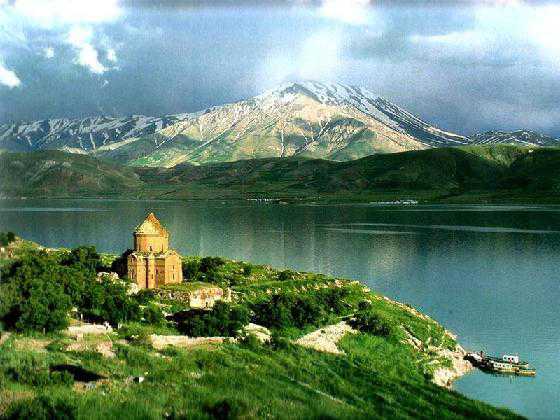
    They stayed at the upscale Çırağan Kempinski hotel in Istanbul and checked out the city’s architectural marvels such as Sultan Ahmet St.Sophia and Topkapı palace.

    They also saw the palaces and mansions lining the shores of Bosporus in a private yacht.

    In the Cappadocia region, the girls got a feel of the unique geological, historic and cultural features of Turkey.

    Visit to the luscious spas at the Swissotel and SPA, Ritz Carlton hotel allowed them to rejuvenate their mind, body and soul. Adding a streak of adventure to their getaway, the three winners ventured into hot air balloons to catch the Cappadocia sunrise.

    The girls also grabbed their fill of sun, sand and sea at the sunny capital of Turkey, Antalya.

    Back in India, the three winners will now start training for the international pageants scheduled for this year.

    Source:  www.masala.com, 21 June, 2009

  • Will Iran Look More Like Turkey, or Turkey Like Iran?

    Will Iran Look More Like Turkey, or Turkey Like Iran?

    Nathan Gardels

    Editor, NPQ, Global Services of Los Angeles Times Syndicate/Tribune Media

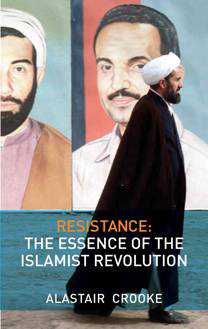
    "Crooke’s mission in this erudite and most readable book is to reassure America and the rest of the world that Hamas, Hezbollah and the seemingly menacing Islamic governments in Iran and elsewhere are not the enemies of the West… a scholarly and closely argued critique of what passes for Western diplomacy today." --Seymour Hersh, The New Yorker magazine
    "Crooke’s mission in this erudite and most readable book is to reassure America and the rest of the world that Hamas, Hezbollah and the seemingly menacing Islamic governments in Iran and elsewhere are not the enemies of the West… a scholarly and closely argued critique of what passes for Western diplomacy today." –Seymour Hersh, The New Yorker magazine

    ISTANBUL — The effort to forge new forms of non-Western modernity in the Muslim world has pushed Iran into bloody civil strife while Turkey swirls with persistent rumors of military plots against the Islamist-rooted government. The great historical question is whether, at the end of the day, Iran will look more like Turkey, or Turkey like Iran?

    As the legendary M16 agent Alastair Crooke argues in his new book, Resistance: The Essence of the Islamist Revolution, the Iranian revolution was a direct consequence a half century later of the forced secularization of the Ottoman Caliphate by Kemal Ataturk. With the superstructure of the Muslim ummah dismantled and replaced with the Turkish nation-state, insurgent religious movements, from the (Sunni) Muslim Brotherhood in Egypt to the Shiite imams of Qum and Najaf, moved into the vacuum to reclaim Islam from the shadow of Western modernization.

    Paradoxically, Ataturk’s whole modernization project is today being recalibrated by the ruling Islamist-rooted (Justice and Development) AK party, which is seeking to reintroduce piety into public life while projecting Turkey as a neo-Ottoman regional power in the Muslim Middle East instead of a mere NATO appendage or European supplicant. At the same time, Iran, the other regional power, is moving in the opposite direction: the Twittering partisans of popular sovereignty are locked in a battle with their theocratic guardians over the legitimacy of power in the Islamic Republic.

    What goes around comes around, it seems. The reaction to the Great Transformation of early 20th century modernization may have given rise to what Crooke calls the “Great Refusal” of the Islamist resistance. But now the legacy of the Great Transformation in Turkey as well as the Great Refusal in Iran are facing the reverse challenges of bringing faith back into the public realm on the one hand, and democratizing a religious state on the other.

    The historical cross currents are complex. In Turkey, one AK Party leader told me, by way of allaying suspicions about an Islamist takeover, that “without its Western orientation, Turkey would be just another Muslim country.” Yet, a publisher friend worries that “without the military guarding Turkey’s secular institutions, the Islamists would take over tomorrow.” And yet again his 20-something daughter, despite the ever more prevalent sight of headscarves on the street, shrugs her bare shoulders doubtfully at the idea of Turkey ever becoming a repressive religious society like Iran.

    In Iran, the very idea of an Islamic Republic, borne out of the 1979 revolution, is coming apart. What we are witnessing is a contest between the Shiite idea of an imamate, where, essentially, God is the head of state, versus the Republic, in which the people rule. What happens to the legitimacy of the state when the people, through their democratic institutions, disagree with God? How can this contradiction at the very heart of the constitutional arrangement of the Islamic Republic ever be resolved?

    For all its grumblings and even rumblings, the military that stands behind secularism in Turkey has not so far frustrated the democratic aspirations of the religious resurgence there. In Iran, the Revolutionary Guards that are protecting theocracy have done just that: they have sought to crush the assertion of popular sovereignty.

    The clerical establishment aligned with the Revolutionary Guard in Iran won’t be easily dislodged from power. Yet, once they’ve felt their power in the streets, as in 1979, neither will the people accept the suppression of their rights. By reasserting his authority after the election through brutal repression, Ayatollah Khameini has undermined the legitimacy of his rule. It may be a long, slow erosion, but the repression of legitimate aspirations is always the beginning of the end for any system of governance.

    For now, the Turkish experiment in creating a non-Western, post-secular order seems more sustainable because it respects the will of the people. That is now the challenge for Iran.

    Source:  www.huffingtonpost.com, June 20, 2009

    ‘This book is required reading at a time when alternative perspectives on the causes of global terrorism and new Western diplomatic initiatives urgently need to replace the failed policies of the Bush administration-led “War on Global Terrorism”.’–John L. Esposito, professor of International Affairs and Islamic Studies at Georgetown University and co-author of Who Speaks for Islam? What a Billion Muslims Really Think

  • Turkey Anxious over Mass Protests in Iran

    Turkey Anxious over Mass Protests in Iran

    By: Emrullah Uslu
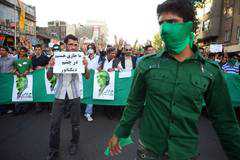
    Iranian supporters of defeated reformist presidential candidate Mir Hossein Mousavi demonstrate on June 17, 2009 in Tehran, Iran.
    Iranian supporters of defeated reformist presidential candidate Mir Hossein Mousavi demonstrate on June 17, 2009 in Tehran, Iran.

    Following the controversial presidential election in Iran, the Turkish media coverage has revealed a mixed interpretation of events, and appears to indicate widespread support in the country for the re-election of the incumbent Mahmoud Ahmadinejad. Several hours after the polls closed in Iran the reformist candidate Mir Hossein Mousavi declared victory. Only minutes after his press conference, Iran’s state owned news agency IRNA reported that the hard-line President Ahmadinejad also declared victory (Zaman, June 13). The Turkish press had sent their correspondents to Tehran to closely monitor the election. Turkey’s leading daily Hurriyet immediately after the poll, speculated about the possibility of social unrest and protests in Iran (Hurriyet, June 13).

    As the protests grew in strength, the Iranian opposition leader Mousavi issued a direct challenge to the country’s supreme leader and cleric-led system, calling for a mass rally to protest against the disputed election results, and the instances of state-inspired violence against his followers. In response Iran’s most powerful military force said that Iranian websites and bloggers must remove any material that “creates tension” or face legal action (Hurriyet Daily News, June 18).

    The key aspect of these developments, which attracted the attention of the Turkish media, was whether the “green wave” protests might spark a reformist revolution. Despite the fact that the opposition leader Mousavi rejected the claims that his “green wave protests are supported by outside supporters,” (Hurriyet, June 18) the nationalist Turkish press displayed a tendency to believe that Iran is facing a new revolution similar to those in Georgia, Ukraine and other former Soviet Republics that were supported by the United States and the European Union.

    For instance, the neo-nationalist Yeni Cag daily alleged that the west is the “dark force” behind the protests in Iran, aiming to topple the Iranian regime. Yeni Cag prefers to regard the protests as revealing that the “patience of the Iranian people is about to explode [against the protest]” (Yeni Cag, June 18).

    Turkish political observers have also tried to associate the protests in Iran with the revolutions in Georgia, Ukraine and other former Soviet republics. Mahir Kaynak in the Star daily said that the global powers were unsuccessful in their alleged efforts to bring about yet another color revolution -this time in Iran (Star, June 16).

    Ibrahim Karagul in Yeni Safak suggested that the events in Iran might be a sign of new developments encouraged by the “dark forces” of the west to bring a reformist revolution to Iran (Yeni Safak, June 17). Nuray Mert in Radikal was another political observer alleging that the protests in Iran might indicate an imminent “green” revolution (Radikal June 16).

    Semih Idiz of Milliyet noted that the victory of Ahmadinejad represents a huge disappointment for Saudi Arabia, Egypt, Jordan and other Middle Eastern countries. However, when it comes to Turkey, it appears that the AKP government is not disappointed with this result. In addition, no matter whether they belong to the secular or Islamist segments of Turkish society, those with anti-American and anti-Western sentiments are happy to see the re-election of Ahmadinejad (Milliyet, June 15).

    Yet there are some Turkish political observers who think that the victory of Ahmadinejad might not prove negative for the west. Kadri Gursel in Milliyet for instance, argued that a victory for Mousavi would be a good option, though he stressed that during the election campaign Ahmadinejad avoided using any anti-American or anti-Israeli sentiments to turn them into an election tool (Milliyet, June 15). The director of the International Strategic Research Center in Ankara Sedat Laciner, also believes that Ahmadinejad is signaling possible compromise with the west, and Mousavi may not be the right person to conduct such negotiations, since his reformist agenda is not supported by all sections of Iranian society (www.usakgundem.com, June 12).

    It appears that, other than a small minority who care about the potential strategic significance of the election, the majority of the Turkish public regardless of their background, seem happy with the outcome of the Iranian election. In addition, they do not approve of the protests in Iran, and they believe that the West is the main driving force behind these expressions of public discontent.

    Islamists in Turkey are satisfied with the Iranian election, because an Islamist has apparently won. The secularists are equally content, as they fear that the west might be sponsoring protests in Iran in order to topple the regime. Most importantly, the neo-nationalists in Turkey have long lived with the fear that the West wants to change the secularist regime, because Turkey with its nation-state structure is one of the biggest obstacles to further globalization. As a result of such an obscure conspiracy theory, neo-nationalists are also pleased to see that Ahmadinejad has secured his re-election.

    Source:  Eurasia Daily Monitor, Volume: 6, Issue: 117, June 18, 2009

  • British software used to crash Iranian websites

    British software used to crash Iranian websites

    Union Jack behind green revolution

    By Nick Farrell

    inquirer

    A BLIGHTY web designer has noticed that an application he developed is being used by members if the Green revolution in Iran.

    Ryan Kelly told Channel Four News he had developed www.pagereboot.com to automatically refresh websites such as Ebay, but said Iranians had emailed him saying they were using it to mount distributed denial of service (DDOS) attacks on that country’s official government websites.

    He noticed that he was suddenly getting large numbers of download requests, then he started received emails from grateful Iranians saying they were using the application to attack government websites and bring them down.

    There have been protests, as well as a web campaign, apparently, against Iran’s government after the results of Friday’s presidential election were announced, amid complaints of vote rigging.

    Kelly took down the website because it could not handle the traffic, but after an online appeal for donations to cover the increased costs, he was able to make it available again. µ

    Source:  www.theinquirer.net, 18 June 2009

  • Internet has changed foreign policy for ever, says Gordon Brown

    Internet has changed foreign policy for ever, says Gordon Brown

    In exclusive interview with the Guardian, prime minister says web era ‘more tumultuous than any previous economic or social revolution’

    Katharine Viner

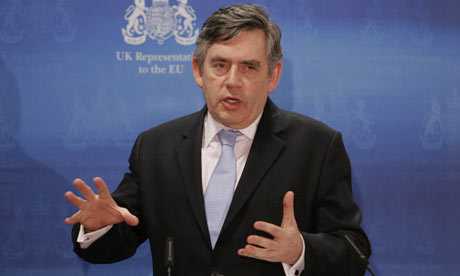
    Gordon Brown says foreign policy 'can no longer be the province of just a few elites'. Photograph: Virginia Mayo/AP
    Gordon Brown says foreign policy 'can no longer be the province of just a few elites'. Photograph: Virginia Mayo/AP

    Foreign policy can never be the same again — and it’s all because of the internet,  Gordon Brown said in an exclusive interview with the Guardian.

    Referring to the so-called Twitter revolution in Iran, the prime minister said technological advances and the democratisation of information mean “foreign policy can no longer be the province of just a few elites”.

    “You cannot have Rwanda again,” he said. “This week’s events in Iran are a reminder of the way that people are using new technology to come together in new ways to make their views known.”

    He described the internet era as “more tumultuous than any previous economic or social revolution”. “For centuries, individuals have been learning how to live with their next-door neighbours,” he added.

    “Now, uniquely, we’re having to learn to live with people who we don’t know.

    “People have now got the ability to speak to each other across continents, to join with each other in communities that are not based simply on territory, streets, but networks; and you’ve got the possibility of people building alliances right across the world.”

    This, he said, has huge implications. “That flow of information means that foreign policy can never be the same again.

    “You cannot have Rwanda again because information would come out far more quickly about what is actually going on and the public opinion would grow to the point where action would need to be taken.

    “Foreign policy can no longer be the province of just a few elites.”

    During a frank and personal interview in Guardian Weekend magazine, published tomorrow, he also discussed the return to favour of the business secretary, Peter Mandelson.

    Brown said that there was now a “common purpose” between the two of them, and that the Labour party – famously resistant to Lord Mandelson’s charms, had finally come round to him.

    “People are coming to appreciate his talents in a way the Labour party didn’t before … I think there’s a great affection for him now,” he added.

    Source: www.guardian.co.uk, 19 June 2009