Month: June 2009

  • A CALL TO THE FREE PEOPLE OF THE WORLD

    A CALL TO THE FREE PEOPLE OF THE WORLD

    Turkistan Newsletter Mon, 22 Jun 2009 16:55:27
    Turkistan Bulteni ISSN:1386-6265
    Uze Tengri basmasar asra yer telinmeser, Turk bodun ilining torugin
    kem artati, udaci erti. [Bilge Kagan in Orkhon inscriptions]
    <<>><<>><>><<>><<>><<>><<>><<>><<>><<>><<>><<>><<>><

    A CALL TO THE FREE PEOPLE OF THE WORLD

    There has been another vicious attack on the peaceful Turkmen people of Iraq.  On Saturday June 21, 2009, a truck bomb exploded in the busiest center of the town of Tuz Khurmatu (pop. 15000), 10 miles south of Kerkuk, at noon, killing more than 75 and wounding more than 200.

    This has been the latest in the chain of attacks against the Turkmens in
    Telafer, Kerkuk, Tuz Khurmatu and Amirli. Those attacks are particularly
    are directed upon the armless and defenseless Turkmens who are not allowed by the governing circles in Iraq to have any defense forces, where others have. The Iraqi police and army failed to stop these attacks in past and it will not be able to achieve that in the future.

    We are asking the President of Iraq, Mr. Talabani, the Prime Minister, Mr.
    Maliki and all political parties and members of the Iraqi parliament, to
    allow the Turkmens their right to defend themselves and form the law
    enforcement units of each locality from the local Turkmens.  In small communities, local police members, usually recognize outsiders, who might be suspected terrorists.

    We in the Union of the Diaspora Turkmens (UDT) ask all the free peoples and
    organizations of the world to help us by putting pressure from their side,
    upon the Iraqi government and the parliament to grant the Turkmens their
    right to defend themselves and form the law enforcement units of each
    locality from the local Turkmens.

    Otherwise these tragedies and the human suffering will continue.

    UNION OF THE DIASPORA TURKMENS
    (UDT)
    [email protected]

  • Armenia Still Hopeful About Deal With Turkey

    Armenia Still Hopeful About Deal With Turkey

    22.06.2009
    Hovannes Shoghikian

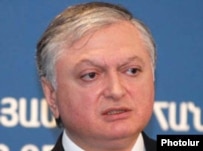
    Armenia remains hopeful that it will normalize relations with Turkey soon despite renewed preconditions set by Turkish leaders, Foreign Minister Eduard Nalbandian said on Sunday.

    He also pointedly declined to deny that the Armenian government has accepted a Turkish proposal to set up a joint commission of historians that will look into the 1915 mass killings of Armenians in the Ottoman Empire. When asked by journalists to comment on statements to that effect made by U.S. and Turkish officials, Nalbandian said, “In order to develop [Turkish-Armenian] relations we intend to create a intergovernmental commission that will deal with numerous issues of interest to the two sides.”

    Testifying before a U.S. congressional subcommittee last week, U.S. Assistant Secretary of State Philip Gordon said that the formation of a historical commission is part of a Turkish-Armenian “roadmap” agreement announced in late April.

    Turkish leaders have said in the past that the joint Turkish-Armenian study should specifically determine whether the Armenian massacres constituted a genocide. Former President Robert Kocharian dismissed the idea as a Turkish ploy designed to keep more countries from recognizing the genocide.

    But Kocharian’s successor, Serzh Sarkisian, indicated shortly after taking office last year that he does not object to the Turkish proposal in principle. In an April interview with “The Wall Street Journal,” Sarkisian effectively acknowledged that Yerevan agreed to the establishment of a “historical sub-commission” during its fence-mending negotiations with Ankara.

    Prime Minister Recep Tayyip Erdogan and other Turkish leaders have since made clear that this is not enough for completing the normalization process. They have said that Turkey will not establish diplomatic relations and reopen its border with Armenia before a resolution of the Nagorno-Karabakh conflict acceptable to Azerbaijan.

    Like some U.S. officials, Nalbandian seemed to suggest that the Turkish statements do not preclude the implementation of the “roadmap” deal. “If there is a desire to solve issues by diplomatic means, then that can be done through negotiations, agreements reached as a result of those negotiations and the implementation of those agreements,” he told a joint news conference with Sheikh Abdullah Bin Zayed al-Nahyan, the visiting foreign minister of the United Arab Emirates.

    “I think that we do have such an opportunity with regard to the normalization of Turkish-Armenian relations,” added Nalbandian. “And Armenia will continue its efforts in that direction.”

    http://www.armenialiberty.org/content/article/1760172.html 

  • Implications of the Acquisition by Israel of a Nuclear Weapons Capability

    Implications of the Acquisition by Israel of a Nuclear Weapons Capability

    Special National Intelligence Estimate Number 100-8-60, “Implications of the Acquisition by Israel of a Nuclear Weapons Capability,” 8 December 1960, Secret/Noforn, Excised Copy

    On the basis of evidence collected during the summer and fall of 1960, the U.S. intelligence establishment drew relatively firm conclusions that Israel had an ongoing program to produce “weapons grade plutonium.”  In recent years, the U.S. government has been more forthcoming in declassifying information about what it knew and when in the early years of the Israeli nuclear program.  In declassifying this previously exempted document, ISCA is following that pattern.

    This Special National Intelligence Estimate (SNIE) was controversial as soon as it was published because information surfaced showing that the intelligence agencies and other U.S. government organizations had overlooked telling evidence that Israel had a nuclear weapons program underway.  As Avner Cohen has shown, an intelligence post-mortem requested by President Kennedy showed that information available as early as April 1958 could have led to an accurate understanding of Israel’s purposes.  Why this happened can not be easily explained, but Cohen identified a number of relevant factors, including “Israeli secrecy and deception,” underestimation of Israeli capabilities, “friends [of Israel] in high places … who might have helped to suppress the early information,” organizational bottlenecks at the CIA, and the possibility that Eisenhower wanted Israel to have the bomb. According to Cohen, “the late 1950s might have been the only time the United States could have successfully pressured Israel to give up its nuclear weapons project in exchange for American security guarantees, but the opportunity was not explored.” (Note 6)

    Full Report:


  • U.S. Navy’s Secret Intelligence Service at the Bosphorus

    U.S. Navy’s Secret Intelligence Service at the Bosphorus

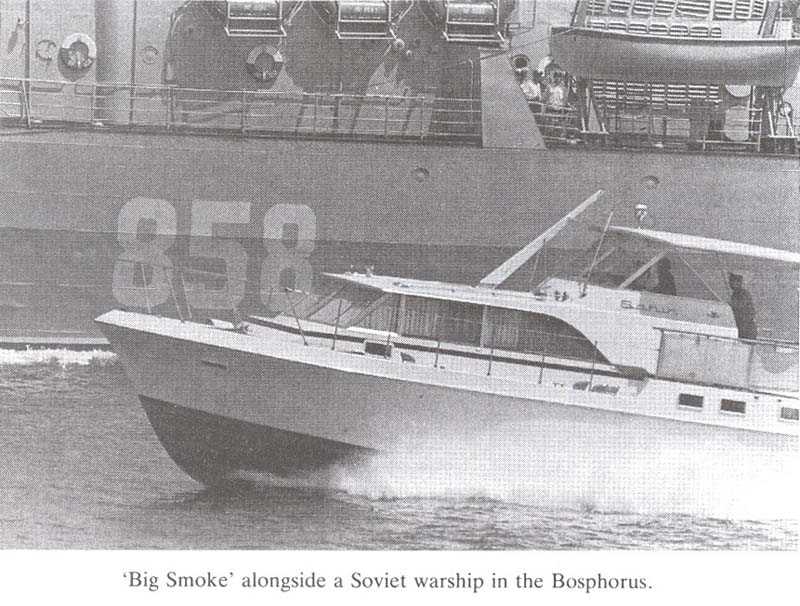
     Big Smoke alongside a Soviet Warship in the Bosphorus

    Photo of Big Smoke, a motor yacht used by the U.S. Navy’s Task Force 157, for intelligence collection operations in the Mediterranean. Photo from Jeffrey Richelson, “Task Force 157: The U.S. Navy’s Secret Intelligence Service, 1966-77,” Intelligence and National Security 11 (1996), 118; used with permission of the author and the journal.

     Central Intelligence Agency (?), “Soviet Nuclear Weapons in Egypt?”, 30 October 1973, Top Secret, Excised copy
    Archival source: Nixon NSC, Henry A. Kissinger Office Files, box 132, Egypt-Ismail Vol. VII Oct. 1973

    In the weeks after the October War, U.S. government officials leaked to the media information about intelligence gleanings of possible shipments of Scud missiles and nuclear weapons to Soviet bases in Egypt during the conflict.  While officials were more certain about the deployment of the missiles, it was more debatable whether Moscow had actually deployed nuclear weapons to foreign territory because of the great risks involved.   According to the press reports, defense officials saw a “reasonable possibility” that nuclear weapons were shipped, but members of the Senate Armed Services Committee, John C. Stennis and Stuart Symington, “said the evidence did not convince them.” (Note 8)

    For the first time, the U.S. government has released one of the intelligence reports that may have been the basis for the leaks.  While intelligence agencies exempted this document in its entirety after the first request to the Nixon Library and also after an appeal, ISCAP agreed to release much of it, suggesting that the much of the information had been overclassified.

    “Soviet Nuclear Weapons in Egypt?” draws back from definite conclusions, suggesting why some U.S. officials believed that the evidence was not good enough.  Interestingly, the report indicates which Soviet cargo ship—the Mezhdurechensk—was one of the objects of suspicion, and that U.S. intelligence photographed the ship at Alexandria on 25 October. 

    While much of the evidence concerning the alleged deployment has been redacted from the report, probably on sources and methods grounds, a prize-winning article by Archive senior research fellow, Jeffrey Richelson, “Task Force 157: The U.S. Navy’s Secret Intelligence Service, 1966-1977,” published in Intelligence and National Security, clarifies the issue. According to Richelson’s account, Task Force 157 included a yacht equipped with a special nuclear intelligence sensor that operated in the Bosphurus and shadowed Soviet ships. The problem was that the sensor was “prone to giving positive false alarms,” and could not determine whether the “type of radiation in question” indicated the presence of nuclear weapons.  This makes it all the more understandable why the authors of the 30 October report were unwilling to draw firm conclusions about the presence of nuclear weapons on the Mezhdurechensk: “The evidence should not yet be regarded as though it creates a strong presumption that the Soviets dispatched nuclear weapons to Egypt.” (Note 9)

    nsa

  • When China Rules the World

    When China Rules the World

    By Martin Jacques

    Reviewed by John Gray – 18 June 2009

    It is clear that the rise of China marks the end of western global hegemony, but just what the coming Chinese ascendency will look like is another matter.
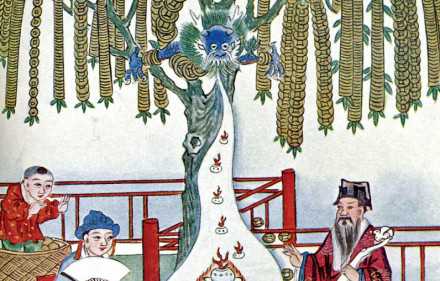
    The civilisation state

    On his first visit to China as US treasury secretary, at the start of this month, Timothy Geithner attempted to reassure an audience at Peking University that there is no need to worry about the enormous holdings China has built up in US government bonds. “Chinese assets are very safe,” he declared. Geithner’s statement produced loud laughter from the largely student audience.

    Unlike most western commentators, who still give the Obama administration the benefit of the doubt, China’s emerging elite know there is no prospect that the United States will pay back its debts at anything like their current value. The only way the US can repay its vast borrowings is by debasing the dollar – a process in which China will inevitably be short-changed. Significantly, the students’ response was not anger, but derision – a clear sign of how the US is now perceived. Resentment at US power is being replaced by contempt, as the impotence and self-deception of the American political class in the face of the country’s problems become increasingly evident.

    In a characteristically incisive formulation, Martin Jacques writes that the “rise of China and the decline of the United States are central to the present global depression”. Although China remains a fast-emerging, rather than a developed, economy and even though it is nowhere near acquiring America’s worldwide military reach, the crisis has speeded up a shift in the balance of power between the two countries that has been taking place for decades. The importance of China’s advance goes far beyond the incontrovertible fact of America’s relative decline, however. If Jacques is right, the rise of China will bring the end of the western world as we have known it over the past several hundred years.

    Western commentators on China fall into two main camps. The first, which we may called the China sceptics, rejects out of hand the notion that China can ever become the world’s dominant power. The second – which is increasingly vocal and influential, especially in the US – sees the rise of China as a major threat to the existing, western-dominated global system. Though the two views are not finally compatible, they can quite often be found in the same person. The awkward fact with which both of them struggle is that China’s industrialisation – the largest in history – has been achieved indigenously. China’s success is widely praised by western governments, but it has been based on a rejection of western advice.

    Like climate-change sceptics, China sceptics tend simply to ignore evidence that does not fit their world-view. Even if they accept that China’s success over the past 30 years has been achieved by following a distinctive path, they can only insist that China will be compelled to westernise at some point in the future – overlooking how it is western neoliberalism, and not Chinese capitalism, that has collapsed. Or else, they must admit that China can go on developing, and even overtake the west, while remaining as different from the west as it has ever been. This last is a terrifying scenario, as it implies that if a country westernises, that does not ensure its economic success – if anything, it may be an impediment. In other words, China may be so successful because it is so different from the west. At this point, the first view of China morphs into the second and we start to hear hysterical warnings of the threat posed by China’s inexorable rise. Inside every China sceptic is a prophet of the New Yellow Peril waiting to be let out.

    The common conviction of nearly all these commentators is that no country can modernise without following a western path. The message of When China Rules the World – by far the best book on China to have been published in many years, and one of the most important inquiries into the nature of modernisation – is that this assumption blinds us to the way the world is being reshaped before our eyes. Jacques’s comprehensive and richly detailed analysis will be an indispensable resource for anyone who wants to understand contemporary China; but its primary value is in overturning the assumption – almost universal in the west, and held by some in China – that, as a country develops, it is bound to evolve into something like a western state. As Jacques points out, China “may seem like a nation state, but its geological formation is that of a civilisation state”. When China was weak it had little alternative but to accept western terms of reference. As it grows richer and stronger, China is more and more affirming the inherent value, if not the actual superiority, of its ancient civilisation. Far from turning its back on its history, the country is returning to the past in order to forge a new version of modernity.

    “The emergence of China as a global power,” Jacques writes, “in effect relativises everything.” The author is not endorsing any kind of fashionable postmodernism here. He is clear that there are universal human values. His argument is rather that there are many ways of recognising universal values in a modern society. All the same, the version of modernity which appears to be emerging in China does come with some rather dark spots. The deep sense of China as a unitary civilisation, together with a pervasive belief in Han superiority, leaves little tolerance for the claims of other cultural groups.

    Some way may be found, the author suggests, whereby the Tibetans can coexist with the Chinese state. But, as he admits, the dominant sense of Chinese identity is essentially racial, and most Chinese look down on Tibetans with loathing. In line with this, and also for strategic reasons, “China has encouraged large-scale Han migration in an effort to alter the ethnic balance of the population and thereby weaken the position of the Tibetans who for the most part live in the rural areas and in segregated urban ghettos.” It is hard to avoid the conclusion that, in building the Chinese civilisation state, Beijing is systematically destroying a unique civilisation.

    A resurgent China will be problematical in a number of ways. It remains very unclear how China’s rulers view the international system. Will they try to reshape it in their own image, and if so what will the world then look like? Jacques argues that something like the tributary system that existed in the past can be re-created, but that system applied mainly to China’s nearer and smaller neighbours. It is impossible to envisage such an unequal relationship being acceptable to India or Russia or, for that matter, Japan. Again, can China extend its control of world markets while retaining its grip on its own economy? Control of capital flows has been one of China’s strengths in the current crisis. Will it be ready to compromise this advantage in order to supplant the failing dollar as the world’s reserve currency?

    There are no clear answers, if only because China’s ruling elite have almost certainly not begun to answer these questions themselves. What is undeniable is that China’s ascendancy is bringing with it an international environment potentially more volatile than any in the recent past. So far, says Jacques, “The changes wrought by China’s rise have done little to disturb the calm of global waters, yet their speed and enormity suggest that we have entered an era of profound instability; by way of contrast, the Cold War was characterised by relative predictability combined with exceptional stability.”

    The witless, end-of-history triumphalism that shaped western attitudes in the post-Cold War era is nowhere more misplaced than in regard to China. History is on the move again – and it is not the delusional, teleological, self-congratulating history dreamt up by liberal rationalists, which somehow always ends with themselves as the winners. The rise of China is the real thing, a world-changing event that marks the end of western hegemony.

    New Statesman
  • CIA’s Iranian Plan?

    CIA’s Iranian Plan?

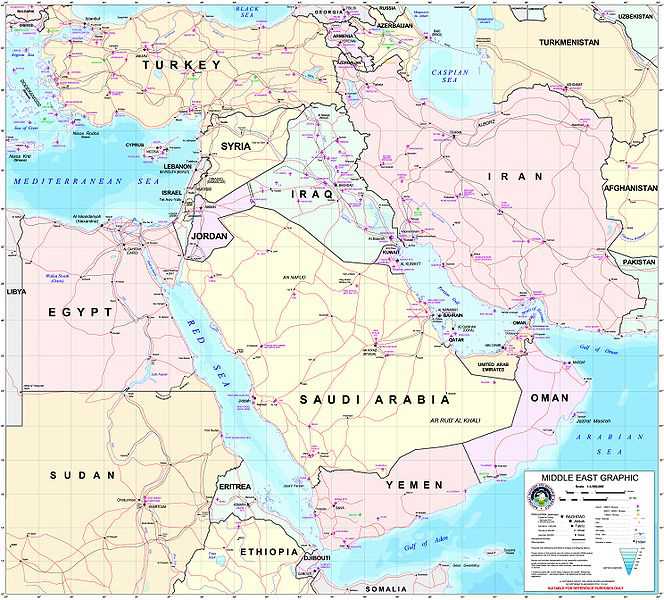
    Short video explores the possibility that the CIA is involved in Iran’s recent election unrest.