Month: June 2009

  • MANY SCHOLARS CHALLENGE THE ALLEGATIONS OF GENOCIDE

    MANY SCHOLARS CHALLENGE THE ALLEGATIONS OF GENOCIDE

    Part I

    I find it important to mirror this work here to help truth-seekers gain one more access the information which is denied them by aggressive Armenian falsifiers, their usually anti-Turkish sympathizers, and other thinly veiled Turk-haters. Hate-based-propaganda and intimidation should not be allowed to replace honest scholarship and reasoned debate.

    Nothing less than the freedom of speech of those who hold contra-genocide views are at stake. Tools most used to advance censorship of contra-genocide views are hearsay, forgeries, harassment, political resolutions, editorial freedom, and consensus, among others. The key to resolving this controversy is more knowledge as in more honest research, more truthful education, and more freedom to debate… not less.

    Those scholars who take Armenian claims at face value urgently need to ponder these simple questions:

    1) How can one study a country’s history without reseraching that country’s archives? Can one study China’s history without using Chinese archives? Or Russia’s past without using Russian documents? Or America’s history without researching American records? Or Ottoman Empire’s past without using Ottoman archives? Why were the Ottoman archives almost never used in Armenian arguments and claims? Are language barriers, bureaucratic hurdles, cost, or others convincing enough excuses in scholarly studies that span a over decades or even centuries? Or is it instant gratification that these (genocide) scholars who ignore Turkihs archives really seek, not the whole truth?

    2) How can one study a controversy by confining one’s views to one side? Can you argue that only one side of say, the abortion issue, is absolutely correct, flalwless, and worthy of knowing, and that the other side should be totally ignored and even censored? How about gun control? And immigration? taxes? Iraq War? Gay rights? and many other controversial issues? Can one be confined, or asked to confine, to only one side of the debate and categorically dismiss forever the other side? Can this ever be made into a policy as it is attempted in the Turkish-Armenian conflcit and controversy? Where does the freedom of speech come into play here? If I, as an individual who holds a contra-genocide view, am slandered, intimidated, harrassed and even threatened for my views by some “opinion thugs” and often censored by “consensus mobs”, then is not this a blatant attack and destrcution of my constitutional right to freedom of speech? Does consensus make it truthful? Does (political) might make right?

    3) Why do those genocide scholars who love to get on their high horses and preach good morals to others, fail to scream murder in the face of that terrible human tragedy in Azerbaijan that victimized a million Azeri women and children in Karabagh and western Azerbaijan? Is it because the perpetrator of this inhumanity is Armenia, their client state? And the Armenians, their paymasters?

    4) If the study of genocide is designed to teach humans how to recognize, avoid, and fight back against new genocides, then why do these genocide scholars not take their client, Armenian and Armenians, to task about the genocide in Khodjaly on 19 February 1992? Since a genocide verdict by a competent tribunal (as the 1948 UN Convention requires) does not exist, yet, for consistency, let me call it man’s inhumanity to man and pogrom. The question is why did all the genocide study fail to stop Armenia from committing one between 1992-1994? Can you see the heart wrenching irony here?

    Here is what honest scholars and historians say about the bogus Armenian genocide:

    ***

    “ Ottoman Armenian tragedy is a genuine historic controversy. Many reputable scholars challenge the conventional, one-sided anti-Turkish narrative and / or refrain from alleging the crime of genocide. These Are Their Words ( https://armenians-1915.blogspot.com/2009/06/2889-ottoman-armenian-tragedy-is.html )

    BACKGROUND – WAR AND IMPERIAL COLLAPSE

    The collapse of the Ottoman Empire dramatically rearranged the map of a vast region. What was once a sprawling, multi-ethnic empire splintered into more than two-dozen new nations, from the Balkans to the Caucasus to the Arabian peninsula. Across the surface of these lands unfolded a profound human tragedy. Nearly incessant war crippled the Ottoman economy. It left towns devoid of men to care for households or to tend crops. Military requisitions drained the countryside of livestock and many of the labor-saving implements of daily life. Disease ran rampant and famine struck many.

    VAST POPULATION MOVEMENTS

    As new states coalesced, large population masses streamed across the landscape, some fleeing the path of war, some seeking new lives among ethnic brethren or co-religionists, some having suffered expulsion, and some obeying negotiated population exchanges. Two such major movements were (a) the flight of Muslim refugees from newly-established Christian states in Balkans and the Caucasus into what would become modern Turkey during the period roughly between 1821 and 1922, and (b) the relocation of much of the Ottoman Armenian population from the war zone of eastern Anatolia into Ottoman domains in Syria, mainly in 1915-16.

    A GENUINE HISTORIC CONTROVERSY

    History records the enormous human suffering from both of these events: Perhaps 5.5 million Muslims, mostly Turks, died as refugees or were killed in the years immediately preceding and during World War I, as well as through the formative years of the Republic of Turkey. And certainly hundreds of thousands of Armenians died during the Armenian Revolt and the relocations consequently ordered by the Ottoman government. Scholars on the Ottoman Empire continue to examine the details and causes of these twin tragedies. What they have uncovered is not a singular tale of Christian woe, but rather a complex story that, if presented as evidence, would make it highly unlikely that a genocide charge could be sustained against the Ottoman government or its successor before a neutral arbiter. Thus, whether the tragic suffering of the Ottoman Armenians meets the definition of the crime of genocide as provided by the United Nations Genocide Convention (see appendix 1) remains a genuine historic controversy. Moreover, the notion that the one-sided Armenian narrative is settled history must be utterly rejected so that researchers will feel free to delve into the details of these contested events.

    QUESTIONS CONSIDERED

    Among the work of the scholars below, many of whom are Ottoman history experts, are considerations of the following questions:

    * Is the genocide label, which is so vigorously promoted by Armenian advocacy organizations appropriate?

    * Did the Ottoman government during World War I possess the requisite intent described by the U.N. Genocide Convention, to destroy the Armenians?

    * What was the Armenian Revolt (see appendix 2) and how did it impact the Ottoman government’s decision to relocate Armenian civilians from eastern Anatolia?

    * What was the ultimate toll upon the Armenian population? And how many deaths could be attributed to the various causes: inter-communal warfare, starvation, exposure, massacre, disease, etc.?

    * What was the ultimate toll upon the Ottoman Muslim population embroiled in these same events? And how many deaths can be attributed to the same causes?

    Their work establishes a better basis upon which to address historic grievances than the one-sided narrative most often provided in media accounts and by Armenian lobbyists and their advocates. In effect, these scholars provide the oft-ignored historical context, which is critical to any explanation of the shared past of the Turkish and Armenian peoples.

    At a minimum, the list below demonstrates that in fact, there exists no common agreement that the genocide label is appropriate and that, contrary to assertions made by Armenian lobby groups, the details of the historic narrative remain open to further study and interpretation.

    THE IMPACT OF PHYSICAL AND ACADEMIC INTIMIDATION

    Sadly, this list likely under-represents the number of scholars who would challenge the conventional wisdom on the Armenian tragedy. Those who write from a contra-genocide perspective have had to do so under extraordinary risk. Merely because of something he wrote, the home Prof. Stanford Shaw of U.C.L.A. was firebombed. Death threats have been received by Justin McCarthy and his family.

    The university press that published Guenter Lewy’s latest work was harassed by two Armenian scholars. (see appendix 3.)

    The University of Southern California in 2006 buckled to the vociferous protest of an Armenian pressure group and canceled a symposium by two former Turkish diplomats.

    Meanwhile, foreign nations such as France and Switzerland have rendered it against the law even to hold the contra-genocide viewpoint. Princeton University’s Bernard Lewis was famously fined by a French court in 1995 for such an “offense.”

    And, the Armenian terrorist organizations ASALA and JCAG carried out no fewer than 73 acts of terrorism in North America alone, killing 16 people. Around the world, Armenian terrorists killed at least 50 more people, mostly Turkish diplomat murdered in planned assassinations and injured over 500, all in the name of “genocide recognition.”

    In short, the chilling effect this has had on free discussion and open debate on the history of the late Ottoman Empire has been genuine and severe, lowering a curtain of fear over the consideration of this important era of world history.

    ADDITIONS AND SUBTRACTIONS

    Our aim is to evaluate as closely as possible each name on the list based on the published statements or writings of each scholar that are readily available. We welcome visitor suggestions for additions to the list. And likewise, if you believe that a particular name ought not be on the list, please let us know. Our goal is to continue to openly discuss and debate the details of history and the genocide allegation. For feedback, please contact info at tc-america.org.

    Whether the tragic suffering of the Ottoman Armenians meets the definition of the crime of genocide as provided by the United Nations Genocide Convention [web] remains a genuine historic controversy. The notion that the one-sided Armenian narrative is settled history does not reflect the truth and must be utterly rejected.

    The work of the following scholars demonstrates that there exists no common agreement that the genocide label is appropriate and that, contrary to assertions made by Armenian lobby groups, the historic narrative of this painful period in Ottoman-Armenian relations remains open to further study and interpretation. Furthermore, the work by the leading historians on the Ottoman Empire and the Middle East provides the oft-ignored historical context without which any explanation of the shared past of the Turkish and Armenian peoples is simply impossible.

    Our aim is to evaluate as closely as possible each name on the list based on the published statements or writings of each scholar that are readily available. Our goal is to continue to openly discuss and debate the details of history and the genocide allegation. For feedback, please contact info at tc-america.org

    ***

    SCHOLARS

    * Arend Jan Boekestijn
    * Mary Schaeffer Conroy
    * Youssef Courbage
    * Paul Dumont
    * Bertil Duner
    * Gwynne Dyer
    * Edward J. Erickson
    * Philippe Fargues
    * Michael M. Gunter
    * Paul Henze
    * Eberhard Jäckel
    * Firuz Kazemzadeh
    * Yitzchak Kerem
    * William L. Langer
    * Bernard Lewis
    * Guenter Lewy
    * Heath W. Lowry
    * Andrew Mango
    * Robert Mantran
    * Michael E. Meeker
    * Justin McCarthy
    * Hikmet Ozdemir
    * Stephen Pope
    * Michael Radu
    * Jeremy Salt
    * Stanford Shaw
    * Norman Stone
    * Hew Strachan
    * Elizabeth-Anne Wheal
    * Brian G. Williams
    * Gilles Veinstein
    * Malcolm Yapp
    * Thierry Zarcone
    * Robert F. Zeidner

    ***

    * AREND JAN BOEKESTIJN
    Lecturer in history of international relations, History Department at Utrecht University, Netherlands.

    Major Publications

    * Economic integration and the preservation of post-war consensus in the Benelux countries, (1993) * Other articles (not in English) Source: Excerpted from Turkey, the World and the Armenian Question (see appendix 4)

    “Citizens and politicians living in Western Europe tend to take the high moral ground on issues where they are not themselves directly involved. This is a strategy that runs the risk of applying double standards. It is all very nice to condemn the so-called Armenian genocide by the Ottoman Empire at the beginning of the last century; but what about the national sins of one’s own country? In addition to the holocaust, Germany committed genocide against the Herero tribe in then Southwest Africa; France slaughtered 200.000 Muslims in Algeria during 1954-1962, and what about King Leopold’s Ghost in the Belgian Congo? The list is much longer. Turks do not have a monopoly on human deficit.”

    “A number of governments and national parliaments ask Turkey that it recognize Armenia’s claims of genocide. These governments include France, Belgium, Russia, Lebanon, Uruguay, Switzerland, Greece, and Canada. The European Parliament and a number of U.S. states have also recognized the slaughtering of Ottoman Armenians as stemming from a systematic policy of extermination. Turkey fears that the U.S. Congress may soon follow. Recently, the German Parliament adopted a resolution in which the word genocide was not used but still called on the Turks to confront their past.”

    “Did the Ottoman Turks really commit genocide? And, is the Turkish government handling this sensitive issue well?

    In article 2 of the present United Nations Convention on the Prevention and Punishment of the Crime of Genocide (adopted 9 December 1948); genocide means any of the following acts committed with intent to destroy, in whole or in part, a national, ethnic, racial or religious group:

    (a) Killing members of the group;
    (b) Causing serious bodily or mental harm to members of the group;
    (c) Deliberately inflicting on the group conditions of life calculated to bring about its physical destruction in whole or in part;
    (d) Imposing measures intended to prevent births within the group;
    (e) Forcibly transferring children of the group to another group.

    The problem in identifying whether genocide was committed is the clause: in whole or in part. In part, implies that most wars involve an element of genocide. Genocide only has real meaning if a government intends to destroy an entire group of human beings. The Armenian side claims that the Ottoman government at the highest level had the intention to kill Armenians. So far, there is no such proof in the Ottoman Archives.”

    “Today, the German Holocaust of the Jewish population is widely compared to that of the Armenian massacre. However there are important differences between the two.

    First, Jews had done nothing wrong. They were just there and formed the basis of Hitler’s blatant racism. There is little doubt that the Turks overreacted to the Armenian challenge, but some Armenians did collaborate with the Russian enemy and some of them were involved in guerrilla like activities behind Ottoman defensive lines. This does not justify the Turkish position, but it is wrong to portray the Armenians as completely innocent.

    Second, in Hitler’s Germany, those in power knew what the Nazi’s were doing with the Jews. Most of them chose to support his policies. In Turkey, not all the members of the Turkish government were aware that some of them were using the deportations as an instrument of ethnic cleansing. When they discovered this, they tried to punish the perpetrators. Unfortunately, some of the perpetrators remained in power or acquired even higher positions.

    Third, there was no pre-planned genocide in Turkey, as in the case with the holocaust. No pre-1914 Ottoman government could have had foreknowledge of the outbreak of the First World War or the circumstances under which the deportations would be accomplished. Mainstream Ottoman politics included normal Armenian participation until war began. There is not only no evidence that the CUP government deliberately planned for genocide before 1914, it is also highly unlikely. It would suggest that it intended to carry out the mass murder of an ethnic group something for which there was no precedent in modern history. Moreover, if there had been plans and these were leaked out, intense international opposition possibly leading to an invasion of the Ottoman Empire by other European Powers would have been the result. Viewed in this light, it seems most implausible that the genocide of the Armenians was preplanned.

    Fourth, the historians who question the intention of the Turks to commit genocide are often excellent historians like Bernard Lewis and Gilles Veinstein with some documentary evidence on their side. They are not mendacious anti-Semitic crackpots who enunciate Holocaust denial.

    And lastly, the CUP never adopted an all-embracing secular, universalistic, quasi-messianic ideology in the style of Nazism and Communism. It remained rooted in traditional (although modernizing) nationalism and a vision of an Islamified Turkey. The events can be read as a botched, wartime panic, overreaction, with premeditation most unlikely and the scale of killings arguably exaggerated.

    Let us try to put these qualifications into perspective. Even if the Armenian massacre cannot be compared to the German Holocaust, even if not all members of the CUP government knew that some of their colleagues were bent on solving the Eastern question once and for all, the fact remains that between 600.000 and 900.000 Armenians died of murder, starvation, and exhaustion.”

    ***

    MARY SCHAEFFER CONROY
    Professor of Russian history at Colorado University, Denver (since 1995).

    Major Publications

    * Peter Arkad’evich Stolypin: Practical Politics in Late Tsarist Russia, Boulder: Westview Press, 1977.

    * Women Pharmacists in Late Imperial Russia. in Linda Edmondson, ed. , Women & Society in Russia & The Soviet Union, Cambridge University Press, 1992, pp. 48-76.

    * In Health & In Sickness: Pharmacy, Pharmacists & the Pharmaceutical Industry in Late Imperial, Early Soviet Russia, Dist. Columbia University Press, 1994.

    * Emerging Democracy in Late Imperial Russia, Boulder: University Press of Colorado, 1998 (edition).

    * The Russian Pharmaceutical Industry in the Late Imperial-Early Soviet Period,” in Politics and Society Under the Bolsheviks, Kevin McDermott and John Morison, eds., Basingstoke: MacMillan; New York: St. Martin’s Press, 1999, pp. 13-36.

    * The Soviet Pharmaceutical Business during Its First Two Decades (1917–1937), New York: Peter Lang, 2006.

    * Medicines for the Soviet Masses during World War II, University Press of America, 2008.

    Relevant Publications

    * Review of Vahakn N. Dadrian, Warrant for Genocide: Key Elements of Turko-Armenian Conflict, The Social Science Journal, vol. 37, no. 3, pp. 481-483. Source: Review of Vahakn N. Dadrian, Warrant for Genocide: Key Elements of Turko-Armenian Conflict, The Social Science Journal, vol. 37, no. 3, pp. 481-483

    “Dadrian claims that Armenians were more oppressed than these groups because they were not allowed to bear arms and had no outside protectors. Furthermore, the Ottoman government allowed Kurds and Islamic migrants from the Balkans and the Caucasus to harass Armenians. His argument, however, is marred by inconsistency and ambiguity. He notes, for instance, the appointment of Armenians to central and local government posts in 1876, periodically refers to the Armenian diaspora, and admits that Armenian merchants, upper echelons of the Armenian clergy and ‘conservative’ Armenians preferred Ottoman rule to Russian (Russia ruled a slice of Armenia following the 1827-1828 Russo-Turkish War) because they believed this would better preserve Armenian identity.

    Indeed, Armenian deputies in the Ottoman Parliament spoke out against Russia. The author tells us nothing, however, about the conditions within the Ottoman Empire which produced the Armenian elites, nor does he elaborate on these issues. Similarly, Dadrian mentions Armenian revolutionaries, the Huntchaks and the Dashnaks, some of whom engaged in raids on the Ottoman Bank in the mid-1890s, and he concedes that their numbers were small and that the bulk of Armenians repudiated them. However, he does not develop the impact these revolutionaries may have had on Ottoman government policies, particularly the reluctance to let Armenians bear arms. Further, Dadrian does not identify the Huntchaks as Marxists nor the Dashnaks as extreme nationalists. In chapter 10, Dadrian informs us that several thousand Armenians fought for Turkey in World War I but, again, does not develop this theme.” P. 482.

    “Although Dadrian appears fluent in Turkish and cites certain Turkish sources — dissident Ittihadist reports, memoirs of a few Turkish leaders, and statements from a post-World War I war-crimes tribunal — almost no information on Turkish government policies regarding Armenians and nothing on the decision to annihilate them comes from Turkish archival sources. Dadrian relies mainly on British Foreign Office and German, Austrian, and French reports. When discussing how the Turks unleashed Kurds to attack Armenians in the mid-1890s, Dadrian even quotes a U.S. senator’s castigation of this event as supporting evidence. Similarly, he cites the Russian newspaper Golos moskvy (incorrectly transliterated ‘Kolos Moskoy’) as one of the sources for a ‘secret Turko-German plan for the massive deportation of the Armenians of eastern Turkey’ along with a Western historian’s ruminations on how important cultural homogeneity was to the Turks, as proof of the Armenian massacres of 1915. Dadrian’s excuse for not documenting Turkish policies with internal governmental sources is that the policies were secret. However, since much evidence exists in Russian archives about secret policies, one cannot but be skeptical about this explanation.

    A few typos and small factual errors, such as the implication that Russian-Ottoman relations were always adversarial in the nineteenth and early twentieth centuries, mar the book. However, the most egregious flaws in this book are its polemical tone, its sketchiness, and its failure to use Turkish archival sources. Therefore, while the book delivers intriguing insights into Ottoman-Kurdish relations and the views of individual Turkish statesmen regarding Armenians, and while it suggests convincing theories for Turkish massacres of Armenians, it does not convincingly document these theories. It is thus unsatisfying as a whole. This book is more a work of journalism than solid history and is not recommended.” P. 483.

    ***

    (To be Continued)
  • THE ROLE OF TURKEY IN GAS TRANSIT TO EUROPE

    THE ROLE OF TURKEY IN GAS TRANSIT TO EUROPE

    Oxford Institute for Energy Studies


    Gareth M Winrow


    June 2009


    Preface

    The subject of Caspian and Middle East gas pipelines to Europe has become increasingly important and emotive in the late 2000s with many projects and aspirations being advanced to create a “4th corridor” aimed at significant reducing dependence on (primarily) Russian gas. The role of Turkey will be critical for all of these projects. While the details of pipeline projects are well known, the role and aspirations of Turkey as an energy transit country have

    received less attention. Some have portrayed Turkey as a country critical to European energy security and a potential hub for Caspian and Middle East (oil and) gas supplies. But some Turkish statements and commercial positions in relation to pipeline projects have raised questions about the conditions which the country may intend to attach to this role, some of which could be seen as obstacles to natural gas transit.


    Because of the partisan nature of much of the current debate, it was important to find an author capable of making an expert, but unbiased, assessment of the Turkish position. Gareth Winrow has long experience in Turkey and was the ideal choice to interview Turkish stakeholders in relation to the many different aspects of the country’s energy situation and the fourth corridor. I am very grateful to Gareth for taking on this project and believe that his paper adds significantly to understanding the complexity of the problems related to these issues.


    Jonathan Stern

    June 2009

  • The Eurasian Pipeline Calculus

    The Eurasian Pipeline Calculus

    Global Research, June 17, 2009


    Calculus has two main variants—derivative and integral. The Eurasian energy pipeline geopolitics between Turkey Washington and Moscow today has elements of both. It is highly derivative in that the major actors across Central Asia from China, Russia to Turkey are very much engaged in a derived power game which has less to do with any specific state and more to do with maintaining Superpower hegemony for Washington. Integral as the de facto motion of various pipeline projects now underway or in discussion across Eurasia hold the potential to integrate the economic space of Eurasia in a way that poses a fundamental challenge to Washington’s projection of Full Spectrum Dominance over the greatest land mass on earth.

    Since at least the time of the Crimean War of 1853, Turkey has played a strategic role in modern Eurasian and European developments. In the 1850’s Ottoman Turkey became a target of Great Power imperial ambitions as Britain and France sought to take advantage of tensions between Russia and the Ottoman Empire in order to weaken and ultimately take vital parts of that weakened empire. 


    The Great Powers of that time, the empires of Britain, France, Russia and Austria began plotting the dismemberment of the vast Ottoman Empire. Debt was their preferred instrument. The foreign debt situation in Ottoman Turkey had become so extreme that Sultan Abdul Hamid II was forced by his French and British creditors to put the entire finances of the realm under the control of a banker-run agency in 1881, the Ottoman Public Debt Administration (OPDA), controlled by the two largest creditors—France and Britain. By the late 1880’s a new player on the Continent who was not part of this debt control, the German Reich, engaged the Ottoman Empire economically. That strategically challenged the vital imperial design of the most powerful empire of the day, Britain.


    After Britain sank into a Great Depression after 1873, Germany’s industrial colossus emerged as the fastest-developing economic power on earth with the possible exception of then fledgling United States. The political and economic fate of Germany and Ottoman Turkey were linked after 1899 with the decision by German industry, Deutsche Bank to build a railway connecting Berlin to the Ottoman Empire as far away as Baghdad in then-Mesopotamia. It was a land bridge for trade between Ottoman Turkey and Germany independent of British control of the seas.  

    A few Eurasian geopolitical basics


    German industry had begun to look overseas for sources of raw materials as well as potential markets for German goods. In 1894 German Chancellor, von Caprivi, told the Reichstag, “Asia Minor is important to us as a market for German industry, a place for the investment of German capital and a source of supply, capable of considerable expansion, of such essential goods as we now buy from countries of which it may well sooner or later be in our interests to make ourselves independent.”  Caprivi was supported by German industry, especially the steel barons, and by the great banks such as Deutsche Bank.


    That Berlin-Baghdad Railway linking the fate of Ottoman Turkey to that of Germany was a geopolitically strategic factor in the events which led Britain to the First World War in a failed bid to preserve her global hegemony. Turkey then as today was regarded by powerful Great Powers as a “pivot” state. The danger in being a pivot state is, of course, the question of who has their hands on it, who moves the pivot for their own geopolitical purposes.


    In 1904 a British professor of geography, Sir Halford Mackinder, delivered a lecture before the Royal Geographical Society titled The Geographical Pivot of History, which was to shape a history of two world wars and subsequent wars and power relations. Mackinder, the father of geopolitics—the relation of geography and political economy and power—developed the systematic axiom of British imperial power. It was simple as it was fateful:


    Who rules East Europe commands the Heartland:

    Who rules the Heartland commands the World-Island:

    Who rules the World-Island commands the World.


    For Mackinder East Europe was Continental Europe from Germany to Poland, France and Austria. The Heartland was the vast Eurasian land power, Russia. The World-Island was Eurasia.


    When the United States emerged to displace the British Empire in world affairs after 1945, she also took the lessons of Mackinder geopolitics. The leading postwar foreign policy strategists including Henry Kissinger, were schooled in Mackinders’ ideas. One American disciple of Mackinder, Zbigniew Brzezinski, cited Mackinder’s geopolitical axiom in a 1997 essay in Foreign Affairs magazine where he defined the American strategic priorities in the post-Soviet era:


    Eurasia is home to most of the world’s politically assertive and dynamic states…The world’s most populous aspirants to regional hegemony, China and India, are in Eurasia, as are all the potential political or economic challengers to American primacy. After the United States, the next six largest economies and military spenders are there… Eurasia accounts for 75 percent of the world’s population; 60 percent of its GNP, and 75 percent of its energy resources. Collectively, Eurasia’s potential power overshadows even America’s.

    Eurasia is the world’s axial super-continent. A power that dominated Eurasia would exercise decisive influence over two of the world’s three most economically productive regions, Western Europe and East Asia. A glance at the map also suggests that a country dominant in Eurasia would almost automatically control the Middle East and Africa. With Eurasia now serving as the decisive geopolitical chessboard…the distribution of power on the Eurasian landmass will be of decisive importance to America’s global primacy. [1]


    That has largely defined US foreign political and military relations with Turkey and the newly emerging former Soviet Republics of Eurasia since the dissolution of the Soviet Union in 1991. Unfortunately for Turkey and the republics of the Eurasian region, those relations have too often been determined by IMF conditionalities and by military alliances and actions more resembling the Cold War than an era of genuine peace and respect for national sovereignty. Until now the post-Soviet East-West relations have largely been based on a negative construct.


    The two geopolitical statements—the one from Mackinder in 1919 during the Versailles talks to divide Europe after the First World War, the second by Mr Brzezinski in 1997 at the end of a bitter Cold War—have defined the principle relations of Turkey and the rest of Eurasia to the world for more than a century.


    Eurasia’s Opportunity today


    What will define the future for the various nations of Eurasia, especially Turkey, two decades since the dissolution of the Soviet Union and Warsaw Pact Cold War structures?


    The answer requires some clarity on basic issues. First and most essential is how Turkey and other Eurasian nations define their bilateral and regional relationships. Second, how do they define their relationship with the Atlantic alliance, the system of political, military and economic relations built after 1945 around the dominance of the United States.


    What defines the situation today is a growing realization across all Eurasia from Beijing to Moscow, from Alma Ata to Ankara that the pillar of the postwar order, the United States has become an increasingly incalculable partner and force in world economic and political affairs. Some even within the US speak of a terminal decline in American influence over the coming decades, with terms such as ‘imperial overstretch.’ It’s essential to understand the extent and nature of the current economic and financial crisis of the Dollar System if we are to make any serious calculation of the future.


    The crisis which broke in August 2007 as a crisis in the sub-prime or high-risk segment of US real estate credit was in fact a first manifestation of a process of debt destruction which is bringing the United States into a new Great Depression, one that will last at least a decade, perhaps several. In its severity it will be far worse than that of the 1930’s. Today the USA is the world’s greatest debtor economy. In 1929 it was the largest creditor. Today the USA public debt is over $11 trillion, growing at the fastest rate in history. The Federal deficit this year is estimated to exceed $1.8 trillion as the Treasury pours money into a bankrupt banking system to try to rescue a collapsing Dollar System. In 1929 US Public Debt was insignificant.


    Since Washington abandoned the Bretton Woods Gold Exchange Standard convertibility in August 1971 it has been accepted wisdom in Washington that, as Dick Cheney put it, ‘deficits don’t matter.’ So long as the dollar was world reserve currency and the US was the greatest military power, the world would support the dollar. That era appears to have ended. The trade surplus economies of Asia, above all China are becoming increasingly concerned that the value of their dollar investments in US debt will depreciate as the volume of debt needed continues to soar.


    In recent months China has begun exploring alternative investment avenues to replace their dollar investments.  Russia and Brazil, seeking to reduce their dependence on the dollar, plan to buy $20billion of SDR bonds from the IMF and diversify foreign-currency reserves. Russia’s central bank said it may cut investments in US Treasuries, currently estimated at $240billion, and China says it may reduce reliance on the dollar and US bonds. China today is America’s largest foreign creditor.


    This is no short-term impulse to dump dollars or a pressure tactic by the countries of Eurasia. It’s the beginning of a global tectonic shift away from a sole financial center to many regional or ‘multipolar’ centers over the next decade. As the trillions of dollars of US taxpayer bailouts have demonstrated, try as they might, Humpty Dumpty, the Dollar System can’t be put together again, as it was even three years ago. Wrong economic policies, decisions taken more than four decades ago in Washington and Wall Street, have reached their relative limits. The world is in what Joseph Schumpeter once called ‘creative destruction.’ The consequences for the future of Eurasia are enormous.


    With the pillar of the US-centered Dollar System slowly collapsing, the choices for Eurasia begin to define themselves. At this point they can go one of two ways: Continue the status quo and subordinate national economic decisions to support the Dollar System. That means abiding by the rules of IMF and World Bank austerity. It means abiding by the trade rules of the G7-dominated WTO, even on issues such as GMO seeds which go against national health security. It means to subordinate national security interests to NATO, an institution created in the Cold War atmosphere of the Truman Doctrine in 1948. That, despite we are at a time the original purpose for NATO, defense against a Soviet military threat or Warsaw Pact aggression has long since become a relic of past history. Those four institutions are at the heart of the 1944 Bretton Woods Dollar System, as I have described in detail in a recent book.


    The main problem for fast-emerging Eurasian nations with continuing this Atlantic status quo, sometimes referred to by Washington as ‘Globalization,’ is that it now means going down with the Dollar Titanic over the longer term. 


    Emerging Eurasian Economic Space


    On the other hand there is second dynamic economic perspective, still raw and unformed, but one containing everything necessary to build a vast zone of economic prosperity, a huge new market.


    The catastrophic US military experience in Iraq and also in Pakistan and Afghanistan since 2001 has led to much rethinking across Eurasia.


    The fact that the new Obama Administration to date, while making rhetorical gestures of a change, has done little of substance to shift US fundamental economic and military policy, suggests that the real options for maintaining the American Century are few at this point. That is clear from the fact that the key players in Obama economic policy were the same persons responsible for creating the conditions of the financial disaster in the first place. The military policies in the new Administration are represented by the same persons responsible for past military misadventures. They are representing an outmoded paradigm that is in fatal decline.


    In this situation of a declining economic influence of the USA the various nations across Eurasia are clearly beginning to look to new regional arrangements which could secure export markets, in fact to build new markets.


    A market in the end is a political decision. Markets, contrary to what Milton Friedman taught, do not exist free in nature. They are created. There is no abstract ‘world market.’ Regional or local markets can be and are created peacefully.


    In the past several years steps to build new markets have become visible across Eurasia. Notable is the Shanghai Cooperation Organization (SCO). According to Russian and to Chinese economists with whom I have discussed, the SCO is seen as an evolving framework to build a new Eurasian economic space.


    It is very initial, but an important framework to economically weave the nations of China, Russia and Central Asia into closer cooperation. From the perspective of geopolitics, the SCO is a natural economic convergence of mutual interests of the republics of Central Asia. SCO founding members include Kazakhstan, China, Kyrgyzstan, Russia, Tajikistan and Uzbekistan. Mongolia, India, Pakistan and Iran are observers. They just concluded an annual meeting in Yekaterinburg, Russia where they discussed deeper economic, security and social cooperation. The background of the present deepening dollar crisis shaped the talks. As well the governments of Brazil and India joined after with Russia and China, to discuss mutual economic interests, including energy cooperation.

    The Eurasian energy calculus


    The future of any economic cooperation among the states of Eurasia, including Turkey, rests on the resolution of vital energy supply issues. Here Eurasia is fortunate to straddle some of the richest energy regions on our planet, in Russia as well as the Caspian Basin state of Kazakhstan and the contiguous Middle East Gulf region.


    Following the ill-conceived decision by the G7 in June 1990 to place the economic reorganization of former economies of the Warsaw Pact including Russia under the mandate of IMF conditionalities, a role for which the IMF had never been intended, Russia today is struggling to regain a stable economic base.


    It has a way to go. But Russia brings to the table huge positive resource advantages in terms of its wealth of oil and gas reserves and energy technology no Western country possesses. Given the rapid industrial expansion of China since the beginning of the decade, a natural partnership is emerging linking the economies of Russia, Kazakhstan and China increasingly around energy. The role of pipeline geopolitics in the economic future of Turkey and Eurasia generally is central.


    Today the future of competing gas pipelines is at the heart of the Eurasian economic calculus. Here Turkey is in a position to play a central role given its geographic and historical role as a bridge between East and West, North and South—Europe and Eurasia.


    One key link through Turkey has been the oil and gas pipeline from Azerbaijan to the port of Ceyhan via Georgia. The Baku-Tbilisi-Ceyhan (BTC) oil pipeline and the Baku-Tbilisi-Erzurum gas pipeline are cited as part of Turkey’s foreign policy strategy to become an energy conduit. BTC has also been a high priority US foreign policy goal to weaken Russian influence over Caspian energy corridors. By itself BTC has limited strategic effect on the regional geopolitical balance. Were it to be coupled with a second project, the much-discussed Nabucco project, the impact would definitely be a direct challenge to Russia’s energy role. The EU knows this well, which is why several member states have been less than eager to invest serious sums in Nabucco.


    Recent developments in discovery and development of new natural gas reserves in both Azerbaijan and most recently in Turkmenistan in South Yolotan-Osman and Yashlar gas fields, located in the eastern part of the Amudarya River basin, add significant new energy resources to the energy calculus of the emerging Eurasian economic space.


    Turkey-Russia cooperation or Turkish-Washington Cooperation?

    Turkish-Russian economic ties have greatly expanded over the past decade, with trade volume reaching $32 billion in 2008, making Russia Turkey’s number one partner. Gas and oil imports from Russia account for most of the trade volume.

    Turkey and Russia are already connected by the twin Blue Stream natural gas pipelines across the bottom of the Black Sea. Moscow and Ankara are talking about increasing deliveries through the network, which in 2008 carried 10 bn cm of Russian gas to Turkey.


    More importantly, following a March meeting in Ankara between the Turkish Energy Minister and Gazprom chief Alexei Miller, discussions are underway about a Blue Stream-2 project. It would be a new gas pipeline parallel to Blue Stream, in addition to the construction of a gas transportation system in Turkey by expanding Blue Stream to interlink with the proposed Samsun-Ceyhan line, with a spur line under the Mediterranean to Ashkelon in Israel.


    Russia’s Prime Minister Putin has also said he was counting on the support of Israel in the construction of a new oil pipeline via Turkey and Israel. The pipeline would link to the Samsun-Ceyhan oil pipeline, to be constructed across the Red and Mediterranean seas.

    For Turkey, which currently imports 90 % of its energy, the projects would provide increased energy security and, in the case of the Samsun-Ceyhan-Ashkelon pipeline, generate significant transit revenues.


    Discussions are also underway on possible extending Turkey’s gas lines across its Thracian territory to supply neighbouring Balkan nations Bulgaria, Serbia, Croatia and Hungary. In such an event, Moscow would have gained a prime goal of lessening its dependency on the Ukrainian pipeline network for transit.


    Russia also won a tender for the construction of Turkey’s first nuclear plant recently, though final resolution is unclear at this time. Russia’s market also plays a major role for Turkish overseas investments and exports. Russia is one of the main customers for Turkish construction firms and a major destination for Turkish exports. Similarly, millions of Russian tourists bring significant revenues to Turkey every year. Importantly, Turkey and Russia may start to use the Turkish lira and the Russian ruble in foreign trade, which could increase Turkish exports to Russia.


    In recent months both Turkey and Russia have taken steps to deepen economic and political cooperation. Cooperation between Russia and Turkey is seen by both now as essential to regional peace and stability.


    In talk of revived ‘Great Games’ in Eurasia during the 1990’s it seemed Turkey was becoming once more Russia’s geopolitical rival as in the 19th Century. Turkey’s quasi-alliance with Ukraine, Azerbaijan, and Georgia led Moscow until recently to view Turkey as a formidable rival. That is changing significantly.


    Russian President Dmitry Medvedev recently commended Turkey’s actions during the Russian-Georgian war of last summer, and Turkey’s subsequent proposal for the establishment of a Caucasus Stability and Cooperation Platform (CSCP). The Russian President said the Georgia crisis had shown their ability to deal with such problems on their own without the involvement of outside powers.


    Russian’s aim is clearly to use its economic resources to counter what it sees as a growing NATO encirclement, made dramatic by the Washington decision to place missile and radar bases in Poland and the Czech Republic, as they see it, aimed at Moscow. To date the Obama Administration has indicated it will continue the Bush ‘missile defense’ policy. Washington also just agreed to place US Patriot missiles in Poland, clearly not aimed at Germany.

    If Ankara moves towards closer collaboration with Russia, Georgia’s position is precarious and Azerbaijan’s natural gas pipeline route to Europe, the Nabucco Pipeline, is blocked. If it cooperates with the United States and manages to reach a stable treaty with Armenia under US auspices, the Russian position in the Caucasus is weakened.


    The strategy for Washington to bring Germany into closer cooperation with the US is to weaken German dependence on Russian energy flows. With the recent Obama visit to Ankara, Washington is evidently attempting to win Turkish support for its troubled Nabucco alternative gas pipeline through Turkey from Azerbaijan which would potentially lessen EU dependence on Russian gas.


    Turkey is one of the only routes energy from new sources can cross to Europe from the Middle East, Central Asia or the Caucasus. If Turkey decides to cooperate with Russia, Russia retains the initiative. Since it became clear in Moscow that US strategy was to extend NATO to Russia’s front door via Ukraine and Georgia, Russia has moved to use its economic “carrot” its vast natural gas resources, to at the very least neutralize Western Europe, especially Germany, towards Russia.


    A Washington Great Game?

    However the question of Turkish-EU relations is linked with the issue of Turkish membership into the EU, a move vehemently opposed by France and also less openly so by Germany, and strongly backed by Washington.


    Washington is clearly playing what some call ‘a deeper game.’ Obama’s backing for Turkey’s application for EU membership comes with a heavy price. As the US is no member of the EU it was an attempt to try to curry favor with the Erdogan government. Since the April Obama visit, Ankara has begun to discuss an agreement with Armenia including diplomatic relations.


    A Turkish accord with Armenia would change the balance of power in the entire region. Since the August 2008 Georgia-Russia conflict the Caucasus, a strategically vital area has been unstable. Russian troops remain in South Ossetia. Russia also has troops in Armenia meaning Russia has Georgia surrounded.


    Turkey is the key link in this complex game of geopolitical balance of power between Washington and Moscow. If Turkey decides to collaborate with Russia Georgia’s position becomes insecure and Azerbaijan’s possible pipeline route to Europe is blocked. If Turkey decides to cooperate with Washington and at the same time reaches a stable agreement with Armenia under US nudging, Russia’s entire position in the Caucasus is weakened and an alternative route for natural gas to Europe becomes available, reducing Russian leverage with Western Europe.


    This past March a memorandum was signed between the Azerbaijan state oil company SOCAR and Russia’s Gazprom for major deliveries of Azerbaijan natural gas to Russia by January 2010.


    Azerbaijan is the only state outside Iran that would likely supply gas to the planned EU Nabucco pipeline from Azerbaijan through Turkey to south-eastern Europe. Russia has proposed South Stream as an alternative to the Nabucco project, also in need of Azerbaijan gas, so in effect Russia weakens the chances of realization of Nabucco.


    In this Eurasian pipeline and economic diplomacy, clear is that Turkey and the other nations of Eurasia are grappling with new possible economic arrangements which will have profound impact on the future of the world economy. The EU as a body is at present clearly frozen in the dynamic of the old post-1945 Bretton Woods order. Initiative is unlikely to come from Brussels for a dynamic economic growth in Turkey or Eurasia generally. Interestingly, Eurasia is becoming the growth locomotive for the EU. Many Europeans find that a hard pill to swallow. It is however the reality, and a fascinating opportunity for the nations of Eurasia as well as for the economies of the EU. Ultimately, as well, a vibrant growing Eurasian economic space would be in the best long-term interest of the United States in a multi-polar world. 


    1. Brzezinski, Zbigniew, A Geostrategy for Eurasia, Foreign Affairs, 76:5, September/October 1997.

    F. William Engdahl is author of Full Spectrum Dominance: Totalitarian Democracy in the New World Order. He may be reached via his website www.engdahl.oilgeopolitics.net 

    https://www.globalresearch.ca/the-eurasian-pipeline-calculus/14007

  • KARABAKH: CONTINUED LACK OF WESTERN INTEREST?

    KARABAKH: CONTINUED LACK OF WESTERN INTEREST?

    By Fariz Ismailzade (06/17/2009 issue of the CACI Analyst)

    The initial hopes that the change of administration in the U.S. would bring new momentum to the deadlocked Nagorno-Karabakh peace process are starting to fade. Although President Obama during the first months of his term in office pushed actively for the normalization of Turkish-Armenian and Azerbaijani-Armenian relations, not much has come out of this process. It is likely now that President Obama, just like his predecessor President Bush, will turn his attention to more global problems, like North Korea and Iraq, and thus forget the Armenia-Azerbaijan conflict for the rest of his term.

    BACKGROUND: When President Bush was elected, he was searching an opportunity for a foreign policy success. Officials at the State Department presented him with the Nagorno-Karabakh conflict as one of the world’s ripest for a breakthrough. Urgent high level talks between the presidents of Azerbaijan and Armenia were arranged by U.S. officials in Key West in 2001 and a great push was made to convince both leaders to come to an agreement. Many analysts believe that the Key West talks were the closest the parties have ever come to a peace agreement in the past decade. Yet, both presidents felt hostage to their nationalistic home crowds and were unable to make compromises. Particularly, then Armenian President Robert Kocharian, fearing the fate of his predecessor Levon Ter Petrosian, shied away from committing to a step-by-step solution of the conflict, in which Armenia would first return the occupied Azerbaijani territories and only after that the final status of Nagorno-Karabakh would be determined.

    The failed Key West talks, in which the US government invested heavily, including the personal involvement of then Secretary of State Colin Powell, led to a grave disappointment among the mediators. The conflict was put on the backburner for the rest of President Bush’s term in office. The September 11 terror attacks and the subsequent wars in Afghanistan and Iraq completely changed the foreign policy priorities of the U.S. and the Nagorno-Karabakh conflict was certainly not on the top list of urgent tasks for the State Department. Yet, much of the blame for the failure in the Key West talks can actually be placed on the US officials themselves. They rushed for a breakthrough without a proper understanding of the conflict’s realities, without proper involvement of Russia, Armenia’s key military ally, and without much change in the balance of power on the ground.

    Without proper preparations, it would be very naïve to expect a breakthrough in the conflict.

    A similar picture now arises with President Obama. Right after his election, he started pushing for the normalization of Turkish-Armenian relations. His agenda was clear: make a breakthrough in bilateral Turkish-Armenian relations and use this as an excuse not to use the “G” word when referring to the events of 1915 in the Ottoman Empire. It was clear that President Obama did not want to use the “G” word and thus ruin the important relations with strategic ally Turkey. But simultaneously he needed to either keep his campaign promise or get out of the situation with a very solid excuse. Therefore, a very heavy diplomatic push started mounting on Turkey to open its border with Armenia.

    Many analysts believed that by opening the border, Turkey could engage Armenia more and thus reduce the latter’s dependence on Russia. Others saw little practical change in the situation on the ground as Armenia’s economy, military and security is practically in the hands of Russia. Thus, a one-sided opening of the border would only damage Turkish-Azerbaijani relations and cause a rift between the two strategic U.S. partners in the region. As a result, the balance of power in the region would shift and the fate of the Nabucco gas pipeline and other mega-projects would be put at risk. After April 24, when both President Obama and the Turkish government managed to avoid the potential disaster in U.S.-Turkish relations, things have calmed down. Turkish Prime Minister Erdogan traveled to Baku and assured his Azerbaijani friends that Turkey would never open the border before the occupied Azerbaijani lands are liberated. There also seems to be substantial progress in Turkish-Azerbaijan talks on the issue of transiting Azerbaijani gas to the European markets through Turkey. Thus, the Nagorno-Karabakh conflict is once again on its way down on the U.S. agenda for the region.

    IMPLICATIONS: It is likely that President Obama, after his initial excitement over the potential normalization of Turkish-Armenian and Azerbaijani-Armenian relations, is going to pay less and less attention to this part of the world. In that respect, he will repeat President Bush’s path. Initial diplomatic activity during both presidential terms would produce many hopes, but no concrete results. Thus, the Nagorno-Karabakh conflict would again be put on the shelf.

    There are some clear signs of this trend already. In the latest peace talks in Prague, Azerbaijani President Ilham Aliyev and Armenian President Serzh Sarkisian made no breakthrough on the terms of an agreement, despite high expectations and hopes. On the contrary, the Azerbaijani side came out of the meeting in a very frustrated mood, saying that Armenia makes no changes in its stubborn and unconstructive approach to the solution of the conflict. The hopeful remarks by U.S. mediator Matt Bryza also irritated official Baku, which accused Mr. Bryza of distorting the information and purposefully sending optimistic news to the State Department leadership whereas the real situation on the ground remained stagnant.

    There are fears that the upcoming meeting of the Azerbaijani and Armenian Presidents in St. Petersburg will put a final end to all hopes for the peaceful resolution of the conflict in the nearest future. No major breakthrough is expected during this meeting and the Nagorno-Karabakh conflict is likely to enter another 4 years of boredom and stagnation. The U.S. administration has to shift its focus to the North Korean peninsula, and its relations with Russia, Iran and Iraq.

    CONCLUSIONS: It has become a recurring pattern that after a change in the U.S. government, the new President rushes to score a foreign policy success by pushing for the resolution of the Nagorno-Karabakh conflict. This is usually done without much change on the ground and without a proper understanding of the conflict. The Nagorno-Karabakh conflict is very much an international conflict. Russia’s role in it is huge and the U.S. administration will never be able to resolve it without properly addressing the role of Russia and without taking into consideration the factor of Armenia’s dependence on Russia.

    Pushing for an immediate breakthrough and desperately wishing to see immediate successes lead to quick disappointments, after which the US administration forgets about the conflict and hesitates to organize another high level push for its solution. It would be better if the U.S. administration would not push for quick resolution of the conflict, for which the parties are not ready, but instead maintained a high level interest in the conflict throughout the whole presidential term and gradually prepared the ground work for a final resolution. This conflict can only be resolved through preparing a solid ground work and shifting the balance of power in the region. Investing all hopes in the initial months of negotiation will inevitably produce disappointment in the end. 

    AUTHOR’S BIO: Fariz Ismailzade is a political analyst based in Baku, Azerbaijan.

    http://www.cacianalyst.org/?q=node/5130

  • Some In Kirkuk Fear Kurds Will Replace U.S. Forces

    Some In Kirkuk Fear Kurds Will Replace U.S. Forces


    June 18, 2009

    KIRKUK, Iraq — Turkoman and Arab politicians in the multiethnic Iraqi city of Kirkuk are concerned that Kurdish forces will fill the void after U.S. forces leave, RFE/RL’s Radio Free Iraq reports.

    Ali Mahdi, a spokesman for the Turkoman bloc on the Kirkuk provincial council, said that when U.S. forces withdraw on June 30 “we want the government to replace them with Iraqi forces from the middle and south because Kirkuk’s security forces are predominantly Kurdish.”

    Muhammad Khalil al-Juburi, a member of the provincial council’s Arab bloc, said that most of the Arab fighters fighting Al-Qaeda as members of the Awakening Councils “are stationed outside the city of Kirkuk and until all ethnic groups are fairly represented in the city’s security agencies and administration, we propose that Iraqi forces replace U.S. troops.”

    But Layla Hassan, a member of the Kurdish bloc on the council, said the Turkoman and Arab concerns are “unfounded” and deploying Arab forces from the south would be “counterproductive.”

    She added that “such a move would be unconstitutional as Kirkuk is recognized by all parties as a disputed area.”

    U.S. forces have often been called on to mediate ethnic confrontations in the oil-rich region.

    https://www.rferl.org/a/Some_In_Kirkuk_Fear_Kurds_Will_Replace_US_Forces/1757185.html

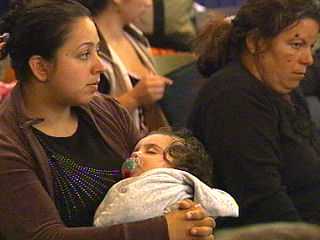
  • Racist Terror Targets Romanian Migrants again second day in a row

    Racist Terror Targets Romanian Migrants again second day in a row

    Police are investigating an attack on the home of another Romanian family in Belfast.

    It follows the attacks by racists on around 20 families in the city, which forced more than 100 Romanians out of their homes.

    A spokesman for the Police Service of Northern Ireland said nobody was injured in the latest incident, which happened in the east of the city at around 11pm.

    “There was an incident last night of criminal damage to a property which is being investigated as a hate crime,” he said, adding that a window was smashed in the attack.

    Northern Ireland Social Development Minister Margaret Ritchie said: “Very sadly we have seen another attack on a Romanian family in east Belfast last night.

    “All of this raises very fundamental questions about the type of society we want to develop and create in Northern Ireland some 15 years after the ceasefire.”

    She continued: “Northern Ireland is still deeply divided, deeply segregated. People in urban areas here in Belfast live in divided communities.

    “There is an urgent need for all government departments across the spectrum to develop a shared future that is an integrated society. The process of reconciliation and healing must start. And we must become a welcoming community.”

    Romania’s consul general is to hold high-level meetings in Northern Ireland over the attacks.

    Dr Mihai Delcea intervened when his countrymen fled to emergency accommodation in Belfast.

    A church hall and leisure centre were used to provide temporary refuge for those left homeless, while donated food and blankets poured in from members of the community.

    It is understood accommodation in the south Belfast area is being made available for one week.

    Dr Delcea will meet Ms Ritchie at the Northern Ireland Assembly at Stormont.

    Police have said they do not believe paramilitaries were involved in orchestrating the attacks that were condemned by Prime Minister Gordon Brown and local politicians.

    ITN