Month: June 2009

  • ‘Obama Is Certainly A European’, Prof Ash

    ‘Obama Is Certainly A European’, Prof Ash

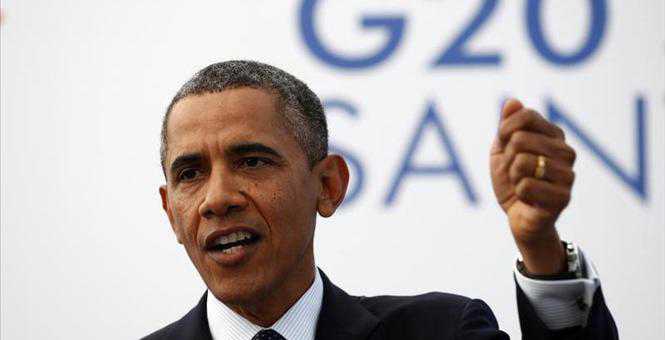
    Interview: ‘Obama Is Certainly A European’

    freeinternetpress

    Oxford historian Timothy Garton Ash discusses the demise of Europe’s social democrats, threats to the European Union posed by populist nationalists, the imminent change of government in Great Britain and America’s rapid slide to the left.

    SPIEGEL: Professor Garton Ash, in the midst of the worst economic crisis since the Great Depression voters have turned away from the social democrats and socialists in European elections. Isn’t this paradoxical?

    Timothy Garton Ash: I think there’s an explanation for it. First, voters apparently feel that the conservatives and liberals are more competent when it comes to economic policy. Second, we are witnessing a return to nationalism as a reaction to the great crisis. And when that happens, voters tend to move to the right rather than to the left, in some cases quite far to the right.

    SPIEGEL: It would seem that leftists, the critics of capitalism, would stand to benefit from a crisis of capitalism.

    Garton Ash: In essence, you have two social democratic parties in Germany, just as we do in Great Britain – with some minor differences. David Cameron’s Conservatives are taking (former Prime Minister) Tony Blair’s approach, except when it comes to European policy. And there is no decisive difference between the Christian Democrats and the Social Democrats in Germany, at least not by the standards of the last century.

    SPIEGEL: In other words, we lack ideological differences, and we are all social democrats?

    Garton Ash: I think so. We are not talking about capitalism as such, but about the question of which form of capitalism works best in our country. And then there is the question of competency. Our governments are behaving more and more like managers. After 10 years, voters are dissatisfied with the current management, and along comes a new one.

    SPIEGEL: The left lost its identity as a result of politicians like Tony Blair and (former German Chancellor) Gerhard Schroder, who believed in the free market and abandoned old social democratic principals. Isn’t that the reason for their defeat throughout Europe?

    Garton Ash: I don’t think so. In each case, the voter is voting for a version of European social liberal democracy. Perhaps a party that calls itself conservative can provide him with the better social democracy.

    SPIEGEL: At least 15 percent of the new European parliament will consist of right-wing extremists, protest parties and joke parties. What does this mean for Europe’s future?

    Garton Ash: If I remember correctly, Bertolt Brecht said: “The womb is fertile still, which bore this fruit.” We are deluding ourselves if we believe that the temptation of xenophobia and national populism no longer exists, and we shouldn’t be surprised to see these forces being strengthened in the course of a major economic crisis. We must make the social market economy credible again as the central solution for the middle class.

    SPIEGEL: How?

    Garton Ash: There are two major domestic policy challenges for the European Union. First: Creating meaningful work for the majority of society. And second: the integration of fellow citizens of non-European descent. These are two sides of the same coin. After all, what are the populists and xenophobes saying, from Latvia to Portugal, and from Finland to Greece? They are saying: We’re in bad shape, and the others are at fault. Both parts of that sentence must be addressed politically.

    SPIEGEL: In Great Britain, the racist British National Party has won two seats for the first time.

    Garton Ash: The same thing also happened in Romania, Finland and Hungary. There are comparable developments everywhere. Until now, the Conservatives in Great Britain have always managed to neutralize the extreme right, just as the CDU/CSU has done in Germany. This time, not only has the BNP won its first two seats, but the anti-European U.K. Independence Party (UKIP) has even won more votes than Labor. Now that’s unsettling.

    SPIEGEL: Do the successes of right-wing extremists and the defeat of the left also indicate a decline in solidarity among voters?

    Garton Ash: Solidarity is certainly a European value, but our willingness to display solidarity also has narrow limits, especially toward the poor, and even more so when they are of non-European origin. This stems partly from the fact that we have developed social welfare states that are difficult to sustain, especially in global competition. The integration of immigrants in the United States is easier, because there is no social welfare state there.

    SPIEGEL: While Europe slips to the right, the United States, under Barack Obama, is discovering the social market economy – and is slipping to the left.

    Garton Ash: Soon they’ll be more European than we are.

    SPIEGEL: How do you explain that?

    Garton Ash: Six years ago, we had the manifesto of Jurgen Habermas and Jacques Derrida in connection with the discussion of the Iraq crisis, pitting Europe, with its socially progressive values against the United States. In that respect Obama, in terms of his system of values, is certainly a European. This is because the middle class in the United States has experienced the brutality and injustice of the unbridled Anglo-Saxon free market economy firsthand – in the healthcare system, for example.

    ‘The True European Elections Will Take Place in Germany in September’

    SPIEGEL: The election was a European election, and yet Europe wasn’t really the issue at all. Instead, the election was about national politics. Does this demonstrate that Europe is not united at all, but in fact divided?

    Garton Ash: I like to say that the true European elections will take place in Germany at the end of September. The German parliamentary election is certainly more important for the future of the European Union.

    SPIEGEL: Why?

    Garton Ash: At issue is the behavior of the most important member of the European Union, which is obvious. The competencies of the European Parliament have certainly grown, and I believe that voters underestimate its true influence. Nevertheless, the European Union is no direct democracy, nor will it become one anytime soon. I believe that voters sense this, and in this regard their behavior is completely rational.

    SPIEGEL: The competencies of the European Parliament have been expanded, partly in the hope that this would increase voter turnout, and yet it was lower than ever this year.

    Garton Ash: I believe that voter turnout will not improve in the foreseeable future, at least not as long as we are not prepared to take the big step toward a United States of Europe, and toward direct democracy. Almost nowhere in Europe are we prepared to do this. The parliament will remain a part of the European system, but the decisive elements will continue to be the European Council, the council of ministers and the cooperation among democratically elected governments.

    SPIEGEL: Doesn’t the voters’ lack of interest show that political Europe has disengaged itself from its citizens?

    Garton Ash: I believe that the European project is a victim of its own success. In each country, the pro-European argument, all national differences aside, took the same form: We were doing poorly, but thanks to Europe our lot will improve. But then comes the moment when we take Europe for granted, which raises the question: What is the purpose of this Europe?

    SPIEGEL: And what is it?

    Garton Ash: We need, for example, a common European foreign policy, so that we can defend our interest in an increasingly non-European world.

    SPIEGEL: Are the words of Henry Kissinger still applicable …?

    Garton Ash:who was searching for a phone number for Europe? I believe, by the way, that he never said that. We did a lot of research at this university and were unable to find a source for the quote. In the end, I wrote to Henry Kissinger myself, and asked: Where did you say this? His response was wonderful. He wrote: I think I must have said it. I just don’t remember when and where. Of course, there is a kernel of truth to the remark. From Washington’s standpoint, or from Beijing’s or Moscow’s, Europe does not exist as a foreign policy player. And we must begin to exist.

    SPIEGEL: Do you really believe that Germany or France would give up its own foreign policy? Don’t national interests always trump European interests?

    Garton Ash: Why always? Why should something that was true in the past continue to apply in the future? The deutsche mark was the epitome of German identity, and yet the Germans gave it up. The history of the European Union over the last 50 years is a history of impossible things that happened, after all.

    SPIEGEL: And how do we arrive at a common foreign policy?

    Garton Ash: We don’t need a United States of Europe for that. What we need, most of all, is the political will of a strategic coalition of member states. It must include Germany, France and Great Britain, but others, as well. When that happens, it will be possible to pursue a common foreign policy.

    SPIEGEL: But there is a big difference between giving up a currency and giving up one’s own foreign policy. Economically speaking, the Union is accepted as a success story, but political Europe is criticized. In Great Britain and Eastern Europe, skeptics of the European Union are calling for a return to a purely economic union.

    Garton Ash: We already have a common foreign policy in the E.U. today – with regard to Tehran’s nuclear program, for example. And it is also accepted by the public. Now it is time to explain why it makes sense to pursue a common Russia policy, or a China policy, and why we are stronger together than individually.

    SPIEGEL: Isn’t it a vote of no confidence against Europe when voters elect someone like the Romanian Paris Hilton, the president’s daughter, Elena Basescu, to the parliament, as well as Sweden’s Pirate Party, and jokesters and odd characters like Austrian populist Hans-Peter Martin?

    Garton Ash: This is an indication of two things. First, voters are saying to themselves that the European Parliament isn’t all that important, so we can afford to elect a couple of pirates. Second – and this is something we see everywhere in Europe – there is a growing, deep dissatisfaction with the political class, to the point of a pre-revolutionary mood. The scandal over the expense accounts of British politicians we are currently experiencing is only one example among many.

    SPIEGEL: What is the source of this deep dissatisfaction?

    Garton Ash: I keep hearing the same thing from a wide range of people throughout Europe: The parliament is a self-service shop, and the political class is merely there to pursue its own interests.

    SPIEGEL: But that view is borne out by the scandal surrounding British members of parliament who used government funds to buy plasma TVs and porn films.

    Garton Ash: It’s really more complicated than that. The reason for this scandal is that politicians, almost 30 years ago, lacked the courage to approve better pay for members of parliament. That’s why they created this absurd system of so-called expenses, which were in fact allowances. As a result, all MPs became expense knights. And some of them were even real knights, right?

    SPIEGEL: At the moment, it looks as though David Cameron will be the next British prime minister.

    Garton Ash: Indeed.

    SPIEGEL: Cameron is threatening to hold a referendum over the Lisbon Treaty. That would be a declaration of war on Europe. Do you think he’ll do it?

    Garton Ash: If you were to inject a truth serum into David Cameron, he would probably have to confess to his secret hope that the treaty will be ratified by then. Then the referendum would no longer be necessary. I believe that, deep in his heart, he is not a euro-skeptic when it comes to Europe. The majority of his MPs and his foreign policy spokesman, William Hague, are euro-skeptics out of conviction. He has to use this rhetoric, especially because the UKIP did so well in the European election. And that’s why it is important for the European Union that the end of the Gordon Brown administration be drawn out for as long as possible.

    SPIEGEL: Cameron is now trying to forge an alliance with Polish and Czech opponents of Europe in the European Parliament.

    Garton Ash: Farce begets farce. Unfortunately, the man carelessly stated a position on the question of the European Parliament in 2005, when he was fighting for the leadership of the Conservatives. Aside from that, though, he learned an important lesson from Blair: Never commit to anything. But that’s why he must now remain true to himself, and is thereby compromising the British Conservatives. Suddenly they’re in bed with Latvian friends of the Waffen SS, Polish homophobes and Czech deniers of climate change.

    SPIEGEL: Is Gordon Brown truly, as they say, the worst British prime minister since Neville Chamberlain?

    Garton Ash: By no means. He isn’t a bad prime minister, as far as the content of his policies is concerned. I don’t know if the inexperienced David Cameron would have handled this major crisis more effectively. But as a personality, Brown is undoubtedly one of the weakest politicians. He makes one mistake after the next. He lacks the talent to sell his policies. He looks ridiculous when he tries in vain on YouTube, where he looks like a grandfather, to sell the people a solution to the expenses affair. He is hampered by the machinery of politics.

    SPIEGEL: Does he lack the charisma?

    Garton Ash: He lacks it completely. He hasn’t even managed to simply come across as a direct and upright character, which is something Angela Merkel has mastered. He could have been the Scottish Mr. Merkel. But he’s too Blairist for that. He wants to manipulate public opinion, and perhaps the worst thing is to try and fail in that endeavor.

    SPIEGEL: Who is responsible for the demise of New Labor? Tony Blair or Gordon Brown?

    Garton Ash: If this is its death, then it certainly had a nice life. In fact, it was quite successful: three legislative periods in a row, which is something Labor didn’t manage in 100 years. Besides, the Labor government is leaving behind a fairly substantial legacy – including Conservatives, who for the better part have adopted New Labor’s approach.

    SPIEGEL: Couldn’t Labor be successful again, after all, perhaps with Alan Johnson as a new party leader?

    Garton Ash: As a historian, I know that everything is possible in history, except cheating death. But I would bet a bottle of champagne that even the best Labor leader in the world will not win the next election.

    SPIEGEL: What kind of a bottle?

    Garton Ash: A magnum bottle, I would say.

    You can read this Spiegel interview with Historian Timothy Garton Ash in context here:

    www.spiegel.de/international/europe/0,1518,631359,00.html

    This interview was in German, it was translated from the German for Spiegel by Christopher Sultan.

    Source: www.reeinternetpress.com, 21.06.2009
  • Antiterrorism expert to speak at OAS Lecture Series

    Antiterrorism expert to speak at OAS Lecture Series

    tsfWASHINGTON, USA — The French investigating Magistrate, Jean-Louis Bruguière, in charge of counter-terrorist section and Vice-president of the Paris Court of Serious Claims (Tribunal de Grande Instance) will be the keynote speaker at the XXXVI OAS Lecture Series of the Americas that will take place on June 22nd, at the headquarters of the Organization of American States (OAS) in Washington DC.

    Bruguière, who is also an antiterrorism expert at the Council of Europe, the Commission of the European Union and the United Nations (UNODC), will speak about the “the Fight against Terrorism and the Promotion of Democratic Values” and the opportunities for Europe and the Americas to work together identifying more effective mechanisms to combat terrorism.

    As part of his work at the Court, Judge Bruguière has promoted a strong relationship with his counterparts as well as with intelligence agencies around the world. He also dealt with investigations concerning radical Islamism, in particular Al-Qaeda; and dealt with inquiries into separatist organizations such as IRA, PKK and LTTE.

    During his career, Bruguière has advised several States on the fight against terrorism and has participated in numerous symposia on this issue.. Recently, he was appointed by the European Union as an “Eminent European Person” representing Europe in the United States within the framework of the US “Terrorism Finance Tracking Programme/SWIFT”

    At the end of the main speaker’s presentation, a question and answer session will take place.

    Source:  www.caribbeannetnews.com, June 19, 2009

  • Are The Iranian Election Protests Another U S Orchestrated Color Revolution

    Are The Iranian Election Protests Another U S Orchestrated Color Revolution

    Paul Craig Roberts
    19 Jun 2009 Iran Faces Greater Risks Than It KnowsStephen Kinzer’s book, “All the Shah’s Men: An American Coup and the Roots of Middle East Terror,” …
    17 Jun 2009 Are You Ready for War With Demonized Iran?How much attention do elections in Japan, India, Argentina or any other country, get from the U.S. media? How …
    10 Jun 2009 Fear RulesThe power of irrational fear in the United States is extraordinary. It ranks up there with the Israel lobby, …

    A number of commentators have expressed their idealistic belief in the purity of Mir-Hossein Mousavi, Ayatollah Montazeri, and the Westernized youth of Tehran. The CIA destabilization plan, announced two years ago (see below), has somehow not contaminated unfolding events.

    The claim is made that Mahmoud Ahmadinejad stole the election because the outcome was declared too soon after the polls closed for all the votes to have been counted. Mousavi declared his victory several hours before the polls closed, however. This is classic CIA destabilization designed to discredit a contrary outcome. It forces an early declaration of the vote. The longer the time interval between the pre-emptive declaration of victory and the release of the vote tally, the longer Mousavi has to create the impression that the authorities are using the time to fix the vote. It is amazing that people don’t see through this trick.

    As for Montazeri’s charge that the election was stolen, he was the initial choice to succeed Ayatollah Khomeini, but lost out to the current supreme leader. He sees in the protests an opportunity to settle the score with Ayahtollah Khamenei. Montazeri has the incentive to challenge the election whether or not he is being manipulated by the CIA, which has a successful history of manipulating disgruntled politicians.

    There is a power struggle among the ayatollahs. Many are aligned against Ahmadinejad because he accuses them of corruption, thus playing to the Iranian countryside where Iranians believe the ayatollahs’ lifestyles indicate an excess of power and money. In my opinion, Ahmadinejad’s attack on the ayatollahs is opportunistic. It does make it odd for his American detractors to say he is a conservative reactionary lined up with the ayatollahs, however.

    Commenators are “explaining” the Iran elections based on their own illusions, delusions, emotions and vested interests. Whether or not the poll results predicting Ahmadinejad’s win are sound, there is, so far, no evidence beyond surmise that the election was stolen. There are credible reports, however, that the CIA has been working for two years to destabilize the Iranian government.

    On May 23, 2007, Brian Ross and Richard Esposito reported on ABC News, “The CIA has received secret presidential approval to mount a covert “black” operation to destabilize the Iranian government, current and former officials in the intelligence community tell ABC News.”

    On May 27, 2007, the London Telegraph independently reported, “Mr.

    Bush has signed an official document endorsing CIA plans for a propaganda and disinformation campaign intended to destabilize, and eventually topple, the theocratic rule of the mullahs.”A few days previously, the Telegraph reported on May 16, 2007, that Bush administration neocon warmonger John Bolton told the Telegraph that a U.S. military attack on Iran would “be a ‘last option’ after economic sanctions and attempts to foment a popular revolution had failed.”

    On June 29, 2008, Seymour Hersh reported in The New Yorker: “Late last year, Congress agreed to a request from President Bush to fund a major escalation of covert operations against Iran, according to current and former military, intelligence and congressional sources. These operations, for which the president sought up to four hundred million dollars, were described in a Presidential Finding signed by Bush, and are designed to destabilize the country’s religious leadership.”

    The protests in Tehran no doubt have many sincere participants. The protests also have the hallmarks of the CIA orchestrated protests in Georgia and Ukraine. It requires total blindness not to see this.

    Daniel McAdams has made some telling points. For example, neoconservative Kenneth Timmerman wrote the day before the election that “there’s talk of a ‘green revolution’ in Tehran.” How would Timmerman know that unless it was an orchestrated plan? Why would there be a ‘green revolution’ prepared prior to the vote, especially if Mousavi and his supporters were as confident of victory as they claim? This looks like definite evidence that the United States is involved in the election protests.

    Timmerman goes on to write that “the National Endowment for Democracy has spent millions of dollars promoting ‘color’ revolutions . … Some of that money appears to have made it into the hands of pro-Mousavi groups, who have ties to non-governmental organizations outside Iran that the National Endowment for Democracy funds.”

    Timmerman’s own neocon Foundation for Democracy is “a private, nonprofit organization established in 1995 with grants from the National Endowment for Democracy (NED), to promote democracy and internationally recognized standards of human rights in Iran.”

    To find out more about Paul Craig Roberts, and read features by other Creators Syndicate writers and cartoonists, visit the Creators Syndicate web page at www.creators.com.

    COPYRIGHT 2009 CREATORS SYNDICATE INC.

  • DARK FAMILY SECRETS OF BNP LEADER NICK GRIFFIN

    DARK FAMILY SECRETS OF BNP LEADER NICK GRIFFIN

    By David Jarvis

    SURPRISE: The 1871 Census has Griffin’s great-grandfather George as a hawker living in a van
    SURPRISE: The 1871 Census has Griffin’s great-grandfather George as a hawker living in a van

    BNP leader Nick Griffin, who last week branded gypsies “anti social and criminal”, can trace his roots to travellers hawking cheap goods from a horse and cart.

    The controversial MEP’s great-grandfather George Griffin roamed from town to town in a horse-drawn caravan with his wife Esther and their children, selling china and crockery.

    Census reports show he spent years living the gypsy life, never settling in one place because as an impoverished traveller he was on the margins of society and never fully accepted anywhere.

    Last week Griffin, 50, who condemned attacks on Romanian gypsies in Northern Ireland, said: “We have to bear in mind that the gypsy community is notorious for its extremely high rate of criminality and antisocial behaviour.

    “Everyone in Romania and eastern Europe knows this and it is one reason why their governments are so keen to encourage them to come over here.”

    Yet between 1868 and 1874 records show his great-grandfather represented just such a minority. He travelled in one caravan with his  while his business partner, Mary Ann Hollis, travelled in another.

    George habitually lied about his age, describing himself as 25 in the 1871 Census, 41 a decade later, 47 in the 1891 Census and 58 in 1901. He plied his precarious trade in Devon and Cornwall and could often be found parked outside the London Inn pub in Liskeard.

    The 1871 Census shows the caravans were parked next to the Cornish pub, noting: “Six persons not in houses”. In the column marked “Houses” it reports them as living in vans.

    While George lived with Esther, 22, and his 10-month-old son George Junior in one, Mary Ann Hollis, 37, was in the second with George’s three-year-old daughter Mary Ann Griffi n and a William Huxham, 16.

    He is described as a servant but probably earned his keep selling wares. In the Census column marked “Rank, profession or occupation” George is a “licensed hawker dealing in china and crockery ware”.

    His lifestyle would not have fitted with the intolerant views of Mr Griffin and the British National Party which does not accept black people as members.

    “Griffin has called for an immediate halt to immigration, and voluntary resettlement of immigrants legally living in Britain.

    When told this week of Mr Griffin’s heritage, shocked BNP deputy leader Simon Darby said: “That will please him.” Genealogy expert Nick Barratt added: “George Griffin travelled around, scratching a living. His group will have roamed from street to street like ragtag travellers trying to survive on their wits and selling their wares.

    “And it is highly likely he spent many more years living the life of a traveller before he married.

    “Today we would call his group travellers and just like today they would have been marginalised on the edge of society and seen as outsiders.

    “They will have been treated with a degree of suspicion and as a minority.”

    Source:  www.express.co.uk, June 21, 2009

  • A ‘great venture’:overthrowing the government of Iran

    A ‘great venture’:overthrowing the government of Iran

    by Mark Curtis From Lobster 30


    This is a slightly abridged version of part of chapter four of Mark Curtis’s book The Ambiguities of Power: British Foreign Policy since 1945 (Zed Press, 1995).

    * * * 

    In August 1953 a coup overthrew Iran’s nationalist government of Mohammed Musaddiq and installed the Shah in power. The Shah subsequently used widespread repression and torture in a dictatorship that lasted until the 1979 Islamic revolution. The 1953 coup is conventionally regarded primarily as a CIA operation, yet the planning record reveals not only that Britain was the prime mover in the initial project to overthrow the government but also that British resources contributed significantly to the eventual success of the operation. Two first-hand accounts of the Anglo-American sponsorship of the coup – by the MI6 and CIA officers primarily responsible for it – are useful in reconstructing events. (1) Many of the secret planning documents that reveal the British role have been removed from public access and some of them remain closed until the next century – for reasons of ‘national security’. Nevertheless, a fairly clear picture still emerges. Churchill later told the CIA officer responsible for the operation that he ‘would have loved nothing better than to have served under your command in this great venture’. (2)

    In the 1950s the Anglo Iranian Oil Company (AIOC) – later renamed British Petroleum – which was managed from London and owned by the British government and British private citizens, controlled Iran’s main source of income: oil. According to one British official, the AIOC ‘has become in effect an imperium in imperio in Persia’. Iranian nationalists objected to the fact that the AIOC not only made revenues from Iranian oil ‘greatly in excess of the revenues of the Persian government but [it] dominates the whole economic life of Persia, and therefore impairs her independence’. (3) The AIOC was recognised as ‘a great foreign organisation controlling Persia’s economic life and destiny’. The British oil business fared well from this state of affairs; the AIOC made £170 million in profits in 1950 alone. (4)

    Iranians could also point to AIOC’s effectively autonomous rule in the parts of the country where the oilfields lay, its low wage rates and the fact that the Iranian government was being paid royalties of 10% or 12% of the company’s net proceeds, whilst the British government received as much as 30% of these in taxes alone. (5) Shown the overcrowded housing afforded to some of the AIOC workers, a British official commented: ‘Well, this is just the way all Iranians live’. (6)

    Britain’s Ambassador in Tehran commented that ‘it is so important to prevent the Persians from destroying their main source of revenue… by trying to run it themselves… The need for Persia is not to run the industry for herself (which she cannot do) but to profit from the technical ability of the West’.(7) The British Minister of Fuel and Power explained that ‘in the case of a mineral like oil [the Iranians] are of course morally entitled to a royalty’ but to say ‘that morally they are entitled to 50%, or… even more of the profits of enterprises to which they have made no contribution whatever, is bunk, and ought to be shown to be bunk’. (8)


    The British priority was to support political ‘stability’ in the country, in effect by aiding Iranian parliamentarians and Prime Ministers ‘to preserve the existing social order from which they profit so greatly’ (9) – as did, it might be added, British oil interests. One difference with the National Front (of which Musaddiq was the leader)was that its members were, according to the Ambassador in Iran,’comparatively free from the taint of having amassed wealth and influence through the improper use of official positions; they can therefore attack the majority deputies, few of whom are in the same happy condition without fear of dangerous counter-attacks’. (10)


    Origins

    The origin of British planning to aid the overthrow of Musaddiq lay in his decision to nationalise oil operations in Iran, which was passed into law in May 1951, the month after he became Prime Minister. In the dispute that followed, Musaddiq offered to compensate the AIOC but Britain demanded either a new oil concession or a settlement that would compensate for loss of future profits. ‘In other words’, according to Iranian scholar Homa Katouzian,’the Iranians would have had either to give up the spirit of the nationalisation or to compensate the AIOC not just for its investment but for all the oil which it would have produced in the next 40 years’. (11) Nationalisation and the offer of compensation were perfectly legitimate in international law though this did not appear to be relevant in guiding subsequent British actions. ‘If Musaddiq seemed to be inflexible’, Katouzian comments further, ‘it was because he insisted on basic principles which would have been observed if the dispute had been between two equal nations’. (12) It was a fatal misunderstanding for which he – and one might add ultimately the Iranians – paid dearly. ‘Persian public opinion’, the British Ambassador commented, ‘is unanimous in rejecting the [British] offer’. (13) But Britain did ‘not consider that a deal on acceptable terms can ever be made with’ Musaddiq’. (14) According to the Foreign Office’s description of the US State Department’s view, ‘a reasonable solution with Musaddiq is impossible’: nevertheless, it added ominously, ‘there is hope of a change which would bring moderate elements into control’. (15)


    The options

    A number of options were available for removing the threat posed to British oil interests. First, the Chiefs of Staff observed that ‘the simplest method of bringing the Persians to heel might well be simply to stop the production and export of oil’. This the AIOC subsequently did, depriving Iran of its main source of income until the 1953 coup, even though, as the Chiefs of Staff had noted, ‘the effect might be to bankrupt Persia thus possibly leading to revolution’. (16) Other, mainly US, oil companies aided the policy by refusing to handle Iranian oil, ‘principally to prevent other oil-exporting countries… from learning a “bad” lesson from Iran’s example’, Katouzian comments; (17) an early example of the ‘domino theory’.

    The second dimension of British policy was to exert pressure, and begin covert planning, to install ‘a more reasonable government’, as Foreign Secretary Eden put it. (18) ‘It has been our objective for some time to get Sayyid Zia appointed Prime Minister’, the Foreign Office noted in September 1951. (19) This was a man who had ‘no popular support’ and whose appointment ‘was likely to provoke a strong public reaction’,according to Iranian academic Fakhreddin Azimi. (20) But Zia had the quality of being ‘the one man who would be able, and anxious, to get a reasonable oil settlement with us’ and adopt a long-term policy of ‘development and reform which is essential for Persia’s future stability’, one Foreign Office memorandum noted. (21)

    The third option was direct military intervention. The military occupation and holding of the area around Abadan – the site of the world’s largest oil refinery and the centre of AIOC’s operations – ‘would demonstrate once and for all to the Persians British determination not to allow the… AIOC to be evicted from Persia and might well result in the downfall of the Mussadiq regime and its replacement by more reasonable elements prepared to negotiate a settlement’. Also, ‘it might be expected to produce a salutary effect throughout the Middle East and elsewhere, as evidence that United Kingdom interests could not be recklessly molested with impunity’. (22) Plans were thus laid for war against Iran. It was recognised, for instance, that ‘on Abadan island the Persians now had four infantry battalions, a naval and marine garrison of some 1200 men, and a dozen or so modern American tanks’. (23) This option was viewed by the Foreign Office, however, as ‘quite impracticable’ because of ‘the risk that the Persians could effectively resist the comparatively small number of troops which could be brought in quickly’. (24) The Foreign Secretary and the Defence Minister of the then Labour government both favoured the use of military force to seize the oil installations. The option of military intervention was kept open until September 1951, when the British government finally decided on the evacuation of British personnel instead. (25)

    The Churchill government

    Upon coming to office the following month, Churchill berated his predecessors ‘who had scuttled and run from Abadan when a splutter of musketry would have ended the matter’. (26) ‘If we had fired the volley you were responsible for at Ismaila at Abadan’, Churchill explained to his Foreign Secretary, Eden,’none of these difficulties……..would have occurred’. (27) (The reference was to the British action at the town of Ismaila, in Egypt in January 1952. After an assault by Egyptian rebels on a British military base, Britain occupied the town of Ismaila, surrounded the police headquarters and then proceeded to kill fifty people and wounding a hundred before the surrender. (28) In Iran, however, despite Labour’s inaction, Churchill noted a few months into his term that ‘by sitting still on the safety valve and showing no weariness we are gradually getting them into submission’. (29)

    Covert operations begin

    ‘Our policy’, a British official explained, ‘was to get rid of Mossadeq as soon as possible’. (30) Thus the Labour government initiated the plan to organise the overthrow of the Iranian Prime Minister. In June 1951, shortly after Musaddiq’s oil nationalisation decree, Ann Lambton, a lecturer at the School of Oriental and African Studies in London, had suggested in a conversation with a Foreign Office official ‘covert means… to undermine the position of Mr. Moussadek’ and that the ‘ideal man to do it would be Dr. Zaehner’, an Oxford lecturer who had been ‘extremely successful in covert propaganda in 1944’ in Iran. (31) Zaehner was swiftly despatched to Iran by the Labour government to aid the fall of Musaddiq, for which he was provided with considerable sums of money. (32)

    After the failure of the oil negotiations the main British negotiator advised the Shah that the ‘only solution’ was ‘a strong government under martial law and the bad boys in prison for two years or so’. (33) The Ambassador in Tehran concurred, noting that ‘if only the Shah can be induced to take a strong line there is a good chance that Musaddiq may be got rid of’. ‘Any new government that is worth its salt’ would then ‘have to take drastic action against individual extremists’. (34) A fortnight later, in September 1951, the embassy was noting its preference ‘for a change of government to be engineered’. (35) An adviser at the British embassy, Colonel Wheeler, explained on 29 September that ‘combined Anglo-American action could, of course, have removed [Musaddiq] at any time during the past six months…Given a united Anglo-American front, a change of government could almost certainly be effected without difficulty or disturbance’. (36) In November, the Foreign Office official who had discussed ‘covert means’ with Lambton reported that ‘our…..unofficial efforts to undermine Dr. Mussadiq are making good progress’. (37)

    With 1952 came the British preference for ‘a non-communist coup d’etat preferably in the name of the Shah. This would mean an authoritarian regime’, (38) the embassy in Tehran noted. On 28 January the Foreign Office declared that ‘the only hope of getting rid of Dr. Mussadiqlies in a coup d’etat, provided always a strong man can be found equal to the task’. It also observed that the Ambassador in Iran believed that this ‘strong man’ would ‘rule in the name of the Shah’. ‘Such a dictator’, the Foreign Office continued, expressing the Ambassador’s preference, ‘would carry out the necessary administrative and economic reforms and settle the oil question on reasonable terms’. In fact, the Ambassador ‘seems to favour the authoritarian coup d’etat’. ‘An oil settlement to have any chance of acceptance by Dr. Musaddiq would no doubt mean an appreciable departure from our principles’, the Foreign Office noted. It then stated who such a reasonable new leader might be: General Zahidi, who was to become the Prime Minister after the coup. (39)

    By March 1952, the British embassy was observing that, unfortunately, the army was ‘unlikely to take overt action against Musaddiq’ but that its attitude might become ‘more positive’. (40) The following month, the Shah was reported as being ‘proud’ of his resisting British pressures for ‘precipitory action’, (41) since Britain had ‘made it abundantly clear that we desire the fall of Musaddiq as soon as possible’. (42) In July and August the embassy continued to note that General Zahidi ‘might well be adequate’ for presiding over a coup; (43) in fact as an alternative to Musaddiq, Zahidi was ‘the only one immediately in sight’. (44) On 4 August embassy official Sam Falle suggested that ‘we propose to the Americans that another member of the National Front be brought into power’, before noting that ‘this proposal has recently been made by the State Department’. ‘We should leave the name-suggesting to the Americans’. ‘It should not be difficult to bring the Americans’ candidate… to power’, the minute states. Then, in order to secure an acceptable oil agreement, this candidate would in turn be removed ‘in favour of someone more prepared to reach agreement with us’. This strategy ‘should be easier than the removal of Mussadiq who is, unfortunately, regarded by many of the ignorant as a messiah’. (45) Falle met Zahidi on 6 August and recorded that ‘he is increasing his activity and has the courage to put himself up as a candidate for the premiership in these dangerous times… I understand that he has contacts, probably indirect, with the Americans and I suggested to him that there would be no harm in making his claims further known to the Americans’. Zahidi, Falle concluded, ‘does seem to offer some alternative to Mussadiq’. (46) The Ambassador then confirmed that Zahidi ‘will make his own contacts with American [sic] embassy and does not wish to appear to be our candidate’. (47)


    Joint CIA-MI6 operation

    In October 1952, the Iranian government closed down the British embassy (claiming – correctly – that certain intrigues were taking place there), thus removing Britain’s cover for its covert activities. An MI6 and Foreign Office team met with the CIA in November and proposed the joint overthrow of Iran’s government based on Britain’s plans. (48) Agents of the British in Iran had been provided with a radio transmitter with which to maintain contact with MI6, and the head of the MI6 operation put the CIA in touch with other useful allies in the country. (49) British pay-offs had already secured the cooperation of ‘senior officers of the army and police, deputies and senators, mullahs, merchants, newspaper editors and elder statesmen, as well as mob leaders’.’These forces’, explained the MI6 officer in charge of the British end of the operation, ‘were to seize control of Tehran, preferably with the support of the Shah but if necessary without it, and to arrest Musaddiq and his ministers’. (50) On 3 February 1953 a British delegation met with the CIA director and the US Secretary of State and decided to send the head of the CIA’s operation to investigate the situation in Iran. (51) On 18 March ‘the CIA was ready to discuss tactics in detail with us for the overthrow of Musaddiq’ and it was formally agreed in April that General Zahidi was the acceptable candidate to replace him. (52) By then, destabilisation other than by bribery was taking place and British and US agents were also involved in plans to kidnap key officials and political personalities. In one instance the Chief of Police was abducted, and finally tortured and murdered. (53)


    The coup decision is taken

    The go-ahead for the coup was finally given by the US in late June – Britain by then already having presented a ‘complete plan’ to the CIA (54) – and Churchill’s authorisation soon followed, the date being set for mid-August. (55) That month, the head of the CIA operation met with the Shah, the CIA director visited some members of the Shah’s family in Switzerland, whilst a US army general arrived in Tehran to meet ‘old friends’, among them the Shah and General Zahidi. (56)


    When the coup scenario finally began, huge demonstrations proceeded in the streets of Tehran, funded by CIA and MI6 money, $1 million dollars of which was in a safe in the US embassy (57) and £1.5 million which had been delivered by Britain to its agents in Iran, according to the MI6 officer responsible for delivering it. (58)


    According to then CIA officer Richard Cottam, ‘that mob that came into north Tehran and was decisive in the overthrow was a mercenary mob. It had no ideology. That mob was paid for by American dollars.’ (59) One key aspect of the plot was to portray the demonstrating mobs as supporters of the Communist Party – Tudeh – in order to provide a suitable pretext for the coup and the assumption of control by the Shah. Cottam observes that agents working on behalf of the British ‘saw the opportunity and sent the people we had under our control into the streets to act as if they were Tudeh. They were more than just provocateurs, they were shock troops, who acted as if they were Tudeh people throwing rocks at mosques and priests’. (60) ‘The purpose’, Brian Lapping explains, ‘was to frighten the majority of Iranians into believing that a victory for Mussadeq would be a victory for the Tudeh, the Soviet Union and irreligion’. (61)


    The head of the CIA operation also sent envoys to the commanders of some provincial armies, encouraging them to move on to Tehran. (62) In the fighting in the capital, 300 people were killed before Musaddiq’s supporters were defeated by the Shah’s forces. AUS general later testified that ‘the guns they had in their hands, the trucks they rode in, the armoured cars that they drove through the streets, and the radio communications that permitted their control, were all furnished through the [US] military defence assistance program’. (63)


    ‘All in all’, US Iran analyst Barry Rubin comments, ‘only five Americans with a half-dozen Iranian contacts had organised the entire uprising’. (64) The British input, however, had clearly been significant. One Iranian agent of the British – Shahpour Reporter, who subsequently served as adviser to the Shah – was later rewarded with a knighthood, before becoming a chief middleman for British arms sales to Iran, in particular for the manufacturers of Chieftain tanks and Rapier missiles. (65) Two years after the coup, the head of the MI6 end of the operation became Director of the Royal Institute of International Affairs, one of Britain’s leading ‘independent’ academic research institutes. (66)


    A communist threat?

    The customary explanation of the coup asserts that it occurred in response to an impending takeover by the Communist Party – Tudeh, which had close contacts with the Soviet Union -and therefore prevented the establishment of a Soviet-backed regime. A slight variation of the ‘communist threat’ scenario deems Musaddiq’s government to have been increasingly reliant on the Tudeh to the extent that the latter were gaining ascendancy. (67) Neither of these two explanations can be properly substantiated.

    In September 1952 the UK Ambassador noted that ‘the communists have been opportunist rather than far-sighted [and] they have played a largely passive role, content to let matters take their course with only general encouragement from the sidelines…they have not been a major factor in the development of the Mussadiq brand of nationalism’. (68) In March 1953, a few months before the coup, the US EMBASSY stated that ‘there was little evidence that in recent months the Tudeh had gained in popular strength, although its steady infiltration of the Iranian government and other institutions [has] continued’. (69) As for the Tudeh’s attempting a coup, a State Department intelligence report of January 1953 noted that ‘an open Tudeh move for power……would probably unite independents and non-communists of all political leanings and would result……in energetic efforts to destroy the Tudeh by force’. (70) Iranian scholar Fakhreddin Azimi concurs with this reasoning, noting that ‘although the Tudeh had been successful in enlisting a number of officers, the military authorities were not unaware of this…The seizure of power by means of a coup was not part of Tudeh strategy, and it was also unlikely that the Russians… would endorse such a move. In any case, the state…..and the army……not to mention the religious establishment, were still capable of countering a Tudeh coup’. Musaddiq himself did not fear a communist coup ‘but rather a right-wing royalist coup’, like that which did occur, with important Anglo-American sponsorship. (71)


    The alleged ‘communist threat’ was, however, used to great effect. The Foreign Office stated that ‘it is essential at all costs that His Majesty’s Government should avoid getting into a position where they could be represented as a capitalist power attacking a Nationalist Persia’. (72) In fact, the British consistently used this threat scenario to promote US interest in finally taking action against Musaddiq, since it had been US policy, much to Britain’s consternation, previously to support Musaddiq as a counter to communist influence. (73) The British embassy in Tehran noted in August 1952 that, in proposing the overthrow of Musaddiq to the Americans, ‘we could say that, although we naturally wish to reach an oil settlement eventually, we appreciate that the first and most important objective is to prevent Persia going communist’. (74) The MI6 officer believed ‘the Americans would be more likely to work with us if they saw the problem as one of containing communism rather than restoring the position of the AIOC’. (75) The deliberate funding of demonstrators posing as Tudeh supporters also gives the game away as to the degree of seriousness with which the communist threat was actually feared. (76)


    ‘Stability’ is restored

    ‘I owe my throne to God, my people, my army – and to you’, the Shah told the head of the CIA operation responsible for installing him; by ‘you’ meaning the US and Britain. (77) Now that the ‘dictator’ had been installed in line with Foreign Office wishes, ‘stability’ could be restored, initially under the auspices of the favoured candidate for Prime Minister, General Zahidi. Thus the British understanding, outlined in 1951, that the Shah ‘does not sufficiently check the members of his family and their entourage from interference in politics and their profitable incursions into business’ and that ‘the chief complaint of his political critics [is] that he wishes to monopolise power for himself’, became a harsh reality. (78) An agreement was signed the year following the coup establishing a new oil consortium in which Britain and the US both had a 40% interest, and which controlled the production, pricing and export of Iranian oil. Britain’s share was thus reduced from the complete control it had prior to Musaddiq but was nevertheless more than the latter’s nationalisation plan had envisaged. The US, meanwhile, had gained a significant stake in Iranian oil and political influence in the country, a change of fortune which symbolised the relative power of the partners in the special relationship.

    * * *

    Footnotes

    1. C. M. Woodhouse, Something Ventured,(Granada, London, 1982); Kermit Roosevelt, Countercoup, (McGraw Hill, London 1979).

    2. Roosevelt, p. 207.

    3. D. Fergusson to R. Stokes, 3 October 1951, PRO, FO 371/91599

    4. W. Roger Louis, The British Empire in the Middle East, 1947-1951: Arab nationalism, the United States and postwar imperialism, (Clarendon, Oxford, 1984), p. 682.

    5. Homa Katouzian, Mussadiq and the struggle for power in Iran, (I. B. Tauris and Co., London, 1990), p. 139.

    6. Barry Rubin, Paved with good intentions: the American experience and Iran, (Oxford University Press, Oxford, 1980), p. 67.

    7. Shepherd to O. Franks, 2 October 1951, PRO, FO 371/91464

    8. D. Fergusson to R. Stokes, 3 October 1951, PRO, FO 371/91599

    9. G. Middleton to A. Eden, 25 February 1952, PRO, FO248/1531

    10. F. Shepherd to H. Morrison, 15 March 1951, PRO, FO371/91454

    11. Katouzian p. 144

    12. Ibid. p. 145

    13. G. Middleton to A. Eden, 23 September 1952, PRO, FO248/1531

    14. F. Shepherd to Foreign Office, 26 January 1952, PRO, FO 248/1531

    15. Foreign Office memorandum , ‘Persia: the State Department’s views’, 16 April 1952, PRO, FO 371/98688

    16. Chiefs of Staff Committee, Confidential Annex to COS(51) 81st meeting, 16 May 1951, PRO, FO 371/91460.

    17. Katouzian p. 145

    18. A. Eden,’Persia: Memorandum by the Secretary of State for Foreign Affairs’, 5 August 1952, PRO, CAB 129/54/CP (52) 276

    19. R. Bowker to Prime Minister, 2 September 1951, PRO, FO 371/91458

    20. Cited in Fakhreddin Azimi, Iran: The Crisis of Democracy 1941-1953, (I. B. Tauris and co., London 1989), p. 251.

    21. R. Bowker to Prime Minister, 2 September 1951, PRO, FO 371/91463

    22. H. Morrison, ‘Persia: Memorandum by the Secretary of State for Foreign Affairs’, 20 July 1951, PRO, CAB, 129/46/CP (51)212

    23. Chiefs of Staff Committee meeting minutes, 4 May 1951, PRO, FO 371/91458

    24. Memorandum by G. Furlonge, 24 May 1951, PRO, FO371/91460

    25. Louis p. 676

    26. Brian Lapping, End of Empire, (Paladin, London, 1989), p. 264

    27. Prime Minister to Foreign Secretary, 17 June 1952, PRO, FO 371/98600

    28. Lapping p. 303

    29. Prime Minister to Foreign Secretary, 17 June 1952, PRO, FO 371/98600

    30. Lapping p. 266

    31. E. Berthoud to R. Bowker, 15 June 1951, PRO, FO 371/91548

    32. Azimi pp. 264-5; Lapping p. 265

    33. Cited in Azimi p. 262

    34. F. Shepherd to W. Strang, 11 September 1951, PRO, FO371/91463

    35. Tehran to Foreign Office, 26 September 1951, PRO, FO371/91464

    36. G. Wheeler to R. Bowker, 29 October 1951, PRO, FO371/91464

    37. Memorandum to E. Berthoud, 2 November 1951, PRO, FO, 371/91609

    38. Tehran to Foreign Office, 26 January 1952, PRO, FO371/98684

    39. Foreign Office memorandum, ‘Sir F. Shepherd’s analysis of the Persian situation’, 28 January 1952, PRO, FO 371/98684

    40. G. Middleton to Foreign Office, 5 March 1952, PRO, FO 248/1531

    41. Memorandum by Dr. Zaehner, 17 May 1952, PRO, FO 248/1531

    42. Memorandum by Pyman, 17 April 1952, PRO, FO 248/1531

    43. Tehran to Foreign Office, 28 July 1952, CAB 129/54/CP(52) 275

    44. Memorandum by S. Falle, 2 August 1952, PRO, FO 248/1531

    45. Memorandum by S. Falle, 4 August 1952, 1952, PRO, FO 248/1531

    46. Memorandum by S. Falle, 7 August 1952, PRO, FO 248/1531

    47. G. Middleton to Foreign Office, 7 August 1952, PRO, FO 248/1531

    48. Lapping p. 270; Rubin p. 77

    49. Lapping p. 269

    50. Woodhouse p. 118

    51. Rubin p. 78

    52. Woodhouse p. 124

    53. Katouzian pp 183-4; Azimi p. 320

    54. Roosevelt p. 1

    55. Lapping p. 271

    56. Sephehr Zabih, The Mosadeq era: Roots of the Iranian Revolution, (Lake View Press, Chicago, 1982), pp. 124-5; Roosevelt pp. 146-55.

    57. William Blum, The CIA: a forgotten history, (Zed Press, London 1986), p. 72; Rubin p. 82

    58. Lapping p. 268

    59. Ibid p. 274

    60. Ibid. pp 273-4; see also Azimi p. 331

    61. Ibid. p. 274

    62. Katouzian p. 190

    63. Blum p. 73

    64. Rubin p. 84

    65. Zabih, pp. 140-2

    66. Woodhouse p. 138

    67. See, for example, Brian Holden Reid, ‘The”Northern Tier” and the Baghdad pact’, in John Young (ed.), The foreign policy of Churchill’s peacetime administration, 1951-1955, (Leicester University Press, Leicester, 1988), pp.165-6 and 168.

    68. G. Middleton to A. Eden, 2 September 1952, PRO, FO 248/1531

    69. US embassy Tehran dispatch, 19 May 1953, PRO, FO, 371/104566

    70. Blum p. 70

    71. See Azimi pp. 331-41

    72. Foreign Office to Washington, 8 June 1951, PRO, FO 371/91459

    73. Lapping p. 270; Katouzian p. 177

    74. Memorandum by S. Falle, 4 August 1952, PRO, FO 248/1531

    75. Woodhouse p. 110

    76. AIOC documents discovered in June 1951 revealed that the company had actually been aiding the Tudeh press to render the latter’s opposition to Mussadiq more effective. Katouzian p.115.

    77. Roosevelt p. ix

    78. F. Shepherd to H. Morrison, 21 May 1951, PRO, FO 371/91459

    December 1995

    Lobster


  • Blood borders

    Blood borders

    How a better Middle East would look
    BY RALPH PETERS

    International borders are never completely just. But the degree of injustice they inflict upon those whom frontiers force together or separate makes an enormous difference – often the difference between freedom and oppression, tolerance and atrocity, the rule of law and terrorism, or even peace and war.

    The most arbitrary and distorted borders in the world are in Africa and the Middle East. Drawn by self-interested Europeans (who have had sufficient trouble defining their own frontiers), Africa’s borders continue to provoke the deaths of millions of local inhabitants. But the unjust borders in the Middle East – to borrow from Churchill – generate more trouble than can be consumed locally.

    While the Middle East has far more problems than dysfunctional borders alone – from cultural stagnation through scandalous inequality to deadly religious extremism – the greatest taboo in striving to understand the region’s comprehensive failure isn’t Islam but the awful-but-sacrosanct international boundaries worshipped by our own diplomats.

    Of course, no adjustment of borders, however draconian, could make every minority in the Middle East happy. In some instances, ethnic and religious groups live intermingled and have intermarried. Elsewhere, reunions based on blood or belief might not prove quite as joyous as their current proponents expect. The boundaries projected in the maps accompanying this article redress the wrongs suffered by the most significant “cheated” population groups, such as the Kurds, Baluch and Arab Shia, but still fail to account adequately for Middle Eastern Christians, Bahais, Ismailis, Naqshbandis and many another numerically lesser minorities. And one haunting wrong can never be redressed with a reward of territory: the genocide perpetrated against the Armenians by the dying Ottoman Empire.

    Yet, for all the injustices the borders re-imagined here leave unaddressed, without such major boundary revisions, we shall never see a more peaceful Middle East.

    Even those who abhor the topic of altering borders would be well-served to engage in an exercise that attempts to conceive a fairer, if still imperfect, amendment of national boundaries between the Bosporus and the Indus. Accepting that international statecraft has never developed effective tools – short of war – for readjusting faulty borders, a mental effort to grasp the Middle East’s “organic” frontiers nonetheless helps us understand the extent of the difficulties we face and will continue to face. We are dealing with colossal, man-made deformities that will not stop generating hatred and violence until they are corrected.

    As for those who refuse to “think the unthinkable,” declaring that boundaries must not change and that’s that, it pays to remember that boundaries have never stopped changing through the centuries. Borders have never been static, and many frontiers, from Congo through Kosovo to the Caucasus, are changing even now (as ambassadors and special representatives avert their eyes to study the shine on their wingtips).

    Oh, and one other dirty little secret from 5,000 years of history: Ethnic cleansing works.

    Begin with the border issue most sensitive to American readers: For Israel to have any hope of living in reasonable peace with its neighbors, it will have to return to its pre-1967 borders – with essential local adjustments for legitimate security concerns. But the issue of the territories surrounding Jerusalem, a city stained with thousands of years of blood, may prove intractable beyond our lifetimes. Where all parties have turned their god into a real-estate tycoon, literal turf battles have a tenacity unrivaled by mere greed for oil wealth or ethnic squabbles. So let us set aside this single overstudied issue and turn to those that are studiously ignored.

    The most glaring injustice in the notoriously unjust lands between the Balkan Mountains and the Himalayas is the absence of an independent Kurdish state. There are between 27 million and 36 million Kurds living in contiguous regions in the Middle East (the figures are imprecise because no state has ever allowed an honest census). Greater than the population of present-day Iraq, even the lower figure makes the Kurds the world’s largest ethnic group without a state of its own. Worse, Kurds have been oppressed by every government controlling the hills and mountains where they’ve lived since Xenophon’s day.

    The U.S. and its coalition partners missed a glorious chance to begin to correct this injustice after Baghdad’s fall. A Frankenstein’s monster of a state sewn together from ill-fitting parts, Iraq should have been divided into three smaller states immediately. We failed from cowardice and lack of vision, bullying Iraq’s Kurds into supporting the new Iraqi government – which they do wistfully as a quid pro quo for our good will. But were a free plebiscite to be held, make no mistake: Nearly 100 percent of Iraq’s Kurds would vote for independence.

    As would the long-suffering Kurds of Turkey, who have endured decades of violent military oppression and a decades-long demotion to “mountain Turks” in an effort to eradicate their identity. While the Kurdish plight at Ankara’s hands has eased somewhat over the past decade, the repression recently intensified again and the eastern fifth of Turkey should be viewed as occupied territory. As for the Kurds of Syria and Iran, they, too, would rush to join an independent Kurdistan if they could. The refusal by the world’s legitimate democracies to champion Kurdish independence is a human-rights sin of omission far worse than the clumsy, minor sins of commission that routinely excite our media. And by the way: A Free Kurdistan, stretching from Diyarbakir through Tabriz, would be the most pro-Western state between Bulgaria and Japan.

    A just alignment in the region would leave Iraq’s three Sunni-majority provinces as a truncated state that might eventually choose to unify with a Syria that loses its littoral to a Mediterranean-oriented Greater Lebanon: Phoenecia reborn. The Shia south of old Iraq would form the basis of an Arab Shia State rimming much of the Persian Gulf. Jordan would retain its current territory, with some southward expansion at Saudi expense. For its part, the unnatural state of Saudi Arabia would suffer as great a dismantling as Pakistan.

    A root cause of the broad stagnation in the Muslim world is the Saudi royal family’s treatment of Mecca and Medina as their fiefdom. With Islam’s holiest shrines under the police-state control of one of the world’s most bigoted and oppressive regimes – a regime that commands vast, unearned oil wealth – the Saudis have been able to project their Wahhabi vision of a disciplinarian, intolerant faith far beyond their borders. The rise of the Saudis to wealth and, consequently, influence has been the worst thing to happen to the Muslim world as a whole since the time of the Prophet, and the worst thing to happen to Arabs since the Ottoman (if not the Mongol) conquest.

    While non-Muslims could not effect a change in the control of Islam’s holy cities, imagine how much healthier the Muslim world might become were Mecca and Medina ruled by a rotating council representative of the world’s major Muslim schools and movements in an Islamic Sacred State – a sort of Muslim super-Vatican – where the future of a great faith might be debated rather than merely decreed. True justice – which we might not like – would also give Saudi Arabia’s coastal oil fields to the Shia Arabs who populate that subregion, while a southeastern quadrant would go to Yemen. Confined to a rump Saudi Homelands Independent Territory around Riyadh, the House of Saud would be capable of far less mischief toward Islam and the world.

    Iran, a state with madcap boundaries, would lose a great deal of territory to Unified Azerbaijan, Free Kurdistan, the Arab Shia State and Free Baluchistan, but would gain the provinces around Herat in today’s Afghanistan – a region with a historical and linguistic affinity for Persia. Iran would, in effect, become an ethnic Persian state again, with the most difficult question being whether or not it should keep the port of Bandar Abbas or surrender it to the Arab Shia State.

    What Afghanistan would lose to Persia in the west, it would gain in the east, as Pakistan’s Northwest Frontier tribes would be reunited with their Afghan brethren (the point of this exercise is not to draw maps as we would like them but as local populations would prefer them). Pakistan, another unnatural state, would also lose its Baluch territory to Free Baluchistan. The remaining “natural” Pakistan would lie entirely east of the Indus, except for a westward spur near Karachi.

    The city-states of the United Arab Emirates would have a mixed fate – as they probably will in reality. Some might be incorporated in the Arab Shia State ringing much of the Persian Gulf (a state more likely to evolve as a counterbalance to, rather than an ally of, Persian Iran). Since all puritanical cultures are hypocritical, Dubai, of necessity, would be allowed to retain its playground status for rich debauchees. Kuwait would remain within its current borders, as would Oman.

    In each case, this hypothetical redrawing of boundaries reflects ethnic affinities and religious communalism – in some cases, both. Of course, if we could wave a magic wand and amend the borders under discussion, we would certainly prefer to do so selectively. Yet, studying the revised map, in contrast to the map illustrating today’s boundaries, offers some sense of the great wrongs borders drawn by Frenchmen and Englishmen in the 20th century did to a region struggling to emerge from the humiliations and defeats of the 19th century.

    Correcting borders to reflect the will of the people may be impossible. For now. But given time – and the inevitable attendant bloodshed – new and natural borders will emerge. Babylon has fallen more than once.

    Meanwhile, our men and women in uniform will continue to fight for security from terrorism, for the prospect of democracy and for access to oil supplies in a region that is destined to fight itself. The current human divisions and forced unions between Ankara and Karachi, taken together with the region’s self-inflicted woes, form as perfect a breeding ground for religious extremism, a culture of blame and the recruitment of terrorists as anyone could design. Where men and women look ruefully at their borders, they look enthusiastically for enemies.

    From the world’s oversupply of terrorists to its paucity of energy supplies, the current deformations of the Middle East promise a worsening, not an improving, situation. In a region where only the worst aspects of nationalism ever took hold and where the most debased aspects of religion threaten to dominate a disappointed faith, the U.S., its allies and, above all, our armed forces can look for crises without end. While Iraq may provide a counterexample of hope – if we do not quit its soil prematurely – the rest of this vast region offers worsening problems on almost every front.

    If the borders of the greater Middle East cannot be amended to reflect the natural ties of blood and faith, we may take it as an article of faith that a portion of the bloodshed in the region will continue to be our own.

    • • •

    WHO WINS, WHO LOSES

    Winners –

    Afghanistan
    Arab Shia State
    Armenia
    Azerbaijan
    Free Baluchistan
    Free Kurdistan
    Iran
    Islamic Sacred State
    Jordan
    Lebanon
    Yemen

    Losers –

    Afghanistan
    Iran
    Iraq
    Israel
    Kuwait
    Pakistan
    Qatar
    Saudi Arabia
    Syria
    Turkey
    United Arab Emirates
    West Bank

    Source :