Month: June 2009

  • Fears over terrorist cyber attacks in UK

    Fears over terrorist cyber attacks in UK

    Al Qaida is intent on using the internet to launch a cyber-warfare campaign against the UK, ministers have revealed.

    Terrorist groups, which already use the internet for recruitment, propaganda and communication purposes, want to turn it into a dangerous weapon.

    Security Minister Lord West issued the warning as he published the Government’s new Cyber Security Strategy aimed at heading off online threats.

    As well as potential cyber-attacks from terrorists, the UK faces a real and growing threat from foreign governments such as China and Russia, and from organised criminal gangs, he said. Targets include key businesses, the national power grid, financial markets and Whitehall departments.

    As part of attempts to beef up defences, a new Office for Cyber Security will be set up to co-ordinate Government policy.

    Another new development will see the creation of a “cyber-forensics” team based at GCHQ, the Government’s eavesdropping centre in Cheltenham, Gloucestershire. The Cyber Security Operations Centre will constantly monitor, analyse and counter cyber attacks as they happen.

    Lord West said the terrorists’ capability to launch attacks was something he believed “will develop” in future.

    “We know terrorists use the internet for radicalisation and things like that at the moment, but there is a fear they will move down that path (of cyber attacks). As their ability to use the web and the net grows, there will be more opportunity for these attacks.

    He confirmed that the UK Government has already faced cyber attacks from foreign states such as Russia and China. But he denied that hackers had successfully broken into Government systems and stolen secret information.

    He also said he could not deny that the Government has its own online attack capability, but he refused to say whether it had ever been used.

    Press Association

  • Turkish Government and Opposition Remain Divided over Foreign Policy

    Turkish Government and Opposition Remain Divided over Foreign Policy

    Turkish Government and Opposition Remain Divided over Foreign Policy


    Publication: Eurasia Daily Monitor Volume: 6 Issue: 121
    June 24, 2009
    By: Saban Kardas
    On June 23, the Turkish Parliament approved a motion that will authorize the government to renew the term of the Turkish peacekeeping force contributing to the U.N. Interim Force in Lebanon (UNIFIL), for one more year, effective from September 5. The parliamentary discussions preceding the vote demonstrate that differences remain between the governing AKP and the opposition parties in regards to their approaches to foreign policy.

    Reflecting its growing involvement in Middle Eastern politics, Turkey played an active role during the 2006 summer war between Israel and Hezbollah. To pacify Lebanon following the Israeli military strikes, the U.N. Security Council enhanced the mandate of UNIFIL in August 2006 to undertake additional tasks, including monitoring the cessation of hostilities and helping the Lebanese armed forces to expand its authority in the south (www.unifil.unmissions.org).

    European nations expressed an interest in fielding a peacekeeping force to prevent the destabilization of the entire region. Given the Turkish army’s experience in peacekeeping operations, and Turkey’s ties to both Israel and Arab nations, there emerged an expectation that Turkey could play a central role in this initiative. The participation of Turkey as a Muslim nation was seen as necessary in order to prevent the impression that the international force was seeking to impose a “Western” plan. It was even suggested that Turkey could lead the international force, on its own or jointly with France. Although Israel reportedly favored this idea, Hezbollah sources did not welcome it (Yeni Safak, June 25, 2006).

    Moreover, Turkish public opinion was strongly opposed to the participation of Turkish soldiers in such a controversial mission. Since this international force was perceived as a measure to contain Hezbollah, there were concerns that the Turkish forces might be forced to engage in armed conflict with Hezbollah militants, which might have complicated Turkey’s friendly relations with Arab states. Given the growing anti-American sentiments within Turkish society, this force was portrayed as an occupation force acting on behalf of Israel (Yeni Asya, August 14, 2006). Despite this domestic opposition, the government preferred to cooperate with the international community. It conducted a careful risk analysis, and the then Foreign Minister Abdullah Gul consulted other regional actors and the major political factions in Lebanon to gauge their reactions to any military deployment (Zaman, August 15, 2006; Aksam, September 3, 2006).

    As a compromise solution, Ankara agreed to contribute to the UNIFIL with non-combat units, and stressed that it would not participate in the demilitarization of Hezbollah. The Turkish Parliament approved the deployment in September 2006, following intense discussions. The opposition parties voted against the motion, but given its parliamentary majority, the AKP was able to obtain the necessary authorization (Turkiye, September 6, 2006). The Turkish contingent was deployed to Lebanon in October 2006 (Sabah, October 12, 2006), and the mandate of the force was renewed in 2007 and 2008. The Turkish armed forces have contributed patrol boats to the UNIFIL Maritime Task Force and a military engineering company to assist the reconstruction efforts in Lebanon (www.tsk.tr; www.unifil.unmissions.org).

    As the mandate of the Turkish contingent expires in September, the government forwarded a motion to the parliament seeking an extension. Since the AKP’s recent foreign policy initiatives have encountered strong resistance from opposition parties, the fate of the motion was unclear. In another recent parliamentary debate, the main opposition Republican People’s Party (CHP), supported by the Nationalist Movement Party (MHP) and the pro-Kurdish Democratic Society Party (DTP), literally waged a “war of attrition” to prevent the passage of a bill concerning mine clearance on the Turkish-Syrian border. The bill eventually passed after these delays, only after the Prime Minister Recep Tayyip Erdogan pressured the deputies from his party (EDM, May 21, 29, June 5).

    No major discussions emerged over the governmental motion extending the mandate of the Turkish contingent, which might be related to its forces not encountering any serious issues thus far. The CHP continued to approach the UNIFIL from a skeptical perspective. The CHP speaker maintained that the UNIFIL’s mission is not limited to the provision of humanitarian services and ensuring regional stability alone. Rather, its purpose is to provide conditions for a future military operation to “eliminate Hezbollah and… act as a shield to protect Israel in the event of such an operation.” He also maintained that despite U.S. President Barack Obama’s rhetoric on mending fences with Turkey, he has not been sensitive to Turkey’s interests in the Middle East, most importantly regarding the PKK issue. The MHP speaker praised the achievements of the Turkish force, but restated his criticism of the policies pursued by other international actors toward the Middle East. The opposition parties failed to oppose the government’s motion, but demanded that it act more assertively to protect Turkish interests vis-à-vis international actors -in particular the United States. In his address to parliament, Foreign Minister Ahmet Davutoglu emphasized that Turkey’s contributions to Lebanon has to be discussed in the context of its new strategy of contributing to global and regional peace. Davutoglu maintained that, both through its soft power and military capabilities, “Turkey is playing an order instituting role” in its region (www.tbmm.gov.tr, June 23).

    Nonetheless, the parliamentary discussions highlighted the underlying divisions between the AKP and the opposition parties, over their positions on how to harmonize Turkey’s regional policies with those of other global actors. The opposition maintains a deep-rooted skepticism toward the agendas of international actors in the Middle East. In contrast, the AKP considers Turkey’s cooperation with the international institutions and Western nations as complementary to its own regional policies. As the AKP strives to promote the country’s regional power status, it triggers suspicions among some circles in the West that view this new policy as a departure from Turkey’s Western orientation. However, on the domestic front, the AKP’s concern not to challenge the interests of international actors, exposes it to criticism for failing to adequately protect its national interests. How Davutoglu manages this “double-challenge,” might prove a major test of his skills as a geostrategist.

    https://jamestown.org/program/turkish-government-and-opposition-remain-divided-over-foreign-policy/
  • Oskanian in NY: Armenian Side Has Lost the Battle

    Oskanian in NY: Armenian Side Has Lost the Battle

    NEW YORK (A.W.)— Armenia’s former Foreign Minister Vartan Oskanian spoke on Thursday, June 18 at Fordham University Law School on the ongoing developments in Armenia’s talks with the Turkish government.

    After a brief introduction by Fordham University professor Anny Kaladjian and organizing committee chair Antranig Kassbarian, Oskanian gave his analysis of the possible directions and pitfalls of the administration’s current approach to negotiations.

    He talked about the power play politics that the Turkish government uses towards Armenia, noting how his administration’s policy did not allow official talks with Turkey as it would be used by Turkey to force Armenia’s consent on national issues.

    Referring to Turkey-Armenia relations during his tenure as Foreign Minister, he said the Armenian side insisted that negotiations remain secret, because there was the concern that “Turkey was more interested in the process and not the outcome,” and hence it would try to use the fact that negotiations are being held to advance its own agenda of derailing genocide recognition.

    Talking about the announcement of the roadmap between Turkey and Armenia on the eve of April 24, Oskanian said that “the Armenian side has lost the battle.” He noted, “They [Turkey] have the Armenian side’s agreement in their pocket, and now Turkey can decide when and how to open border. We haven’t received anything in return.”

    Oskanian said that for Armenia, national issues must remain a priority and the government’s greatest challenge is standing strong against immense pressures from other countries to do what is best for them, not necessarily what would be in Armenia’s best interest.

    After a brief but concise presentation, Oskanian opened the floor to questions from the audience and responded to inquiries ranging from his ideas on the post election protests, Armenia’s approach on the Karabagh issue, as well as genocide reparations and his thoughts on the roadmap.

    The event was organized by the Armenian Revolutionary Federation and co-sponsored by the Armenian Catholic Exarcate, the Armenian Club of Fordham University, AMAA, ANCA, ASA, AYF, knights and Daughters of Vartan, and the Prelacy of the Armenian Apostolic Church.

    Related Posts

    1. Oskanian Says Armenia-Turkey Relations May Get Worse
    2. Oskanian, Hovannisian Urge Caution in Turkey-Armenia Deal
    3. Oskanian Meets with OSCE Co-Chairs
    4. Oskanian Meets with Iranian and Turkish Foreign Ministers in New York
    5. We Need to Achieve De Jure Independence of Karabakh, Says Oskanian
  • FETULLAH GULEN’S  Schools are  all over the US

    FETULLAH GULEN’S Schools are all over the US

    Arizona

    Schools Operated by Daisy Education Corporation

    Sonorant Science Academy-Tucson Middle-High School 2325 W Sunset Rd., Tucson, AZ 85741

    Sonorant Science Academy-Tucson Elementary School 2325 W Sunset Rd., Tucson, AZ 85741

    Sonorant Science Academy-Broadway Kindergarten – Grade 8 6880

    E Broadway Blvd., Tucson, AZ 85710

    Sonoran Science Academy-Phoenix Kindergarten – Grade 10 4837

    E McDowell Rd., Phoenix, AZ 85008

    Daisy Early Learning Academy 2325

    W Sunset Rd., Tucson, AZ 85741

    Davis Monthan Air Force Base *Opening 2009*

    Arkansas

    Lisa Academy 21 Corporate Hill Dr., Little Rock, AR 72205

    Lisa Academy-North 5410 Landers Rd Sherwood, AR 72117

    California

    Magnolia Science Academy 1 18238 Sherman Way

    Reseda, CA 91335

    Magnolia Science Academy 2 18425 Kittridge St Reseda, CA 91335

    Magnolia Science Academy 3 1444 W Rosecrans Ave Gardena, CA

    90249

    Magnolia Science Academy 4 1010 Abbot Kinney Blvd Venice, CA

    90291

    Magnolia Science Academy 5 1530 N Wilton Pl Hollywood, CA 90028

    Magnolia Science Academy San Carlos

    Momentum Middle School 6365 Lake Atlin, San Diego, CA 92119

    Bay Area Technology School (Bay Tech) 4521 Webster St. Oakland,CA 94609

    Pacific Technology School-San Juan *Opening 2009*

    Pacific Technology School-Santa Ana *Opening 2009*

    Colorado

    Lotus School for Excellence Aurora, CO.

    Florida

    Orlando Science Middle School 2427 Lynx Lane. Orlando, FL 32804

    River City Science Academy 3266 Southside Blvd., Jacksonville, FL

    Sweet water Branch Academy 1000 NE 16th Ave. Building C Gainesville, FL 32601

    Stars Middle School 1234 Blountstown Highway, Tallahassee, FL 32304

    Georgia

    Fulton Science Academy Middle School 1675Hembree Rd Alpharetta GA 30009

    Technology Enriched Accelerated Charter High School 4100 Old Milton Pkwy, Alpharetta, GA 30005

    Illinois

    Science Academy of Chicago Grade 1-Grade 8 8350 N.

    Greenwood Ave, Niles, IL 60714

    Chicago Math and Science Academy Secondary School 1705 West Lunt Ave,

    Chicago, IL 60626

    Indiana

    Operated by Concept Schools, Inc.

    Indiana Math and Science Academy Grade 6-Grade 12 4575 W 38th Street, Indianapolis, IN 46254

    Louisiana

    Abramson Science and Technology 5552 Read Blvd., New Orleans, LA 70127

    Maryland

    Chesapeake Science Point Secondary School 1321 Mercedes Drive Suite QS,Hanover, MD 21076

    Massachusetts

    Pioneer Charter School of Science Grade 7- Grade 10 51-59 Summer Street, Everett MA, 02149

    Missouri

    Broadside-Frontier Math and Science School Secondary School 5605 Troost Kansas City, MO 64110

    Broadside Charter and Day School Elementary School

    5220 Troost Ave., Kansas City, MO 64110

    Nevada

    Coral Academy of Science-Las Vegas 8185 Tamarus St., Las

    Vegas, NV 89123

    Coral Academy of Science-Reno Secondary School 1350 East Ninth Street

    Reno, NV 89512

    Coral Academy of Science- Reno Elementary School 1701 Valley Road Reno, NV

    89512

    New Jersey

    Bergen Arts and Science Charter School K-8 200

    MacArthur Ave, Garfield, NJ, 07026

    Paterson Charter School For Science And Technology

    276 Wabash Ave., Paterson, NJ 07503

    Tuition Schools

    Pioneer Academy of Science K-12 366 Clifton

    Avenue, Clifton, NJ 07011

    Ohio

    Operated by Concept Schools, Inc.

    Horizon Science Academy-Cincinnati Middle School-High School 1055

    Laidlaw Avenue, Cincinnati, OH 45237

    Horizon Science Academy-Cleveland High School 6000

    South Marginal Rd., Cleveland, OH 44103

    Horizon Science Academy-Cleveland Middle School 6100

    South Marginal Rd. Cleveland, OH 44103

    Horizon Science Academy-Cleveland Elementary School 6150

    South Marginal Rd. Cleveland, OH 44103

    Horizon Science Academy-Columbus High School 1070

    Morse Rd. Columbus, OH 43229

    Horizon Science Academy-Columbus Middle School 1341

    Bethele Road Columbus, Ohio 43220

    Horizon Science Academy-Columbus Elementary School 2835

    Morse Rd., Columbus, OH 43231

    Horizon Science Academy-Dayton 545

    Odlin Ave Dayton,OH 45405

    HORIZON SCIENCE ACADEMY – DENISON K-1, Grade 4-Grade 8 1700

    Denison Avenue, Cleveland OH 44109

    HORIZON SCIENCE ACADEMY – SPRINGFIELD Grade 5- Grade 8 630

    South Reynolds Road, Toledo, OH 43615-6314

    HORIZON SCIENCE ACADEMY – TOLEDO High School 425

    Jefferson Avenue, Toledo, OH 43604-1060

    Noble Academy-Columbus K-Grade 8 1329

    Bethel Road Columbus, Ohio – 43220

    Noble Academy-Cleveland 1200 E.

    200th Street Euclid, Ohio 44117

    Oklahoma

    Schools operated under the Cosmos Foundation, TX.

    Dove Science Academy-OKC Secondary School 919 NW 23rd St. Oklahoma City,

    OK 73106

    Dove Science Academy-OKC Elementary School 4901 N Lincoln Blvd. Oklahoma

    City, OK 73105

    Dove Science Academy-Tulsa 280 S Memorial Dr.

    Tulsa,OK 74112

    Tuition school affiliated with Raindrop Turkish House

    Bluebonnet Learning Center of Tulsa Nursery, Pre-School and Pre-Kinder

    education 280 S Memorial Dr., Tulsa, OK 74112

    Pennsylvania

    Truebright Science Academy Secondary School 926 West Sedgley

    Avenue, Philadelphia PA, 19132

    Snowdrop Science Academy Pre-school – Grade 7 233 Seaman

    Lane, Monroeville, PA 15146

    Texas

    Operated by The Cosmos Foundation

    Harmony Science Academy-Austin Secondary School 930

    East Rundberg Lane Austin,TX 78753

    Harmony School of Science-Austin Kindergarten- Grade 8 11800 Stonehollow

    Dr. Suite 100 Austin, TX 78758

    Harmony Science Academy-North Austin Grade 6- Grade 10 1421 Wells Branch

    Pkwy W Suite 200 Pflugerville, TX78660

    Harmony Science Academy-Beaumont Kindergarten- Grade 10 4055 Calder Ave,

    Beaumont, TX 77706

    Harmony Science Academy-Brownsville

    Harmony Science Academy-Bryan/ College Station

    Harmony Science Academy-Dallas Secondary School 11995 Forestgate Dr

    Dallas,TX 75243

    Harmony Science Academy-Dallas Elementary School 11995 Forestgate Dr

    Dallas,TX 75243

    Harmony Science Academy- El Paso 9405 Betel Dr. 79907 El Paso, TX

    Harmony Science Academy-Fort Worth

    Harmony Science Academy-Grand Prairie 1102 NW 7th St, Grand Prairie, TX

    75050

    Harmony Science Academy-Houston Secondary School 5435 S. Braeswood,

    Houston, TX 77096

    Harmony School of Excellence-Houston Elementary-Secondar y y School 7340 N

    Gessner Rd, Houston, TX, 77040

    Harmony School of Innovation-Houston 9421 West Sam Houston Parkway S,Houston, TX 77099

    fetullahHarmony School of Science-Houston 13415 W Belford Ave. Sugar Land, TX 77478

    Harmony Science Academy-Northwest Kindergarten- Grade 10 16200 Tomball

    Pkwy (SH 249), Houston, TX 77086

    Harmony Science Academy-Laredo 4401 San Francisco Avenue Laredo, TX 78041

    Harmony Science Academy-Lubbock 1516 53rd Street, Lubbock, TX 79412

    Harmony Science Academy-San Antonio 8505 Lakeside Parkway San Antonio, TX, 78245

    Harmony Science Academy-Wako 1900 N. Valley Mills Dr. WACO, TX 76710

    Texas Gulf Institute Career Center Adult Education 9431 W Sam Houston  Pkwy S #203, Houston, TX 77099

    Riverwalk Education Foundation, Inc

    School of Science and Technology Discovery K-12 5707 Bandera Road, Leon Valley, TX 78238

    School of Science and Technology-San Antonio Secondary School

    1450 NE LOOP 410, San Antonio, TX 78209-1543

    School of Science and Technology-Corpus Christi

    Tuition schools affiliated with Raindrop Turkish House

    Bluebonnet Learning Center of Houston Nursery, Pre-School and Pre-Kinder

    education 9303 W Sam Houston Parkway South Suit 200, Houston, TX 77099

    Bluebonnet Learning Center of Dallas Nursery, Pre-School and Pre-Kinder education 1416 E Collins Blvd., Richardson, TX 75081

    Bluebonnet Learning Center of El Paso Nursery, Pre-School and

    Pre-Kinder education 9405 Betel Dr., El Paso, Texas 79907

    Utah

    Beehive Science and Technology Academy Secondary School 1011 Murray Holiday Rd., Salt Lake City, UT 84117

    Wisconsin

    Wisconsin Career Academy Middle-High School 4801 S 2nd St., Milwaukee, WI 53207

  • Israel’s New Ambassador to the U.S.

    Israel’s New Ambassador to the U.S.

    Calls Armenian Killings “Genocide”

    By Harut Sassounian

    Israel’s new Ambassador to the United States, Michael B. Oren, is a firm believer in the veracity of the Armenian Genocide, despite his government’s denialist position on this issue.

    Prior to his ambassadorial appointment, Oren repeatedly confirmed the facts of the Armenian Genocide in his writings. In the May 10, 2007 issue of the New York Review of Books, he wrote a highly positive review of Taner Akcam’s book: “A Shameful Act: The Armenian Genocide and the Question of Turkish Responsibility.” The review was titled: “The Mass Murder They Still Deny.”

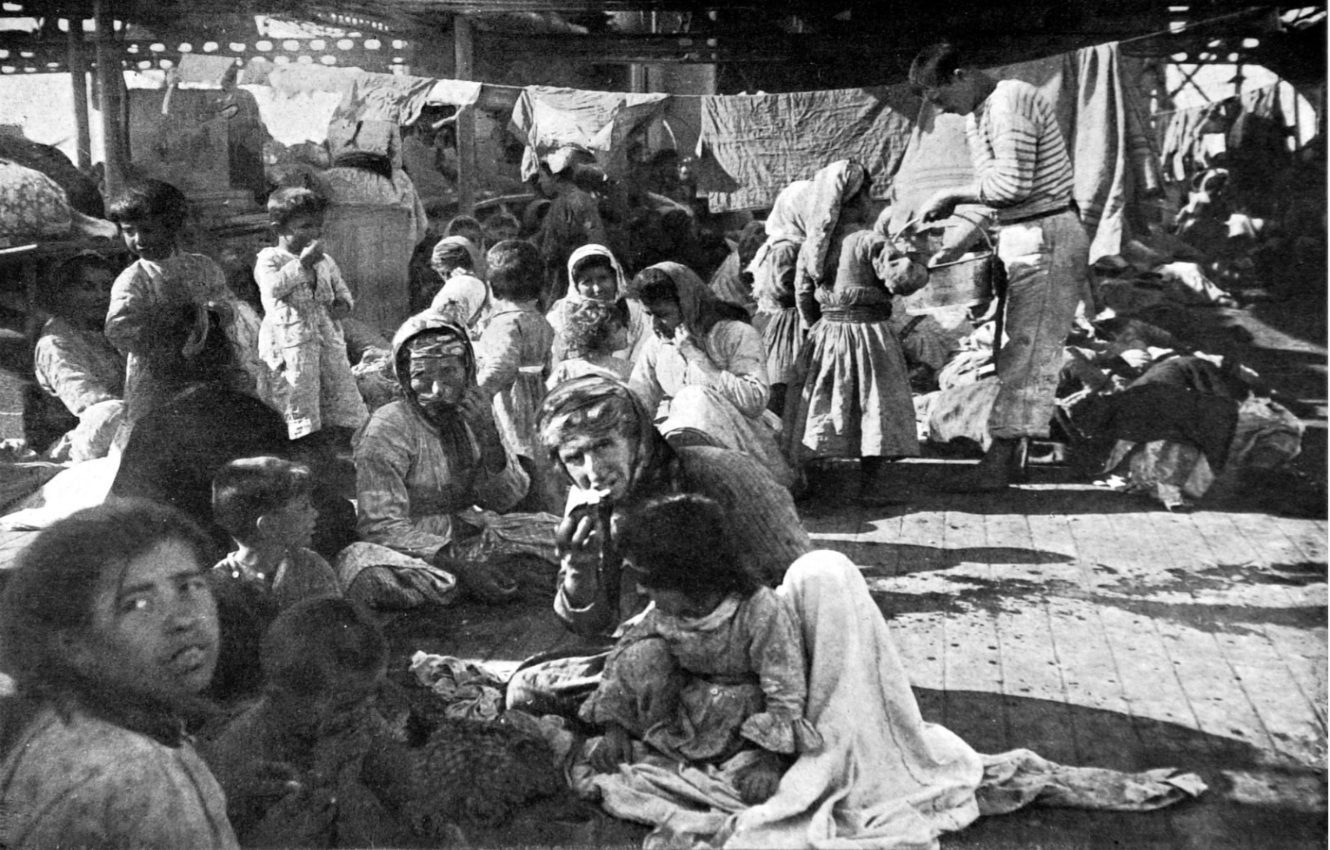
    In his most recent book, “Power, Faith and Fantasy,” Oren made dozens of references to Armenia and Armenians, including lengthy heart-wrenching descriptions of the mass killings before and during the Armenian Genocide. Here are some of the most striking quotations from his book:

    “The buildup of Ottoman oppression and Armenian anger erupted finally in the spring of 1894, when Turkish troops set out to crush a local rebellion, but then went on to raze entire villages and slaughter all of their inhabitants…. Some 200,000 Armenians died — 20 percent of the population — and a million homes were ransacked. ‘Armenian holocaust,’ cried a New York Times headline in September 1895, employing the word that would later become synonymous with genocide.”

    Oren then went on to establish that more than a century ago, similar to today’s acrimonious political tug-of-war over the genocide recognition issue, the Armenian atrocities seriously affected U.S.-Turkish relations. He wrote: “Maintaining amicability with Turkey would prove complicated, however, because ties between the United States and the Porte [Sultan] had long been frayed. The perennial source of friction was the oppression of Armenian Christians. Though a band of modernizing Young Turks, many of them graduates of Roberts College, had achieved power in Istanbul in 1908 and promised equal rights for all of the empire’s citizens, barely a year passed before the slaughter of Armenians resumed. Some thirty thousand of them were butchered by Turkish troops in south-central Anatolia.”

    In a section titled, “The most horrible crime in human history,” Oren wrote: “The first reports, from December 1914, told of anti-Christian pogroms in Bitlis, in eastern Turkey, and the hanging of hundreds of Armenians in the streets of Erzerum. Armenian men between the ages of twenty and sixty were being conscripted into forced-labor battalions, building roads, and hauling supplies for the Turkish army. The following month, after their defeat by Russian forces in the Caucasus, Turkish troops salved their humiliation by pillaging Armenian towns and executing their Armenian laborers. In the early spring, Turkish soldiers laid siege to the Armenian city of Van in eastern Anatolia and began the first of innumerable mass deportations. The slaughter then raged westward to Istanbul, where, on April 24, security forces arrested and hanged some 250 Armenian leaders and torched Armenian neighborhoods. Interior Minister Talaat Pasha informed the Armenian Patriarch that ‘there was no room for Christians in Turkey’ and advised him and his parishioners ‘to clear out of the country.’”

    Oren then exposed Turkey’s attempts to falsify history by pointing out that: “Most contemporary observers agree that the massacres were scarcely connected to the war, but rather represented a systematically planned and executed program to eliminate an entire people. Indeed, foreshadowing the Nazi genocide of the Jews twenty-five years later, Turkish soldiers herded entire Armenian villages into freezing rivers, incinerated them in burning churches, or simply marched them into the deserts and abandoned them to die of thirst…. By the end of summer, an estimated 800,000 Armenians had been killed and countless others forcibly converted to Islam.”

    After citing numerous eyewitness accounts of the mass killings, Oren concluded: “In all, as many as 1.5 million Armenians were killed in a genocide that the Turkish government would never acknowledge, much less regret.”

    While it is true that Michael Oren published this book before his assignment as Ambassador to Washington, his compelling position on the Armenian Genocide would hopefully make him refrain from following the footsteps of his predecessors who shamefully lobbied against the congressional resolution on this issue.

    The appointment of a staunch supporter of the truth of the Armenian Genocide as Israel’s Ambassador to Washington comes on the heels of a serious rift between Turkey and Israel following the Gaza war earlier this year. On that occasion, there were major manifestations of anti-Semitic statements and acts throughout Turkey, including anti-Israeli remarks by Turkish Prime Minister Rejeb Erdogan. His insulting words to Israel’s President Shimon Peres in Davos, Switzerland, antagonized Israelis and Jews worldwide. Even though Israel downplayed Erdogan’s offensive words, they did a lasting damage to Israeli-Turkish relations.

    The combination of an Israeli government that is less sympathetic of Turkey and the presence of Israel’s Ambassador in Washington who is a firm believer in the facts of the Armenian Genocide may facilitate the passage of the pending congressional resolution on the Armenian Genocide.

  • Health Reasons Force Erdogan to Cancel Athens Visit

    Health Reasons Force Erdogan to Cancel Athens Visit

    Health Reasons Force Erdogan to Cancel Athens Visit

    Publication: Eurasia Daily Monitor Volume: 6 Issue: 119
    June 22, 2009
    By: Saban Kardas
    On June 20 Prime Minister Recep Tayyip Erdogan cancelled a planned trip to Athens. Although his health condition was offered as the reason for the last-minute cancellation, it did not prevent speculation that Erdogan sought to use the pretext of his health concern to protest about recent Greek diplomatic initiatives against Turkey.

    Erdogan was scheduled to visit Athens to attend the opening the new Acropolis Museum. Prior to the opening ceremony, Erdogan was expected to meet Greek Prime Minister Costas Karamanlis, and both were to address bilateral issues including the conditions of minorities, as well as recent developments regarding the Cyprus dispute (Cihan Haber Ajansi, June 19). On the morning of June 20, Erdogan attended some meetings in the Aegean town of Izmir. He was expected to fly to Athens later that afternoon and return to Turkey that night. It was later announced that Erdogan had telephoned Karamanlis and informed him of his cancellation. He told Karamanlis that he would like to visit Athens at the earliest opportunity. A statement from Erdogan’s office explained that due to sunstroke, which Erdogan experienced during his visit to Edirne on June 19, his doctors had recommended rest. On June 21 he also cancelled the rest of his program in Izmir and his trips inside Turkey, and returned to Istanbul to rest over the weekend (ANKA, June 20).

    Deputy Prime Minister Bulent Arinc told reporters on June 21 that Erdogan was in good condition, and would resume his functions the following day. Arinc added that Erdogan had experienced temporary hypertension related to weariness, but this was not a serious problem. After resting in Istanbul, Erdogan was expected in Ankara on June 23, to attend an AKP party meeting and also have a working lunch with E.U. ambassadors (Anadolu Ajansi, June 21).

    However, the official statement did not satisfy some diplomatic observers who believe that political motives were behind Erdogan’s last-minute decision. They suggested two issues which might have influenced Erdogan’s decision: Karamanlis’ public complaints about the Turkish Air Force allegedly violating Greek airspace in the Aegean Sea and the E.U. Presidency’s latest conclusions which referred to Turkey as a country of origin and transit in illegal immigration, at Greece’s urging (Radikal, Hurriyet Daily News, June 21). The Greek media also speculated that Erdogan might have cancelled his trip to express his displeasure over these developments. They argued that Erdogan might have wanted to avoid confronting Karamanlis on the Aegean and illegal immigrants’ issues (Anadolu Ajansi, June 20).

    An interrelated set of disputed claims by Ankara and Athens in the Aegean Sea has proved a major long-standing bilateral source of tension between the two countries. Due to the ongoing controversy over the delimitation of national airspace, Flight Information Regions (FIR) and military over-flight rights, Turkish and Greek fighters engage each other in tactical military provocations (so-called “dog-fights”), which frequently heighten tensions between the two countries. Greece considers the flights of Turkish jets in the disputed zones as violations of its national airspace or transgressions of the FIR. During his contacts in Brussels in the context of the E.U. Summit, Karamanlis reiterated Athens’s complaints concerning Turkish jets’ “violations of Greek airspace,” and added that he “discussed this issue with Obama and would raise it during [his] meeting with Erdogan” (www.cnnturk.com, June 19).

    The Greek attempt to use the E.U. as leverage to pressure Turkey on a different issue also reportedly angered Ankara. Last week, the European Council discussed the challenge of illegal immigrants, and ways to improve cooperation with countries of origin and transit. The presidency conclusions issued at the end of the summit announced that, as part of its external policies, the E.U. will seek to sign readmission agreements with major countries of origin and transit. By the time such agreements are concluded, the E.U. will require the implementation of existing bilateral agreements (www.eu2009.cz, June 19). Greece reportedly threatened to veto the presidency conclusions, if the European Council did not specify Turkey, along with Libya, as a key country of origin and transit. Although Turkey was not mentioned in the draft document, following last-minute changes, the final communiqué made reference to it (www.abhaber.com, June 19).

    Athens claims that a great majority of illegal immigrants arriving in Greece transit Turkey and it expects Ankara to be more cooperative in the readmission of those immigrants. Ankara claims that since the final destination of those immigrants are E.U. countries, Turkey cannot be expected to bear the heavy financial burden of readmitting them, which would cost over 1.2 million Euros and demands fairer burden-sharing (Hurriyet, June 20).

    The declared justification for Erdogan’s cancellation of his trip is perhaps true; yet, the very fact that it resulted in such speculation indicates the level of tension between the two countries. Athens has long blocked the progress of Turkish-E.U. relations, and the two neighbors even came to the brink of war over the Aegean issues in the 1990’s. In the post-1999 period, when the Turkish-E.U. talks were revitalized following the Helsinki Summit, bilateral relations entered a new phase. The resulting normalization of the relationship produced concrete results; in addition to launching diplomatic talks to discuss a resolution to the bilateral issues, Athens removed its objections to Ankara’s entry into the European Union. During the rapid wave of domestic reforms following the AKP’s accession to power in 2002, which resulted in the launch of membership talks in 2005, Erdogan developed a close working relationship with his Greek counterpart and visited Athens twice in 2004. However, parallel to the stalling of Turkey’s E.U. accession process since 2005, Turkish-Greek relations also experienced a downturn, which largely resulted from Turkey’s inability to resolve its differences with Greek Cypriots. If he is serious about his claim to revive Turkey’s E.U. bid, Erdogan must talk to his Greek counterpart and reach a consensus on bilateral and E.U. related issues. In this context, he might soon visit Athens.

    https://jamestown.org/program/health-reasons-force-erdogan-to-cancel-athens-visit/