Month: June 2009

  • IRAN: AZERIS CAUTIOUS ABOUT SUPPORTING NATIVE SON MOUSAVI

    IRAN: AZERIS CAUTIOUS ABOUT SUPPORTING NATIVE SON MOUSAVI

    Shahin Abbasov 6/23/09

    Iran’s ethnic Azeri community numbers roughly 15-20 million, or almost a quarter of the country’s overall population. Most Azeris harbor deep feelings of resentment toward Mahmoud Ahmadinejad’s administration in Tehran, and they are believed to have voted strongly for the aggrieved presidential challenger, Mir Hussein Mousavi, who is himself an Azeri from Tabriz. Even so, most Azeris remain unwilling to take an active part in the continuing battle for control of Iran’s social and economic agenda.

    Mousavi’s lackluster record on promoting civil rights for minority groups in Iran is the main reason why many Azeris are currently sitting on the sidelines. Iranian Azeris see little to gain from getting involved. Regardless of the outcome of the power struggle in Tehran and Qom, few Azeris expect that their quality of life will improve significantly.

    Yashar Hakkakpour, spokesperson for the Association for the Defense of Azerbaijani Political Prisoners in Iran, an unofficial organization based in Tabriz, explains that Azeri activists see no advantage to be gained from pushing for Mousavi, or opposing Ahmadinejad.

    “The Tehran-based organizations that back Mousavi do not report on the activists arrested in Azeri cities. Persian-language media ignores minorities. Why would Azeris support their cause?” asked Hakkakpour in a telephone interview from Van, Turkey. [For background see the Eurasia Insight archive].

    “It does not mean that Azeris support the current regime,” he added. “They just do not see a big difference.”

    That situation, argues another activist, explains why the reaction to events by Azeris in Azerbaijan proper has been relatively muted. For example, there have been no pro-Mousavi protests staged outside the Iranian Embassy in Baku.

    One Tabriz-based Azeri cultural rights activist concurred with Hakkakpour. “We [ethnic Azeris] have decided not to interfere in the confrontation between the regime and Mousavi,” said the activist, who spoke on condition of anonymity. The activist pointed out that some prominent Mousavi backers today endorsed the use of coercive measures to contain Azeri protests in Tabriz and other cities in 2006. The protests erupted after an Iranian youth magazine published a cartoon in which an Azeri was depicted as a cockroach.

    While most Azeris may not feel inclined to publicly display support for Mousavi, some did take to the streets following the June 12 rigged presidential election. [For background see the Eurasia Insight archive]. Media outlets in Azerbaijan reported that five people were killed and dozens injured in mass protests on June 13 and June 15 in Tabriz and Orumieh, the capitals of Iran’s East Azerbaijan and West Azerbaijan provinces, respectively. [For additional information click here].

    In general, many areas with high concentrations of ethnic minorities — not just East and West Azerbaijan, but also Kurdistan, Baluchistan and Khuzestan — have been quiet amid the post-election tumult in Tehran. Minority groups, including Azeris, Arabs, Kurds and Baluchis, have long resented systematic discrimination carried out by authorities in Tehran, in particular restrictions on cultural and linguistic rights. But they don’t see the present crisis as an opportunity to seek redress for their grievances.

    Hardliners in Tehran are doing all in their power to make sure ethnic minorities don’t become more active. The ethnic minority issue is a potential powder keg for Iran, and if it were to blow up at this time, it could completely alter the nature of the country’s power struggle. Just as hardliners have flooded Tehran with security forces, they have placed the regional capitals of ethnic minority enclaves under lockdown conditions. Hardliners also reportedly told the Mousavi camp that security forces would take drastic action if it appeared that the opposition was trying to stir up trouble among ethnic minority groups.

    During the presidential election campaign, both Mousavi and Ahmadinejad promised to expand civil rights for Azeris. Ahmadinejad, who claimed to speak Turkish, promised to allow Azeri-language classes in universities and schools, the Tabriz source told EurasiaNet. Mousavi, meanwhile, promised to designate Azeri as Iran’s second official language and to grant greater financial autonomy to Azeri-populated regions.

    But few Azeris treated these campaign pledges as anything more than empty rhetoric. “Every election, candidates come to Tabriz, Orumieh and other cities and make similar promises. However, once they win the elections, they immediately forget their promises,” Hakkakpour said.

    “Mousavi during his entire career has never shown concern about [Azeri language rights and pressure on ethnic Azeris] and there were no signs he is willing to bring changes,” added Agri Garadagli, an Azeri activist now living in exile in Baku as the spokesperson for the South Azerbaijani National Awakening Movement.


    Editor’s Note: Shahin Abbasov is a freelance correspondent based in Baku. He is also a board member of the Open Society Institute-Azerbaijan.

    Posted June 23, 2009 © Eurasianet

  • Nabucco, an American piece for a European orchestra

    Nabucco, an American piece for a European orchestra

    19:37 24/06/2009

    MOSCOW. (Alexander Knyazev, director of the regional branch of the Institute of the CIS, for RIA Novosti) – The European Union and Turkey plan to sign an intergovernmental agreement on the Nabucco natural gas pipeline project on June 25 in Ankara.

    Why such a romantic name?

    “Nabucco” is an opera by Giuseppe Verdi based on a biblical story about the plight of the Jews as they are assaulted and subsequently exiled from their homeland by the Babylonian King Nabucco (Nebuchadnezzar). It is also an enchanting story of love and struggle for power.

    The latter element of the story is probably the only thing in common between the opera and the gas pipeline project initiated by U.S. President George W. Bush and based on some European and post-Soviet countries’ non-love of Russia, as well as the global battle for elbowing Russia out of the Eurasian gas market.

    Since Nabucco is mostly a political product, Turkey’s efforts to use its transit location to its best advantage are perfectly logical from the viewpoint of its national interests.

    Turkey will host a major portion of the 2,050-mile pipeline, which is to bring gas supplies from Central Asia and the Middle East to Europe without using Russian resources or territory.

    A consortium of six countries – Austria, Hungary, Romania, Bulgaria, Turkey and Germany – was set up to build the pipeline to Central Europe via Turkey and the Balkans. The shareholders will finance one-third of expenditure, with the remaining part to be covered by international financial and credit organizations.

    The more than 3,300-km pipeline has been estimated at 7.9 billion euros ($10.7 billion) and will have an annual throughput capacity of 31 billion cubic meters. It is to be completed by 2013.

    However, technical calculations show that it cannot be commissioned sooner than in 2015; and that given the high and stable energy prices. The project is burdened with political risks and will run across a difficult geographical terrain.

    Europe, in truth, is encumbered by problems with energy delivery routes.

    A small Polish oil pipeline running from Odessa to Gdansk via Brody in Ukraine has long been incapacitated by Chevron’s inability to supply oil from the Tengiz deposit in Kazakhstan.

    Poland, which has been trying to break its dependence on Russian energy supplies, should now heave a sigh of relief, since supplies via Belarus are likely to shrink. The same goes for Lithuania whose oil refinery, Mazeikiu Nafta, that used Russian oil, has been idling since last year.

    If this is the energy freedom they wanted, then the two countries are paying an excessively high price for it. Europe’s efforts to solve its energy problems without Russia by importing energy resources from Central Asia are counterproductive – this is a fact. And the same is true of the Nabucco project.

    On the contrary, Russia’s South Stream project will have the guaranteed amount of natural gas, and its capacity can be subsequently increased. A recent agreement between Russia’s Gazprom and Italy’s Eni stipulates increasing it to 63 billion cubic meters annually. Besides, Nabucco is unlikely to be competitive compared to Gazprom’s project in terms of prices.

    The Russian gas export monopoly plans to pay for the South Stream construction and gas distribution and to sell gas to end users in Europe at attractive prices.

    Gas for Nabucco is expected to come from Turkmenistan and possibly Iran. However, Russia has an agreement with Turkmenistan under which it buys all of its export gas, and Russia and Iran may veto the construction of any pipeline along the bottom of the Caspian Sea.

    This means that Nabucco can receive gas only from Azerbaijan’s Shah Deniz deposit, but the probability of this is undermined by tensions between Turkey and Azerbaijan over the recent thaw in Turkish-Armenian relations.

    In other words, Nabucco will have no reliable sources of natural gas in the near future.

    A pipeline partnership is unimaginable without stability and reliability, something the U.S. administration cannot ensure even to its taxpayers. And so, what does the U.S. administration have to do with the Nabucco project?

    Unlike the most naive part of the European establishment, the East European and other “democratic” media describe Nabucco not as a European economic or energy project, but as an American political venture.

    The chaotic chanting in support of the Nabucco project reminds me of the “Va, pensiero” chorus of Hebrew slaves from Verdi’s opera – beautiful yet altogether gloomy and hopeless.


    The opinions expressed in this article are the author’s and do not necessarily represent those of RIA Novosti.

  • BBC’s Mark Thompson claimed £2,000 to fly family home during Sachsgate

    BBC’s Mark Thompson claimed £2,000 to fly family home during Sachsgate

    Mark Thompson, the BBC Director-General, used more than £2,000 of licence fee-payers’ money to fly his family home from holiday after the Jonathan Ross and Russell Brand row.

    He cut short his family holiday to return to the UK as public anger grew over the lewd messages left by Brand and Ross on the answering machine of Andrew Sachs, the Fawlty Towers actor.

    The cost of flying his family home – £2,236.90 to be exact – was met by the BBC with the approval of the chairman of the corporation’s audit committee.

    Expenses claims made by the corporation’s board were published on Thursday in what Mr Thompson, who earns £ 816,000 a year, described as a “significant advance in openness at the BBC”, although full details of top stars’ salaries are to remain confidential.

    Notes on the claim for flying Mr Thompson’s family home read: “The chairman of the audit committee of the executive board agreed that the expense of cutting a family holiday short would be met by the BBC in advance of the claim being made.

    “The chairman of the BBC Trust was also informed.”

    On the same day as his family’s flight back to the UK, October 30 last year, Mr Thompson also claimed £500 for hotel rooms in the towns of Siracusa and Ragusa in Sicily, where he is believed to have been spending his holiday, and a further £206 for what is described in the accompanying notes as “holiday cut short”.

    In 2004 Mr Thompson put the £1,277.71 cost of chartering a private plane on expenses, again because he had to curtail a family holiday to deal with an “urgent staff issue” in London.

    He claimed £99.99 last year for a bottle of Krug Grande Cuvee champagne – an 80th birthday gift for entertainer Bruce Forsyth – and spent £500 on a Christmas dinner for BBC executives in 2007.

    Jana Bennett, director of BBC Vision, holding creative control of the corporation’s television output, claimed £500 for the theft of her handbag while on official business.

    Notes on the claim said: “The BBC decided to pay half the cost of replacing the property and cash stolen.”

    She also charged £35 to have her hair styled for a TV interview and nearly £190 for vaccinations ahead of a trip overseas.

    On a trip to meet studio bosses in Los Angeles in May 2007, Ms Bennett claimed more than £1,300 for a stay at the luxury Raffles l’Ermitage hotel in Beverly Hills.

    Her attendance at the World Economic Forum in Davos, Switzerland, in January 2008 cost more than £1,100 in hotel bills.

    In May 2007 Ms Bennett spent more than £2,000 hosting a “talent” dinner with 22 attendees.

    In July 2007 she claimed £1,500 for a leaving party for Jay Hunt, who is now BBC1 controller.

    Ms Bennett also spent £400 on a cake to celebrate the end of the BBC’s series Any Dream Will Do, for a party for contestants’ families.

    She also claimed various sums of around £30 a time for “talent gifts” such as bouquets of flowers.

    Ms Bennett also spent £5 on a taxi “while carrying confidential documents” and £25 on a taxi when she “needed to make urgent phonecalls, carrying papers”.

    The expenses list also showed that in May 2007 Ashley Highfield, who was the BBC’s director of future media and technology, spent more than £450 under the heading “external hospitality” while attending the Edinburgh festival.

    He also claimed 54p in mileage for a meeting about the charity Comic Relief with Richard Curtis in September 2007.

    Mr Highfield also spent more than £200 on a new Apple iPod in the same month “for testing with BBC services”.

    In November 2007, chief operating officer Caroline Thomson spent £33.20 on hospitality for a “confidential discussion” before a meeting.

    In September 2007 she claimed £135 in “celebratory drinks” for an awards bash. The same month saw her spend a total of more than £200 for a leaving do held at her house – as it was “cheaper than a restaurant”.

    Jenny Abramsky, who was the BBC’s director of audio and music, spent nearly £550 in December 2007 on an internal Christmas lunch.

    Mark Byford, the deputy director general, spent £60 in May 2007 on “discussing 2012”.

    Mr Thompson spent £73.69 in September 2007 on a business lunch with Olympics Minister Tessa Jowell.

    In October 2007 he splashed out more than £1,800 on flights for a business trip to New Delhi and in December that year he spent more than £600 on the office Christmas party.

    Even charitable efforts clocked up significant expenses.

    Tim Davie, director of audio and music, spent nearly £130 on a discussion on Sport Relief and also charged £407.25 for a “Children in Need business discussion”.

    In September 2007 chief financial officer Zarin Patel claimed £700 for a “thank you” to Deloitte for work on a business plan.

    Earlier, Mr Thompson announced that in future the BBC would release expenses claims made by the corporation’s 50 highest-earning executives and its leading decision makers every quarter.

    Erik Huggers, the corporation’s director of future media and technology, claimed more than £2,500 for a three-day trip to Las Vegas in January which included a stay at the five-star Bellagio Hotel.

    Leading stars at the BBC face substantial pay cuts due to the recession.

    Those on large contracts include Jonathan Ross, said to be on £6 million a year; Graham Norton, who is believed to earn £ 2.5 million a year; Jeremy Paxman, reported to be paid £1 million, and Fiona Bruce, thought to earn £ 800,000 a year.

    For some highly paid stars, the salary reduction could reportedly be as much as 40 per cent.

    A hard-hitting MPs’ report also said recently that confidentiality agreements between the BBC and top radio stars were preventing full scrutiny of the way the corporation spent public money.

    The House of Commons Public Accounts Committee said the BBC appeared to be paying some of its radio presenters more than twice what commercial stations paid theirs.

    The BBC refused to give the National Audit Office (NAO), the public spending watchdog, a breakdown of presenters’ salaries for a selection of radio shows unless the NAO signed a non-disclosure agreement, the committee said.

    Edward Leigh MP, the chairman of the committee, said it was “disgraceful” that the BBC could dictate what the NAO could inspect when public money was at stake.

    Telegraph

  • Yugoslav Media War Mongers Evade Justice

    Yugoslav Media War Mongers Evade Justice

    24 June 2009  Court cases have confirmed the key role of the media in spreading hatred in former Yugoslavia in the 1990s, yet no journalist has been tried.

    By Nidzara Ahmetasevic

    Trials for war crimes committed in the former Yugoslavia have been ongoing before local courts and the International Criminal Tribunal for former Yugoslavia, ICTY, for more than 15 years.

    But although many indictments, verdicts and expert witnesses’ statements mentioned the key role of media in the war, no journalist or editor has been indicted to date. 

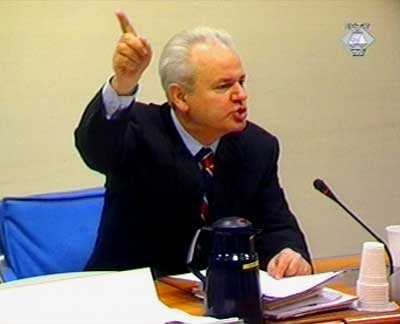
    For the first time, however, an opportunity has now appeared to try journalists who served the Milosevic regime in Serbia. See: Milosevic Media Face War Crimes Spotlight

    Serbia’s war crimes prosecution recently said it intends to investigate whether grounds exist to open investigations into the role that certain media played during the war. 

    This idea has been prompted by statements of former soldiers and witnesses who appeared at trials in Belgrade for the crimes committed in Vukovar, eastern Croatia, and Zvornik, eastern Bosnia, a short time ago. Some of these volunteer soldiers said that they had decided to join up as a result of media coverage of the conflict. 

    One example of this media influence came in a piece of reportage broadcast by Serbian Radio and Television, RTS, in autumn 1991. This showed a young woman, dressed in uniform and carrying a rifle, among a party of volunteers.

    Asked what she was doing among the volunteers, she said she had decided to go to war after watching TV reports on events in Vukovar. She had left behind three children.

    Expert witnesses, who appeared at several trials conducted before the ICTY concluded that media propaganda prompted many people to fight. 

    Professor Renaud de La Brosse, from the University of Reims Champagne-Ardenne in France, in a report presented at the trial of Slobodan Milosevic, said that some politicians had “deliberately made the media change its focus from the provision of information and entertainment to purely spreading propaganda, thus serving their goals”. 

    Disinformation, not information: 

    Court files contain abundant evidence of the important role some media played during the war.  In his report of August 1992, Tadeusz Mazoviecki, the Special UN Commissioner for Human Rights, wrote that the deliberate spreading of rumours and disinformation formed a “crucial element of the current situation, greatly contributing to ethnic animosity. 

    “With a few exceptions, the national media in the countries I have visited aim towards presenting the news on the conflict and human rights violations in an upsetting manner. Consequently, the general public does not have access to reliable, objective sources of information.”

    Mazowiecki compiled a special report on the media two years later, in December 1994. In it he wrote that the information published by the media in the former Yugoslavia primarily consisted of “nationalistic discourse and omnipresent insults and offences aimed at other peoples”.

    At the request by the Hague Prosecution, during the Milosevic trial, de La Brosse delivered a report entitled “Political Propaganda and the ‘All Serbs in one Country’ Project: Consequences of Using Media as an Instrument of Ultra-nationalistic Goals”.

    Among other things, the Professor determined that “the atmosphere of distrust and animosity towards other peoples, fed by various fears and extreme nationalism for ages, gradually started manifesting itself in all republics in the former Yugoslavia from the late Eighties”.
    While De La Brosse focused on Serbia in the Milosevic era, he suggested politicians used the media in the other republics in much the same way during the war. 

    “The authorities in each republic tried to control the media on their territories; particularly the television stations,” he said. “They turned the media into the instruments of their regime propaganda, whose aim was to ‘bring over’ the general public to their political ideas and actions.”

    British author Mark Thompson drew similar conclusions in his book “Forging War: The Media in Serbia, Croatia, Bosnia and Hercegovina”. He later appeared as a prosecution expert witness at the trial of Momcilo Krajisnik. His report and testimonies mainly focused on the situation in Bosnia and Herzegovina. 

    Thomson wrote that in early 1992 the Serbian Democratic Party, SDS, “successfully gained control over the media on its territory, using it to scare the Serbian population… telling them that they would be exterminated and persuading them that the Croats and Bosniaks had genocidal intentions. 

    Describing how the SDS gained control over the media in Bosnia, Thompson said that this was done in stages. The first consisted of a drive to ethnically divide up Radio Television of Sarajevo, as well as attacks on the daily newspaper, Oslobodjenje. Taking control of the transmitters in Bosnia and Herzegovina, which began in August 1991, was another important step. 

    Speaking of the media and its uses as a propaganda instrument in the war, Thompson said many outlets acted as official “megaphones”,. The proper role of the media is to provide space for discussion and debate and “make relevant information available to the public, enabling it to make informed decisions on issues of concern,” he said. 

    “[But they were megaphones. They were just political tools used for conveying certain messages”, Thompson said. 

    Serbian propaganda the most extreme:

     The relations between the media and politics are mentioned in several ICTY indictments. One is the indictment against Milosevic, which alleges that he “controlled, manipulated and used Serbian media… with the aim of spreading excessive and false messages on ethnic conflicts initiated by Bosnian Muslims or Croats targeting Serbs, in an attempt to create an atmosphere of fear and animosity among the Serbs who lived in Serbia, Croatia and Bosnia and Herzegovina.

    “This largely contributed to the deportation of the majority of the non-Serbian population, especially Bosnian Muslims and Bosnian Croats from their homes in parts of Bosnia”.

    De la Brosse cautioned against considering the role played by the media in Serbia, Croatia and Bosnia as equal.

    “If we compare Serbian, Croatian and Bosnian nationalistic propaganda, we can conclude that the first one exceeded the two others by its scale and content of media messages,” he said.

    The indictment against Krajisnik mentions the control of media in the section referring to a joint criminal enterprise.

    It alleged that the media “supported, instigated, enabled and participated in spreading information among Bosnian Serbs about the threat of being tyrannized by Bosnian Muslims and Bosnian Croats, telling them that the territory on which Bosnian Muslims and Bosnian Croats live actually belongs to Bosnian Serbs; spreading information with an aim of generating fear of, or animosity towards, Bosnian Muslims and Croats among Bosnian Serbs… and ensuring their support and participation in achieving the goals of the joint criminal enterprise”. 

    The allegation that the media were used as “megaphones”, as Thompson said, is supported by the fact that the SDS established a Committee for Mass Communications in October 1991. This information can be found in ICTY documents. This body was tasked with developing plans to establish a news agency, daily newspapers and choose journalists loyal to the SDS’s goals. 

    Dorothea Hanson, an expert who appeared at the Krajisnik trial, described how the various “crisis committees” established on Bosnian Serb territory controlled radio stations and other media outlets. 

    Use of the media for propaganda purposes was included in the indictment issued against the Bosnian Serb leader Radovan Karadzic. This alleges that he “substantively contributed to the goal of the permanent extermination of the Bosnian Muslims and Croats from the areas controlled by Serbs”, among other things, by “spreading, instigating and/or enabling propaganda distribution”. 

    The role of the media is mentioned also in the indictment issued against the Bosnian Croat Jadranko Prlic, and others. This alleges that, following the establishment of the Bosnian Croat statelet, Herceg-Bosna, in November 1991 and particularly beyond May 1992, the leadership “became involved in permanent and coordinated efforts aimed at establishing domination and ‘Croatising’ the municipalities that were allegedly parts of Herceg-Bosna,” and to that effect, “the authorities and forces of Herceg-Bosna gained control over the media, inflicting Croatian ideas and propaganda”. 

    Impacts on ordinary lives:

    Testimonies by victims who appeared at war crime trials reveal how ordinary citizens interpreted the propaganda broadcast over the media. 

    The media was frequently mentioned before the War Crimes Chamber of the Court of Bosnia and Herzegovina. For example, Redzep Zukic, a witness at the trial of Nikola Kovacevic, a former member of the Serbian armed forces from Sanski Most sentenced by the Court of Bosnia and Herzegovina to 12 years’ imprisonment, recalled how “radio Sana broadcast offensive songs and called Muslims offensive names”. It also called on Muslims to “display white flags on their houses” in 1992, he said.

    Enes Kapetanovic, who appeared at the trial for crimes committed in Omarska detention camp, told a similar story.

    “In late April 1992, after the Serbs gained control over Prijedor, they informed us via the media every day that we had to wear white bands around our arms if we wanted to show we were loyal to the new authorities. All of us, adults and children alike, had those bands around our arms,” Kapetanovic said.
    Witnesses at the trial of Gojko Jankovic, sentenced to 34 years’ imprisonment for crimes in Foca, said the media in Montenegro also issued calls for volunteers to go to the battlefields in Bosnia during April 1992.

    The indictments against members of the Army of Bosnia and Herzegovina, on the other hand, rarely mention the role of media.

    According to Thompson, the propaganda dictated from Sarajevo was not of the same character as that which came from Belgrade or Zagreb.

    Nevertheless, propaganda existed, considering that the then editors of public broadcast services in Sarajevo, like their colleagues in Belgrade in Zagreb, were appointed on the basis of their political affiliation and not as a result of professional standards.

    Although the role of media was often mentioned before the ICTY and is now often brought up in trials before local courts, no indictments have been filed, as has been stated. Asked why no indictments have been filed, Hague officials answer that there is not sufficient evidence on the role of media to proceed.

    Nidžara Ahmetašević is BIRN – Justice Report editor. [email protected]. Justice Report is BIRN online weekly publication.

    BIRN
  • Net surveillance and filters are a reality for Europe, too

    Net surveillance and filters are a reality for Europe, too

    Yaman Akdeniz Lecturer in University of Leeds
    Yaman Akdeniz Lecturer in University of Leeds

    The internet is playing such a key role in ­getting information out of Iran that attention has focused, once again, on how much Iran controls the internet within its borders. Iran controls the internet gateways into the country, and in 2006 the government outlawed any connection faster than 128kbps – until the policy met stiff opposition from business leaders and even members of the Iranian parliament.

    It’s easy to point to countries such as Iran, which the Open Net Initiative says maintains some of the most extensive internet controls in the world, while overlooking the increasing filtering and surveillance of the internet in Europe.

    Yaman Akdeniz, the director of Cyber-Rights and Cyber-Liberties, spoke at the recent Deutsche Welle Global Media Forum about the increasing number of websites blocked in Turkey. In 2007, the Turkish parliament fast-tracked ­legislation to regulate the internet, ­passing the bill in just 59 minutes. Supporters defended the legislation on the grounds that it would protect children. In two years, the number of sites blocked went from zero to 2,600.

    But many of the sites being blocked have little to do with protecting children from inappropriate content. Blogger, Google‘s blogging service, was blocked temporarily because one blog was being used to distribute pirated videos of football matches. Richard Dawkins’s site was blocked over complaints from Turkish creationists, and Turkey is one of a handful of countries in the world that completely blocks YouTube, Akdeniz says. The Turkish government had asked YouTube to remove videos seen as defamatory to the founder of modern Turkey, Mustafa Kemal Atatürk. YouTube’s owner, Google, offered to block Turkish users from seeing the offending videos, but the Turkish government demanded the videos be taken down from the global site.Of course, whether in Iran or Turkey, the filters are ineffectual.

    The Turkish government may be able to block YouTube on computers, but they haven’t figured out how to block the service on Apple’s iPhone. But it’s not just on the edge of Europe, in Turkey. Let’s look to the heart of Europe, to Germany, which has just passed a law to crack down on child ­pornography sites by adding offending sites to a DNS blacklist.

    German net activists launched an e-petition opposing the plan. They needed to get at least 50,000 signatures in six weeks for the petition to be read in parliament, but they needed only three days to get that number. When the ­petition was closed six weeks later, it had 130,000 signatures, making it the most successful e-petition.

    Instead of using filtering technology, the internet community suggested targeting the offending sites. Using leaked blacklists – such as Germany was proposing – net activists were able to get 60 sites containing child pornography shut down, by contacting international internet service providers, the internet activist and blogger Markus Beckedahl said.

    The German government backed down on completely blocking the sites after civil rights and even victims’ rights groups joined internet activists to oppose the plan. Now, internet users coming to a restricted site will see a ­government warning telling them viewing child pornography is a crime, but the user will still be able to access the site.

    Child pornography is an easy target, and it has long been used as a rallying cry by internet censors. But we often don’t know what is being blocked.

    Here in the UK, it is illegal to even look at the list of blocked sites kept by the Internet Watch Foundation. And while a crackdown on websites makes good headlines, net activists question whether the filtering works or tackles the issue of the exploitation of children.

    “Instead of effectively investing time and efforts to have illegal content removed from the internet, the German government is choosing censorship and blocking – an easy and dangerous way out,” says Beckedahl.Akdeniz told Deutsche Welle, “In a sense, blocking access to these Web sites does not necessarily make the problem go away. We just push it off our computer screens — whether in Germany or the United Kingdom or any other country- but that doesn’t necessarily mean the serious problem of sexual exploitation of children and child pornography disappear from the Internet.”

    Guardian

  • GCHQ  needs “ultra, ultra criminals”

    GCHQ needs “ultra, ultra criminals”

    Britons face a growing online threat from criminals, terrorists and hostile states, according to the UK’s first cyber security strategy.

    Businesses, government and ordinary people are all at risk, it says.

    The strategy has been published alongside an updated, wider National Security Strategy.

    Its publication is a sign of the growing recognition within government of the need to bolster defences against a growing threat.

    In line with a wider focus within the National Security Strategy on not just protecting the state but also citizens, the cyber-strategy encompasses protecting individuals from forms of fraud, identity theft and e-crime committed using technology as well as defending government secrets and businesses.

    ‘Attack capability’

    Launching the strategy, security minister Lord West said: “We know that various state actors are very interested in cyber warfare. The terrorist aspect of this is the least (concern), but it is developing.”

    He warned that future targets could include key businesses, the national power grid, financial markets and Whitehall departments.

    He said: “We know terrorists use the internet for radicalisation and things like that at the moment, but there is a fear they will move down that path (of cyber attacks).

    “As their ability to use the web and the net grows, there will be more opportunity for these attacks.”

    He confirmed that the UK government has already faced cyber attacks from foreign states such as Russia and China.

    But he denied that hackers had successfully broken into government systems and stolen secret information.

    He also said he could not deny that the government had its own online attack capability, but he refused to say whether it had ever been used.

    “It would be silly to say that we don’t have any capability to do offensive work from Cheltenham, and I don’t think I should say any more than that.”

    ‘Naughty boys’

    Among those the government has turned to for help on cyber crime are former illegal hackers, Lord West added.

    He said the government listening post GCHQ at Cheltenham had not employed any “ultra, ultra criminals” but needed the expertise of former “naughty boys” he said.

    “You need youngsters who are deep into this stuff… If they have been slightly naughty boys, very often they really enjoy stopping other naughty boys,” he said.

    Officials said e-crime crime is estimated to costs the UK several billion pounds a year.

    Two new bodies will be established in the coming months as part of the strategy.

    A dedicated Office of Cyber Security in the Cabinet Office will co-ordinate policy across government and look at legal and ethical issues as well as relations with other countries.

    The second body will be a new Cyber Security Operations Centre (CSOC) based at GCHQ.

    This will bring people together from across government and from outside to get a better handle on cyber security issues and work out how to better protect the country, providing advice and information about the risks.

    “CSOC’s aim will be to identify in real time what type of cyber attacks are taking place, where they come from and what can be done to stop them”, according to a Whitehall security official.

    Experts say the “forensics” of detecting who is behind a cyber attack and attributing responsibility remains extremely difficult.

    Officials said it would require input from those who had their own expertise in hackers. “We need youngsters,” an official said.

    The range of potentially hostile cyber activity – from other states seeking to carry out espionage through criminal gangs to terrorists – is daunting.

    Critical information

    At one end of the spectrum, military operations – such as Russia’s conflict with Georgia last year – are now accompanied by attacks on computer systems.

    The UK’s critical national infrastructure is also more reliant on technology than it was even five years ago and terrorists who have used the internet for fundraising and propaganda are also believed to have the intent – if not yet the capability- to carry out their own cyber-attacks.

    Officials declined to give a figure of how many attacks on government computer networks take place each day.

    In a speech in 2007, the head of MI5, Jonathan Evans, explicitly mentioned Russia and China in the context of a warning that that “a number of countries continue to devote considerable time and energy trying to steal our sensitive technology on civilian and military projects, and trying to obtain political and economic intelligence at our expense. They do not only use traditional methods to collect intelligence but increasingly deploy sophisticated technical attacks, using the internet to penetrate computer networks.”

    Officials said they were not aware of any “key pieces of information” that had gone missing yet but said that British companies had lost critical information.

    The new Cyber Security Operations Centre will work closely with the designated parts of the critical national infrastructure and wider industry and officials say that business are keen for the government to take a lead but also share as much information as possible.

    US President Barack Obama has been carrying out a similar re-organisation for defending US computer networks and British officials said the two countries were co-ordinating closely not least because of the intimate relationship between GCHQ and its US equivalent.

    British officials believe that their government systems may also have fewer vulnerabilities than their US counterparts partly because they moved online later and have fewer connections between the internal government system and the rest of cyberspace to monitor.

    Officials in the US and UK are also thought to be working on forms of offensive cyber-warfare capability but officials are unwilling to go into any details of what this might involve.

    Some Comments:

    CSOC’s aim will be to identify in real time what type of cyber attacks are taking place, where they come from and what can be done to stop them
    Whitehall security official
    It would be silly to say that we don’t have any capability to do offensive work from Cheltenham, and I don’t think I should say any more than that
    Lord West, security minister
    BBC