Month: September 2008
-

Financial Insight : POOR RICHARD’S REPORT
Richard De Graff [[email protected]]860-522-7171800-821-6665-watts860-315-7413- *860-208-0258CellI SMELL A RAT!I would like to start this letter with an explanation of my disclaimer. I receive information from various sources that over the years have a ninety five percent rate of accuracy. Some I pay a handsome fee for and they in turn carry a hefty fine for plagiarism, so I rephrase parts in my own style. In times of crisis it would be very difficult and time consuming to sue when the information is for the public good. The statements I make are well founded on over 48 years of experience.For the past 2 ½ years I have been warning about this stock market. We are in a major long term bear market that can have tremendous rallies only to fall to new lows. If you have not figured that out yet – then you never will. My prayers go out to you.Instead of searching out whom to blame, I am going to write about how to improve the system. We are the largest economy in the world. One would have to combine the next five largest economies just to equal ours. We should be preaching love and kindness and setting higher standards of trusting ethics. Don’t laugh, I believe it can be done, but first we must rein in the greedy choirmasters.The President of the United States receives a base salary of $400,000 per year. It is a lousy job, but the greatest retirement, the problem is getting there.Members of Congress receive $169,300 per year. After serving one term when they reach retirement age they will receive full pay. I wish I could do that. Then I wondered why they run so hard to get reelected? It suddenly dawned on me- the lobbyists. What do these politicians do with all that money? They keep a lot of it. Especially if they are not wealthy to begin with. I can just see those republicans waiting to come into power in the early 1990’s, with their mouths drooling with greed. They were not too smart handling those slush funds, as many went to jail.The first matter of business is to have the lobbyist publically report exactly how much money they spend on everything- just like a public corporation. Failure to do so would be 5 years of jail with no parole and return of family properties to the IRS. Once their wife, kids, and home are involved they should become squeaky clean. Then we will only have to worry about the ones that are single.The next important change on my priority list is to bring back the UPTICK Rule for short sales. Usually, we dream of buying stocks at a low price and selling them high for a nice profit. Well, a short sale is the opposite. One sells first and hopefully buys back at a lower price. First one must find a stock to deliver to the buyer when he sells. If the firm cannot find shares to deliver to the buyer – then they cannot have a trade. Next, and this is very important before the stock can be sold short – the stock must trade up from the previous trade. That is called an uptick. Joseph Kennedy, the first SEC chairman instituted this rule and brought instant calmness to the market place. Since this rule has been rescinded in July 2007 the market has been subject to all kinds of abuses and the volatility, in my opinion, is a result of this. John McCain is right in asking for the removal of SEC Chairman Cox.Since rule breakers in Washington are dealing with public funds that affect our families, we must also pass punishment on their families too. That would sure clean up Washington real fast, or we might find a spate of divorces.So what has the administration been doing? They are banning shorts sales in 700 odd financial institutions until October 2nd!I smell a rat. This is a lousy band aid. Mutual Funds’ year ends September 30th so you have seen a lot of short covering. When you buy a stock all you can lose is what you paid for it. If you sell short, first you are on margin and your losses are unlimited. Traders who want to squeeze the short sellers can just keep buying until the last short stock has been covered. (That means the short seller has found a seller who will deliver a stock certificate so that he can deliver it back to the one he borrowed it from. So the upside is unlimited as far as losses are concerned, versus your profit being limited once the security you shorted goes to zero.) This writer has never sold short and there were many occasions I should have, but that is making money off someone else’s misery- sometimes mine.Here is the scary part.Well, certain powerful global corporations thought they could do anything. There are greedy guys breaking the cardinal rules of honest finance and breaking the backs of honest investors; some of whom will never return to the market place. The investment pool is evaporating and these big “fishes” lack the water to swim in.The central bankers, like an expert fisherman, gave them all the line they wanted and then yank! Pow! Oh the pain of being reeled in. Imagine the pain they have caused upon the poor trusting consumers.Moral #1:Central Bankers make good money. Chairman Bernanke makes $212,000 per year. That makes him the second highest paid official in the US Government. Among central bankers he is one of the lowest paid officials.Moral#2:Don’t mess with your central bank- he holds all the cards!AddendumWhile the empty talking heads on TV are spouting off in all directions, they are missing the point.Listen to this Mr. Cox, to stop 90% of the greed, bring back the uptick rule and the markets will calm down the minute you sign the order. Maybe Dr. Bernanke should do it and Congress would abolish Cox’s job.(Most of the Washington politicians I know are dead and buried, but valued reader, if you know some – send this letter.)Future letters will dwell on how to improve the investment environment while curtailing the abuses going on today. With instant communications available today, we must devise new checks and balances to protect the ordinary investor.The Investment Act of 1940 should be revisited. There are provisions there that are antique by today’s standards. Their size brings corporate power to their management instead of the shareholders.Management should be paid on corporate performance. Corporate earnings decline, management salaries should drop by the same percentage.These are just a few ideas and I will go into more detail in future letters.Thank You.This report has been prepared from original sources and data we believe reliable but we make no representation to its accuracy or completeness. Coburn & Meredith Inc its subsidiaries and or officers may6 from time to time acquire, hold, sell a position discussed in this publications, and we may act as principal for our own account or as agent for both the buyer and seller.
This is my new Home/Office number in Eastford Ct. I can be reached any where from 8:30am to 8:00pm a cell phone can not be used for transmitting orders. The cell phone is always on my person, but like me has to be recharged every night. -
Turkey PM ‘insult’ artist cleared
An artist who made a collage mocking Turkey’s prime minister by portraying him as a dog, has been acquitted by a court of insulting him.
Michael Dickinson, 58, was cleared by a court in Istanbul after a judge decided the controversial collage of Tayyip Erdogan was art and not insulting.
The piece, called Good Boy, showed Mr Erdogan as a dog with a stars and stripe leash and nuclear missile tail.
Mr Dickinson, originally from Durham, has worked in Turkey for 20 years.
The artist had already been held in custody for 10 days in 2006 after police seized another collage considered to be offensive.
At the time, he was ordered to leave the country, but was charged when he later returned on a tourist visa.
The Turkish court said that although Mr Dickinson’s work “had some insulting elements” it could be considered within the limits of criticism and he was acquitted.
BBC NEWS | UK | England | Turkey PM ‘insult’ artist cleared.
-

Rice Praises ‘Healing Reforms’ In Armenia
U.S. Secretary of State Condoleezza Rice praised President Serzh Sarkisian for his efforts to end Armenia’s post-election political crisis and improve its relations with Turkey as they met in New York late Wednesday.
In her opening remarks at the meeting released by the U.S. State Department, Rice spoke of “healing reforms” which she believes have been initiated by Sarkisian since the dramatic aftermath of the Armenian presidential election. “We believe that you have made some good steps to address this, and so I’m here to build on that and to move forward,” she said.
Sarkisian, for his part, thanked the United States for its “financial assistance and non-financial help” to Armenia. “They are both important,” he said at the start of the talks held on the sidelines of the UN General Assembly.
Ever since he took office on April 9, Sarkisian has been under pressure from the U.S. and other Western powers to end his predecessor Robert Kocharian’s harsh crackdown on the Armenian opposition. The crackdown has involved mass arrests and the use of lethal force against opposition demonstrators demanding a re-run of the February 19 presidential election which Washington has described as “significantly flawed.”
U.S. officials have repeatedly urged the new Armenian administrations to release all political prisoners, abolish severe restrictions on freedom of assembly and engage in dialogue with the opposition led by former President Levon Ter-Petrosian. They have said that is essential for the provision of $235.6 million in additional U.S. assistance to Armenia, that was effectively frozen following the bloody suppression of the opposition protests in Yerevan.
Earlier this month, the U.S. Millennium Challenge Corporation (MCC) again declined to disburse the first major installment of the five-year aid package earmarked for the reconstruction of Armenia’s rural roads. The $7.5 million tranche was due to be released in May. In a June statement, the MCC board said the Armenian government should do more to address U.S. concerns about the political situation in the country.
In a statement, Sarkisian’s office quoted Rice as saying that the steps taken by the new Armenian president create a “good basis” for the continuation of U.S. aid. The statement said the two also spoke about U.S.-led international efforts to settle the Nagorno-Karabakh conflict, with Sarkisian reaffirming his declared commitment to a “compromise solution.”
Visiting Baku and Yerevan earlier this month, the U.S. Deputy Assistant Secretary of State Matthew Bryza indicated that the OSCE’s Minsk Group, which he co-heads together with senior Russian and French diplomats, will step up its efforts to broker a framework peace agreement on Karabakh before the end of this year. Bryza and the two other co-chairs met Sarkisian in New York earlier on Wednesday. Sarkisian’s office said they discussed the possibility of arranging another meeting of the Armenian and Azerbaijani presidents.
Armenia’s unprecedented rapprochement with Turkey, long championed by the U.S., was also on the agenda of Rice talks Sarkisian. According to the latter’s press service, Rice welcomed Yerevan’s overtures to Ankara and expressed hope that Turkish President Abdullah Gul’s historic visit to Armenia will lead to the normalization of relations between the two neighboring states.
Foreign Minister Eduard Nalbandian and his Turkish counterpart Ali Babacan were scheduled to meet in New York on Thursday in an effort to keep up momentum in the Turkish-Armenian dialogue. They were expected to discuss and possibly finalize a joint declaration that would call for the creation of Turkish-Armenian commissions dealing with economic and other issues of mutual interest. According to Turkish press reports, one of those commissions would be made up of historians tasked with studying the 1915 mass killings of Armenians in Ottoman Turkey.
The idea of conducting such a study is unpopular in Armenia and especially its worldwide Diaspora. Many Armenian politicians and Diaspora leaders fear that the Turks would exploit it to keep more foreign nations from recognizing the massacres as genocide.
Sarkisian sought to allay these fears as he spoke before hundreds of Americans of Armenian descent in New York on Wednesday. He described Turkey’s current leadership as “courageous” and said many Turks are now ready to face up to their troubled Ottoman past.
“We must now think about how we can help Turkish society be more objective towards its own history,” said Sarkisian. “A society of which hundreds of thousands representatives took to the streets [of Istanbul] with banners saying ‘We are all Hrant Dink’ and ‘We are all Armenians.’
“One thing is clear to me: we must talk about all topics. Only those people who have nothing to say and suffer from complexes avoid contacts, conversations. We have no complexes and our message is clear.”
Sarkisian also assured Armenian-American activists that Gul is genuinely committed to Turkish-Armenian reconciliation. “I am convinced that now is really the time to solve the problems in Turkish-Armenian relations, and I saw a readiness to do in my Turkish counterpart,” he said. “I felt that he has sufficient courage to make difficult decisions.”
-

MORE SPEED, LESS HASTE RESULTS IN TURKISH NUCLEAR TENDER FIASCO
By Gareth Jenkins
Thursday, September 25, 2008
Turkey’s latest attempt to acquire nuclear power resulted in humiliating failure on September 24, when only one consortium submitted a bid to build the country’s first nuclear power plant at Akkuyu, near the eastern Mediterranean port of Mersin.In the six months following the announcement of the contract in March, 13 consortia bought tender documents. However, almost all had subsequently expressed reservations about the project; not least about the terms of the state guarantee to buy electricity for the first 15 years of the proposed plant’s operating life. Their concerns were exacerbated by the recent turbulence on the international markets and increased uncertainty about the prospect of securing financing for the project. In the run-up to the September 24 deadline for bids, there were repeated calls for an extension of the deadline pending a resolution of ambiguities in the tender terms and a decline in the turbulence on international financial markets (see EDM, September 23). The ruling Justice and Development Party (AKP), however, remained adamant that the process would continue as scheduled.
“Turkey has already waited until very late for nuclear energy. It doesn’t have the luxury of being able to afford a postponement,” Prime Minister Recep Tayyip Erdogan declared on September 22 (Anadolu Ajansi, September 22).
As a result of the AKP’s intransigence, all but one of the potential bidders declined to make an offer. Humiliatingly for the government, the opening of the bids at 14.30 on September 24 was carried live on national television. Although officials from the tender commission reported that they had received six responses, it soon became clear from the five slim envelopes and single large parcel sitting on the desk in front of them that they had received only one bid. The five slim envelopes contained letters thanking the commission for its time and politely declining to submit an offer. The sole bidder was a joint venture between the state-owned Atomstroyexport of Russia and the Turkish Ciner Group (NTV, CNNTurk, CNBC, September 24).
What happens now remains unclear. In theory, the tender process consists of three stages. In the first, the consortium presents the commission with a sealed envelope indicating an intention to bid. In the second stage, the technical details of the bid are forwarded in a sealed envelope to the Turkish Atomic Energy Authority (TAEK) to be examined for compliance with the project’s safety standards. If TAEK approves the project, a sealed envelope containing the proposed price of the electricity is opened (Referans, Dunya, Anadolu Ajansi, September 25).
The AKP appears to have assumed that despite all the expressions of concern, several consortia would present bids and the government would be able to choose the cheapest. When asked by a Turkish journalist whether the single bid meant that the tender would now be cancelled, Haci Duran Gokkaya, the general manager of the state-owned Turkish Electricity Trading and Contracting Inc. (TETAS), huffily replied: “The fact that there was a bid means that the competition process is continuing” (NTV, Anadolu Ajansi, September 24). Gokkaya did not specify the identity of the rival with whom the Atomstroyexport-led consortium is now competing.
The Turkish media is in doubt about why, alone of all the consortia that bought tender documents, it was the one led by a Russian state-owned monopoly that submitted a bid. Turkey currently obtains almost two thirds of its natural gas and approximately one third of its oil from Russia (see EDM, September 9).
“The reason Russia was interested in the project was because it is the largest supplier of natural gas to Turkey, which gives it extraordinary bargaining power,” noted columnist Metin Munir in the daily Milliyet. “One of the main reasons the other companies kept their distance was concern about payment for the electricity that they would produce. Russia has no such worries. It is confident that all it would have to do would be to give the government a kick in the backside by cutting off the gas for a couple of days in the middle of winter” (Milliyet, September 25).
Although it has received less coverage in the Turkish media, a decision by the AKP to award the contract to Atomstroyexport would undoubtedly also have political repercussions. Even before the tension sparked by the war between Russia and Georgia in August, the United States would have been unlikely to welcome Turkey’s choosing the same company that has been so heavily involved in Iran’s nuclear program. In the current political climate, awarding the contract to build Turkey’s first nuclear power plant to a Russian company would doubtless be regarded in Washington as not just an economic but also a strategic decision.
Despite Gokkaya’s comments, the general consensus in Turkey is that the AKP will eventually have to cancel the nuclear power tender. It is currently unclear whether it would simply invite private companies to submit bids in a new tender or whether it would look for some kind of public-private partnership. Although the Nuclear Power Plant Law, which was promulgated in November 2007 (Law No. 5710, published in the Official Gazette, November 21, 2007), provides for the state to build the plant on its own if necessary, the Turkish public sector lacks the expertise to do so.
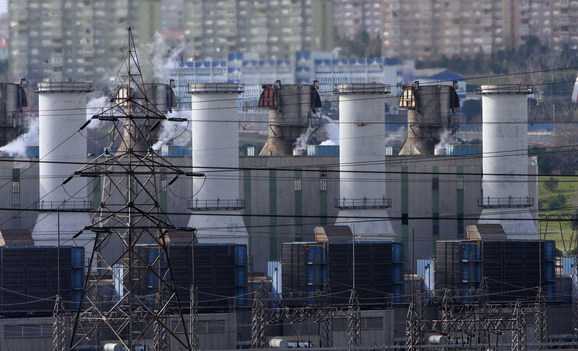
Whichever option the AKP decides to take, the result is likely to be a further loss of time and credibility, both of which are already in increasingly short supply. Turkey currently has a total installed electricity production capacity of 40,834 megawatts (MW) (www.tetas.gov.tr); but 13,393 MW is from hydroelectric plants, which can operate only at a limited capacity as the result of declining rainfall. A recent study by the state-owned Turkish Electricity Transmission Company (TEIAS) forecast that, even if the nuclear plant at Akkuyu is completed, Turkey will still face severe electricity shortages over the next decade. The TEIAS study was based on worst case and best case scenarios, taking into account the expected growth in electricity demand over the period from 2008 to 2017. According to the best case scenario, Turkey will add 12,917 MW in installed capacity by 2017. Under the worst case scenario, just 8,599 MW will be added; but the study also found that in order to keep pace with expected demand, the country will need a minimum of 22,000 MW in extra capacity by 2017; and if the economy continues to grow at a reasonable rate, it is more likely to need an additional 34,155 MW.
“Whatever we do, we face a crisis,” noted Songul Selvi in a commentary on the report in the daily Dunya. “The only question is how bad.” (Dunya, September 25).
-

book in german on turkish-european jews and the holocaust
From: [email protected]
List Editor: Mark Stein <[email protected]>
Editor’s Subject: H-TURK: book in german on turkish-european jews and the holocaust [E Kaynar]
Author’s Subject: H-TURK: book in german on turkish-european jews and the holocaust [E Kaynar]
Date Written: Mon, 22 Sep 2008 10:47:01 -0400
Date Posted: Mon, 22 Sep 2008 10:47:01 -0400Guttstadt, Corry Cover: Die Türkei, die Juden und der Holocaust ISBN 978-3-935936-49-1 | 520 Seiten | erschienen September 2008 | 26.00 € / 46.00 sF | lieferbar Zum Buch: Ab 27. September 2008 im Buchhandel - Vorbestellungen sind möglich. Die erste Generation türkischer Migranten in Westeuropa war mehrheitlich jüdisch. 20 bis 30.000 Juden türkischer Herkunft lebten während der Zwischenkriegszeit in verschiedenen europäischen Ländern, wo sie eigene sephardische Gemeinden gründeten. Obwohl viele von ihnen Opfer der Schoah wurden, wurden sie in der internationalen Holocaustforschung bislang kaum berücksichtigt. Die Autorin untersucht die wechselvolle Geschichte der Juden der Türkei. Noch gegen Ende des 19. Jahrhunderts hatten die etwa 400.000 Juden des Osmanischen Reiches weltweit eine der größten und blühendsten Gemeinden gestellt. Die Kriege zu Beginn des 20. Jahrhunderts sowie der forcierte Nationalismus der neu entstehenden Nationalstaaten trieb viele von ihnen in die Emigration. In zahlreichen europäischen Metropolen entstanden türkisch-jüdische Gemeinden, die ihre eigenen kulturellen und sozialen Strukturen hervorbrachten. Während des Nationalsozialismus wurden viele ihrer Mitglieder Opfer der Judenverfolgung, obwohl sie als Angehörige eines neutralen Staates speziellen Bedingungen unterlagen. Das Buch geht dem Schicksal türkischer Juden in verschiedenen europäischen Staaten unter der NS-Herrschaft nach. Besonderes Augenmerk liegt dabei auf der widersprüchlichen Politik der Türkei, die zwar einerseits verfolgten deutsch-jüdischen Wissenschaftlern und Künstlern Exil gewährte, andererseits jedoch wenig unternahm, um ihre im NS-Machtbereich befindlichen jüdischen Staatsbürger zu retten. Auch innerhalb der Türkei wurden Juden durch eine Sondersteuer faktisch ihres Besitzes beraubt, sodass die Mehrheit der verbliebenen Juden der Türkei nach Gründung des Staates Israel dorthin emigrierte. Das Buch schließt nicht nur eine wichtige Forschungslücke, sondern erhält vor dem Hintergrund eines erstarkten Antisemitismus in der Türkei sowie der Diskussion um das Holocaustgedenken in der Migrationsgesellschaft eine besondere Aktualität. „Nach unserer Kenntnis ist dies die wichtigste Arbeit über die sephardischen Juden türkischen Ursprungs, die Opfer des Holocaust wurden“ (Michael Halévy).
-

Baku denies Armenia will host Nabucco
BAKU, Azerbaijan, Sept. 24 (UPI) — Azerbaijani officials Wednesday said there are no plans to alter the route of the proposed Nabucco pipeline through Armenian territory.
Turkish media had reported Ankara spoke with officials in Armenia about the possibility of altering the Nabucco route to Europe.
Construction on the 2,000-mile pipeline from Caspian gas fields to Europe is slated for 2009. Azeri officials, however, denied the plans included Armenia, Trend Capital News reported.
“The route of Nabucco has already been determined. It will run through territory of Azerbaijan and Georgia, onwards to Turkey, Greece up to Italy,” said Ali Hasanov with the Public Policy Department in Baku.
Hasanov said Baku “has repeatedly stated” it will not deal with Armenia until it releases territory Azerbaijan claims is under occupation.
Europe and the United States back development of the Nabucco pipeline as a means of easing Europe’s dependency on Russian energy.