Friday, 26 September 2008
Assoc. Prof. Dr. Sedat LACINER is director of USAK,
Ankara-based Turkish think-tank and International Relations lecturer. BA (Ankara U., Turkiye), MA (Sheffield, UK), PhD (King’s College London, UK)
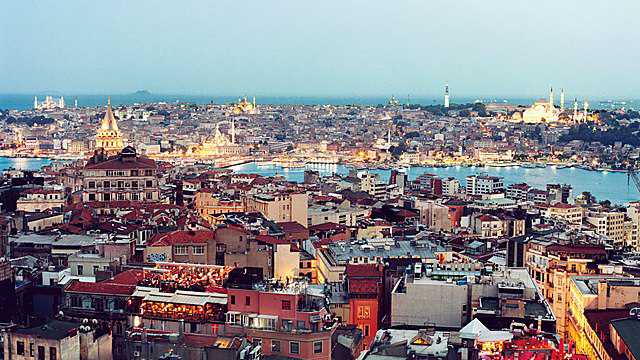
Some claim that Turkey is one of the transit countries of the drug trafficking, not a consumer; so the fight against narcotic should not be involved with in the priority struggles of Turkey. Even, within some conversations, it is possible to hear that narcotic money has an additional value for Turkey. Data on drug usage verifies the fact that Turkey is not a crucial drug consumption market, it is mostly a transit country. Due to drug smuggling, billions of dollar have entered to the country. However, these are not the whole part of the schema. To clarify Turkey just as a “transit country” is not sufficient. In the mean time, Turkey has become one of the crucial narcotic centers of the world. Every drug bags, pass through Istanbul and other Turkish cities to the Western Europe this turns back as a terror, crime organization, violence on the street and loss of government power in Turkey. Besides, this process continues for decades; drug-violence-degeneration triangle insidiously prejudice Turkey internally. At that point, drug trucks, passes from Turkey, should be stopped so as to re-construct order in Turkey, re-gain government authority by the government itself.
Terrorist organizations are based on two main columns: The first one is ideological/political base. Terrorist organizations exploit mistakes of states, areas where there is no state authority; the more these exploitation facilities continue, the more these organizations grow fast. The second important column terrorist organizations based is the economic infrastructure. Money is requisite for weapons, explosive materials, daily needs of terrorists etc. Contrary to general perception, money mostly has not come “directly” from other countries. When other countries want to assist, they prefer utilizing from “natural ways”; randomly cash money is given directly to the terrorists by foreign countries. There are two fundamental principles to maintain economic infrastructure of terror. 1) tribute \ blackmailing \ donation, 2) robbery, 3) narcotic money, 4) other illegal revenue. Among these, since it is relatively easier way and more sustainable, mostly, narcotic money catches attention. If it is considered that world’s drug market is around 400-500 billion dollars, this amount will not only sustain terrorist organizations but also countries. The money, circulated in the drug market, is almost equal to the USA’s defense expenditure in a year and it is approximately over Turkish gross national product. In Europe, one of the most important regions of the huge market, the PKK, time to time, has controlled 80 % of the market; so it is not difficult to comprehend how the PKK can stand for more than two decades.
When the PKK constituted as a terrorist organization, it did not take it so long to discover the drug smuggling money. At the beginning of 1980’s, it started to act in both producing and transportation sectors of illegal drug business. In 1982, the PKK begun to produce hemp and opium poppy around the Lebanese camps (Baelbek and Hermen) that were under Syrian control. Ports of Beirut, Sayda, Sur, Miryan, Abdeh and Tripoli were the main transit points of this transition. Drugs were sent to ports of Greek Cyprus, Greece and Italy; and from this forwarding, the terrorist organization sustained significant amount of revenue for the years. It is unfortunate that Syria, Greek Cyprus and Greece ignored (or supported) the PKK drug business in order to support this terrorist organization against Turkey. In the beginning of the 1980’s, another considerable role of the PKK was in the line that comes from Afghanistan-Pakistan-Iran, crosses Turkey and reach to Europe. As it is known these three countries were called “golden crescent” for drug smuggling. Behind the ‘Golden Crescent’ Laos – Thailand – Birmania countries are ‘Golden Triangle’ for drug producing and smuggling. In other words, most crucial producer countries are located in the east of Turkey, and Turkey is one of the most crucial routes for the European drug market. It did not take too long for the PKK militants to notice how a ‘lucky position’ they had to control drug trafficking between the East and the West. Terrorists realized the huge wealth, and firstly begun business by allowing transition and sustaining “security services” for ordinary smugglers. During the 1980s it was not difficult for the PKK to secure international drug transportation in the region because it was organized almost in every district and villages of eastern Turkey. When its organizations advanced in Istanbul, other Western big cities and Western European countries, drug dispatching and distribution has become easier for the PKK. Especially, over Afghanistan-Iran-Turkey-Eastern Europe-Southern Europe-West Europe line, tons of morphine, heroin, liquid hashish and other drug materials were transferred under the PKK control. The PKK has not only played a significant role in the East-West route drug transportation but also in the West-East transportation of chemical goods for processing of raw drug materials in the East. At the end of 1980s, it was realized that the real money was in the processing business. When raw drug materials were processed, its price increases geometrically. At that point the PKK, firstly in the East and Southeast Anatolia, later in different regions of Turkey and in some East European countries, constructed processing drug laboratories.
When the PKK reached its one of the political aims by composing a Kurdish diaspora close to itself in the Western European countries, it became a real boss in the drug business between Golden Crescent and Western Europe without any serious rival. In most of the cities in Europe, the PKK had thousands of members and huge sympathizer network that assist it in drug business. The terrorist organization helped many Kurdish people to immigrate illegally to Western Europe, and all these people were forced to pay significant part of their income in their new life. Apart from these so-called donations, Kurdish immigrants were forced to help the PKK’s drug businesses in Western European cities. Since there was no second group organized as the PKK did in the East and in the West, within a short time, the PKK strengthened its power in European drug market in terms of production, transportation, distribution and marketing. Kurdish children including 10-15 years old ones became drug seller in front of the pubs, pavilion, and even around certain schools in many European capitals.
In 1991, a PKK confessor said that between 1988 and 1990, he carried more than 300 kg heroin to Europe by his own. According to Interpol, in 1992, the PKK was orchestrating 80 % of the European drug market. This relationship was in the fields of processing, transportation, securing transportation, distribution, and marketing. With reference to 1992 Interpol data, the number of Kurdish organizations related with drug business was 178; and most of them were under the PKK control or they gave tribute to the PKK. Ikbal Huseyin Rivzi, Interpol’s chief narcotics officer, explained that the PKK was heavily evolved in drug trafficking as a means to support terrorism in Turkey. At the same year, the reports of the Italian police clearly showed that the PKK set up special teams for international drug business. German high rank officials also stated that the 75 % of heroin caught in this country in 1994 was belonging to Kurdish origin Turks. Moreover, 70 % of drug sale in Germany was made by the PKK. Other sources similarly indicate that the PKK controlled between 60 % to 70 % of the European illegal drug market in 1994. The number of the imprisoned PKK members related with drug crimes in Germany was 30 in 1994. In the same year, the amount of the captured PKK drug was nearly 1.6 ton.
By this way, drug business has become most important revenue of the PKK terrorist organization. The 1996 UN Narcotic Audit Committee’s Report indicated the reason how the PKK still stands, as narcotic money. 1997 Sputnik Operation (Belgium) showed how the PKK launders narcotic money. The terrorist organization in these years laundered money under the name of donation or aid to so-called cultural, children, women etc associations in London, Paris, Brussels and other European cities. This money has been collected in certain accounts; later, laundered money has been spent for MED TV (now Roj TV), weapons, explosives, militia training and for other PKK businesses. Another laundering method is jewelry buying-selling and some other legal investments.
In 1997, relationship between the terror organization and drug smuggling begun to disturb more the Western European countries, and with some operations, terror organization was forced to take more measures to hide its illegal activities. When risks increased in drug business, the PKK started a propaganda campaign claiming that it was not in any illegal drug business. The organization further claimed that these accusations were part of the Turkish Republic’s ‘propaganda game’ against the PKK. According to the PKK propaganda, those people who were caught by police had not any relationship with the PKK. In this regard, the PKK, thanks to its social and so-called cultural organizations, started a great “No to Drug” campaign in many European countries in 1998. With these kind of campaigns, as expected it was not possible for the PKK to clear itself in the eyes of European police and other security forces. However, it shouldn’t be forgotten that English or French police and judiciary are working within political system, and public opinion naturally influences their works against the criminals. May be this is the point that Turkey cannot intercept fully, but the PKK utilizes, perfectly. While Turkey generally perceives all Europe (even the West in general) as a single body, the terror organization successfully abuses the Western democracies’ weaknesses and the Western pluralist political and legal structures.
After capture of Abdullah Ocalan, head of the PKK, and with the dramatic decrease of clashes in the Anatolian mountains, the organization begun to give more importance to drug business than before. Between 2004 and 2005, the amount of drug just caught in the Netherlands was more than 400 kg. With reference to 2005 European data, the PKK is the primary actor of the illegal European drug trade. BBC stated that, 80 % of European drug market was Turkish origin (it means Kurdish origin); and the PKK manages it. The BBC also reports that the number of the PKK members in British prisons is more than 1000. According to Turkish authorities, the number of PKK members caught with drug is around 700 between 1984 and 2000. These numbers clearly stated that the PKK has worked with hundreds of people in each country on the transition route.
When all these data is considered, it won’t be so extreme to say that the PKK has developed by narcotic money. In the mean time, a new kind of mafia emerged in drug, smuggling, and tribute \ robbery areas. This formation, can be called as ‘PKK mafia’, has developed its own mentality beyond terrorist organization’s classic mentality. In course of time, participations begun to this network from outside; and a network, stretched to three continents (Europe, Asia and Africa), was created. Surprisingly, some organizations, defined themselves on the contrary to the PKK, have also begun to participate to this PKK mafia network. Thus Turkist or Kurdist ideologies curtailed the real intentions and the drug money undermined public order and state authority in the country. So as to secure drug production, processing, transportation, distribution and marketing; this network has reflected itself differently and spreaded even inside the state body. The criticism made by European countries in the mid-1990s, was about the fact that drug bosses had friends in the Turkish cabinets. Although these claims seem to be more exaggerated, it is so remarkable that organizations that reflect themselves to public under different ideology and utilize from state power in some cases, has been cooperating with the PKK. It can be argued that the Deep State problem, extreme nationalisms and terrorism in Turkey have been financed by the drug smuggling money for the years.
In brief, illegal drug trade is the most crucial financial source of terror and collapse of legal state in Turkey. In order to end terror, if Turkey succeeds in ending drug smuggling it will get more effective solutions than bombing Kandil Mountain. Turkey on the one hand must eliminate the areas that are exploited by terrorists and extremists, and at the same time it must destroy financial infrastructure of terror and other crimes by cutting drug smuggling. Otherwise, the Turks will continue to live with the problems like robbery in streets of Istanbul, terror in mountains of southeast Anatolia and political assassinations in most sensitive times. We should also note that Turkey desperately needs immediate help of the European countries in its combat against terrorism. The ‘monster’ so big for Turkey, and the Turks cannot overcome the problem without the EU. At the same time, the drug smuggling mainly targets the youth of the Western European countries, and the EU cannot stop the illegal drug problem without a real co-operation with Turkey.
—
Assoc. Prof. Dr. Sedat LACINER is director of USAK, Ankara-based Turkish think-tank and International Relations lecturer. BA (Ankara U., Turkiye), MA (Sheffield, UK), PhD (King’s College London, UK)
[email protected]