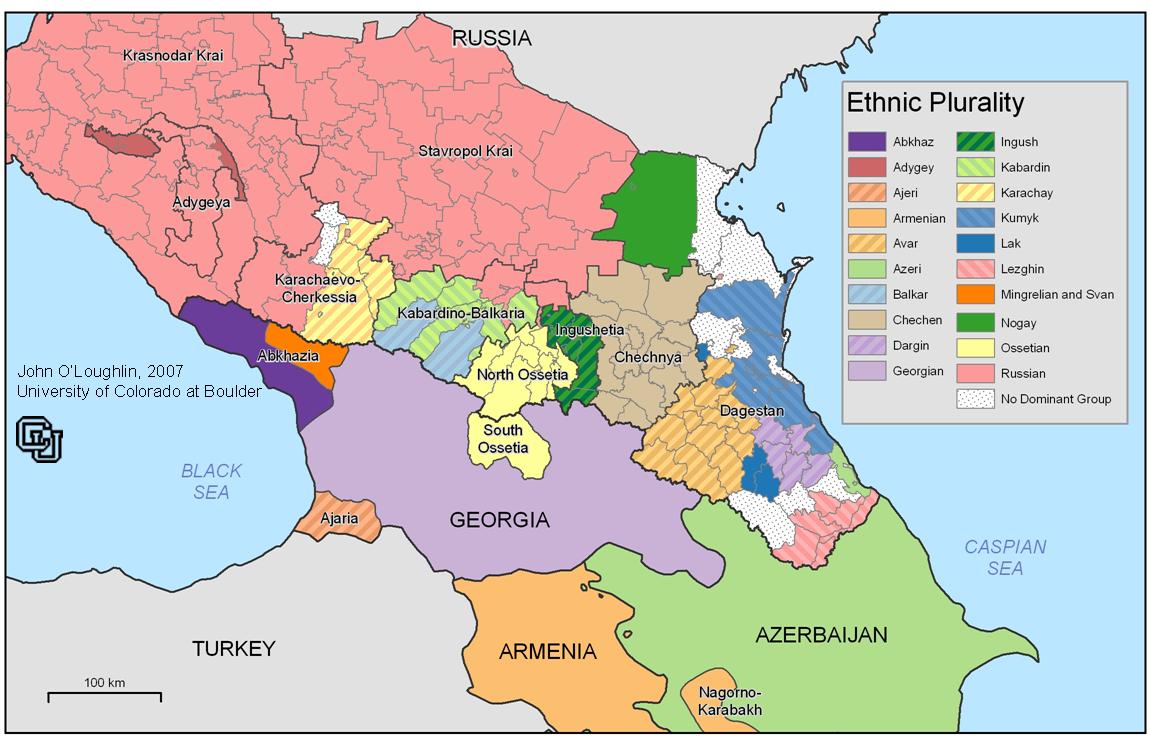
ANKARA – The foreign ministers of Georgia and Russia are expected to visit Turkey separately in a few days’ time for talks on the escalating crisis in the Caucasus, a government official said Friday.Turkish Foreign Minister Ali Babacan will host his Georgian counterpart Eka Tkeshelashvili on Sunday in Istanbul, two days before he meets Sergei Lavrov of Russia on September 2 in the same city, said the official, who requested anonymity.
There were no plans for a three-way ministerial meeting, he added.
Turkey was put on edge as Russia sent tanks and troops into Georgian territory on August 8, a day after a Georgian offensive to retake the rebel region of South Ossetia.
Tensions increased on Tuesday when Russia recognised South Ossetia and Abkhazia — another secessionist Georgian teritory on the Black Sea — as independent states.
Turkey, which has developed close ties with Georgia, said at the time that it supported its northeastern neighbour’s territorial integrity, but refrained from openly condemning Russia.
Ankara has in recent years worked hard to improve ties with Moscow, which has become an important trading partner and Turkey’s biggest supplier of natural gas.
Russia is on the other hand angry that NATO member Turkey has allowed US and NATO warships through the Dardanelles and Bosphorus straits into the Black Sea.
Moscow has accused the Atlantic alliance of building up its forces in the Black Sea and has said it was taking “measures of precaution”.
NATO has denied Russia’s accusations while Turkey says the ships’ passage was in line with the 1936 Montreaux Convention which sets limits for the number and type of military vessels in the Black Sea.
NATO says five ships are currently in the Black Sea for routine exercises planned before the Georgian conflict while two US warships are in Georgia to provide humanitarian aid.
Turkish riot police capture protestors after a Kurdish rally in the south-eastern province of Diyarbakir in November 2007 GALLO/GETTY
Many ethnic Kurds and Turks hope that an ongoing investigation into an undercover organisation may help explain hundreds of unsolved murders, disappearances and bombings which rocked Turkey in the early 1990s.
State prosecutors allege that a highly-secretive group – ‘Ergenekon’ – was responsible for many unsolved, high-profile killings in Turkey in recent years.
These include the murders of leading journalists, such as Hrant Dink, assassinated in January 2007, and Ugur Mumcu, killed in 1993.
Prosecutors also allege that the group was behind plans to destabilise Turkey and pave the way for a military coup to unseat the current government. Some 86 people have so far been detained in the case, including media, political and retired military figures.
“The Ergenekon case is very, very important,” Hasan Fendoglu, an advisor to Recip Tayyip Erdogan, the former prime minister, told Al Jazeera.
“It is the first case of its kind in the Republic of Turkey in 40 years. If we can solve this case, we will have made some major progress in human rights,” Fendoglu, who also heads the Human Rights Presidency, the official human rights body, added.
But there are fears that political pressures may derail what many are calling the most important Turkish criminal investigation in years.
Troubled southeast
While many of the high-profile assassinations happened in Istanbul and Ankara, most of Turkey’s unsolved murders and disappearances of the last two decades have centred in the country’s troubled southeast.
This region has an ethnic Kurdish majority and has been the scene of continuing conflict between Turkish security forces and fighters of the Kurdish Workers Party (PKK), who have led a violent campaign for independence. More than 30,000 people have been killed in this conflict so far.
Interest in Ergenekon is therefore high in the southeast and in Diyarbakir, its regional capital. Many are hoping that the case will help solve decades-old murders and disappearances.
One such unsolved disappearance concerns Mecit Gundem, a farmer from the ethnic Kurdish village of Hazro.
He has not seen his father since 1991.
“The jandarma [paramilitary rural police gendarme force] came to our village at 4am,” he told Al Jazeera.
“They came to our house and took away my father, Ibrahim, right in front of many witnesses. But when we went to the jandarma station later that morning and asked for him, they told us he wasn’t there.”
Since that day, no one has heard anything of Ibrahim. “We kept asking, but they just told us they didn’t know anything about him, or whether he was dead or alive,” Mecit said.
Death squads
Dink was gunned down in front of his office in January 2007 AFP
But the Ergenekon case may have offered a fresh clue.
“One day a few weeks ago, there was an article in a newspaper that caught my eye,” he says.
“It said that according to a file that had come to light because of the Ergenekon investigation, there was a death squad operating in my region back in the 1990s.”
“The file said that this squad had operated on the instructions of a secret group within the state, which ordered it to kill anyone they suspected of involvement with the PKK. It said too that this group killed a man from Hazro the same day my father disappeared, along with many others from other places.”
Mecit is now pushing local human rights lawyers to take up the case again.
One such lawyer is Muharrem Erbey, chair of the Diyarbakir branch of Turkey’s Human Rights Association (IHD).
“Ergenekon is extremely important for Kurdish society,” he says.
“Why?” He points to a row of five portraits on the wall of his office.
“They are all human rights activists killed by Ergenekon. We have lost many, many people over the years to them.”
The IHD in Diyarbakir also has files on some 1,285 people who were allegedly arrested by the police, the jandarma, the army and other security forces since 1991 – and were never seen or heard from again.
“The state used groups like Ergenekon to kill Kurdish activists, intellectuals and businessmen,” he says. “The group became very strong as the conflict intensified. Ergenekon grew out of the Kurdish issue.”
The “deep state”
Some analysts see Ergenekon as just one part of the ‘deep state’ – a shadowy network of groups responsible for many killings and disappearances over the years.
“The heyday of the deep state was the 1990s, when it was vastly powerful,” says Gareth Jenkins, Turkey analyst with the Washington-based Jamestown Foundation.
“The deep state was never a single, structured organization, but a web of groups and networks, some of which were autonomous, others of which sometimes cooperated with each other. The unifying factor was not central control but shared immunity from prosecution.”
Others dispute any official culpability though. “Our police stations and security services have all been doing their work properly here,” Cemal Husnu Kansiz, the deputy governor of Diyarbakir, told Al Jazeera.
“If there are any specific cases of disappearances or killings then they always follow them up. In this instance, there are no specific human rights problems in Diyarbakir.”
This is not a widely-held view in the region, however. Tahir Elci, a local lawyer, recalls another case he was involved in, this time from 2001.
“Two local politicians in Silopi [a nearby town] from the pro-Kurdish party, HADEP, were called to the local jandarma station in the middle of the day,” he says.
“They went there by car and were never seen again. We asked after them, and the jandarma said, ‘yes, they came, then left, we don’t know what happened’.
“We took the case all the way to the European Court of Human Rights, who ruled in our favour – that Turkey had failed in its responsibilities towards the two men. We still haven’t found them. The jandarma commander in the area at the time, Levent Ersoz, refused to testify.”
Ersoz has also now been indicted by state prosecutors in the Ergenekon case, charged with being a key member of the group. A warrant for his arrest was issued on August 14, when his whereabouts were unknown.
The jandarma would not comment on any of these cases.
“On Ergenekon, we cannot comment on an ongoing case – we will just have to wait and see,” Kansiz told Al Jazeera.
Politically motivated?
Police believe recent violence has also been the work of Ergenekon AFP
Many hope though that the Ergenekon case will reveal more connections to the disappeared of the southeast, as well as to cases in other parts of Turkey.
Yet there are also concerns that the Ergenekon file may be politically motivated and badly put together.
“All the people who have been accused so far are also known for their anti-government stance,” says Onur Oymen, spokesman for the Republican People’s Party, Turkey’s main parliamentary opposition.
“In the indictment, sometimes you also find the same person mentioned as a member of Ergenekon and then later mentioned as someone Ergenekon wanted to kill.”
At the same time, others worry about the ability of the judiciary to successfully investigate and prosecute such cases.
“One of the issues is how will the justice system deal with Ergenekon when there are major question marks over the judiciary and the pressure – political pressure – that can be brought to bear on it,” says Emma Sinclair-Webb of the international group, Human Rights Watch.
Yet officials remain confident.
“It is impossible for political pressure to be brought to bear in this,” says Fendoglu. “The courts are completely independent of the government.”
Meanwhile, Mecit has a simple request.
“I just want to know what happened to my father. I want to know where and how he was killed. My whole family just wants to know.”
His Majesty the King, Hamad bin Isa Al Khalifa’s suggestion to establish a railway link between the GCC states and Turkey has been welcomed by observers as a strategic vision for a bright economic and political future for the region.
Half of the ambitious project would be carried out by Saudi Arabia while the rest would be taken care of by the other GCC states which will enact laws and put in place mechanisms to implement the suggestion.
During his recent visit to Turkey, King Hamad laid the moral cornerstone for the economic integration with Turkey through the project connecting Turkey with the Arabian Gulf.
Observers did not expect such a suggestion and said it was the perfect time to start working on it thanks to the economic and political options offered by Turkey and the GCC states.
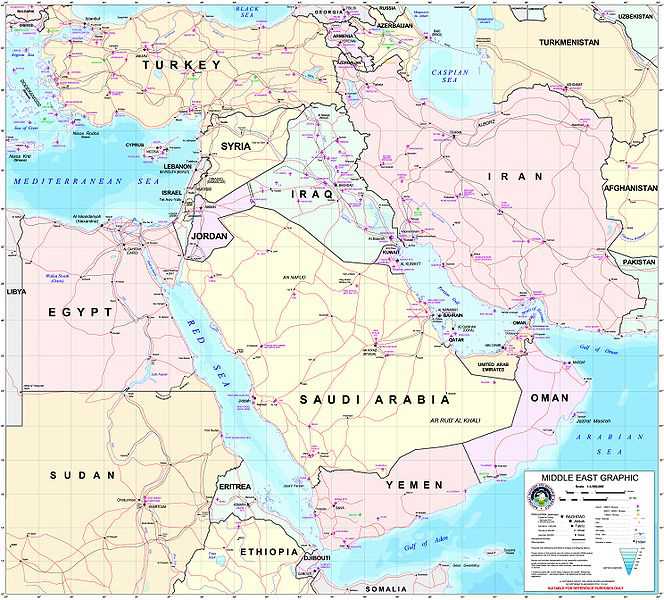
There is a proposal to set up a link from Oman, the uae, Bahrain, Qatar, Saudi, Kuwait, Iraq and then to Turkey. Another proposal suggests the network to start from Oman, the uae, Bahrain, Qatar, Saudi Arabia, Jordan, Syria to Turkey.
The King Fahad Causeway will be the integral part in either project to reach Turkey.
The gcc states set up a financial plan for the project by signing an agreement to establish a free trade zone with Turkey in May, 2005 in Bahrain. Negotiations are expected to start to implement the agreement.
Bahrain has signed agreements with Turkey on avoidance of dual taxation and tax evasion to provide suitable atmosphere to attract investment.
During the dinner banquet hosted in King Hamad’s honour, Turkish President Abdullah Gul said HM the King’s visit was a turning point in friendly ties between both countries.
Gul said Istanbul paid great attention to the agreement on promoting strategic dialogue between Turkey and the gcc states.
Turkish people believe that their economic potential meets the region’s demands and their country is a secure place for investment.
King Hamad highlighted Turkey’s importance in the region and said the country links Asia and Europe and seeks peace, freedom and development for all which is the goal of every body in the Gulf.
Syrian authorities have arrested two Kurdish leaders and charged one with a capital offence, as part of a campaign to crush political dissidents that has triggered international protests.
The two men were arrested ahead of a visit by French President Nicolas Sarkozy to the Syrian capital on Wednesday.
Sarkozy has been trying to convince President Bashar al-Assad to release leading political prisoners who have been campaigning for minority rights and a democratic constitution as an alternative to four decades of Baath Party rule.
Talal Mohammad of the banned Wifaq party, an offshoot of the Kurdish Workers Party (PKK), which is also active in Turkey and Iraq, was arrested without warrant in northeastern Syria last week and not heard from since, according to the National Organisation of Human Rights in Syria.
Authorities earlier arrested Mashaal Tammo, an official in Future Movement, which like all opposition parties in Syria is banned.
Future Movement advocates democracy and equal rights for Syria’s one million Kurdish minority.
The Kurdish language is not allowed to be taught in schools and tens of thousands of Kurds were denied citizenship after a 1960s census.
Tammo had said before his arrest that Syrian policy toward the Kurds risked a repeat of riots that killed 30 people in Syria in 2004. The riots started in a Kurdish region.
Tammo was charged on August 27 with committing aggression and arming Syrians to start civil war, an accusation that carries the death penalty and is rarely directed against well-known political activists.
Other charges regularly used against dissidents were also levelled at Tammo, including belonging to an organisation that aims to change the basis of society and causing racial and sectarian tension.
Denies charges
Tammo has denied the charges and human rights lawyer Mohannad al-Hassani said it would require a great deal of evidence to prove that Tammo, who renounces violence, had wanted to start civil war.
“The authorities cannot resort to such fearsome charges just because they disagree with someone’s opinions,” he said.
The U.S. State Department denounced Tammo’s arrest, saying he was held incommunicado for 15 days before he was charged.
“We condemn the detention of Tammo and other Syrian prisoners of conscience and call for their immediate release,” State Department spokesman Robert Wood said in a statement.
“We encourage the international community to join us in calling on the Syrian government to stop its policy of arresting critics of the regime and to comply with its obligations under the International Covenant on Civil and Political Rights.”
Syria, which has been controlled by the Baath Party since it took power in a 1963 coup and imposed emergency law, has thousands of political prisoners, human rights lawyers say.
Assad said during a visit to Paris last month authorities only arrest those suspected of violating the constitution and that criticism of his rule was permitted.
Under Turkish pressure, Syria has cracked down on the PKK, which it once backed.
A security court handed several PKK members long sentences in 2006 in trials branded illegitimate by international human rights groups.
“What is this? You armed us and now you imprison us,” one defendant shouted at the judges before he was sentenced to seven years in jail.
I recently checked the Nobel Foundation Web Page and found nothing about our homeland, Azerbaijan, in connection to the world recognized Nobel Prize. Well, I complained. Here’s the letter I wrote and the result…
“I recently saw the Nobel Foundation Web Page and the article about Alfred Nobel, benefactor of the Nobel Prize. The article is very well written except that it omits that Nobel acquired much of his wealth in Azerbaijan, specifically from oil fields in Baku at the turn of last century. This money is still being used to honor Nobel Laureates and their great contributions to modern society. Please contact me if I’m wrong, however I would really appreciate if additional material about the life of Nobel in Azerbaijan could be added to your Web Server.”
The reply I received came from Hans Mehlin of the Karolinska Institute in Stockholm who wrote, “You are correct. Especially Alfred’s brothers, [Robert and Ludwig] were involved in the oil business in Azerbaijan. We are planning to make extensive changes to the Server this summer. Plans are already being made to include this kind of information. Several relatives of the Nobel Family will be traveling to Azerbaijan this summer to visit places that relate to the Nobels. They will provide us with photos and text after the trip.”
Adil Baguirov
Northwestern Michigan University
e-mail: ([email protected])
April 30, 1996
Editor: Azerbaijan International wrote about the relationship of the Nobel Prize to Azerbaijan (AI 2:3. Summer 1994). Alfred Nobel was the largest single shareholder in the Baku oil fields and factories owned by his brothers, Robert and Ludwig. When Alfred died in 1896, much of his legacy went to fund the Nobel Prize. Swedish historian, E. Bargengren, who had access to the Nobel family archives, insists that it was this “decision to allow withdrawal of Alfred’s money from Baku that became the decisive factor that enabled the Nobel Prizes to be established.” This year, 1996, commemorates 100 years since the Prize was established, although the first awards were designated in 1901.
For the article and photos about Petrolea Park which surrounds the still existing beautiful stone structure of the Nobel Residence, visit our Web Site: ) Environmental Issue, Summer 1994.