Month: September 2008

  • Ilqar Mamed: “Serzh Sargsyan seems to realize the cost of self-isolation, to which Armenia was led by a person with a provincial soul and Kocharyan by surname”

    Ilqar Mamed: “Serzh Sargsyan seems to realize the cost of self-isolation, to which Armenia was led by a person with a provincial soul and Kocharyan by surname”

    Day.Az interview with famous political scientist Ilqar Mamed.

    – Can you comment on the announcement of President of Armenia Serzh Sargsyan that he proposed to President of Azerbaijan Ilham Aliyev to invest into Nagorno Karabakh to demonstrate Azerbaijan’s interest in the welfare of Karabakh and safe life of its population? (more…)

  • Turkey and Armenia Friends and neighbours

    Turkey and Armenia Friends and neighbours


    Sep 25th 2008 | ANKARA AND YEREVAN
    From The Economist print edition
    Rising hopes of better relations between two historic enemies

     
    KEMAL ATATURK , father of modern Turkey, rescued hundreds of Armenian women and children from mass slaughter by Ottoman forces during and after the first world war. This untold story, which is sure to surprise many of today’s Turks, is one of many collected by the Armenian genocide museum in Yerevan that “will soon be brought to light on our website,” promises Hayk Demoyan, its director.
    His project is one more example of shifting relations between Turkey and Armenia. On September 6th President Abdullah Gul became the first Turkish leader to visit Armenia when he attended a football match. Mr Gul’s decision to accept an invitation from Armenia’s president, Serzh Sarkisian, has raised expectations that Turkey may establish diplomatic ties and open the border it closed during the 1990s fighting between Armenia and Azerbaijan over Nagorno-Karabakh. The two foreign ministers were planning to meet in New York this week. Armenia promises to recognise Turkey’s borders and to allow a commission of historians to investigate the fate of the Ottoman Armenians.
    Reconciliation between Turkey and Armenia could tilt the balance of power in the Caucasus. Russia is Armenia’s closest regional ally. It has two bases and around 2,000 troops there. The war in Georgia has forced Armenia to rethink its position. Some 70% of its supplies flow through Georgia, and these were disrupted by Russian bombing. Peace with Turkey would give Armenia a new outside link. Some think Russia would be happy too. “It would allow Russia to marginalise and lean harder on Georgia,” argues Alexander Iskandaryan, director of the Caucasus Media Institute.
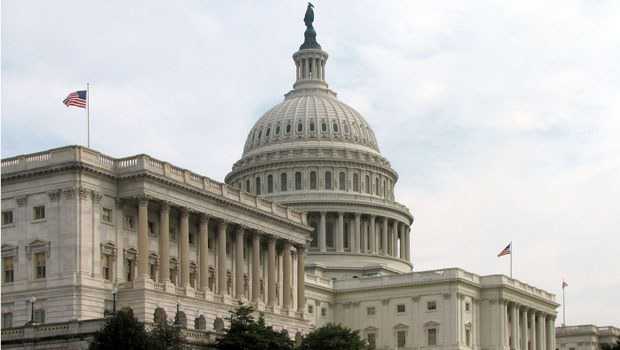
    Mending fences with Armenia would bolster Turkey’s regional clout. And it might also help to kill a resolution proposed by the American Congress to call the slaughter of the Armenians in 1915 genocide. That makes the Armenian diaspora, which is campaigning for genocide recognition, unhappy. Some speak of a “Turkish trap” aimed at rewriting history to absolve Turkey of wrongdoing. Indeed, hawks in Turkey are pressing Armenia to drop all talk of genocide.
    Even more ambitiously, the hawks want better ties with Armenia to be tied anew to progress over Nagorno-Karabakh. But at least Mr Gul seems determined to press ahead. “If we allow the dynamics that were set in motion by the Yerevan match to slip away, we may have to wait another 15-20 years for a similar chance to arise,” he has said.

  • Turkey facing difficult choice on nuclear energy

    Turkey facing difficult choice on nuclear energy

    By Thomas Grove and Orhan Coskun

    ISTANBUL/ANKARA, Sept 26 (Reuters) – Turkey has a difficult decision ahead as it ponders if it can afford to reject the single bid it received in a long-delayed $7.5 billion nuclear tender at a time when global liquidity is drying up.

    A consortium led by Russian-based Atomstroyexport was the single bidder on Wednesday in the tender to construct and operate the first of three planned nuclear power plants.

    The plants are a cornerstone of the Turkish government’s policy to cut dependence on imports and address power consumption demand, seen rising at eight percent a year.

    But doubts the tender will go ahead have mounted as analysts say the government will want a broader range of options beyond a single offer, and Atomstroyexport’s plan is considered expensive for the technology on offer.

    Analysts also have pointed out that the Russian-based company’s construction of the plant undermines Ankara’s energy policy of limiting its dependence on Russia, which already provides more than 60 percent of Turkey’s gas imports.

    “The fact the tender came at the moment of the latest global financial crisis really weighed on the process. If a competitive second bid had come in it would have been much better,” said a senior Turkish Energy Ministry source, who declined to be named.

    Business Feed Article | Business | guardian.co.uk.

  • Are Russia and Turkey Trying to Alter the Nagorno-Karabakh Peace Process Format?

    Are Russia and Turkey Trying to Alter the Nagorno-Karabakh Peace Process Format?

    Confronted with widespread international criticism over its actions in Georgia, Russia is eager to show that it can still serve as a peace broker the post-Soviet area. A primary Kremlin aim appears to be checking any further advance of the North Atlantic Treaty Organization.

    “The South Ossetian crisis will not constitute a precedent,” Russian Foreign Minister Sergei Lavrov told the Federation Council’s Foreign Affairs Committee on September 18. “We will continue to responsibly fulfill our mediation mission in the negotiation process and peacemaking [and] that fully applies to [the separatist conflicts of] Transdniester and Nagorno-Karabakh,” he said.

    The signal the Kremlin wants to send is that “it is not restoring its empire and that it is ready to reconcile warring parties while playing a leading role in the process,” wrote Sergei Markedonov of the Moscow-based Institute for Political and Military Analysis in the September 16 issue of Russia’s “Kommersant” daily.

    Russia has been expending a lot of energy since the August crisis to revive the Transdniester and Nagorno-Karabakh peace processes outside the framework of the existing international settlement mechanisms.

    Concerning Karabakh, Russian President Dmitry Medvedev met twice in September with his Armenian counterpart Serzh Sargsyan and once with

    EurasiaNet Eurasia Insight – Are Russia and Turkey Trying to Alter the Nagorno-Karabakh Peace Process Format?.

  • PM urges financial responsibility

    PM urges financial responsibility

    Gordon Brown has called for an end to the “age of irresponsibility”, ahead of White House talks with President Bush on the global financial crisis.

    The prime minister told the UN General Assembly that “co-ordinated” solutions to the economic downturn were needed.

    Mr Brown advocated a “new global order, founded on transparency, not opacity”.

    US talks on a $700bn (£380bn) bail-out plan to revive the finance sector have ended in stalemate. Mr Brown is due to meet President Bush at 2120 BST.

    ‘Not just national’

    The prime minister has voiced his support for the proposals put forward by the US government.

    He told the UN: “This cannot just be national anymore. We must have global supervision…

    “The age of irresponsibility must be ended. We must now become that new global order founded on transparency, not opacity.”

    On Thursday, the prime minister urged world leaders not to use the financial crisis as an excuse to abandon efforts against global poverty.

    Desire for stability

    Mr Bush has proposed the US government take on the debts of struggling financial firms in an attempt to keep them afloat and also prevent a recession.

    The prime minister said quick action was needed to stabilise the economic situation and that longer-term reforms to the world’s financial system were also needed.

    “While the problem comes out of America, it has consequences for all of us and every family will want to know that we are doing everything in our power to ensure that there is stability,” he said.

    Other issues on the agenda for the White House meeting are thought to include Iraq, Afghanistan and the situation in Georgia.

    Meanwhile, a survey of 1,012 people for BBC Two’s Daily Politics show suggests 36% trust Mr Brown and Chancellor Alistair Darling most to steer the UK’s economy through the downturn.

    Some 30% opted for Conservative leader David Cameron and shadow chancellor George Osborne, while 5% chose Lib Dem leader Nick Clegg and Treasury spokesman Vince Cable.

    The poll, conducted ComRes on 24th and 25 September, suggests that 24% of people do not know which party offers the best option on the economy. 

    To watch Video: 7636165.stm


    BBC 26 September 2008
  • Turkey PM ‘insult’ artist cleared

    Turkey PM ‘insult’ artist cleared

    Michael Dickinson denied his work was offensive

    An artist who made a collage mocking Turkey’s prime minister by portraying him as a dog, has been acquitted by a court of insulting him.

    Michael Dickinson, 58, was cleared by a court in Istanbul after a judge decided the controversial collage of Tayyip Erdogan was art and not insulting.

    The piece, called Good Boy, showed Mr Erdogan as a dog with a stars and stripe leash and nuclear missile tail.

    Mr Dickinson, originally from Durham, has worked in Turkey for 20 years.

    The artist had already been held in custody for 10 days in 2006 after police seized another collage considered to be offensive.

    At the time, he was ordered to leave the country, but was charged when he later returned on a tourist visa.

    The Turkish court said that although Mr Dickinson’s work “had some insulting elements” it could be considered within the limits of criticism and he was acquitted.

    Mr Dickinson’s Good Boy provoked anger in Turkey

    Speaking after the hearing on Thursday, Mr Dickinson said: “It was all over in about 20 minutes.

    “The judge read out a testimonial letter from Professor Mehmet Ozer, an art teacher at Marmara University saying that in his opinion the collage ‘Good Boy’ was more an example of political criticism rather than an insult.

    “He said as Turkey was trying to join the European community a collage such as mine should not be held as a crime.

    “So I’m free, without even a fine. I’m very relieved to have it all over now after having lived under the shadow of the charge for the last two years.”

    In 2006 Mr Dickinson exhibited a collage entitled Best in Show depicting the Turkish PM as a dog receiving a rosette from President Bush.