Month: September 2008

  • Scholar claims to find medieval Jewish capital ; Yahudi Turklerin Hazar Devletinin Baskenti: Itil, the Khazar capital

    Scholar claims to find medieval Jewish capital ; Yahudi Turklerin Hazar Devletinin Baskenti: Itil, the Khazar capital


    The KHAZARS/ Scholar claims to find medieval Jewish capital

    September 22nd, 2008 · 1 Comment  


    By MANSUR MIROVALEV, Associated Press Writer Sat Sep 20, 2:13 PM ET
    MOSCOW – A Russian archaeologist says he has found the lost capital of theKhazars, a powerful nation that adopted Judaism as its official religion more than 1,000 years ago, only to disappear leaving little trace of its culture.
    Dmitry Vasilyev, a professor at Astrakhan State University, said his nine-year excavation near the Caspian Sea has finally unearthed the foundations of a triangular fortress of flamed brick, along with modest yurt-shaped dwellings, and he believes these are part of what was once Itil, the Khazar capital.
    By law Khazars could use flamed bricks only in the capital, Vasilyev said. The general location of the city on the Silk Road was confirmed in medieval chronicles by Arab, Jewish and European authors.
    “The discovery of the capital of Eastern Europe’s first feudal state is of great significance,” he told The Associated Press. “We should view it as part of Russian history.”
    Kevin Brook, the American author of “The Jews of Khazaria,” e-mailed Wednesday that he has followed the Itil dig over the years, and even though it has yielded no Jewish artifacts, “Now I’m as confident as the archaeological team is that they’ve truly found the long-lost city,
    The Khazars were a Turkic tribe that roamed the steppes from Northern China to the Black Sea. Between the 7th and 10th centuries they conquered huge swaths of what is now southern Russia and Ukraine, the Caucasus Mountains and Central Asia as far as the Aral Sea.
    Itil, about 800 miles south of Moscow, had a population of up to 60,000 and occupied 0.8 square miles of marshy plains southwest of the Russian Caspian Sea port of Astrakhan, Vasilyev said.
    It lay at a major junction of the Silk Road, the trade route between Europe and China, which “helped Khazars amass giant profits,” he said.
    The Khazar empire was once a regional superpower, and Vasilyev said his team has found “luxurious collections” of well-preserved ceramics that help identify cultural ties of the Khazar state with Europe, the Byzantine Empire and even Northern Africa. They also found armor, wooden kitchenware, glass lamps and cups, jewelry and vessels for transporting precious balms dating back to the eighth and ninth centuries, he said.
    But a scholar in Israel, while calling the excavations interesting, said the challenge was to find Khazar inscriptions.
    “If they found a few buildings, or remains of buildings, that’s interesting but does not make a big difference,” said Dr. Simon Kraiz, an expert on Eastern European Jewry at Haifa University. “If they found Khazar writings, that would be very important.”
    Vasilyev says no Jewish artifacts have been found at the site, and in general, most of what is known about the Khazars comes from chroniclers from other, sometimes competing cultures and empires.
    “We know a lot about them, and yet we know almost nothing: Jews wrote about them, and so did Russians, Georgians, and Armenians, to name a few,” said Kraiz. “But from the Khazars themselves we have nearly nothing.”
    The Khazars’ ruling dynasty and nobility converted to Judaism sometime in the 8th or 9th centuries. Vasilyev said the limited number of Jewish religious artifacts such as mezuzas and Stars of David found at other Khazar sites prove that ordinary Khazars preferred traditional beliefs such as shamanism, or newly introduced religions including Islam.
    Yevgeny Satanovsky, director of the Middle Eastern Institute in Moscow, said he believes the Khazar elite chose Judaism out of political expediency — to remain independent of neighboring Muslim and Christian states. “They embraced Judaism because they wanted to remain neutral, like Switzerland these days,” he said.
    In particular, he said, the Khazars opposed the Arab advance into the Caucasus Mountains and were instrumental in containing a Muslim push toward eastern Europe. He compared their role in eastern Europe to that of the French knights who defeated Arab forces at the Battle of Tours in France in 732.
    The Khazars succeeded in holding off the Arabs, but a young, expanding Russian state vanquished the Khazar empire in the late 10th century. Medieval Russian epic poems mention Russian warriors fighting the “Jewish Giant.”
    “In many ways, Russia is a successor of the Khazar state,” Vasilyev said.

    He said his dig revealed traces of a large fire that was probably caused by the Russian conquest. He said Itil was rebuilt following the fall of the Khazar empire, when ethnic Khazars were slowly assimilated by Turkic-speaking tribes, Tatarsand Mongols, who inhabited the city until it was flooded by the rising Caspian Seaaround the 14th century.

    The study of the Khazar empire was discouraged in the Soviet Union. The dictator Josef Stalin, in particular, detested the idea that a Jewish empire had come before Russia’s own. He ordered references to Khazar history removed from textbooks because they “disproved his theory of Russian statehood,” Satanovsky said.

    Only now are Russian scholars free to explore Khazar culture. The Itil excavations have been sponsored by the Russian-Jewish Congress, a nonprofit organization that supports cultural projects in Russia.

    “Khazar studies are just beginning,” Satanovsky said.


  • Iraq Passes Provincial Elections Law

    Iraq Passes Provincial Elections Law


    ?
    _r=1&oref=slogin

    The struggle over Kirkuk, where Arabs, Kurds, Turkmens, Christians
    and other groups have all staked claims, has been among the central
    obstacles to unifying Iraq. Government officials in the Kurdish
    region in the north insist that Kirkuk rightfully belongs to them.
    Sunni Arab and Turkmen lawmakers have proposed a power-sharing
    agreement to govern the city.

    Under the new bill, passed unanimously by the 190 members of
    Parliament present, a committee made up of representatives from the
    major groups involved in the Kirkuk dispute will take up the question
    and present recommendations by March 31. The election in Kirkuk is to
    be postponed, and the current provincial council would remain in
    place until a separate election law for the province could be passed.

    Elections in the three provinces of the Kurdish region, an autonomous
    territory, will be held in 2009.

    Sa’adaldin Arkij, head of the Turkmen Front political party, called
    the passage of the election law “a historical victory for Iraqis.”

    “Today there was no winner and no loser, but Iraq won” he said.
    “Kirkuk is not an easy issue, and the agreement is a confirmation of
    Iraqis’ awareness and responsibility for unity in their country.”

    The new law eliminates an article that, in an earlier version, had
    provided 13 seats in six provinces for Iraqi Christians, Yazidis and
    other minorities — a move that Younadim Kanna, head of the Assyrian
    Democratic Movement and the only Christian member of Parliament said
    was “a very, very bad sign.”

  • S.E.C. Concedes Oversight Flaws Fueled Collapse

    S.E.C. Concedes Oversight Flaws Fueled Collapse


    Published: September 26, 2008
    WASHINGTON — The chairman of the Securities and Exchange Commission, a longtime proponent of deregulation, acknowledged on Friday that failures in a voluntary supervision program for Wall Street’s largest investment banks had contributed to the global financial crisis, and he abruptly shut the program down. 

    Joshua Roberts/Bloomberg News

    Christopher Cox, the head of the Securities and Exchange Commission, testifying before the Senate banking panel on Tuesday.

    Multimedia

    Interactive Feature  

    Three Weeks of Financial Turmoil

    Related

    Times Topics: Credit Crisis

    The S.E.C.’s oversight responsibilities will largely shift to the Federal Reserve, though the commission will continue to oversee the brokerage units of investment banks.

    Also Friday, the S.E.C.’s inspector general released a report strongly criticizing the agency’s performance in monitoring Bear Stearns before it collapsed in March. Christopher Cox, the commission chairman, said he agreed that the oversight program was “fundamentally flawed from the beginning.”

    “The last six months have made it abundantly clear that voluntary regulation does not work,” he said in a statement. The program “was fundamentally flawed from the beginning, because investment banks could opt in or out of supervision voluntarily. The fact that investment bank holding companies could withdraw from this voluntary supervision at their discretion diminished the perceived mandate” of the program, and “weakened its effectiveness,” he added.

    Mr. Cox and other regulators, including Ben S. Bernanke, the Federal Reserve chairman, and Henry M. Paulson Jr., the Treasury secretary, have acknowledged general regulatory failures over the last year. Mr. Cox’s statement on Friday, however, went beyond that by blaming a specific program for the financial crisis — and then ending it.

    On one level, the commission’s decision to end the regulatory program was somewhat academic, because the five biggest independent Wall Street firms have all disappeared.

    The Fed and Treasury Department forced Bear Stearns into a merger with JPMorgan Chase in March. And in the last month, Lehman Brothers went into bankruptcy, Merrill Lynch was acquired by Bank of America, and Morgan Stanley and Goldman Sachs changed their corporate structures to become bank holding companies, which the Federal Reserve regulates.

    But the retreat on investment bank supervision is a heavy blow to a once-proud agency whose influence over Wall Street has steadily eroded as the financial crisis has exploded over the last year.

    Because it is a relatively small agency, the S.E.C. tries to extend its reach over the vast financial services industry by relying heavily on self-regulation by stock exchanges, mutual funds, brokerage firms and publicly traded corporations.

    The program Mr. Cox abolished was unanimously approved in 2004 by the commission under his predecessor, William H. Donaldson. Known by the clumsy title of “consolidated supervised entities,” the program allowed the S.E.C. to monitor the parent companies of major Wall Street firms, even though technically the agency had authority over only the firms’ brokerage firm components.

    The commission created the program after heavy lobbying for the plan from all five big investment banks. At the time, Mr. Paulson was the head of Goldman Sachs. He left two years later to become the Treasury secretary and has been the architect of the administration’s bailout plan.

    The investment banks favored the S.E.C. as their umbrella regulator because that let them avoid regulation of their fast-growing European operations by the European Union.

    Facing the worst financial crisis since the Great Depression, Mr. Cox has begun in recent weeks to call for greater government involvement in the markets. He has imposed restraints on short-sellers, market speculators who borrow stock and then sell it in the hope that it will decline. On Tuesday, he asked Congress for the first time to regulate the market for credit-default swaps, financial instruments that insure the holder against losses from declines in bonds and other types of securities.

    The commission will continue to be the primary regulator of the companies’ broker-dealer units, and it will work with the Fed to supervise holding companies even though the Fed is expected to take the lead role.

    The Fed had already begun regulating Wall Street firms that borrowed money under a new Fed lending program, and the S.E.C. had entered into an agreement under which its examiners worked jointly with Fed examiners, an arrangement that is expected to continue.

    The S.E.C. will still have primary responsibility for regulating securities brokers and dealers.

    The announcement was the latest illustration of how the market turmoil was rapidly changing the regulatory landscape. In the coming months, Congress will consider overhauls to the regulatory structure, but the markets and the regulators are already transforming it in response to events.

    Still, the inspector general’s report made a series of recommendations for the commission and the Federal Reserve that could ultimately reshape how the nation’s largest financial institutions are regulated. The report recommended, for instance, that the commission and the Fed consider tighter limits on borrowing by the companies to reduce their heavy debt loads and risky investing practices.

    The report found that the S.E.C. division that oversees trading and markets had failed to update the rules of the program and was “not fulfilling its obligations.” It said that nearly one-third of the firms under supervision had failed to file the required documents. And it found that the division had not adequately reviewed many of the filings made by other firms.

    The division’s “failure to carry out the purpose and goals of the broker-dealer risk assessment program hinders the commission’s ability to foresee or respond to weaknesses in the financial markets,” the report said.

    The S.E.C. approved the consolidated supervised entities program in 2004 after several important developments in Congress and in Europe.

    In 1999, the lawmakers adopted the Gramm-Leach-Bliley Act, which broke down the Depression-era restrictions between investment banks and commercial banks. As part of a political compromise, the law gave the commission the authority to regulate the securities and brokerage operations of the investment banks, but not their holding companies.

    In 2002, the European Union threatened to impose its own rules on the foreign subsidiaries of the American investment banks. But there was a loophole: if the American companies were subject to the same kind of oversight as their European counterparts, then they would not be subject to the European rules. The loophole would require the commission to figure out a way to supervise the holding companies of the investment banks.

    In 2004, at the urging of the investment banks, the commission adopted a voluntary program. In exchange for the relaxation of capital requirements by the commission, the banks agreed to submit to supervision of their holding companies by the agency.

  • Azerbaijani view of Gul’s visit to Yerevan

    Azerbaijani view of Gul’s visit to Yerevan

    Turkish Journal California Representative Isil Oz talked to Azerbaijani-American Council (AAC) – Javid Huseynov to get some information about their feelings for Gul’s visit to Yerevan.

    September 6th 2008

    Isil Oz (Turkish Journal)

    Today a World Cup qualifying game between the Turkish and Armenian national football teams will take place in Yerevan. Armenian President Serge Sarkisian invited his Turkish counterpart to “watch the game together” in an article he wrote for the Wall Street Journal, July 9. After this article, President Abdullah Gul decided to go to Yerevan… Some have said Gul showed “the foresight and the courage” needed to act. Some have questioned why Gul should visit a country they refer to as Turkey’s enemy.

    What about Azerbaijani side?

    President Gul’s visit to Yerevan has come under a heavy criticism of Azerbaijani mainstream media, some officials and independent analysts. So I talked to Azerbaijani-American Council (AAC) – Javid Huseynov to get some information about their feelings for Gul’s visit to Yerevan.

    “President Gul’s landmark visit to Yerevan today may open a new chapter in Turkey’s relations with its troublesome neighbor. Media and analysts in Turkey, Armenia and other countries attempt to provide a variety of analyses citing primarily positive sides of this symbolic gesture.

    In Azerbaijan, Mr. Gul’s Yerevan visit has come under substantial criticism of the media, various officials and independent analysts. Certainly, the government of Azerbaijan has its own views in this regard, which may have been conveyed to Prime Minister Erdogan upon his recent visit to Baku. Azerbaijani position in this regard is naturally shaped by the unresolved Karabagh conflict. Speaking from a moral standpoint, Mr. Gul accepted this invitation from a man who participated in Karabagh war atrocities, namely, gave orders during the brutal Khojaly massacre against Azeri Turks in 1992. In fact, Mr. Sarkissian, now President of Armenia, is also the author of the following words:

    “before Khojali, the Azerbaijanis thought that they were joking with us, they thought that the Armenians were people who could not raise their hand against the civilian population. We were able to break that [stereotype].” (Thomas De Waal. “Black Garden: Armenia and Azerbaijan through Peace and War”, NYU Press,2004

    From Azerbaijani perspective?

    A trip by President Gul would be seen similar to a hypothetical visit by a Turkish head of state to Bosnia upon an invitation from Radovan Karadzic or a hypothetical visit by Azerbaijani head of state to Turkey upon an invitation from Abdullah Ocalan. In legal terms, there is no difference between the actions of Karadzic in Bosnia, Ocalan in Turkey, and those of Sarkissian in Azerbaijan.

    However, let’s put aside Azerbaijani position as one-sided, and look at this visit from a position of an independent observer.

    First of all, Turkey severed its relations with Armenia in 1993, as a result of Armenian occupation of Karabagh and 7 surrounding districts, all internationally recognized parts of Azerbaijan. I shall remind that Karabagh war resulted in 30,000 civilian deaths, out of which 25,000 were Azeri Turks, an ethnic cleansing and exodus of close to 1 million Azeris from their homes. The Turkish condition for the restoration of those relations was simple – Armenia must respect international law, withdraw forces, allow refugees to return to their homes and start negotiations about the future of Karabagh region.

    There is nothing ambiguous in this Turkish condition, in fact, there are 4 UN Security Council resolutions from 1993, calling upon Armenian forces to withdraw from Azerbaijan proper and allow for the return of civilians. Yet Armenia up to date has not fulfilled this international demand. In fact, over the last 15 years, Armenia has actively dragged the peace process, while reinforcing and resettling the occupied territories, destroying any Azeri trace on them. Furthermore, Armenia established an unrecognized separatist regime of “Nagorno-Karabagh Republic”, and two recent Armenian presidents, Robert Kocharyan and Serge Sarkissian, are products of this regime. Armenian side claims the right of “self-determination of people Karabagh”, with a little deviation: this right is only for Armenian population. As a reminder, prior to Karabagh war, third of Karabagh’s population were Azeri Turks.

    The second condition of Turkey was for Armenia to cease its support for the international legal recognition of interethnic strife that took place in Eastern Anatolia in the course of World War I as Armenian genocide. As we know this effort is led by Armenian diaspora, which plays an important role in politics of Armenia. Yet in past decade, it became obvious that Armenian government would not be able to stop diaspora even if it officially refrained from supporting its efforts.

    The third and most important condition was for Armenia to recognize and respect the borders of neighboring countries, of course, primarily Turkey and Azerbaijan. Armenia is the only country in the world, which does not recognize the borders of Azerbaijan and occupies part of its territory. Being a signatory of 1921 Kars Treaty, Armenia also does not respect the borders of Turkey, in fact, in Armenian legislature, media and press, Eastern Anatolia is referred to as Western Armenia. Moreover, there are now occasional voices in Armenia wishing to raise the issue Armenian-settled Javakheti region of Georgia, opening a way for disrespecting the integrity of yet another neighboring country.

    Do you think that the recently elected president of Armenia will make changes in their policies?

    With the bloody and undemocratic election of Serge Sarkissian in March 2008, Armenia did not seem to change its decade-old position on any of the fundamental issues of concern for Turkey. Despite the fact that its confrontational policy against neighbors resulted in locked borders, isolation from important regional projects and slow economic development, Armenia has not stepped back from its position for an inch. Sarkissian insists on reopening relations without preconditions, i.e. Armenia and diaspora will continue doing what they were doing but Turkey should eventually open the border.

    What is the benefit for Turkey?

    Perhaps, Mr. Gul and Turkish diplomats can answer this question better. But even without their opinion, this visit by Abdullah Gul can be viewed as a reward for Armenia’s aggressive policy and essential failure of Turkish principles. It’s psychological victory for Armenia and a boost to Serge Sarkissian, with little or no return for Turkey.

    Recent war between Russia and Georgia, further limited Armenia’s choices, and perhaps, after some time with now three borders closed, Armenian government would be forced to rethink its unconstructive policy in the region. President Gul’s visit, however, offers a needless incentive rather than helping Armenia to come to terms with reality and obey international law.

    What’s your view of Turkey’s position regarding recent events in Caucasus?

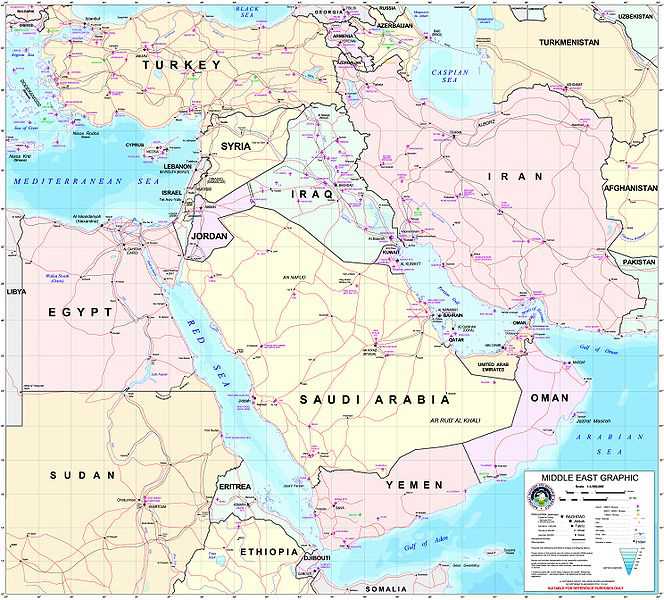
    As we know, in the wake of Russia’s recent aggression against Georgia, Prime Minister Erdogan came up with the initiative of a new regional security arrangement, involving Azerbaijan, Armenia, Georgia, Turkey and Russia. I can’t comment on this proposal in detail, as not much is known about it. But the timing of this proposal and parties involved in it do not offer a very bright perspective for this idea. First of all, Azerbaijan’s territorial integrity is violated by Armenia without any desire to revert its policy. Georgia’s integrity is violated even more boldly by Russia against all letters of international law. Turkey is perceived as an enemy by Armenia and Armenians for four generations now. So I am not sure what kind of cooperation Mr. Erdogan is envisioning.

    But I also would like to comment on Turkey’s stance vis-à-vis events in Georgia. Perhaps, due to similar conditions in Kosovo and Northern Cyprus, Turkey could not be more vocal on the issue of violation of Georgia’s integrity. However, in my view, Turkish government should have responded with humanitarian aid and support to Georgia. For many years now, Georgia has courageously stood against Russian provocations to provide a path for delivering Azerbaijani hydrocarbons to Turkey. In other words, Georgia took all risks in its Western orientation and to the benefit of Turkey and its position as a new energy hub. Turkey should not have left Georgia without support at such crucial moment.

    What about the position that was taken by Turkish government?

    The action of Turkish government in this regard may raise questions about the reliability of Turkey as a regional ally for both Azerbaijan and Georgia. In other words, Turkey has demonstrated that in matters pertaining to the region of Caucasus, it cannot be an independent player, but only act in tandem with Russia or the United States. Combined with Gul’s visit to Yerevan, in my mind, these indicate the weakening of Turkey’s position in the region.

    Of course, Turkey has to uphold its own interests above all, yet it’s not quite visible what benefits would Turkey gain from Armenia while losing Azerbaijan and Georgia. Aside from ethnic affinities between Azeri and Anatolian Turks, the Turkish energy interests shall be considered as well.

    Couldn’t we think Turkey is searching for new opportunities?

    What sort of opportunities? Armenia’s purpose is to open the border, reinforce its stance vis-à-vis Azerbaijan. Armenia does not plan to step back from any of its positions, and it’s naïve to imagine that Armenian troops will leave Karabagh region and allow refugees to return to their homes or will stop supporting the historical blackmail of Turkey after border is opened.

    The public in Turkey as well as Turkish diaspora is being constantly brainwashed via various media outlets that opening of borders will bring benefits to Turkey too. If so – what are they? Armenia is economically dependent on border opening, Turkey is not. But opening of borders without compromise is a meaningless retraction from Turkish position, which will only strengthen and embolden the non-constructive position of Sarkissian’s regime vis-à-vis both Azerbaijan and Turkey.

    Do you think this visit will affect the fraternal relations Azeri and Anatolian Turks in the U.S.?

    I want to reiterate that from the position of diaspora, a visit by President Gul won’t affect the fraternal relations of Azeri and Anatolian Turks in the U.S. Our brotherhood is shaped not by political establishment but by centuries of common Turkic ethnic roots, language, identity, and culture, and no one is in power to change these. 

    Javid Huseynov, PhD is the current president of Azerbaijani-American Council (AAC) established in 2006, and currently operating in California and Texas. AAC is a community organization of Azeri-Americans, working also closely with ATA-SC and its local chapters, American Jewish Committee (AJC) and other community grassroots organizations in California and nation-wide. AAC website is available at .

    In professional career, Dr. Huseynov is a senior software engineer and scientist, working in Orange County. Since 1995, he actively participated in grassroots activities of Azerbaijani and Turkish diaspora in the United States. 

  • Communications with Armenian Diaspora: Part 1

    Communications with Armenian Diaspora: Part 1

    COMMUNICATIONS WITH ARMENIAN DIASPORA: PART I

    By Ergun KIRLIKOVALI

    “WHY DON’T YOU TALK TO EACH OTHER?”

    Who amongst us has not yet heard the following well-meaning and naïve comments from disinterested third parties on the Turkish-Armenian conflict (or form some members of the Turkish-American or even Armenian-American communities:)

    “Why don’t you sit down and discuss your differences face to face?”

    For the record, I would love to do that, if I can be assured that there will not be any physical violence directed at me or any harm done to my family, friends, and/or supporters. I know of many Turkish researchers who would love to similarly engage in informed, thoughtful, constructive, and responsible debates with their Armenian counterparts, if those Turkish speakers could also be protected against random and ubiquitous Armenian violence. This is no idle fear or anxiety considering the following:

    1- Armenian terrorism around the world

    2- Armenian terrorism in America

    3- Armenian terrorism in California

    4- Armenian harassment and intimidation in California

    5- Anti-Turkish culture in the Armenian Diaspora

    6- Anti-Turkish Armenian activities in American campuses

    7- Anti-Turkish bias cultivated by Armenians and their sympathizers in media

    While some items in the above list are directly responsible for Armenian violence, others are contributory factors. Until the Armenian Diaspora matures to such a level that they can tolerate dissenting views and refutations of their genocide allegations, without calling names, shouting insults, or resorting to slander, intimidation, harassment, physical violence, and terrorism—in that order—, I am afraid, there may not be any peaceful discussions any time soon. Too bad for peace-lovers and truth-seekers.

    What is even more ironical is the fact that some respectable American colleges are used as backdrop for Armenian propaganda (disguised as “genocide panels” in history departments) and Turkish-American speakers are deliberately excluded. When the latter request inclusion, they are quickly labeled “deniers” and campus police is alerted as to potential violence coming from deniers. Cases in point: Chapman University and Cal State Long Beach in 2007.

    In both Chapman and CSULB campuses, history departments arranged a genocide panel but only solicited Armenian professors and/or sympathizers subscribing to pro-genocide views. When I and others in the Turkish-American community objected to this blatantly biased “academic” panel and requested inclusion of responsible opposing views, we were threatened with law suits and extra police presence during the event was arranged. This behavior is not only strange (as Turkish-Americans are not known to retaliate at all to the many decades of Armenian terrorism in California) but also unfair (as Turkish-Americans are the victims of prejudicial history passionately promoted by the Armenian Diaspora, not perpetrators of physical violence.) All Turkish-Americans want is to be heard fairly in an un-biased format and fair platform. Is telling your side of the story such a bad thing? So bad that it would necessitate ignoring, dismissing, isolation, defamation, and extra police protection?

    ANATOMY OF A TYPICAL TURKISH-ARMENIAN CYBER-DEBATE

    Having pointed out the above facts, I must say that I have attempted online discussions of the Turkish-Armenian conflict with Diaspora Armenians many times. It usually starts as my reaction to some published historical distortion defaming Turks.

    What I have found out is that Armenians are not really interested in learning new facts concerning their genocide claims, as they are busy single-mindedly pushing their version of history on to you.

    Genocide is all the Diaspora Armenians have ever heard all their lives from their parents and grandparents, therefore, it happened. It is a foregone conclusion. They are startled merely because you are so ignorant that you don’t even know it. They do you a favor by “educating you” with “facts and figures”. But when you show them that even their facts and figures just quoted don’t add up, they really get agitated. They start telling their family stories of pain and suffering. When you tell them you have similar family stories of murder and mayhem and that such personal tragedies do not necessarily turn a war into a genocide, they go out of control.

    Some Armenians end the discussion abruptly (like the case below.) Others start a cut-and-paste war showing you how many states have passed genocide laws or resolutions and how many U.S. presidents condemned the perpetrators. When you them all that shows nothing more than good political organization skills of the Armenian lobby, not real history, and that history is not a matter for legislation but historical research, the discussion finally ends. All too often. the Armenian correspondent will resort to some choice words stereotyping Turks or Muslims before s/he leaves the scene with a blast.

    THE “BALLISTICIAN” CASE

    Here is an email letter I received recently form an Armenian I will call “Ballistician” (not his real name.) Let’s read:

    “ Ergun,

    My father was from a village called Darman which today is called Baglarpinari in the vilayet of Erzeroum. In 1915 my father was 7 years old. He had 2 older brothers and his mother at home with him at the time. His father had gone to New York to make some money to bring his family to America. The gendarmes came and took his mother and two older brothers away to never be seen again. It was the habit in 1915 to leave Armenian boys under the age of 7 to become Turkish. My father was taken to a Beirut orphanage by Danish missionaries until he was 16 years old. When his father in New York found out that one of his sons was still alive, he brought him to America.

    My mother came (from) Kaiseri. In 1915 the Turks took her mother away to jail even though she had just given birth to a baby girl. The girl died since no one could breast feed the baby.

    I have met many Turkish people in Florida that are wonderful and even have relatives that married Armenians. The younger Turks have good things to say about their Armenian relatives. They have no idea just how bad the genocide was or at least don’t admit it. The Turkish government hid all the facts from these people when they were growing up in Turkey. But what they do know is that their Turkey under the Ottomans is never discussed. Too bad.

    You somehow think that my grandmother and her children deserved their fate. If so, I pray for all Armenians that still live in Turkey under fear. An Armenian cannot live as a normal human being if the crescent flag flies over their head. “

    MY RESPONSE

    Ballistician,

    Have you ever taken a few minutes of your time to hear the Turkish side of the story for once in your entire life?

    Your account of Turkish-Armenian history is so typical “Diaspora” that I could write a 500-page book on it, effortlessly. I don’t have time to write it and I don’t think you would care to read it. So, I’ll try to make my response as manageable as possible.

    1. Turks and Armenians—and other Muslims and Christians— enjoyed a reasonably harmonious co-habitation in Anatolia for a millennium (that’s a thousand years!) under that “crescent” that you so passionately demonize.

    2. Turks liked and trusted the Armenian subjects of the Ottoman Empire so much that Turks called the Armenians “Millet-i Sadika”, the loyal nation. Armenians enjoyed high standards of living in trade, construction, arts, and other fields, while Muslims did most of the heavy lifting of the empire such as soldiery, agriculture, and administration. (It is interesting to note that some Armenian propagandists use this as a proof of inequity in the Ottoman Empire, however, when the Armenians were given the right to soldiery after the declaration of reforms on 23 July 1908 (II. Mesrutiyet,) the Armenians invented ways to get out of this obligation (see the letter by Armenians sent to the Lausanne Conference in 1923 asking for the right to be free from military service to be bestowed upon the Armenian community.)

    3. The above picture, i.e. with all its shortcomings and/or defects, was still the nearest thing to perfection, given the state of humanity through the middle ages around the known world, especially in Europe with wars, conquests, colonization, slavery, mass killings, mass deportations, crusaders, inquisitions, holocausts, pogroms, and more. Compared to all this mayhem and carnage in Europe in the last millennium, the Ottoman Empire with its unique and tolerant “millet system”, was so peaceful and orderly that it could be considered the “USA of Europe” at the time. Armenians were one of the biggest beneficiaries of this centuries long stability.

    4. All that started changing for the Turkish-Armenian relations after 1878 Berlin Peace Conference. Russia started claiming special protector’s rights over the Ottoman-Armenian community with an eye towards capturing Istanbul and the two straits (Bosporus & Dardanelles) to extend the Russian imperial reach into the warm waters of the Mediterranean. Britain and France were eyeing other parts of the Ottoman Empire for themselves.

    5. The U.S. Protestant missionaries, headquartered in Boston, with their many educational and medical facilities dotting Anatolia serving as convenient cover for their missionary activities, focused their attention on the Armenian community after they realized that proselytization of Muslims, Jews, or Greeks were nearly impossible. The Boston missionaries started dividing and polarizing not only the many communities of the entire Ottoman Empire but also the Armenian community within itself. The missionary sermons were incendiary, pitting Armenians against Turks, Muslims against Christians, and even Protestants against the Gregorian and the Catholic. Thus, these religious men abused the traditional hospitality of Turks by organizing a hate-filled resistance movement against the Turkish rule, causing untold miseries on all sides. These “men of god”, caused much spilling of innocent blood in the name of god. In my opinion, therefore, these missionaries are the guiltiest party of them all, followed by Tsarist Russia, Imperial Britain, Colonialist Russia, and Western media (The New York Times topping the list in biased coverage by publishing 145 anti-Turkish articles in 1915 alone with an incredible “ZERO” Turkish rebuttals allowed!)

    5. The Armenians started creating revolutionary organizations like Ermenakan (Van, 1882), Hunchack ( Geneva, 1887), Tashnak (Tbilisi, 1890) and many others of differing sizes and locations. Almost without exception, these Armenian organizations were bent on armed resistance against the Turkish rule. The Armenians used propaganda, agitation, terror, rebellions, and supreme treason, in that order, from 1882 to 1915, when finally some of the Armenians (not all of them) were sent on a TERESET (Temporary Resettlement).

    6. TERESET (Temporary Resettlement) was a justified military measure because the Armenian bands would hit and run the unprotected Muslim villages, kill Muslim women and children, frustrate the supply lines, and otherwise harass the rear of the Ottoman Army during a time of war. No country (including the U.S., the U.K., France, or Russia or any others) would tolerate this kind of open rebellion, systematic treason, and omnipresent terror to be put into action by any community, large or small, especially when the safety and security of the country is in question. The Armenian bands would launch their bomb attacks during the night and then hide in ordinary homes during the day, turning Armenian women and children to little more than human shields for their murderous and treasonous acts. Those who cry out today “Why did you move innocent Armenian women and children from their homes?” should re-phrase their questions and direct them at their nationalist Armenian leaders “Why did you use the innocent Armenian women and children as your cover before and human shields after your dastardly acts of terror against innocent, non-combatant Muslims?”

    7. What you are describing in your letter to me (above) are your personal tragedies. I am sure your family lived some or most of them (although frequent exaggerations and embellishments concocted by Armenian propagandists since 1915 are never challenged by the likes of you, thus diminishing Armenian credibility.) I believe that many Armenians lived through those horrors. But they pale in comparison to what we, Turks, had to endure at hands of the Ottoman-Christians, including the Armenian terrorists, rebels, traitors, backstabbers, and murderers. My personal family story is much more tragic than yours and if you care to know about it, please read the following essay of mine as it is too painful to write it here again:

    TURKISH LAST NAMES : HONEST STORY TELLERS

    8. Personal tragedies, by themselves, do not turn a war into a genocide. Not all killings, not all sufferings are automatically genocides. The U.N. definition is clear: there must be an “intention” to destroy all or part of a community. Without “intention”, a murder is just that, a murder, and penal code can amply deal with that. The Armenians or their sympathizers have never proven “Turkish inten” to annihilate Armenians. In fact, History shows that just the contrary is true:

    -a millennium of peaceful co-habitation between Turks and Armenians;

    -endowment of the Armenian community with a “ loyal nation” status in the Ottoman Empire;

    -highest posts for Armenians in all walks of Ottoman life, like politics, armed forces, trade, business, art, and more;

    -all of the above followed by, unfortunately, an intense period of organized Armenian terror, rebellions, treason, and territorial demands, and more (all with Western & Russian complicity and support);

    -triggering a temporary, military, wartime safety measure of moving only those Armenians who posed a serious threat to Ottoman Empire’s war effort;

    -excluding Armenians of Istanbul, Izmir, Edirne, Aleppo and other places who were not considered a threat;

    -also excluding those Armenians serving the Ottoman Armies such as officers, doctors and inner city people from the TERESET order;

    -detailed steps were described in official orders—to many of them to be dismissed casually—on how to move the Armenian groups safely and allow them to claim their properties back on their return (contrary to common misperception, many did return!)

    There is more, much more, but I already wrote most of them in my corner here and you are welcome to check it out yourself.

    In conclusion, it was a wartime tragedy, engineered, provoked, and waged by Armenians, with support from Russia, England, France, the U.S., Christian missionaries and Western media; but not genocide.

    “BALLISTICIAN” RESPONDS:

    Our conversation is over. I can’t stand a gray wolf maligning a people. You’re the typical Moslem. You’re blocked! 
  • KRG confirms South Korea oil deals

    KRG confirms South Korea oil deals

    By United Press International

    South Korea was granted the lead role in two northern Iraq oil projects and increased interest in six others, United Press International has confirmed.

    The Korean National Oil Corp. has also pledged $2.1 billion in infrastructure projects in Iraq’s Kurdish region as part of the deal, but $1.5 billion will be withheld until oil exports begin.

    Iraq’s central government has called most of the 20-plus oil deals signed by the Kurdistan Regional Government illegal and is pledging to confiscate any oil produced.

    The KRG and KNOC have confirmed leaders signed a massive Implementation Agreement for Oil & Gas Infrastructure Projects Thursday in Seoul.

    In exchange for the investment in electricity, water, road and other infrastructure — the remaining $1.5 billion will come from KNOC’s earnings from oil exports — KNOC was granted two production-sharing contracts.

    The state-owned firm will have an 80-percent ownership of the Qush Tappa block PSC and 60-percent ownership of Sangaw South.

    KNOC was also granted interest in existing production contracts: a 15-percent stake in each of Norbest Limited’s K15, K16 and K17 blocks; a 15-percent interest in block K21; and a 20-percent stake in Sterling Energy Ltd.’s Sangaw North block. It also was given 20 percent more of the Bazian block, of which KNOC is the lead company in a consortium that was granted a 60-percent stake last November.

    The agreement was seven months in the making, when a memorandum of understanding was reached between the two sides. In June, contracts for oil stakes were agreed to, as well as an investment project. All of the details were negotiated since then and the deals made official Thursday.

    Iraq Oil Minister Hussain al-Shahristani, in a June interview in his Baghdad office, told United Press International all but the four KRG contracts signed before February 2007 would be regarded as illegal.

    “That oil will be confiscated; they have no right to work in that part of the country,” he said. “We’ll use a number of measures to stop any violation of Iraqi law. Those contracts have no standing with us, we don’t recognize them and they have no right to do that.”

    A draft version of a new oil law for Iraq was approved in February 2007 by the Iraqi Cabinet but was scuttled after changes were made and interpretations varied.

    KRG Prime Minister Nechirvan Barzani urged Baghdad to concentrate on passing the law instead of condemning the regional government’s contracts.

    Ben Lando, UPI Energy Editor