Tag: EU

  • Europol report shows how PKK funds terrorist activities in EU

    Europol report shows how PKK funds terrorist activities in EU

    The outlawed Kurdistan Workers’ Party (PKK) is involved in activities such as drug smuggling, trafficking in human beings and money laundering in European Union states, according to a report released by the EU’s police agency, Europol.

    “Information obtained from EU Member States shows, for instance, that both the PKK/Kongra-Gel are actively involved in drugs and human trafficking, the facilitation of illegal immigration, credit card skimming, money laundering and fraud for the purpose of funding terrorist (support) operations,” Europol said in its 2011 EU Terrorism Situation and Trend Report.

    Turkey has repeatedly criticized EU countries for not effectively fighting the PKK and its umbrella organization, Kongra-Gel, particularly by not prohibiting its fund raising and propaganda activities.PKK/Kongra-Gel has been on the EU’s list of terrorist organizations.

    “The PKK/Kongra-Gel … also collects money from their members, using labels like ‘donations’ and ‘membership fees,’ but are in fact extortion and illegal taxation. In addition to organized extortion campaigns, there are indications that the PKK/Kongra-Gel are actively involved in money laundering, illicit drugs and human trafficking, as well as illegal immigration inside and outside the EU,” the report said. “In March 2010, a simultaneous and joint operation against the PKK/Kongra-Gel was carried out in Belgium, France, the Netherlands and Turkey. Investigations into the PKK/Kongra-Gel were also conducted in Italy, Romania and Slovakia. These investigations into PKK/Kongra-Gel activities were linked to recruitment, financing, logistical support, propaganda and training camps.”

    The report also mentioned propaganda activities and said Roj TV, a Europe-based television station which Turkey says is a mouthpiece for the PKK, is used by the group in such activities.

    “Separatist groups use international propaganda and their own media (TV and radio stations). Member states report that separatist organizations, such as the [Liberation Tigers of Tamil Eelam] LTTE, ETA and the PKK/Kongra-Gel, spread their ideas at cultural gatherings, during demonstrations and sporting events, and through television channels, such as the Tamil Television Network and Roj TV,” said the report.

    The report also said the PKK was pursuing a “double strategy” of resorting to violence in Turkey, while seeking legitimacy abroad. It said: “The announcement, in June 2010, of the PKK/Kongra-Gel intention to enter a more violent period of its history was immediately followed by the declaration of a ceasefire which was, in turn, belied by the bomb attack in İstanbul in October 2010. No execution of attacks in the EU show the PKK/Kongra-Gel’s double strategy of armed struggle in Turkey while at the same time seeking to gain a greater degree of legitimacy abroad.”

    The report said the PKK was likely to pursue this double strategy. It also noted that the terrorism threat posed by the group to EU states can currently be considered as “relatively low.”

    “However the large number of PKK/Kongra-Gel militants living in the EU and the continuing support activities in the EU, like large demonstrations organized in the past, show that the PKK/Kongra-Gel is in a position to mobilize its constituency at any time and is an indication that it maintains the capability to execute attacks in the EU,” it added.

    TR Defence
  • America and Israel haters relying on anti-Turkish lobbies

    America and Israel haters relying on anti-Turkish lobbies

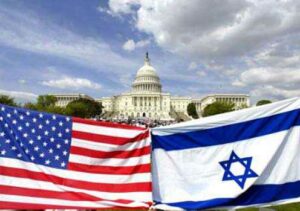
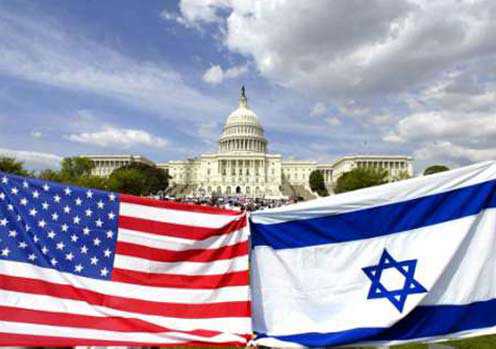
    The “Armenian genocide season” opened relatively early this year. Clearly the “conjuncture” is considered “uniquely ripe” by anti-Turkish activists. There are also fresh opportunities for increased cooperation against Turkey among Washington’s highly active Armenian, Kurdish, Israeli and Syriac lobbies.

    In the meantime, the worsening of Turkish-Israeli ties has driven a wedge between Ankara and the Obama administration.  Both sides are trying to be polite about this but the damage is showing. It is also clear that Turkey can not rely on the Republicans in Congress, as it did before, given the unquestioning support they provide to Israel.

    Driven mostly by constituency considerations, Republican congressmen are said to be “out to get Turkey” this time for a host of reasons, not just to do with Israel. These naturally include the Erdoğan government’s stance on Iran and Syria, as well as its cozying up to radical groups like Hamas and Hezbollah.

    Put briefly, Turkey is not considered a reliable ally anymore in the United States Congress. In the meantime it is no surprise that the Israeli lobby in America should be out to punish Turkey for its stand on the brutalizing of Palestinians by the IDF in Gaza under the guise of retaliation.

    Turkey’s apparently rock-solid demand for an apology and compensation from Israel for its the murder of nine Turkish activists on the Mavi Marmara ship, on the other hand, only fuels the growing animosity towards Ankara. What obviously increases the anger of Israelis and members of the Israeli lobby is that their nemesis, namely Prime Minister Erdoğan, is so popular around the world.

    It is no surprise that those contributing to Time Magazine’s “Man of the Year” poll this year should have put Erdoğan in second position after Julian Assange. (He was in fact in first position before Assange overtook him with his arrest in the United Kingdom).

    The fact that Time, in what many see as a “rabbit out of the hat trick,” actually selected Facebook’s Mark Zuckerberg, who was in 10th position in the magazine’s own public poll, as “Man of the Year” does not belie Erdoğan’s international popularity.

    If we go back to the Armenian issue, it is clear from the feverish activity among Armenian groups in the U.S. that they have high hopes for the passage of an Armenian genocide resolution in the U.S. Congress this time around. The advantages appear to be stacked on their behalf too.

    There is nevertheless a very real possibility the “force majeure” will come into play again and prevent this happening – for the sake of “global strategic considerations” – despite all the anti-Turkish sentiment floating around in Washington. The mostly likely outcome is that the Armenians will be disappointed again.

    It will, however, be a surprise for some to hear that there are quite a few people in Turkey who are rabidly anti-Israeli and anti-American, and who have little sympathy for Europe and the European Union, who actually want the genocide resolution to pass (preferably with the help of Israeli lobbies).

    Their reasoning is a simple one. Such a development will spell the death knell for any hope whatsoever of a rapprochement with Israel – which they have never desired. It will also lead to the greatest crisis in Turkish-U.S. ties ever, which again will be highly welcomed by them since they see America as “the root of all evil,” which makes ties with Washington abhorrent to them anyway.

    In other words, the Armenian and Israeli lobbies could be playing beautifully into the hands of those in this country who want to see Turkey move away from the West, and closer not just to the Islamic world but also to the powers currently on the ascendant, which Fareed Zakaria refers to as “The Rest,” as opposed to “The West.”

    The fact Turkey is also a “rising” country makes those with anti-Western sentiments even more bullish. Firstly they believe there is nothing short of war that Armenians can do to get anything from Turkey, especially at a time when the country feels stronger and more assertive and influential in the world than at any time before.

    The bottom line is that the orld is not what it was a decade or two ago. Neither, in particular, is the U.S. – nor is the West generally. New centers of political, military and economic influence are emerging fast. These provide new opportunities for Turkey, and Ankara’s reaching out to these countries is already fueling arguments about Turkey drifting away from the West.

    It is also clear that Israel’s isolation will increase in such a world. It is already almost totally alone in the U.N. where it has only America’s blind support to rely on, no matter what it does. This automatically puts Turkey in a much better position internationally than Israel in terms of any cost-benefit analysis relating to foreign policy administration.

    It seems that there will be much to mull over in Washington and Tel Aviv over the next weeks and month in terms of the “Turkey question.” It could be that we are heading for the kind of breakdown in ties that anti-Western elements in this country want.

    But if a simple list were to be made of countries that stand to loose the most by Turkey’s drifting away from the West it might read as follows:

    1- Israel

    2- Armenia

    3- The United States

    4- The EU (although it is no country)

    5- Turkey

    Others may wish to change the order in the list and provide strong and convincing arguments in doing this. What appears common to all countries in the list however, is that they all stand to loose something if Turkey were to drift from he West and go with “The Rest,” that is, the majority of countries in the world.

    Hurriyet Daily News

  • Europe, Look Outward Again

    Europe, Look Outward Again

    By CARL BILDT, FRANCO FRATTINI, WILLIAM HAGUE, and ALEXANDER STUBB

    European Union enlargement, the transformation of a mainly Western European Club into a truly pan-European Union, has been one of the E.U.’s greatest success stories. But the historic mission to bring further stability, democracy and prosperity to the whole Continent is not yet finished.

    On Monday, we will meet our colleagues from around the European Union at the General Affairs Council in Brussels to set out perspectives for the enlargement process and the countries moving down the path to E.U. membership. This will clearly be a significant occasion to turn around the inward-looking tendencies of recent years and revitalize the vision of an open Europe.

    The economic crisis has underlined Europe’s need for much greater dynamism. Emerging from the crisis, we cannot afford to overlook the opportunity of expanding the free flow of capital, goods, services and labor.

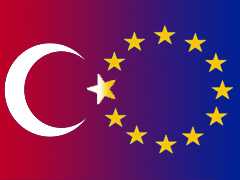
    Moreover, E.U. integration is about strengthening the rule of law and common European values and standards all over the Continent. This is apparent not least in Turkey, where E.U.-inspired liberal reforms have turned the country into one of Europe’s principal growth engines.

    The crucial question is not whether Turkey is turning its back on Europe, but rather if Europe is turning its back on the fundamental values and principles that have guided European integration over the last 50 years.

    In some quarters there is clearly some anxiety regarding the consequences of a Turkish E.U. membership. The doubts over admitting a large and self-confident nation are as explicit now as they were when Britain once applied — facing strong opposition from older members of the club. Voices of opposition were also heard when Sweden and Finland knocked on the door to the E.U.

    Concerns are legitimate — but the counter-argument is clear: New members can help Europe return to economic dynamism and take on its proper weight in world affairs. By pushing prospective candidates toward liberal reforms and full respect for human rights, the European space of stability and growth can expand further.

    In the back of our minds we should also remember that Turkey, like no other country, has the ability to advance European interests in security, trade and energy networks from the Far East to the Mediterranean.

    The newly released Commission Enlargement Strategy clearly shows that
    the membership perspective is still a forceful agent of change.

    Fifteen years after the conflict in the Western Balkans, all the countries of the region now have a clear European perspective. Turkey is in the midst of a far-reaching reform process. The application of Iceland, which is now at the start of its membership negotiations, proves that the E.U. remains attractive all over Europe.

    Turkey is in a class of its own. It is an influential actor on the world stage with considerable soft power. Its economy is expected to expand by more than 5 percent this year, compared with a eurozone average of 1 percent. The O.E.C.D. predicts that Turkey will be the second-largest economy in Europe by 2050.

    Turkish entrepreneurs in Europe already run EURO 40 billion worth of businesses and employ 500,000 people. A Turkish economy in the E.U. would create new opportunities for exporters and investors, and link us to markets and energy sources in central Asia and the near east. So the security and economic case for Turkish membership is strong.

    That said, if we are all to reap those benefits, Turkey needs to play its full part. We want to see movement on important areas of fundamental human rights. Economic reform must continue and E.U. single-market rules must be implemented. We encourage Turkey to continue with the steps it has taken along this path.

    Yet it is undeniable that the ongoing enlargement process is following a slower pace than the earlier waves of accession. This is partly a reflection of the economic situation in the Union, and weak administrations, shyness on reforms and prospective candidates falling short of fulfilling the Copenhagen criteria.

    Let us be clear: The Union’s exacting standards of democracy and rule of law require a welcome but time-consuming reform process. However, the magnetism and the transformational capacity of enlargement works only if commitments are kept on both sides.

    We, the member states, must stick to our established principles and benchmarks in order to safeguard the integrity and credibility of the process.

    At its coming General Affairs Council, the E.U. should restate its strong commitment to further enlargement.

    Carl Bildt, Franco Frattini, William Hague and Alexander Stubb are the foreign ministers, respectively, of Sweden, Italy, Britain and Finland.

    I.H.T. OP-ED CONTRIBUTOR, December 10, 2010

  • Euro collapse ‘possible’ amid deepening divisions over bail-out

    Euro collapse ‘possible’ amid deepening divisions over bail-out

    It is feasible that the euro will not survive the current sovereign debt crisis sweeping Europe, one of the Treasury’s leading independent forecasters has said.

    Under questioning from MPs on the Treasury Select Committee, Stephen Nickell, a member of the Office for Budget Responsibility (OBR) and a former Bank of England rate-setter, said a collapse of the single currency was “a possibility”.

    Attempting to defy Germany, the eurozone’s powerhouse and the nation that will provide the bulk of any rescue fund, Belgian Finance Minister Didier Reynders called for the €440bn bail-out fund to be expanded, while Luxembourg Finance Minister Jean-Claude Juncker and Italian counterpart Giulio Tremonti outlined proposals for a joint European government bond.

    However, Germany, the Netherlands and Austria on Monday pitched themselves against weaker member states by insisting the rescue package should not be increased. Finance ministers from the 16 member nations were debating the bail-out plans late into the night.

    Mr Juncker and Mr Tremonti’s “E-Bonds” would be sold by a European Debt Agency, created as early as this month, to finance as much as 50pc of the issuances by EU members. For troubled members, like Ireland and Portugal, it could fund the entire bond issue.

    However, Angela Merkel, the German Chancellor, quickly dashed hopes by rejecting the idea as unworkable and stating: “I see no need to expand the fund right now.”

    As market fears revived, the cost of insurance for Irish, Greek, Portuguese, Italian and Spanish sovereign debt rose. Bond yields were also higher as institutions shunned governments.

    Ireland, which faces a crucial vote on its debt reduction plans on Tuesday, offered some rare good news as the government appeared to have won sufficient parliamentary support to push the plans through and qualify for the €85bn bail-out package.

    On the euro, Mr Nickell said: “There is a possibility it will collapse but at the moment it is not something to which I subscribe a very high probability.” Asked to estimate the probability he said: “1.7pc”.

    Meanwhile, European Central Bank (ECB) Governing Council member Nout Wellink said it is not the central bank’s task to rescue euro-area countries with funding problems.

    “It’s not up to the ECB to save countries where governments run the risk of becoming insolvent,” Wellink, who also heads the Dutch central bank, said. “We are not here to take over, on our balance sheet, the risks of the national economies of Europe.”

    Ten-year bond yields

    Greece: 11.393 (+0.39)

    Ireland: 7.916 (+0.1)

    Portugal: 5.701 (-0.1)

    Spain: 5.080 (+0.9)

    Italy: 4.461 (+0.7)

    The Telegraph

  • Turkish Exceptionalism? By Soner Cagaptay Hurriyet Daily New

    Turkish Exceptionalism? By Soner Cagaptay Hurriyet Daily New

    Follow the Institute on
    http://twitter.com/washinstitute http://www.facebook.com/WashingtonInstitute http://www.washingtoninstitute.org/rss.php http://www.washingtoninstitute.org/rss.php?podcast http://www.youtube.com/WashingtonInstitute
    Have trouble viewing? Click here.
    Turkish Exceptionalism?

    By Soner Cagaptay
    Hurriyet Daily News
    November 28, 2010

    Some might claim that in spite of the intensifying Justice and Development Party (AKP)-led reorientation of Turkey’s domestic and international agenda, Turkey will inevitably maintain, at the least, a fair balance between its Eastern and Western commitments and perhaps even continue to be a strong Western ally. Although some Turks boast about this intrinsic “Turkish exceptionalism” in explaining their country’s unique ability, thus far, to mesh with the West, this is only a myth. Turkey has functioned as an exceptional Western Muslim country, not because the Turks are exceptional, but because they have lived in a system which has taught them that they share values, institutions, and interests with the West, and led them to collaborate with NATO, the United States, and the European Union accession process.

    This is slowly coming to an end.

    According to the 2010 Transatlantic Trends report, 55 percent of Turks feel Turkey has such different values from the West so as to make it non-Western. In 2004, 73 percent of Turks believed membership in the EU would be beneficial, but those numbers had dropped to 38 percent by 2010. The majority of Turks (53 percent) found NATO essential in 2004, but by 2010 this has eroded to less than one-in-three (30 percent).

    This is not without consequences for Turkey’s foreign policy. According to the same report, whereas 13 percent of Turks desire cooperation with the EU, down from 22 percent in 2009, the percentage of those desiring cooperation with Turkey’s Muslim Middle Eastern neighbors has risen to 20 percent, up 10 points since 2009. What is more, despite U.S. President Barack Obama’s outreach to Turks, their approval rating of him has dropped from 50 percent in 2009 to 28 percent in 2010. Even more alarming, the latest Pew Global Attitudes Project figures show that 56 percent of Turks view the U.S. as a “military threat.” In short, Turkey is flipping under the AKP.

    Not long ago, some would have expected the military and the secular echelon of Turkish society to intervene to guide Turkey on the right path. This is not the case anymore. The AKP’s de-Kemalization has included civilianization, limiting the role of the army in the state’s affairs, and has done so on the premise of an alleged coup. The government has since aggressively bullied the military and jailed opponents, successfully neutering the military and intimidating the opposition.

    The use of illegal wiretaps against the government’s opponents has created a republic of fear: anyone who opposes the AKP can land in jail under the most spurious allegations. In the latest incident, Hanefi Avci, a police chief famous for being a “communist hunter,” was arrested when he published his memoirs, which described the AKP and its allies’ use of wiretaps to intimidate opponents and recalcitrant bureaucrats. Ironically, the “communist hunter” police chief was charged with membership in a communist cell.

    The implication of this newfound power, especially after the AKP successfully interfered in August to change the line of succession among the military’s top brass, is that even the military will bend to the will of the ruling party and play along with its newfound leadership role in the “Muslim world.” Most recently, the military remained quiet in October when the AKP objected to the placement of a NATO missile defense shield in Turkey, suggesting that it did not perceive Iran and Syria as threats within the NATO doctrine. Instead, they launched joint military exercises with China, making this the first such cooperation between a NATO member and Beijing. The question now is whether the military, under pressure from the AKP, will stop purging Islamist officers from its ranks. There are signs this practice will stop, opening the way for a grassroots Islamization of NATO’s second largest army.

    Turkey is certainly positioning itself as the leader of the Muslim world; however, it is unclear as of yet whether the Muslim world is ready to accept this imposition. While some, such as the Syrian regime, will look to Turkey for leadership, others, such as Saudi Arabia and Egypt, already consider themselves at the helm of the Muslim world and will not accept Turkish dominance. Moreover, non-Arab Muslim countries that also promote political Islam, e.g., Iran, might differ in vision as to who shall speak on behalf of the Muslim world. (Anecdotal evidence, however, suggests that the AKP is already a popular force on the streets of Cairo and Damascus). Beyond any leverage the West has with the AKP, this leaves other Muslim governments as a check and balance to the AKP’s ambitions to position Turkey as leader of a politically-charged “Muslim world.”

    However, if the AKP manages to perfect its foreign policy and co-opt its Middle Eastern neighbors — the party’s frustrated efforts this past summer to broker a nuclear deal between Iran and the West suggest otherwise — it will position Turkey as the defender of global Islamist causes. The party has already worked to uproot the Kemalist-nationalist element of Turkish identity, a dangerous move in the post-9/11 environment, where adherents of a politically-defined Muslim identity are especially prone to viewing the world in a Huntingtonian fashion. Subsequently, one can expect the party to follow policies explicitly contrary to those of the U.S., Europe, and the West on a variety of issues ranging from Iran’s nuclearization to Arab-Israeli peace, conflict in Sudan, and practically any problem involving Muslims. Such grandstanding policies will invariably make the populist-authoritarian AKP even more popular at home, and cement the demise of the socio-political milieu that made Turkey “exceptional” in the first place.

    In other words, the AKP will bake its cake and eat it too, unless Kemalist Turkey re-emerges out of its own shadow. There are signs that since the secular opposition, the Republican People’s Party, or CHP, elected Kemal Kilicdaroglu, a charismatic, pro-Western and social democratic leader as its head earlier this summer they are better poised against the AKP in the next elections. Kilicdaroglu is moving toward New Kemalism, boosting traditional Kemalism’s commitment to Turkey’s Western vocation while re-guiding it toward more liberal values, in order to make Kemalism attractive for 21st-century Turkey. New Kemalism might yet defeat the AKP. For that test, one has to wait for the results of the June 2011 elections, the most important battle for Turkey’s soul in two centuries and two score [years] after the first Ottoman sultans decided to orient Turkey westwards.

    Soner Cagaptay is director of the Turkish Research Program at The Washington Institute.

  • Thousands expected to protest Irish austerity plan

    Thousands expected to protest Irish austerity plan

    Tens of thousands of demonstrators are expected in Dublin to oppose the government’s harsh austerity plan, aimed at slashing the country’s budget deficit to meet the terms of a bailout for its humbled economy.

    The labor union-organized rally Saturday follows Irish Prime Minister Brian Cowen’s announcement Wednesday of a four-year package to cut spending, raise taxes and ax thousands of state jobs, the toughest budget measures in the nation’s history.

    Cowen acknowledged that living standards will fall, but insisted action is needed to tackle a 2010 deficit running at 32 percent of GDP, the highest in Europe since World War II.

    His government will unveil an emergency annual budget on Dec. 7, which must be passed to allow an euro85 billion ($113 billion) loan from the European Union and the International Monetary Fund.

    Ireland’s Congress of Trade Unions — an umbrella group which represents labor unions with about 832,000 members — said the protest would be a final chance to influence the budget.

    “It’s difficult to see any justification — either economic, social, or indeed moral, for what the government proposes to do, and we’ll oppose them in every way we can,” said David Begg, general secretary of the group.

    Cowen’s 2011 budget will seek euro4.5 billion ($6 billion) in spending cuts and to raise an extra euro1.5 billion ($2 billion) in taxes.

    Though he is expected to have the plan endorsed at Ireland’s parliament, his governing Fianna Fail party lost a special election Friday, reducing the government’s majority.

    Cowen has vowed to call a national election after the 2011 budget is passed into law.

    Sally Anne Kinahan, of the labor union congress, said Saturday’s protest would allow people to “express their frustration and fear at the direction government policy is taking us in.”

    Some have expressed surprise that Ireland’s public has so far restrained from rowdy protests. Greece saw violent clashes ahead of its own bailout, and imperiled Portugal has suffered a daylong strike that partially paralyzed public services.

    In Ireland, demonstrations so far have been esoteric, not angry.

    Comedian Morgan Jones led a silent protest Tuesday outside Parliament.

    In September, artist Fergal McCarthy floated giant Monopoly pieces — red and green houses — along Dublin’s River Liffey, to highlight real estate speculation which prompted to bailouts of some Irish banks.

    Begg insisted the city center protest — a march to the General Post Office, headquarters of the leaders of Ireland’s 1916 uprising — would be free from violence.

    Even so, Irish police chief superintendent Michael O’Sullivan said officers would be on guard for trouble. “There are individuals and groups who seek to exploit such events for their own ends,” he said.

    Labour Party deputy leader Joan Burton has urged demonstrators to consider the image of Ireland that violent protests would send across the world.

    “I appeal to people in some of the smaller political organizations — I know some people are mad as hell and do not want to take anymore — not to be used as photo fodder presenting the worst image of Ireland,” she said.

    osman kadri koca
    osman kadri koca

    By DAVID STRINGER and SHAWN POGATCHNIK ( mail times )

    Osman Kadri Koca – Economist

    Media Watch