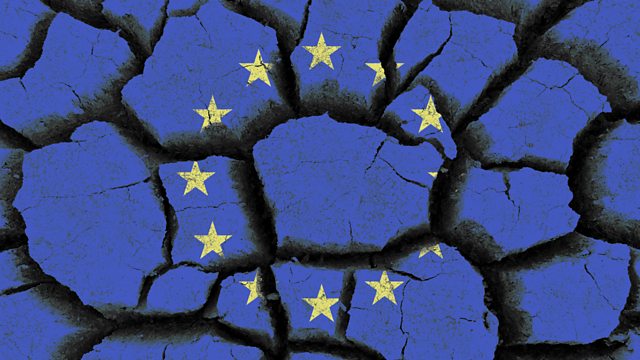
German Chancellor Angela Merkel and French President Nicholas Sarkozy reignited the debate on Turkey’s place within Europe by questioning the wisdom of Turkey seeking full membership of the European Union. Attending a meeting in Berlin, the two leaders emphasized their objection to the EU’s enlargement to include Turkey, arguing that any misguided expansion might endanger its operational effectiveness, and that it should stop making empty promises to Turkey. They instead reiterated their support for “privileged partnership” as an alternative framework to regulate Turkish-EU relations (Deutsche Presse-Agentur, May 10).
Sarkozy is known for his frequent objections to Turkey’s membership. Before his election in 2007, he spoke against the country’s accession and instead proposed an alternative partnership through his Mediterranean Union project. Due to objections from Turkey and other EU member states most notably the UK, Sarkozy dropped the idea, which enabled the creation of the Mediterranean Union as a separate organization -which Turkey also joined (EDM, July 15, 2008).
Although he has since softened his rhetoric and avoided blocking Turkish-EU accession negotiations during the French presidency of the European Union, Sarkozy has remained Turkey’s most vocal opponent. For instance, when President Obama tried to promote Turkish-EU accession talks during his recent European trip, Sarkozy immediately dismissed these comments as an unwarranted intervention in European affairs, and led other likeminded states to mobilize resistance against Turkey (Hurriyet, April 7).
Merkel shares similar views on Turkish-EU relations. Nonetheless, her policies have been tempered by the coalition partnership with the Social Democrats, who hold more positive views on the issue. However, Merkel uses electoral considerations and her conservative grassroots’ discomfort with Turkey to justify her objections. Referring to the upcoming European elections in June, Merkel said: “It is right that we say to people [during the campaign]… our common position is: a privileged partnership for Turkey, but no full membership” (Hurriyet Daily News, May 11).
Sarkozy does not hide the role electoral politics play in shaping his position on Turkey. Indeed, he has accelerated his objections to Turkish accession ahead of the European election campaign. He is advocating that the EU considers the creation of a common platform with Turkey, perhaps including Russia, to regulate economic and security relations (Hurriyet Daily News, May 6).
Inside the EU, the Franco-German position is countered by the member states more sympathetic to Turkey and the representatives of the EU institutions. Portugal’s President Anibal Cavaco Silva, while currently visiting Turkey reiterated his country’s support for Turkish accession, noting the many benefits it would bring to the EU (Anadolu Ajansi, May 12). Last week, Finland’s Foreign Minister Alexander Stubb, also ruled out a privileged partnership, and reaffirmed Helsinki’s commitment to bring Turkey into the EU as a full member (Cihan Haber Ajansi, May 8). A statement from the office of the EU Commissioner for Enlargement Olli Rehn, responded swiftly to the statements by Sarkozy and Merkel, saying that the decisive factor from the commission’s perspective was Turkey’s fulfilment of the membership criteria (ANKA, May 11).
Although Merkel and Sarkozy’s views on Turkey were well known, their recent statements surprised many within Turkish domestic politics. Some Turkish dailies labeled this development, particularly Merkel’s remarks, as “shocking” (Milliyet, May 11). Deniz Baykal, the leader of the main opposition party, called their statements “rude, harsh and negative” and argued that since they were made during the ongoing membership talks, they should be taken as a sign of disrespect toward Turkey. Baykal also criticized the government’s failure to take action to protest more forcefully against this development (Anadolu Ajansi, May 12).
In reacting to calls to downgrade the Turkish-EU relationship, officials in Ankara have highlighted three points. They have restated Turkey’s position that privileged partnership is unacceptable, and maintain that since the EU has initiated membership talks, it must honor this commitment. Shortly after assuming his post last week, Turkish Foreign Minister Ahmet Davutoglu stressed this argument. Noting that he would revitalize the stalled membership process, Davutoglu expressed his discomfort over speculation on privileged partnership. Offering Turkey other alternatives short of full membership would betray Turkey and also undermine the EU’s own values, Davutoglu contended (Yeni Safak, May 9). In his reaction to the Merkel-Sarkozy statement, President Abdullah Gul also echoed Davutoglu, arguing that European leaders had agreed on membership negotiations with a unanimous decision, which still legally binds all member states (www.cnnturk.com, May 12).
Turkish officials maintain that European politicians are using the debate about its future membership as a tool calculated to achieve domestic political gains. Gul suggested that the Merkel-Sarkozy remarks reflected “short-term thinking,” caused by a lack of strategic vision on the part of some European leaders (Cihan Haber Ajansi, May 12).
Turkish leaders emphasize their commitment to the membership process, and say they will do more to conclude the negotiations successfully. Following a cabinet meeting, the state minister and government spokesman Cemil Cicek, told reporters that the government will take further steps to implement domestic reforms. This will involve preparing a new constitutional amendment package in consultation with the opposition. Cicek added that the government will shortly forward a draft law to parliament, which will reorganize the under-secretariat for the European Union in order to streamline reforms (www.cnnturk.com, May 12).
The Turkish government seeks to counteract objections to membership by reminding the EU of its commitments to the accession process, and by downplaying those objections -attributing them to short-term calculations. The government implicitly believes that if the discussions on Turkey are conducted on the basis of the contractual framework of the accession process, it may de-legitimize European objections to Turkey. However, it fails to appreciate that its track record on domestic reforms is far from satisfactory. Despite promises to revitalize the membership process in 2009, little has been accomplished (EDM, January 12, 20). Although it might be justified in calling on its EU partners to fulfil their promises, the Turkish government must acknowledge that it is time to deliver on domestic reforms.
https://jamestown.org/program/merkel-and-sarkozy-call-for-privileged-partnership-angers-turkey/