Tag: Donald Trump

  • Newly-Elected House Democratic Majority Will Paralyze Trump’s Presidential Powers

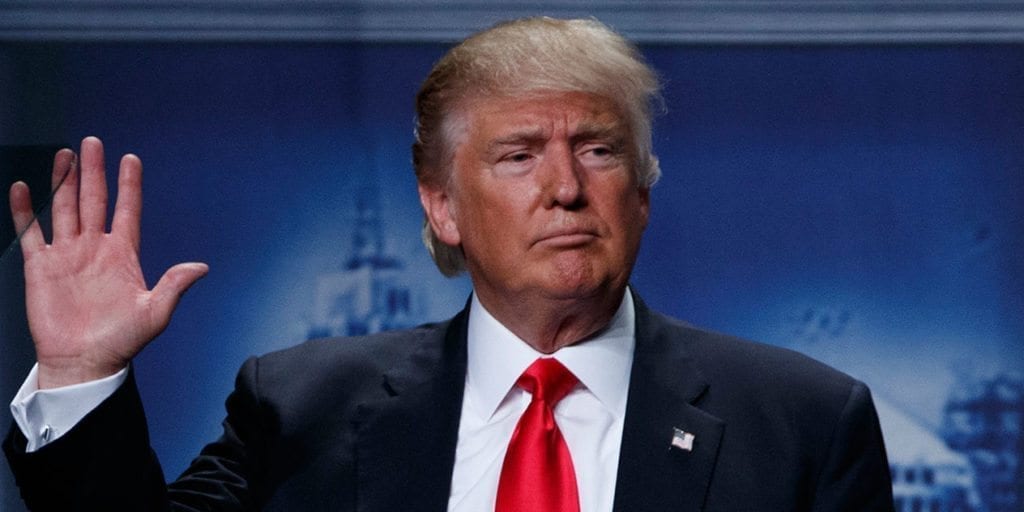
    Newly-Elected House Democratic Majority Will Paralyze Trump’s Presidential Powers

     
    The midterm elections held on November 6, 2018, will significantly restrain Pres. Trump’s rule of the United States as a dictatorship.
     
    In the first two years of his presidency, Trump often abused his powers by signing Executive Orders and by controlling both the Executive and Legislative branches of the U.S. government through the Republican majorities in both the House and Senate. During this period, Pres. Trump made many outrageous statements and acted as he pleased disregarding any politically, legally and morally correct behavior.
     
    However, the President’s free ride has come to an end! With the new Democratic majority in the House of Representatives, Pres. Trump will no longer be able to do as he pleases. He will be unable to propose any bills without the consent of the House Democrats who will investigate the illegal actions of the President and his cabinet members, as well as protecting the Special Prosecutor’s Russia collusion probe in the 2016 U.S. presidential elections. The new Democratic majority in the House will be able to subpoena Pres. Trump’s campaign associates which the previous Republican majority had blocked, and will also demand the release of the President’s tax returns which he has adamantly refused to disclose, hiding his business dealings in foreign countries.
     
    This new state of affairs will have two concrete consequences. The U.S. government will be in gridlock for the next two years. Hardly any new bills initiated by Pres. Trump will be approved by the House. Secondly, frustrated by the House blocking his actions, Pres. Trump will lash out at the Democrats even more harshly than before. The President has already declared that if the Democrats investigate him, he will investigate them in return! This means that Pres. Trump’s anger and hostility will rise to new heights, leading him to send more insulting tweets and deliver more outrageous speeches at his political rallies.
     
    During the next two years, Pres. Trump will be so busy attacking his political rivals that he will be unable to pay full attention to domestic and foreign policies which will hopefully limit his mischief in the United States and around the world!
    Armenian-American Candidates in the Midterm Elections
     
    On the positive side, at least eight Armenian-Americans won local, state and federal political seats during the Nov. 6, 2018 midterm elections.
     
    Armenian-American Anna Eshoo (Dem.-CA) won reelection to the House along with Jackie Kanchelian Speier, another Democrat from California. Armenian-American Anthony Brindisi (Dem.-N.Y.) is 1,293 votes ahead of the incumbent Republican Congresswoman Claudia Tenney as of election night, pending thousands of votes yet to be counted. If Brindisi wins, he will be the third Armenian-American serving in the U.S. House of Representatives.
     
    In the history of the United States, there have been only seven Armenian-Americans elected to the U.S. House of Representatives. They are:
    — Thomas Corwin (1831-1840; 1859-1861), Republican from Ohio.
    — Steven Derounian (1953-1965), Republican from New York.
    — Adam Benjamin (1977-1982), Democrat from Indiana.
    — Charles Pashayan (1979-1991), Republican from California.
    — Anna Eshoo (1993-now), Democrat from California.
    — John Sweeney (1999-2007), Republican from New York.
    — Jackie Speier (2008-now), Democrat from California.
     
    Incredibly, Thomas Corwin, of Armenian and Hungarian descent, was a highly-accomplished politician and diplomat. He is the only Armenian-American who became a U.S. Senator (1845-1850), a Republican from Ohio. Besides his service in the House and the Senate, Corwin was the Governor of Ohio (1840-1842), and U.S. Secretary of the Treasury (1850-1853). In addition, he served as U.S. Ambassador to Mexico (1861-1864).
     
    Danny Tarkanian, Republican congressional candidate from Nevada, lost his election bid on Nov. 6, running against Democrat Susie Lee. Tarkanian trailed with 43.4% of the vote to Lee’s 51.4%.
     
    Johnny Nalbandian, Republican congressional candidate from the Glendale, CA area, lost his election bid to incumbent Democrat Cong. Adam Schiff. Nalbandian had 23.5% of the vote to Schiff’s 76%.
     
    Democrat Adrin Nazarian from the San Fernando Valley region of Los Angeles won reelection against Republican challenger Roxanne Hoge for the California State Assembly. Nazarian won 77.9% of the vote to Hoge’s 22.1%.
     
    Elizabeth Warren (not to be confused with U.S. Senator Elizabeth Warren), granddaughter of Armenian Genocide survivors, lost her election for the California State Assembly to fellow Democrat Tasha Boerner Horvath.
     
    Republican Rita Topalian lost her race for the State Senate against Democrat Bob Archeleta, who won by 65% of the vote.
     
    Outside of California, Mari Manoogian, 26, Democratic candidate for Michigan State House, defeated her opponent former Michigan GOP chair David Wolkinson, with 57% of the vote vs. Wolkinson’s 43%. Manoogian was endorsed by Pres. Barack Obama, Sen. Gary Peters, and Governor-Elect Gretchen Whitmer.
     
    Another Armenian-American candidate, Sara Gideon, a Democratic member of the Maine House of Representatives, was reelected.
     
    Anna Astvatsaturian Turcotte was re-elected to Ward Three on Westbrook, Maine’s City Council. Turcotte, a refugee from Baku, Azerbaijan, is a strong advocate for Artsakh’s independence.
     
    Finally, Lorig Charkhoudian, a Democratic candidate for Maryland’s House of Delegates, was elected to become the first Armenian-American to serve in the Maryland State legislature.
     
    Most Armenian-Americans, who ran for political office on Nov. 6, won. The same is true for many non-Armenian supporters of the Armenian-American community. The Armenian National Committee of America reported that 92% of the congressional candidates it endorsed won their seats. This is great news!
     
    On the other hand, Armenian-Americans are pleased that Cong. Pete Sessions (Rep.-Texas), co-chair of the Congressional Caucus on Turkey, lost his reelection bid, despite contributions to him by pro-Turkey donors!


  • Trump’s National Security Adviser Tries To Distance Armenia from Russia and Iran

    Trump’s National Security Adviser Tries To Distance Armenia from Russia and Iran


    John Bolton, the National Security Adviser of Pres. Trump, visited Russia, Azerbaijan, Armenia and Georgia in October, conveying the White House position on regional and international issues. Bolton is known as a hawk on foreign policy and is often described as a warmonger for his extremist positions!
     
    In his meetings with Armenian officials, Bolton spoke about U.S. sanctions on Iran which may affect third countries, including Armenia. He also made a surprise offer to sell American weapons to Armenia and discussed Armenian-Turkish relations, and the resolution of the Artsakh conflict.
     
    It became clear that Bolton tried to distance Armenia from its strategic ally Russia and key trading partner Iran, since the border with Armenia is blockaded by neighboring Azerbaijan and Turkey.
     
    Even though serious concerns were expressed by many Armenian commentators and particularly Russian officials regarding the policies advanced by Bolton, Acting Prime Minister of Armenia, Nikol Pashinyan, was surprisingly upbeat and told the Armenian Parliament: “I’ve met with Bolton. There wasn’t even the slightest nuance during this meeting which can cause disturbance in Armenia and among the Armenian people. I consider this meeting to be a major diplomatic achievement for us, I will say in the future as to what is the reason that I am saying so.”
     
    The Acting Foreign Minister of Armenia Zohrab Mnatsakanyan added: “The dialogue [with Bolton] was very successful, and the US understood the logic of our relations with the Russian Federation, Iran, our position on the Nagorno-Karabakh issue, relations with Turkey, etc.”
     
    Putting a positive spin on his meetings in Armenia, Bolton tweeted: “Yesterday I had a nice visit to Armenia, an important friend in the region. I enjoyed productive conversations with the [Acting] Prime Minister and his national security team.”
     
    Despite the heated relations between the United States and Russia, Armenia has to maintain a delicate balance between the two superpowers. On the one hand, Armenia relies on Russia for its critical needs: weapons, energy, and trade, and therefore, cannot afford to antagonize its strategic ally. On the other hand, Armenia has maintained friendly relations with many other countries, particularly Western Europe and the United States.
     
    Proposed Sale of Weapons to Armenia
     
    Bolton surprised his Armenian hosts by offering them to purchase American weapons by stating that they are superior to those of Russia. However, he did not mention how impoverished Armenia would be able to pay for these weapons. As we know, Russia supplies the bulk of Armenia’s weapons either by providing loans or at discount prices. Pashinyan responded by stating that Armenia will consider the American offer, while Acting Defense Minister Davit Tonoyan told NEWS.am that there was no need to purchase U.S. weapons at this time.
     
    By acquiring American weapons, Armenia would risk antagonizing Russia, its main source of arms. Secondly, the United States may be using its offer to Armenia as a cover to sell multi-billion dollars of advanced weapons to Azerbaijan, something it can afford to purchase, while Armenia cannot.
     
    Bolton’s other illogical statement was that the Russian sale of weapons to Armenia and Azerbaijan has hampered the settlement of the Artsakh conflict. Ironically, this is exactly what Bolton is proposing by offering to sell U.S. weapons to both countries. In my opinion, the United States and all other countries should refrain from selling weapons to both Armenia and Azerbaijan! Pouring more weapons into a conflict zone can only to lead to increased violence and deaths on both sides.
     
    Armenian-Iranian Relations
     
    In response to Bolton’s statement that the United States will enforce sanctions against Iran “very vigorously” and for that reason the Armenian-Iranian border is “going to be a significant issue,” Pashinyan stated that Armenia as a landlocked nation does not have diplomatic relations with either neighboring Turkey or Azerbaijan, so it must retain “special relations” with its other two neighbors — Iran and Georgia — which are Armenia’s only “gateways” to the outside world. Pashinyan optimistically told the Armenian Parliament: “I think that the position of Armenia was clear, comprehensible and even acceptable to representatives of the U.S. delegation.”
     
    Rather than pressuring Armenia to disrupt its critical trade relations with Iran, the United States should be urged to pressure Turkey and Azerbaijan to open their borders so Armenia can trade more easily with and through all four of its neighbors. Pashinyan correctly pointed out that the Republic of Armenia has its own national interests which do not always coincide with the interests of other countries. In my view, the United States has no right to demand that third countries comply with its misguided sanctions on Iran. Furthermore, since the United States is exempting Turkey from implementing U.S. sanctions on Iran, why shouldn’t Armenia be also exempt from these sanctions? Besides, Bolton acknowledged that the United States does not “want to cause damage to our friends in the process.”
     
    Relations with Turkey
     
    Bolton declared that the resolution of the Artsakh conflict would help open Turkey’s border with Armenia. Pashinyan responded by stating that Armenia is ready to establish relations and have open borders with Turkey, however, without any preconditions which Turkey tried to impose by linking the opening of the border with the Artsakh conflict. To counter Turkey’s precondition, I suggest that Armenia impose its own precondition by linking the opening of the border with Turkish recognition of the Armenian Genocide!
     
    Resolution of Artsakh Conflict
     
    Bolton suggested that the December 9 Parliamentary elections, during which Pashinyan’s political party is expected to win the majority of seats, will give him a strong mandate to take decisive steps in the resolution of the Artsakh conflict. Bolton did not seem to be aware of Pashinyan’s repeated statements that “the ones who determine whether to resolve or not resolve the Karabakh conflict are the Armenian people, and specifically the people of Armenia, the people of Artsakh and in this case also the Diaspora, because this is a Pan-Armenian issue.”
     
    As Armenia is facing both internal and external uncertainties, it is mandatory that Armenians worldwide support their homeland and join forces against their common adversaries!


  • Trump Administration Cancels Two More International Treaties

    Trump Administration Cancels Two More International Treaties

    I wrote an article in September criticizing the Trump administration’s dismissal of the International Criminal Court. I considered the U.S. action to be a lack of respect for justice and the rule of law.

    Last week, the Trump administration took two more scandalous actions further flouting international law and avoiding the peaceful option of legal recourse to conflict resolution.

    Secretary of State Mike Pompeo announced that the United States was terminating the Treaty of Amity signed in 1955 between the U.S. and Iran, after a unanimous ruling on October 3, 2018, by the International Court of Justice (ICJ), also known as the World Court, that the United States had to resume the export of humanitarian goods and spare parts for civil aviation safety services to Iran, despite U.S. sanctions. This was certainly a victory for Iran as it had sued the United States in the World Court. The U.S. withdrawal from the treaty made it look like a sore loser!

    President Trump renewed the U.S. sanctions after withdrawing this May from the 2015 nuclear deal with Iran and several other major powers. The sanctions covered dollar transactions, food exports and sales of aluminum and steel. In November, the U.S. will add new sanctions against Iran’s oil sales, energy and shipping sectors and foreign financial transactions.

    After the verdict, ICJ President Abdulqawi Yusuf announced that “the court’s order applies to medicines and medical devices; foodstuffs and agricultural commodities; and spare parts, equipment and repair services for civil aviation. The United States must also ensure that licenses and authorizations are granted and that payment for such goods and services are not subject to any restrictions,” the Washington Post reported.

    Although the rulings of the International Court of Justice are binding, they are not enforceable. U.S. National Security Adviser John Bolton, during his appearance at the White House press briefing on Oct. 3, stated that Iran had “made a mockery” of the Amity Treaty. In response, Iran’s Foreign Minister Mohammad Javad Zarif called the United States “an outlaw regime.”

    Ironically, the United States files cases against other countries in the International Court of Justice when it suits its interests. Back in 1979, the United States sued the government of Iran after the takeover of the U.S. Embassy in Tehran by Iranian militants. The U.S. won that case and the ICJ ordered Iran to release all American hostages and pay compensation. It is strange that the United States government is now cancelling its treaty with Iran and not in 1979 during the hostage crisis!

    The Washington Post reported that “during meetings at the United Nations last week, Trump, Pompeo and Bolton railed against Iran and berated various other member states and U.N. bodies for not bending to American interests. Their approach elicited an icy reaction. At a Security Council session chaired by President Trump, every other member of the U.N.’s most powerful body scolded Washington for its rejection of the nuclear deal, an agreement the council had endorsed.”

    On Oct. 3, 2018, Bolton also announced that the United States would withdraw from the “optional protocol” under the Vienna Convention of Diplomatic Relations. This decision was prompted by the filing of an ICJ complaint in September 2018 by the Palestinian Authority against the United States for moving the U.S. Embassy in Israel from Tel Aviv to Jerusalem.

    The Vienna Convention is an international treaty which sets out diplomatic relations between states and provides immunity to diplomats. Ironically, Bolton stated: “the United States remains a party to the underlying Vienna Convention on Diplomatic Relations and we expect all other parties to abide by their international obligations under the convention.”

    Bolton further announced that the United States will review all other international agreements to safeguard U.S. sovereignty. In less than two years of Trump’s presidency, the United States has withdrawn from the nuclear agreement with Iran, the global climate agreement, the United Nations Educational, Scientific and Cultural Organization, threatened to distance itself from NATO, left the UN Human Rights Council, and cut off funding to UNRWA (United Nations Relief and Works Agency) which has been providing humanitarian aid to millions of Palestinian refugees for the past 70 years!

    Constitutional lawyers may question the legal right of the Trump administration to abrogate international treaties which are ratified by the U.S. Senate. Shouldn’t the Senate give its consent to the White House before it withdraws from such treaties? In the first 189 years of America’s history, 40 treaties were abrogated after both houses of Congress agreed to do so. Just two treaties were abrogated by the Senate only, after a vote by two-thirds of its members. Unfortunately, in recent years, due to congressional ineptitude and historical inactivity, the Executive Branch has taken the initiative of unilaterally abrogating international treaties. This is an issue that the U.S. Congress should review, particularly if Democrats win the majority, in order to restrain Pres. Trump’s arbitrary decisions which embarrass the United States in the eyes of the world.

    Hopefully, the next more responsible U.S. President will reverse Trump’s deeply flawed decisions on international agreements and other vital issues.

  • Trump and Bolton Undermine The International Criminal Court

    Trump and Bolton Undermine The International Criminal Court

    Many Americans and others around the world have been following with great concern the irrational statements and destructive decisions made by Pres. Trump ever since his election.

    Some of the President’s policies on national and international issues have made the United States the laughing stock of the world. The latest such example is the announcement by the White House National Security Adviser John Bolton that the United States will not cooperate with the International Criminal Court; will not allow the Court’s judges to travel to the United States; will sanction their funds in American banks; and prosecute them in U.S. courts.

    According to Wikipedia, “the International Criminal Court (ICC) is an intergovernmental organization and international tribunal that sits in The Hague in the Netherlands. The ICC has the jurisdiction to prosecute individuals for the international crimes of genocide, crimes against humanity, and war crimes. The ICC is intended to complement existing national judicial systems and it may therefore only exercise its jurisdiction when certain conditions are met, such as when national courts are unwilling or unable to prosecute criminals or when the United Nations Security Council or individual states refer situations to the Court. The ICC began functioning on 1 July 2002, the date that the Rome Statute entered into force. The Rome Statute is a multilateral treaty which serves as the ICC’s foundational and governing document. States which become party to the Rome Statute, for example, by ratifying it, become member states of the ICC. Currently, there are 123 states which are party to the Rome Statute and therefore members of the ICC.”

    John Bolton, the National Security Adviser of Pres. Trump, in a highly critical speech on Sept. 10, 2018, rejected the jurisdiction of the ICC, especially in cases involving accusations against the United States and its allies, particularly Israel.

    Bolton and his boss were incensed by ICC’s investigation of possible crimes committed by U.S. soldiers in Afghanistan and charges brought by the Palestinian National Authority against Israel. To prevent any legal action against American forces, the United States has signed binding agreements with 100 countries not to surrender any U.S. personnel to the ICC. Furthermore, the United States shut down the representative office of Palestine in Washington, D.C., because of the latter’s intention to file charges at the ICC for alleged Israeli violations. This comes on the heels of the White House decision to move the U.S. Embassy to Jerusalem, thus eliminating all possibility for the United States to serve as an honest broker between the Palestinian Authorities and Israel.

    Bolton gave five reasons for the U.S. refusal to cooperate with the ICC:

    The first reason is Bolton’s claim that the ICC “threatens American sovereignty and US national security interests. The prosecutor in The Hague claims essentially unfettered discretion to investigate, charge, and prosecute individuals, regardless of whether their countries have acceded to the Rome Statute.” Bolton’s claim is not accurate. First, all international treaties ratified by the United States supersede national sovereignty, such as the Genocide Convention and many others. Secondly, the ICC has jurisdiction over U.S. citizens only in cases where the U.N. Security Council authorizes the Court to do so. While the United States is not a member of the ICC, it is a Permanent Member of the U.N. Security Council and as such it has veto power over its decisions. Thirdly, the ICC does not get involved in cases where the home country takes legal action against its own citizens.

    Bolton’s second objection is that “the International Criminal Court claims jurisdiction over crimes that have disputed and ambiguous definitions, exacerbating the court’s unfettered powers.” Bolton is concerned that ICC judges would bring charges against the United States, in cases such as the U.S. bombing of Syria in 2017 for its alleged use of chemical weapons. As in any other trial, if the evidence proves that the United States acted illegally, there should be an appropriate verdict. No country is above international law. The U.S. is already protected from such Court actions as a non-member of the ICC. It is ironic that the United States, after preaching for decades to the rest of the world about upholding law and order, is now flouting the very principles that America was founded on!

    Bolton’s third concern is that “the International Criminal Court fails in its fundamental objective to deter and punish atrocity crimes. Since its 2002 inception, the court has spent over $1.5 billion while attaining only eight convictions.” Contrary to Bolton’s assertion, the eight convictions prove that the Court is very deliberate in its judgments and does not pursue every little case around the world, allowing member states to charge their own accused citizens.

    Bolton’s fourth complaint is that “the International Criminal Court is superfluous, given that domestic US judicial systems already hold American citizens to the highest legal and ethical standards.” This is an easily dismissible issue. If the ICC finds that U.S. courts have dealt with a particular crime, it will not interfere. The ICC is a court of last resort. This is one of ICC’s main guidelines.

    Bolton’s fifth criticism is that “the International Criminal Court’s authority has been sharply criticized and rejected by most of the world. Today, more than 70 nations…are not members of the ICC.” While 70 countries are not yet members of ICC, 123 countries are members! Over time, more nations will join the ICC, as is the case with other international conventions.

    Rather than argue against the rule of law, the United States should be the first to join such international legal institutions. By rejecting the ICC and considering it to be “dead,” as Bolton described it, the United States is simply encouraging the impunity of brutal regimes and dictators around the world!

  • Planning for the Post-Trump Wreckage

    Planning for the Post-Trump Wreckage

    When the president eventually exits the White House, the rest of us will quickly have to make sense of the world he’s left behind.

    By Stephen M. Walt

    | August 30, 2018, 1:23 PM

    Donald Trump speaks during an event to announces a grant for drug-free communities support program, in the Roosevelt Room of the White House in Washington, DC, on August 29, 2018. (MANDEL NGAN/AFP/Getty Images)

    One of the many unfortunate consequences of U.S. President Donald Trump’s cavalier, corrupt, and capricious handling of foreign policy is that it discourages farsighted thinking about the global agenda. Even worse, it is gradually undermining the institutional capacity the United States will need to deal with that agenda. To a first approximation, the people who are most alarmed by his actions (and I include myself among them) are spending a lot of their time circling the wagons and trying to minimize the damage that he and his minions do while in office. They are like parents trying frantically to corral a rambunctious toddler (hat tip to Dan Drezner) who is running amok through a china shop: All the attention is on saving as much of the crockery as possible, and nobody has any time to think about what they’ll do once the kid has finished smashing things.

    It’s understandable that people are trapped in a reactive mode, because Trump’s genius is his ability to make nearly everything all about him and to focus attention on whatever his latest outrageous antic is. What other president could or would make himself the center of attention when a prominent senator died or express his disagreement with an important allied leader by tossing candy at her? Trump may be terrible at running the government, but his ability to command attention through outrageous behavior makes Madonna look like an amateur.

    Trending Articles


    The Myth of Erdogan’s Power

    Far from a sultan, the Turkish president is hemmed in by the nationalists who back him—and they don’t want him to get…


    Yet we should resist the urge to remain in a defensive crouch. Yes, there’s a lot of damage being done these days, and resisting Trump’s worst impulses is important. But there are plenty of problems out there that will require attention in the not-too-distant future, and where the appropriate solutions aren’t immediately obvious. Careful and creative thought will be needed to figure out an appropriate destination and then to chart a course to get there. It is not too soon, therefore, for foreign-policy mavens to start thinking about the post-Trump world, not simply to restore the pre-Trump status quo but in order to figure out arrangements that acknowledge new realities and are appropriate for the conditions we will face in the future.

    No doubt each of you has your own list of priorities, but for what it’s worth, here are a few of mine.


    #1: The Architecture of Great Power Politics

    About the Author

    Stephen M. Walt is the Robert and Renée Belfer professor of international relations at Harvard University. @stephenwalt


    When he ran for president back in 1992, Bill Clinton once declared that “the cynical calculus of pure power politics simply does not compute. It is ill-suited to a new era.” He was expressing the widespread belief (pious hope?) that humanity had turned a corner at the end of the Cold War, and that the old logic of great power rivalry was now behind us. He was dead wrong, alas, and great power politics are now back with a vengeance.

    But the form and intensity of that rivalry remains open, and the nature of relations among today’s great powers needs to be shaped through farsighted diplomatic action. Will the United States disengage and let Europe and Asia (mostly) go their own way? Will the United States, its NATO allies, and Japan link up with others to contain Russia, China, and their various regional partners? Should the United States make a concerted effort to drive a wedge between Moscow and Beijing, perhaps by trying to work out an agreement on Ukraine and promoting a security architecture for Europe and Russia that reduces each side’s fears? Where will countries like India fit into the constellation of great powers, and where should the United States want it to be?

    It is all well and good to obsess about “saving NATO” or “preserving a liberal order,” but those short-term, reactive goals do not eliminate the need to think hard about what sort of great power relations are realistic and desirable in the decades ahead. At key moments in world history—such as 1815, 1870, 1919, 1945, and 1993—the leaders of the great powers had to imagine and then try to implement visions of great power politics designed to preserve key interests, ideally without (much) resort to force. They were sometimes successful; at other key moments, they failed miserably. The problem cannot be avoided, but we are more likely to end up with arrangements we like if we start thinking through the possibilities now. 

    #2: The Brave New World of Cyber:

    I’m the first to admit that I didn’t foresee all of the ways that digitalization, social media, and other aspects of the cyber-world would shape both international and domestic politics. Sure, there’s been a lot of hype and threat inflation about cybersecurity, cyberwar, and cyber-everything else, but in 2018 it’s impossible to deny that these issues are affecting us all in pretty far-reaching ways. Indeed, even the suspicion that bad guys are using the internet to manipulate politics can have effects all on its own.

    Read More

    Justin Trudeau Can’t Take Any More Humiliation

    Unless Canada’s prime minister strikes a trade deal on his own terms, Donald Trump’s bullying won’t stop.

    Argument |

    Jonathan Kay

    Trump Wants to Help Israel by Cutting Aid to Palestinians. Why are Some Israelis Worried?

    Cuts could deepen economic crisis in the West Bank and Gaza and lead to violence.

    Argument |

    Neri Zilber

    In Tacit Rebuke, U.S. Embassy in South Africa Rejects Trump Tweet

    Internal cable cites report that farm murders in South Africa are at their lowest level in 19 years.

    Exclusive |

    Robbie Gramer, Colum Lynch

    Instead of moving energetically to address these issues, however, Trump fired the White House cybersecurity coordinator and eliminated the position, repeatedly denied that anybody interfered in the 2018 election, and now is tweeting out accusations that Google is biased against him. Instead of developing a coherent U.S. policy and trying to negotiate an international code of conduct that might mitigate these problems, he’s kicking the can down the road.

    But does anyone believe these issues will simply disappear on their own? Surely not. Which means more farsighted people will have to start developing policies that can preserve the benefits of the digital revolution while protecting us from its dark downside.

    #3: New Institutions for the World Economy

    It is now obvious that contemporary globalization did not deliver as promised for millions of people—though it did have significant benefits for the Asian middle class and the global 1 percent—and that the main institutions set up to manage global trade and investment need serious rethinking. This is partly because some countries (e.g., China) have complied poorly with some of the rules, though no country’s track record is perfect, and because unfettered globalization did not allow individual countries to tailor arrangements in order to support key cultural or national priorities.

    This is not my area of expertise, and I’m not going to offer any detailed advice on what should be done. For what it’s worth, I find my colleague Dani Rodrik’s arguments on allowing nations greater autonomy within the global trading and investment order, so that their participation does not produce wrenching social dislocations at home, convincing. Less globalization might be more, therefore, but less globalization does not mean zero.

     As near as I can tell, the Trump administration’s approach to these issues has been to use U.S. economic leverage to bully other countries into making minor economic concessions, which Trump can then hail as the “beautiful” new trade deals that he promised back in 2016. That’s what happened with South Korea and what appears to be happening with NAFTA. But what’s missing, at least so far, is any attempt to develop a larger set of institutions or arrangements that would safeguard the wealth-enhancing elements of (mostly) open trade and avoid both the obvious costs of a trade war and the social turmoil of hyper-globalization. Again, it’s not my field, but I sure hope Dani isn’t the only person thinking about what a new global economic order should look like.

    #4: Whither the Middle East? 

    If the architecture of great power politics is now uncertain and will require creative diplomacy to adapt to and shape, that goes double in the troubled Middle East. Thus far, the Trump administration has mostly doubled down on supporting America’s longtime Middle East partners: giving a free hand to Israeli expansionism, backing Abdel Fattah al-Sisi’s military dictatorship in Egypt, and encouraging Saudi Crown Prince Mohammed bin Salman’s ambitious domestic reforms and his increasingly reckless regional behavior (most notably and tragically in Yemen), as well as ramping up pressure on America’s perennial bête noire, Iran. Trump has also stumbled into a pissing contest with President Recep Tayyip Erdogan in Turkey, but Erdogan is at least as prickly and desperate for scapegoats as Trump himself, and a cynic might argue that the two leaders deserve each other.

    Although it’s possible that National Security Advisor John Bolton will still get the war with Iran that he has long favored, the bigger questions are what the U.S. role in the region will be over the longer term and how it will deal with problems that are going to come home to roost eventually. Former Presidents Clinton, George W. Bush, and Barack Obama all openly backed a two-state solution between Israel and the Palestinians, for example, and each tried to bring it about in their own not-very-effective fashion. The two-state solution is now on life support if not completely dead, however, which raises the obvious question: If “two states for two peoples” is impossible, then what is does the United States support? Does it believe Israel should become a one-state democracy, with full political rights for all inhabitants, including the Palestinians who are now under strict Israeli control and denied political rights? Do Americans think those Palestinians should be kept in a state of permanent subjugation (aka apartheid)? Is the United States in favor of Israel expelling them to some other country? Nobody really wants to think about awkward questions such as these, let alone answer them, but Trump’s successors are going to get asked. Might be a good idea to start formulating a response.

    And that’s just one issue. The United States will also need to figure out if it wants to continue its (mostly futile) efforts to mold local politics all over the region or revert back to the strategy of “offshore balancing” that it employed there from 1945 to roughly 1991. Should it strive for a modus vivendi with Iran—in the service of maximizing U.S. leverage and maintaining a regional balance of power—or continue to flirt with regime change? And it is worth asking if the Middle East is even as vital a region as it once was, given the shale gas revolution back in the United States, the imperative to reduce fossil fuel consumption, and the rising strategic importance of Asia?

    #5: Rebuilding Foreign Policy Capacity and Expertise

    Unfortunately, the United States will be grappling with all of these problems with a severely depleted foreign-policy capacity. The travails of the State Department are well known, but there has also been exceptionally high turnover among key Trump aides and a general erosion of nonpartisan experience and expertise throughout the government. Trump’s repeated attacks on the intelligence agencies and his efforts to politicize the civil service aren’t helping either. Lord knows I’m critical of the “Blob” and its tendency not to hold itself accountable and to stick with strategies that aren’t working, but the answer is a better foreign-policy establishment, not amateur hour.

    Accordingly, planning for a post-Trump world will also require a sustained effort to rebuild the institutional and administrative capacity for an effective foreign policy. Having an effective and professional civil and foreign service is critical in a system such as America’s, because so many top jobs get replaced whenever the White House changes hands, and many senior officials take months if not years to be nominated and confirmed. Moreover, a lot of them stay in their posts for only a year or two, creating further disarray and churn within the government. Add to that America’s odd practice of letting big campaign donors serve in important diplomatic posts or management positions, and you have a recipe for trouble.

    This problem wouldn’t be a big issue if the United States had modest foreign-policy goals, but that is hardly the case. Instead, it is trying to run the world with perhaps the most disorganized and dysfunctional system imaginable. Accordingly, farsighted patriots need to start planning how to restore expertise, analytic capacity, and accountability now, so that this process can begin swiftly once Trump is gone.

    The list presented here is far from complete, and it’s easy to think of other issues (e.g., climate change, proliferation, migration, etc.) where imaginative thinking is going to be needed. But my central point remains: Preserving the status quo against Trump’s wrecking operation is not enough. Instead of just playing defense, his critics need to start thinking about the positive goals they intend to pursue once he’s left the political stage. And there’s an added benefit in this course of action: The most obvious way to convince Americans that Trump’s policies are mistaken is to show them a better alternative.

    Stephen M. Walt is the Robert and Renée Belfer professor of international relations at Harvard University. @stephenwalt

    View
    Comments

    Tags: Diplomacy, Military strategy, Politics, Trump, Voice

    Trending Now Sponsored Links by Taboola

    Dream of a Career in Sneakers? Here’s How.Fashion Institute of Technology

    Western Boot Lovers Are Going Crazy Over This New BrandTecovas

    Your Knees Will Wish You Did this years agoInstaflex Advanced Supplement

    This Simple Tip Will Keep You From Snoring Ever AgainSnore B Gone

    By Taboola

    More from Foreign Policy

    A Map of China, By Stereotype

    How the Muslim World Lost the Freedom to Choose

    Forget Sykes-Picot. It’s the Treaty of Sèvres That Explains the Modern Middle East.

    A Dutch Newspaper Finds the Perfect Way to Explain Trump

    By Taboola

    Latest

    U.S. to Canada: Deal or No Deal?


    August 30, 2018, 5:01 PM

    Don’t Buy the Panic About the Rupee’s Fall


    August 30, 2018, 3:52 PM

    Justin Trudeau Can’t Take Any More Humiliation


    August 30, 2018, 2:28 PM

    Planning for the Post-Trump Wreckage


    August 30, 2018, 1:23 PM

    Western Officials Ignored Myanmar’s Warning Signs of Genocide


    August 30, 2018, 12:36 PM

    See All Stories

    Trending

    1. 1

    Planning for the Post-Trump Wreckage 16 Shares

    1. 2

    Justin Trudeau Can’t Take Any More Humiliation 4 Shares

    1. 3

    India Is Getting Cold Feet About Trump’s America 39 Shares

    1. 4

    U.S. to Canada: Deal or No Deal? 11 Shares

    1. 5

    U.S. to End All Funding to U.N. Agency That Aids Palestinian Refugees 6632 Shares

    Voices

    Planning for the Post-Trump Wreckage


    Stephen M. Walt

    America Needs the Muhammad Ali Doctrine


    Stephen M. Walt

    The Death of the Gentle Peacemaker


  • Top Aide to Kim Jong-un Is Bound for U.S., Trump Says

    Top Aide to Kim Jong-un Is Bound for U.S., Trump Says

    North Korea’s top nuclear weapons negotiator was headed for New York on Tuesday and expected to meet with Secretary of State Mike Pompeo as officials race to settle on an agenda for a June 12 summit meeting between the North’s leader, Kim Jong-un, and President Trump in Singapore.

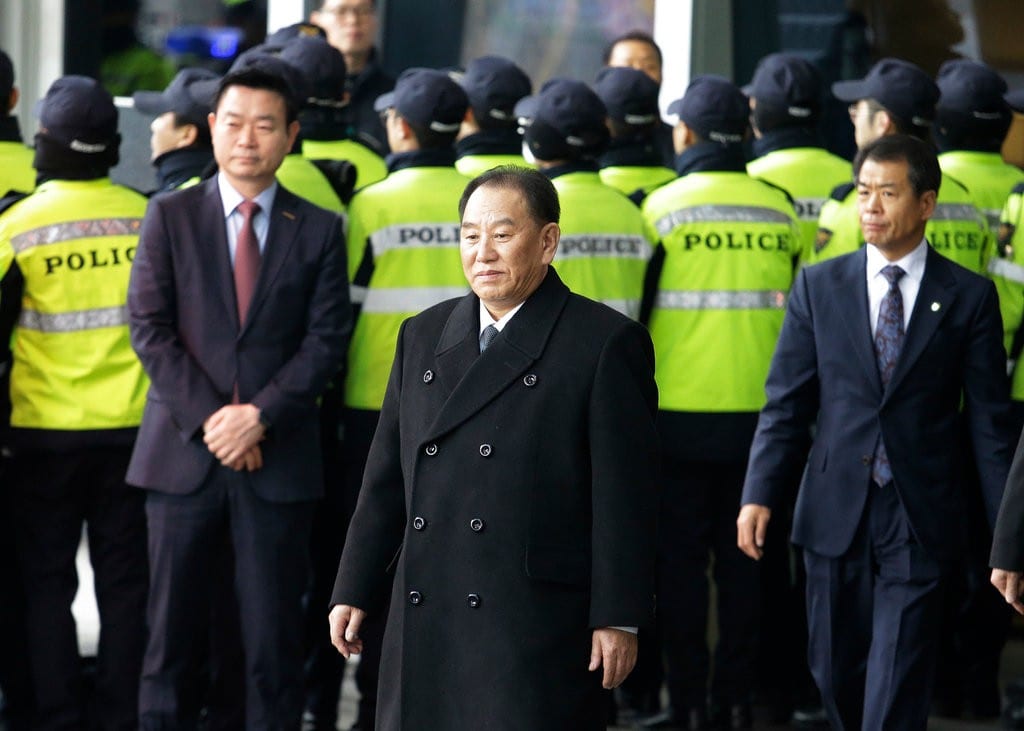
    Mr. Trump said on Twitter that Kim Yong-chol, one of the most trusted aides to the North’s leader and a former intelligence chief, was “heading now to New York.” In a reference to the moves made since he canceled the on-again-off-again summit meeting, the president added, “Solid response to my letter, thank you!”

    The former intelligence chief, who is 72, has been at the side of the North Korean leader, 34, during a recent whirl of diplomacy, meeting with South Koreans in the Demilitarized Zone dividing the peninsula and with the Chinese.

    Mr. Kim’s trip to the United States starts the most important negotiating track leading up to the summit meeting. Over the weekend, a team of American diplomats met with North Korean officials in the Demilitarized Zone, and White House logistics experts have been talking with North Koreans in Singapore about arrangements for the leaders’ meeting there.

    But a trip to the United States by Kim Yong-chol — who has served the three leaders of the Kim dynasty that has ruled the North since 1945 — signaled that negotiations were reaching a critical point.

    Mr. Kim would be the highest-ranking North Korean official to visit the United States since 2000, when Vice Marshal Jo Myong-rok invited President Bill Clinton to Pyongyang, with the prospect of sealing an agreement on curbing the North’s missiles. It never came to fruition.

    A diplomat in Beijing, where Mr. Kim stopped overnight Tuesday, said it was not immediately clear whether the negotiator would meet with the Chinese again before going on to New York, where he is expected to arrive on Wednesday.

    China’s Foreign Ministry would not confirm the former spymaster’s presence in Beijing, even though video footage showed him at the airport after his arrival from the North Korean capital, Pyongyang.

    In recent weeks, China and the United States have been vying for the attention of Kim Jong-un, with Mr. Trump accusing China of contributing to a toughened North Korean stance on denuclearization after the North Korean and Chinese leaders met this month.

    If the former spy chief met with senior Chinese officials in Beijing, he might risk angering Mr. Trump again, diplomats said. His stop in Beijing could also be related to his presence on a sanctions list that bars him from entering the United States.

    An American diplomat said a waiver would have to be granted for such an individual to enter the United States, although it was likely one would automatically be given under extraordinary circumstances like these.

    Mr. Kim was probably headed to New York, where North Korea has a mission to the United Nations, rather than to Washington because it was easier for him to get a visa there, another American diplomat said. North Korean diplomats and officials are not allowed to travel more than a few miles outside New York City.

    Kim Yong-chol has already met Mr. Pompeo twice in Pyongyang. On the second visit, Mr. Pompeo expected to come away with a set of details for the Singapore summit meeting relating to the denuclearization of the North, but failed to do so. After the second meeting this month, Mr. Pompeo returned to Washington with three Americans who had been detained in North Korea.

    In his most recent meeting with Mr. Pompeo, Mr. Kim struck a defiant tone, saying at a luncheon that North Korea’s willingness to enter into talks was “not a result of sanctions that have been imposed from the outside.” But he reminded the visiting Americans that North Korea intended to focus “all efforts into economic progress in our country.”

    Mr. Kim has served as a senior manager of the North’s intelligence operations for nearly 30 years, according to the website North Korea Leadership Watch.

    Mr. Kim’s rare combination of senior positions in the North’s highly stratified political and military apparatus makes him “one of the most powerful figures in North Korea,” it said.

    He is also one of the longest serving senior officials of the Kim dynasty. Mr. Kim was involved in the 1990s in one of the earliest efforts to limit the North’s nuclear weapons. According to an account in “The Two Koreas,” by Don Oberdorfer and Robert Carlin, Mr. Kim was the toughest of negotiators on an accord that eventually failed in 1992.

    At the time, Mr. Kim accused a South Korean diplomat of composing 90 percent of the language in the accord, it says, quoting him as saying, “This is your agreement, not our agreement.”

    In the mid-2000s, he was assigned as head of the Reconnaissance General Bureau, the North’s spy agency, and paid particular attention to operations against South Korea. When he was chief of the North’s intelligence service in 2010, South Korea accused him of being responsible for blowing up a South Korean Navy vessel, killing 46 sailors. Five months later, the United States Treasury put Mr. Kim on the sanctions list.

    In February, Mr. Kim was sent to the closing ceremony of the Winter Olympics in South Korea. He appeared in photographs seated behind Ivanka Trump, a stern expression on his face.

    Over the past few months, the United States and North Korea have come closer than ever to holding the first summit meeting of the countries’ leaders. In March, Mr. Trump surprised many people when he accepted Kim Jong-un’s invitation to meet, which was relayed through South Korean envoys. But last Thursday in a letter to the North Korean leader, Mr. Trump abruptly canceled the meeting.

    He then changed course again on Friday, saying that the meeting might take place as scheduled. Officials from the United States and North Korea have since started a whirlwind of working-level diplomacy to try to narrow a gap over how to denuclearize the North and salvage the planned meeting.