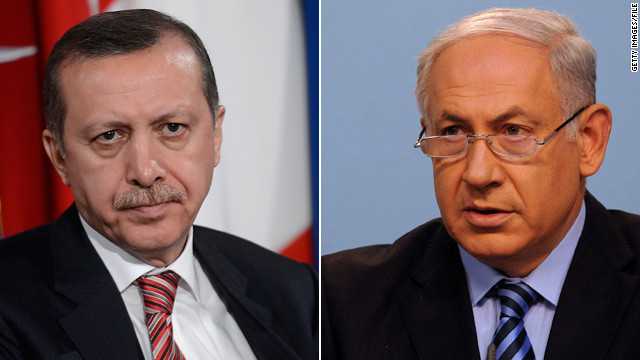
There are three flagship vessels of world politics that steer not by compass but by the direction of the wind. One swings his red tie like a club, another mistakes his staff for a magic trick behind the curtain, and the third wears his black robe like a shroud. Their shared talent is to use words like landmines; the moment you step on them, they explode, leaving behind not truth but only smoke and a few scorched sentences.
When the Iranian minister said, “Trump has lied 35 thousand times,” he was not so much giving a statistic as certifying a record. Yet no one objects to this record, because the opposing teams have their own scorecards as well. Trump’s language is that of a used car salesman: each sentence is a new model with zero mileage, but the engine is always made of the same scrap parts. When he says, “No one has ever told the truth like I do,” he does not realize that he is effectively erasing the statistics of his own lies, because in his world, statistics are merely a club to beat rivals with. He practices lying as a sport; his training is on Twitter, and his matches are on the podium.
As for Erdoğan… He is more than an acrobat in political discourse; he is an engineer of time. He can transform the sentence “I said that yesterday, but today conditions have changed” into a philosophical depth in a single breath. According to his opponents, there is no such entry as “consistency” in his dictionary; to his supporters, however, this is “the art of adapting to a changing world.” But behind the curtain, what becomes visible is this: every speech is the demolition of the previous one; every demolition promises a new construction; and when that construction is completed, you are faced with a wall made of the torn pages of the previous speech. His politics is not chess but backgammon: he rolls his own dice, and his pieces always land on his own square. And most importantly, when he loses, he has the audacity to flip the table and say, “Actually, I won.”
Netanyahu, on the other hand, is the dark magician of this trio. His discourse is like an archaeological excavation; at every layer you find a different fossil of “truth.” At times he relies on biblical kingdoms, at other times he weighs modern intelligence documents on a scale. But his real skill is to process threat like a kneading machine: the larger the threat, the broader his license to justify himself. It is known that while saying “Iran could build a bomb within three months,” he disregards his own intelligence reports; but for him this is not a contradiction, it is a prescription. He has turned lies into a reason for existence, because without threat, the shield would have no meaning.
When you place these three names side by side, what emerges is nothing but a tragicomedy. Each one is a tightrope walker who has received a certificate of mastery from the workshop of rhetoric. Trump has turned lying into a performance art; Erdoğan has turned lying into a governing technique; and Netanyahu has turned lying into a theology. One pounds the microphone and says, “This is not a lie, it is an alternative truth”; another whispers, “My nation believes in me, the rest is detail”; the third takes refuge in the defense that “The world is already against us, so every word is legitimate.” All three converge on the same point: truth, the moment it leaves their mouths, becomes a balloon that changes shape; the more they inflate it, the farther it flies, but in the end it either bursts or deflates. Know this: these three cannot fall asleep on any given day without having lied multiple times. Lies are the name of the sleeping pill that rests them and gives them pleasure. Without lies, Erdoğan, Netanyahu and Trump remain identityless and makeshift. They cannot exist without lies, nor can lies exist without them. Because lies belong to them, and they are the registered property of lies.
And the audience? Ah, that audience… Millions are both victims and accomplices of this game. Everyone cheers for their own acrobat, because the fall of the other acrobat means their own acrobat stays in the air longer. Yet when viewed from the bottom of the tower, all are performing on the same rope; no one looks at the rope itself, everyone just watches the hands. Truth fell into the safety net beneath the rope right from the start, left there forgotten and rotting. The audience applauds, because if they do not applaud, they pay from their own pockets. This is how politics works: lies are presented like a mathematical problem; no one checks the solution, everyone likes their own equation.
Perhaps the most painful part is not the lies of these men, but the gravity of the need for those lies. As societies feed on lies, they lose their immunity to truth. All three leaders compete to collapse this immune system. Trump lies openly; Erdoğan delegates his lies to national interest; Netanyahu bases his lies on divine command. And all of them, amid an avalanche of applause, keep raising the tower they have built. Yet the higher the tower rises, the louder the fall will be. But they love noise, because noise is safer than the reckoning that silence brings.
The outcome? From the top of the tower, these three sages see the same view: the world is round, but they have drawn a flat map. On that map, every country takes shape according to the words that leave their mouths. Yet the map does not show reality, only a navigational tool. And whenever one of them loses his compass, all three cling to their own drawn map and shout, “This is where the truth is!” But the truth lies in the warning written at the edge of the map: “This map is for explorers, not for those who are not ready to get lost.”
So the next time a leader steps up to the podium and says, “I will tell you the whole truth,” know that the curtain is opening once again, but the script is always the same. Truth is not behind the curtain; it is hidden where the curtain is torn. And seeing that tear, unfortunately, falls only to the brave among the audience. Those who are not brave keep applauding, until the tower collapses.
Note: This translation preserves the satirical, sharp tone of the original without adding or removing any substantive content. The text aims to provoke critical thinking through irony and exaggeration, not to offend individual personalities.
Sefa Yürükel
Danish ethnographer and social anthropologist (MA)
Aarhus University, 1997
Independent Researcher
Fields of Research: International Politics, Public International Law, Geopolitics, Sociology, Psychology,