Tag: Donald Trump

  • Trump’s Afghanistan Strategy Unveils US Stronger Ties with Tajikistan

    Trump’s Afghanistan Strategy Unveils US Stronger Ties with Tajikistan

    The United States continue expanding their presence in the Central Asia as part of the program «The Great Central Asia». As President Trump announced his new policy on Afghanistan earlier this week, the US Administration have started looking towards Tajikistan, the key region on the Central Asia which has a longer border with Afghanistan.

    Boosted earlier in 2016 by the Secretary of State John Kerry, the cooperation between the United States and the Central Asia in trade, economic development, the anti-terrorism fight is likely to be particularly focused on making stronger ties with Tajikistan as the US Embassy in Dushanbe have lobbied the military and technical aid agreement between the United States and Tajikistan. The $100 billion agreement for a period of 5 years, from 2018 to 2023, has already been approved by Tajikistan authorities, according to the head of the Tajik Border Security Forces col. Avzalov.

    As part of the agreement, the US Embassy in Tajikistan with support of «AT Communication US» will implement a new operation control system designed by «HARRIS» to the Tajik Border Security Forces. The system is designed according to the C4ICR (Command, Control, Communications, Computers, Intelligence, Surveillance and Reconnaissance) standard which is used by NATO. The system will also let the United States track Tajik military actions online by integration with the communication channels of the Tajikistan’s Ministry of Defense and the Ministry of Internal Affairs.

    The stronger ties the bigger funding. The United States have decreased their military and technical financing around the world from $1 billion to $800 million since the start of 2017, while Tajikistan continues to receive larger funding than any other country in the region.

    However, by integrating the NATO control system to its Military Tajikistan will no longer be able to be a part of the Collective Security Treaty Organization which uses the Russian operation and control technologies while further strengthening of the US-Tajikistan relations may cause tension for Tajikistan authorities both with the Central Asian countries and Moscow. Finally, the initiative courageously taken by the Tajik Border Security Forces may have negative results considering the authoritative and self-dependent course of the President Emomali Rahmon.

  • Pres. Trump Succumbs to Turkish Pressures By not Recognizing the Armenian Genocide

    Pres. Trump Succumbs to Turkish Pressures By not Recognizing the Armenian Genocide

    Armenians and Turks around the world wait with bated breath each year to see if the President of the United States would use in his annual April 24 statement the word Genocide to describe the mass killings of Armenians.

    Armenians and Turks seem to forget that the United States has not only recognized the Armenian Genocide, but has done so repeatedly at the highest levels: The House of Representatives recognized the Armenian Genocide twice in 1975 and 1984. So did President Reagan in his Presidential Proclamation 4838, issued on April 22, 1981. Most importantly, the United States Government officially recognized the Armenian Genocide in a report filed with the International Court of Justice (World Court) in 1951.

    Therefore, after all this recognition, as I have repeatedly stated in my columns, Armenians no longer need additional acknowledgments by the President of the United States or the U.S. Congress.

    This year, many were curious if Pres. Trump would issue a statement at all on April 24 and whether he will use the term Armenian Genocide. After 84 members of Congress wrote a joint letter to Pres. Trump and private individuals like Mike Sarian of California contacted high level Trump administration officials urging the President to acknowledge the Armenian Genocide, the White House issued a statement on April 24, declining to call it genocide.

    The good news is that, given Pres. Trump’s lack of familiarity with Armenian issues, and not having made any campaign promises to the Armenian community, the Trump administration did not completely ignore the anniversary of the Armenian Genocide and marked this special day with a statement, as was done by several previous presidents. Pres. Trump’s statement mentions the basic facts of the Genocide, describing the Armenian mass killings as “one of the worst mass atrocities of the 20th century. Beginning in 1915, one and a half million Armenians were deported, massacred, or marched to their deaths in the final years of the Ottoman Empire.”

    While Armenians are disappointed that Pres. Trump shied away from using the term Armenian Genocide, the Turks have no reason to celebrate. On the contrary, they should be ashamed that the President of the United States is accusing their ancestors of committing “one of the worst atrocities of the 20th century” and refers to the killings of 1.5 million Armenians, which the Turkish government denies to this day!

    The bad news, however, is that Pres. Trump issued a statement that does not acknowledge the Armenian Genocide as a genocide. Pres. Trump’s aides have simply copied the texts issued for eight years by Pres. Obama and before him by Presidents Bush and Clinton, including the reference to the Armenian term “Meds Yeghern,” which is not understood by anyone except Armenians, and does not have the legal meaning under international law of the term genocide or ‘tseghasbanoutyoun’ in Armenian. The use of “Meds Yeghern” is simply a clever ploy to avoid the word Genocide. In the past, I have taken the position that if a President cannot acknowledge the Genocide, he should not insult the memory of the Armenian victims and the intelligence of Armenian-Americans by referring to it as ‘tragedy’ and ‘atrocities.’ When Sean Spicer, Trump’s spokesman was asked about the White House’s omission of the term genocide from its April 24 statement, he cynically replied: “it is perfectly in keeping with the language that’s been used over and over again [by previous Presidents].” It is shocking that a Pres. Trump, who takes such pride in speaking out his mind and strongly criticizes the shortcomings of previous presidents, is all of a sudden proud to follow their unacceptable censorship of the Armenian Genocide! Pres. Trump angered a lot of people around the world when he called Pres. Erdogan after the referendum earlier this month and congratulating him on a tainted election that gave Erdogan dictatorial powers! Pres. Trump is scheduled to welcome Pres. Erdogan to the White House in May!

    I fully agree with the reactions of the Armenian National Committee of America (ANCA) and the Armenian Assembly of America (AAA) to Pres. Trump’s statement. The ANCA stated: “President Trump has chosen to enforce Ankara’s gag-rule against American condemnation and commemoration of the Armenian Genocide. In failing to properly mark April 24th, President Trump is effectively outsourcing U.S. genocide-prevention policy to Recep Erdogan, an arrogant and authoritarian dictator who clearly enjoys the public spectacle of arm-twisting American presidents into silence on Turkey’s mass murder of millions of Armenians, Greeks, Assyrians, and other Christians.” The AAA stated: “the President’s statement fails to stand up for human rights and is inconsistent with American values, and represents the same kind of capitulation to Turkish authoritarianism which will cost more lives.”

    Cong. Adam Schiff (Dem.-CA), a long-time supporter of the Armenian community, also issued a statement condemning Pres. Trump’s lack of use of the term Armenian Genocide: “Today, we received another disappointing statement from yet another President, refusing to acknowledge the murder of 1.5 million Armenians from 1915-1923 for what it was — a genocide. President Trump now joins a long line of both Republican and Democratic Presidents unwilling to confront Turkey, and by refusing to do so, he has made the United States once again a party to its campaign of denial. How can we speak with the moral clarity we must about the genocidal campaign by ISIS against religious minorities in Syria and Iraq, if we are unwilling to condemn the first genocide of the last century?  If the President will not speak out, the Congress must, and I join my colleagues — Democrats and Republicans — in calling on the House to take up the Armenian Genocide resolution.”

    With all due respect to Cong. Schiff, the Armenian-American community does not need one more House resolution on the Armenian Genocide, on the top of the two resolutions already adopted in 1975 and 1984. What Armenians around the world demand is justice — compensation for their enormous losses, return of their confiscated private and communal properties, and liberation of the occupied Armenian territories. This is what a future House resolution must demand, not more genocide recognition.

    Finally, I am very pleased that WikiLeaks tweeted on April 24 to its 4.6 million followers one of my previous columns on Hillary Clinton rejecting the suggestion of her top campaign aides to issue a statement on the Armenian Genocide before last year’s presidential elections.

  • Trump’s Attack on Syria: Wrong for so Many Reasons

    Trump’s Attack on Syria: Wrong for so Many Reasons


    Many Americans and people around the world followed with great concern the off-the-cuff and zany ideas Donald Trump voiced during the presidential campaign and more ominously after becoming President.

    It is one thing to disagree with him on a domestic policy issue like banning Muslim tourists or healthcare or building a wall, it is quite another when he issues threats to foreign countries such as Iran and North Korea, and even worse when he orders a missile attack on Syria!

    What is wrong with such a disastrous decision? Pres. Trump does not have the requisite background knowledge about the Syrian conflict, except for what he has read in some fringe publications and seen on his favorite TV Channel, FOX News.

    Pres. Trump stated that he was deeply touched by the images of babies he had seen on TV who had been hurt by a chemical attack. Who would not be? Certainly, he had an emotional and impulsive reaction to heart-wrenching pictures, which cannot be a substitute for a well-thought out foreign policy without a thorough examination of the facts of this tragic incident and careful consideration of the consequences of an extreme action like launching 59 tomahawk missiles on a Syrian air base.

    Fortunately, Pres. Trump’s aides alerted Russia shortly before the attack, to avoid any Russian casualties which could have had catastrophic consequences for the entire world!

    Furthermore, Pres. Trump’s actions violated the U.S. Constitution, as he neither sought nor received the legally required authorization from the U.S. Congress to launch a war on another sovereign state.

    Pres. Trump had neither the wisdom nor the patience to wait for the outcome of the investigation of the circumstances of the chemical attack — to verify who is truly responsible for this terrible attack.

    The Trump Administration accused the Syrian Air Force of carrying out a chemical attack near Idlib. The Syrian and Russian governments have a different version of these events. They affirm that Syria does not possess any chemical weapons after its 2003 agreement to dispose of all such hazardous materials. Furthermore, Syria claims that the chemical explosion was caused by its Air Force bombing a warehouse belonging to Syrian terrorists who had stored these dangerous materials. It makes no sense for Pres. Assad to use chemical weapons while he is winning, risk antagonizing the West, and precipitating a military backlash.

    We recall that back in 2013, there was another chemical attack on a Damascus suburb that killed many more people than the one near Idlib. Back then, Pres. Obama was close to going to war with Syria wrongly believing that the Syrian government had crossed his announced “red line.” However, when he learned that the chemical attack near Damascus was a “false flag,” meaning that it was orchestrated by Turkey and its terrorist allies to force the United States to intervene militarily in Syria, Pres. Obama did not go through with his plans to launch missiles on Syria. No one should forget that U.S. officials in 2003 presented fake “intelligence” evidence to the world claiming that Pres. Saddam Hussein possessed WMD (Weapons of Mass Destruction), to justify the invasion of Iraq.

    Ironically, many Republican members of Congress who are now applauding Pres. Trump for his decision to attack Syria, back then were the most vocal critics of Pres. Obama for planning a similar attack. Furthermore, even though the 2013 chemical attack killed many more people and babies, Donald Trump issued 40 tweets urging Pres. Obama not to attack Syria. Trump did not seem to care about “beautiful little Syrian babies” back then, as he is claiming now!

    Both the White House and many self-declared pundits in the American media, who have made up the most outrageous lies about Syria in the last six years, are now claiming that eliminating the use of chemical weapons in Syria is in the U.S. national interest. They also affirm that the chemical weapons are banned by international treaty and their use is a violation of international law.

    While acknowledging the truth of these statements, one has to ask:

    1) Why no investigation was carried out of the chemical attack, prior to the U.S. Missile launch?

    2) Under what right Pres. Trump has appointed himself the arbiter of international law and policeman of the world? International law, by definition, is an issue touching all countries, not just the United States. The proper venue to investigate, condemn and punish such violations of international law is the United Nations Security Council, not the White House. Furthermore, attacking a sovereign nation is itself a violation of international law!

    3) By attacking Syria and destroying its military planes, Pres. Trump has in fact emboldened and strengthened the ISIS terrorists to continue and expand their criminal acts in Syria and around the world, particularly when they see that each time they use chemical weapons, the West accuses Pres. Assad for it and attacks Syria. Furthermore, by weakening and replacing Pres. Assad, Pres. Trump risks causing chaos and terrorism similar to Iraq and Libya, leading to many more deaths! Who will replace Pres. Assad and what guarantees are there that his replacement will not be ISIS, resulting in not just 80 deaths as in the recent chemical attack, but additional million casualties on the top of the half a million deaths in the Syrian conflict in recent years? The last thing the Syrian people need is more attacks and more bloodshed. What they need is painstaking diplomatic effort to find a peaceful resolution of the conflict.

    All those in the U.S. and around the world who were concerned that Pres. Trump would make reckless decisions and endanger international peace, have regrettably witnessed the first such incident within the first 100 days of his Presidency. Everyone now fears that more such saber-rattling and unwarranted destabilizing attacks will take place in the coming weeks and months in other parts of the world. One hopes that Pres. Trump did not initiate the attack on Syria simply to distract attention away from many of his domestic problems, as he has done repeatedly on other issues in recent weeks!

    Finally, what happened to Pres. Trump’s repeated brash statements about “America First,” and “I am the President of the United States, not the President of the world”?
  • New York federal prosecutor Preet Bharara says he was fired by Trump administration

    New York federal prosecutor Preet Bharara says he was fired by Trump administration

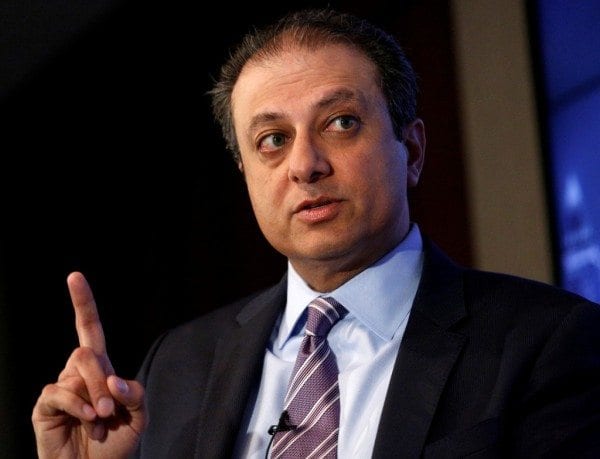
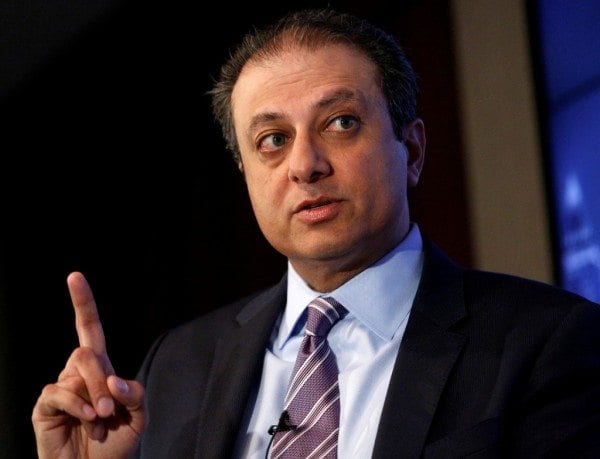
    New York federal prosecutor Preet Bharara said on March 11 that he had been fired, one day after the Justice Department asked him and 45 other federal prosecutors who had served under President Obama to submit their resignations. (Reuters)
    By Devlin Barrett, Sari Horwitz and Robert Costa March 11 at 3:08 PM
    Preet Bharara, one of the most high-profile federal prosecutors in the country, said he was fired Saturday after refusing to submit a letter of resignation as part of an ouster of the remaining U.S. attorneys who were holdovers from the Obama administration, according to people familiar with the matter.

    Bharara’s dismissal was an about-face from President Trump’s assurances to the Manhattan-based prosecutor in November, weeks after the election, that he wanted him to stay on the job following a meeting at Trump Tower, according to Bharara.

    Two people close to Trump said the president’s chief strategist, Stephen K. Bannon, and Attorney General Jeff Sessions wanted a clean slate of federal prosecutors and were unconcerned about any perception that the White House changed its mind about Bharara. The removal of former president Barack Obama’s federal prosecutors is about asserting who’s in power, the two said.

    Checkpoint newsletter

    Military, defense and security at home and abroad.

    The departure of Bharara, the U.S. attorney for the Southern District of New York, capped a confusing sequence of events, beginning Friday, when acting deputy attorney general Dana Boente began making calls to 46 prosecutors asking for their resignations by the end of the day. Requests for resignation are a normal part of a transition of power from one administration to another, although both the Bush and Obama administrations let their U.S. attorneys leave gradually.

    [The brash New York prosecutor who’s indicting left and right ]

    Bharara after meeting with Trump in 2016: ‘I agreed to stay on’

    Play Video0:38

    After meeting with President-elect Donald Trump at Trump Tower on Nov. 30, 2016, Preet Bharara, the former U.S. attorney for the Southern District of New York, said he agreed to stay remain in his role in the Trump administration. (C-SPAN)

    During Friday’s call with Bharara, the New York prosecutor asked for clarity about whether the requests for resignations applied to him, given his previous conversation with Trump, and did not immediately get a definitive answer, according to a person familiar with the exchange.

    ADVERTISING

    When asked Friday whether Bharara was also being asked for a resignation letter, one White House official not authorized to speak publicly said, “Everybody’s gone,” and would not engage further on the issue.

    On Saturday morning, when the administration had still not received Bharara’s resignation, Boente attempted to call the U.S. attorney to find out why, but the two men did not immediately connect, according to people familiar with the discussions.

    When they finally did speak shortly before 2:30 p.m., Boente informed Bharara that the order to submit his resignation indeed applied to him because he was a presidentially appointed U.S. attorney, according to a Justice Department official with knowledge of the conversation.

    Bharara asked Boente if he was firing him and Boente replied that he was asking him to submit his resignation, the official said.

    Minutes later, Bharara announced on Twitter that he was out. “I did not resign,” Bharara said. “Moments ago I was fired. Being the US Attorney in SDNY will forever be the greatest honor of my professional life.”

    Bharara sent an email to his staff, asserting again that Boente had removed him from his job.

    Sessions asks 46 Obama-era U.S. attorneys to resign

    Play Video0:51

    U.S. Attorney General Jeff Sessions has asked the remaining 46 chief federal prosecutors left over from the Obama administration to resign “in order to ensure a uniform transition,” the Justice Department said (Reuters)

    “Needless to say it is personally very sad for me,” the note said. “This is the greatest place on Earth and I love you all. Even on a day when your U.S. Attorney gets fired it is still Thanksgiving because you all still get to do the most honorable work there is to do.”

    Bharara added that the office “could not be in better hands” than with the deputy U.S. attorney for the Southern District of New York, Joon H. Kim, whom he called “a tremendous leader and public servant and who loves the office just as much as I do.”

    Within the Justice Department, some are questioning whether a recent phone call from Trump to Bharara may have contributed to the decision to remove the Obama holdovers, according to a person familiar with the matter.

    On Thursday, a White House aide called and left a message for Bharara, saying the president wanted to speak with him, though the prospective topic of discussion was unclear. Bharara consulted his staff and determined that it would probably be a violation of Justice Department protocols for him to speak directly to the president, this person said. That protocol exists in order to prevent political interference — or the appearance of political interference — with Justice Department work.

    Bharara then contacted the chief of staff for the attorney general, Jody Hunt, told him of his own determination, and the two agreed that it would be a violation of the Justice Department protocol for Bharara to call the president back. Bharara then called the White House staffer who had left the message and said he wouldn’t be talking to the president, and explained why, this person said.

    It’s unclear whether the Trump call and its aftermath had anything to do with Friday’s decision.

    Bharara, who was born in India and came to the United States as a child, had a particularly powerful perch in the criminal justice system. The Southern District of New York has 220 assistant U.S. attorneys, making it one of the largest federal prosecutors’ offices in the country.

    During his tenure, Bharara indicted 17 prominent New York politicians for malfeasance — 10 of them Democrats. Along with his bipartisan prosecutions, ­Bharara developed a reputation for being tough on insider trading, although he was criticized for the lack of prosecutions that followed the financial crisis.

    Bharara was an outspoken man in a job that has been held by vocal and politically aspirant predecessors, including former New York mayor Rudolph W. Giuliani and FBI Director James B. Comey.

    There is no indication that the ouster of Bharara stems from a disagreement about a particular case or investigation. While the FBI has been conducting a counterintelligence inquiry looking for evidence of contacts between agents of the Russian government and Trump campaign advisers, and a former campaign adviser to Trump has been part of an investigation into possible overseas corruption, there have been no signs that Bharara’s office has been involved in either of those probes or any other inquiries that might touch on the president or people close to him.

    [Preet Bharara said he wanted to be a U.S. attorney “forever.” Well, he was just fired.]

    On Wednesday, watchdog groups asked Bharara to probe whether Trump has received payments or other benefits from foreign governments through his business interests in violation of the Constitution’s emoluments clause, which prohibits top officials from receiving favors or payments from foreign governments.

    The president complained on Twitter earlier this month that Obama had ordered wiretapping of Trump Tower during the election season — an accusation that multiple federal law enforcement officials have said is untrue — partly because presidents cannot order the FBI to wiretap Americans, and also because no such surveillance was undertaken. But Bharara was not drawn into that debate, which principally revolved around the Justice Department and FBI headquarters.

    Initially after Trump won the presidency, it looked as if Bharara’s position was safe. Trump brought up Bharara’s name in November during a phone conversation with Sen. Charles E. Schumer (D-N.Y.), whom the president-elect was calling to congratulate on becoming the leader of the Senate Democrats, according to people familiar with the matter. In that conversation, Trump said he was thinking of keeping Bharara in his job, these people said. Schumer praised Bharara and Trump then arranged a meeting with Bharara at Trump Tower.

    During the conversation, Trump told Bharara to call ­Sessions, his nominee for attorney general, who also asked Bharara to stay, people familiar with the conversation said.

    When Bharara was leaving, according to one person, he asked the president-elect what he should tell the reporters in the lobby. Trump told Bharara to tell them he was staying on, this person said.

    Bharara told reporters afterward that the president-elect, “presumably because he’s a New Yorker and is aware of the great work that our office has done over the past seven years,” asked to meet with him and discuss whether he would remain in his position.

    “We had a good meeting,” Bharara said. “I agreed to stay on.”

    Matt Zapotosky, Rosalind S. Helderman, Cleve R. Wootson Jr., Amy B Wang and Ellen Nakashima contributed to this report.


  • Trump lays groundwork to change U.S. role in the world

    Trump lays groundwork to change U.S. role in the world

    National Security

    Even at GOP retreat, Trump sets the agenda

    At the Republican retreat for members of Congress in Philadelphia, President Trump’s tweets, speeches and executive orders derailed the GOP’s plan to agree upon a replacement for Obamacare and set other policy initiatives. (Video: Jayne Orenstein/Photo: Getty Images/The Washington Post)

    Obamacare and set other policy initiatives. (Video: Jayne Orenstein/Photo: Getty Images/The Washington Post)

    By Karen DeYoung and Philip Rucker January 26 at 8:25 PM

    President Trump began this week to reshape the U.S. role in the world, laying the groundwork, in a series of planned and signed executive actions and statements, for the “America first” foreign policy on which he campaigned.

    Already, Trump has mandated construction of a border wall with Mexico and a clampdown on local immigration enforcement. Other directives drafted but not yet signed would halt all refu­gee admissions and entry into the United States of citizens from seven Muslim-majority countries deemed terrorist hotbeds; declare a moratorium on new multilateral treaties; and mandate audits of U.S. funding for international organizations, including the United Nations, with a view toward cutting U.S. voluntary contributions by 40 percent.

    Additional pending orders, copies of which were obtained by The Washington Post, call for a review of cyber capabilities and vulnerabilities, in advance of what is expected to be greater use of offensive powers; and direct the Pentagon to quickly develop plans to reduce spending on items not deemed “highest priority,” while ramping up programs to expand the armed forces and modernize the U.S. nuclear deterrent.

    Checkpoint newsletter

    Military, defense and security at home and abroad.

    [Read the draft of the executive order to rebuild the armed forces]

    Another draft order under consideration would direct the State Department to review its designations of foreign terrorist organizations, allowing it to add the Muslim Brotherhood to the list, according to an administration official who was not authorized to discuss it. The group’s status as a legitimate political movement vs. a terrorist group is controversial in the Middle East. Such a listing would please some, including Egypt and Saudi Arabia, but could anger others, such as Turkey and Qatar.

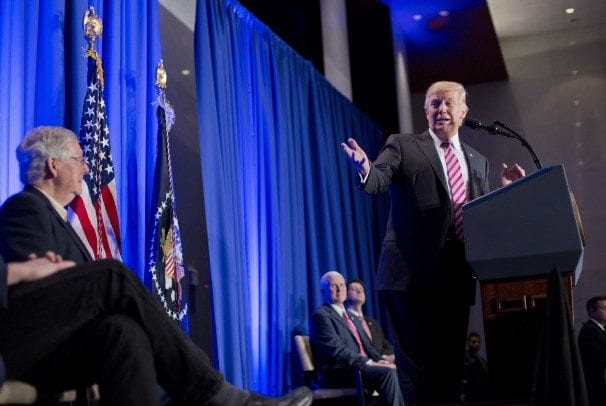
    See what President Trump has been doing since taking office
    View Photos

    The new president is expected to make his mark on an aggressive legislative agenda.

    Trump could sign some of these orders as early as Friday during a scheduled visit to the Pentagon. The White House declined to comment on the directives.

    If implemented, these initiatives and other steps Trump has previewed will usher in a new era of American foreign policy, after decades of bipartisan agreement that the United States has a responsibility to spread democracy and stand up for the oppressed, and that it would prosper when a united, free world prospered.

    In the policies Trump has outlined, there are no apparent trade-offs to be made that balance short-term American advantage with global goals benefiting the United States over the longer term. Instead, as a policy posted on the White House website on Inauguration Day put it, “The world will be more peaceful and more prosperous with a stronger and more respected America.”

    “Every decision on trade, on taxes, on immigration, on foreign affairs will be made to benefit American workers and American families,” Trump said in his inauguration speech. “We must protect our borders from the ravages of other countries making our products, stealing our companies and destroying our jobs. Protection will lead to great prosperity and strength.”

    [Read the draft of the executive order on treaties ]

    Trump sees himself as the protector of an American fortress and disrupter of a world that is growing more calamitous and dangerous by the day. “The world is a total mess,” he said Wednesday in an interview with ABC News.

    At times, it is difficult to determine whether he is laying down the law or establishing a negotiating position. Having pushed Mexican President Enrique Peña Nieto into a corner on funding the border wall, the administration indicated Thursday that it considered Mexico’s cancellation of a presidential visit to Washington a mere postponement.
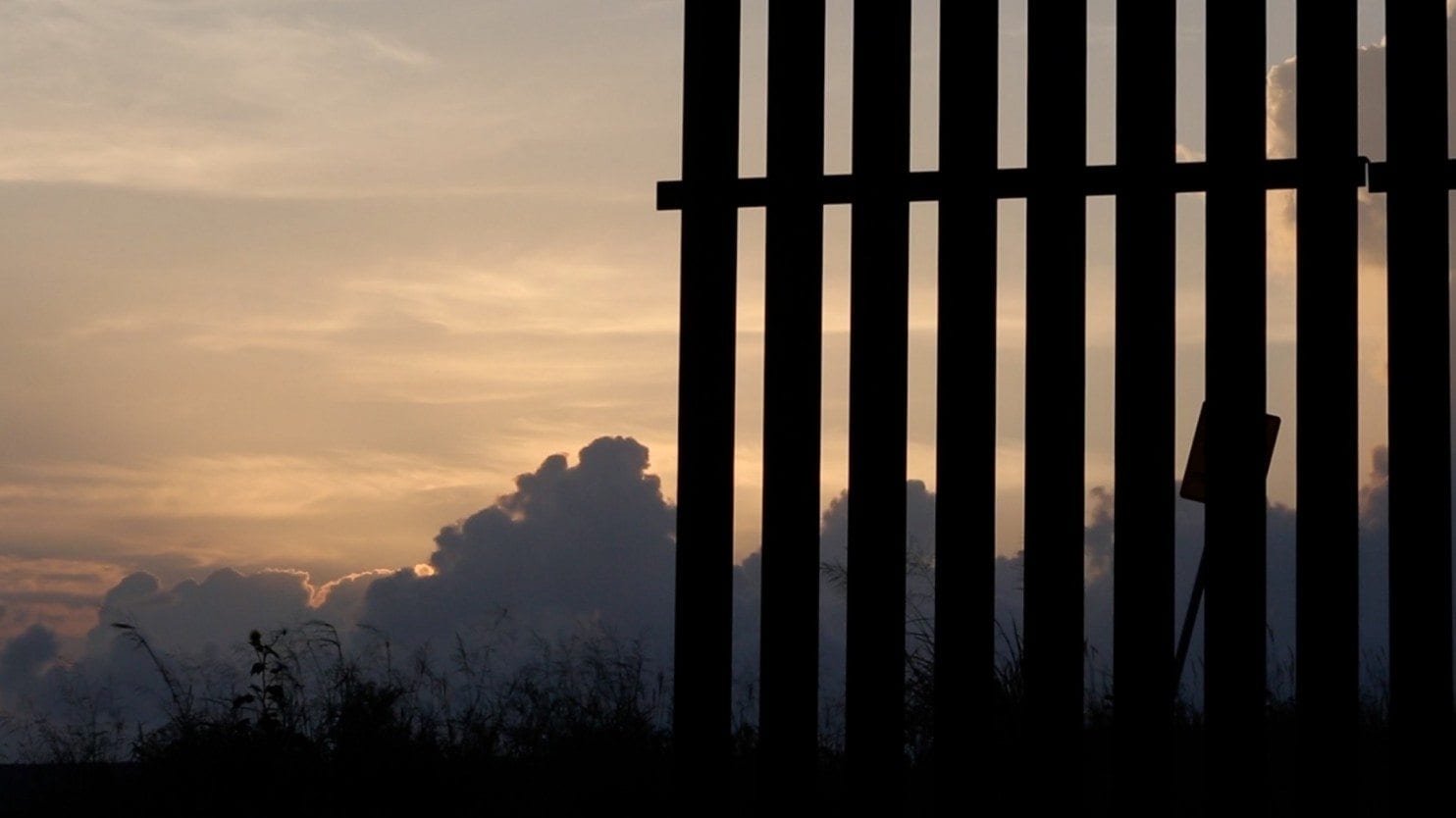
    5 challenges Trump may face building a border wall View Graphic

    Kori Schake, a former national security official in the George W. Bush administration who opposed Trump’s candidacy, said the executive orders are already causing political damage with U.S. allies. “It’s consistent with the way in which President Trump creates chaos and moves blithely on,” she said.

    Many of Trump’s ideas are not new, although they draw from a wide political spectrum. Trump’s reimagining of a new 21st-century architecture for world order, including a sharp reduction in U.S. participation in international institutions, has been a rallying cry for conservatives for years.

    [Read the draft of the executive order on U.S. funding]

    His words and actions reflect “a view that the status quo that has essentially grown up over the last 70 years costs the U.S. more than it benefits it,” said Richard N. Haass, president of the Council on Foreign Relations and a senior official in the George H.W. Bush administration. That view, extending from trade policy to traditional alliances, Haass said, “is fundamentally flawed in its assumption that American involvement and leadership in the world has cost us more than it’s gained us, but that nonetheless appears to be their vision.”

    The United Nations, with its welter of sometimes obscure sub-organizations, and the platform it often provides for criticism of the United States, has been a long-standing target.

    Two of the treaties that Trump’s proposed executive order makes particular mention of as forcing adherence to “radical domestic agendas” — the Convention on the Elimination of All Forms of Discrimination Against Women and the Convention on the Rights of the Child — are traditional bull’s eyes. Like many other U.N.-generated treaties, they have never been ratified by the United States.

    Trump proposes internal high-level committees to examine multilateral treaties, with a view toward leaving them, as well as a 40 percent cut in funding for international organizations whose agendas are “contrary to American interests.” It is unclear whether the intent is to cut funds for U.N. activities such as peacekeeping forces­ and humanitarian programs, as well as those, already targeted by Trump, that support Palestinians and other groups out of favor with the new administration.

    John B. Bellinger III, who served as legal counsel to both the National Security Council and the State Department in the George W. Bush administration, said the treaty examination was based on a “false premise . . . that the United States has become party to numerous multi­lateral treaties that are not in the United States’ interest.”

    There are “many hundreds of multi­lateral treaties that help Americans every day in concrete ways,” he said. Without them, “Americans could not have our letters delivered in foreign countries; could not fly over foreign countries or drive on foreign roads using our state driver’s licenses; could not have access to a foreign consular official if we are arrested abroad; could not have our children returned if abducted by a parent; and could not prevent foreign ships from polluting our waters.”

    While mandates for building a border wall, boosting immigration law enforcement and barring refugees will take immediate effect, others buy time by establishing committees and reviews.

    The draft Pentagon order begins by stating, “It shall be the policy of the United States to pursue Peace Through Strength.” It directs Defense Secretary James Mattis to produce a National Defense Strategy — something virtually every administration regularly does — by the beginning of 2018.

    There is little apparent controversy in the draft executive order to strengthen cybersecurity, a six-page document that in tone and substance could have been written by the Obama administration. It calls for no bold initiatives but rather for review of areas Trump’s predecessor had already scrutinized.

    [Read the draft of the executive order on cybersecurity]

    One line in the proposed order appeared to signal that the new administration might want to reorganize agencies or boost legal authorities to better protect the country’s civilian government networks and critical infrastructure.

    Even as Trump sets direction with executive orders, the White House is trying to exert direct control over policymaking at federal departments and agencies. Although offices in many departments sit empty as Cabinet nominees await confirmation, and sub-Cabinet positions are not yet filled, senior advisers have been deployed from the West Wing as liaisons to some departments, to ensure the work that is being done is in keeping with White House priorities.

    Of the suggestion that at least some of Trump’s moves so far may be largely symbolic and eventual policies could become more traditional, Schake said, “Oh my God, that’s the hopeful interpretation — that he’s trying to take rapid symbolic gestures that will please his base and that the policy details can get worked out subsequently when he has a Cabinet in place.”

    “The downside, of course, is it brings all of the diplomatic and economic downsides of having taken the policy action, even if it’s only a symbolic gesture,” she said.

    Ellen Nakashima, Missy Ryan, Dan Lamothe and Thomas Gibbons-Neff contributed to this report.
  • Trump’s foreign policy revolution

    Trump’s foreign policy revolution

    See what President Trump has been doing since taking office

    View Photos

    The new president is expected to make his mark on an aggressive legislative agenda.

    By Charles Krauthammer Opinion writer January 26 at 7:19 PM

    The flurry of bold executive orders and of highly provocative Cabinet nominations (such as a secretary of education who actually believes in school choice) has been encouraging to conservative skeptics of Donald Trump. But it shouldn’t erase the troubling memory of one major element of Trump’s inaugural address.

    The foreign policy section has received far less attention than so revolutionary a declaration deserved. It radically redefined the American national interest as understood since World War II.

    Trump outlined a world in which foreign relations are collapsed into a zero-sum game. They gain, we lose. As in: “For many decades, we’ve enriched foreign industry at the expense of American industry; subsidized the armies of other countries” while depleting our own.

    Opinions newsletter

    Thought-provoking opinions and commentary, in your inbox daily.

    And most provocatively this: “The wealth of our middle class has been ripped from their homes and then redistributed all across the world.” Bernie Sanders believes that a corrupt establishment has ripped off the middle class to give to the rich. Trump believes those miscreants have given away our patrimony to undeserving, ungrateful foreigners as well.

    JFK’s inaugural pledged to support any friend and oppose any foe to assure the success of liberty. Note that Trump makes no distinction between friend and foe (and no reference to liberty). They’re all out to use, exploit and surpass us.

    [Newt Gingrich: Margaret Thatcher is the real model for the Trump presidency]

    No more, declared Trump: “From this day forward, it’s going to be only America First.”

    Imagine how this resonates abroad. “America First” was the name of the organization led by Charles Lindbergh that bitterly fought FDR before U.S. entry into World War II — right through the Battle of Britain — to keep America neutral between Churchill’s Britain and Hitler’s Reich. (Then came Pearl Harbor. Within a week, America First dissolved itself in shame.)

    Not that Trump was consciously imitating Lindbergh. I doubt he was even aware of the reference. He just liked the phrase. But I can assure you that in London and in every world capital they are aware of the antecedent and the intimations of a new American isolationism. Trump gave them good reason to think so, going on to note “the right of all nations to put their own interests first.” America included.

    Some claim that putting America first is a reassertion of American exceptionalism. On the contrary, it is the antithesis. It makes America no different from all the other countries that define themselves by a particularist blood-and-soil nationalism. What made America exceptional, unique in the world, was defining its own national interest beyond its narrow economic and security needs to encompass the safety and prosperity of a vast array of allies. A free world marked by open trade and mutual defense was President Truman’s vision, shared by every president since.

    Until now.

    Some have argued that Trump is just dangling a bargaining chip to negotiate better terms of trade or alliance. Or that Trump’s views are so changeable and unstable — telling European newspapers two weeks ago that NATO is obsolete and then saying “NATO is very important to me” — that this is just another unmoored entry on a ledger of confusion.

    But both claims are demonstrably wrong. An inaugural address is no off-the-cuff riff. These words are the product of at least three weeks of deliberate crafting for an address that Trump’s spokesman said was intended to express his philosophy. Moreover, to remove any ambiguity, Trump prefaced his “America First” proclamation with: “From this day forward, a new vision will govern our land.”

    [Trump is his administration’s own worst enemy on foreign policy]

    Trump’s vision misunderstands the logic underlying the far larger, far-reaching view of Truman. The Marshall Plan surely took wealth away from the American middle class and distributed it abroad. But for a reason. Altruism, in part. But mostly to stabilize Western Europe as a bulwark against an existential global enemy.

    We carried many free riders throughout the Cold War. The burden was heavy. But this was not a mindless act of charity; it was an exercise in enlightened self-interest. After all, it was indeed better to subsidize foreign armies — German, South Korean, Turkish and dozens of others — and have them stand with us, rather than stationing even more American troops everywhere around the world at greater risk of both blood and treasure.

    We are embarking upon insularity and smallness. Nor is this just theory. Trump’s long-promised but nonetheless abrupt withdrawal from the Trans-Pacific Partnership is the momentous first fruit of his foreign policy doctrine. Last year the prime minister of Singapore told John McCain that if we pulled out of the TPP “you’ll be finished in Asia.” He knows the region.

    For 70 years, we sustained an international system of open commerce and democratic alliances that has enabled America and the West to grow and thrive. Global leadership is what made America great. We abandon it at our peril.

    Read more from Charles Krauthammer’s archive, follow him on Twitter or subscribe to his updates on Facebook.

    Read more on this topic:

    Sebastian Mallaby: Trump says Europe is in trouble. He has a point.

    Anne Applebaum: Trump’s dark promise to return to a mythical past

    David Ignatius: Trump could smash the old world order — and replace it with what?

    Charles Krauthammer: What happened to the honeymoon?

    The Post’s View: In his inaugural address, Trump leaves America’s better angels behind