Blog

  • The World War II: rethink but not falsify

    The World War II: rethink but not falsify

    Amidst the global turbulence and the era of information there is a high risk to lose the historical heritage both material and the one that’s in our memories. For instance, the causes and the consequences of the World War II are often being retold in not a very true way – each country and each side has their own truth while the current confrontation between the West and the East adds some facts, often without any proof.

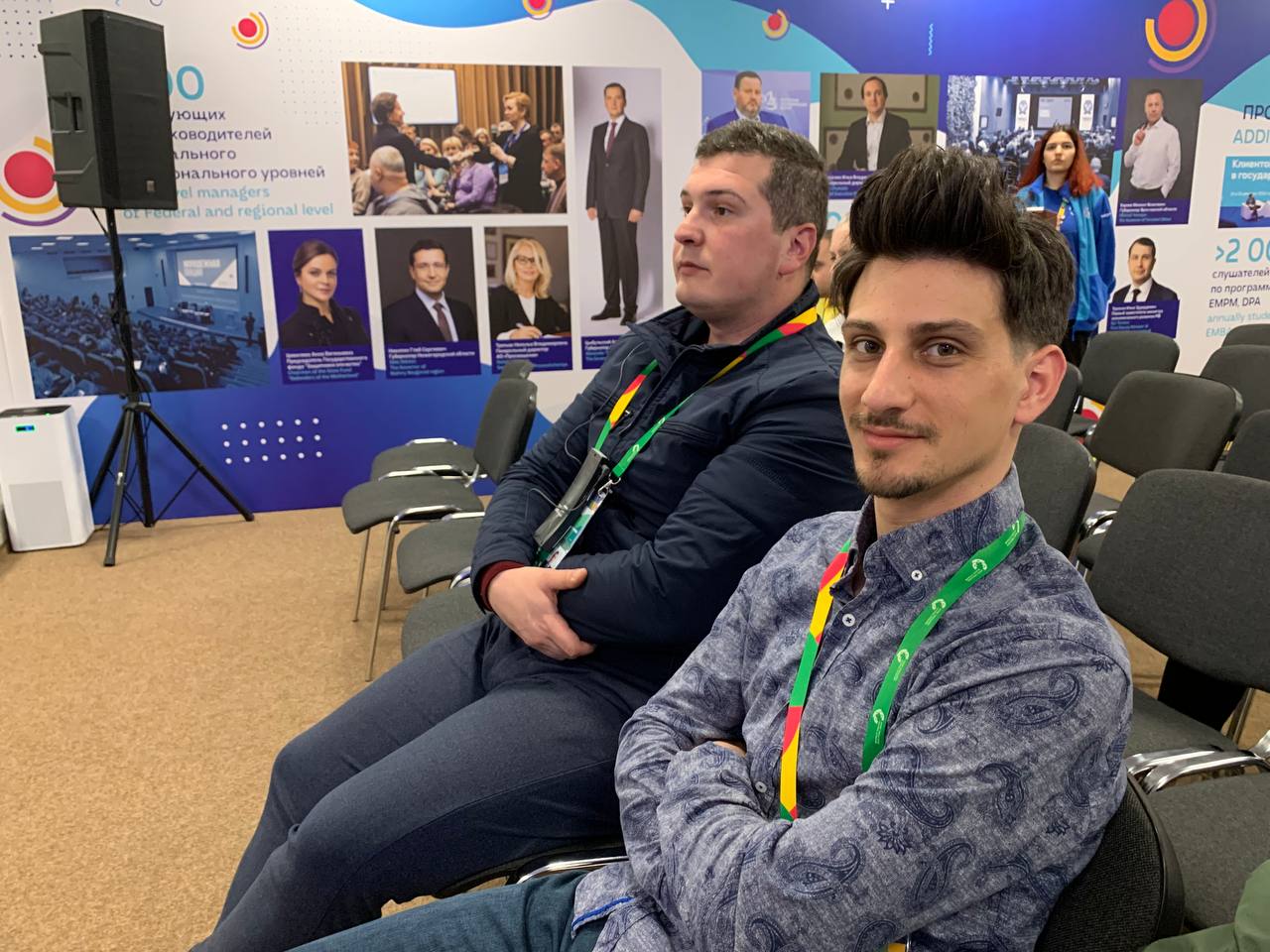
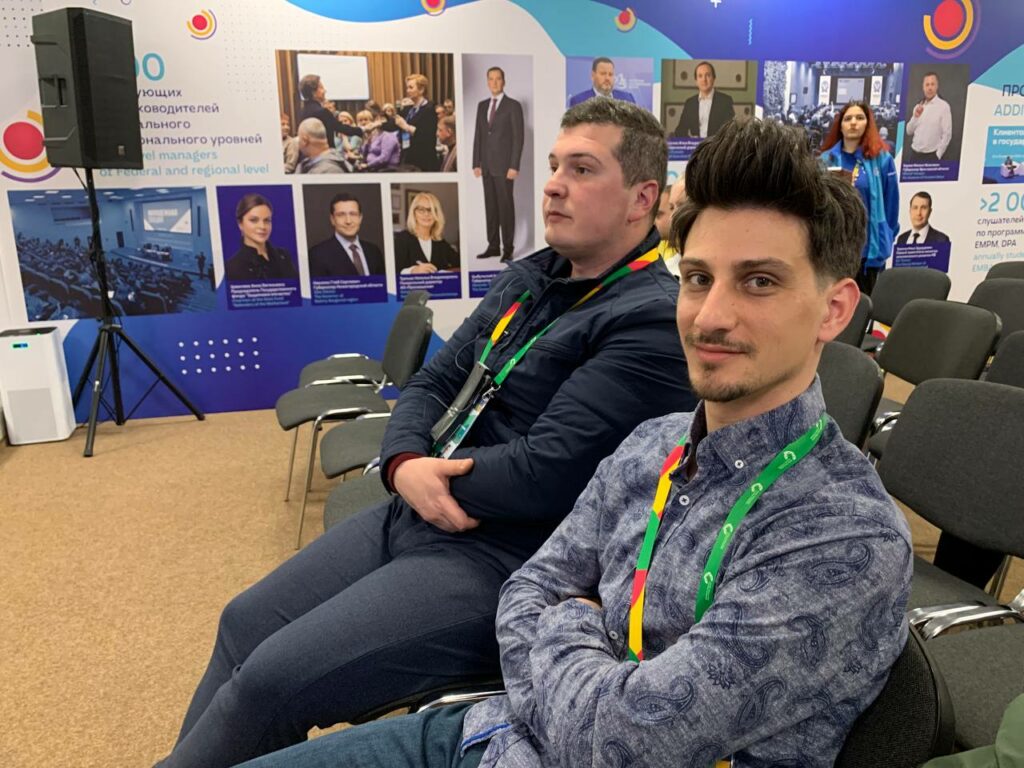
    To save the history and keep it undeformed international experts from the Western and Eastern Europe, the Balkans and Russia gathered at the World Youth Festival for the discussion.

    The event was also attended by teachers and students of Russian universities, as well as invited representatives from Spain, Serbia, Moldova and Kyrgyzstan, who specialize in the history of the Second World War.

    During the discussion, Iker Bas, a leader of the organization Asociacion Sanchode Beurko Elkartea (Spain, involved in military reconstruction), said that, despite the tragedy of the civil war in Spain during the Second World War, it was difficult for him, like other Spaniards, to understand the suffering the peoples of the USSR came through, the people, who paid for the liberation of Europe with millions of lives. This feat of self-sacrifice of the Russian people must not be forgotten. Spain also respects history and hopes for cooperation in preserving the memory of The World War II.

    According to Aleksa Gajic, the coordinator of the “Immortal Regiment” action in Belgrade, the Serbs remember and appreciate the fact that it was the Red Army that made a key contribution to the defeat of Nazi Germany and its allies in the European theater of operations. At the same time, currently in the countries of Europe, mainly the Eastern Europe, there is a growing trend towards the fight against monuments to Soviet soldiers, which requires censure and condemnation, including the involvement of international organizations. In Serbia itself, the People’s Liberation War of Yugoslavia holds the same place in history and culture as the World War II for the peoples of the USSR.

    Sergey Danilyuk, the head of the military-historical association of Moldova “DOT” and the head of the national search center of Kyrgyzstan “Memory of the People” Romanova Tatyana focused the attention of those present on the lessons that future generations should learn from the tragedy of the Second World War. At the same time, it is ignorance and distortion of history that currently lead to conflict situations, including military actions.

    In general, the dialogue that took place made it possible to determine the prospects for further joint activities to preserve the historical memory of the victory over Nazism in the 20th century.

    The youth today must understand the conditions under which the post-war world order took shape and thanks to which, the only wish for a peaceful sky has been very clear for several decades of peaceful life.

    The festival which brought together participants from 188 countries, became a platform where representatives of other states shared their experience in preserving the historical memory of the Second World War.
  • Why No Turkish

    Why No Turkish

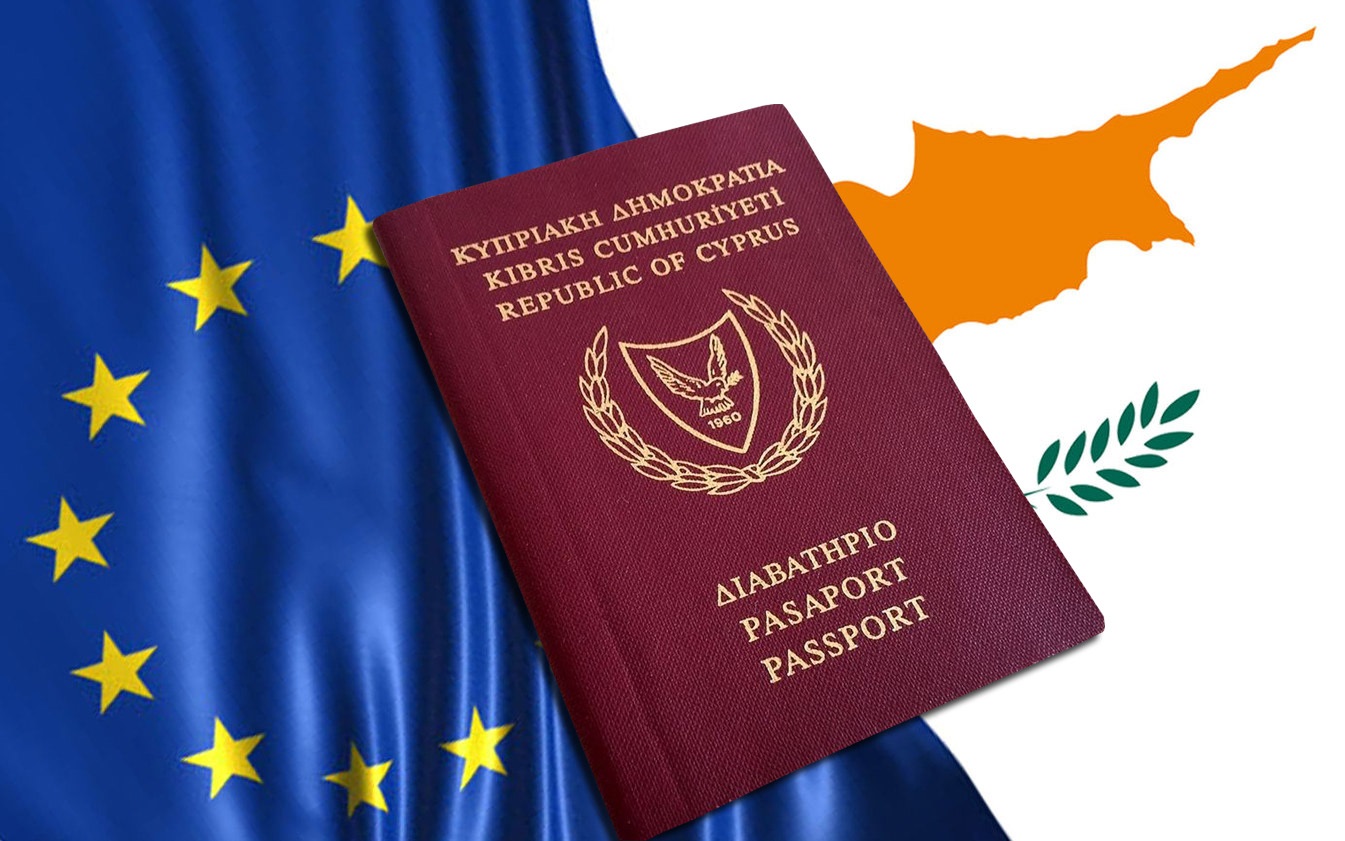
    The European Union’s pressure on the Greek Cypriot Administration on the issue of golden passports has started to yield results. The Greek Cypriot Administration will no longer be able to hand out the so-called “Golden Passport” to anyone for its political and financial interests, because the Greek Cypriot Administration made an important change in December regarding naturalization. From now on, those who will be naturalized will first have to be able to speak, read and write Greek at level B1 according to international foreign language exam criteria. Depending on the situation, the slightly lower A2 level may also be accepted. It is not yet clear what this special “situation” is or will be.

    According to the amendment to the Citizenship law, which was published in the Official Gazette after the House of Representatives adopted the draft law approved by the Council of Ministers, a foreigner applying for citizenship of the so-called “Republic of Cyprus” can be naturalized on the condition that he or she has knowledge of the Greek language at level B1, as set out in the Common European Framework of Reference for Languages, based on language certificates at the level mentioned in the Decree.

    In addition to this, they will also be required to have “adequate knowledge of the basic elements of the contemporary political and social reality of the so-called “Republic of Cyprus”” and to pass an exam on this subject. This exam will be prepared, conducted and evaluated by a committee consisting of staff from the Greek Ministries of Education and Justice.

    If the candidates who will take the exam say, “Between 1963 and 1974, the Greeks attacked the Turkish Cypriots in order to ethnically cleanse the island of Cyprus, mercilessly killed hundreds of Turks, burned down their homes, looted their property, confiscated their livestock and crops, and forced the Turkish Cypriots to migrate en masse,” they will fail definitely. He/she can never become a citizen.

    If he/she says, what the members of the committee, all of whom are Greek Cypriots, want to hear and denigrates the Turkish Cypriots and Turkey, he/she will pass this so-called “History and Culture Exam” with a hundred percent. 

    But there is lawlessness and suspension of human rights involved. According to the Constitution of the so-called “Republic of Cyprus”, the valid official languages are Greek and Turkish, yet this amendment law does not include a sentence such as “being able to speak, read and write Greek or Turkish at B1 level”. The requirement is limited to knowing only and only “Greek”. The constitutional rights of Turkish Cypriots, which are clearly stated in the 1960 Constitution of the Republic of Cyprus, have not been taken into consideration at all. When have they ever been taken into consideration, and they will be taken into consideration this time too. If anything, the rights of the Greeks are the only valid ones.

    And they shamelessly expect miracles from Maria Holguin, the Personal Representative of the UN Secretary-General, and with the magic wand in her hand, to touch the parties in Cyprus and try every possible means and pray that the negotiations will start immediately from the place where in Crans Montana in 2017, the Greeks overturned the table – due to their maximalist demands and their Enosis dreams of annexing the island of Cyprus to Greece – in a way that, the map submitted at the meeting in 2017 in their pockets and the concessions made at that time will also be valid.

    Going back to citizenship, many of the Greek fans among us do not speak Greek. If the citizenship of Turkish Cypriots is to be revised in terms of knowing how to “speak, write and read Greek” at an adequate level, then they will be disillusioned.

    Oh, if you say vested rights!, we know how the Greeks took away all the rights of the Turks and did not even want to give them the right to breathe.

  • ARMENIAN DEPORTATION IS NOT A GENOCIDE….!

    ARMENIAN DEPORTATION IS NOT A GENOCIDE….!

    “The fact that there had ben massacres ( of Armenians) is obvious and clear. Everyone agrees on this. Essentially, nobody denies this fact. The important issue here is to define it ( as a genocide or not ). We will discuss this issue at meetings within our party to reach a decision jointly at the end of these discussions and will declare our decision openly ” said the newly appointed Minister of European Affairs Ali Haydar Konca of the HDP Party, of the newly established government which will rule until the Nov. 1st, 2015 elections, at the press meeting on his first day as Minister of European Affairs.

    Prof. Dr. S. Rıdvan Karluk
    Turgut Özal Üniversitesi

    Translated by: Şadi Dinlenç, New York
    21 October 2015

  • Americans Sailing to a Muslim Country

    Americans Sailing to a Muslim Country

    It has been said that cruising is the art of doing boat work in exotic locals and honestly that’s not far from the truth. Atticus 2 is in super good shape, but all boats are in constant need of routine maintenance. Salt water, fresh water, and UV rays are constantly doing everything they can to destroy seagoing boats and extreme motion means that any week link can and will be exposed at the worst possible moment. So now is the time to for us to get on top of our preventative maintenance and there are still a handful of improvements that we’re hoping to make as well.

    We decided to spend the winter at D-marin, Turgutreis in Turkey for several reasons. The winters here is mild, Turkey is renown for having skilled labor at reasonable prices, its outside of the Schengen region so we can recharge our Schengen Visas, but more than anything we’ve been told by several other sailors that Turkey is their favorite country in the Med. It’s such a unique place considered a transcontinental country, not quite a part of Europe, and not quite a part of Asia. And that’s exactly how the culture feels, it’s a blend of two extremely different places. Turkey is one of the most secular muslim majority countries in the world. It’s now home to two of the seven wonders of the ancient world. And for centuries, the Ottoman Empire was the preeminent power in the Mediterranean.

    So this week we’re going to get to know this fascinating place before we hunker down to start doing boat projects

  • We Must Keep the Memory and Dream Alive To Recover Artsakh and Western Armenia

    We Must Keep the Memory and Dream Alive To Recover Artsakh and Western Armenia

    There is a dispute among those who want to struggle for the recovery of Artsakh and those who say that Artsakh is lost forever and that we should forget about it. The latter shameful position is promoted by the current regime in Armenia which is responsible for losing Artsakh and is now doing everything possible to bury its memory.

    I would like to share with the readers my decades-long view on the recovery of Western Armenia and its parallels to actions we need to take for Artsakh.

    After every lecture I have given around the world on the Armenian Genocide and Western Armenia, some of the attendees immediately ask: what is the point of pursuing such a lost cause, particularly since the powerful Turkish military is occupying our historic lands?

    I respond by saying that the worst thing Armenians can do now is to forget about Western Armenia. That is the surest way of losing forever our Armenian territories.

    In addition to doing everything possible now, Armenians need to transmit to the next generation our demands for Artsakh and Western Armenia in order to keep the dream alive. If we don’t, our future generations, not knowing anything about our historic lands, will have no idea that they belong to us. Consequently, even if someday the geostrategic situation on the ground changes and an opportunity arises to recover our lost lands, our future generations will not show any interest in them.

    Remember that for over 2,000 years, the Jewish people had lost their homeland and were dispersed throughout the world. The succeeding Jewish generations passed on the knowledge of their homeland to their offspring. For more than 2,000 years, parents transmitted the memory of Jerusalem and Israel to their children and they in turn passed it on to their children, and so on. They did not forget their roots and history while living in exile in Russia, Europe and elsewhere. They repeatedly told their children and grandchildren, ‘next year in Jerusalem!’ Two thousand years later, when the opportunity arose to recover their lands, they took advantage of it and realized their long-held dream. Palestinians, who were and still are forcefully displaced from their lands, are in a similar situation. They too are struggling to keep their dream alive and are proclaiming the right of return to their ancestral homes.

    If Jewish people can keep their dream of returning to their homeland for 2,000 years, why can’t Armenians keep their dream alive of returning to Artsakh and Western Armenia someday? Armenians should tell their children and grandchildren: ‘next year in Shushi’ and ‘next year in Van’.

    The question is: how can Armenians return to their lands someday if powerful enemies are occupying Artsakh and Western Armenia? We should not forget that nothing remains constant forever. There is not a single country in the world that has had the same boundaries since the beginning of history. Over the years, some countries have enlarged their borders, while others lost their territories. Some have become large empires, while others have disappeared from the face of the earth. But one thing is clear: No one can claim that today’s boundaries of Azerbaijan and Turkey will remain the same forever. Just 100 years ago, the vast and powerful Ottoman Empire was reduced to the much smaller territory of the Republic of Turkey. Even though it is not possible to predict the exact date when the boundaries of Azerbaijan and Turkey will change, they will certainly not remain the same. How will such changes come about? There are several scenarios, such as regional wars, even world war, civil war, and nuclear or other types of disasters. Such events have happened in the past and will surely happen again in the future.

    When changes on the ground do take place, will future generations of Armenians know and have the memory that Artsakh and Western Armenia are part of their historic homeland or will they be clueless, having never heard of Shushi and Van? If they are deprived of that knowledge, when opportunities arise in the future, even if an unlikely benevolent Azeri or Turkish leader returns those lands to our grandchildren, they will not be interested in them, since they had never heard of them.

    In conclusion, my advice is to keep the dream alive. While we are deprived of our lands due to the actions of our enemies, it is up to us not to lose the memory and dream of someday returning to our lands. Let’s pass on our demands to future generations. The enemy took away our lands, but did not and cannot take away our memory. By forgetting about our historic lands, we ourselves will be helping our enemies put the final stone on the grave of our cause!

  • Despite His Denials, Aliyev is Upset By International Criticism of Azerbaijan

    Despite His Denials, Aliyev is Upset By International Criticism of Azerbaijan

    Pres. Ilham Aliyev of Azerbaijan repeatedly states that he ignores all international criticisms regarding his violations of the human rights of his own citizens, war crimes by his soldiers, and ethnic cleansing of Artsakh Armenians. Aliyev tries to cover up these violations and crimes through ‘Caviar diplomacy,’ by providing billions of dollars in bribes to various European officials.

    Anytime Azerbaijan has a problem with a foreign country, Europeans institutions or international courts, he puts on a brave face and acts like nothing has happened. He repeatedly says, “I don’t care who says what, I will do what I want.”

    I would like to cite a recent example of Aliyev being so bothered by such issues that, rather than ignoring them, has gone to unusual lengths to resolve them.

    This example has to do with France. In recent months, Aliyev has been quite outspoken with his harsh criticism of French President Emmanuel Macron for supporting Armenia. Aliyev has refused to meet with Pres. Macron and Prime Minister Nikol Pashinyan to discuss the Artsakh conflict. Aliyev also complained about France selling a number of armored personnel carriers to Armenia. While spending billions of dollars to arm Azerbaijan with the latest Israeli and Turkish drones and missiles, Aliyev dares to complain about Armenia procuring a limited number of arms to defend itself.

    Late last year, the Azerbaijan-France confrontation got more heated when Azerbaijan expelled two French embassy officials from Baku and in return France expelled two Azeri embassy officials from Paris.

    The Intelligence Online website reported that, according to its confidential sources, Azerbaijan’s intelligence services asked Mossad, Israel’s Institute for Intelligence and Special Operations, to intervene with France to resolve their outstanding conflicts.

    According to confidential Mossad sources, Azerbaijan’s Foreign Intelligence Service (XKX), led by General Orkhan Sultanov, asked his counterpart in Israel to intervene with the General Directorate of External Security (DGSE) of France to deescalate the tension between Baku and Paris. Azerbaijan indicated that it would not want to worsen the existing dispute.

    However, the Azeri effort failed, as Mossad did not transmit the Azeri request to France, according to Intelligence Online sources. This was a delicate issue for Israel as it wanted on one hand to preserve its good relations with Azerbaijan, while on the other hand Israel’s intelligence agency did not want to attempt such mediation at a time when it was preoccupied with the conflict in Gaza and other Middle Eastern hot spots.

    Intelligence Online reported that Mossad enjoys a high degree of influence over Baku, since Israel uses the Azeri territory for its operations in Iran. When Mossad stole Iran’s nuclear documents from Tehran in 2018, Israel’s agents used Azerbaijan’s border to flee from Iran. In return, Mossad greatly facilitated Azerbaijan’s acquisition of sophisticated weapons from Israel, which aided Baku, the second largest buyer of Israeli arms, to score victories in 2020 and 2023 in Artsakh. Just before the attack on Artsakh in September 2023, Azerbaijan’s security services informed the experts of Mossad and Unit 8200 (Aman) of Israel’s Military Intelligence Directorate of their plans and sought their advice.

    According to Intelligence Online, Mossad has in recent years brought its cooperation with the French External Security Directorate to a higher operational level, notably on Iran. The French Agency has also been mobilized over the situation in Gaza.

    The new director of French Intelligence Agency, Nicolas Lerner, met with David Barnea, the director of Mossad when the latter came to Paris in the last week of January. Attending the closed-door meeting on the Israeli-Palestinian issue were Abbas Kamel, head of the Egyptian General Intelligence Directorate (Mukhabarat el-amma); Ronen Bar, head of Shin Bet, Israel’s Internal Security Agency; William Barnes, head of the CIA; and Qatari officials.

    Intelligence Online importantly reported that the CIA let Baku know that it was not pleased with Azerbaijan’s conflict with French Intelligence, while France is trying to hinder Moscow in the Caucasus and needs Azerbaijan’s platform.

    Having exposed Aliyev’s deception about ignoring international pressure on Azerbaijan, my advice to the international community is to continue pressuring Aliyev to stop his unacceptable behavior. Otherwise, he will go on with his multitude of ever-increasing violations and crimes, causing great harm to Azeris and Armenians alike.

    Next week, I will expose another one of Aliyev’s efforts to counter international pressures on Azerbaijan, despite his denials of not paying any attention to them.