Blog

  • Pashinyan is a Greater Threat to Armenia’s Security, Than Artsakh’s Government-in-Exile

    Pashinyan is a Greater Threat to Armenia’s Security, Than Artsakh’s Government-in-Exile

    We all know the disasters that Prime Minister Nikol Pashinyan brought upon Armenia in addition to losing Artsakh due to his incompetence.

    We can cite Pashinyan’s many misguided actions and contradictory statements. Following his complete mismanagement of the military as Commander-in-Chief during the 2020 war, Pashinyan is now making sure that Armenians forget about the loss of Artsakh by wiping out its name from people’s memory.

    Pashinyan took no action to protect Artsakh Armenians’ right to live peacefully in their millennia-old homeland. He also made no advance preparations to house the over 100,000 refugees from Artsakh, even though he knew that after the 2020 war Artsakh Armenians would eventually flee to Armenia.

    To make matters worse, knowing that in future elections Artsakh Armenians will not vote for his political party, Pashinyan declared that they are not citizens of Armenia. These people for decades have had passports of the Republic of Armenia which were recognized not only by Armenia but also by foreign countries when they travelled overseas. Regrettably, thousands of Artsakh Armenians have since left Armenia for Russia to find shelter and work to be able to feed their families.

    Furthermore, Pashinyan refuses to meet with any Artsakh official and opposes Artsakh Armenians holding protests in Yerevan to complain about their dire conditions in Armenia.

    Here is the latest example of Pashinyan’s anti-Artsakh actions. Last week, the President of Artsakh Samvel Shahramanyan gave an interview to the French Le Figaro newspaper in which he said that the Republic of Artsakh continues to exist despite its occupation by Azerbaijan. He also stated that there is an Artsakh government-in-exile in Yerevan where his offices are located.

    Shahramanyan’s words angered Pashinyan who immediately lashed back and warned that legal action will be taken against all those who talk about an Artsakh government-in-exile. Without any evidence, Pashinyan accused the Artsakh leaders of threatening Armenia’s national security. Not understanding the meaning of the term ‘government-in-exile,’ Pashinyan said that there is only one government in Armenia and there cannot be a second government, even though nobody was talking about creating a second government. If Pashinyan had any knowledgeable advisers, they would have informed him that there are in many countries dozens of ‘governments-in-exile’ which are universally accepted under international law.

    In reality, the only person in Armenia who is threatening the security of Armenia is Pashinyan himself. Not only he has not defended the rights of Artsakh Armenians who are citizens of Armenia, but has also allowed Azerbaijan’s military to cross Armenia’s borders in 2021 and 2022. In addition, when Pres. Aliyev demanded that Armenia hand over to Azerbaijan four Armenian villages, Pashinyan warned their inhabitants that otherwise Azerbaijan will start a new war.

    In his harsh reply to Shahramanyan, Pashinyan also threatened to take appropriate measures so that “foreign forces do not use certain [Artsakh] circles as a threat to the security of Armenia.” It is regrettable that Pashinyan is falsely accusing Artsakh Armenians of being manipulated by foreigners.

    Pashinyan’s real problem is not Artsakh’s government-in-exile, but the fact that Artsakh Armenians are taking steps to keep the memory of Artsakh alive, which is highly embarrassing for him, since he is the one who gave it away. We have lost Artsakh to the enemy, but we should not erase it from our memory. We have an obligation not only to remember Artsakh, but transmit the dream of returning to Artsakh to the next generation. This is critical because if future generations do not know that Artsakh is an Armenian land, when the opportunity presents itself for its liberation, they will not take advantage of it, thus losing Artsakh forever, not because of what the enemy has done, but because of our own inaction.

    In the meantime, we can only regret that Armenia’s Prime Minister, wittingly or unwittingly, is doing Pres. Aliyev’s bidding by trying to suppress even the memory and dream of Artsakh. Furthermore, it will be shameful if Pashinyan, acting on his threats, were to order the arrest of Artsakh leaders in Armenia, thus joining Baku in holding Artsakh leaders as captives.

    With each passing day, Pashinyan is intensifying his anti-Armenian actions. How long will Armenians in Armenia and the Diaspora remain silent in the face of such self-defeating actions? When will Armenians wake up from their slumber, say ‘enough is enough’ and find a new competent leader to lead the nation out of this quagmire? Contrary to Pashinyan’s contention, Artsakh is not a closed issue. Armenians should not continue to sit with their arms folded and watch Armenia gradually disappear because of the misdeeds of one man!

    Finally, it would be shameful if Shahramanyan and other Artsakh officials were to be forced by Pashinyan to leave Armenia and relocate their government-in-exile to a foreign country.
  • Turkey’s 5th Generation Fighter: KAAN

    Turkey’s 5th Generation Fighter: KAAN

    Turkey’s TF Kaan 5th Generation Fighter

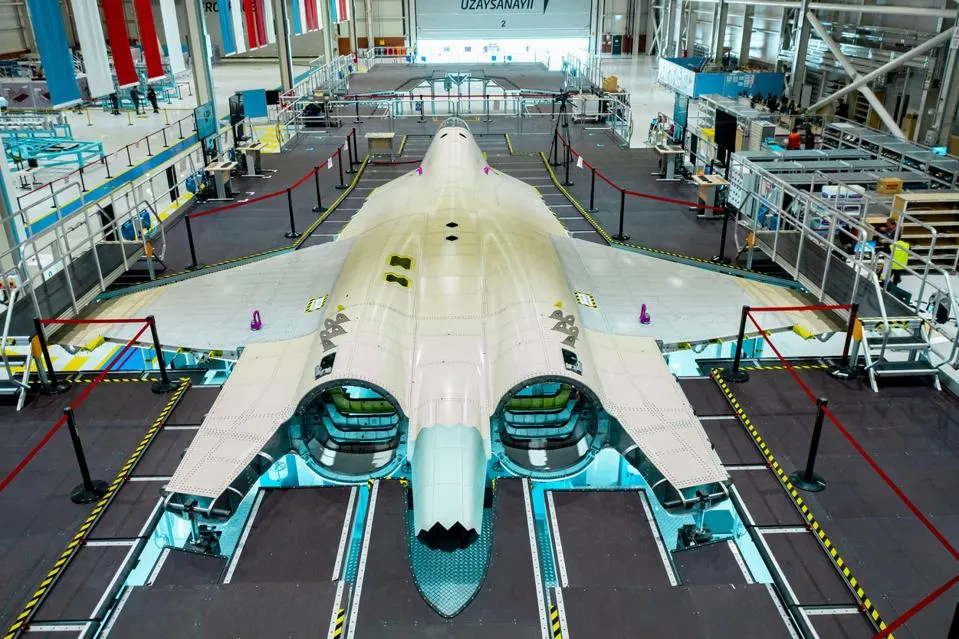
    On the 21st of February 2024, a new 5th-gen fighter took to the skies. The Turkish Aerospace Industries TF Kaan is Turkey’s first domestically built modern fighter, and as we shall see, it marks the beginning of an ambitious program to refit Turkey’s military with nationally produced equipment. So, what is the TF Kaan, and what is it likely to be capable of?

    _ Disclaimer _
    Original footage and recreated scenes may not be 100% accurate to the event being described but has been used for dramatic effect. This is because there may not have been original footage of a particular event available, or copyright prevents us from showing it. Our aim is to be as historically true as we can be given the materials available.

    Copyright disclaimer under fair dealing sections ss 40/103C, ss 41/103A,ss 42/103B of the Copyright Act which includes research, study, criticism, review, and reporting of news. Copyright remains with the respective owners. These videos are made for educational purposes only.

    The Australian Military Aviation History Association is a not-for-profit association with the intent of recording, preserving and promoting Australian military aviation history.

  • Putin’s Friend, Wanted by Ukraine, Perpetrator of Crimes in Karabakh

    Putin’s Friend, Wanted by Ukraine, Perpetrator of Crimes in Karabakh

    By Azer HASRET

    I believe that this information will be of interest to our esteemed readers. That’s why I’m reprinting it. The information below is not my investigation. It was published by one of the X users and as I see seems very trustworthy. I do deal with the issues in our region, especially with the problem of conflict between Armenia and Azerbaijan. I know quite well the roots of the Karabakh conflict as well. And I’m aware of Ruben Vardanyan’s illegal activities in the territory of Azerbaijan.

    For those who need a bit more information, Ruben Vardanyan alongside other criminal separatist elements of Karabakh was stopped and brought to Baku to be investigated. He is among those who fueled ethnic hatred between Armenians and Azerbaijanis. He was arrested after a 1-day local anti-terror operation led by the Azerbaijani military on September 19-20, 2023. Before that, he and others were called to lay down arms and cease. But they continuously ignored peaceful calls. Then Azerbaijan had to launch an anti-terror operation, which resulted in success.

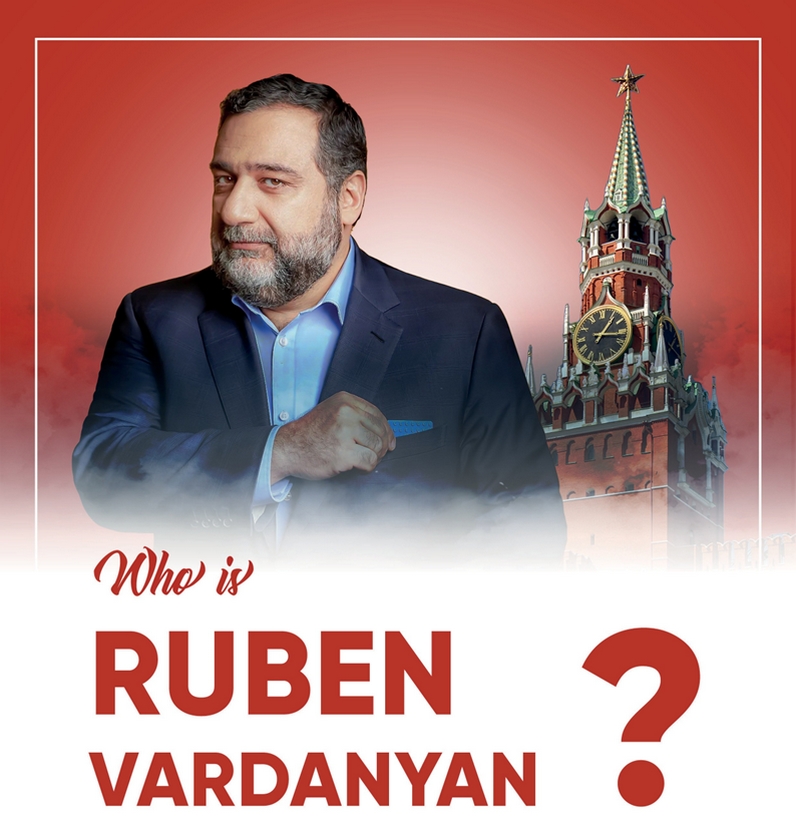
    Now let’s see who this friend of Russian President Vladimir Putin and a perpetrator of crimes even in Ukraine Ruben Vardanyan is.

    Backed by Kremlin Ruben Vardanyan was very sure that he will not be punished…

    GENERAL INFORMATION

    Ruben Vardanyan, born in Yerevan on 25 May 1968, is a Russian oligarch of Armenian descent, a billionaire, and former minister of the state of the so-called “Nagorno-Karabakh Republic”, an entity not recognized anywhere in the world.

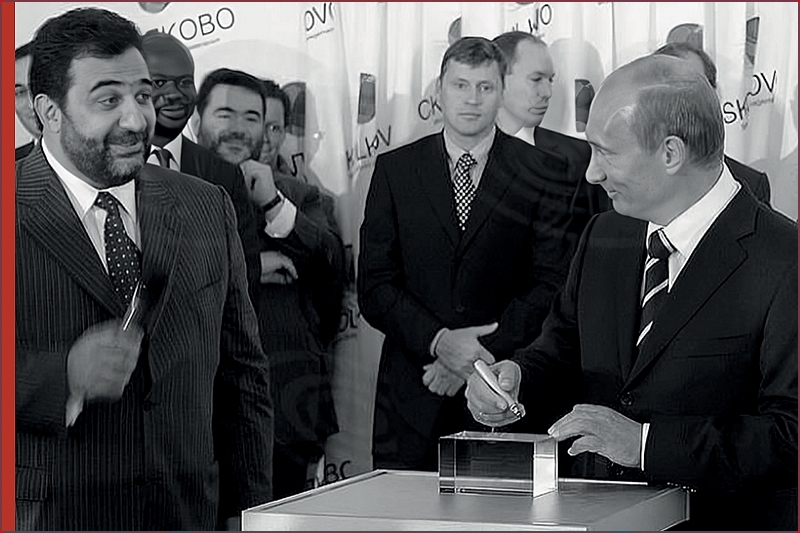
    Vardanyan was the initiator, one of the founders, and the first president of the Moscow School of Management in Skolkovo. President Vladimir Putin attended the groundbreaking ceremony for the campus in 2006.

    According to the Washington Times, Vardanyan is a friend of Vladimir Putin.

    Ruben Vardanyan with the Russian President Vladimir Putin

    Vardanyan was once the head and main partner of Troika Dialog, an investment company that created an extensive network of offshore companies involved in money laundering from Russia. Since 2011, Forbes has included him in its ranking of Russia’s richest people.

    In September 2021, Ruben Vardanyan renounced his Russian citizenship but continued to actively participate in Russian business, where his partner is the head of ROSTEC, Sergei Chemezov. Together they hold positions on the Board of Directors of KAMAZ OJSC and receive significant payments for their work. In addition, Vardanyan owns a stake in the car manufacturer KAMAZ through a consortium of investors in which ROSTEC also participates.

    In 2018, Vardanyan’s foundation and a subsidiary of ROSTEC invested in facial recognition technology by buying shares in the company. In addition, Vardanyan was a former co-owner of Avtovaz, but sold his stake for $180 million in 2013, remaining in partnership with ROSTEC.

    SKOLKOVO PROJECT

    Back in 2009, well-known Russian opposition actor Alexei Navalny (now dead) investigated Skolkovo’s financing scheme and noted in his blog that, despite Vardanyan’s statement about the charitable nature of Skolkovo, the school’s project was estimated at $500 million, with half of that amount coming from the founders’ donations and the remaining $250 million coming as a loan from Sberbank.

    “The loan was granted under unclear conditions and with unclear guarantees. Both the Skolkovo school and Sberbank categorically refuse to disclose the terms of the loan,” Navalny said.

    “The construction of the Skolkovo school was financed from the funds of the state-owned Sberbank, and no one was going to pay back the money, but Vardanyan and the rest of the gang of tycoons told the naive public and journalists that this was a very “cute” commercial project”, Navalny added.

    ORGANIZED CRIME AND CORRUPTION REPORTING PROJECT (OCCRP) ABOUT TROIKA DIALOG

    For more than two decades, Ruben Vardanyan was the face of Western-style investment banking as the founder of Troika Dialog during the birth of Russian capitalism, with successes that earned him billionaire status and ties to the Kremlin.

    The system dubbed the Troika Laundromat by the Organized Crime and Corruption Reporting Project, involved at least 75 offshore companies and exported about $4.8 billion between 2006 and 2013, often through fictional deals, with the help of a now-defunct Lithuanian bank, according to the OCCRP’s investigative journalists.

    Sergey Roldugin, a cellist and friend of Vladimir Putin, was among the ultimate recipients of the funds.

    While Vardanyan wasn’t personally accused of wrongdoing, he was president, chief executive officer, and chairman of Troika during this period, as well as its main partner. According to the OCCRP, he used the bank to pay millions of dollars in personal expenses.

    In March of 2019, the European Parliament members wrote a letter to the European Commission President Jean-Claude Juncker, in which they stated the need to introduce sanctions against the ex-owner of Troika Dialog Ruben Vardanyan and others linked to Troika Dialog’s “offshore eco-system”. The letter was signed by 22 MEPs representing Lithuania, Poland, Sweden, Germany, Great Britain, and other countries.

    VARDANYAN’S INVOLVEMENT IN AGGRESSION AGAINST UKRAINE

    Known for his active pro-Russian stance, Ruben Vardanyan was included in the Ukrainian “Peacekeeper” sanctions database for his assistance to the Russian invaders and his involvement in crimes committed by the Russian authorities against Ukraine and its citizens. He is also accused of denying and publicly justifying Russian aggression and financing military actions in the post-Soviet space. The list designates him as a person subject to “immediate arrest and transfer to the law enforcement authorities of Ukraine and NATO countries”.

    Bob Blackman, a Conservative member of the British parliament, said Vardanyan was an accomplice to aggression against Ukraine. “We have to understand that this is someone who has been sanctioned as part of Russia’s involvement in Ukraine, and it is believed that Russia is trying to strengthen its capabilities in terms of its war effort. His companies have been well used and well involved in the whole process of expanding the military presence in Ukraine and Nagorno-Karabakh”, the British MP said.

    Vardanyan also has links with Tehran, which is helping Moscow in its regular attacks on Ukraine. His ties to Iran can be traced through Russia’s Gorchakov Foundation, which organizes events in various countries, including Armenia, with government-approved speakers from Tehran.

    In September 2022, Vardanyan renounced his Russian citizenship to avoid Western sanctions, but Ukraine included him on its sanctions list for providing logistical support to the Russian occupation army.

    IN THE TERRITORY OF AZERBAIJAN

    After renouncing his Russian citizenship to avoid Western sanctions, Vardanyan came to “power” in Karabakh and illegally seized copper, molybdenum, and gold deposits in the region, which belongs to Azerbaijan. The resources, guarded by the Russian peacekeepers, were plundered in violation of environmental regulations. The Azerbaijani authorities demanded that experts be given access to the deposits, but this was repeatedly blocked.

    According to Canada’s Geopolitical Monitor, the Kremlin appointed Vardanyan to the post of “Minister of State of the Republic of Nagorno-Karabakh” in order to thwart the European Union’s potential success in reaching a peace agreement.

    Bulgarian National Radio noted that Vardanyan was engaged in active propaganda that did not contribute to the resolution of the conflict between Baku and Yerevan.

    There are reasonable grounds to suspect that Vardanyan has committed offenses under Articles 214-1 (Financing terrorism), 279.3 (Participation in the creation and activities of paramilitary groups or groups not provided for by law), and 318.1 (Illegal crossing of the state border of Azerbaijan) of the Criminal Code of Azerbaijan.

  • German Television Exposes Azerbaijan’s Massive Bribery of European Officials

    German Television Exposes Azerbaijan’s Massive Bribery of European Officials

    This is not the first time that autocratic Azerbaijan has come under scrutiny for handing out billions of dollars in bribes to Western officials to ignore its massive violations of the human rights of its own population and Artsakh Armenians.

    The term ‘Caviar diplomacy’ was coined to describe specifically the corrupt practices of Azerbaijan in European institutions. Regrettably, some equally corrupt European officials were happy to pocket the millions of dollars offered to them by Azerbaijan.

    “Bringing this intricate web of influence and manipulation to light is a groundbreaking film by German broadcaster ARD, ‘Am Abgrund’ (on the precipice). Though the film is fiction, it is based on a series of investigations dubbed ‘Azerbaijani Laundromat,’ exposing how the Azerbaijani government bribed the Council of Europe politicians. The investigations published in 2017 discovered how the government of Azerbaijan was the driving force behind a $2.9 billion secret slush fund that may have helped it pay off European politicians,” Lamiya Adilgizi wrote on the globalvoices.org website.

    “Baku has cleverly navigated the corridors of power in Europe, winning over politicians with a mix of luxurious trips and direct cash payments. The aim? To ensure these influential voices speak up for Azerbaijan’s interests, particularly within the halls of the Parliamentary Assembly of the Council of Europe (PACE) and even Germany’s own Bundestag,” wrote Adilgizi.

    The film, directed by investigative reporter Daniel Harrich, premiered at an event organized by the German Parliament on February 20. A follow-up documentary is planned to further reveal Azerbaijan’s corrupt lobbying efforts in Europe.

    The film exposes both the bribe-giving Azeris and bribe-taking European officials. “At the heart of this tale is both Azerbaijan, a country rich in energy resources and scrutinized over its ruling government’s authoritarian practices, but also European countries, known as champions of democracy, rule of law, and human rights, who have long been mentors to the emerging nations from the Soviet era. But here’s the twist — instead of spreading these cherished values, it seems they, too, are vulnerable to corruption….”

    The movie starts with Azerbaijan’s efforts to silence its domestic opponents who are thrown in jail for bravely exposing the regime’s human rights violations. It features “dramatic scenes that replicate footage from hidden cameras planted in the bedroom of renowned journalist Khadija Ismayilova in 2012, exposing her private life. Ismayilova penned a series of investigations into government corruption linked to the ruling family of Aliyevs. The leaked footage aimed to tarnish the journalist’s reputation. Ismayilova was later jailed on bogus charges and spent two years behind bars as a result.”

    The film follows “Gerd Meineke, a fictional member of the German Bundestag who also serves in the Council of Europe. Meineke discovers that the latter institution created back in 1949 to foster democracy and the rule of law has been compromised and that German Members of Parliament have been swayed by Azerbaijan’s regime, trading their votes in the Council of Europe for money, gold, prostitutes, and other bribes, betraying the principles of democracy and human rights.”

    Meineke’s attempt to pass a resolution condemning Azerbaijan for its numerous political prisoners is defeated by other members after receiving bribes from Azerbaijan.

    During the discussion following the screening of the film, director Harrich said: “The issue extended beyond the government of Azerbaijan and implicated Western politicians and societies in the corrupt practices fueled by Azerbaijan’s natural resources. Among the guests to the screening was the German Member of Parliament Frank Schwabe who has recently become known for his loud criticism of the Azerbaijani government. It was Schwabe who challenged the credentials of the Azerbaijani delegation at the PACE during the Assembly’s opening winter session in January 2024.”

    Schwab told Global Voices that his attempt to tell the truth about Azerbaijan “aligns with the mission of the Council of Europe. If a member of this organization doesn’t respect its principles, then action is necessary.” After boycotting Russian gas due to the war in Ukraine, Europe started buying gas from Azerbaijan which is partly imported from Russia. However, “it’s crucial that we don’t overlook human rights violations for the sake of trade relationships,” Schwab said.

    After PACE’s refusal to ratify the credentials of Azerbaijan’s delegation in January 2024, “‘the timing [for the film’s launch] couldn’t be better,’ said Gerald Knaus, the chairman of the European Stability Initiative, a think tank, and a vocal critic of the Azerbaijani government, in an interview with Global Voices. His think tank coined the term ‘caviar diplomacy’ in 2012 and was the first to document Azerbaijan’s influence at the Council of Europe.”

    Knaus warned of the possible expulsion of Azerbaijan from the Council of Europe if it does not release its political prisoners by April 2024, the 75th anniversary of the Council of Europe.

    There are over 200 political prisoners in Azerbaijan.

  • The World War II: rethink but not falsify

    The World War II: rethink but not falsify

    Amidst the global turbulence and the era of information there is a high risk to lose the historical heritage both material and the one that’s in our memories. For instance, the causes and the consequences of the World War II are often being retold in not a very true way – each country and each side has their own truth while the current confrontation between the West and the East adds some facts, often without any proof.

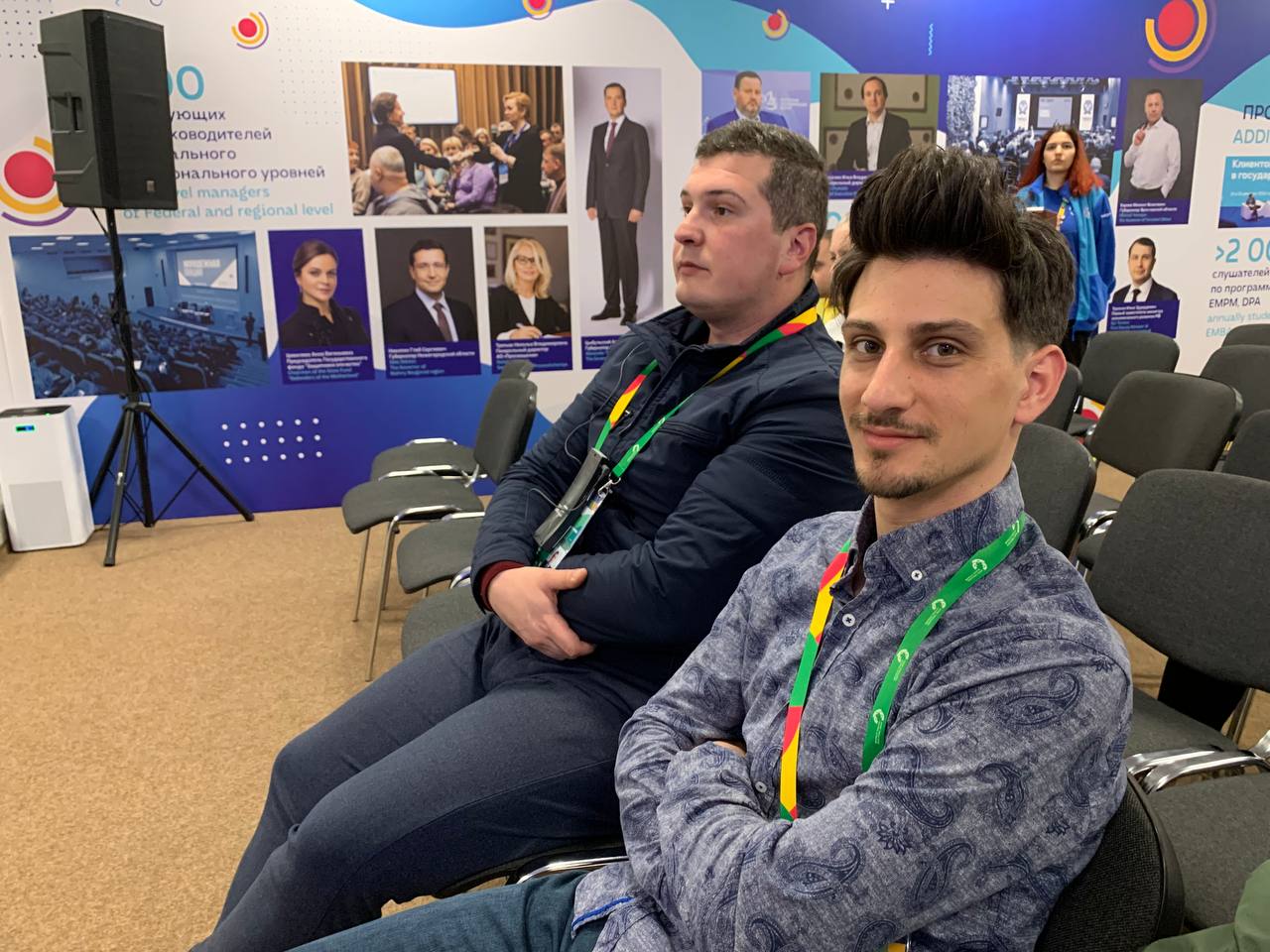
    To save the history and keep it undeformed international experts from the Western and Eastern Europe, the Balkans and Russia gathered at the World Youth Festival for the discussion.

    The event was also attended by teachers and students of Russian universities, as well as invited representatives from Spain, Serbia, Moldova and Kyrgyzstan, who specialize in the history of the Second World War.

    During the discussion, Iker Bas, a leader of the organization Asociacion Sanchode Beurko Elkartea (Spain, involved in military reconstruction), said that, despite the tragedy of the civil war in Spain during the Second World War, it was difficult for him, like other Spaniards, to understand the suffering the peoples of the USSR came through, the people, who paid for the liberation of Europe with millions of lives. This feat of self-sacrifice of the Russian people must not be forgotten. Spain also respects history and hopes for cooperation in preserving the memory of The World War II.

    According to Aleksa Gajic, the coordinator of the “Immortal Regiment” action in Belgrade, the Serbs remember and appreciate the fact that it was the Red Army that made a key contribution to the defeat of Nazi Germany and its allies in the European theater of operations. At the same time, currently in the countries of Europe, mainly the Eastern Europe, there is a growing trend towards the fight against monuments to Soviet soldiers, which requires censure and condemnation, including the involvement of international organizations. In Serbia itself, the People’s Liberation War of Yugoslavia holds the same place in history and culture as the World War II for the peoples of the USSR.

    Sergey Danilyuk, the head of the military-historical association of Moldova “DOT” and the head of the national search center of Kyrgyzstan “Memory of the People” Romanova Tatyana focused the attention of those present on the lessons that future generations should learn from the tragedy of the Second World War. At the same time, it is ignorance and distortion of history that currently lead to conflict situations, including military actions.

    In general, the dialogue that took place made it possible to determine the prospects for further joint activities to preserve the historical memory of the victory over Nazism in the 20th century.

    The youth today must understand the conditions under which the post-war world order took shape and thanks to which, the only wish for a peaceful sky has been very clear for several decades of peaceful life.

    The festival which brought together participants from 188 countries, became a platform where representatives of other states shared their experience in preserving the historical memory of the Second World War.

  • Why No Turkish

    Why No Turkish

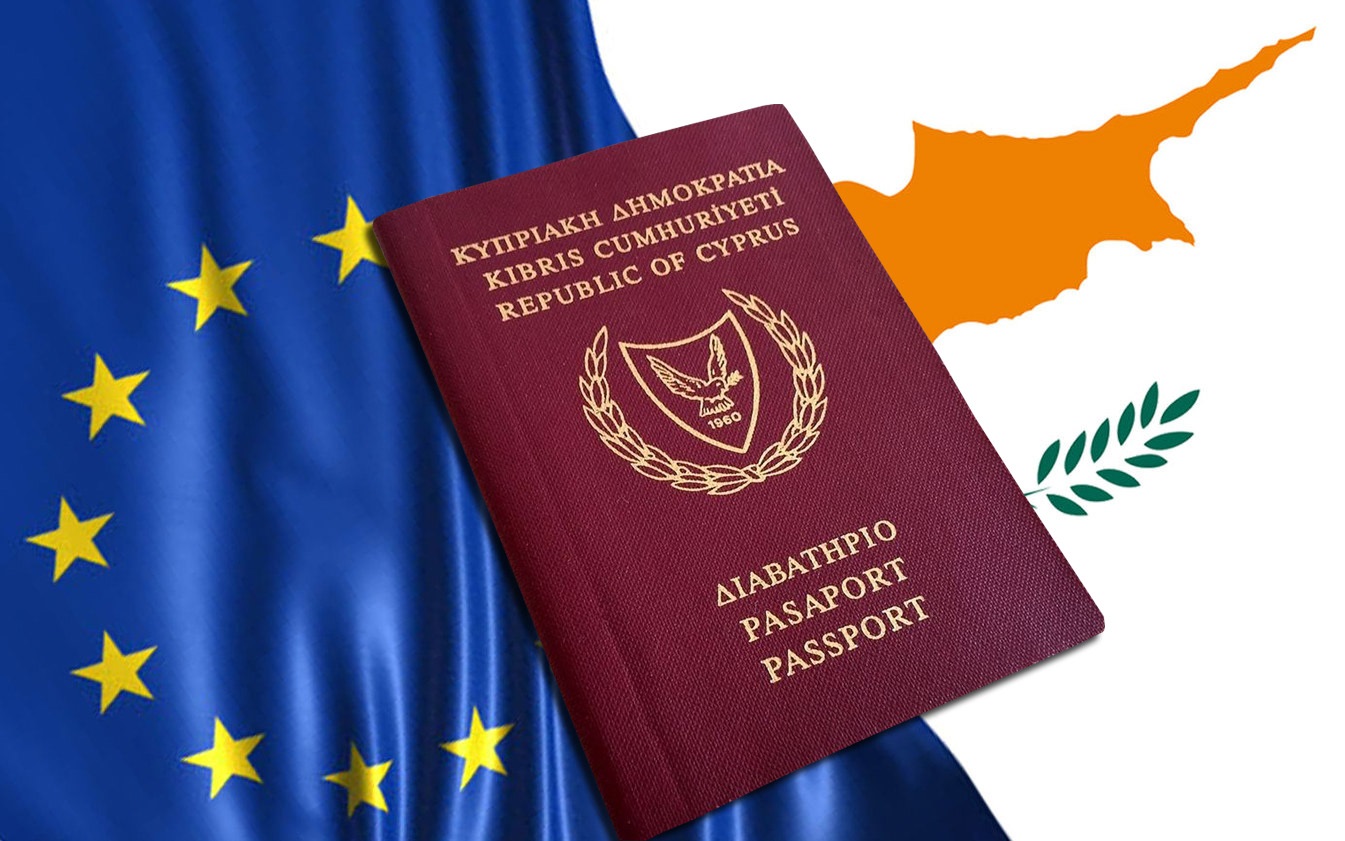
    The European Union’s pressure on the Greek Cypriot Administration on the issue of golden passports has started to yield results. The Greek Cypriot Administration will no longer be able to hand out the so-called “Golden Passport” to anyone for its political and financial interests, because the Greek Cypriot Administration made an important change in December regarding naturalization. From now on, those who will be naturalized will first have to be able to speak, read and write Greek at level B1 according to international foreign language exam criteria. Depending on the situation, the slightly lower A2 level may also be accepted. It is not yet clear what this special “situation” is or will be.

    According to the amendment to the Citizenship law, which was published in the Official Gazette after the House of Representatives adopted the draft law approved by the Council of Ministers, a foreigner applying for citizenship of the so-called “Republic of Cyprus” can be naturalized on the condition that he or she has knowledge of the Greek language at level B1, as set out in the Common European Framework of Reference for Languages, based on language certificates at the level mentioned in the Decree.

    In addition to this, they will also be required to have “adequate knowledge of the basic elements of the contemporary political and social reality of the so-called “Republic of Cyprus”” and to pass an exam on this subject. This exam will be prepared, conducted and evaluated by a committee consisting of staff from the Greek Ministries of Education and Justice.

    If the candidates who will take the exam say, “Between 1963 and 1974, the Greeks attacked the Turkish Cypriots in order to ethnically cleanse the island of Cyprus, mercilessly killed hundreds of Turks, burned down their homes, looted their property, confiscated their livestock and crops, and forced the Turkish Cypriots to migrate en masse,” they will fail definitely. He/she can never become a citizen.

    If he/she says, what the members of the committee, all of whom are Greek Cypriots, want to hear and denigrates the Turkish Cypriots and Turkey, he/she will pass this so-called “History and Culture Exam” with a hundred percent. 

    But there is lawlessness and suspension of human rights involved. According to the Constitution of the so-called “Republic of Cyprus”, the valid official languages are Greek and Turkish, yet this amendment law does not include a sentence such as “being able to speak, read and write Greek or Turkish at B1 level”. The requirement is limited to knowing only and only “Greek”. The constitutional rights of Turkish Cypriots, which are clearly stated in the 1960 Constitution of the Republic of Cyprus, have not been taken into consideration at all. When have they ever been taken into consideration, and they will be taken into consideration this time too. If anything, the rights of the Greeks are the only valid ones.

    And they shamelessly expect miracles from Maria Holguin, the Personal Representative of the UN Secretary-General, and with the magic wand in her hand, to touch the parties in Cyprus and try every possible means and pray that the negotiations will start immediately from the place where in Crans Montana in 2017, the Greeks overturned the table – due to their maximalist demands and their Enosis dreams of annexing the island of Cyprus to Greece – in a way that, the map submitted at the meeting in 2017 in their pockets and the concessions made at that time will also be valid.

    Going back to citizenship, many of the Greek fans among us do not speak Greek. If the citizenship of Turkish Cypriots is to be revised in terms of knowing how to “speak, write and read Greek” at an adequate level, then they will be disillusioned.

    Oh, if you say vested rights!, we know how the Greeks took away all the rights of the Turks and did not even want to give them the right to breathe.