Category: Regions

  • Iran nuclear talks could resume soon – EU’s Ashton

    Iran nuclear talks could resume soon – EU’s Ashton

    By Fredrik Dahl

    VIENNA | Sat Oct 22, 2011 1:43am IST
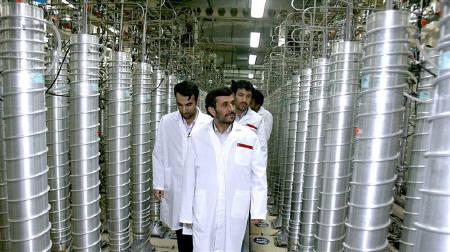
    (Reuters) – Major powers are willing to meet with Iran within weeks if it is prepared to “engage seriously in meaningful discussions” and address concerns about its nuclear programme, the European Union’s foreign policy chief told Tehran in a letter on Friday.

    In a long-awaited response to an offer of talks last month from Iran’s chief nuclear negotiator Saeed Jalili, Catherine Ashton made clear her position that there must be no repeat of the last round of talks, which took place in January in Istanbul and ended with no progress.

    EU foreign policy chief Ashton has been leading efforts on behalf of six countries — the United States, Britain, France, Germany and non-Western powers China and Russia — to negotiate with Tehran over its disputed atomic activities.

    Iran has said it is willing to resume discussions, but insists that other countries recognise its right to enrich uranium, a major stumbling block, particularly for Western diplomats who see it as an unacceptable precondition.

    They want Iran to agree to suspend enrichment activity which they suspect forms part of a covert weapons programme, and answer questions raised by the U.N. nuclear watchdog.

    If Iran is ready to discuss concrete confidence-building measures without pre-conditions, “we would be willing to agree on a next meeting within the coming weeks at a mutually convenient venue,” Ashton said.

    “I welcome your suggestion to resume talks, in order to take fundamental steps for sustainable co-operation,” she said in the letter, a copy of which was obtained by Reuters.

    Her response to Jalili comes amid heightened U.S.-Iran tension. The United States accused Iran this week of a plot to kill the Saudi envoy to Washington, a charge Iran rejected as an attempt by its arch foe to further isolate it.

    “CONFIDENCE-BUILDING EXERCISE”

    In Vienna, the U.N. International Atomic Energy Agency (IAEA) is next month expected to issue a report on Iran that will strengthen suspicions that it may be working to develop a nuclear missile. The document may provide the West with new arguments to impose further punitive steps on Iran.

    But divisions have emerged among the six powers over the report, with Russia and China signalling concern it could hurt any chance for diplomacy and arguing Iran should be given time to study its content before it is published.

    Western diplomats often accuse Iran of seeking further negotiations to buy time for its nuclear programme without making any major concessions.

    The United Nations has tightened sanctions on Tehran, and the six powers have offered Iran economic and political incentives if it suspends enrichment.

    Iran says it needs refined uranium for a planned network of power plants, and has the right to produce it.

    “When moving to continuation of our talks, it is crucial to look for concrete results and not to repeat the experience of Istanbul,” Ashton said. “We have to ensure that when we meet again we can make real progress on the nuclear issue.”

    She said the goal “remains a comprehensive negotiated, long-term solution which restores international confidence in the exclusively peaceful nature” of Iran’s nuclear programme.

    “In order to start such a process, our initial objective is to engage in a confidence-building exercise aimed at facilitating a constructive dialogue on the basis of reciprocity and a step-by-step approach,” the letter added.

    via Iran nuclear talks could resume soon – EU’s Ashton | Reuters.
  • Feridun Hamdullahpur prepares to lead UW into the future

    Feridun Hamdullahpur prepares to lead UW into the future


    Robert Wilson/Record…

    WATERLOO — There is tranquility in the submerged moment.

    There is warmth in the wondrous, fish-filled waters of the Sea of Marmara, where a young boy from Istanbul can swim and snorkel and sail away the days of his youth.

    “You lose track of time,” said Feridun Hamdullahpur, recalling the childhood sanctuary he discovered by dipping beneath the surface of Turkey’s inland sea.

    “You lose your presence. You forget about it. You are so immersed in that environment because it’s so fabulously beautiful.”

    Maybe this morning will provide Hamdullahpur with another serene moment when the 57-year-old professor of mechanical and mechatronics engineering is officially installed as the University of Waterloo’s sixth president at the Physical Activities Complex.

    He has already taken over for the departed David Johnston, Canada’s governor-general.

    But this is the instant where the former skydiver figuratively parachutes in to guide a world-renowned school of 30,000 students with 4,000 faculty and staff.

    Maybe he’ll get a skydiver’s rush during fall convocation ceremonies.

    “The first 5-10 seconds of your jump, once you are in a vertical position, after your chute opens, it’s silence,” he said.

    Hamdullahpur’s is an international man, educated in Turkey and Canada, bent on leading Waterloo into an increasingly international age of higher education.

    As he turns 58 on Nov. 3, he’ll be on a flight to the south coast of China where he’ll open a Waterloo office in Hong Kong. He takes off Nov. 2. He touches down Nov. 4. Technically, he’ll miss his birthday.

    But the cause is worthwhile.

    Hamdullahpur believes the university’s physical and intellectual presence must be felt around the world to reach out to alumni and potential new students.

    That’s the only way to stay on top with new universities emerging from India, China, Brazil, Singapore and Europe to challenge the established school powers.

    “The world has changed,” he said of the international push.

    “No reputable university on this planet will survive if we continue in our ways of how we attracted students and talent to our universities. Ten, 15, 20 years ago, we could sit in our offices and expect that people from around the world will come.”

    That’s no longer the case, he said.

    Waterloo already has a Dubai campus in the United Arab Emirates, along with local campuses in Kitchener, Cambridge and Stratford. On Saturday, the first 87 graduates of the school of pharmacy in Kitchener earn degrees.

    Hamdullahpur, the former school provost, is perhaps best-known for sacking the 2010 football season of the scandal-ridden Warriors.

    “It was a bitter pill for everybody but it was a necessary pill,” he said.

    “Education sometimes has hard lessons.”

    Hamdullahpur met his Canadian wife, Cathy, in Halifax in 1983, was former provost at Carleton University in Ottawa and wants Waterloo’s students to get to know him better.

    “It’s an open-door policy with me,” he said. “I’m not somebody who is sitting in his office whose name they can’t pronounce.”

    Hamdullahpur is the youngest of five brothers raised by a single mom. His businessman-father, Nasri, died of liver disease when Feridun was barely one. He didn’t know his dad. So Hamdullahpur, a father of two grown boys, said he will think of his mom on Saturday.

    Merziye, 92, preached humility and the value of education to her boys.

    She still lives by herself in Istanbul.

    “One very independent-minded woman,” Hamdullahpur said.

    He’ll also think of his oldest brother Perviz, who quit school when his dad died in order to run the family business and support his mother and brothers.

    He’ll remember Firuz, the brother he lost in a car crash nine years ago.

    When Firuz was old enough to go to matinees, his smaller brothers would give him money to go to the movies. Feridun and Riza were too young to go.

    When Firuz retuned, he would retell the entire move to a pint-sized audience.

    “We would just sit and listen,” Hamdullahpur said.

    On Saturday, about 2,000 graduating students will get a chance to sit and listen to him.

    [email protected]

    via TheRecord – Feridun Hamdullahpur prepares to lead UW into the….

  • Delegation of prominent American Armenians to visit Turkey – PanARMENIAN.Net

    Delegation of prominent American Armenians to visit Turkey – PanARMENIAN.Net

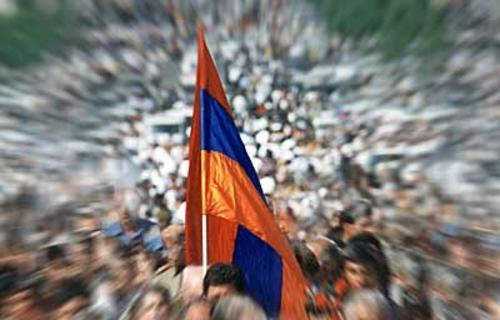
    PanARMENIAN.Net – A delegation of prominent members of the American-Armenian community will arrive in Turkey on Friday, October 21, in an unprecedented visit to various religious sites throughout the country.

    The 25-member delegation, which includes U.S.-based influential businessmen and religious figures, will embark on a six-day tour of key religious sites in Istanbul, Diyarbakir and Van. The visit comes after the completion of restoration work on the 15th-century Surp Giragos Church in Diyarbakir province, one of the largest churches in the Middle East and a historic center of Turkey’s once thriving Armenian population.

    Archbishop Khajag Barsamian and other high level members of the American-Armenian diocese will participate in the church’s reopening which is slated for Oct. 23. The delegation also plans to attend a ceremony at the recently restored Armenian church on Akhtamar Island in the province of Van, Today’s Zaman reported.

    via Delegation of prominent American Armenians to visit Turkey – PanARMENIAN.Net.

  • New train to Germany will refresh memories after 50 years

    New train to Germany will refresh memories after 50 years

    New train to Germany will refresh memories after 50 years

    This Wednesday the state-run Turkish Radio and Television Corporation will host a remembrance event at the Sirkeci railway station.

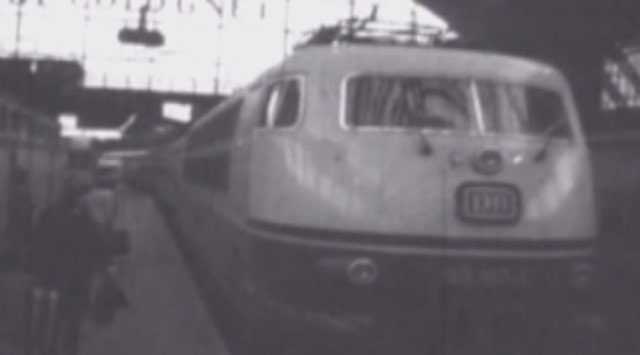
    It was a long ride; it took more than three days. Muharrem Mirlihay entered the train in the Sirkeci station in İstanbul, and left it in an alien country far to the north: Germany.

    This happened in 1961, and the young man from İstanbul took the train because Germany needed a workforce for its booming industries — and he needed an income after his own company, a copperplate printing business in İstanbul, had gone bankrupt. Mirlihay, now 85 years old, was one of the first guest workers to move from Turkey to Germany.

    This Wednesday the state-run Turkish Radio and Television Corporation (TRT) will host a remembrance event at the Sirkeci railway station. A “Germany train” will leave on a symbolic trip to Munich in southern Germany. This project will bring to life the memories of many guest workers from those first years.

    Mirlihay started to work at the construction company Züblin in Berlin in 1962. He stayed there until 1988, when he retired. He is still partly living in Berlin: He has an apartment there as well as one in his old hometown, the İstanbul suburb of Şile on the Black Sea. His daughter and son live in Berlin, but the grave of his wife, who followed him to Germany in 1963, is in Şile.

    “I like the climate and the food in Şile,” he told Cihan news agency, sitting in a cafe in the town center, “It keeps me healthy.” He prefers to speak Turkish; his knowledge of German has remained rather limited, although he belonged to the very first wave of “guest workers.” The agreement between the Turkish and the German state governing the transfer of laborers was signed on Oct. 30, 1961.

    The 50th anniversary will be celebrated by Prime Minister Recep Tayyip Erdoğan and German chancellor Angela Merkel in Berlin, and for the occasion many cultural events are taking place or have already occurred in both Turkey and Germany.

    It was not Germany’s first guest worker agreement — similar agreements with Italy, Spain and Greece were already in place — but it was the one with the deepest impact. However, at the time when the contract was signed no one could imagine how profoundly this piece of paper, bearing German government file number 505-83 SZV 3-92.42, would change German society. Thanks to this, Europe’s biggest state developed willy-nilly into an immigration country.

    TRT’s Germany train will follow the historic path of the guest workers: They also travelled from Sirkeci to Munich before they were allocated from there to different cities. The train will arrive on Oct. 30 in Bavaria, on the actual anniversary date. In a press conference on Friday, TRT General Manager İbrahim Şahin gave information regarding the project.

    According to him, Turkish workers who immigrated to Germany from Sirkeci, journalists, artists, and politicians will join the ride.

    “Deputy Prime Minister Bülent Arınç, who is responsible for TRT, and Deputy Prime Minister Bekir Bozdağ, who is responsible for Turkish citizens abroad, are likely to join this train tour. The parliament speaker will also be with us until we reach Belgrade. Ten deputies from different political parties will also join the Germany Train. This train journey will allow us to produce a documentary on our people’s immigration to Germany in the 60s. There will be live music shows aboard the train, which will be shown live on TV,” said Şahin.

    Fifty years ago, Muharrem Mirlihay felt very sad after the train from Sirkeci arrived in Germany. When he got off the train he “deeply regretted” his decision to leave Turkey, his wife and his two children, he said, “I knew no one, I didn’t understand the language.” The first months he worked at different factories in the southwestern State of Baden-Württemberg before he moved to Berlin. His son and his daughter were born in Turkey, but started primary school in Germany after they and their mother had followed Mirlihay to Berlin. Mirlihay’s job at the construction company Züblin was to repair and operate cranes. He liked his job and his colleagues; his boss helped him to find a good apprenticeship for his son.

    After 12 years, in 1973, Germany stopped recruiting Turkish workers because of the economic downturn due to the oil crisis. By that time, 2,659,512 Turks had applied to be guest workers, and 648,029 of them had been placed in Germany. About half of them returned to Turkey, the other guest workers decided to stay with their families in Germany. Today more than 2.5 million inhabitants of Germany have Turkish roots, like Mirlihay and his children’s families.

    He said that now his homeland is half in Turkey and half in Germany. One of the things Mirlihay liked most about Germany was that thanks to his rather good income he did not have to work evenings and weekends, and therefore had more time for his family. Difficult to cope with were the prejudices and the rejection he sometimes felt in Germany. “On the other hand, we also had contacts with some German neighbors, and we visited each other.” Cihan news agency asked Mirlihay: If he passes away in the remote future, does he want to be buried in Berlin or Şile? “I think when I am dead I will not care,” he says.

    Cihan

  • Turkey-Russia relations and missile defence

    Turkey-Russia relations and missile defence

    The ruling Justice and Development Party’s (AKP) pursuit of a more muscular and independent foreign policy has helped change the perception of Ankara in Moscow over the past ten years from being in step with NATO aims to a more independent foreign policy actor.

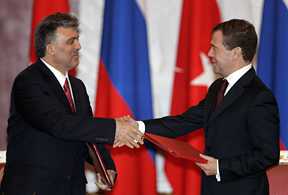
    Turkish President Abdullah Gul (left) greets Russian President Dmitry Medvedev. Turkey-Russia economic relations are a key component of bilateral ties. [Reuters]
    Turkish President Abdullah Gul (left) greets Russian President Dmitry Medvedev. Turkey-Russia economic relations are a key component of bilateral ties. Reuters
    “There have been some remarkable milestones that affected Turkish-Russian relations and paved the way for further co-operation,” Habibe Ozdal, a researcher at the International Strategic Research Organisation, specialising in Russia and Black Sea Studies, tells SETimes.

    One of these significant milestones was the Turkish parliament’s refusal to allow the United States to invade northern Iraq from Turkish territory in 2003.

    After this decision, “Ankara started to be evaluated as an independent actor in the region. From this standpoint, Moscow began to evaluate Ankara as an important actor that can stand for its national interests, even against a longtime ally,” according to Ozdal.

    On the local level, growing bilateral trade and tourism has contributed to the thawing of relations. However, close relations with Moscow are still new, and the two sides are working to build trust at the upper echelons of government.

    “It [Turkey] has been a member of NATO since 1952, that together with the EU integration process, has built up a certain level of trust [with the West] … between Turkish policy spheres, state agencies, security, military and business elites,” European Geopolitical Forum founder Marat Terterov tells SETimes.

    “They don’t have the equivalent of that in the Turkish-Russian relationship. They are in the process of building it.”

    One potential point of contention is Russia’s stringent opposition to the NATO decision to deploy an anti-ballistic missile system, which includes the forward based radar on Turkish territory.

    “While [most] Russians generally accept the US and NATO concern about countries with missile capability, such as Iran, they do not see that capability emerging in the near future,” Vienna Centre for Disarmament and Non-proliferation senior fellow Nikolai Sokov told SETimes.

    “According to Russian assessments, Iran is still pretty far from long-range missile capability. Hence they suspect that the real reason for missile defence is not the reason that is publicly declared.”

    The recently concluded agreements for the launch of the newer Phased Adaptive approach with Turkey, Romania, Poland and Spain has been met with sharp criticism in Moscow.

    “This is not about the radar itself — it clearly does not have capability vis-a-vis Russia. It was rather seen as further evidence that NATO proceeded with implementing missile defence plans without co-ordinating with Moscow,” Sokov said.

    “People are making the argument that the missile defence would undermine the Russian strategic potential,” Pavel Podvig, director and principal investigator of the Russian Nuclear Forces Project, tells SETimes.

    “There is no way the system can be a threat to anyone,” according to Podvig, but “the military and defence agencies [in NATO member states] are using it as a pretext for new programmes and for more money.”

    This content was commissioned for SETimes.com.

  • Rotary District 6920 seeking applicants for trip to Turkey

    Rotary District 6920 seeking applicants for trip to Turkey

    Rotary District 6920 is accepting applications for the Group Study Exchange to Turkey. .

    Applications are due by Nov. 12, according to a release.

    The team is tentatively scheduled to depart for Turkey on May 2, 2012, and return on June 1, 2012. The Rotary Foundation provides each team member with a round-trip air ticket, and local Rotarians in Turkey and Istanbul provide meals, lodging and travel within their district to keep the cost of the trip minimal.

    The trip is designed to give local professionals an opportunity to travel and learn about Rotary’s projects.

    Rotary District 6920 is looking for a team of four non-Rotarians professionals ages 25-40. Applicants must be employed full-time in a recognized profession and not be a Rotarian.

    For more information, contact Pam Lightsey at [email protected] or (706) 840-2087.

    via Rotary District 6920 seeking applicants for trip to Turkey | The Augusta Chronicle.