Category: Regions

  • Turkey Sends Commandos Into Iraq After Kurdish Rebels Kill 26 Turkish Soldiers

    Turkey Sends Commandos Into Iraq After Kurdish Rebels Kill 26 Turkish Soldiers

    Suspected P.K.K. rebels stage one of the worst attacks on Turkish troops in years

    by Margaret Griffis, October 19, 2011

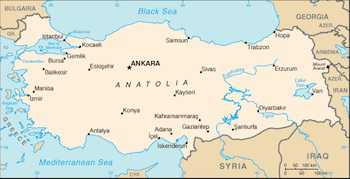
    Suspected Kurdistan Workers Party (P.K.K.) rebels ambushed two military posts in southeastern Turkey today, killing at 26 Turkish soldiers and wounding 18 more. Backed by helicopter gunships, about 600 Turkish commandos then entered several miles into Iraq in response to the attacks. The number of dead rebels is unknown. Turkey also hinted that outside forces might be supporting the rebels.
    The P.K.K. claimed to have killed 100 Turkish soldiers, while only five of their rebels were killed during the attacks. According to other reports, though, at least 15 rebels were killed. Due to the remoteness of these mountainous areas where the P.K.K. keeps base camps, independent confirmation of casualty figures is unlikely.

    The attacks came just hours after Turkey resumed shelling northern Iraq as part of a larger escalation of violence that began in May after the latest peace attempts failed. The P.K.K. is seeking greater autonomy for Kurds in Turkey, where they have been treated as second-class citizens for decades. The guerilla war has left an estimated 40,000 dead since 1984.

    In an official statement, U.S. Ambassador to Turkey Francis Ricciardone said, “as a friend and ally, the United States will continue to stand with the people and government of Turkey in their fight against the P.K.K., which the United States has officially designated as a terrorist organization.”

    As well as enjoying the moral support, Turkey has been dependent on U.S. intelligence to stage their counter-attacks on the rebels. The United States has already promised to redeploy Predator drones to Turkey and send helicopters after the U.S. pullout from Iraq.

    via Turkey Sends Commandos Into Iraq After Kurdish Rebels Kill 26 Turkish Soldiers — News from Antiwar.com.

  • Exclusive: Qatar bank stalks Dexia’s Turkish arm

    Exclusive: Qatar bank stalks Dexia’s Turkish arm

    By Victoria Howley and Dinesh Nair

    LONDON/DUBAI

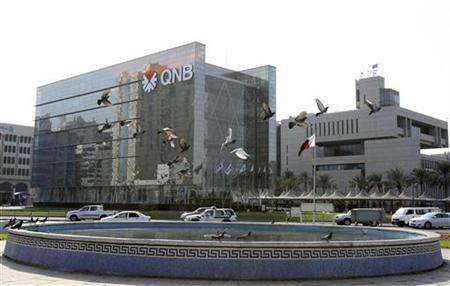
    (Reuters) – Qatar National Bank QNBK.QA, the Gulf state’s largest lender, is eyeing Denizbank (DENIZ.IS), the fast-growing Turkish arm of euro zone debt casualty Dexia (DEXI.BR), in a deal potentially worth up to $6 billion.

    QNB, 50 percent owned by sovereign wealth fund Qatar Investment Authority, would be the latest Qatari interest in Dexia’s assets after the Gulf state’s royal family last week bought Banque Internationale Luxembourg, a private bank.

    “QNB Group announced that it has entered into negotiation with DenizBank in Turkey toward the aim of acquiring a controlling stake,” it said in an emailed statement, confirming a Reuters report earlier on Tuesday.

    It said talks were still at an early stage.

    The lender said a potential deal would depend on how well Denizbank fitted with QNB’s expansion strategy and on a price that “fairly reflects” the Turkish bank’s financial position.

    Denizbank shares rose 12.7 percent on the Istanbul stock exchange at 1333 GMT. They have risen more than 55 percent in the last month in anticipation of a potential deal, Reuters data shows.

    Qatar’s al-Thani royal family also runs investment groups including QIA, which has invested in European banks including Barclays (BARC.L) in the past.

    Bank of America Merrill Lynch is evaluating strategic options for Denizbank.

    QNB, which has been talking to investments banks about a possible bid, could also use its own in-house investment banking team for an offer, people familiar with the matter told Reuters.

    Bankers said Denizbank was one of Dexia’s best assets and a cheap way into the Turkish market, where banking licenses are hard to obtain. Sources said the deal could be worth up to $6 billion.

    Middle East unrest and debt crises in Europe and North America have made Turkish firms a natural target for Gulf investors, lured by the region’s growth prospects.

    A strong recovery from the global financial crisis of 2008-2009 has persuaded many long-term investors to look at Turkey.

    Its economy grew 10.2 percent in the first half of this year while the International Monetary Fund’s forecast of 2.5 percent growth in 2012 is well above the 1.1 percent which it predicts for the euro zone.

    The bankers said an acquisition would be a stretch for expansion-minded QNB, even though it was the largest lender in the Gulf Arab state.

    “A purchase would give them scale and the Gulf Arab region is in love with Turkey. Still, Denizbank would be a large trade for them,” one banker said.

    QNB has been expanding abroad, with operations in Jordan, Switzerland, Syria and the United Arab Emirates. Its third-quarter net profit rose 27 percent as it increased lending in Qatar’s booming economy.

    RIVAL INTEREST

    Sources said the sale of Denizbank could attract multiple offers and Dexia would be able to offload the business easily.

    Last week, Sberbank (SBER03.MM), Russia’s No.1 lender, said it was looking at the bank as a potential acquisition target but had yet to begin talks.

    Bankers said Intesa Sanpaolo (ISP.MI), Italy’s largest retail lender, was another potential bidder. Chief executive Corrade Passera has said there was “nothing on the table” on the subject.

    They also said Turkish group Akbank could be a candidate but were skeptical about interest from other domestic banks. International interest was expected to include HSBC (HSBA.L).

    Dexia was rescued by Belgium and France because of its heavy exposure to Greece and after it could no longer secure short-term credit to finance long-term lending activities.

    Dexia bought into Denizbank in 2006 when it took a 75 percent stake for $2.4 billion, later lifting its ownership above 99 percent.

    In August, QNB set up a $7.5 billion euro medium-term note program to fund its banking operations. The lender picked Barclays, HSBC and QNB Capital as arrangers.

    (Additional reporting by Sophie Sassard; Editing by David Cowell)

    via Exclusive: Qatar bank stalks Dexia’s Turkish arm | Reuters.

  • Test of Sincerity in Turkey-Azerbaijan Relations

    Test of Sincerity in Turkey-Azerbaijan Relations

    Hasan Selim Ozertem, USAK Center for Energy Studies

    Although Ankara had to give up a lot of dreams beyond the Caspian Sea due to regional geopolitics and geographical reasons, it succeeded in developing a complex relationship with Azerbaijan.

    Twenty years ago, the Soviet Union was divided into fifteen republics. The resulting picture necessitated Turkey returning to a geography in which it was alienated as a result of the controlling policies of the Soviets. In the reconstruction process of five Turkic states, four in Central Asia, and Azerbaijan in the Caucasus, Turkey did not hesitate to take the initiative. If we look back, we can say that Turkey could not realize its dreams beyond the Caspian Sea due to regional geopolitics and geographical reasons, but succeeded in establishing a complex ties with Azerbaijan.

    Located west of the Caspian Sea, Azerbaijan has experienced various problems in integrating into the international system after seventy years of Soviet administration. The first of them was the outbreak of war in Karabakh in 1988, which emerged as the biggest obstacle to experiencing a normal transition period for the country. Until the ceasefire agreement was signed in 1994, the country had serious troubles in the areas of security and economics, but after Heydar Aliyev’s coming to power, it entered a rapid recovery process.

    In that period, Turkey sided with Azerbaijan and closed its border with Armenia in 1993, in response to Armenia’s occupation of the territory of Azerbaijan and human rights violations. This step opened the way for Turkey to share a common fatewith Azerbaijan, but in the long run paved the way for the narrowing of its maneuvering area.

    Baku’s Flirting with Moscow

    The entering into service of the Baku-Tbilisi-Ceyhan crude oil pipeline in 2006 and the delivering of gas via the Baku-Tbilisi-Erzurum line the next year were important turning points for Azerbaijan. Because from 2006 to the end of 2008, when the global financial crisis occurred, Azerbaijan has grown by over 20 % and thus had a chance to recover from its economic problems and modernize its military. The completion of these projects creates an important success story for Turkey, but Ankara, having difficulties reaching beyond the Caspian Sea, could not take its current relations beyond the level they were in the 1990s. Even at certain points, it was seen that the existence of Ankara was relatively weakened by the gradual growth of Russia in the region. It should be noted that the Georgia-Russia war which erupted in 2008 played an important role in that issue.

    The Kremlin, taking an aggressive stance in its backyard starting in the 2000s, sent important messages to both countries of the region and to the West with this war. Looking at Turkey-Azerbaijan relations, two important factors gain clarity. The first factor was the need for Baku to redefine its relations with Russia, which until 2008 Baku had always tried to keep balanced. The first reflection of that was the Kremlin’s monopolization of the Karabakh problem’s solution process since it wants to be the primary actor in solving the problems in its backyard. The second reflection was the symbolic but politically significant natural gas treaties signed between Azerbaijan and Russia.

    The second important factor was the normalization process of Turkey-Armenia relations. In Baku, a pro-Russian clique close to the administration used the normalization process as a propaganda tool and that played a catalytic role in the rapprochement between Azerbaijan and Russia. In that process, which turned into a test of sincerity, some conflicts between Turkey and Azerbaijan entered the political scene. The closure of Sehitlik Mosque which was built in Azerbaijan by Diyanet, hauling down of Turkish flags in the country, assumption of a rigid attitude on the mutual abolition of visas, and adoption of a strong language toward Turkey were reflections of the tensions that occurred in that process. Yet, examples of Baku’s attitude seen in Wikileaks documents were quite interesting. Aliyev did not refrain from using expressions that underestimate Turkey in the meetings with American authorities.

    Azerbaijan’s search for exercising power over Turkey

    While we see acceleration in Baku-Moscow flirtations after 2008, it became apparent that Azerbaijan did not choose to completely cut its relations with Turkey. Inthat period, Baku a fortiori preferred to exercise power over Ankara. A positive public perception of Turkey in Azerbaijan was effective in İlham Aliyev’s not extravagating in that partly successful policy. As a consequence, Baku, taking public response into account, continued to exercise power over Ankara while managing the perceptions of the public.

    On the other hand, Turkey did not take a stance that will raise tension against such steps, on the contrary; it took concrete steps to normalize strained relations. Prime Minister Erdoğan did not abstain from sending clear messages in the Azerbaijani parliament after the signing of protocols. That initiative weakened the hand of Turkey in relations with Armenia but helped Erdoğan regain power in Baku. In other words, while not being able to take a step back from the decision taken in the 1990s to close the borders, an era in which relations with Azerbaijan are defined in terms of policies toward Armenia has started. As a result of this, Turkey is faced with a question that asks how to turn the equation in a zero-sum game in its favor. This equation has not yet been solved.

    At this point, we cannot say bilateral relations are at a specific level they had been in 1990s, but it is a fact that Turkey’s current position maintains its critical importance in Azerbaijan’s westward expansion. In this respect, Turkey is still seen as an important ally that is not dispensable in Baku. For Turkey, the situation is not so different. After the June 12 elections, PM Erdoğan’s first visit abroad after Cyprus was to Baku, and that illustrates Azerbaijan’s importance in Turkish foreign policy.

    Nevertheless, in order to bring current relations to a more robust structure for the next twenty years, more than diplomatic jests are needed. Strengthening its economic and strategic position in the Caucasus is very important for a Turkey that wants to be a regional power, and for the turning of perception in Azerbaijan in favor of Turkey. But, Ankara, having to amend the paradigm with Armenia toward 2015, has to find ways to avoid a crisis in its relations with Azerbaijan.

    *This piece was translated by Nihal Cizmecioglu.
    Tuesday, 18 October 2011

    Hasan Selim Ozertem, USAK Center for Energy Studies

  • FM: Turkey’s commitments to EU not negotiable

    FM: Turkey’s commitments to EU not negotiable

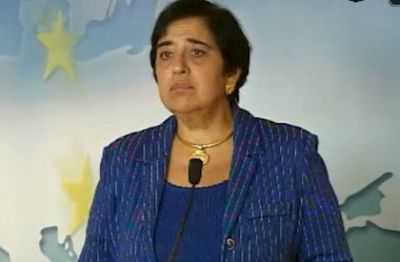
    Foreign Minister Erato Kozakou-Marcoullis
    FAMAGUSTA GAZETTE
    • Tue, Oct 18, 2011

    Turkey does not understand what it means to be a candidate country for EU membership, Foreign Minister Erato Kozakou-Marcoullis has said, clarifying at the same time, that Ankara’s commitments to EU member states, including the Republic of Cyprus, are not negotiable.

    In statements following a meeting with the new Ambassador of Egypt to Cyprus Menha Mahrous Bakhoum, here Monday, Marcoullis said it was a substantive meeting in view of her visit to Egypt in early November.

    The Minister said that it would be a very important visit and expressed Cyprus’ readiness to help in Egypt’s transformation process.

    ”We want to be in contact with this country as much as possible in order to see how to help, not only maintain our traditionally excellent relations, but find ways to help in the development and reshaping of the institutions and democracy in this very important neighboring country,” she added.

    Asked about the agreements signed between Cyprus and Egypt, Marcoullis said that ”Egypt honors and will respect all agreements it has signed with Cyprus.”

    The Minister referred to public statements made by the Foreign Minister of Egypt immediately after his meeting with Foreign Minister of Greece, adding that this position will be confirmed during his own visit to Egypt.

    She noted that Cyprus and Egypt signed an agreement in 2003 on the delimitation of their Exclusive Economic Zones and a ”very important agreement,” on joint exploitation of hydrocarbon deposits, which is pending ratification in both countries.

    ”What I asked of Ambassador of Egypt is for both countries, particularly Egypt, to move towards the ratification of this very important agreement, so that we can run as soon as possible several joint projects to jointly exploit hydrocarbons deposits” she added.

    Asked about Cyprus – Lebanon agreement on the delimitation of the EEZ which has not yet been ratified by the parliament of Lebanon, Marcoullis said that a delegation of technocrats from Lebanon is expected to arrive in Cyprus either this week or next to discuss issues concerning the exclusive economic zone.

    She said that the purpose of the visit is to discuss on a technocratic level some concerns raised by Lebanon not on the agreement, clarifying that there was never any problem with this agreement but problems emerged on the Lebanon – Israel exclusive economic zone.

    She said she would visit Lebanon following the Lebanese delegation visit to Cyprus perhaps in November.

    Asked if she discussed the Turkish threats with the new Ambassador of Egypt, Marcoullis said that Egypt’s position is clear, adding that Egypt ”recognizes the sovereign rights of the Republic as all other countries in the international community.”

    ”There is not one country in the world which does not recognize this exclusive right of the Republic of Cyprus, because as you know, most countries are signatories to the UN Convention on the Law of the Sea”, she pointed out.

    She recalled that Turkey unfortunately not only has it not signed this Convention, but it is also an enemy of the Convention having its own interpretations regarding the Law of the Sea,” noting that ”these are the interpretations Turkey is trying to implement by conducting seismic exploration and other activities in Cyprus’s EEZ ”.

    Replying to questions, she said Cyprus has made representations about Turkey’s explorations within Cyprus’ EEZ by Turkish seismographic vessel Piri Reis and the Norwegian research vessel ‘Bergen Surveyor”, adding that Cyprus has made representations both to the Norwegian and the French governments since a French company is also involved in cooperating with the Norwegian company.

    She said that these representations are primarily addressed to the UN and the Security Council, “which we constantly keep updated with all developments,” he said.

    Asked to comment on Turkish newspaper Sabah reports according to which Turkey has proposed to Cyprus opening the port of Mersin to Cyprus-flagged ships in exchange of opening a chapter in its accession process which remains closed due to the Cyprus problem, Marcoullis said that this is a very old proposal.

    “Things are clear. In 2004 the EU demanded that Turkey signs and implements the Ankara Protocol, which requires the opening of all Turkish ports and airports to Cyprus. There is no question of negotiating,” she said.

    Of course, she continued, ”Turkey is known for haggling, but it must understand that the EU is not an issue for negotiation. It is a matter of specific rules and procedures which each candidate country must follow. ”

    Asked to comment on statements by Turkish Minister Responsible for Europe who described the Greek Cypriot side as the Trojan Horse of Israel on the issue of natural gas, the Minister said that such statements prove that Turkey has not realized what it means to be a candidate country for EU membership.

    She said that ”the candidate country must adapt to the EU and not the other way around. It seems, ”she added,” they have not understood this very basic element which governs the relations of all candidates with no exception, irrespective of the difficulties they face.”

    “The road to EU membership is not an easy one, it is difficult and requires difficult and serious decisions,” she said.

    Turkey, she said, has to decide if it wants to proceed at all costs, adding that it will also have to pay a political cost since it should certainly recognize the Republic of Cyprus, meet its commitments to the EU and implement the Ankara Protocol.

    In conclusion she said that this road is not determined by Turkey but by the EU and if Turkey wants to move on then it should follow this precise path.

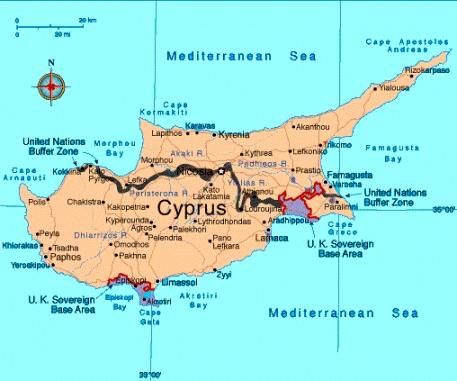
    Turkish troops occupy Cyprus’ northern part since they invaded in 1974. Ankara does not recognise the Republic of Cyprus.

    Drilling in Cyprus’ EEZ has begun and is being carried out by Houston-based “Noble Energy”, off Cyprus’ south-eastern coast.

    Following Nicosia’s decision to begin drilling in its EEZ, Ankara has deployed warships in the Eastern Mediterranean.

    The government of Cyprus has protested to the UN and the EU Turkey’s moves, saying it has a sovereign right to exploit its natural resources, pointing out that Greek Cypriots and Turkish Cypriots will benefit from any benefits that may come from oil drilling.

    Cyprus has signed an agreement to delineate the Exclusive Economic Zone with Egypt and Israel with a view to exploit any possible natural gas and oil reserves in its EEZ. A similar agreement has been signed with Lebanon but the Lebanese Parliament has not yet ratified it.
    — Copyright © Famagusta Gazette 2011

  • Turkey’s EU Minister Receives U.S. Delegation

    Turkey’s EU Minister Receives U.S. Delegation

    ANKARA (A.A) – Turkish Minister for EU Affairs and Chief Negotiator Egemen Bagis received a U.S. delegation in Ankara on Tuesday.

    During his meeting with members of U.S. House of Representatives and senior advisers, Bagis said that Turkey-U.S. relations were important, adding that the relations were healthy.

    Bagis noted that Turkey and the U.S. had many common points such as democracy, respect to human rights and freedom of thought, adding that the relations in politics, security and military were also on good level.

    It is necessary to further develop economic relations too, he added.

    Recalling that the U.S. extended support to Turkey’s EU accession process, Bagis said that the U.S. should also encourage parties in Cyprus to reach a solution.

    Bagis also wanted the U.S. to convince the EU to prevent Cyprus issue’s hampering Turkey’s EU membership process.

    Tuesday, 18 October 2011

    A.A.

  • Peace, reconciliation not possible unless Turkey faces its own history – French Ambassador

    Peace, reconciliation not possible unless Turkey faces its own history – French Ambassador

    YEREVAN.- Peace and reconciliation are not possible unless Turkey faces its own history, France’s Ambassador to Armenia Henri Reynaud told journalist on Monday.

    Commenting on France’s stance on the EU accession, the Ambassador recalled Nicolas Sarkozy’s position. In particular, acknowledging the role and essence of Turkey, President Sarkozy is confident that Turkey should not join the Union. French leader considers that Turkey, a big and strong country, will further strengthen its positions by recognizing the Armenian Genocide.

    via Peace, reconciliation not possible unless Turkey faces its own history – French Ambassador | Armenia News – NEWS.am.