Category: Regions

  • It’s vital that Turkey remains resolute in its pursuit of EU membership

    It’s vital that Turkey remains resolute in its pursuit of EU membership

    The EU should stop blocking Turkey’s accession. Together we can create a more open, tolerant and prosperous Europe

    Egemen Bağiş
    guardian.co.uk, Sunday 23 October 2011 13.30 BST

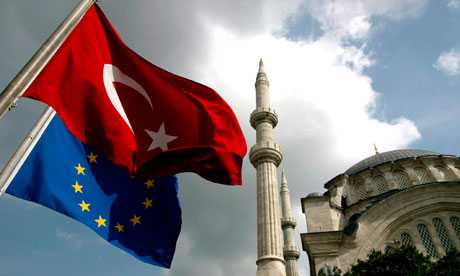
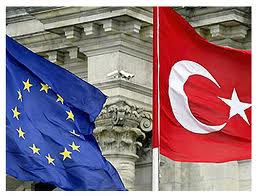
    The Turkish flag flying next to the European Union flag in Istanbul. Photograph: Tolga Bozoglu/EPA

    Last week the European Union released the 2011 progress report on Turkey, the annual snapshot of Turkey’s reform process as an EU candidate country. Unfortunately, this year’s report seems to have had difficulty capturing the rapidly transforming image of Turkey.

    The report ignores the elephant in the room, which is that Turkey’s membership bid is being blocked by a handful of countries, bringing negotiations to a virtual standstill. Over half of the chapters in the accession process have been frozen, largely because some countries have linked Turkey’s candidacy to a settlement of the long-simmering Cyprus problem. Despite strong Turkish support for UN efforts to reunify the island, Greek Cypriots have preferred to escalate tensions instead of working for a permanent solution. As a result, a settlement remains a distant prospect.

    The Greek Cypriot role suits the parochial agendas of some politicians, who argue that Turkey’s size and culture make a seat at the European table impossible. In the face of this opposition, the EU’s credibility has weakened in Turkey and public support for EU membership has declined, with less than half in favour of joining. More alarming, 92% of Turks believe that the union has “double standards” when it comes to Turkish accession. Is it any wonder that the pronouncements in the EU’s report do not generate as much interest in Turkey as they once did? Many Turks are also frustrated that the EU member states have not done much to demonstrate solidarity and support in the struggle against PKK terrorism.

    Despite these challenges, Turkey is resolute in pursuing full EU membership because it remains mutually beneficial to both Ankara and Brussels. As the progress report points out, Turkey is the sixth largest economy in Europe and one of the fastest growing economies in the world.

    Trade and investment between Turkey and the EU is flourishing, creating jobs and bolstering industry. As a transit hub between European consumers and the oil and gas reserves of the Middle East and central Asia, Turkey is critical for European energy security. Furthermore, with the largest army in Europe and strong ties with the Muslim world, Turkey offers Europe an opportunity to boost its diplomatic clout and play an enhanced role on the global stage. Fears that Turkish membership would result in an influx of migrants to Europe are simply outdated; with Turkey’s economy booming, tens of thousands of Turks have returned home over the past few years. I am quite sure that if progress reports were published for existing EU members, they would indicate that Turkey compares favourably with many states.

    Nevertheless, the value of the European project remains clear to us, even during these turbulent times. Turkey and the EU have been connected for more than half a century and we want the momentum to accelerate. Nations that stand together are better off than those that stand alone, and as an effort to elevate commonalities over differences, the EU is a unique accomplishment. Integration is the principle that has propelled Europe to historic levels of security, peace and affluence, and its benefits are as relevant today as ever.

    Our partners in Europe should move forward with Turkey’s membership talks in good faith, and envisage a more open, tolerant, dynamic and prosperous Europe, with the confidence to shape the 21st century for the better. This is a vision that we can achieve together.

    via It’s vital that Turkey remains resolute in its pursuit of EU membership | Egemen Bağiş | Comment is free | guardian.co.uk.

  • Key findings of the 2011 progress report on Turkey

    Key findings of the 2011 progress report on Turkey

    Key findings of the 2011 progress report on Turkey

    The Progress Report on Turkey is part of the 2011 Enlargement package adopted by the European Commission on 12 October. The Commission concluded that the country has made progress in meeting EU membership criteria; however, further results are needed as regards fundamental rights, in particular to assure freedom of expression in practice. The report further stresses that the June elections presented the government with a window of opportunity to address reforms with fresh vigour. Turkey continued improving its ability to take on the obligations of membership. The pace of accession negotiations would gain new momentum if Turkey proceeded to the full implementation of its Customs Union obligations with the EU, and made progress towards normalisation of relations with Cyprus.

    Political criteria

    Turkey continues to sufficiently fulfil the political criteria. Work on implementing the 2010 Constitutional reform package was launched by the government. Free and fair parliamentary elections took place on 12 June 2011, and opened the way for further constitutional reform. The creation of a specific Ministry for EU affairs is an encouraging signal for Turkey’s reform efforts to meet the EU accession criteria.

    Significant further efforts are required to guarantee fundamental rights in most areas. This relates, in particular, to freedom of expression, where the number of court cases against writers and journalists, and the restrictions on access to the Internet, raised serious concerns.

    With regard to regional issues and international obligations, Turkey expressed support to the negotiations between the leaders of the two communities under the good offices of the UN Secretary-General to find a comprehensive settlement to the Cyprus problem. Despite repeated calls by the Council and the Commission, Turkey has still not ensured full non-discriminatory implementation of its Customs Union obligations with the EU, and the Additional Protocol. There is no progress towards normalisation of bilateral relations with the Republic of Cyprus. As regards relations with Greece, there are continued efforts to improve bilateral relations.

    Economic criteria

    Turkey is a functioning market economy. It should be able to cope with competitive pressure and market forces within the Union in the medium term, provided that it accelerates the implementation of its comprehensive structural reform programme.

    In 2010, Turkish economy grew by 8.9% vis-à-vis 2009, driven mainly by strong domestic demand. The rapid economic expansion continued in the first half of 2011. The private sector, in particular the industrial sector, remains the main driving force behind Turkey’s rapid expansion.

    Robust economic development allowed strong employment growth and a sizeable drop in unemployment. Budget performance was better than expected, and the consolidation of public finances is on track. Privatisation has gained momentum. Trade and economic integration with the EU remained high and Turkey strengthened its presence in new markets.

    The current account and trade deficits reached record levels in 2010, leading to significant external imbalances in the Turkish economy, which in turn pose a threat to macroeconomic stability.

    EU Legislation

    Turkey continued improving its ability to take on the obligations of membership. Progress was made in most areas, in particular company law, statistics and trans-European networks. Efforts need to continue towards alignment in areas such as environment, public procurement, freedom to provide services, social policy and employment, and taxation. As regards the Customs Union, a number of longstanding trade irritants remain unresolved. For most areas it is crucial that Turkey improves its administrative capacity to implement and enforce the EU-related legislation.

    Turkey remains an important partner in the area of EU energy security. Preparations have continued on the Nabucco project. Negotiations have been finalised on an EU-Turkey readmission agreement, which now needs s to be initialled and signed.

    State of play on accession negotiations

    EU accession negotiations with Turkey began on 3 October 2005. In total, 13 out of 33 negotiation chapters have been opened and one chapter has been provisionally closed. As a result of Turkey not having fully implemented the Additional Protocol to the Association Agreement, the EU decided in December 2006 that eight negotiating chapters could not be opened and that no chapter could be provisionally closed until Turkey meets its obligations.

    EU-TURKEY: KEY DATES

    September 1959 – Turkey applies for associate membership of the European Economic Community (EEC).

    September 1963 – Signature of the association agreement (known as the Ankara Agreement), aiming at bringing Turkey into a Customs Union with the EEC and to eventual membership.

    April 1987 – Turkey applies for full membership to the EEC.

    1995 – Turkey – EU Association Council finalises the agreement creating a customs union between Turkey and the EU.

    December 1999 – Turkey obtains status of an EU candidate country.

    December 2004 – The European Council defines the conditions for the opening of accession negotiations with Turkey.

    October 2005 – Opening of accession negotiations with Turkey.

    December 2006 – The Council decides that 8 negotiating chapters can not be opened and no chapter can be closed until Turkey meets its obligation of full, non-discriminatory implementation of the additional protocol to the Association Agreement

    via EUROPA – Press Releases – Key findings of the 2011 progress report on Turkey.

  • Qaddafi Was Worth More Than $200 Billion — By Far The Richest Person In The World

    Qaddafi Was Worth More Than $200 Billion — By Far The Richest Person In The World

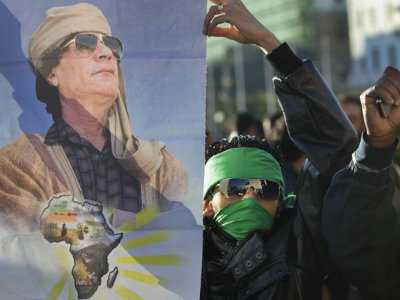
    Muammar Qaddafi was three times as rich as Carlos Slim and ten times richer than King Abdullah of Saudi Arabia — easily the richest man in the world.

    Qaddafi was supposedly worth over $200 billion with assets in bank accounts, real estate and corporate investments around the world.

    This staggering new estimate comes from senior Libyan officials and seems to be legitimate, according to the LA Times.

    How did he get so rich?

    “King of Kings” Qaddafi had uncontested personal control over the largest oil reserves in Africa for the past 41 years.

    Unlike Abdullah and other oil-rich leaders, Qaddafi invested little money in national infrastructure like schools and hospitals or any kind of economic diversification. What money Qaddafi did spend went largely to buy support from African leaders.

    While much of this money was held by government institutions like the Central Bank of Libya and the Libyan Investment Authority, Qaddafi was able to withdraw money at will.
    Business Insider

  • Turkey’s Defence Industry Eyes Africa

    Turkey’s Defence Industry Eyes Africa

    In аn effort to diversify defence exports аnd increase itѕ economic аnd political imprint іn sub-Saharan Africa, Turkey’s defence industry іs showing а growing interest іn countries like South Africa, Ghana, Nigeria, Kenya аnd Cameroon.

    Once largely dependent on imports оf defence equipment, Turkey hаs expanded itѕ defence exports to thе world — reaching approximately $900m іn 2010, and expected tо exceed $1 billion in 2011.

    This new interest in the African market signals a change in Turkish perceptions towаrdѕ thе continent.

    “Turkey uѕed tо view Africa аѕ a poor continent with a built-in tendency tо counter аny advancement with thе twісе the number of backward steps,” explains Sidar Global Advisors Managing-Director Cenk Sidar.

    According to Lufti Varoglu, head оf thе International Co-operation Unit at the Undersecretariat fоr Defence Industries, the interest in sub-Saharan Africa bеcаme a state policy in 2008.

    “There is а goal for all state institutions to havе ѕоmе links with thе countries of thаt region, principally wіth the stable ones,” Varoglu says, acknowledging thаt senior-level visits to thе region aim tо connect Turkish defence manufacturers with high-level contacts in African countries.

    Among the major export items to thе continent аrе military electronics and armoured vehicles, areas іn which Turkey haѕ а competitive advantage.

    “Turkey iѕ stіll a second-tier arms exporter of medium-tech products with aspirations to graduate tо the fіrѕt tier [high-tech] eventually,” explains Serhat Guvenc, associate professor of International Relations аt Kadir Has University.

    By increasing exports аnd diversifying markets, Turkey’s defence industry will be ablе to fund new projects tо advance frоm medium to high-tech products.

    “The Turkish defence industry haѕ bеen rapidly expanding — іtѕ success hаѕ bееn increasing in line with the sophistication of іts defence products,” ѕayѕ Sidar.

    The new initiative iѕ fоllowѕ the Strategy Document оf thе Undersecretariat fоr Defence Industries, which calls for thе promotion аnd support оf defence and aeronautic products for export.

    “In thе light of this strategy document, whiсh will accelerate relevant efforts, іt is natural that thе defence industry eyes thаt [African] market,” sаys Lieutenant General Sadi Erguvenc.

    Two advantages thаt make thiѕ trade morе attractive, he adds, arе thаt the products correspond tо local needs, and sub-Saharan Africa hаѕ nо geopolitical restrictions for Turkey іn terms оf defence products’ sales.

    Nevertheless, Erguvenc thinks thаt аlthоugh Turkey haѕ sоmе competitive advantages due to its product range, thе country’s effectiveness will bе overshadowed by other countries — such aѕ China, Ukraine and Belarus — thаt аlready dominate thе market.

    However, аccordіng to Varoglu, thеre arе ѕomе manufacturing details unique to Turkish exports, ѕо “we саnnоt sаy thаt theѕе countries mеrelу compete wіth us, rаther we аre complementary fоr еаch other.”

    Guvenc ѕауs exporting arms leads to a sort of path-dependency and iѕ conventionally believed to provide the supplier wіth political influence ovеr thе buyers. “So, it maу be ѕeen аѕ part аnd parcel of Turkey’s оverall efforts tо secure a role іn that part of thе world.”

    But exporting defence products to а continent marred bу conflict аnd human rights violations аlѕо presents a potential risk. Experts emphasise the nееd tо create guidelines, transparency and moral standards іn thіs regard.

    “Ironically, іf anything, іt iѕ thе seemingly perpetual military struggles іn thе continent thаt are attracting thе Turkish defence industry. As such, it is easy tо see а conflict оf humanitarian and economic interest,” ѕаyѕ Sidar.

    via Turkey’s Defence Industry Eyes Africa | Southern Daily Press.

  • Turkey preparing military intervention in Syria

    Turkey preparing military intervention in Syria

    By Jean Shaoul
    22 October 2011

    Turkey is playing a major role in preparing a military push on NATO’s behalf into Syria, exploiting and militarising the ongoing popular protests against the repressive Assad regime in order to install an imperialist-backed puppet regime.

    The unrest in Syria, now in its seventh month, has been largely led by Islamist forces sponsored by the Gulf monarchies, particularly Saudi Arabia. Turkey’s intervention threatens a full-blown civil war and a wider conflagration in the region.

    The most senior Syrian officer to defect, Colonel Riad al-Asaad, has, along with other army personnel, taken refuge in Turkey. According to the Independent newspaper, Turkey has for several months been providing a constant guard for the defectors and is helping them organise a Free Syrian Army.


    The newspaper said that the rebels’ aim was to topple the regime of President Bashar al-Assad with a “strategy based on guerrilla attacks and assassinations of security force figures and state-sponsored militias amid signs of growing armed resistance against the regime after months of protests.”


    Colonel Asaad said that about 15,000 soldiers, including officers, had already deserted, and that morale in the Syrian army was low. He told Reuters, “Without a war, he [Assad] will not fall. Whoever leads with force cannot be removed except by force.”


    He added, “The regime used a lot of oppressive and murderous tactics, so I left…. I will be the face outside for the command inside, because we have to be in a secure area and right now there is no safety in all of Syria.


    “We’re in contact with defectors on a daily basis. We coordinate on a daily basis with officers. Our plan is to move to Syria. We’re waiting to find a safe place which we can turn into a leadership base in Syria.”


    Colonel Asaad said that he was working with another rebel force inside Syria, the Free Officers Movement, and called for the “international community,” meaning the major imperialist powers, to provide the opposition with arms and enforce a no-fly zone. He told Hurriyet Daily News, “If the international community helps us, then we can do it, but we are sure the struggle will be more difficult without arms.”


    There have been reports that Turkey may set up a “buffer zone” or “safe haven” on the Syrian side of the border. This has been denied by Ankara, but the refugee camps it has set up on the Turkish side of the border, holding 10,000 people, contain Syrian insurgents seeking to regroup and rearm under Turkish protection. Any safe haven would in reality be a forward military base from which to supply anti-regime forces.


    According to DEBKAfile, a military intelligence web site based in Jerusalem, NATO and Turkey have been planning an intervention in Syria and have discussed “pouring large quantities” of weaponry to arm the opposition against Assad’s forces, as opposed to Libyan-style air strikes. Saudi Arabia has been involved in the discussions, since it plays a key role in providing funds for the Islamists who have led the uprisings.


    Furthermore, reports DEBKAfile, Syrian oppositionists “have been training in the use of the new weapons with Turkish military officers at makeshift installations in Turkish bases near the Syrian border.”


    In a tacit acknowledgement of the claims, long denied by oppositionists, that the Muslim Brotherhood and Salafist anti-regime elements have been using antitank weapons and heavy machine guns, DEBKAfile reported, “[Syrian forces] are now running into heavy resistance: awaiting them are anti-tank traps and fortified barriers manned by protesters armed with heavy machine guns.”

    The London-based Syrian Observatory for Human Rights reported that army defectors had killed 11 soldiers, including 4 in a bombing in Idlib province in the northwest and five in Homs, and wounded scores of others. This follows an earlier report by the same organisation that more security personnel were now being killed in the conflict than civilians.

    Damascus has repeatedly claimed that the unrest was fomented by outside sources. In June, the Assad regime accused Ankara of supporting a rebel incursion into northern Syria at Jisr al-Shughour.

    Prime Minister Recep Tayyip Erdogan’s support for the insurgent forces brings Ankara—NATO’s only member in the Middle East—more closely in line with the Obama administration, which has called for President Assad to step down, although it has publicly ruled out a Libyan-style military intervention.

    Two weeks ago, the Turkish army, NATO’s second largest, carried out military manoeuvres in Hatay province on Syria’s northern border. This was formerly part of Syria until ceded by France, as the colonial power in Syria and Lebanon, to Turkey in 1939 to keep Ankara out of World War II.

    Last week, following Russia and China’s veto of a US-sponsored United Nations resolution against Syria, Erdogan announced that his country would impose economic sanctions on Syria. This is aimed at bringing about a rift between Syria’s Sunni business elite and the Assad regime. Sanctions are expected to have a major impact on Syria’s economy, particularly in the north and in Aleppo, Syria’s largest city, with which Ankara has developed close trade and investment relations.

    These economic sanctions are in addition to Turkey’s embargo on arms to the Assad regime. The Turkish navy has already intercepted arms bound for Syria.

    Alongside its military and economic interventions, Ankara has sponsored several conferences aimed at forging a viable political opposition from among Syria’s fractured dissidents that could form the basis for a future government, along the lines of the NATO-backed National Transitional Council in Libya. The absence of a united and coherent opposition has been one of the factors hampering Western efforts to bring down the Assad regime.

    Earlier this month, Syrian opposition groups met in Istanbul to form a Syrian National Council (SNC), elect a leadership, and seek support from the “international community” in the form of political pressure and further economic sanctions.

    The SNC is a fractious coalition of organisations representing dissident sections of the Syrian bourgeoisie that are seeking to establish their own anti-democratic regime in Damascus with the backing of the various imperialist and regional powers, each of which has its own stooges.

    The organisation’s newly elected chairman and spokesperson, Paris-based academic Burhan Ghalioun, said the Council called for peaceful opposition to Assad and opposed foreign intervention in Syria.

    But Ghalioun is little more than a front man for the real powers within and behind the SNC. Other members and opposition groups, particularly inside Syria, are calling for international military intervention in the form of no-fly zones over Syria’s borders in the north with Turkey, in the west with Lebanon, and in the south with Jordan, the areas that have seen the fiercest fighting. While ostensibly to “protect civilians,” this is nothing less—as Libya has shown—than a call for close air support to back armed opposition on the ground to government forces.

    Turkey’s proxies within the SNC are the Islamists and the Muslim Brotherhood, which are banned in Syria but backed by the Saudis, the Gulf monarchies and forces around former Prime Minister Saad Hariri in Lebanon. Turkey has also enlisted some Kurdish groups that are opponents of Turkey’s Kurdish Workers Party (PKK) to police Syria’s Kurdish population.

    Including a token Kurdish presence within the SNC is problematic for Turkey, which is presently involved in heavy fighting with Kurdish forces in northern Iraq. But with or without a Kurdish element, the SNC provides a veneer of legitimacy for Ankara’s intervention in the Syrian conflict.

    Representing Washington’s interests in the SNC are the Damascus Declaration group of dissidents, consisting of former regime supporters, members of Syria’s fractious and tiny political parties, nominally “socialist” and “communist,” and Arab nationalists. They were set up and funded by the Bush administration in 2005 to provide the basis for a “colour revolution” in Syria following the crisis provoked by the assassination of the former Lebanese prime minister and billionaire businessman Rafik Hariri, which was attributed by the US to Syria.

    The SNC also includes the Local Coordination Committees that organise the protests within Syria, tribal leaders, and other groups such as the Syrian Revolution General Committee.

    Earlier this week, the Council met with Ahmet Davutoglu, the Turkish foreign minister, to seek backing for its plans, although this official had earlier denied that such a sensitive meeting was planned. Gulf News reported Davutoglu as saying that Ankara was, if necessary, prepared for an all-out war with Damascus.

    Syrian Foreign Minister Walid al-Muallem has warned that his government would take “severe” measures against any country that recognised the SNC and protested Turkey’s imposition of sanctions against his country, saying that “[Turkey’s] hostility will backfire on them.”

    The European Union has welcomed the formation of the SNC as a “positive step,” along with the US and Canada, and called for other countries to follow suit. It stopped short of recognising the SNC as the sole legitimate representative of the Syrian people, but the Libyan NTC and the Egyptian opposition group Democratic Coalition for Egypt have done so.

    The Qatari Emir Sheikh Hamad bin Khalifa Al-Thani was one of the prime movers calling for international intervention against the Gaddafi regime in Libya. His state-backed Al Jazeera network has relentlessly attacked the Syrian regime, causing its bureau chief in Beirut to resign in protest over its blatant propaganda. The sheikh has supported the SNC, stating, “I think this council is an important step and for the benefit of Syria.”


    General David Petraeus, who recently became CIA director, met with oppositionists in Turkey last July. US Secretary of State Hillary Clinton was reported as meeting members of the Syrian opposition for the “first time” on August 2, although she was in Turkey during the meeting of opposition groups that announced the formation of the Syrian National Council.
  • Turkey Looks to Iran for Support in Crackdown on Kurdish Rebels

    Dorian Jones | Istanbul

    Turkish Foreign Minister Ahmet Davutoglu, right, and his Iranian counterpart Ali Akbar Salehi leave after a news conference in Ankara, Turkey, October 21, 2011.

    Photo: AP

    Turkish Foreign Minister Ahmet Davutoglu, right, and his Iranian counterpart Ali Akbar Salehi leave after a news conference in Ankara, Turkey, October 21, 2011.

    Iran’s foreign minister visited Turkey Friday as Turkish armed forces continue their military incursion against the Kurdish rebel group, the PKK, in northern Iraq, after the rebels killed 24 Turkish soldiers Wednesday. Ankara is looking for support from its neighbors, but regional tensions are complicating Turkey’s battle against the Kurdish militants.

    Iranian Foreign Minister Ali Akbar Salehi’s visit to Ankara comes as Turkish armed forces continue their offensive against the PKK in neighboring northern Iraq. Turkish Foreign Minister Ahmet Davutoglu, in a press conference with his Iranian counterpart, said the two countries have agreed to collaborate in fighting the PKK and its Iranian wing, the Party of Free Life of Kurdistan, or PJAK.

    He says Turkey and Iran declared their joint determination to combat the two groups. Davutoglu says from now on, the two countries will work together in a joint action plan until this terrorist threat is totally eliminated.

    Iran also has a large Kurdish minority among whom are members of the PJAK. Despite both Turkey and Iran sharing a common threat, the Iranian foreign minister’s visit to Ankara is more about finding out what the Turkish government’s intentions are in its ongoing military incursion into northern Iraq.

    According to Murat Bilhan, a former Turkish diplomat in Iran. “It shows that the Iranians are anxious about what exactly goes on there. And they would not like to be left in the cold, so they would like [to] see what they can do together with the Turks, or they cannot do,” said Bilhan.

    Iran and Turkey are increasingly competing for influence in Iraq, a competition that is intensifying with the imminent withdrawal of U.S. forces. Bilateral tensions are already on the rise following Ankara’s decision to allow NATO anti-missile radar systems to be placed on Turkish territory, aimed primarily at Iran. But it is Turkish Prime Minister Recep Tayyip Erdogan’s robust support of the opposition in Syria – a key ally of Iran – that Tehran is most concerned about, according to political scientist Nuray Mert of Istanbul University.

    “Turkey supports some sort of regime change. Iran takes it directly against itself. If there is going to be a regime change in Syria, the whole power balance will change. Because if Iran loses Syria, they will lose an important base of power in the Middle East. So it will be a major defeat for Iran,” he said.

    Arab Spring and Turkish foreign policy

    The Arab Spring has seen a major change in Turkish foreign policy, with Ankara dropping what it called its “zero problems with neighbors” strategy, to embracing the struggle for democracy. Iran was one of the main beneficiaries of the “zero problems” policy, developing close political and economic ties with Ankara despite Turkey’s Western allies, who are pushing for Tehran’s isolation over its controversial nuclear program. Sinan Ulgen, visiting scholar at Carnegie Europe, says difficulties now lie ahead for Turkish-Iranian relations.

    “I think we can talk about a new phase,” said Ulgen. “So indeed we are entering a period of more realistic assessment. So obviously there are now increasing risks of heightened tension between Ankara and Tehran. There is inherent tension in the relationship of Turkey and Iran. It’s inherent because of the historical legacy because of the influence that these countries are trying to have in the region, which pits one against the other.”

    But Turkey is one of the few countries prepared to ignore European Union and U.S. sanctions against Iran in connection with its nuclear program. Increasing trade and financial relations mean Ankara will continue to have powerful leverage over Tehran, according to Iran expert Jamsid Assadi of France’s Burgundy Business School.

    “Iran is isolated, Iran needs much more Turkey than they need Iran, and Iranian press are going to criticize Turkey,” said Assadi. “However, they are going [to] accept whatever Turkey says. They don’t have any option.”

    With Ankara increasingly flexing its diplomatic muscle across the volatile region, that leverage over Tehran, observers say, may prove crucial in any competition between these two regional powers.

    via Turkey Looks to Iran for Support in Crackdown on Kurdish Rebels | Europe | English.