Category: Regions

  • Armenian businessmen to meet Çalık chairman

    Armenian businessmen to meet Çalık chairman

    VERCİHAN ZİFLİOĞLU

    Twenty-six Armenian businesspeople from the United States are scheduled to meet today with Istanbul Mayor Kadir Topbaş and Ahmet Çalık, chairman of Turkey’s Çalık Holding, to discuss business opportunities.

    Archbishop Viken Ayvazian and Archbishop Khadjak Barsamyan, two Armenian-American religious leaders, are to lead the group during the Istanbul visit. The businessmen were joining a larger group that attended the recent reopening ceremony of an Armenian church in the southeastern province of Diyarbakır.

    “Most of these businessmen are visiting Turkey for the first time,” said Oscar Tatosian, who spoke to the Hürriyet Daily News on behalf of the group.

    Commenting on the upcoming meeting with the Çalık Holding head, Tatosian said it was very important in terms of dialogue. “Our people should come together and enjoy a cup of tea,” he said. “The dialogue starts with arts, culture, academic cooperation and trade. The rest will follow.”

    Tatosian owns the New York-based Oscar Isbenan Rug Company, a business started by Tatosian’s grandfather in the Central Anatolian province of Sivas that continues to produce rugs with Anatolian patterns.

    “My grandmother used to tell me a lot about the importance of neighborhood,” he said. “Aren’t Armenia and Turkey two neighboring countries?”

    The Armenian community abroad is wrongly considered a homogenous one by Turkish people, Tatosian said, adding that many wanted a good relationship with the Turks.

    via Armenian businessmen to meet Çalık chairman – Hurriyet Daily News.

  • Nicolas Sarkozy tells David Cameron: ‘We’re sick of you telling us what to do’

    Nicolas Sarkozy tells David Cameron: ‘We’re sick of you telling us what to do’

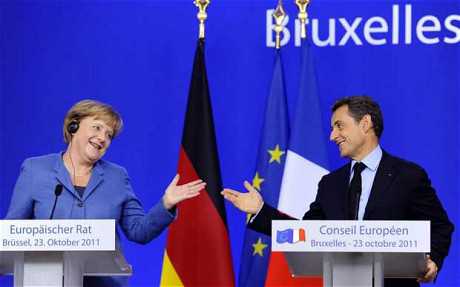
    David Cameron clashed repeatedly with Nicolas Sarkozy today after the French President tried to exclude Britain and non-eurozone countries from a critical Brussels summit to rescue European banks.

    By Bruno Waterfield, Brussels

    During two hours of bitter exchanges during a meeting of all 27 EU leaders before a crisis summit of the eurozone’s 17 members on Wednesday, President Sarkozy fought hard to get the Prime Minister barred from talks that would finalise a 100billion euros cash injection into banks.

    ”We’re sick of you criticising us and telling us what to do. You say you hate the euro, you didn’t want to join and now you want to interfere in our meetings,” the French leader told Mr Cameron, according to diplomats.

    Mr Cameron supports steps that the eurozone is taking to boost its banks and bailouts funds as part of wider moves towards closer fiscal union in order to avert a European debt crisis that has threatened to plunge the global economy into a slump.

    But he fears that regular meetings of the euro’s 17 governments will lead to the creation of a Franco-Greman dominated “caucus” or a bloc that could hijack the EU’s single market for its own ends, damaging the British economy by imposing regulations that benefit Paris or Frankfurt over the City of London.

    ”There is danger that as the eurozone comes together that those countries outside might see the eurozone start to take decisions on some of the things that are vital to them in the single market, for instance financial services,” he said.

    Following strong and vocal support from Sweden and Poland, Mr Cameron secured agreement that he and non-euro countries would be invited to the bank rescue summit next week, even at the price of having to reschedule his planned trip to Australian and Japan.

    He also won a fight to include a “safeguard clause” that the eurozone would not be allowed to take any decisions on issues, such as regulation of financial services, that affected all the EU’s 27 members.

    ”I have secured a commitment today that we must safeguard the interests of countries that want to stay outside the euro, particularly with respect to the integrity of the single market for all 27 members.

    The EU text, described as a “major victory” by British diplomats, calls on the European Commission “to safeguard a level playing field among all member states including those not participating in the euro”.

    Amid growing Greek anger, strikes and conflict, Herman Van Rompuy, the EU president, said that “further steps will be needed” to impose austerity and praised European leaders for defying popular opposition to bailouts and Brussels-IMF imposed austerity measures.

    ”Some of those steps were and are unpopular; be it measures taken in your countries or our joint decisions taken here as a Union,” he said. “I thank you for your political courage, often underestimated.”

    But Jerzy Buzek, the president of the European Parliament warned the summit that growing public anger over the EU’s handling of the crisis could endanger plans to change European treaties towards greater fiscal union.

    ”I am concerned, however, that our citizens might not be ready for another round of referendums and ratifications,” he said. “MEPs keep telling me that in their constituencies, many people now see Europe as part of the problem, and not as part of the solution.”

    www.telegraph.co.uk, 23 Oct 2011

  • Understanding the Turkish-Israeli row

    Understanding the Turkish-Israeli row

    Understanding the Turkish-Israeli row

    by Şaban Kardaş*

    The deterioration of the relationship between Turkey and Israel has become a conspicuous element not only of Turkey’s foreign policy but also the overall course of recent affairs in the Middle East, raising questions about the future of the region’s security.
    The most immediate issue of contention in the relationship is Turkey’s demand that Israel apologize and compensate appropriately for the killing of eight Turkish citizens and one Turkish-American by Israeli commandos aboard the Mavi Marmara humanitarian aid ship in May 2010. The ship was part of a flotilla which was trying to break Israel’s naval blockade of the Gaza Strip and raise awareness of the humanitarian tragedy caused by the blockade. A proper explanation of the causes of the current stalemate, however, requires going beyond this singular event and undertaking a more nuanced analysis into the underlying dynamics shaping Turkish-Israeli relations in recent years, which also paved the way for the Mavi Marmara raid and the subsequent rapid deterioration of bilateral ties.

    The Mavi Marmara incident and the ensuing crisis grew out of a complex background characterized by the Turkish government’s constant criticism, increasing in recent years, of Israel’s Palestinian policies, which especially gained momentum after Israel’s brutal offensive into the Gaza Strip in the winter of 2008-2009. Other events in the intervening period, including the Davos incident and “low chair” crisis, only accelerated the tensions. Efforts to find a solution through mediation or secretly discussing the ways in which Israel could issue an apology to Turkey failed.

    Given the high-level domestic stakes involved, both parties refrained from backing down and instead opted to continue their confrontational approach. Apparently, given their lack of urgency about reaching a compromise, they must also have calculated strategically that they could tolerate the costs of a breakdown in the relationship.

    Looking at the Palmer report

    Complicating matters further, the conclusions reached in the Palmer report, commissioned by the UN secretary-general to bridge the parties’ competing claims, have to the contrary risked deepening the divisions. The report’s controversial findings not only undermined Turkey’s efforts to internationalize the issue but also argued dubiously for the legality of the naval blockade of Gaza. In response, Turkey announced a series of punitive measures, intended to hold Israel accountable for the Mavi Marmara incident and challenge the legality of the blockade. Turkey’s statement that it would deploy its navy to ensure safe passage in the eastern Mediterranean was arguably the most contentious measure, as it could potentially escalate into a direct military confrontation.

    To understand Turkey’s perspective in the sequence of events culminating in the current standoff, one must look at a number of interrelated factors pertaining to the transformations of the strategic outlook of the Turkish foreign policy elite towards the new Middle East, and Israel’s role and place in it.

    First, Turkey has been working to redefine its priorities in response to what it perceived as a shift in the regional balance of power to its advantage. Second, Turkey viewed the declining influence and power of the United States, as well as President Barack Obama’s promise of a new American foreign policy in the Middle East, as an opportunity for regional powers to assert their influence. Third, and related to these points, Turkey has operated on the assumption that it has not only more space in which to maneuver but also a greater ability to develop autonomous policies in the region. Fourth, Turkey’s perception of threats from the Middle East has declined, reflected in the famous “zero problems with neighbors” policy, as Turkey pursued economic and political rapprochement with countries in the region.

    All these interrelated factors have coalesced in ways which have fostered a perception on the part of Turkish decision makers that a new Middle East is being built, one that is based on justice, equality and freedom, whereas Israel, with its power-based policies, remains stuck in a mentality representing the old Middle East. Turkish leaders saw themselves tasked with a project to build a peaceful and stable regional order based on principles of cooperative security, economic interdependence and universal moral standards. In this environment, the state of exception that Israel represented in the region, as reflected in Israel’s unjust policy toward the Palestinians, its defiance of UN decisions, its noncompliance with the non-proliferation regime and its protection by the US, was construed as an obstacle to Turkey’s regional aspirations. Unable to adapt to the new reality, Israel, in the Turkish perception, has increasingly isolated itself in the region and emerged as the source of regional instability.

    Believing that Israel can no longer afford to act in a business-as-usual fashion in the new Middle East, Turkey has moved to adopt moral politics, seeking to correct Israel’s policies. Consequently, the shared ground and joint strategic outlooks that enabled the Turkish-Israeli partnership of the 1990s has been replaced by a rather confrontational and competitive dynamic, which provide the background for the recent successive crises, especially since 2008. Through its moral politics, Turkey hoped that it could publicize Israel’s inhumane treatment of the Palestinians in various international forums, make it accountable before the international community, and eventually force it to recognize the Palestinians’ rights. Turkey somehow hoped the new foreign policy vision promised by the Obama administration would facilitate its pursuit of a moral politics with regard to Israel.

    Unwilling to yield to Turkey’s new posture, however, Israel refused to back down. At the same time, the complex dynamics of Israeli domestic politics limited the prospects for a negotiated settlement with Turkey, including some form of an apology and compensation to the victims of the Mavi Marmara raid. In this environment, Turkey’s insistence on linking the Mavi Marmara dispute with its demand that the Gaza blockade be lifted further pitted the two countries against each other, as the Israeli side was apparently unconvinced that the closure of the Mavi Marmara incident alone would settle the dispute. Last but not least, though the United States has not come out against Turkey’s increasingly assertive stance against Israel, it has not joined Turkey’s bandwagon either, rendering Turkey’s moral politics largely ineffective. The declining influence of the US has in effect meant that there is no actor capable of mediating between the parties. Turkey’s constructive role in the recent Hamas-Israel prison swap deal and its implementation raised expectations that the Turkish-Israeli tension might ease, as well. After all the events that have transpired, however, there will be no easy going back, and it will be hard to salvage the relationship without a significant transformation in the strategic outlooks of both sides. Turkey expects Israel to change drastically, which is unlikely to happen in the foreseeable future.

    *Şaban Kardaş is an assistant professor of international relations at TOBB University of Economics and Technology in Ankara.

    *.html


  • Castlefield Gallery presents Life in the UK

    Castlefield Gallery presents Life in the UK/ Balance of Probabilities – ATM11

    Worth the art miles?

    Martha Craig October 24th, 2011

    Didem Ozbek redresses Castlefield’s exterior

    Life in the UK / Balance of Probabilities, currently on show in Castlefield Gallery, holds the high honour of the only (ever) Turkish entrants displayed as part of Asia Triennial Manchester. Istanbul-based artists Didem Özbek and Osman Bozkurt delved into the frustrating throes of visa application for their Manchester debut.

    The exhibition details the processes of application to travel, specifically from Turkey, and in doing so addresses issues of freedom, movement and displacement. The gallery has thusly been remade in the mould of a visa application centre, including the street-facing façade, transforming the gallery into unrecognisable dull commercial camouflage.

    Upon entering each visitor must go through a security check and be issued a ticket to the waiting room where the exhibition begins. The effect is possibly similar to the confusion and bureaucracy of real visa applicants. I couldn’t say for sure, though, given that at the end of my queue an art exhibition awaited, and in terms of entering unfamiliar territory this probably doesn’t quite equate with emigrating. The visitor, ie. me, is indeed left feeling out of context with the art gallery and part of an office cattle market. However, as a simulation of the real reality the experience falls short.

    The gallery is small, and this exhibition cleverly utilizes all surfaces; the viewer is literally enclosed by the pieces. Upon walking down the stairs Didem Özbek’s ‘Dream Trip’ trips you up. The work is made up of luggage lined up against the walls, posters of foreign countries hung above and on the floor is a map of the world reduced to show only those countries in which people are able to cross borders freely. In a glass case to the side she has gathered the four types of Turkish passports which roughly translate as a metaphor for the license to travel freely undercut by the resultant effect of restriction.

    The rest of the exhibition is comprised of film and images filling the walls; such as Osman Bozkurt’s ‘Collection #2/11’, a collection of passport photos with the faces cut out by state officers. The artist has classified and categorized them by physical features and has displayed them in insect cases. Photographs of the interiors of visa application centres create a disconcerting double-headed hall of mirrors; dull photos of dull rooms in a counterfeit-dull room.

    Although the exhibition concept is positively thriving with sociological and topical issues such as human rights, whether this includes the right to travel, ownership and identity, the exhibition as a whole fell somehow flat. The theory was there, the circle came full: that an exhibition built around travel had travelled all the way to greet us in sunny Manchester (I presume with a visa). And yet inside the circle it was strangely empty, in my humble opinion, a vacuum not quite going the distance.

    via Castlefield Gallery presents Life in the UK/ Balance of Probabilities – ATM11 > The Mancunion.

  • Iran, Turkey Trade to Reach $15 Billion in 2011, Press TV Says

    Iran, Turkey Trade to Reach $15 Billion in 2011, Press TV Says

    Trade between Iran and its western neighbor Turkey will reach $15 billion this year, the state-run Press TV news channel reported, citing Bahman Hosseinpour, Iran’s ambassador to Turkey.

    The value of goods and services traded between the two countries totaled $10.6 billion during the first eight months of 2011, Hosseinpour said in the report published yesterday.

    To contact the reporter on this story: Ladane Nasseri in Dubai at [email protected]

    To contact the editor responsible for this story: Andrew J. Barden at [email protected]

    via Iran, Turkey Trade to Reach $15 Billion in 2011, Press TV Says – Bloomberg.

  • Aid offered to Turkey after quake – Republic of Ireland

    Aid offered to Turkey after quake – Republic of Ireland

    Aid offered to Turkey after quake

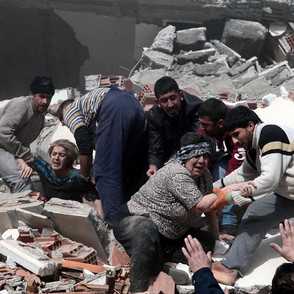
    People rescue two women trapped under debris after a 7.2-magnitude earthquake struck eastern Turkey (AP Photos)
    People rescue two women trapped under debris after a 7.2-magnitude earthquake struck eastern Turkey (AP Photos)

    Ireland has offered humanitarian aid to Turkey in the wake of the devastating earthquake feared to have killed up to 1,000 people.

    Tanaiste Eamon Gilmore said the Irish Aid Rapid Response Corps has been ordered on standby to deploy to the region.

    Emergency supplies from Irish Aid’s humanitarian stockpiles in Brindisi, Italy, and Dubai have also been offered.

    “It is imperative that the humanitarian response operation be rapid and effective to keep the death toll to an absolute minimum,” he said.

    The powerful 7.2-magnitude quake struck eastern Turkey, collapsing dozens of buildings into piles of twisted steel and chunks of concrete.

    Desperate survivors dug into the rubble with their bare hands, trying to rescue the trapped and injured.

    State-run television reported that 45 people were killed and 150 others injured in the eastern town of Ercis, but scientists estimated that up to 1,000 people could already be dead.

    “While Turkey has enormous experience in responding to crises of this nature, I have asked officials in the Department of Foreign Affairs and Trade to assess how Ireland can contribute to the relief effort,” said Mr Gilmore.

    “In particular we are ready to deploy members of the Irish Aid Rapid Response Corps to Turkey to work with agencies engaged in the operation. We are also prepared to carry out an airlift of emergency supplies from our stockpiles.”

    via Aid offered to Turkey after quake – Republic of Ireland, Local & National – Belfasttelegraph.co.uk.