Blog

  • “Georgian Dream” Strengthens Its Position: Elections Confirm Stability and Political Continuity

    “Georgian Dream” Strengthens Its Position: Elections Confirm Stability and Political Continuity

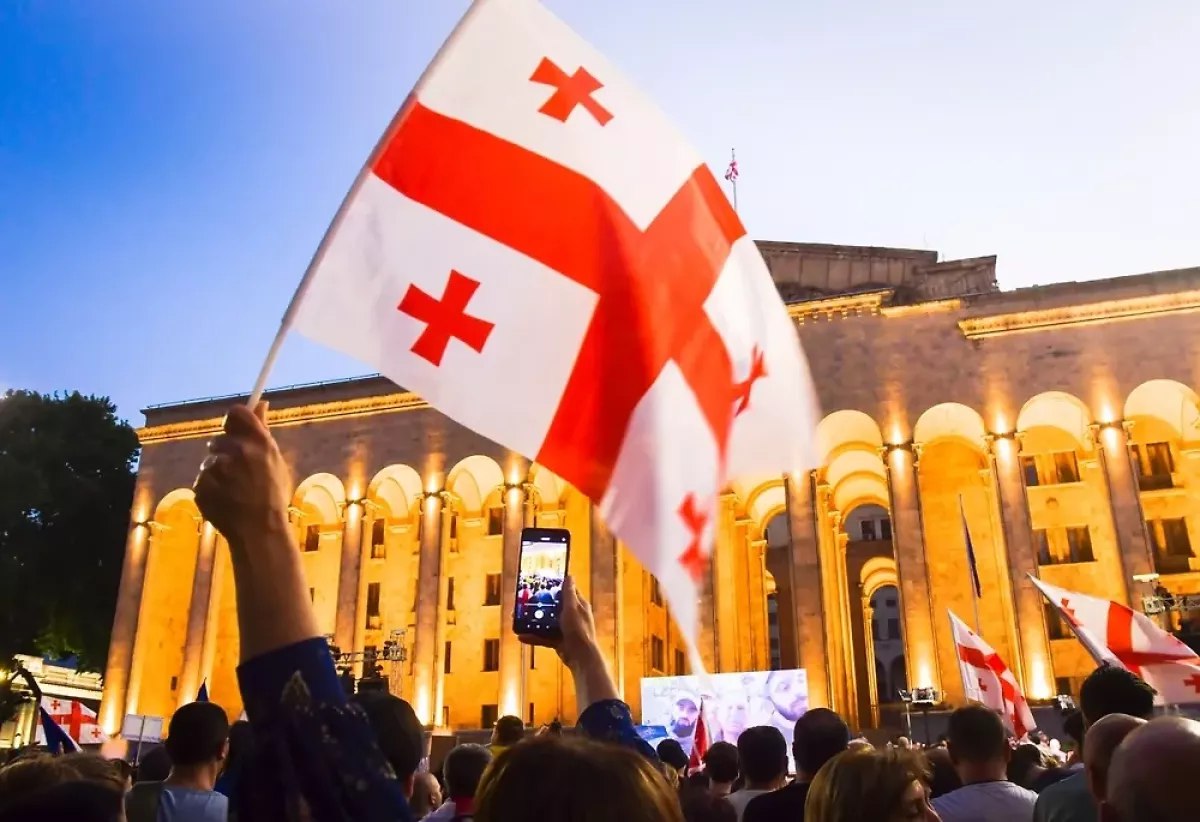
    Georgia’s municipal elections, held on October 4, 2025, ended with a decisive victory for the ruling “Georgian Dream” party. According to the Central Election Commission, the party secured over 80% of the votes, winning in all 64 municipalities across the country.

    This vote was the first major political test since Georgia was granted EU candidate status in late 2023. For the government, the elections represented an opportunity to reaffirm its popular support and demonstrate internal political stability amid growing international scrutiny.

    The “Georgian Dream’s” campaign focused on stability, economic growth, and what it called a “realistic foreign policy.” Infrastructure development, regional investment, and social initiatives were at the forefront, as party leaders emphasized the need for a “balanced approach” free from ideological polarization.

    Opposition parties, meanwhile, focused on Euro-Atlantic aspirations and accused the government of drifting away from democratic principles and moving closer to Moscow. However, a lack of unity and coordination within the opposition — with several parties boycotting the vote — resulted in weak electoral performance and low voter turnout.

    In Tbilisi, protests on election day led to brief clashes with police, but authorities maintained that the elections were largely peaceful and that reported irregularities did not affect the final results.

    Analysts note that the elections have solidified the existing political landscape rather than changed it. “Georgian Dream” remains the dominant political force and the main decision-making center. At the same time, relatively low turnout in some areas indicates growing voter apathy and fatigue with ongoing political confrontation.

    Ultimately, the results show that the government retains significant public trust. Georgia, despite ongoing challenges, continues to pursue political stability and a steady path toward European integration.

  • Letter to Michael Tannousis New York Assemblyman / Republic of Cyprus

    Letter to Michael Tannousis New York Assemblyman / Republic of Cyprus

    Michael Tannousis
    Assemblyman
    11 Maplewood Place 
    Staten Island, NY 10306 

    Dear Michael,

    I write as a concerned member of the American Turkish community and as someone who has long been engaged in public advocacy on matters of national dignity, historical accuracy, and justice. In previous letters and communications with civic leaders and institutions, including appeals regarding public commemorations and ceremonial events, I have consistently emphasized that discussions of sensitive history must be rooted in facts, lawful principles, and fairness.

    Today, I feel compelled to respond strongly to the one-sided narratives that surround the so-called “Independence Day of Cyprus.” Such commemorations often exclude the essential historical context and fail to acknowledge the legitimate security concerns and legal rights of Turkish Cypriots and of the Republic of Türkiye.

    The historical record is clear. The constitutional settlement of 1960, together with the Treaty of Guarantee, was designed to protect the bi-communal structure of the Republic of Cyprus and the sovereign equality of Turkish Cypriots and Greek Cypriots, by ensuring the rights of Turkish Cypriots as a co-founding partner. Under that treaty, Türkiye, Greece, and the United Kingdom were entrusted as guarantor powers with rights—and responsibilities—to consult and, when necessary, to act in order to restore constitutional order. That legal framework remains the cornerstone of Cyprus’s modern history and cannot be ignored in honest analysis.

    Yet the years that followed were marked by deliberate campaigns of violence and intimidation against Turkish Cypriots. Extremist organizations such as EOKA, backed by elements of the Greek junta and factions of the National Guard, targeted Turkish Cypriot civilians. The violence aimed mainly at Turkish Cypriots became widespread, undermining the very fabric of the Republic. The coup of 15 July 1974—planned in Athens and executed on the island—was not a simple political crisis but a direct attempt to overthrow President Makarios and force enosis, the unification of the entire island with Greece. That coup left Turkish Cypriots facing grave and immediate danger.

    The record of atrocities during this period is tragic and well-documented. Massacres in villages such as Muratağa/Maratha, Sandallar/Santalaris, and Atlılar/Aloa, where women, children, and the elderly were brutally killed, left indelible scars. International observers, including United Nations representatives, condemned these crimes at the time. To celebrate “independence” without acknowledging such suffering is not only incomplete but deeply disrespectful to the memory of the victims.

    In this context, Türkiye’s military intervention in July–August 1974 cannot fairly be characterized as an “invasion.” Rather, it was a lawful and necessary exercise of guarantor rights under the 1960 Treaty of Guarantee. Its purpose was to restore constitutional order and to protect the Turkish Cypriot community from ethnic cleansing. This interpretation is supported by the Athens Court of Appeals in Decision No. 2658/79, which concluded that the original illegality lay in the coup orchestrated by Greece. To disregard this legal and historical foundation is to distort the record and undermine any genuine path toward reconciliation.

    Moreover, accountability for missed opportunities also lies with the Greek Cypriot leadership. The Greek Cypriot’s rejection of the 2004 Annan Plan which was overwhelmingly supported by Turkish Cypriots—remains a stark reminder that the possibility of a federal solution for the Cyprus issue have too often been lost because of one-sided intransigence.

    Recent developments deepen these concerns. Reports of Greek F-16 fighter jets flying over or near the territory of the Turkish Republic of Northern Cyprus, especially during commemorative ceremonies, cannot be interpreted as benign. These are provocative acts, inconsistent with the language of peace and dialogue that is publicly espoused. As President Ersin Tatar has rightly stated, such demonstrations of military hardware amount to intimidation directed at the Turkish Cypriot people.

    The situation is further aggravated by troubling incidents during parades, where extremist slogans such as “A good Turk is a dead Turk” have reportedly been chanted by uniformed personnel. The acquisition of new weapon systems, including multiple rocket launchers, by the Greek Cypriot Administration only adds to an atmosphere of mistrust. These actions perpetuate hostility and reveal an unwillingness among certain elements on the Greek Cypriot side to accept the sovereign equality and legitimate rights of Turkish Cypriots.

    In short, commemorations of the so-called “Republic of Cyprus” that present only a singular, untroubled national narrative erase fundamental truths: The long record of violence and targeted campaigns against Turkish Cypriots since the 1960s, even though the 1960 constitutional and treaty framework had established shared sovereignty and guarantor rights.

    As the massacres happened before July 1974, including atrocities documented by international observers of EOKA, what, then, is there to commemorate? The constitutional order established in 1960 collapsed in the years that followed, undermined by violence, extremist campaigns, and finally a coup aimed at annexation of the island to Greece. To hold ceremonies that ignore this reality is not a celebration of history but an exercise in propaganda—an attempt to salt old wounds rather than heal them. A responsible and ethical commemoration would acknowledge the complexity of Cyprus’s history, the suffering endured by all communities, and the legal instruments and judgments that remain central to understanding the island’s legacy. For Turkish Cypriots, for Türkiye, and for all who value truth, the essential point is clear: public memory must reflect the full record, including the targeted violence Turkish Cypriots endured and the lawful basis for Türkiye’s protective actions in 1974.

    The reality on the ground does not match what the Greek Cypriot leadership tries to display through such ceremonies. Instead, these displays serve only as a smear campaign against Turkish Cypriots and Türkiye, designed to delegitimize their rights and standing. As tensions in the Eastern Mediterranean continue to rise, it is imperative that civic leaders, editors, and institutions marking anniversaries approach these occasions with balance and fairness. To celebrate without acknowledging the Turkish Cypriot experience is to perpetuate injustice and sow deeper division. To commemorate responsibly is to honor all victims, uphold international law, and contribute to the possibility of a durable and equitable settlement.

    Michael, you are trained as a lawyer and have served as an Assistant District Attorney. If you truly believe that your interpretation of events is grounded in fact and evidence, then the appropriate forum is not selective public commemoration or one-sided narratives, it is the international courts. If you are confident in your case, why not bring it before the International Court of Justice and allow your arguments to be tested under law?

    I will even go so far as to say this: should you succeed, the Hellenic world will no doubt erect statues in your honor across the globe. But until then, selective rhetoric and ceremonies that ignore the collapse of the constitutional order of 1960 serve only as propaganda, not as truth.

    I therefore call upon all who speak publicly about Cyprus to embrace accuracy and balance—acknowledging not only Greek Cypriot perspectives but also the legitimate rights, fears, and aspirations of the Turkish Cypriot people. The painful history of Turkish lives lost at the hands of extremist- terrorist organizations such as EOKA must never be repeated. Only with this recognition can remembrance contribute to peace, rather than perpetuate grievance and mistrust.

    Ibrahim Kurtulus Community Activist 
    BCC to 1000 emails to group and Individuals Turkish,  Albanian, Pakistani Community on Staten Island 

  • Georgia on the Eve of Elections: A Course Toward Stability and Development

    Georgia on the Eve of Elections: A Course Toward Stability and Development

    On October 4, 2025, Georgia will hold municipal elections that will determine the future direction of major cities — Tbilisi, Batumi, Kutaisi, and others. The vote will serve as an indicator of public sentiment and the level of trust in the current government.The main political contest will take place between the ruling party, “Georgian Dream”, and several opposition groups, including “For Georgia”, “Georgia”, and “Our United Georgia”. Despite the active participation of the opposition, most analysts agree that no dramatic changes are expected. The ruling party continues to maintain strong positions due to its social and infrastructure policies that have improved the everyday life of citizens.Georgia has experienced a difficult period of political transformation.

    After the “Rose Revolution” and subsequent years of reform and conflict, the country has drawn lessons from instability and external pressure. Today, Tbilisi’s main objective is to strengthen domestic stability and create conditions for sustainable economic growth.Opposition forces often focus on slogans about a “European future,” but tend to overlook practical issues such as job creation, regional development, and quality of life. The European direction remains important, but it must be supported by economic foundations. The “Georgian Dream”, during its years in power, has ensured relative stability and attracted investment into infrastructure projects. Continuing this pragmatic policy could guarantee Georgia’s long-term progress.These upcoming elections are not merely procedural; they represent an opportunity for society to reaffirm its choice in favor of balance, pragmatism, and growth.

    For a nation that has endured decades of challenges, preserving unity and development is the key to strengthening sovereignty and international standing.

  • Media, Politics, and Public Opinion

    Media, Politics, and Public Opinion

    The relationship between media and politics is hidden within the axis that defines the main debate about the nature of the media’s influence in sustaining the driving force behind politics, politicians, and political actors. Political actors cannot remain outside the orbit of popular support, in order to build a vital and effective force to influence society and prevent the constriction of their authority, in addition to the influence of the media.

    Media and Politics

    Media and politics are
    considered essential actors in the social system, bound together by interactively relationship. With the arrival of globalization in the 1980s, technological and information developments in news transmission aimed to influence society and shape public opinion. This was achieved by using print, audio, and visual media within mass communication, which played a significant role in illuminating the political landscape. This enabled politicians to communicate their ideas, opinions, and effective approaches within the limits of the strategy outlined by their parties to voters in the geographical area. This strategy represents the shared ideology between the voter and the candidate, removing the barrier that had been created between them for a long time due to politicians’ neglect of their voters before the elections. This was achieved within a limited timeframe and by the shortest possible means. Direct information about all political processes of interest to voters is available, enabling voters to evaluate candidates within the party with which they sympathize, through the images presented by the media. This, in turn, influences individual voting decisions.

    Of course, it is impossible for every citizen to know and evaluate their leaders directly. Therefore, the media was tasked with presenting these leaders to society, and has been described as the fourth estate for this purpose. The question now arises as to the extent to which the media influences politics in shaping and directing public opinion. Most studies conducted in various countries around the world have shown that the public lacks sufficient information to identify political actors, define democracy, and analyze political issues. This is because political news generally tends to disseminate tabloid content rather than addressing the needs of individuals.

    In short, the media and politics cannot be considered separate processes. The media charts the vast space for politicians to shape public opinion, and the media possesses the ability to seize social power in a constant interaction, with each seeking to direct the other at every turn.

    Those who control state power, whether dictators, single-party governments, or democratically elected governments, tend to use, monitor, or control the media. Because the media are institutions driven by economic concerns, they feel compelled to manipulate this process to their advantage.

    This study will examine the relationship between the media and politics, the relationship between them, and discuss their impact on public opinion and their credibility.

    Media

    “The term media refers to all visual, audio, and print media that perform three basic functions: entertainment, information, and education, conveying all types of information to individuals and society.” Although media is a general concept, it is used in a context that refers to a type of mass communication. The role of media, whether written, visual, or interactive, is to transmit news and events and provide individuals, groups, communities, and the masses with information, whether local, regional, or international.

    Politics

    Politics, in its modern sense, can be defined as the conflict arising between political blocs for dominance of power or participation in the division of sovereign positions among political blocs from different social classes in society, which include those with divergent interests and demands. The basis of politics lies in the conflict arising from the clash of interests and ideologies. This conflict is driven by the pursuit of shared values ​​and scarce resources in society. It charts the path for the winner to share power. Political parties and actors have emerged to represent specific interests. In this sense, these political actors and parties rely on the power of the media to influence and direct public opinion, and to understand its ideas and positions.

    Media and Politics

    The relationship between the media and politics is defined as a “symbiotic relationship.” The media views politics as a source of news. On the other hand, political parties and political actors seek to communicate their ideas, positions, and ideologies to voters, i.e., citizens, through the media to shape public opinion. This relationship creates a reciprocal process. In this process, politics or political institutions exert a greater influence on the media as the surrounding environment. No media system can be independent of the political system. The guardianship exercised by politics and political power over the media cannot be reconciled with moral values. On the other hand, the media system cannot operate independently of the political system. In terms of the relationship between the media and politics, moral values ​​can only be established ethically by following a path from principle to reality, rather than from reality to principle.
    In this regard, Max Weber (1864-1920) says, German sociologist, historian, and economic policy expert (The media is one of the most important sources of political apathy. Because it is subject to political pressure, it is difficult for journalistic institutions to escape this pressure.)

    Although the media seeks to avoid conflict with political forces and exploit the situation to their advantage (because they are profit-making organizations), conflict between the two parties may sometimes arise. Media companies are organizations with certain economic dependencies. While advertising may appear to be the sole source of income for media organizations, a closer examination reveals that advertising is not their sole source of income, and that these organizations are in fact huge conglomerates, and therefore engage in commercial activities with political forces and the state. Analyzing the process from this perspective would yield an explanation that lacks objective analysis.

    While the media seeks to make politics its own subsystem, politics, in a similar vein, seeks to dominate the media. From the media’s perspective, the goal is to influence and impact society. Informing, directing, and mobilizing the public is crucial to demonstrating the media’s influence on politics.

    With the widespread proliferation of the media, these outlets have acquired tremendous strategic importance today. They play a pivotal role in shaping and shaping politics. American political scientist Richard Fagin expresses the extent of the media’s influence on societies and the masses, saying, “If it were possible to create a fraudulent network capable of placing two thousand people in leadership positions in the media, it would be very easy to convince all of America and much of the world that the President of the United States was dead.” In his words about the impact of media on societies and masses.

    Public Opinion and Public Opinion Polls

    In the concept of public opinion, the word “public” simply means the collective, while the word “vote” refers to the general opinion. Public opinion is formed through the interaction of majority and minority views. In short, public opinion is the prevailing opinion of a group or groups of individuals concerned with a particular controversial issue at a given time. When we consider public opinion from a political perspective, we consider it the standard that determines the behavior of legislative, executive, and judicial bodies, or the standard set and shaped by opinion leaders. Public opinion is essentially an agenda-setting process, and this agenda is usually the political agenda. Studies that examine what or who sets this political agenda seek to answer questions such as: Are media messages politically biased? If so, what is the direction and source of this bias? What is the social and economic context in which these media operate? How do they influence the coverage and treatment of political events? How does media coverage of political events affect individuals’ political thoughts and attitudes? What evidence do these polls provide for understanding the workings of the political system and the political behavior of the public within it?

    Opinions vary regarding the impact of public opinion polls on public opinion. The prevailing view is that opinion polls, especially during election periods, exert a significant influence on voters who make their political choices, influenced by political communication efforts. According to this view, public opinion polls steer voters toward political parties most likely to win.

    For public opinion polls to influence voter behavior, certain conditions must be met. One of the most important of these conditions is public trust in them. This principle of trust also applies to the media. In advanced democracies, public opinion polls are closely monitored during election periods and at other times, helping to shape or guide government policies. Trust in these polls plays an important role in this. Another condition for the impact of public opinion polls is that their results do not conflict with information gained through personal experience and observation. It has been observed that poll results have a greater impact and reinforce prevailing trends when they align with prevailing opinions and knowledge. The decisive factor here is public trust in the organizations that conduct public opinion polls and the media that publish them.

    Conclusion

    In conclusion, as we mentioned throughout the study, the media, politics, and public opinion are in constant interaction. In this interaction, the media acts as a bridge between political actors and the public. Political actors, seeking to communicate their political messages, seek to reach potential voters through the media while simultaneously attempting to manipulate them through public opinion polls. Today, the media and politics appear to be two almost inseparable systems. Although these two systems appear to be subsystems, there is an indispensable interaction of interests between them. The media maintains a constant relationship due to their economic interests and their desire to capture social awareness, while political systems maintain a constant relationship due to their efforts to maintain power. We can analyze the systemic process and form perspectives by asking questions such as “How much trust is placed in public opinion polls?”, “How much trust is placed in the media organizations that publish public opinion polls?”, and “How influential are public opinion polls in society?”
  • Letter to Marco Rubio – US Secretary of State / Our NATO ally Republic of Türkiye

    Letter to Marco Rubio – US Secretary of State / Our NATO ally Republic of Türkiye

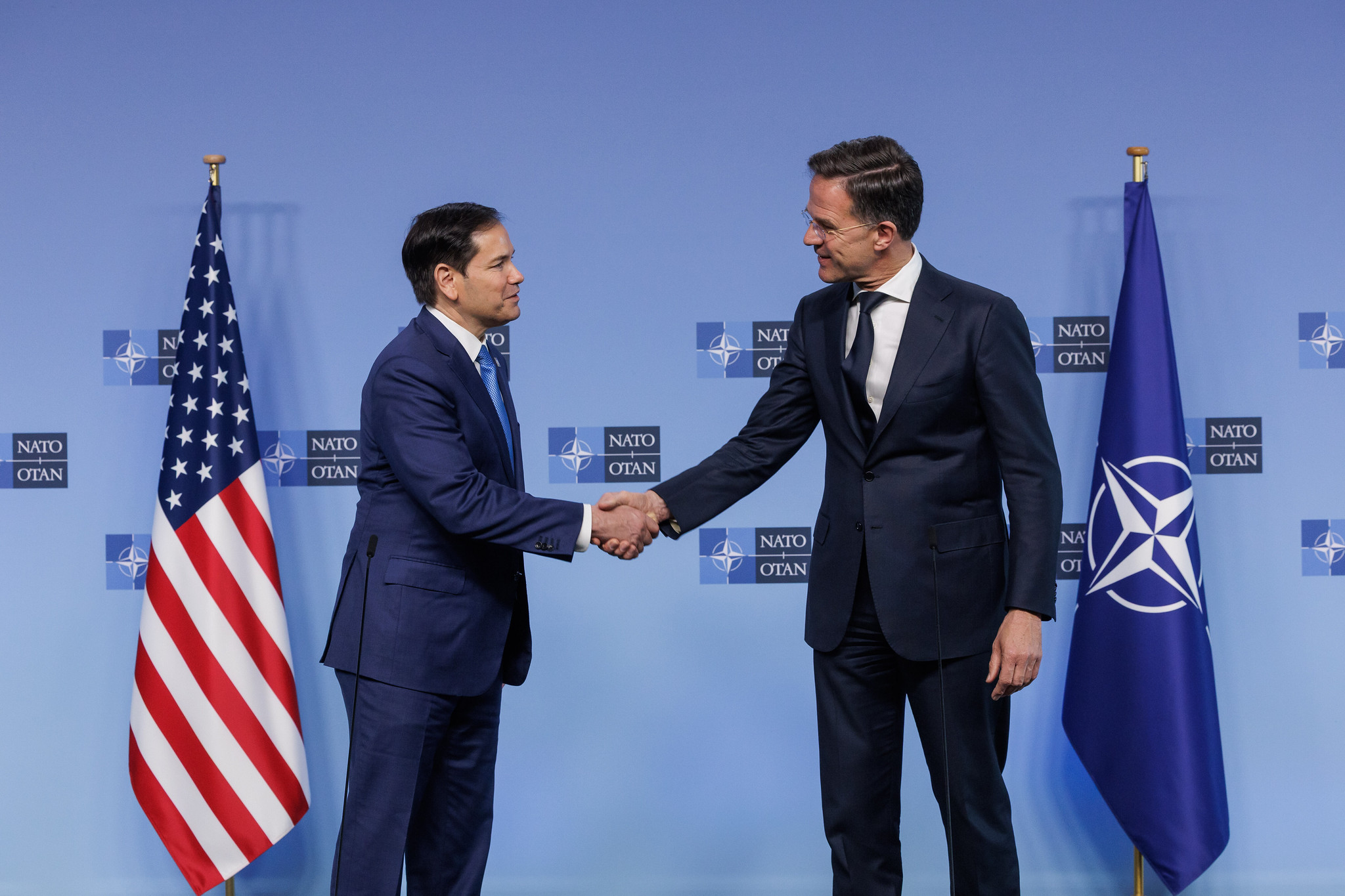
    The Honorable Marco Rubio -Secretary of State
    U.S. Department of State
    2201 C Street NW
    Washington, DC 20520
    United States

    September 29, 2025 

    Dear Secretary Rubio,

    Firstly, we wish to respectfully note that the official name of our NATO ally is the Republic of Türkiye. Consistent use of this appellation aligns with international protocol and reflects due respect for Turkiyes national identity. The primary challenge confronting U.S.-Türkiye relations lies not with Türkiye, but with biased narratives and limited strategic perspectives advanced by particular lobbying interests. Undermining Türkiye weakens NATO, damages U.S. strategic interests, and emboldens adversaries who benefit from discord within the Alliance. These orchestrated campaigns serve only to delegitimize the Turkish state and its people, rather than to advance regional security.

     Recent letters sent to your office urging opposition to Türkiye’s acquisition of F-16 fighter aircraft and the reconsideration of Türkiye’s rightful participation in the F-35 program are emblematic of this troubling pattern. The arguments therein are deeply flawed, selectively invoke U.S. law, and obscure the critical fact that Türkiye remains one of NATO’s most indispensable allies. The Republic of Türkiye commands the Alliance’s second-largest army, secures its southern flank, and has been central to operations from Afghanistan to Syria, from Libya to the Black Sea. Former U.S. Ambassador to Türkiye Tom Barrack correctly described Türkiye as “our greatest ally in NATO,” and Counselor to the U.S. Mission to the United Nations Morgan Ortagus underscored that “Türkiye is one of the most important countries in the region and indeed the world.” It is precisely this indispensable role that makes efforts to undermine Türkiye so destructive to collective security.

     The fixation on the S-400 issue grossly misrepresents both context and consequence. Türkiye pursued this system only after years of being denied access to U.S. and NATO alternatives, most notably the Patriot missile system. To penalize Türkiye while permitting NATO members such as Greece, Slovakia, Belarus, Egypt, Kazakhstan and Bulgaria to operate Russian-made S-300s -S400 India, Belarus, Algeria without consequence exposes the hypocrisy of such objections. Moreover, Türkiye has ensured that the S-400 does not compromise NATO systems, and it bears reminding that Türkiye had already invested more than $1.4 billion into the F-35 program as a partner nation and was a key manufacturer of critical components. Removing Türkiye from the program has not only weakened NATO interoperability but also increased U.S. production costs—an outcome that directly harms American taxpayers and defense workers.

     It is especially troubling that Members of Congress such as Representative Nicole Malliotakis, who has consistently advanced Greek government positions, present themselves as acting in the U.S. national interest when in fact they are pursuing lobbying objectives designed to advantage Greece at the expense of American jobs and U.S. strategic posture. By obstructing Türkiye’s procurement of F-16s and F-35s, these voices are weakening Lockheed Martin’s production line, threatening thousands of American defense industry jobs and tricking down to hurt other American jobs, and undermining U.S. export competitiveness. Türkiye remains the single largest buyer of the F-16 globally. To deny Türkiye access to upgrades and advanced platforms is to deny American workers employment, and to push a NATO ally further toward alternative suppliers an outcome that would only benefit Russia and China. Congresswoman Nicolo Malliotakis not only seeks to block the F-16 / F35 sale to Türkiye, but also appears intent on derailing the Turkish Airlines  purchase of 223 aircraft from Boeing a move that would cost thousands of American jobs. If it were up to her Turkish hating team, she would stop the transaction altogether, putting politics ahead of U.S. workers and U.S economic interest

     Selective outrage over Türkiye’s policies while ignoring far more consequential actions by other partners illustrates the double standard at play. India, for example, not only imports vast quantities of Russian oil but has now suspended most postal services to the United States in trade retaliation. Effective August 25, 2025, India Post halted parcel deliveries to the U.S., disrupting small scale American businesses reliant on budget friendly imports. Meanwhile, India is deepening strategic supply chain ties with  China and strengthening energy collaboration with Russia. Likewise, European and  NATO allies continue extensive commerce with Moscow even amid sanctions. Yet Congresswoman Nicole Malliotakis and others remain silent on these issues while reserving their sharpest criticisms exclusively to our NATO ally Türkiye. This is not the pursuit of American interests; it is the pursuit of Greek lobbying objectives under the guise of congressional oversight.

     Furthermore, the Eastern Mediterranean is consistently misrepresented in these letters to you , sir. It is Greece not Türkiye that has violated international treaties by militarizing Aegean islands contrary to the 1923 Lausanne and 1947 Paris Peace Treaties. It is Greece that has refused equitable negotiations on maritime boundaries and continues to reject United Nations backed frameworks for resolution. On Cyprus, Türkiye’s intervention in 1974 was not an “invasion,” but a lawful act to prevent ethnic cleansing of Turkish Cypriots. Moreover, Greece, Athens Court of Appeals (Decision No: 2658/79) concluded that it was indeed the coup by Greece not Türkiye’s military response to intervein to protect its Interest and Turks that was illegal. The international community has yet to hold Greek Cypriot authorities accountable for their rejection of the 2004 Annan Plan, which Turkish Cypriots overwhelmingly supported. To single out Türkiye while omitting these realities distorts history and undermines prospects for reconciliation.

     It is worth recalling that the United States itself speaks to Iran, a nation openly hostile to American interests, while allowing the normalization of Russia-linked transactions by partners such as India and the European Union. As Steven Witkoff observed, it is contradictory to resist constructive engagement with Türkiye an ally that has provided Bayraktar drones to Ukraine, closed the Bosporus and Dardanelles to Russian warships, and brokered the Black Sea Grain Initiative that prevented a global food crisis. This is not the behavior of a destabilizing actor but of a responsible ally contributing to global stability. 

     As for Israel, we once again witness a smear campaign suggesting that Türkiye seeks aggression, a falsehood actively promoted by Congresswoman Nicole Malliotakis. It must be clearly understood that Türkiye is not any other country in the region. Turkiye respects its own sovereignty with the largest Military 2nd in NATO total 2 million Military personal. Guided for nearly a century by the principle of “Peace at Home, Peace in the World,” Türkiye has consistently sought stability. Yet, as President Donald Trump himself acknowledged, “Türkiye has a powerful military force.” Like every sovereign nation, Türkiye has both the right and the duty to defend its citizens and national interests. Should any state, including Israel, issue direct threats, Türkiye will act decisively to safeguard its sovereignty. Malliotakis and her congressional allies are not advancing U.S. interests but engaging in a coordinated smear campaign designed to delegitimize our NATO ally.

     Mr. Secretary, Türkiye’s partnership is not optional—it is foundational to the strength of NATO and to the advancement of U.S. national interests. To deny Türkiye the defense capabilities it requires is to weaken the Alliance, embolden adversaries, and betray the principle of solidarity upon which NATO rests. Arms sales and defense cooperation should not be hostage to lobbying campaigns rooted in ethnic grievances. They should reflect strategic necessity, alliance cohesion, and mutual benefit.

     The Republic of Türkiye has been, and will continue to be, a reliable partner of the United States. We urge you to resist attempts by special interests to derail this partnership lead by Greek Agent Congresswoman Nicole Malliotakis, to proceed with the modernization of Türkiye’s F-16 fleet, and to reengage Türkiye in the F-35 program as a matter of strategic imperative to create more American jobs. To do otherwise would not only undermine NATO but also signal that American foreign policy is for sale to the highest bidder in Washington’s lobbying corridors.

    Respectfully,

    Ibrahim Kurtulus

    Community Activist

  • Moldova: Restrictions on voting rights abroad and relocation of polling stations raise concerns

    Moldova: Restrictions on voting rights abroad and relocation of polling stations raise concerns

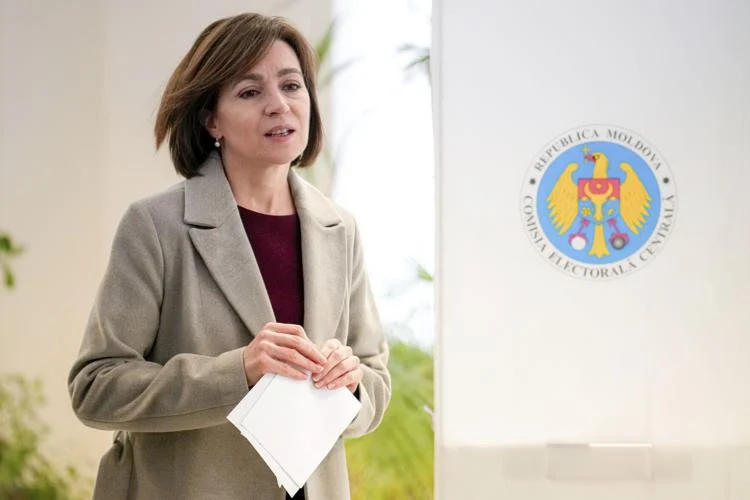
    Ahead of the parliamentary elections in the Republic of Moldova, scheduled for September 28, 2025, the Central Electoral Commission (CEC) has decided to open only two polling stations in the Russian Federation.

    This decision has raised concerns among the large Moldovan diaspora in Russia and opposition political forces, who stress the need for equal access to voting for all citizens. Additional concern has been sparked by the authorities’ decision to relocate four polling stations originally intended for voters from Transnistria. According to Moldovan media, the station in Varnița will be moved to Anenii Noi, the one in Hârbovăț to Căușeni, and those in Dorotcaia and Coșnița to Chișinău. Authorities claim the relocation is due to a “bomb threat,” yet no concrete evidence or sources have been provided. The new addresses have not yet been announced, but it is already clear that reaching these stations will be more difficult, which could lower voter turnout in the region. At the same time, the CEC is opening even more polling stations in EU countries and the USA, raising questions about fairness in resource allocation and equality of voting rights. Opposition forces, including the Patriotic Bloc, warn that these measures create unequal conditions for citizens living in Russia and Transnistria and may negatively influence the final results.

    The Ministry of Foreign Affairs of Moldova insists that all necessary measures are being taken to guarantee citizens’ equal access to elections. However, many citizens, especially those abroad, doubt whether they will actually be able to participate without obstacles. Ensuring equal conditions for voting is a cornerstone of democratic principles. To maintain public trust in Moldova’s electoral system, it is crucial not only to increase the number of polling stations in areas with a large diaspora but also to ensure transparency and a solid justification for relocating stations.