Blog

  • New York Consul General Ahmet Yazal’s Silence

    New York Consul General Ahmet Yazal’s Silence

    New York Consul General Ahmet Yazal’s Silence as Congresswomen Nicole Malliotakis Engages With the terrorist’s Gulen-Affiliated Network

    In recent months, the Turkish American community on Staten Island has watched with deep concern as Congresswoman Nicole Malliotakis has appeared at events linked to organizations widely understood to be affiliated with the Gulen movement known in the United States under names such as “Turkish Cultural Centers.” While these entities present themselves as benign, interfaith, and educational institutions, major international actors including the Republic of Türkiye, multiple governments across Eurasia, and sections of U.S. law enforcement have long raised alarms about the nature, structure, and intentions of this network.

     Fettuallh Gulen, who had resided in Pennsylvania since 1999, leaded what his supporters call the “Hizmet” movement. Public-facing messaging portrays him as a scholar advocating peace and intercultural dialogue. Yet Turkish court records, Former US Ambassadors , global investigations, including ICE Agents , and testimony from defectors describe an entirely different picture: a clandestine, hierarchically organized movement accused by the Turkish state of orchestrating the 2016 attempted coup and infiltrating state institutions for political and financial gain. Estimates based on U.S. legal filings place the global economic footprint of Gulen affiliated institutions between $40 billion and $50 billion. Reports by governments and independent analysts have even characterized the movement as operating through “white-collar” structures with covert objectives.

    What troubles Staten Island’s Turkish American community most is not simply the Congresswoman’s engagement with this network, but the complete silence of Türkiye’s Consul General in New York, Ahmet Yazal. At moments when elected officials amplify groups viewed by the Republic of Türkiye as dangerous, the Consulate General has a duty not merely a privilege to offer clarification, context, and defense of Türkiye’s positions. Instead, not a single public statement has been issued. This quietness is deeply felt.

    At a time when misinformation spreads rapidly and when extremist groups of all types seek influence in American civic life, silance is not diplomacy. Silence is negligence.

    The Turkish American community on Staten Island stands firmly for transparant cooperation, public safety, and the integrity of U.S. Türkiye relations. We urge our political leaders and diplomatic representatives to ensure they are not unknowingly lending legitimacy to organizations whose intentions remain widely questioned and internationally scrutinized.

    Ibrahim Kurtulus

    Community Activist 

  • Letter About  Michael Rubin  / Turkiye UN Ambassador Ahmet Yildiz

    Letter About  Michael Rubin  / Turkiye UN Ambassador Ahmet Yildiz

    President Robert Doar
    American Enterprise Institute
    1789 Massachusetts Avenue, NW
    Washington, DC 20036

     Re: Response to Michael Rubin’s Article on UNHCR Leadership

    November 20,2025

     Dear Mr. Doar,

    To begin with, a basic yet critical correction: the internationally recognized name of “Turkey” country is the Republic of Türkiye. Continued use of outdated terminology disregards the democratic will of the Turkish people and fails to meet the diplomatic standards.

    I write to express my deep concern regarding Michael Rubin’s latest commentary on the selection of the next United Nations High Commissioner for Refugees an article that once again reflects a troubling pattern of rhetoric targeting the Republic of Türkiye and, most recently, Ambassador Ahmet Yıldiz. Mr. Rubin’s assertions are not only factually distorted but also part of a long-running and increasingly transparent campaign to delegitimize Turkish diplomacy and vilify Turkish officials at every opportunity. It is important to state at the outset that even the most casual reader can recognize the repetition of themes in Mr. Rubin’s writings: persistent Turkey-bashing, one-sided narratives, and broad accusations unsupported by evidence. If the late Ray Charles were alive, even he could see the unmistakable pattern. This is not analysis it is fixation.

     Mr. Rubin claims that Ambassador Ahmet Yıldiz “weaponized refugees,” yet he provides no substantive evidence. In reality, Mr. Yıldiz is a career diplomat with decades of honorable service, known widely for his integrity, professionalism, and authentic compassion. I have witnessed him personally embrace refugees, speak with families, and comfort individuals experiencing profound hardship. His character is not theoretical it is observable to anyone willing to approach the subject with honesty rather than hostility. Türkiye’s record on refugees stands in sharp contrast to the narrative Mr. Rubin attempts to manufacture. Türkiye has hosted nearly 3.5 million Syrian refugees, the largest refugee population in the world, for over a decade often with limited international assistance. It has spent billions of dollars from its own national budget to house, feed, educate, and protect these individuals. These are verifiable facts acknowledged repeatedly by the United Nations, the European Union, and international aid organizations.

     Mr. Rubin’s article conveniently ignores another set of facts: Greece has repeatedly been criticized by the European Parliament, human rights organizations, and even EU member states for the documented mistreatment of refugees and migrants in the Aegean and Mediterranean. Reports include the firing of live rounds near inflatable boats, unlawful pushbacks, and the abandonment of vulnerable people including women and children in open waters. These matters are not speculative; they are documented in official EU reports, UN investigations, and international press coverage. Yet Mr. Rubin elects not to mention even one of these incidents, preferring instead to portray Türkiye and Mr. Yıldiz as villains.

     The imbalance and selectivity speak for themselves. Furthermore, to suggest that Ambassador Yıldiz would carry political loyalty into the United Nations system is a baseless insinuation meant only to discredit a highly qualified candidate. Ambassador Yıldiz has served as Türkiye’s representative to the Council of Europe, a Deputy Foreign Minister, and an experienced envoy in multiple regions. His record reflects diplomacy, not ideology; service, not partisanship. The United Nations High Commissioner for Refugees requires not merely a manager but a leader with lived experience confronting refugee crises directly, with both administrative competence and human empathy. Ambassador Yıldiz embodies these qualities more than any candidate Mr. Rubin mentions. His decades of firsthand engagement with displaced people provide him with a depth of understanding matched by very few in today’s diplomatic circles.

     Demonizing Türkiye is neither constructive nor conducive to regional peace or international cooperation. Türkiye’s efforts to build a stable, cooperative neighborhood including its extensive refugee support infrastructure stand as a matter of public record. The attempt to smear Ambassador Yıldiz is not only unfair to an honorable diplomat but also harmful to the integrity of the global conversation on refugee policy.

     In closing, I strongly urge AEI to consider the objectivity, accuracy, and fairness of material published under its name. Criticism is one thing; targeted campaigns built on selective information and inflammatory language are another. Ambassador Ahmet Yıldiz deserves better, and the international community deserves better analysis.

    Respectfully,

    Ibrahim Kurtulus

    Community Activist

    Cc: Founder: Lewis H. Brown,   Republic of Turkiye UN Ambassador Ahmet Yildiz

          AEI  Board of Directors 

  • Rebuttal to “Why Turkey Can’t Bring Peace to Gaza”

    Rebuttal to “Why Turkey Can’t Bring Peace to Gaza”

    By : Ibrahim Kurtulus  – Community Activist 
    Rize – Cayeli –  Demirhisar Koyu  – Republic of Turkiye 

    Anti-Türkiye propaganda by Sinan Ciddi and the Foundation for Defense of Democracies (FDD):

    Frist and foremost the name is Turkiye   Not “Turkey ” Mr Ciddi lets get it right. 

    The argument advanced in the referenced article rests on a shallow reading of Turkish foreign policy and, more troublingly, on the familiar pattern of marginalizing Türkiye’s role in its own region. The piece assumes that peace in Gaza is somehow the prerogative of external actors while denying meaningful agency to a sovereign nation that has, for decades, demonstrated both principled consistency and strategic capability in Middle Eastern diplomacy. Such claims reflect less a genuine analysis of diplomatic realities and more an ideological resentment rooted in outdated geopolitical illusions. 

    For years, there has been a chorus of commentators who mask their discomfort with an independent, self-confident Türkiye by framing their objection as a critique of President Erdogan alone. In truth, the position they oppose is not a govarnment, but the very ethos of the Republic founded by Mustafa Kemal Atatürk namely, the right of the Turkish nation to chart its own political, regional, and security course free from external tutelage. The attempt to present this as a struggle between “secularism” and “Islamism” is a false dichotomy deliberately constructed to obscure the real issue: the rejection of the failed Western neoconservative project that once aimed to engineer a compliant “model Muslim state,” complete with imported social hierarchies and externally sponsored religious leadership. Türkiye’s refusal to submit to such schemes is precisely what irritates these commentators. Their current rhetoric is simply the echo of old grievances.

    The assertion that Türkiye is unqualified to support or facilitate peace in Gaza is historically inaccurate and strategically misleading. Türkiye has maintained one of the most sustained diplomatic, economic, and military relationships with Israel in the region, even during periods of political tension. A true partner does not merely smile politely; a real partner delivers difficult truths. Ankara has also long served, with the quiet acknowledgment of Washington, as an intermediary with Hamas precisely because Türkiye could speak credibly to all sides. To suggest otherwise is intellectual dishonest with one motive to use as a another weapon in the international campaign to de-legitimize the Turkish state and the Turkish people.

     Moreover, Türkiye’s military and diplomatic competence is not rhetorical. The Turkish Armed Forces have led NATO missions in Afghanistan (commanding ISAF twice), supported international stabilization in Somalia, brokered the delicate normalization process between Armenia and Azerbaijan, assisted Bosnia in its darkest hours, and conducted counter terrorism and stabilization operations in Syria and Iraq. This is not theoretical capability it is proven operational leadership. Türkiye does not merely project power; it deploys capacity with legitimacy grounded in regional familiarity and cultural fluency.

     Contrary to the article’s insinuations, Türkiye is not merely in the Middle East it is of it. That distinction matters. Unlike distant actors seeking influence through pressure or military impisition, Türkiye’s relationships with regional societies, institutions, and political actors are organic, historical, and ongoing. This unique positioning is precisely what makes Türkiye indispensable to any sustainable Gaza solution. Peace cannot be engineered from afar; it requires a mediator who understands the language literal and diplomatic of the region.

     The article’s author, Sinan Ciddi, has unfortunately become a recurring voice in the international campaign to depreciate Türkiye’s strategic relevance. His analyses increasingly reflect personal disaffection rather than disciplined scholarship. Since departing institutional roles where policy required rigor over rhetoric, his commentary has grown more polemical, aligning closely with organizations that promote a narrow, ideological agenda rather than balanced security analysis.

     Dismissing Türkiye’s role in Gaza does not strengthen diplomacy; it weakens the prospect of a viable, durable peace. Those who genuinely seek stability should recognize that Türkiye’s contributions will not resemble the models of the past because the region itself has changed. The task now is not to deny Türkiye’s role, but to engage with it seriously, constructively, and without ideological prejudice

  • Mustafa Kemal Ataturk: A Childhood Recollection

    Mustafa Kemal Ataturk: A Childhood Recollection

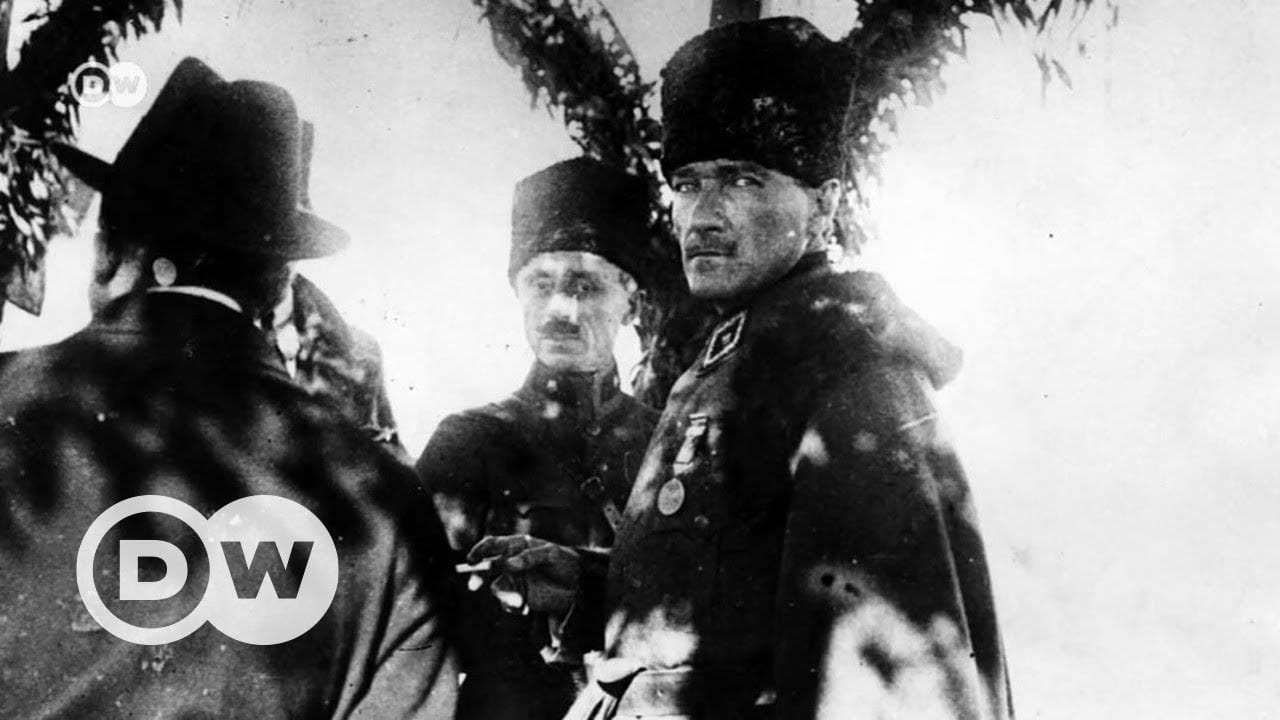
    On the eve of the 21st century, Turkey is celebrating the uninterrupted 75th anniversary of her foundation (29 October 1923) and commemorating the 60th anniversary of the death of Mustafa Kemal Ataturk (in November 1938). The man who founded modern Turkey, the successful fighter against European colonialism, was at 35 years of age, the youngest general of World War I and the hero of the Gallipoli campaign. Even today I remember how we Turks mourned him as though we had all lost our father. There are not many of his contemporaries alive today, but there are many of my generation who saw him in their youth or childhood. I am one of them.

    My encounter with Ataturk occurred in elementary school. The year was 1937 or 1938. News of his visit brought excitement to the school. The blackboards were painted and even inaccessible corners were cleaned. The school administration distributed new history texts to each class. The text was written by Afet Inan, ‘a liberated woman historian’, whom Ataturk admired. The students became impatient. Each wanted to see him, while the teachers, overcome with emotion, wanted to be relieved of their classroom duties.

    There were some descendants of famous personalities scattered in various classes. The school administration took care to make their classrooms especially attractive. Still we had a little bit of hope in our class. According to our teacher, if he was to be believed, Ataturk would not overlook our class since our teacher fought in Ataturk’s army during the war for independence, 1920-1922. As rumour of his impending arrival spread, Ataturk appeared at the end of the week. We were studying Turkish history exclusively that day. We did not hear Ataturk arrive but realized something was happening because of the commotion in the corridor. Every eye turned to the windows with a view of the corridor. There was no doubt that Ataturk was here. Our teacher counselled us to avoid losing our heads in the excitement. 


    Ataturk’s presence did not raze my classmate at the neighbouring desk. He had a mania for copying secretly from a book which he kept on his lap during examinations. Even in a subject in which he was well versed, he preferred to copy. When he filled in his name, date of birth, and address, he would glance at his identity card and copy. Cheating was a game for him. Ataturk’s presence did not dissuade him from keeping his copy book on his lap. He was the type who would be proud to say later ‘You see, nobody would dare cheat in Ataturk’s presence but me.’

    Meanwhile, Ataturk and his party had gathered in the corridor. Ataturk was in the middle, flanked by the senior school administrators. The remainder of the group followed at least two steps behind them. Then the door opened wide and Ataturk entered with his entourage. We all stood at attention just like soldiers. As we jumped to attention, the book fell from my classmate’s lap. He blushed with embarrassment. Fortunately, no one noticed in the excitement.

    Ataturk told our teacher to seat us, which he did. Our teacher then bowed, not extremely low, but at just the right height and introduced himself rather modestly as ‘Your obedient teacher in history’. Since he was a member of the board of education as well, we were astounded that he referred to himself as merely a teacher. Perhaps Ataturk would have questioned him more diligently if he had known of the teacher’s other responsibilities. Ataturk asked him ‘Do you teach from the book or from your own concept?’ The principal and the teacher answered simultaneously ‘From the book’ as they tried to prevent him from asking ‘From which book?”Very nice’ replied Ataturk with a glance at the text book on the desk. Had he asked us about anything in that book, we would have been dumfounded. Thank heaven, he didn’t. The principal and the teachers explained the curriculum to Ataturk to change the subject.

    I had seen a picture of Ataturk. He posed with two fingers in his waistcoat pocket, his head bent slightly forward. ‘To look at him directly is difficult. To look in his eyes is impossible. If you look at any more than his chin, you will be dazzled by the reflections from his eyes and lose consciousness as though you were struck by lightning’. This was common folk wisdom so I didn’t dare raise my head to look at his face. What I could see was his watch chain, waistcoat, two fingers of his left hand in his pocket, his collar and part of his chin but the Devil made me suddenly glance a little higher. I saw no dazzle nor did lightning strike. Even the principal and the teacher could look into his eyes with no ill effects. 
    Dazzling reflections and lightning were exaggerations but the stare from those eyes was unusual. The eyes stared into space; they seemed to focus at great distances and peer into wide chasms. Even a child could not fail to notice that nothing escaped those eyes. No one could deceive this man. He was unimpressed by bombast. He was extraordinary. Nobody was required to tell him what needed to be done. Those who attempted to deceive him appeared to be merely superfluous, thoughtless, unseemly or presumptuous. That is why the principal and the teacher were so ridiculous in his presence. He did not need their briefing. What he should have been told he already knew.

    I am still convinced today of the correctness of those childhood impressions. I recently read a 1941 publication about Ataturk’s conversation with General MacArthur when MacArthur visited Istanbul in 1931. In his diary MacArthur noted that even before Hitler’s rise to power in Germany Ataturk had prophesied that World War II would begin in Europe between 1941-1945. He also foresaw that the United States could not maintain its neutrality and that the first victor in Europe would be Bolshevik Russia rather than England, France, or Germany.

    Everything happened exactly as he had prophesied. He knew that teachers would give him evasive answers; that a book would fall from the lap of a blushing student; and that a newly introduced unopened book would be presented to him as a traditional text. He knew all that in the early morning prior to his departure from his residence at Bosporus. For such a man there are no surprises.

    To avoid embarrassing his hosts he always appeared to be listening to their presentations but he could not wipe the sardonic expression from his face. I noticed how his cold blue eyes, arched eyebrows and thin lips produced an expression that said: ‘Tell me Mister, what kind of text book do you really use? I already know what district you’re from; what your favourite flavour is; and what kind of coffee you drink and whether you take it with cream or sugar.’

    I asked myself why Ataturk didn’t perceive the sanctimoniousness of the selfish sycophants around him when he was able to look into the bottom of their souls. Some time later I realized the answer. Ataturk was not deceived by the games they were playing. He was just toying with them. Nothing is as ridiculous as a confidence man being duped by his intended victim.

    After paying quick visits to two other classes, he and his entourage visited the principal’s office. Before he left the office, Ataturk autographed a photograph of himself. No sooner had he left the office when two blustering teaching assistants slipped in and lunged toward the cigarette butt Ataturk had left in an ashtray. They argued over who would smoke Ataturk’s cigarette butt and finally agreed to share it in the hope that each would inhale some of Ataturk’s ingenuity. I thought both would now be on a fast track to a ministerial post. Alas, that was not to be. One became a customs officer and the other headed a small municipal office.

    As the teaching assistants fantasized about their future, Ataturk prepared to leave. His departure was announced and we all rushed into the schoolyard. After conferring with his aides, Ataturk decided to mingle with the student body. He left his aides behind and plunged into the crowd. We all marched with him to the main entrance, which was used only on ceremonial occasions. The young students moved in every direction, some even creeping backwards like lobsters to look at his face. Ataturk was unperturbed and strode resolutely ahead.

    Curious spectators appeared by the thousands at the school entrance. Police officers had great difficulty keeping the crowd from spilling into the street. Every window with a view was crammed with faces struggling for a glimpse. When Ataturk appeared on the street, the crowd began applauding. Exulted by the applause, he entered his automobile and departed, flanked by a motorized escort. His entourage followed with great difficulty as the swarming crowd impeded the passage of their vehicles.

    That evening the attendance list was checked. Two sly foxes were found to have exploited the occasion and skipped school that day. I don’t remember if they were punished. I think missing that historic day was punishment enough.

    Azmi Guran. Ph.D., Prof.El.Eng. (University of Pennsylvania)

  • Islamophobic Rhetoric by Mayor Eric Adams and Andrew Cuomo

    Islamophobic Rhetoric by Mayor Eric Adams and Andrew Cuomo

    Statement in Response to Islamophobic Rhetoric by Mayor Eric Adams and Andrew Cuomo

    by Ibrahim Kurtulus Community Activist

    In recent days, deeply troubling comments have been made by Mayor Eric Adams and echoed by political surrogates and supporters of former Governor Andrew Cuomo remarks that irresponsibly conflate the peaceful faith of millions of Muslim Americans with extremism abroad. Such rhetoric is not only misleading and factually incorrect, but it also fuels a climate of suspicion, hostility, and division at a time when unity and understanding are urgently needed.

    Let us be clear and precise: Islam is not the cause of extremism. Muslims are not responsible for the acts of radicals.

    The Mayor Eric Adams reference to Nigeria, for example, is demonstrably inaccurate. Violence in Nigeria is not a simple case of “Islamic extremism burning churches.” Nigeria faces deeply complex internal challenges ranging from ethnopolitical conflicts, criminal banditry, resource competition, and armed insurgencies involving multiple actors. Communities of all religions, including Muslims, have both suffered from and opposed violence. To reduce such human tragedy into a political talking point is irresponsible and profoundly misleading.

    Yet what is even more alarming is the willingness of political actors to seize upon fear in order to divide New Yorkers for electoral gain. When public leaders speak carelessly, they legitimize the darkest impulses on our streets. And today we are witnessing a measurable rise in harassment, intimidation, and violence against Muslim Americans here in our own communities, in our own neighborhoods, on our own buses, sidewalks, and playgrounds.

    What is perhaps most painful is the silence of those who should know better. Silence from those who claim moral authority. Silence from those who claim to value civil rights. Silence from those who pledge inclusivity yet remain mute when Muslim Americans are targeted. This silence is not neutrality. It is complicity. As Turkish Americans as Muslim Americans, as New Yorkers, and as people of conscience from all faiths and backgrounds, we speak today with one united voice:

    Bigotry against any of us is a threat to all of us. An attack on you is an attack on me.

    This nation was built upon the foundational belief in the inherent dignity of all people. Our diversity is not a liability it is our greatest strength. When hatred is directed at any community Muslim, Jewish, Christian, Sikh, Black, Asian, immigrant, LGBTQ+, or any other our very democracy is diminished.

    We reject the use of religion as a political weapon. We reject rhetoric that dehumanizes. We reject fear as a tool of public leadership.

    Instead, we affirm the following: Every person has the right to practice their faith without intimidation or shame. Our city is strongest when we protect one another.

    We will not allow the peaceful religion of Islam to be defamed by those who seek division.

    New York has long stood as a symbol of hope etched in the Statue of Liberty, echoed in our neighborhoods, and lived daily in our shared lives. We will continue to uphold the values of cooperation, respect, and mutual understanding. We will challenge stereotypes, confront ignorance, and stand up together against the hatred that threatens our society.

    Hate leaves a scar on a city. But solidarity heals.

    Today, we reaffirm our commitment to a just, inclusive, and equitable New York where all children may grow without fear, where all families are respected, and where our leaders speak with responsibility and truth.

    We stand together. We speak together. And we will not be divided.

    Ibrahim Kurtulus

    Community Activist

  • BRICS International Municipal Forum: Cities of the Future and Global Partnership in Action

    BRICS International Municipal Forum: Cities of the Future and Global Partnership in Action

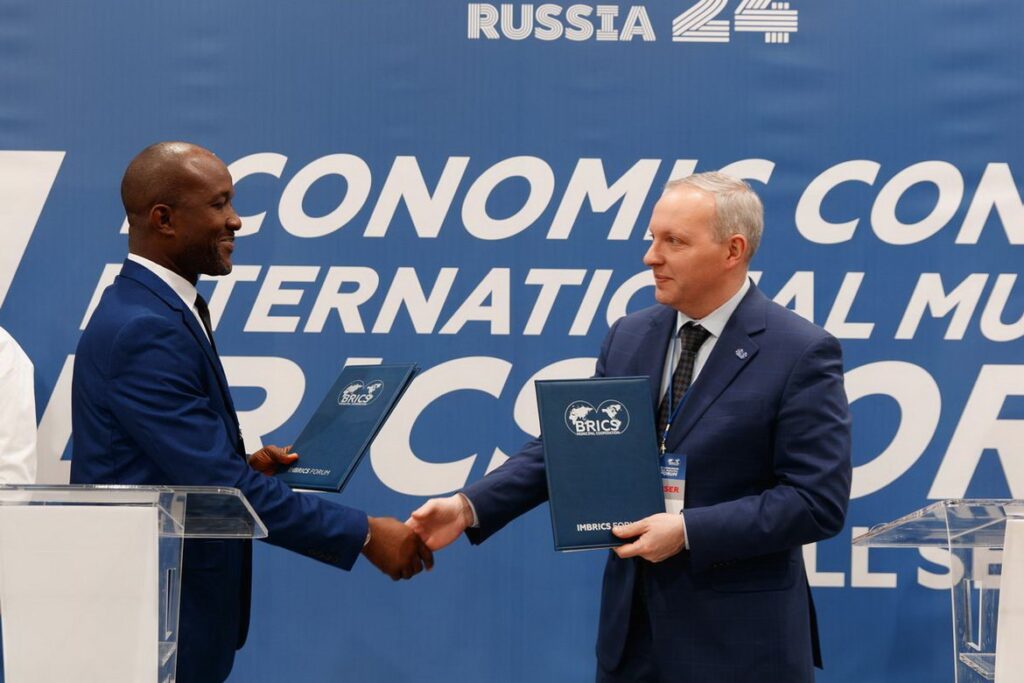
    From October 29 to 31, 2025, St. Petersburg will host the BRICS International Municipal Forum (IMF BRICS). The upcoming Forum is set to become one of the key global events fostering cooperation, innovation, and sustainable urban development among the BRICS+ countries and friendly nations.

    As a leading communication and business platform, the Forum unites partners from over 70 countries and 2,000 cities and regions around the world. In 2024, the event gathered nearly 6,000 delegates from 101 countries, underscoring its growing global significance.

    The Forum’s mission is to promote effective solutions for sustainable urban development, facilitate the exchange of advanced technologies and best governance practices, and strengthen direct ties between cities and regions. Discussions will focus on urban innovation, digital transformation, green economy, infrastructure, education, and social policy, with special attention to achieving the UN 2030 Sustainable Development Goals.

    The event is held with the support of the Ministry of Foreign Affairs of the Russian Federation, the Federation Council, the Administration of the President of Russia, the Governments of Moscow and St. Petersburg, the All-Russian Congress of Municipalities, the Moscow City Duma, the Moscow Chamber of Commerce and Industry, and the Russian Union of Industrialists and Entrepreneurs. Since 2020, the Forum has been officially included in the BRICS Chairmanship event plan and recognized in the Beijing Declaration of the XIV BRICS Summit (2022) and the Kazan Declaration of the XVI BRICS Summit (2024) as a key mechanism for enhancing cooperation among cities and promoting sustainable development.

    The President of the Russian Federation, Vladimir Putin, has commended the Forum for its contribution to strengthening international dialogue and practical cooperation at the municipal level. This year’s BRICS International Municipal Forum will serve as a dynamic platform for new partnerships, innovation-driven projects, and meaningful agreements, shaping the urban future within the expanding BRICS+ partnership network.